
Hear from Our Customers
You stop bracing every time you walk to the back door. You mow the lawn without scanning the ground first. Your kids play outside again without checking every corner of the yard. That’s what yellow jacket nest removal in Otisville actually delivers — not just a dead colony, but your outdoor space back.
A lot of homes in Forest Township were built well before World War II. That means aging soffits, old wood siding, gaps around chimneys, and crawlspace access points that German Yellowjackets find before you do. Once they’re inside a wall void, the colony chews through insulation and drywall as it grows. What starts as a pest problem becomes a structural one — and structural repairs in older Otisville homes run from a few hundred dollars into the thousands.
The other thing worth knowing: nearly half the properties in Forest Township sit on three or more acres. That’s a lot of ground for Eastern Yellowjackets to nest in — abandoned animal burrows, field edges, wooded lot lines. On a property that size, you may not find the nest until someone steps on it. Professional yellow jacket pest control means the nest gets located, treated completely, and sealed off — not just sprayed and hoped for.
We’ve been operating in Genesee County since May 31, 2005. That’s 20 years of Michigan pest seasons, 20 years of learning what actually works in this part of the state, and 20 years of building a reputation in Otisville and surrounding communities where word travels fast and a bad job follows you. Roger Chinault founded the company and still leads it — with 26 years of hands-on pest management experience and a direct role in how every job gets done.
We’re headquartered in Swartz Creek, right here in Genesee County. We hold MDARD Pesticide Application Business License #250081, have earned awards from Angie’s List and HomeAdvisor, and carry a 4.7 out of 5 rating on Angi. Every technician is a trained, full-time professional — not a seasonal hire. And the same technician comes back to your property year after year, which matters a lot when your home has a history and your land has specific conditions worth knowing.
It starts with identification, and that step matters more than most people realize. German Yellowjackets nesting inside your wall void require a completely different treatment approach than Eastern Yellowjackets nesting underground in your backyard. Treating the wrong species the wrong way — or treating a wall-void nest without knowing its depth and size — can drive the colony further into the structure and make the situation significantly worse. We’re trained in Integrated Pest Management, which means the right identification comes before any product goes down.
Once the species and nest location are confirmed, treatment is scheduled for nighttime when the full colony is present and activity is lowest. For wall-void or attic infestations — which are common in Otisville’s older housing stock — we apply registered insecticide dust directly into the cavity. For ground nests on larger Forest Township properties, we use pyrethrum aerosols and targeted dust application to reach the full colony. The goal is a complete kill, not a partial one that leaves a surviving queen to rebuild.
After treatment, you’ll get clear guidance on sealing the entry points that made your home or structure vulnerable in the first place. In Michigan, yellow jacket season peaks from late August through September — which is right when the Otisville Hot Dog Festival draws people outside and Covenant Hills Camp is at full capacity. If you’re seeing activity now, the colony is already large. This is not the time to wait.
Ready to get started?
Every yellow jacket job comes with a 1-year service guarantee. If activity returns within the guarantee period, we come back and re-treat at no additional charge. On rural Otisville and Forest Township properties where nesting conditions are persistent year after year — abundant wooded edges, open acreage, aging outbuildings — that guarantee is not a formality. It’s a real protection.
We serve both residential homeowners and commercial properties throughout Genesee County. If you’re a homeowner on a rural lot off M-15, a property manager with a commercial building near the M-57 corridor, or a business owner dealing with a nest near an entrance, the same licensed, professional approach applies. No part-time technicians, no rotating faces, no binding contracts. You’re not locked into anything — the quality of the work is what keeps customers coming back.
Seniors, veterans, and first responders receive a discount on service. Otisville and Forest Township have a notably large population of Vietnam-era veterans, and we’ve been honoring that community for years. If a competitor has given you a quote, ask about price matching — we’ll match any reasonable rate. All pest control work performed in Michigan requires a valid MDARD Pesticide Application Business License. We hold License #250081, which is publicly verifiable. If any company you’re considering can’t provide that, don’t let them on your property.
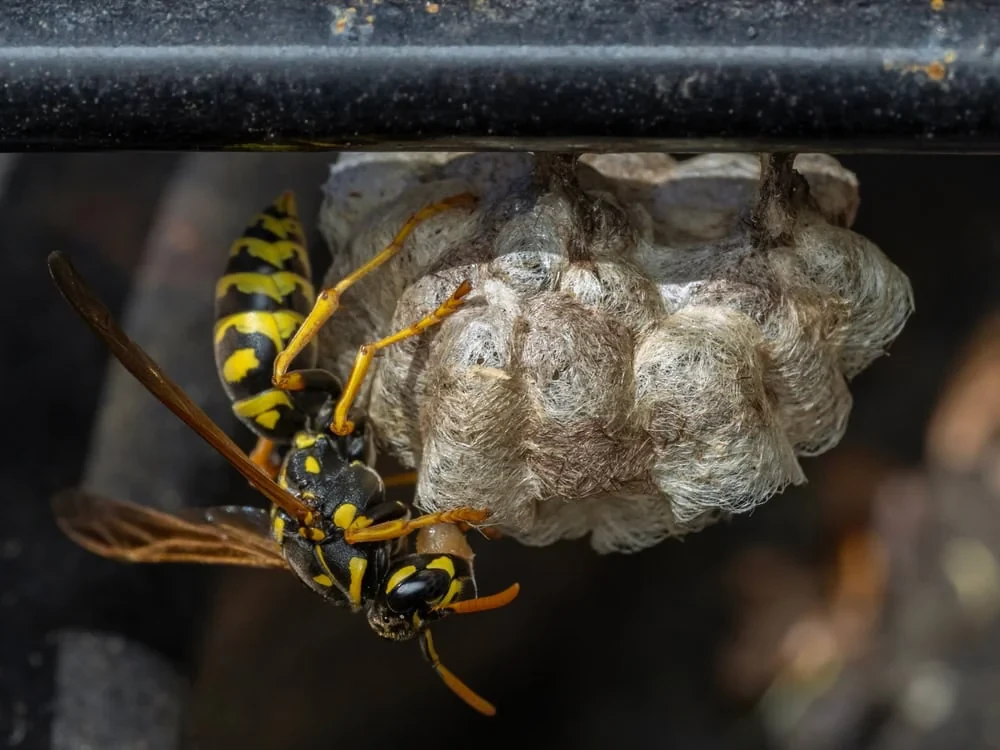
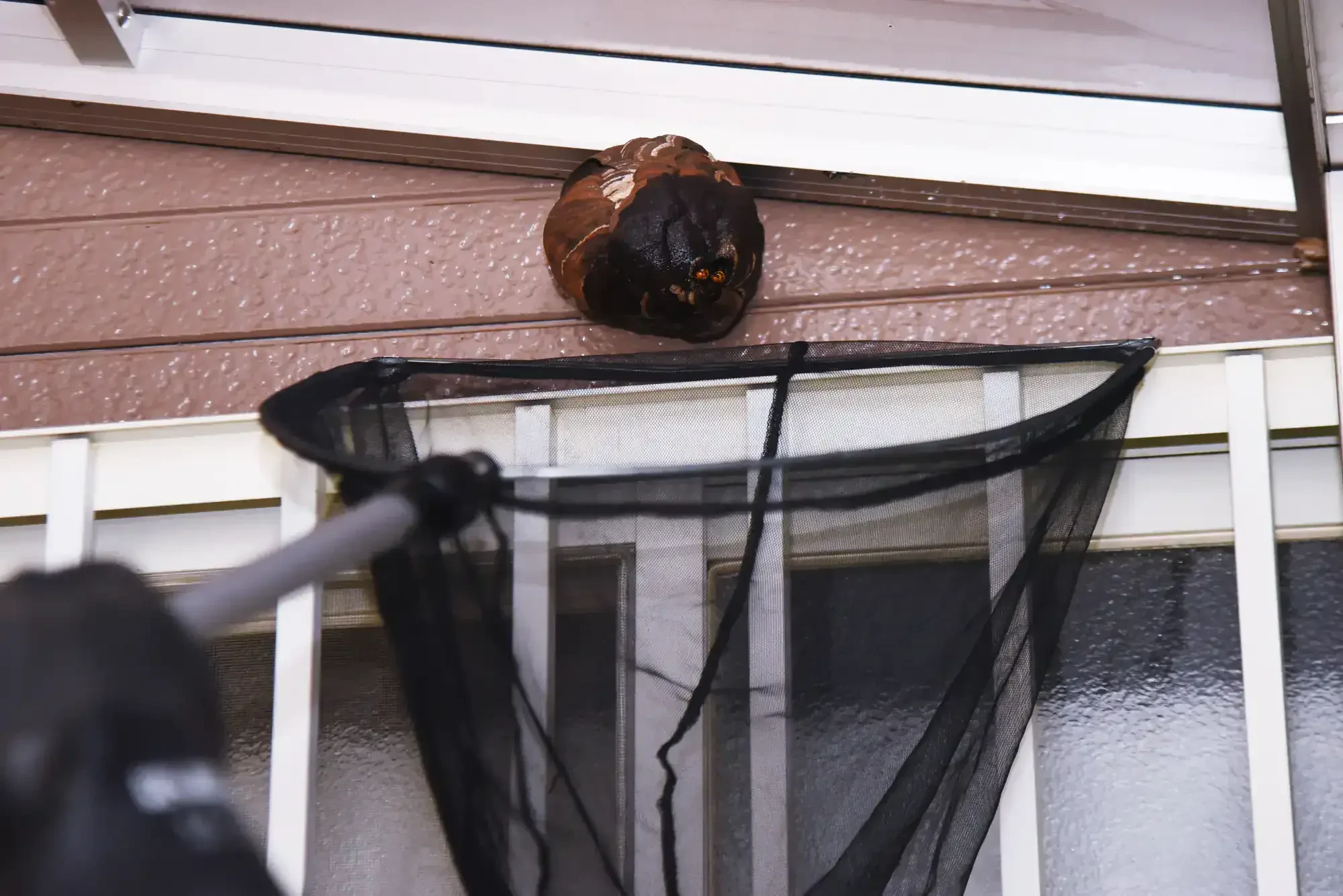
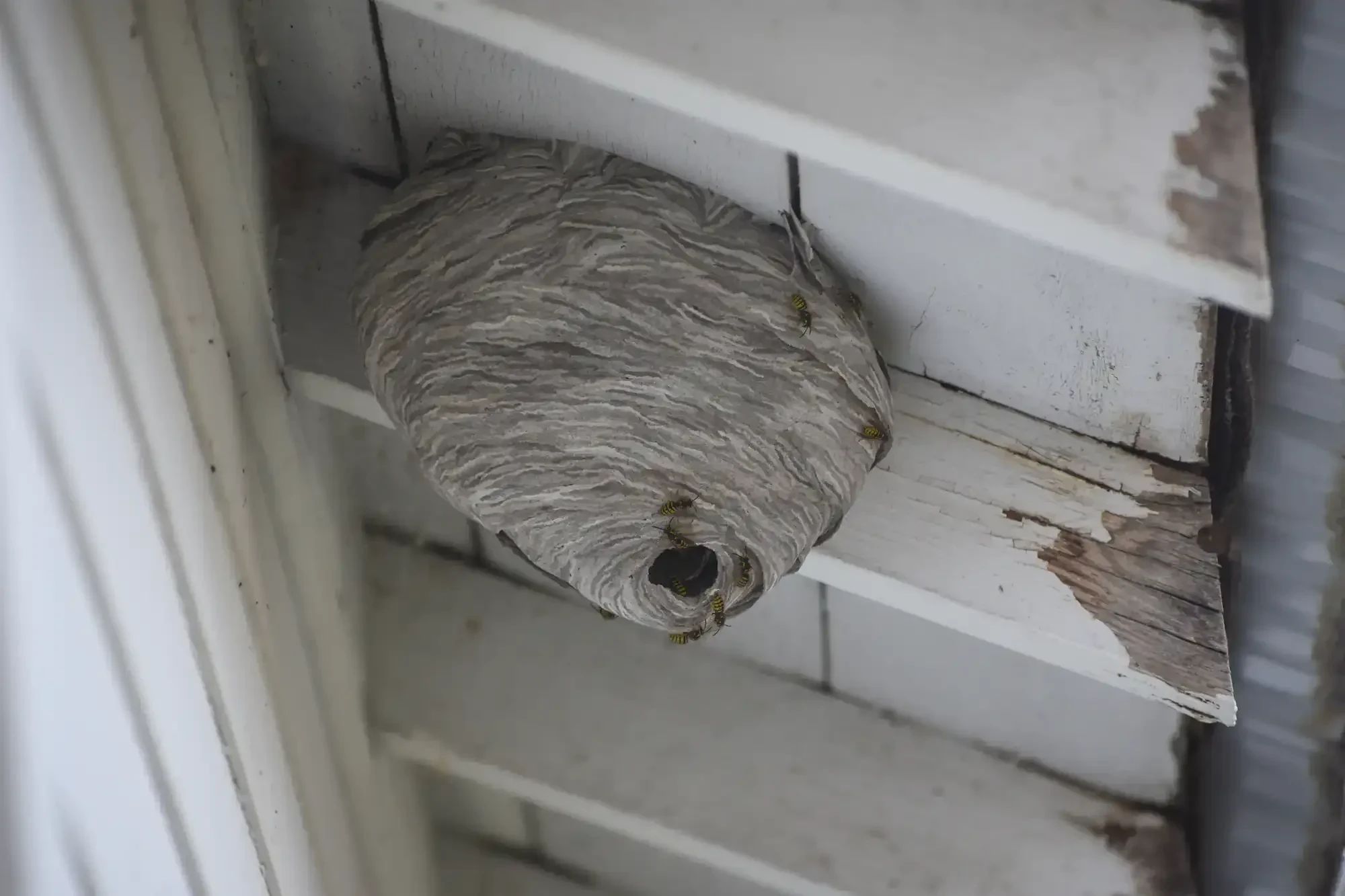
The most common sign is a consistent line of yellow jackets entering and exiting a small gap — usually around a soffit, window frame, exterior trim, or gap in the siding. You may also hear a faint buzzing or chewing sound from inside the wall, especially in a quiet room adjacent to the exterior. In Otisville’s older homes — many of which were built before World War II — these entry points are common because aging wood, deteriorating caulk, and original siding leave gaps that weren’t there when the house was new.
What makes wall-void infestations tricky is that the colony can be much larger than the entry point suggests. A small gap the size of a dime can lead to a nest the size of a basketball inside the cavity. By late summer in Genesee County, that colony may have thousands of workers. If you’re seeing consistent wasp traffic at a specific point on your home’s exterior, don’t probe it yourself — call us so we can assess the nest size and location before any treatment begins.
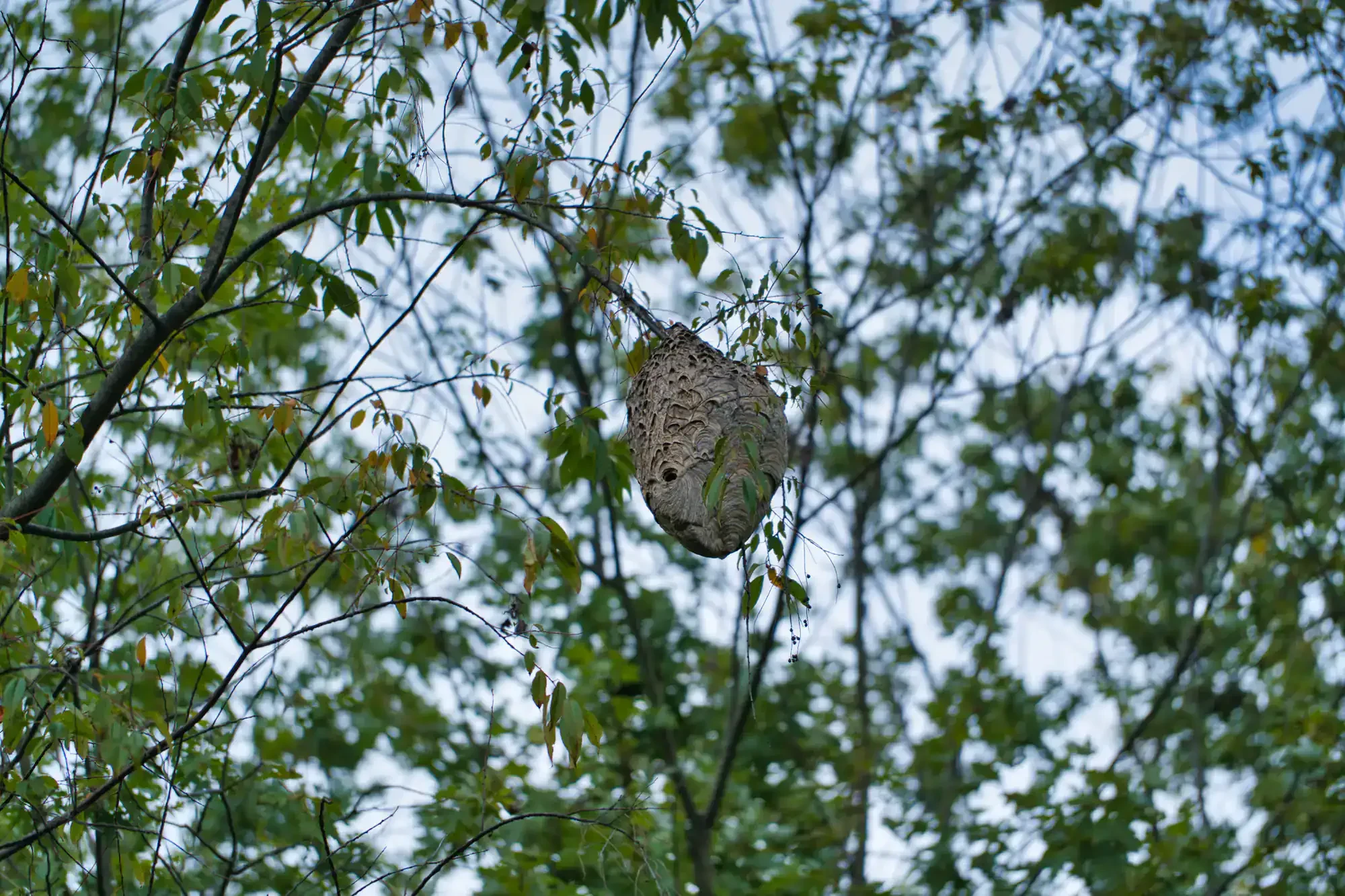
Technically you can attempt it, but the risk is real and the failure rate for DIY ground nest treatment is high enough that it’s worth thinking through carefully. Ground nests on Forest Township properties are often located in abandoned animal burrows — which means the colony can be two to three feet underground with multiple tunnel exits. Pouring store-bought foam or dust into one entrance rarely reaches the full colony, and disturbing the nest without eliminating it causes an immediate and aggressive defensive response from thousands of workers.
The other issue is timing. Most homeowners attempt treatment during the day when foragers are out and activity looks manageable. Professional treatment is done at night, when the full colony is present and the insects are less active. On a rural property with three or more acres, you may also have multiple ground nests without knowing it. A professional inspection identifies all active colonies before treatment begins, which is the only way to make sure you’re not solving one nest while leaving another untouched twenty feet away.
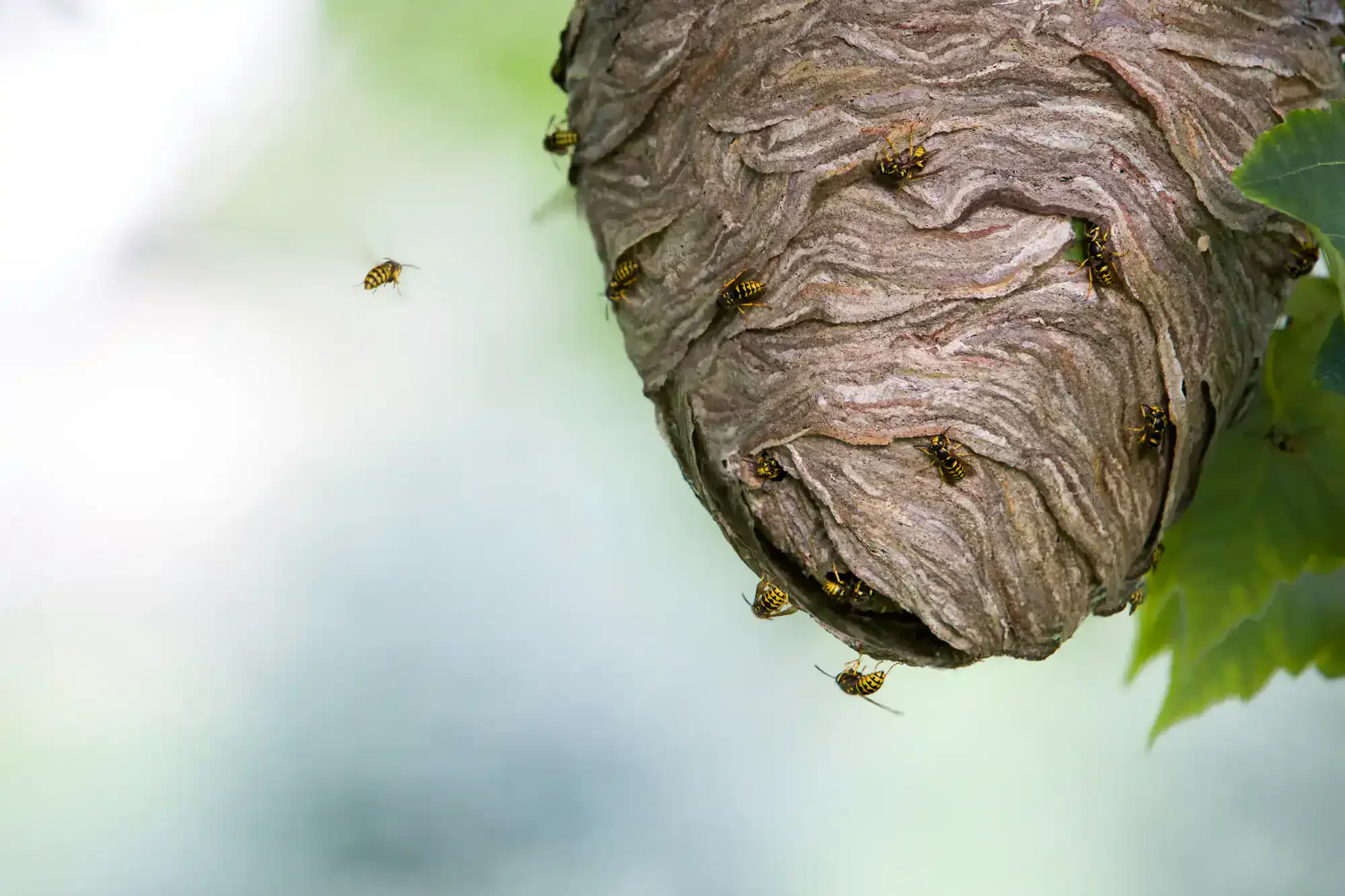
Late August through September is the peak danger window in Genesee County. A colony that started with a single queen in April can reach 1,000 to 5,000 workers by late summer. At that point, the colony’s food source shifts from protein to sugars, which is why yellow jackets become aggressive around outdoor food, beverages, and garbage during this period. They’re not just defensive — they’re actively food-seeking and far less tolerant of anything they perceive as a threat.
This timing matters for Otisville specifically because the Otisville Hot Dog Festival falls in mid-to-late September, right at peak yellow jacket aggression season. Covenant Hills Camp at 10359 Farrand Rd draws campers, hikers, and families through wooded terrain during the same window. If you’re planning any outdoor event or activity on your property in August or September and you’ve noticed yellow jacket activity, treat the nest before the season peaks — not after your guests have already encountered it.
Nationally, yellow jacket extermination averages around $725, with wall-void and attic infestations typically running toward the higher end of the range — sometimes $1,000 or more depending on colony size, nest location, and structural access. Ground nest removal on open acreage is generally on the lower end of that range, assuming the nest is accessible and there’s only one active colony to treat.
For Otisville homeowners, it’s worth framing that cost against the alternatives. A single emergency room visit for a severe sting reaction can exceed $1,000 — and between 0.5% and 4% of the population experiences anaphylaxis from stinging insect venom. Structural repair for drywall and insulation damage from an untreated wall-void colony in an older Otisville home can run $2,000 to $10,000 depending on how long the colony was active before it was found. We offer price matching against reasonable competitor quotes, so if you’ve already received an estimate, bring it up when you call.
Yes, and it happens more often than most homeowners expect. German Yellowjackets are cavity nesters — they seek out enclosed spaces inside walls, attics, crawlspaces, and ceilings. Once inside, the colony actively chews through insulation, drywall, and wood framing to expand the nest as the colony grows. By late summer, a wall-void nest can be the size of a large watermelon with thousands of workers, and the damage to the surrounding cavity is significant.
In Otisville, this is especially relevant because of the age of the housing stock. Homes built before World War II — which describes much of the village’s residential inventory — have original materials that are more susceptible to moisture, decay, and pest intrusion than newer construction. A colony that goes undetected for a full season in an older home’s wall void can cause damage that requires professional remediation well beyond the cost of the pest control itself. Early treatment, combined with post-treatment sealing of entry points, is the most cost-effective approach for protecting an older Otisville home.
Yes — discounts for seniors, veterans, and first responders apply throughout the service area, including Otisville and Forest Township. Otisville has a notably large population of Vietnam-era veterans relative to its size, and a significant portion of the village’s residents are retirees on fixed incomes. We’ve been serving Genesee County for 20 years, and the discount program reflects the kind of community we’ve built our business in — one where neighbors look out for each other and long-term relationships matter more than one-time transactions.
When you call to schedule service, mention that you’re a senior, veteran, or first responder and ask about current discount availability. It’s also worth asking about price matching if you’ve received a competing quote from another pest control company serving the Otisville area. We’ll match any reasonable rate — so you don’t have to choose between the most experienced, locally-rooted option in Genesee County and a fair price. You can have both.
Useful Links