
Hear from Our Customers
You get your yard back. No more watching where you step near the garden, cutting the grass in sections, or keeping guests away from the patio because something’s living in the ground near the fence line. That’s not a small thing — that’s your property, and you should be able to use it.
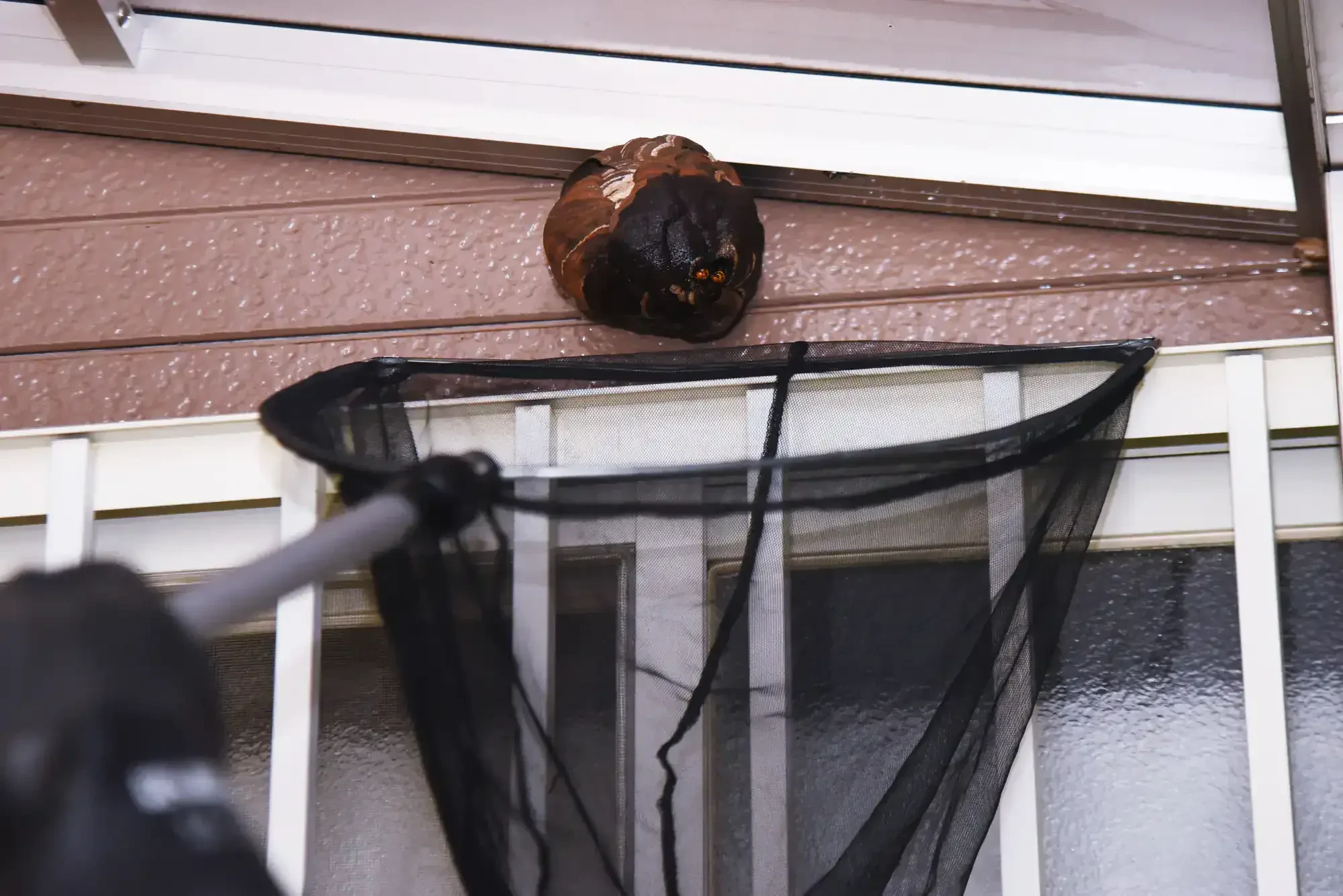
For homeowners in Whigville and the surrounding Grand Blanc Township area, yellow jacket nests in wall voids are especially common. Michigan’s freeze-thaw cycle opens up new gaps in siding, soffits, and fascia boards every winter — and German Yellowjackets find those gaps fast. When the nest is inside a wall, you’re not just dealing with a stinging hazard outside. You’re dealing with a colony that can number in the thousands, chewing through insulation and drywall, with workers finding their way inside your living space.
Getting that nest properly treated — not sprayed at the entry point with a can from the hardware store, but treated at the source — means the colony is gone, the entry point gets addressed, and you’re not calling someone again in three weeks because the problem moved deeper into the wall. For the significant number of seniors in this neighborhood who face higher risk from sting reactions, that resolution isn’t just convenient. It’s genuinely important.
We’ve been operating out of Swartz Creek since May 31, 2005. That’s two decades of serving Genesee County homeowners — including the families and retirees in Whigville — without rotating technicians, without binding contracts, and without handing your job to a part-time seasonal worker who’s never seen your neighborhood.
Roger Chinault founded this company and brings 26 years of hands-on pest management experience to every call. We hold MDARD Pesticide Application Business License #250081, have completed Integrated Pest Management training, and have earned recognition from both Angie’s List and HomeAdvisor. Our 4.7 out of 5 rating on Angi reflects real customers — including homeowners dealing with stinging insect problems not far from Dort Highway — not a marketing number.
When you call First Choice, you’re talking to a Genesee County company. Not a national brand with a local area code. There’s a difference, and you’ll notice it from the first conversation.
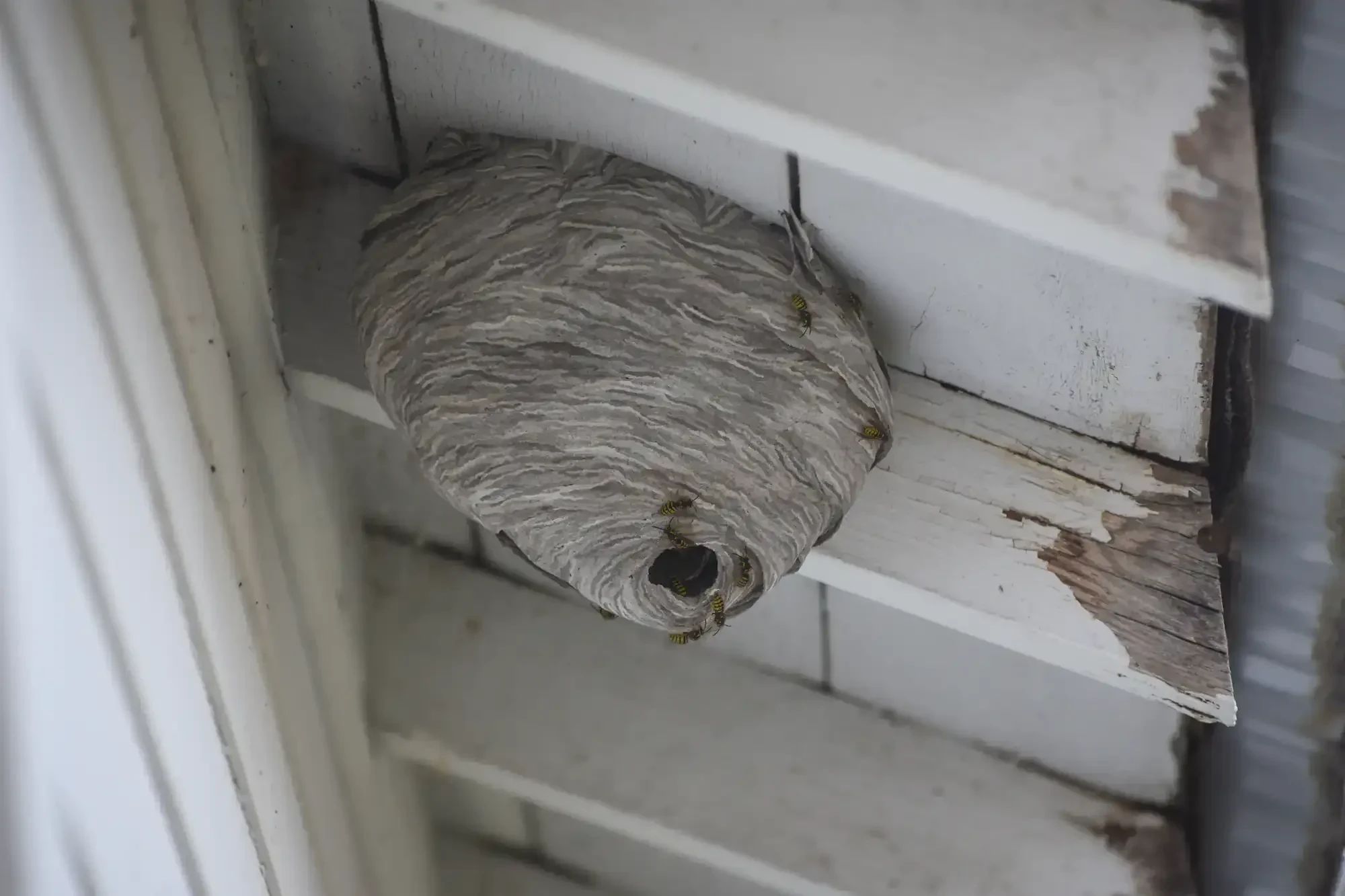
It starts with a proper inspection. Yellow jackets in Whigville tend to fall into two categories: German Yellowjackets nesting inside wall voids, attics, and enclosed structural cavities, and Eastern Yellowjackets building underground colonies in ground burrows — often in lawn areas near older homes or properties adjacent to more open land. Before any treatment happens, our technician identifies which species you’re dealing with, locates the nest entry points, and determines the right approach for your specific situation.
For wall-void and attic nests — the most common structural scenario in Grand Blanc Township’s mixed-age housing stock — treatment involves applying an insecticide dust that workers carry back into the nest and distribute throughout the colony. This is how you reach the queen. Spraying at the entry hole doesn’t do that. It pushes the colony deeper and makes them more aggressive. Professional treatment works from the inside out.
After treatment, you’ll get clear guidance on re-entry timing and what to watch for in the days that follow. If the nest is in a wall or attic, sealing the entry point after the colony is eliminated is critical — Michigan’s winters open up new gaps every year, and an unsealed entry is an open invitation for next spring’s queen. We back every yellow jacket treatment with a 1-year service guarantee. If activity returns within that window, your technician comes back and re-treats at no additional charge.
Ready to get started?
Every yellow jacket service call from us starts with species identification — because how a nest gets treated depends entirely on what you’re dealing with and where it’s located. A ground nest near a garden bed is handled differently than a wall-void colony that’s been expanding inside your home since June. Both are dangerous. Both require a different approach. You get the right one.
Whigville homeowners dealing with attic yellow jacket removal face a specific challenge: colonies in attic spaces are often larger than expected by the time they’re discovered, and the nest material left behind after the colony dies off can attract rodents and secondary pests if it’s not addressed. Our IPM-certified approach accounts for the full picture — not just the immediate stinging hazard, but the structural and secondary concerns that come with a late-season infestation in an older Grand Blanc Township home.
The service includes a 1-year guarantee, price matching for reasonable competitor rates, and discounts for seniors, veterans, and first responders — no binding contracts required. For a community where long-term homeowners and retirees have built their lives, that combination of accountability and accessibility matters. You’re not locked in, and you’re not left unprotected if something comes back.
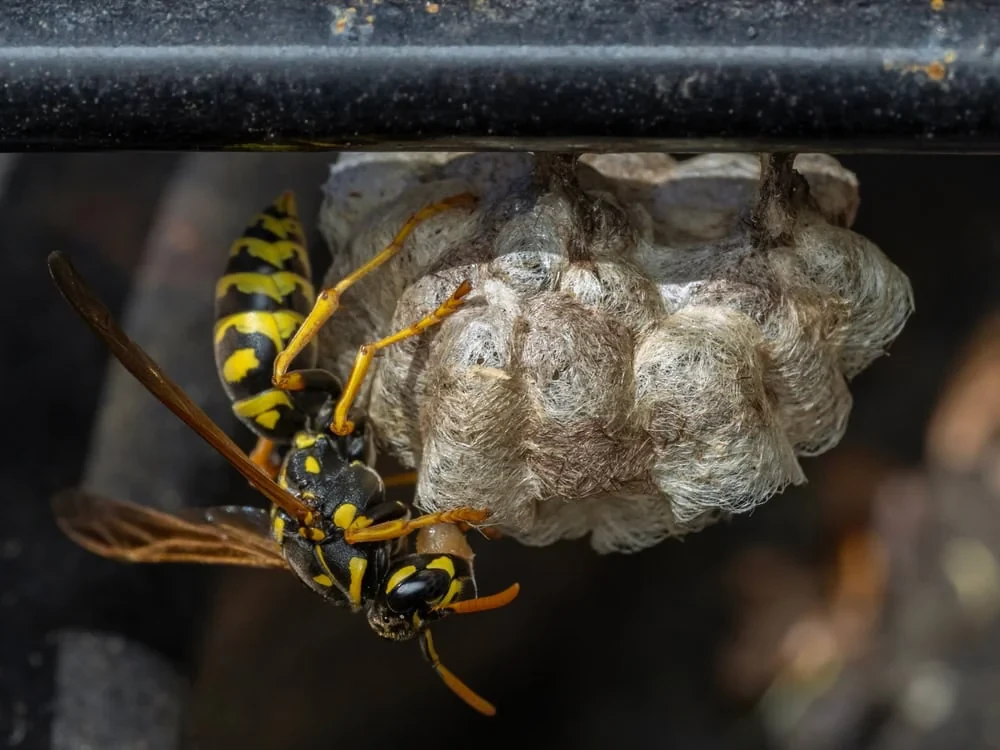
The most common sign is worker activity around a specific entry point — a gap in siding, a crack near a soffit, a space around a utility penetration — where you see yellow jackets entering and exiting repeatedly, especially in the morning when foraging starts. If you’re also hearing a low buzzing or chewing sound inside a wall, that’s a strong indicator the colony is already established inside the structure.
In Whigville and the broader Grand Blanc Township area, this is particularly common in homes where Michigan’s freeze-thaw cycle has opened up new gaps in aging siding or fascia boards. German Yellowjackets — the species most likely to nest in wall voids in Michigan — are drawn to enclosed, protected cavities and can establish a colony of several thousand workers inside a wall before most homeowners realize what’s happening. If you’ve noticed increased yellow jacket activity near your home’s exterior since late spring, don’t wait. Colonies grow fast, and a wall-void nest treated in July is significantly less complicated than one discovered in September.
It’s not just unsafe — it usually makes the problem worse. When you spray into a wall-void entry point with an over-the-counter product, the surviving workers retreat deeper into the structure. The queen, who is located well inside the nest, is untouched. The colony becomes more defensive, and you’ve now pushed them further into your wall without eliminating the source.
Professional treatment for wall-void nests uses insecticide dust applied at the entry point in a way that workers carry back into the nest on their bodies, distributing it throughout the colony and eventually reaching the queen. That’s how a wall-void infestation actually gets resolved. The other thing worth knowing: a failed DIY attempt often results in workers finding a secondary exit point inside the home — through electrical outlets, light fixtures, or gaps in drywall — which turns an outdoor pest problem into an indoor one. If the nest is in your wall, call a licensed exterminator. It’s the faster path to actually solving it.
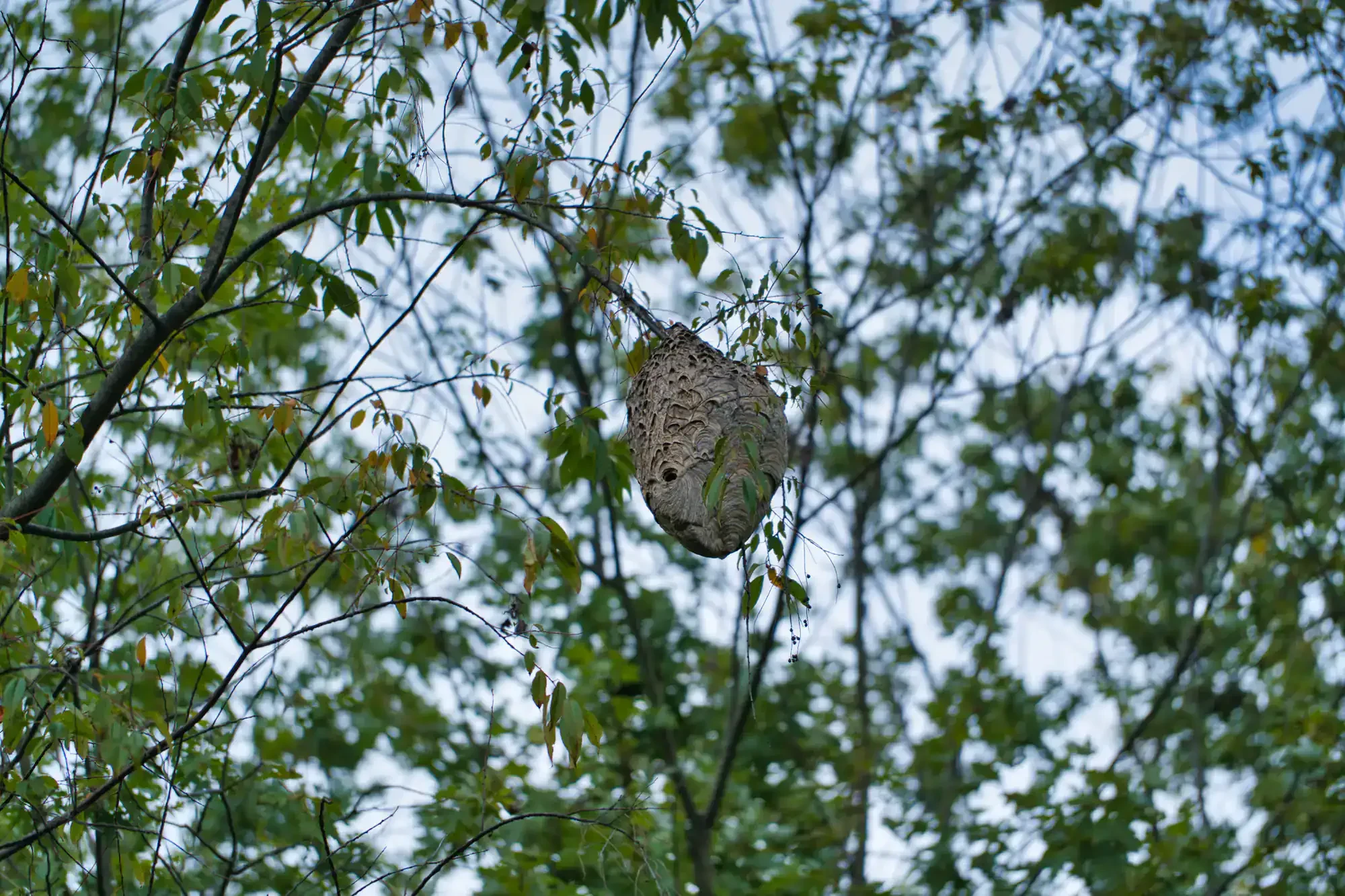
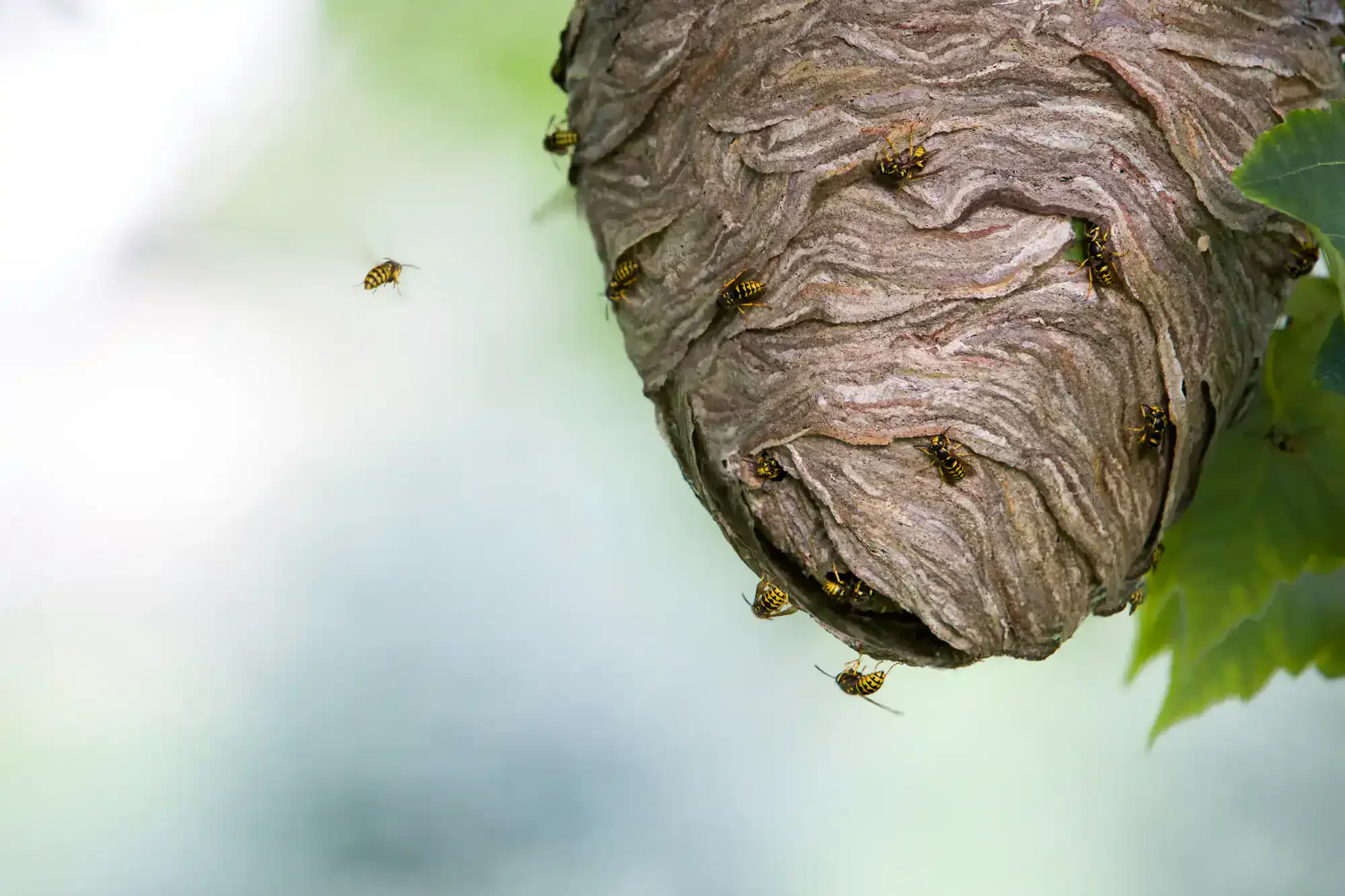
In Genesee County, overwintering queens emerge in late March or early April and immediately begin building new nests. By June, colonies are actively growing. By August and into September, colonies can reach 1,000 to 5,000 workers, and this is also when yellow jackets shift from hunting insects to scavenging sugary foods — which is why late summer is when most people start getting stung near garbage cans, outdoor meals, and fruit trees.
The honest answer is: call as soon as you notice consistent yellow jacket activity around your home. Early-season treatment — May or June — means a smaller colony, a less aggressive response, and a simpler job overall. But if you’re reading this in August because something happened near your patio or garden, that’s still absolutely the right time to call. Waiting until winter is a common mistake. Nests in wall voids don’t disappear cleanly — the dead nest material attracts rodents and secondary pests, and the entry point stays open for next spring’s queen to reuse the exact same location.
Yes, it changes everything about how they’re treated — which is why correct identification before any treatment happens matters. Yellow jackets are wasps, not bees. They have slender, smooth bodies, they can sting repeatedly without dying, and they are significantly more aggressive than honeybees, especially in late summer. Honeybees are fuzzy, tend to be docile unless the hive is directly threatened, and are protected under Michigan conservation guidelines in many contexts — meaning a licensed pest control company won’t treat a honeybee hive the same way we treat a yellow jacket nest.
In Whigville and across Genesee County, the two yellow jacket species you’re most likely to encounter are the German Yellowjacket — which nests in wall voids, attics, and enclosed structural spaces — and the Eastern Yellowjacket, which builds underground colonies in ground burrows, often in lawn areas. MSU Extension identifies yellowjackets as the most troublesome wasp pests in Michigan specifically because of how closely they nest to homes and how aggressively they defend those nests. A licensed technician will confirm exactly what you’re dealing with before any treatment begins.
Yes. Every yellow jacket treatment from us is backed by a 1-year service guarantee. If yellow jacket activity returns within that period, your technician comes back and re-treats at no additional charge. That’s not a vague satisfaction promise — it’s a specific, time-bound commitment that protects your investment.
This matters in Michigan because yellow jacket colonies are annual — they die off each winter, but new queens emerge every spring and look for established entry points to reuse. If a treated entry point isn’t properly sealed after the colony is eliminated, next spring’s queen can move right back in. We address this as part of the service conversation, not as an afterthought. The 1-year guarantee is there to cover you if something comes back, and the guidance you receive after treatment is designed to reduce the chances of that happening in the first place. No binding contracts are required to get that coverage.
We offer discounts for seniors, veterans, and first responders. Given that Whigville and the surrounding Grand Blanc Township area has a notably strong population of long-term homeowners and retirees — people who have been part of this community for decades — those discounts reflect a straightforward recognition of who makes up this neighborhood and what they’ve contributed.
We also offer price matching for reasonable competitor rates. If you’ve received a quote from another licensed, insured provider in Genesee County and the number is lower, bring it to us. We’ll match it. That combination — a discount for qualifying residents and a price match for everyone else — means cost shouldn’t be the reason you settle for a less experienced company. We’ve been operating in this county since 2005 and hold a 4.7 out of 5 rating on Angi. You can get that track record at a competitive price. Call and ask what applies to your situation.
Useful Links