
Hear from Our Customers
When yellow jackets move into a wall void or set up underground near your back door, your outdoor space stops feeling like yours. You stop letting the kids run to the garden. You think twice before opening the back gate. That shift happens fast — and it gets worse the longer you wait.
By late summer, a single colony near the Red Cedar River corridor can hold thousands of workers, all of them aggressive and all of them hunting for sugar. Williamston’s wooded riparian habitat along the river creates ideal conditions for queens to establish colonies every spring, and those colonies push into residential yards, downtown patios along Grand River Avenue, and the aging wall cavities of the Victorian-era homes that define this city’s character.
The right treatment doesn’t just knock down the visible nest. It addresses the entry point, the void, and the conditions that made your property a target in the first place. After a proper yellow jacket nest removal in Williamston, you get your yard back — and you stop wondering whether this summer’s barbecue is going to end with someone in an ambulance.
We’ve been serving Williamston and mid-Michigan since May 2005 — which makes this our 20th year in business. That’s two decades of yellow jacket seasons, two decades of learning how Ingham County homes behave, and two decades of showing up and getting it right. Roger Chinault, who founded First Choice Pest Control and leads every job with 26 years of hands-on experience, built this business on one principle: the person calling us is dealing with something real, and they deserve a real answer.
We hold MDARD Pesticide Application Business License #250081, have completed Integrated Pest Management training, and have earned awards from both Angie’s List and HomeAdvisor — holding a 4.7 out of 5 rating on Angi from verified customers. You’ll get the same technician every time you call, not a rotating crew that has to relearn your property from scratch. For Williamston homeowners protecting historic homes and significant property values, that consistency matters.
It starts with a proper inspection. Before any treatment begins, our technician identifies the species — because a German Yellowjacket colony in your wall void and an Eastern Yellowjacket colony underground in your lawn require completely different approaches. Treating one like the other is how you end up with an angrier nest and a wasted service call. In Williamston, both species are common: German Yellowjackets exploit the aging soffits, eave gaps, and brick mortar voids found throughout the city’s older downtown homes, while Eastern Yellowjackets favor the ground-level burrows in residential lawns and the wooded margins along the Red Cedar River trail.
Once the species and nest location are confirmed, treatment is applied directly and precisely. The goal is targeted elimination — not broad chemical saturation. Our IPM-trained approach means your family, your pets, and your property are considered at every step. You’ll know what was applied, where, and when it’s safe to resume normal activity.
After treatment, you’ll get clear guidance on what to watch for in the days that follow and what can be done to reduce the risk of a new colony targeting the same entry points next spring. August and September are peak season in Williamston — if you’re seeing activity now, the colony is already large. The sooner treatment happens, the simpler the job.
Ready to get started?
Our yellow jacket pest control service in Williamston covers the full range of nesting situations that Ingham County homeowners actually deal with — wall voids, attic spaces, underground burrows, deck cavities, and structural gaps in older homes. The Victorian-era and late-19th-century properties throughout Williamston’s Downtown Historic District are especially vulnerable to enclosed-cavity nesting, where colonies can chew through drywall and insulation for months before a homeowner notices. Attic yellow jacket removal in Williamston requires a different level of care than a surface nest — and that’s exactly the kind of job we’re built for.
Every service includes a thorough inspection, species identification, targeted treatment, and post-treatment guidance. We offer price matching for reasonable competitor rates, so if you’ve gotten a quote from another Ingham County provider, bring it — we’ll work with you. Seniors, veterans, and first responders in the Williamston community receive additional discounts, because those aren’t groups that should have to negotiate for fair pricing. The work is backed by a one-year service guarantee. If yellow jacket activity returns within the guarantee period, we come back — no additional charge, no runaround.
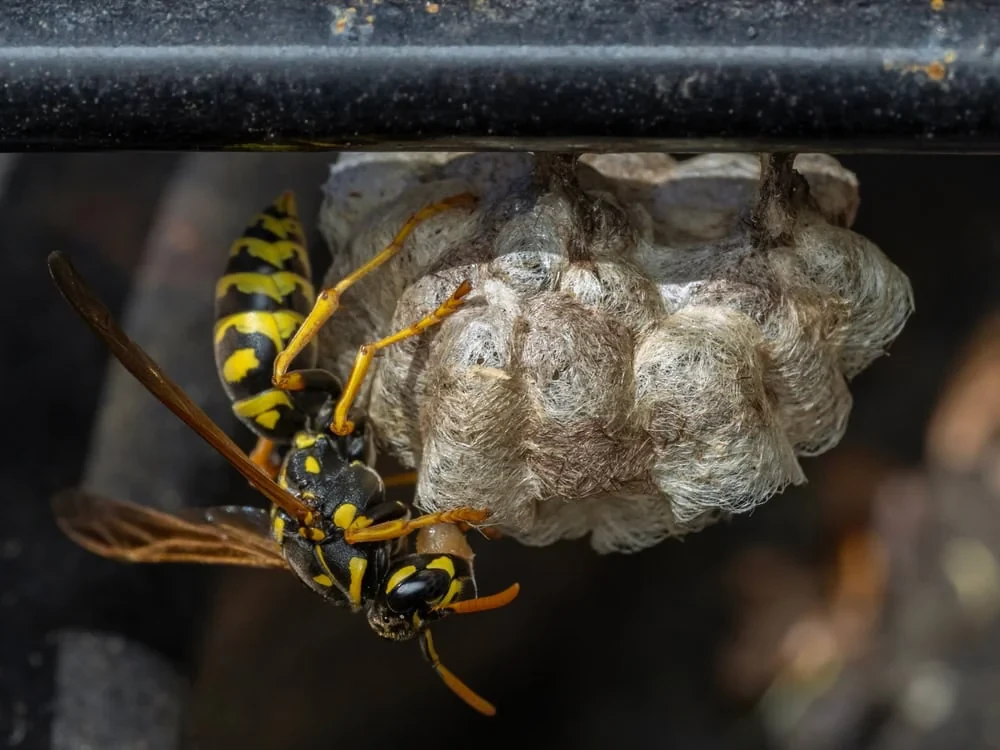
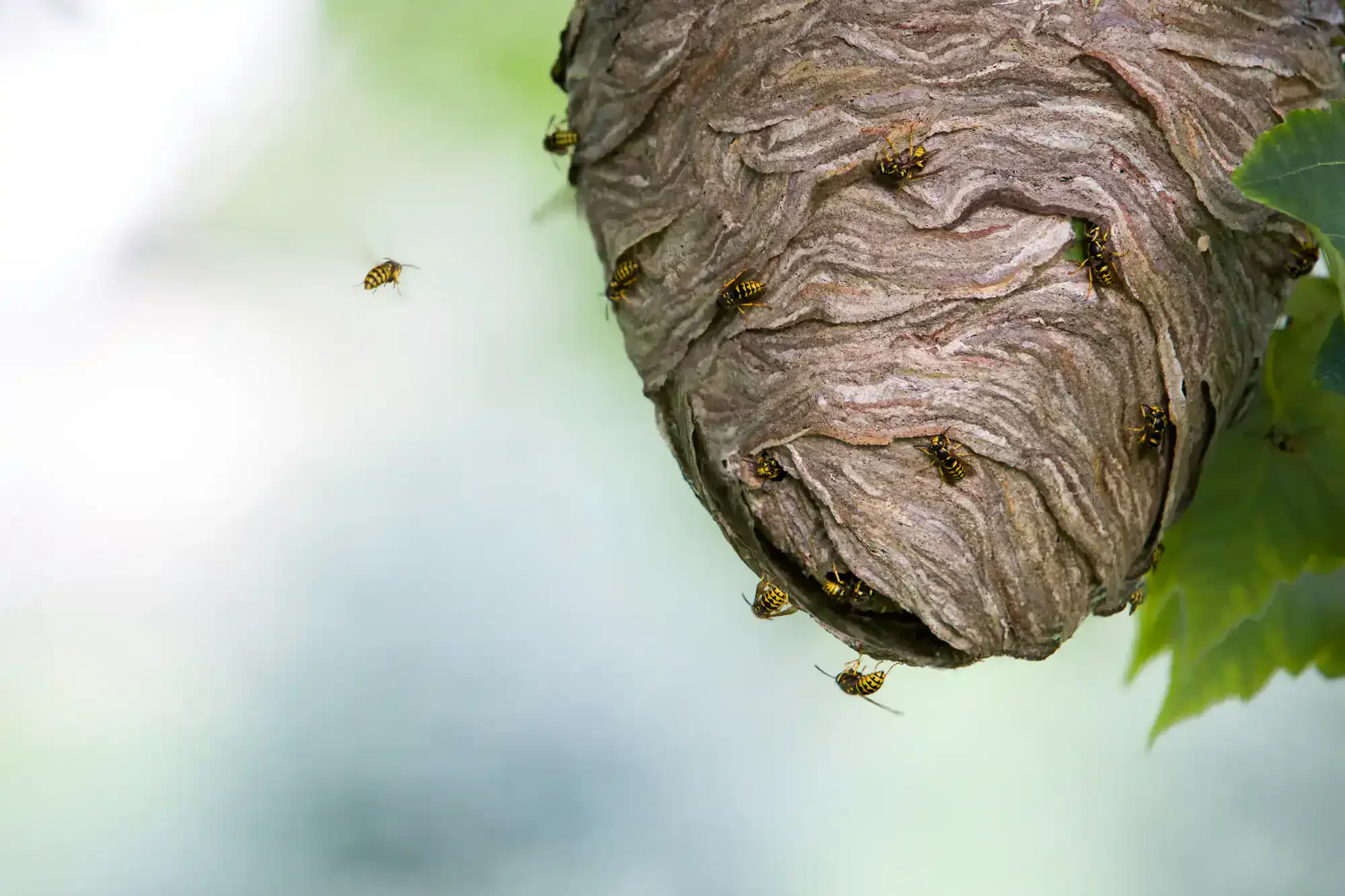
By August, a yellow jacket colony that started with a single queen in April can contain anywhere from 1,000 to 5,000 workers. The colony’s food needs shift during this time — away from protein-based insects and toward sugar, which is why yellow jackets become relentless around outdoor food, open drinks, and garbage in late summer. In Williamston, this timing lines up directly with peak outdoor activity at McCormick Park, the Dog Days of Summer festival, and backyard gatherings throughout the city.
What makes it feel worse is that late-summer colonies are under more stress — resources are tighter, the colony is larger, and workers are more defensive of the nest. If your home is near the Red Cedar River corridor, you’re also dealing with one of the most productive yellow jacket habitats in mid-Michigan. The wooded riparian areas along the river give queens ideal overwintering and early-spring nesting conditions, which means more colonies establishing near residential properties each year. Waiting until September to address the problem means dealing with a colony at its absolute largest and most aggressive.
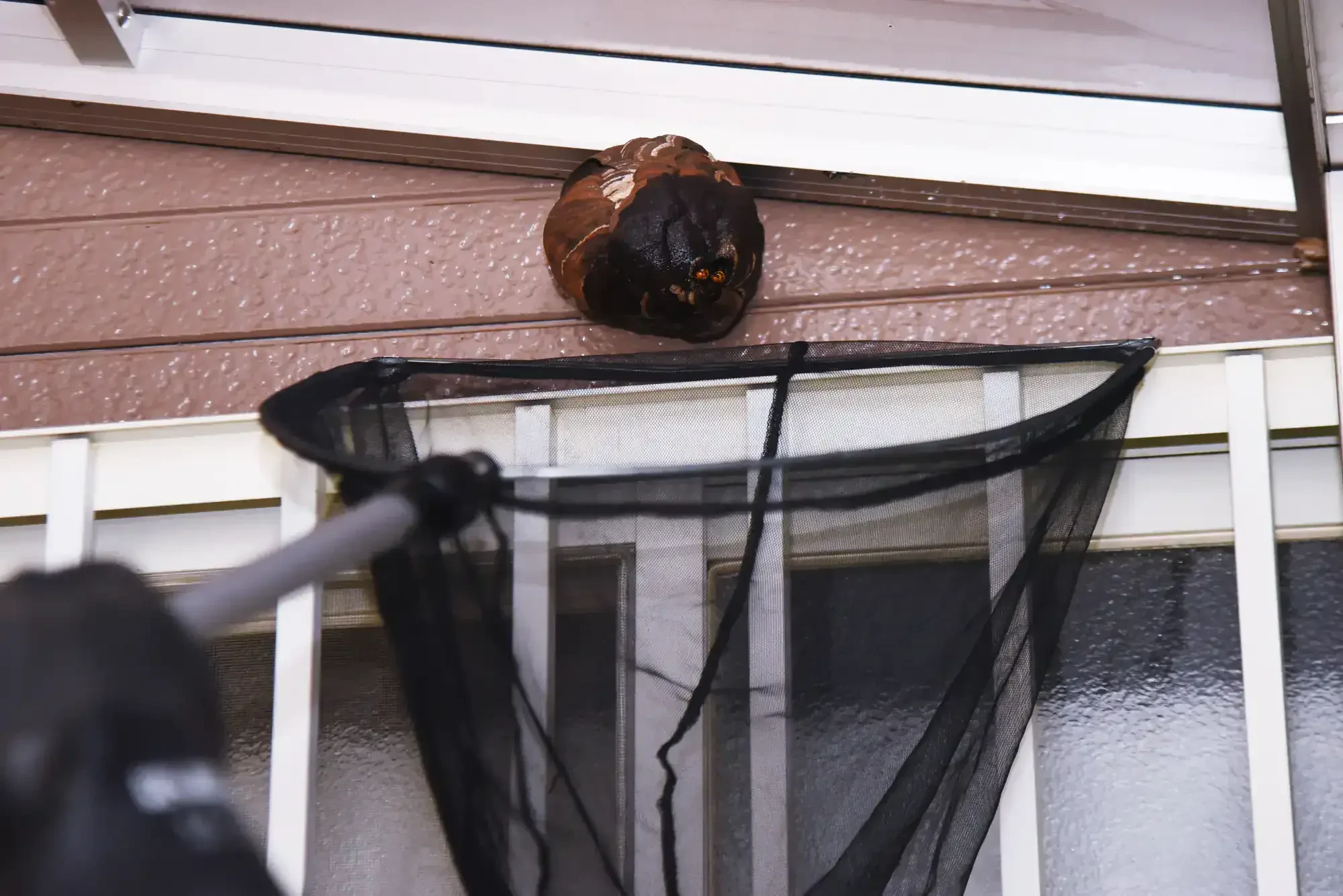
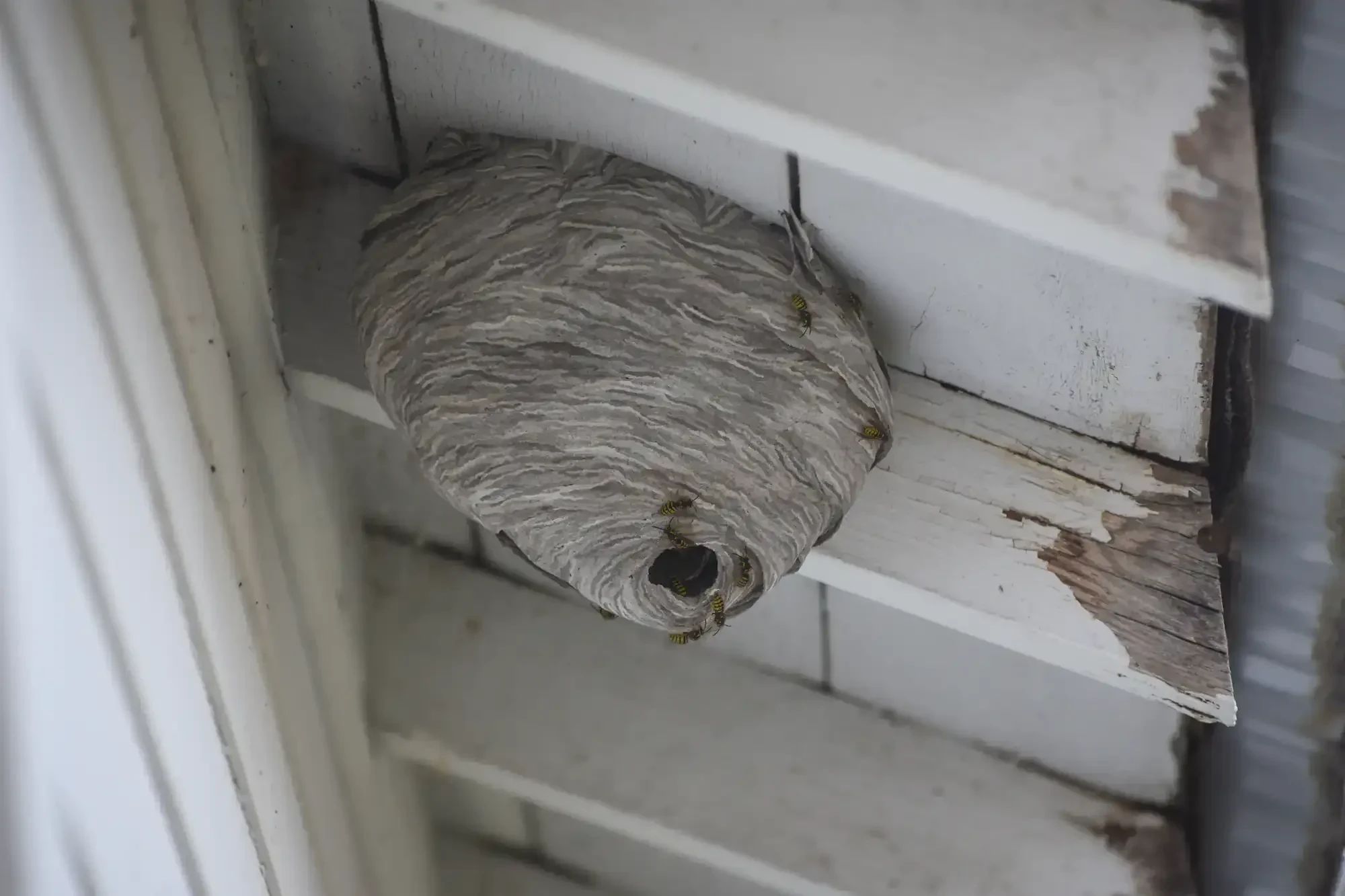
The clearest sign of a wall-void nest is consistent, repeated entry and exit through a single gap — usually a crack in siding, a gap around a pipe or wire, a loose soffit panel, or deteriorating mortar in older brick. If you’re seeing yellow jackets disappearing into the same spot on your home’s exterior multiple times throughout the day, there’s almost certainly a nest on the other side of that wall.
In Williamston’s older homes — particularly the Victorian-era properties along and near Grand River Avenue — freeze-thaw cycles over decades have widened gaps that were never there when the homes were built. These are exactly the entry points German Yellowjackets exploit. A colony inside a wall void will also sometimes make itself known from the inside: you may hear a low buzzing or crackling sound from within the wall, or in severe cases, workers begin chewing through drywall as the nest expands. If you’re noticing either of those signs, the colony has been there long enough to cause structural damage. Professional inspection is the right move.
For a small, exposed paper nest under a deck or eave — caught early in the season, before the colony grows — a store-bought aerosol can sometimes work if applied correctly and at the right time of day. But that scenario describes a small minority of yellow jacket situations. For anything in a wall void, an attic, or underground, over-the-counter sprays almost always make things worse. You can’t reach the queen or the core of the nest with a surface spray, and the aggression you trigger in the process can result in a significant number of stings.
The risk goes beyond the immediate sting. Between 0.5% and 4% of people experience anaphylaxis from stinging insect venom — a reaction that can be life-threatening without immediate medical attention. For wall-void and underground nests in Williamston — which are the most common nesting situations here given the older housing stock and the wooded Red Cedar River habitat nearby — professional treatment is the approach that actually works the first time.
Yellow jackets don’t reuse old nests — the paper structure is abandoned once the colony dies off in late fall. But the entry point that gave last year’s colony access to your wall void or attic is still there, and a new queen emerging in spring will find it just as attractive as the last one did. This is one of the most common frustrations homeowners deal with: they treat the nest, the problem goes away for the winter, and then the following August they’re dealing with the exact same situation in the exact same spot.
The way to break that cycle is to seal the entry point after treatment — not during, because you need to allow workers to exit and contact the treatment material before closing the gap. Our technician will walk you through the timing and what to look for. For Williamston’s older homes, where gaps in original siding, brick mortar, and eave structures are common, this post-treatment step is especially important. The one-year service guarantee means that if a new colony does establish through the same entry point within the guarantee period, we come back and handle it.
Yes — when it’s done correctly. Our IPM-trained approach means treatments are targeted to the nest location, not broadcast across your entire yard or home. You’ll receive clear re-entry guidance before our technician leaves: when it’s safe to let kids and pets back into the treated area, what to avoid touching in the hours after treatment, and what to expect as the colony responds to the treatment over the following 24 to 48 hours.
For families in Williamston — where the community trail along the Red Cedar River, McCormick Park, and active backyard spaces are a big part of daily life — getting that re-entry window right matters. The goal is to eliminate the threat with as little disruption to your household as possible. If there are specific concerns about a child’s known allergies or a pet’s behavior near treated areas, bring those up when you call. Our technician will factor that into the approach and make sure you have everything you need to keep your family safe through the process.
We offer discounts for seniors, veterans, and first responders — and that applies to yellow jacket pest control service in Williamston and throughout Ingham County. Williamston is a tight-knit community where a lot of longtime residents, retired professionals, and people who’ve spent careers in public service call home. Offering a discount to those groups isn’t a promotional add-on — it’s a straightforward acknowledgment that those customers have earned it.
We also offer price matching for reasonable competitor rates. If you’ve received a quote from another licensed pest control provider serving the Williamston area, bring it to the conversation. The goal is to make sure cost isn’t the reason someone puts off dealing with a yellow jacket nest that’s only going to get larger and more dangerous as the season progresses. Call to ask about current discount availability and to get a clear answer on what the service will cost for your specific situation — no vague estimates, no surprises when the job is done.
Useful Links