
Hear from Our Customers
The moment a hornet nest gets handled correctly, you notice it immediately. You stop planning your route around the garage. Your kids go back to playing in the yard. You leave for work in the morning without bracing yourself at the front door. That shift — from tense to normal — is what professional hornet removal in Burton, MI actually delivers.
Burton’s housing stock makes this more complicated than it looks from the outside. A lot of homes here were built between the 1950s and 1980s, and that means aluminum siding with gaps at the seams, aging fascia boards, and eave lines that have seen decades of Michigan winters. Hornets find those gaps fast. A local Burton homeowner described it exactly: hornets nesting under the aluminum siding at the front of the house, attacking every morning on the way out the door. That is one of the most common calls we get.
Living near For-Mar Nature Preserve on N Genesee Road adds another layer. That 383-acre preserve — with its wooded trails, three ponds, and the Kearsley Creek corridor running through it — creates ideal foraging habitat for bald-faced hornets. Colonies establish in the preserve and forage straight into residential neighborhoods along Genesee Road and the surrounding streets. If your property backs up to green space or sits near that corridor, you are more likely to deal with this problem than you might think.
We founded First Choice Pest Control on May 31, 2005, and have been serving Burton and the broader Genesee County community ever since. That is two decades of treating the specific homes, the specific housing stock, and the specific pest pressure that this area produces. We’re headquartered in Swartz Creek — about 10 miles west of Burton along the I-69 corridor — which means your technician is a genuine neighbor, not someone dispatched from a regional hub who has never driven down Belsay Road.
Owner Roger brings 26 years of hands-on pest control experience to every job. This is not a management role — he is in the field, and we operate like it. We do not rotate through part-time seasonal workers. We assign the same technician to the same customers year after year, which means whoever shows up at your home on Lapeer Road or off Genesee Road already understands the property, the history, and what needs to happen. We hold IPM training certification through MDARD, are BBB Accredited, and have earned awards with both Angie’s List and HomeAdvisor. The track record is real and verifiable.
When you call First Choice for hornet removal in Burton, the first thing that happens is a real conversation — not a script. You describe what you’re seeing: where the nest is, how long it’s been there, how aggressive the activity has gotten. That information shapes our approach before anyone sets foot on your property. Flat-rate pricing is confirmed upfront, so there are no surprises when the technician arrives.
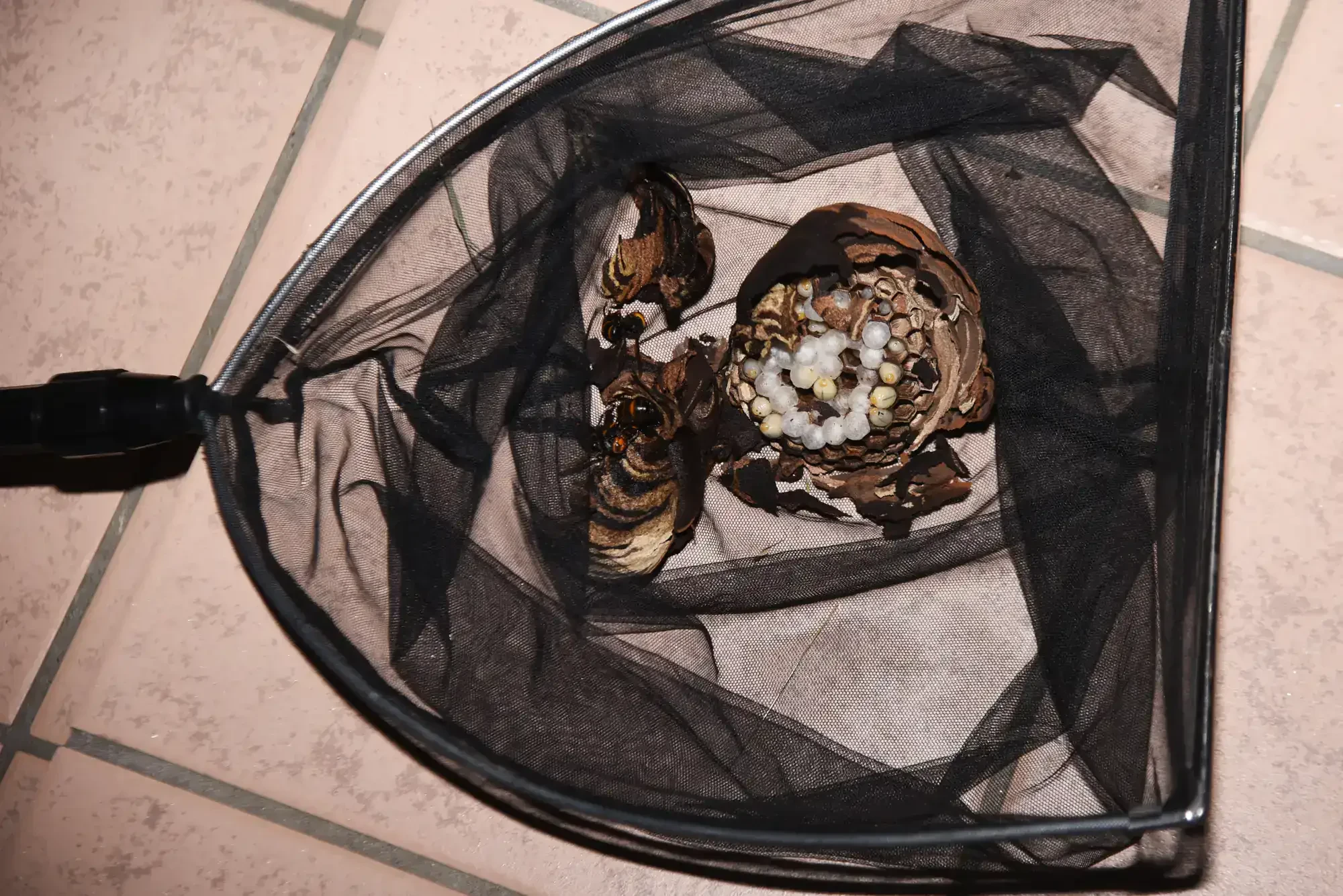
On the day of service, our technician assesses the nest location and species. In Burton, that often means dealing with bald-faced hornets nesting inside structural voids — behind aluminum siding, inside soffit gaps, or in wall cavities accessed through aging exterior seams. These situations require more than a surface spray. They call for insecticide dust applied directly into the void, which reaches the colony where it lives rather than just treating the entry point. Exposed aerial nests get treated differently than concealed ones, and our approach is always matched to what is actually there.
After treatment, you get a clear picture of what was done, what to expect over the next 24 to 48 hours as remaining workers die off, and what steps reduce the likelihood of a new colony establishing in the same location next season. Michigan’s climate means overwintered queens often return to the same structural gaps the following spring — knowing that ahead of time is part of what makes the difference between a one-time fix and a recurring problem.
Ready to get started?
We handle hornet removal for both residential and commercial properties across Burton and Genesee County. On the residential side, the most common scenarios involve bald-faced hornets in structural voids — the kind of infestation that develops quietly inside aging siding or eave gaps and becomes a serious problem by late summer when colonies can reach 100 to 400 workers. Paper wasps building open nests under deck railings and porch overhangs are also common, particularly in neighborhoods with mature tree coverage near the Kearsley Creek corridor.
For commercial customers in Burton — retail spaces, warehouses, office buildings — hornet nests near entryways and loading areas are a liability issue that needs to move fast. We serve those accounts with the same flat-rate pricing and same-technician consistency that residential customers receive. If you have a reasonable quote from another provider, we will match it.
Pricing for hornet nest removal in Genesee County typically ranges from $84 to $830 depending on nest size, location, and accessibility. We give you the number before the job starts — not after. Seniors, veterans, and first responders receive discounts, and we hold Michigan Pesticide Application Business License #250081, which means every treatment is performed by a licensed professional under Michigan law. If you are hiring for hornet control in Burton, that license is worth verifying with any company you consider.
Hornet removal costs in Genesee County range from roughly $84 on the low end to $830 for larger, more complex infestations. Where your job falls in that range depends on a few things: the size of the colony, where the nest is located, and how accessible it is. A small aerial nest on an open eave is a straightforward job. A colony that has established inside a wall void behind aluminum siding — which is one of the most common scenarios in Burton’s older housing stock — takes more time, more specialized treatment, and the right equipment to do it safely.
We give you a flat-rate, upfront price before any work begins. No estimates that balloon after the fact, no charges added on-site. If you have received a quote from another provider, we will match it if it is reasonable. For seniors, veterans, and first responders in Burton, discounts are available — just ask when you call.
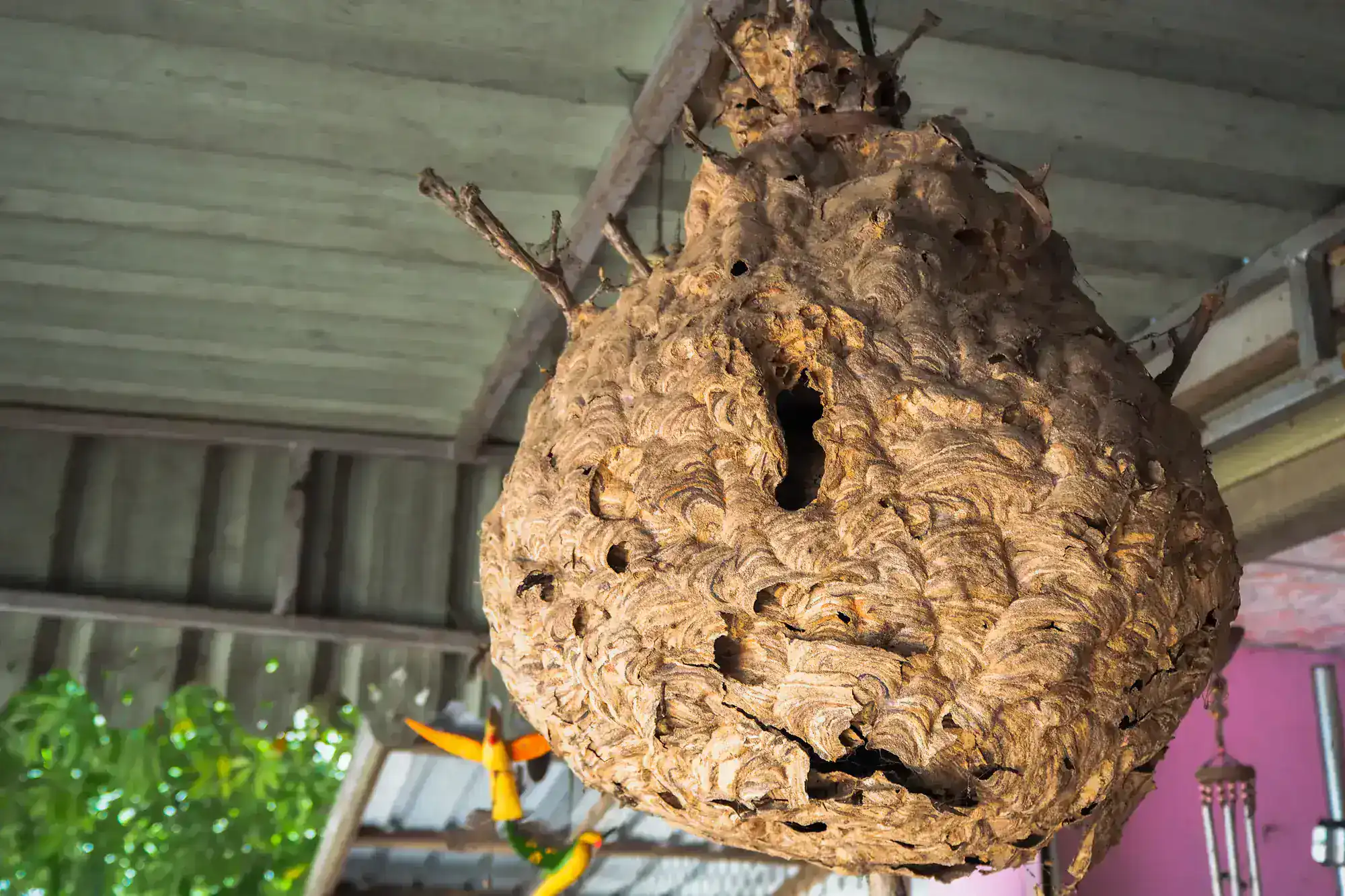
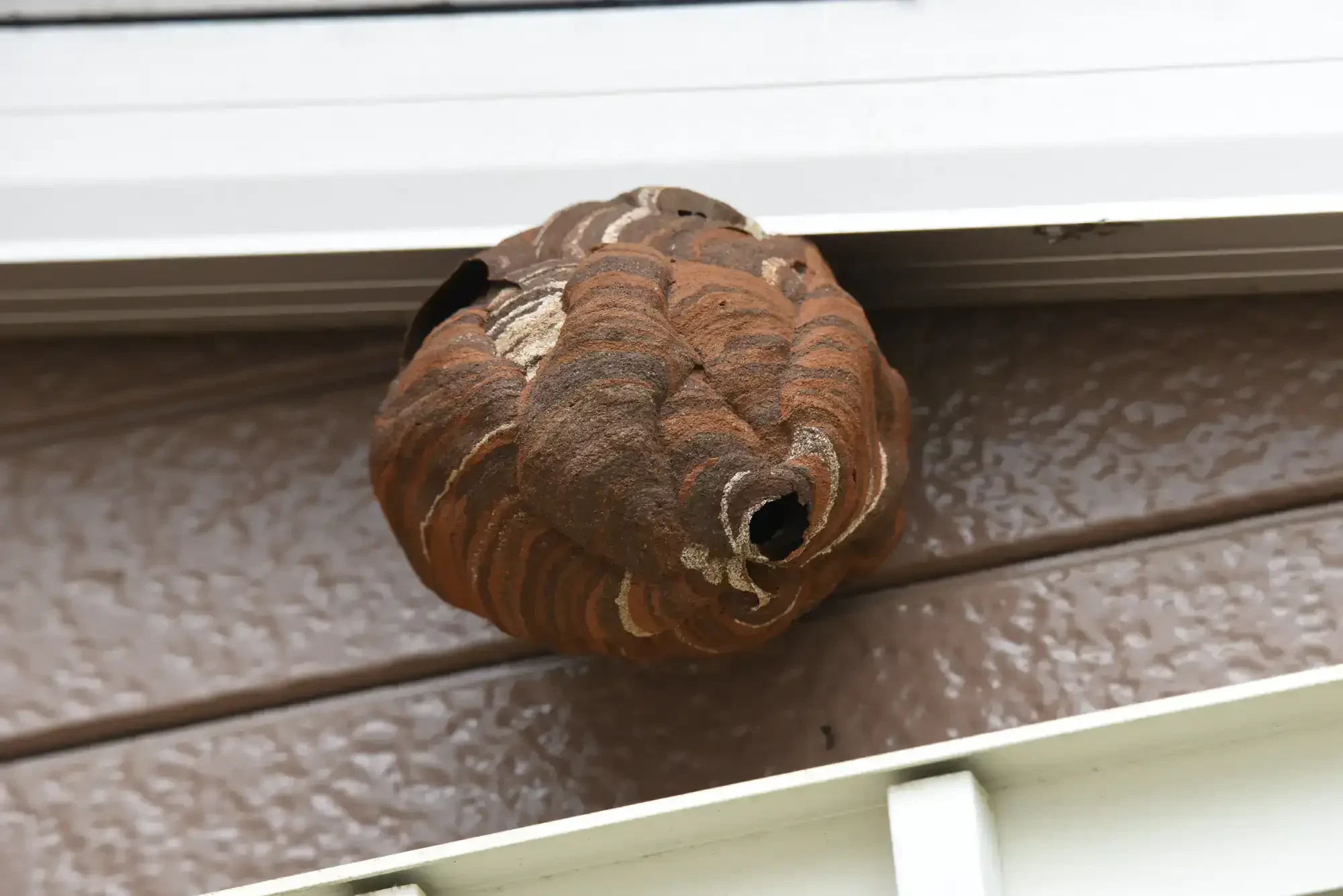
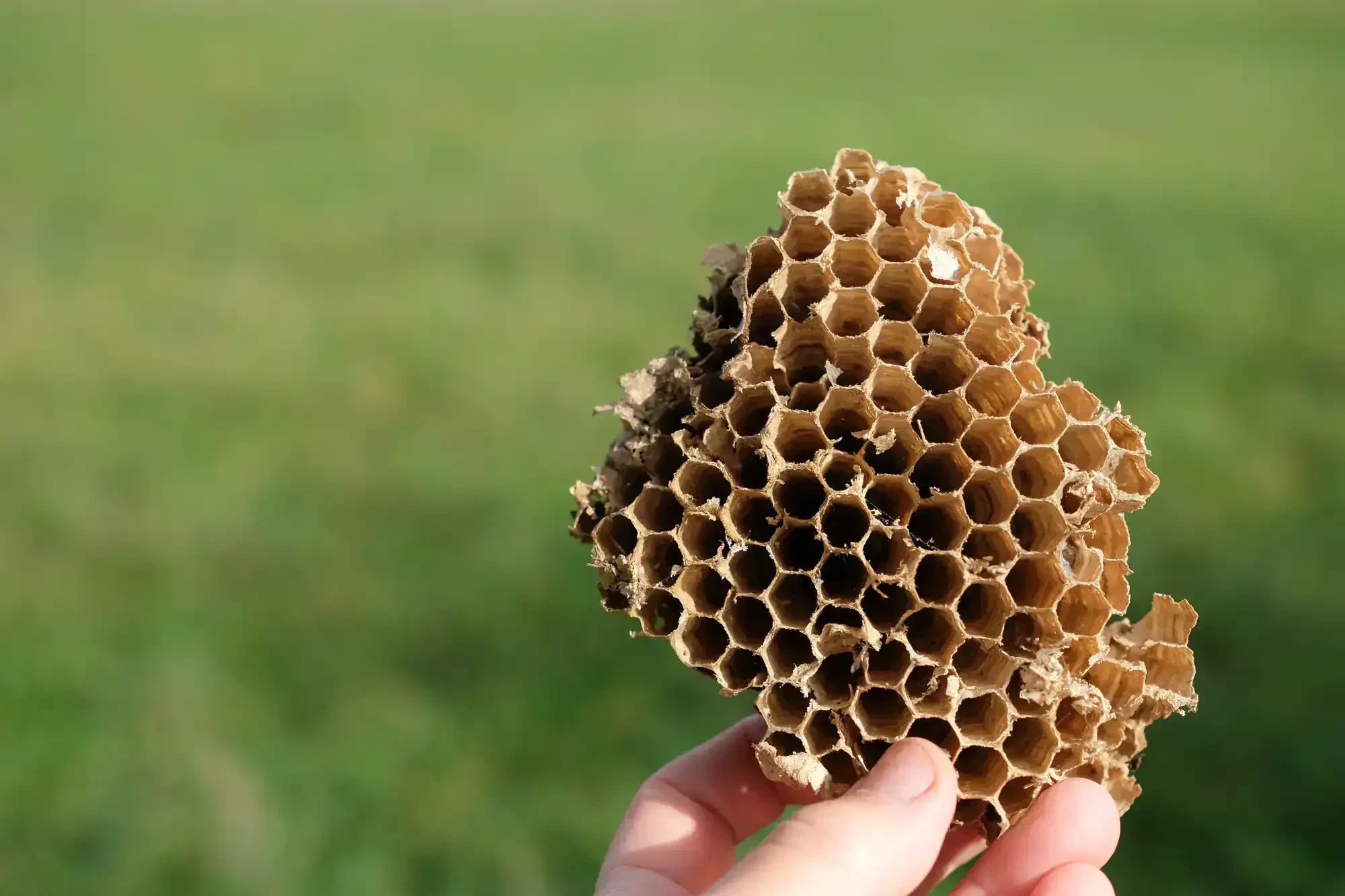
Bald-faced hornets are the most common species we handle in Burton and across Genesee County. They build enclosed, gray paper nests that look like a football or teardrop hanging from a tree branch, eave, or overhang — but they also nest inside structural voids, which is where they become a serious problem in Burton’s older homes. A mature bald-faced hornet colony in late summer can hold anywhere from 100 to 400 workers, and they are aggressive defenders. Unlike honeybees, they can sting repeatedly without losing their stinger.
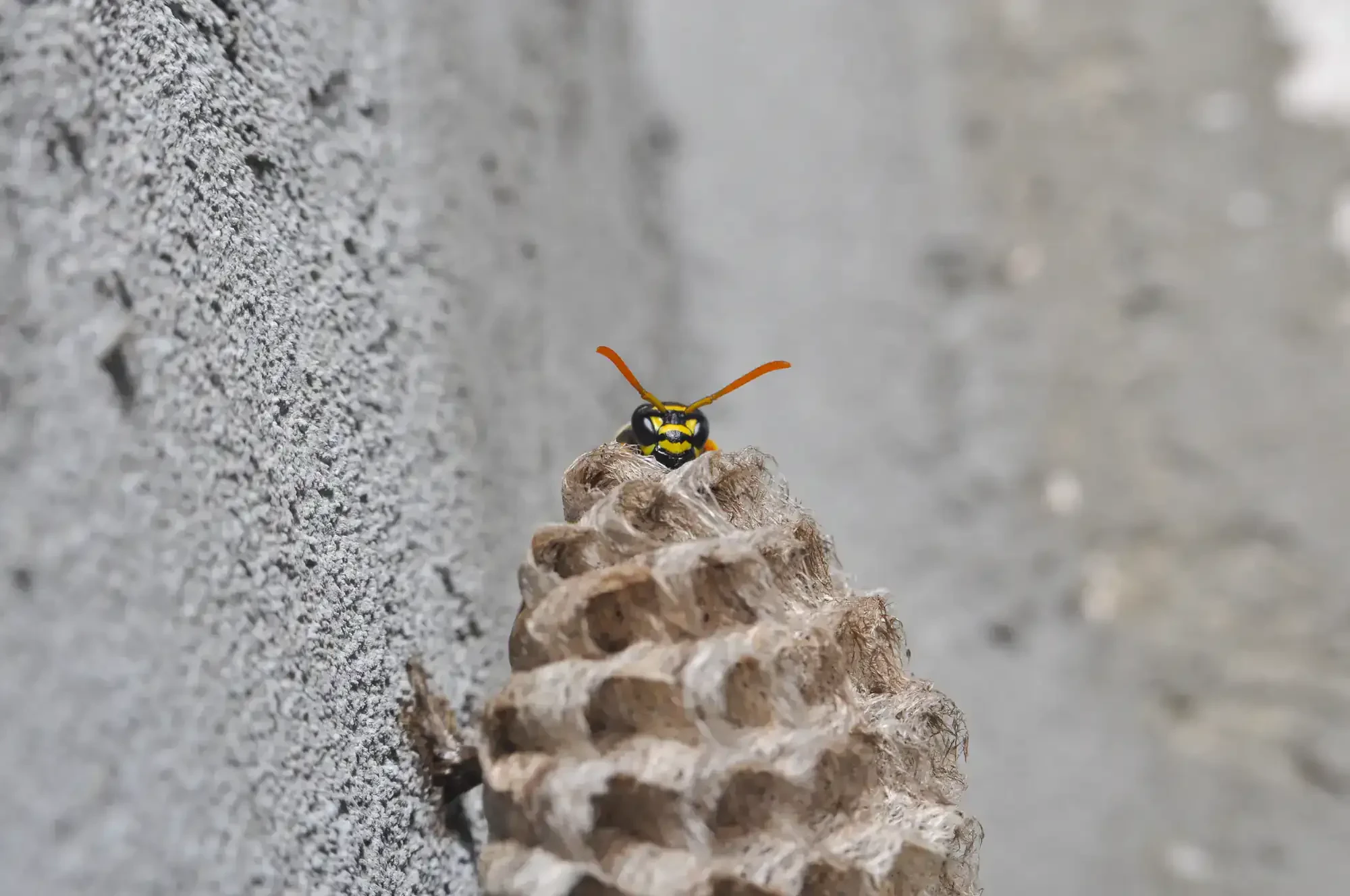
Yellow jackets are also common in this area, especially in late summer and early fall when their food sources shift and they become more aggressive around trash bins, outdoor dining areas, and play spaces. Paper wasps show up frequently under deck railings and porch overhangs. Each species behaves differently and responds to different treatment approaches, which is why correct identification before treatment matters — and why experience in this specific region makes a real difference.
The honest answer is that DIY hornet removal works sometimes — and goes badly other times. A small, newly established nest in an accessible location, treated at night when the colony is inactive, can sometimes be knocked down with a store-bought aerosol. But there are real risks that most people underestimate. Bald-faced hornets are highly aggressive when their nest is disturbed, and a single provoked colony can send dozens of workers at you simultaneously. The CDC documents an average of 62 deaths per year in the U.S. from hornet, wasp, and bee stings — most of them from unexpected mass attacks, not single stings.
The scenarios where professional removal is clearly the right call: the nest is inside a wall void or under siding, the colony is large and well-established, someone in your household has a known allergy, or previous DIY attempts have already agitated the colony. In Burton, the wall void and under-siding situations are especially common given the age of the housing stock, and those jobs require insecticide dust treatment inside the void — not something a hardware store product is designed to handle.
Spring is the easiest and least expensive window. When overwintered queens emerge in April and May and start building new nests, those nests are small — sometimes no bigger than a golf ball — and the colony has very few workers. Treatment at this stage is faster, safer, and typically costs less. The problem is that most homeowners do not notice a nest at this size. By the time it becomes visible or the activity becomes hard to ignore, it is usually mid to late summer.
August and September are peak season for hornet removal calls in Burton. Colonies are at maximum population, workers are at their most defensive, and the aggressive foraging behavior that comes with late-summer resource competition puts hornets in direct contact with people. This is the highest-risk window for DIY attempts and the point where professional treatment is most clearly worth it. One thing worth knowing: even after a colony dies off in winter, the structural gap or void that hosted it remains. Without addressing that entry point, a new queen will often re-establish in the same location the following spring.
This is one of the most common questions we hear, and the answer comes down to how hornets overwinter. The workers and males in a colony die off every fall — but fertilized queens survive by hibernating in protected locations, often within or very near the same structure where the colony was active. When spring arrives, those queens emerge and instinctively return to familiar sites to begin building. If the structural gap, void, or eave line that hosted the original colony is still accessible, you are very likely to see activity in the same spot again.
In Burton, where a lot of homes have aluminum siding with aging seams, gaps around garage door frames, and weathered fascia boards that have developed cracks over decades of Michigan winters, these re-entry points are common and easy to miss. Treating the active colony is step one. Identifying and sealing the access point — or at minimum knowing where it is — is what breaks the cycle. A technician who has been to your property before and knows its history is in a much better position to catch that detail than someone seeing the house for the first time.
Yes — we serve Burton and the surrounding Genesee County area. We’re based in Swartz Creek, roughly 10 to 12 miles west of Burton along the I-69 corridor, so response times are genuinely local — not routed through a regional dispatch center an hour away. When you call, you’re reaching a Genesee County company that has been operating in this area since 2005 and knows the roads, the neighborhoods, and the housing stock here.
As for timing, hornet removal is treated as the urgent situation it is. If hornets are blocking your entry, nesting near a play area, or creating a safety concern for your family, our goal is to get a technician out as quickly as the schedule allows. We assign the same technician to the same customers over time, which means if you have used us before, the person who shows up already has context on your property. For Burton residents near For-Mar Nature Preserve, along the Kearsley Creek corridor, or in neighborhoods with older homes on Belsay Road or Genesee Road, that kind of continuity matters — because the conditions that attract hornets to your property tend to be consistent year over year.
Useful Links