
Hear from Our Customers
When a hornet colony sets up near your home, it doesn’t stay small for long. By late August, what started as a golf-ball-sized spring nest can hold 400 or more aggressive workers — and they’re not subtle about defending it. The longer you wait, the more dangerous and expensive the removal becomes.
Davison’s older Colonial-era homes, many built in the 1960s, are especially prone to hornet problems. Aging soffits, deteriorating fascia boards, and small gaps in exterior siding create exactly the kind of sheltered entry points that bald-faced hornets and European hornets look for when they’re building inside wall voids. A can of hardware store spray won’t reach a nest tucked inside your walls — and attempting it usually makes the colony more aggressive before it makes things better.
For families who moved to Davison specifically for the school district, the stakes feel even higher. Kids walking to the bus stop, playing in the backyard, or heading to Abernathy Park shouldn’t have to navigate a hornet flight path. Getting the nest handled professionally means your outdoor space is yours again — without the guesswork, the risk, or a second trip back to fix what didn’t work the first time.
We founded First Choice Pest Control on May 31, 2005, which means this year marks 20 consecutive years serving Genesee County — including Davison and the surrounding township. We’re based out of Swartz Creek, just down the road, so when you call about a hornet nest, you’re not getting routed through a regional dispatch center three counties away. You’re getting a local company that already knows Davison.
Roger, who owns and leads First Choice, brings 26 years of hands-on pest control experience to every job. He’s treated hornet nests in the eaves of 1960s Colonials off M-15, in the wall voids of newer craftsman builds throughout Davison Township, and in the outbuildings of rural properties on the township’s agricultural edges. That’s not a background you replicate with a summer hire.
We hold Michigan Pesticide Application Business License #250081, carry IPM training certification through MDARD, and have earned recognition from both Angie’s List and HomeAdvisor based on verified customer outcomes — not paid placement. Our 4.7-star Google rating across 67 reviews backs it up.
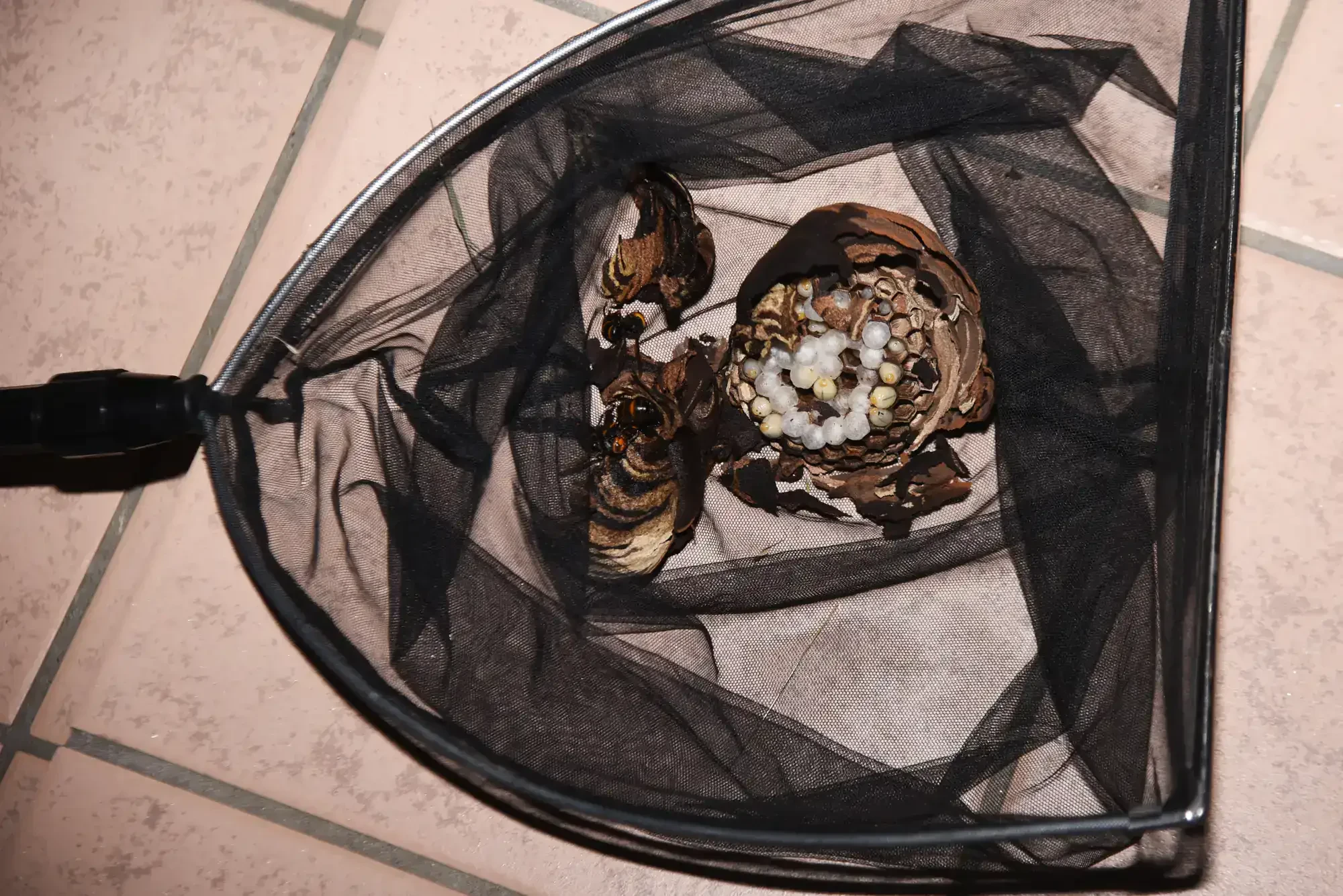
The process starts with proper identification — not an assumption. Bald-faced hornets, European hornets, and paper wasps each behave differently, build differently, and respond to treatment differently. Treating them all the same way is how jobs go wrong. Before anything is applied, we confirm the species and assess the nest location, including whether it’s exposed on an eave or tucked inside a wall void — a distinction that changes the entire treatment approach.
For exposed nests, treatment is typically direct and fast. For nests inside wall voids — which are common in Davison’s older housing stock given the age of the soffits and exterior woodwork — we apply a professional dust treatment into the void to reach the colony without tearing open your walls. This is not something a store-bought aerosol can accomplish, and attempting it without the right product usually agitates the colony before it eliminates it.
After treatment, you’ll know what was done, why, and what to watch for. If the colony was active inside a wall, there’s a follow-up window where dying workers may push through before the nest is fully inactive — that’s normal, and we walk you through it so you’re not caught off guard. Michigan’s pest season peaks in August and September, so timing matters. The earlier in the season a nest is treated, the smaller and less aggressive the colony — and the lower the cost.
Ready to get started?
Every hornet removal job through First Choice starts with a real assessment of your specific property — not a one-size-fits-all approach. Davison homes vary significantly: a 1960s Colonial with aging eaves near Kearsley Creek has different vulnerabilities than a newer ranch-style build on the township’s eastern edge or a rural property with an old outbuilding off N. Gale Road. We match the treatment to what’s actually there.
We’re IPM-certified through MDARD, which matters in a community like Davison that operates its own municipal well water system. IPM means we select the most targeted, effective method for each situation — not a blanket chemical application across your entire yard. Treatments are applied where they need to be, in the concentrations that get the job done, with the safety of your family, your pets, and your groundwater in mind.
Our pricing is flat-rate and upfront — you know the cost before anything starts. We also offer price matching for reasonable competitor quotes, so you’re not forced to choose between the most experienced local company and a fair price. Discounts are available for seniors, veterans, and first responders — a real acknowledgment of Davison’s strong veteran population and the people who’ve served it. No hidden charges, no contracts, no surprises when the job is done.
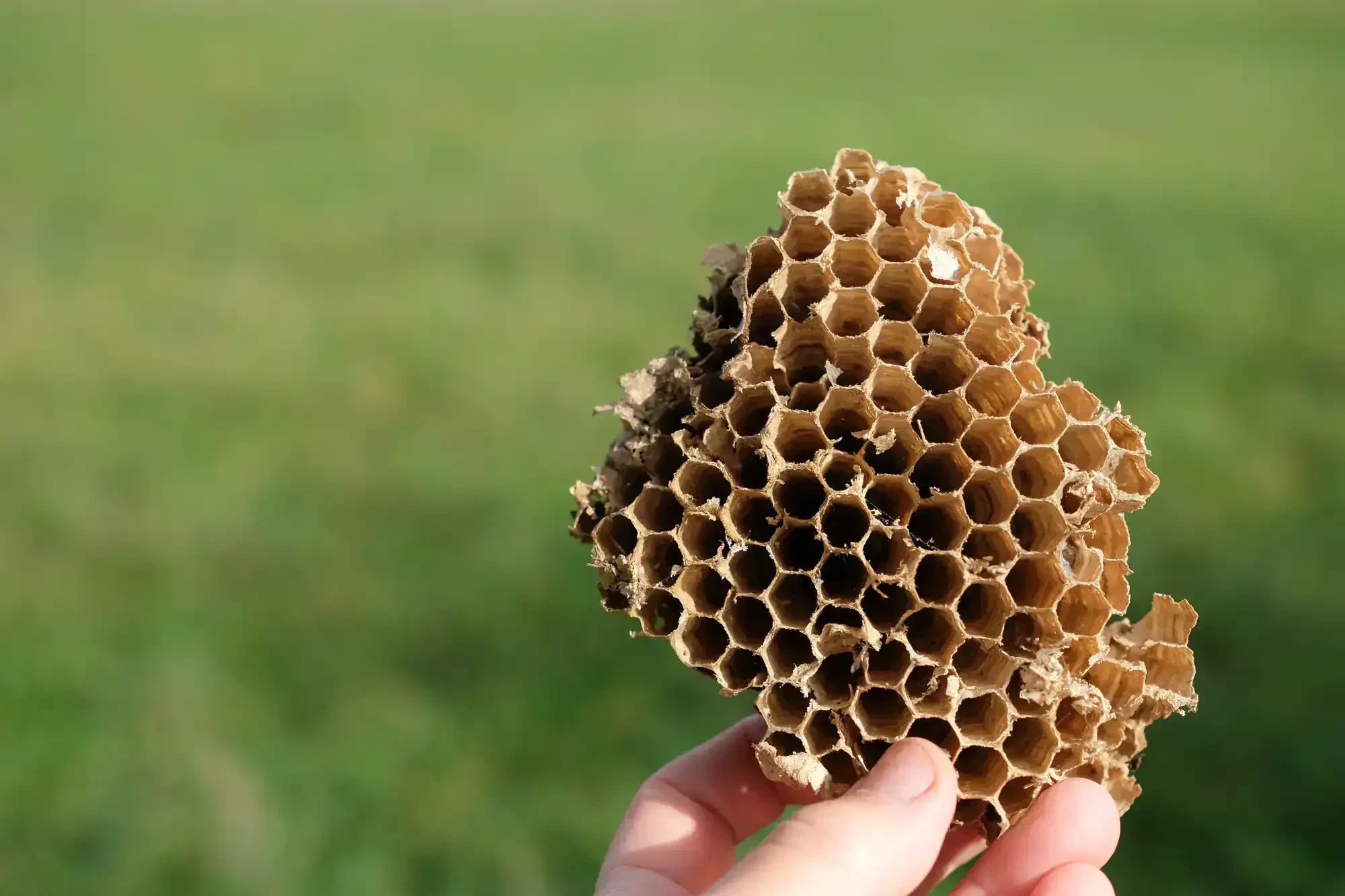
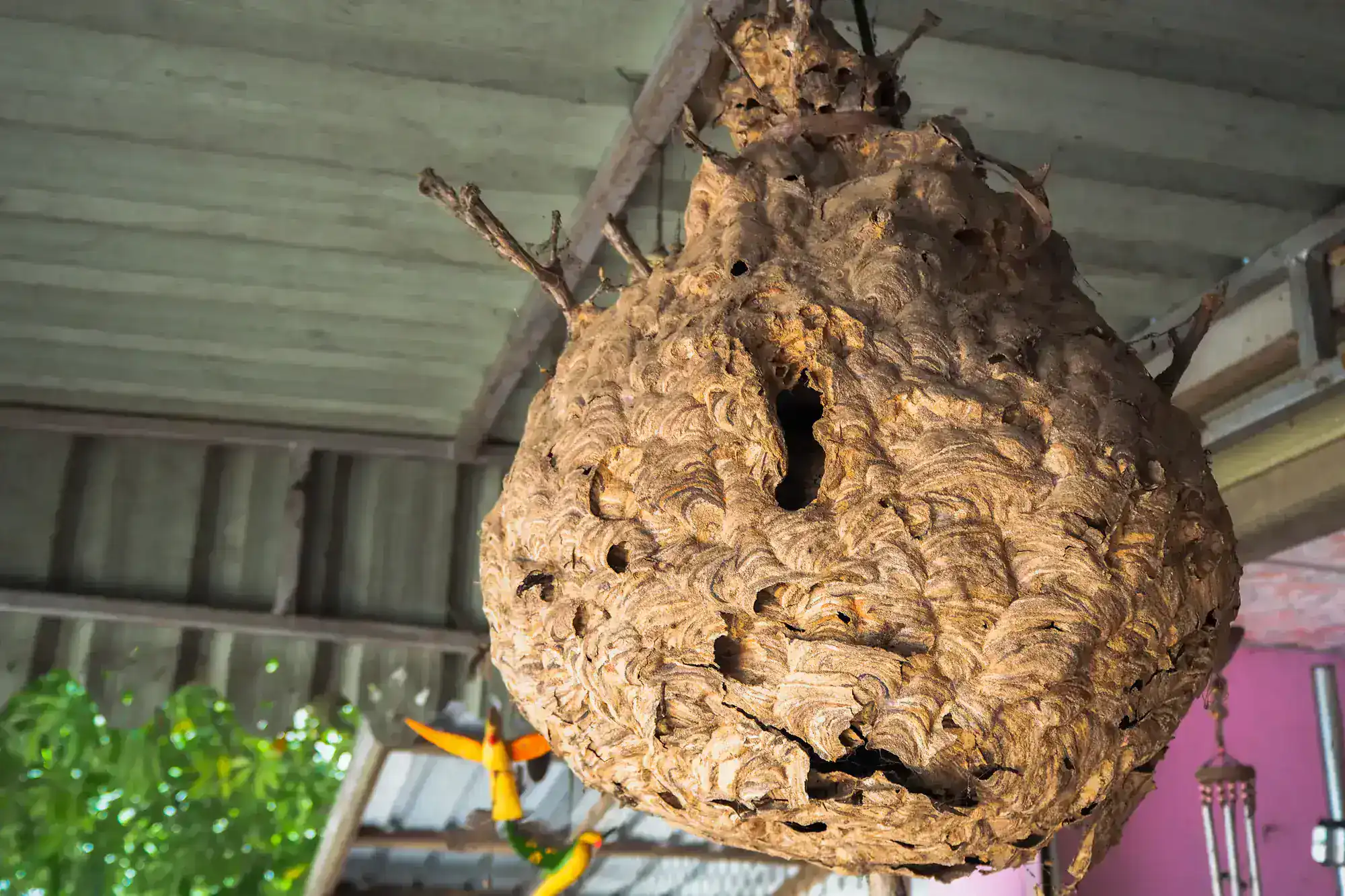
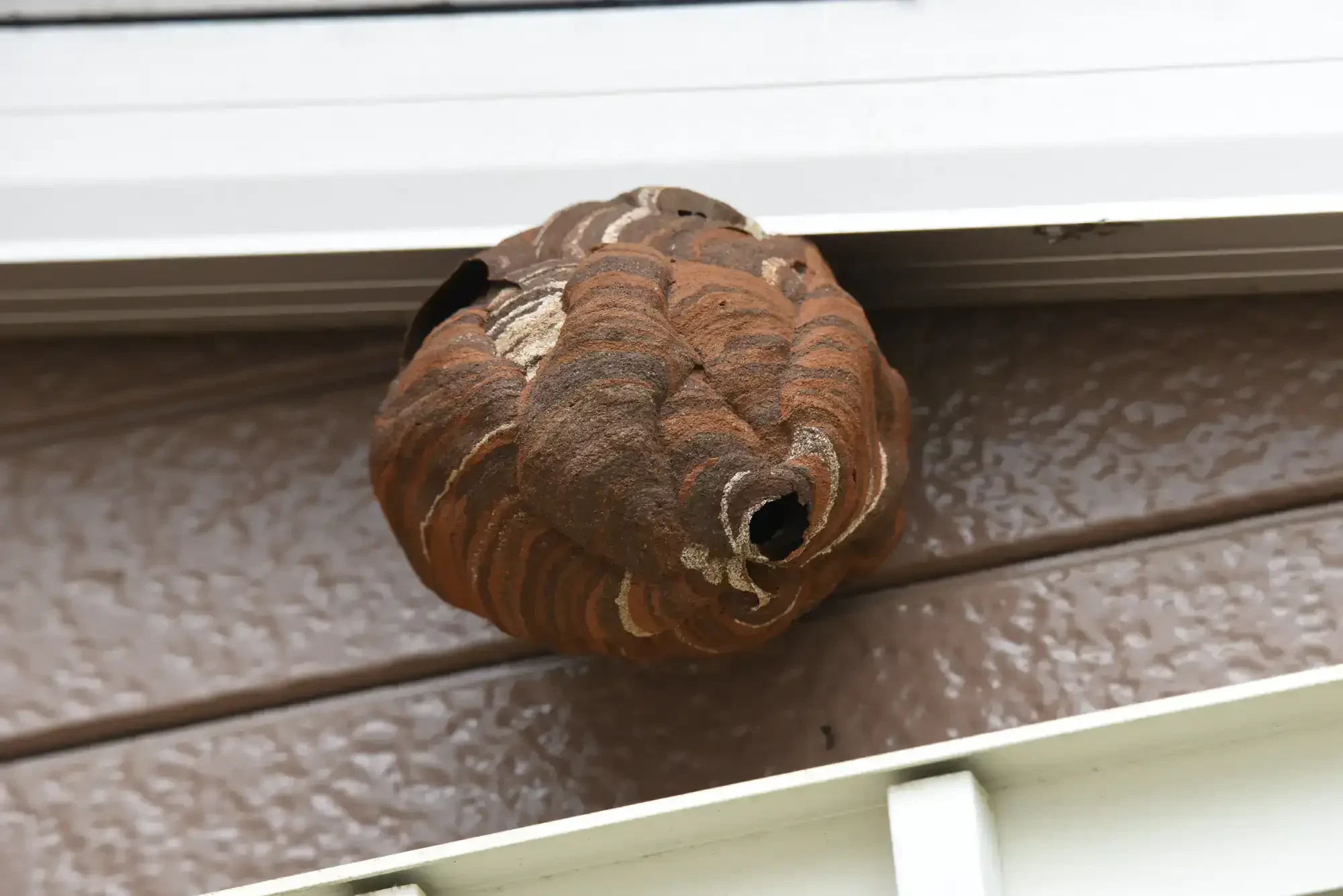
The distinction matters more than most people realize, because the two insects behave very differently and require different treatment approaches. Bald-faced hornets — the most common aggressive species in Davison — build large, enclosed gray paper nests that look almost like a football hanging from a tree branch, eave, or shrub. They’re black and white, not yellow, and they’re significantly more aggressive than the average yellow jacket or paper wasp when their nest is disturbed. European hornets are larger, brownish, and tend to nest in wall voids, hollow trees, or attic spaces — which makes them harder to spot until the colony is well established.
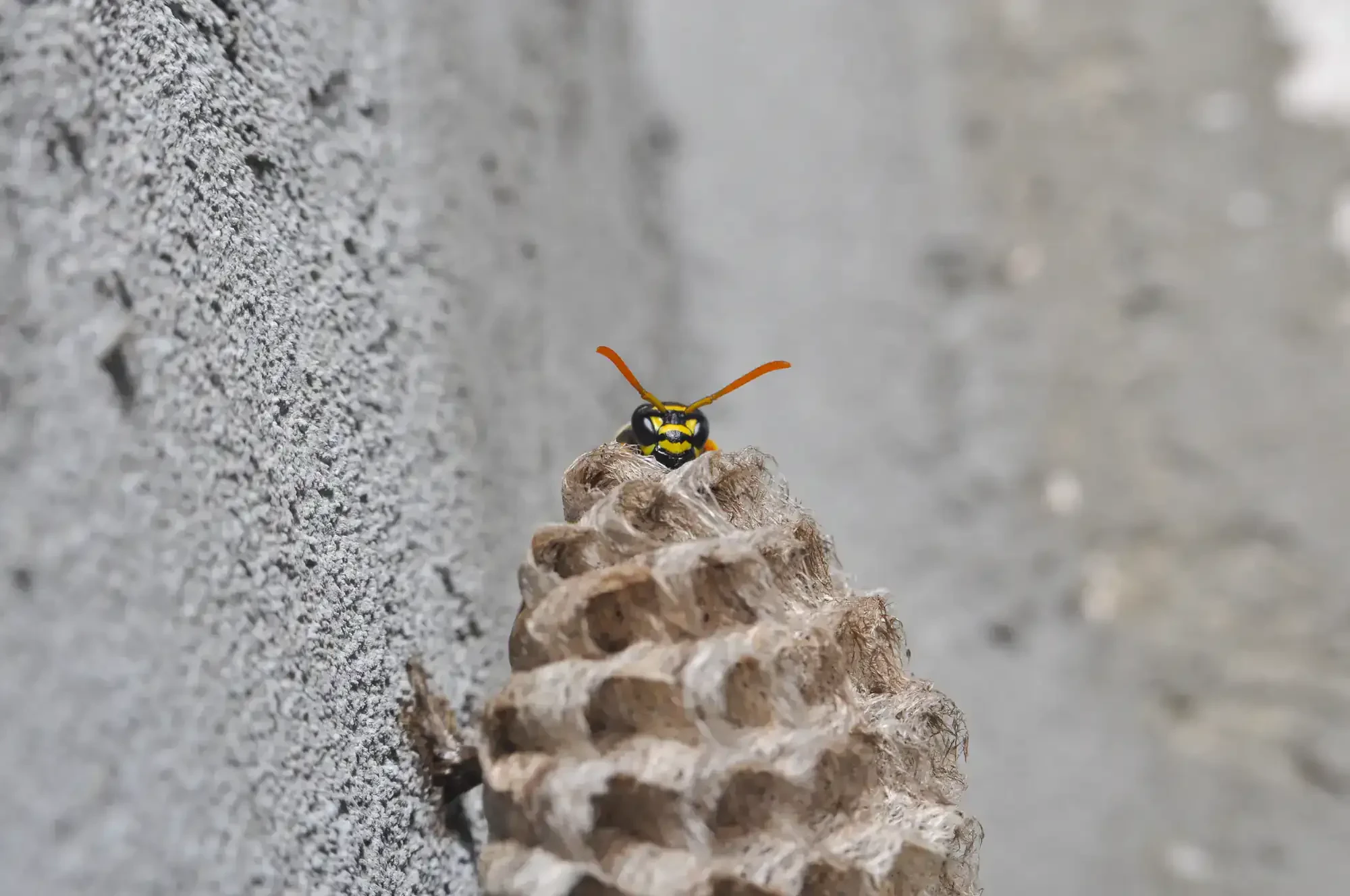
Paper wasps build the open, umbrella-shaped comb nests you’ll often see under eaves or on porch ceilings. They’re less aggressive than hornets but will sting if threatened. If you’re seeing a lot of stinging insect activity around your Davison home and you’re not sure what you’re dealing with, don’t poke at it to find out. We can identify the species, locate the nest, and recommend the right treatment — which is a very different conversation depending on what’s actually there.
The honest answer depends on the nest size, location, and species — but the window where DIY is even remotely reasonable is small. Early in the season, a queen that’s just started building in a visible, accessible spot might be manageable with a store-bought aerosol if you’re careful, treat at night, and wear proper protection. That window closes fast. By mid-summer, a bald-faced hornet colony in Davison can contain several hundred workers, and they respond to perceived threats as a group — not one at a time.
Wall void nests are never a good DIY candidate. Spraying into a gap in your siding with an aerosol can will agitate the colony without eliminating it, and it can drive workers deeper into the wall or into your living space. Professional dust treatments are specifically designed to penetrate the void and reach the colony where it lives. If you’ve already attempted a treatment and it didn’t work, that’s one of the most common calls we receive — and it’s almost always more complicated to resolve the second time around. Call us before the situation gets worse.
Late summer is when things get serious. In Michigan, hornet colonies grow steadily from spring through summer, hitting their peak population in August and September. That’s when a bald-faced hornet colony that was barely noticeable in June becomes a 300-to-400-worker operation that treats your entire yard as its territory. The colony also becomes more defensive as the season winds down — workers are protecting the queen’s ability to produce next year’s queens, and they’re not subtle about it.
The timing is especially relevant in Davison because the community’s outdoor culture — the Black Creek Nature Trail, Lake Callis Recreation Complex, Abernathy Park — means residents are outside and active during exactly this peak aggression window. Families using their decks, kids playing in backyards, and homeowners doing yard work are all at elevated risk in August and September. The practical takeaway is this: if you spot a nest in spring or early summer, treating it then costs less and carries significantly less risk than waiting until August when the colony is at full strength and maximum aggression.
They can, and it’s worth understanding why. Hornets don’t reuse old nests — the colony dies off each fall with the first hard frosts, and the paper nest is abandoned. But the location where they built is still attractive to next year’s queens. Fertilized queens overwinter in sheltered spots — often inside the walls, attics, or exterior woodwork of Davison’s older homes — and emerge in spring to scout for a new nest site. If the conditions that made your eave or wall void appealing last year haven’t changed, there’s a real chance a new queen finds it again.
The way to reduce recurrence is to address the entry points after the colony is eliminated. Sealing gaps in soffits, repairing deteriorating fascia, and caulking cracks in exterior siding removes the invitation for next season. This is particularly relevant for Davison’s 1960s-era Colonial homes, where aging exterior materials create more potential entry points than newer construction. We walk you through what was found during the removal so you know exactly what to address — that’s a more useful conversation than a generic “check your eaves” recommendation.
Cost depends on the nest size, location, and how far into the season you’re calling. An early-season nest that’s small and accessible is straightforward to treat and generally falls on the lower end of the pricing range. A large, late-summer colony inside a wall void of a Davison home — where professional dust treatment is required and the colony is at peak size — is a more involved job and priced accordingly. That’s not a bait-and-switch; it’s just the reality of what the work requires.
What you won’t get from us is a vague estimate that changes when the technician shows up. Our pricing is flat-rate and upfront — you know the number before anything starts. We also match reasonable competitor quotes, so if you’ve already gotten a price from another hornet exterminator serving Davison, bring it. The goal isn’t to be the cheapest option on the list; it’s to be the one that actually solves the problem without a return visit. Discounts are available for seniors, veterans, and first responders — ask when you call if you qualify.
Yes — and it’s not a token gesture. Davison has a notably large Vietnam-era veteran population, and we’ve offered discounts for veterans, seniors, and first responders since the beginning. These are real reductions off the service cost, not a percentage off an inflated starting price. If you or someone in your household qualifies, mention it when you call to schedule your hornet removal in Davison and it gets applied to your quote.
The discount reflects something straightforward: this community has a lot of people who’ve served, and they deserve quality pest control at a fair price. We’ve been operating in Genesee County for 20 years, which means we’ve built real relationships with Davison-area homeowners — including veterans who’ve been customers for years and refer their neighbors. If you’re eligible, the discount is there. If you’re not sure whether you qualify, ask — the answer takes about ten seconds and it’s worth knowing before you book.
Useful Links