
Hear from Our Customers
Most Hunters Creek homeowners don’t find a hornet nest when it’s small. They find it in August — when the colony is at full strength, the workers are aggressive, and the nest has been hanging in that oak tree for two months. By then, the outdoor space you moved here for feels off-limits. That’s a real problem when you’ve got a deck, a creek path, or a few acres you actually want to use.
What changes after professional hornet removal isn’t just the absence of a nest. It’s being able to walk your property line again, let the kids outside without scanning the tree line, and stop wondering what’s buzzing inside that soffit. The older housing stock throughout Hunters Creek — many homes built between the 1940s and 1990s — has more entry points than newer construction. Wall voids, gaps in fascia, loose soffits — hornets find them before you do. Our trained technicians find them too, and treat them the right way.
The wooded, creek-side character of Hunters Creek is part of why you chose it. It’s also why hornet pressure here is higher than in a newer subdivision. Riparian corridors along the Hunters Creek waterway create dense vegetation that stinging insects use as nesting habitat and foraging range. Getting ahead of that — with targeted, IPM-based treatment instead of a blanket spray — means protecting your property without disrupting the environment you actually want to live in.
First Choice Pest Control has been serving southeast Michigan since May 31, 2005 — that’s twenty years of hornet removal, wasp control, and stinging insect management in communities across Lapeer County, including Hunters Creek. This isn’t a call center operation. Roger, our owner, has 26 years of hands-on pest control experience and is still actively involved in the work. When something needs to get done right, he’s not delegating it to whoever’s available that week.
We hold Michigan Pesticide Application Business License #250081, issued by MDARD — a verifiable credential you can look up. We’re also IPM-certified, which means treatments are targeted and specific, not a spray-everything approach. That matters on the larger, wooded properties along Hunters Creek Road and Plum Creek Road, where the environment around your home is part of why you’re there.
We serve residential and commercial customers, offer flat-rate upfront pricing, and match reasonable competitor quotes. Seniors, veterans, and first responders receive discounts — not as a footnote, but as a genuine reflection of who we are and who we serve in communities like Hunters Creek.
It starts with a call. You describe what you’re seeing — where the nest is, how long it’s been there, whether you’ve noticed activity near the house or deeper in the tree line. That conversation matters because hornet removal on a wooded, creek-side property in Lapeer County isn’t the same job every time. A nest under a roofline is a different situation than one hanging twenty feet up in a tree, and a yellow jacket colony inside a wall void requires a completely different treatment than an exposed paper nest.
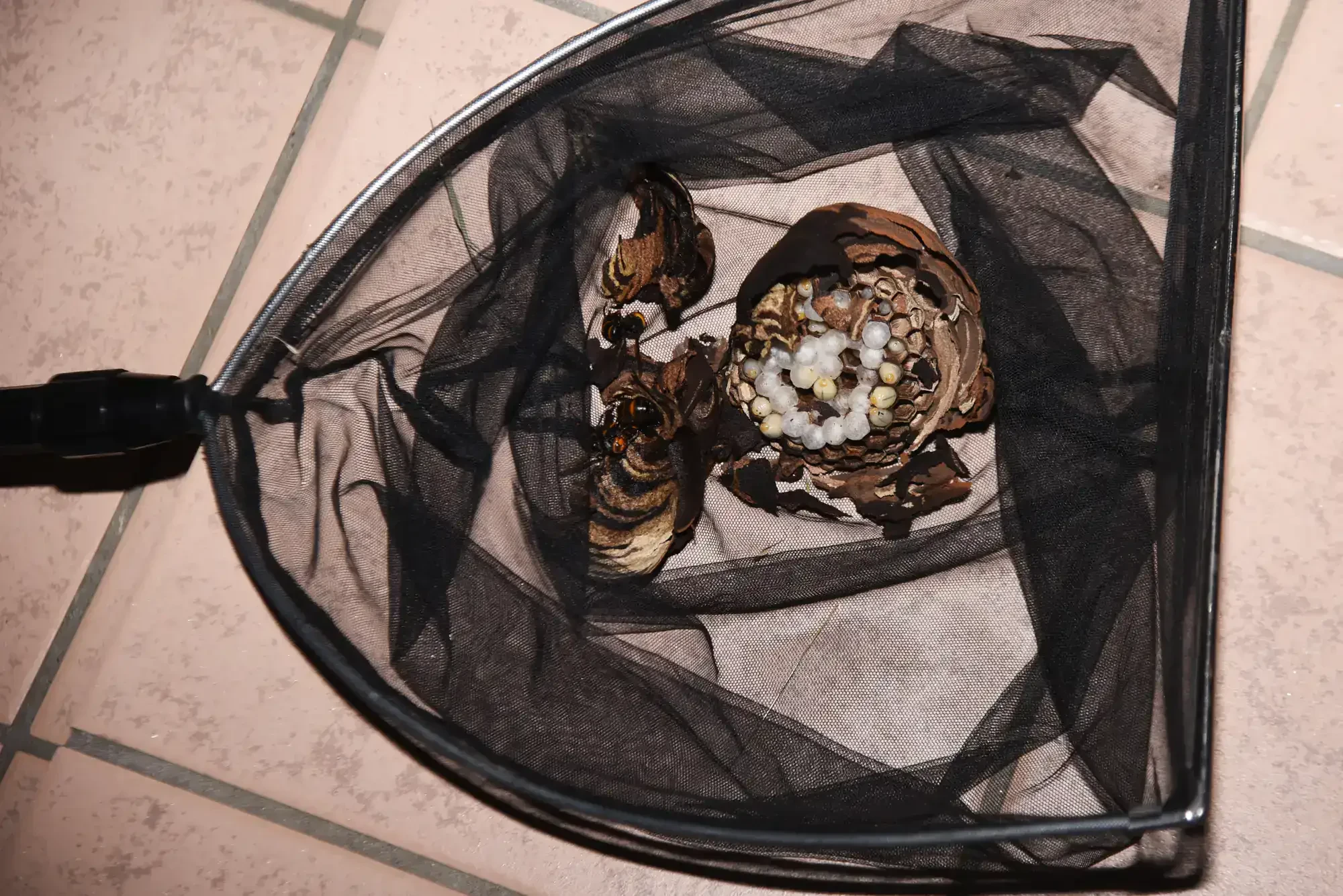
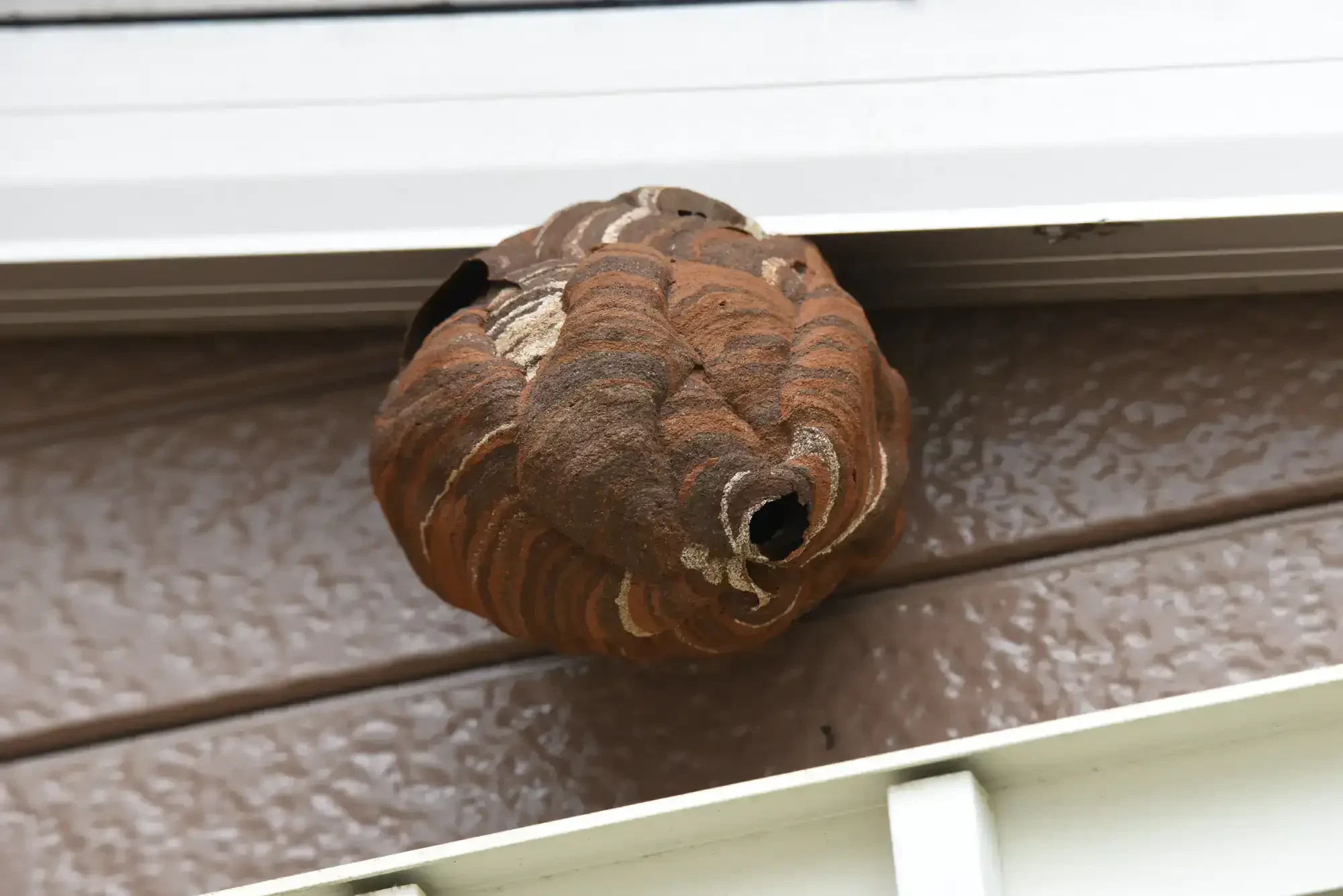
When our technician arrives, they assess the full picture — not just the nest you called about. On properties like those along Hunters Creek Road, that means checking eaves, soffits, outbuildings, and wooded perimeters where secondary nests can establish without being visible from the yard. The treatment itself is targeted to the species and location. Exposed aerial nests get a direct treatment at dusk when workers are inside. Wall void infestations get a dust application that reaches the colony without requiring you to open up a wall.
After the job, you’ll know what was found, what was treated, and what to watch for going forward. Michigan’s hornet season runs from spring through late fall, and a colony that’s removed in August can have a new queen overwintering on your property by October — ready to start again next spring in the same spot. We walk you through what prevention actually looks like so you’re not starting this conversation over again next summer.
Ready to get started?
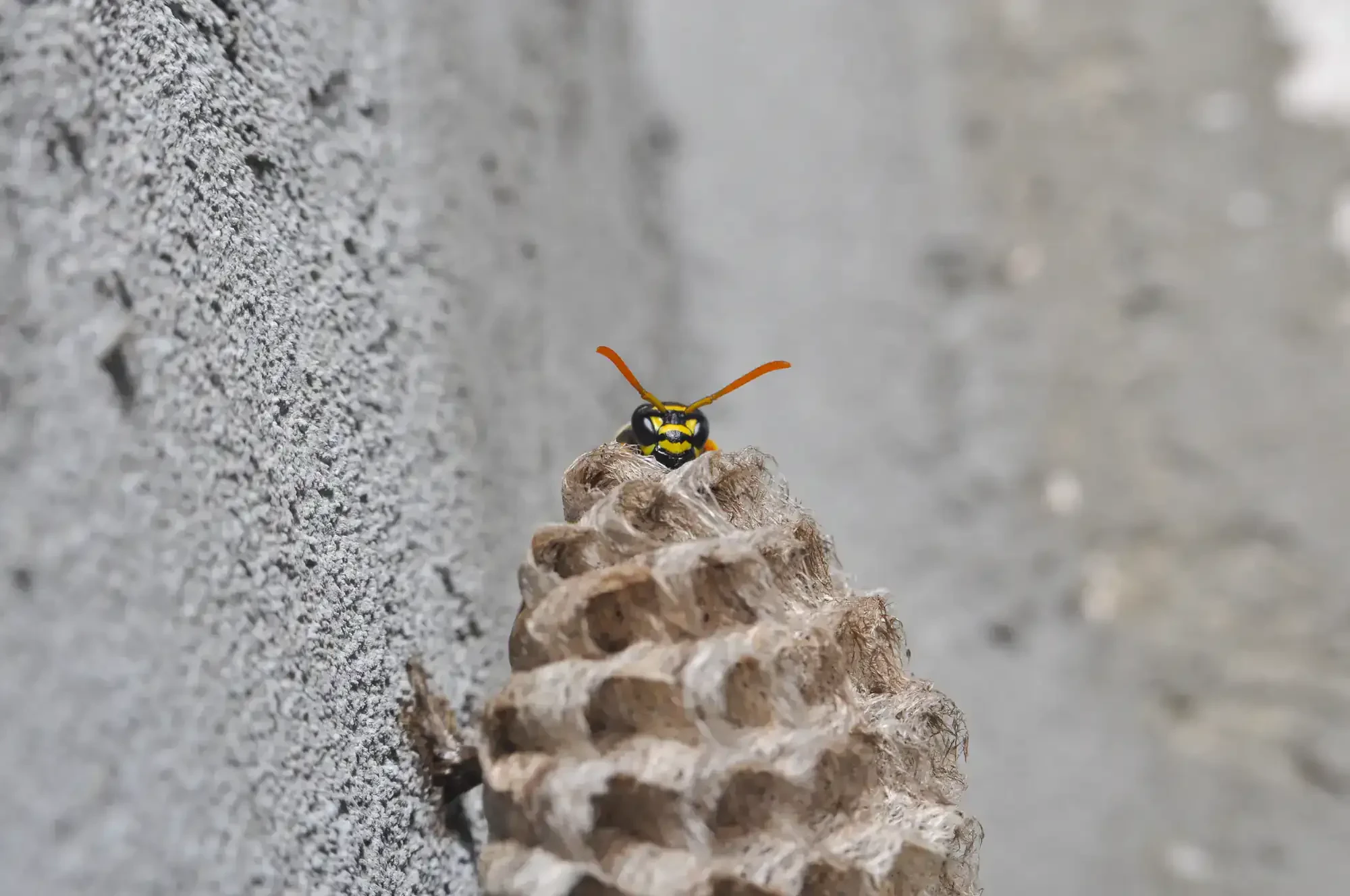
Hornet removal in Hunters Creek isn’t a single product applied to a single spot. What you’re getting is a licensed technician — not a part-time seasonal hire — who identifies the species, locates all active nesting sites on your property, and applies the right treatment for each one. Bald-faced hornets, which are the most common hornet species in Michigan, build large enclosed paper nests in tree canopy, under eaves, and on structures. Yellow jackets nest in the ground or inside wall voids. Paper wasps hang open-comb nests under overhangs and in outbuildings. Each one gets a different approach.
For properties in the Hunters Creek area — especially those with significant tree cover, creek frontage, or older housing stock — the inspection phase is just as important as the treatment. Nests in tree canopy on larger lots can grow for weeks before they’re visible. Wall void infestations in homes built before 1980 can go undetected until workers start appearing inside. Our technician accounts for all of it.
We also keep the same technician assigned to your property year after year. That means your tech builds familiarity with your specific conditions — where nests have appeared before, which corners of your property see the most activity, and what’s changed since the last visit. For Lapeer County homeowners who deal with recurring stinging insect pressure each season, that continuity is worth more than a lower quote from a company that sends a different face every time.
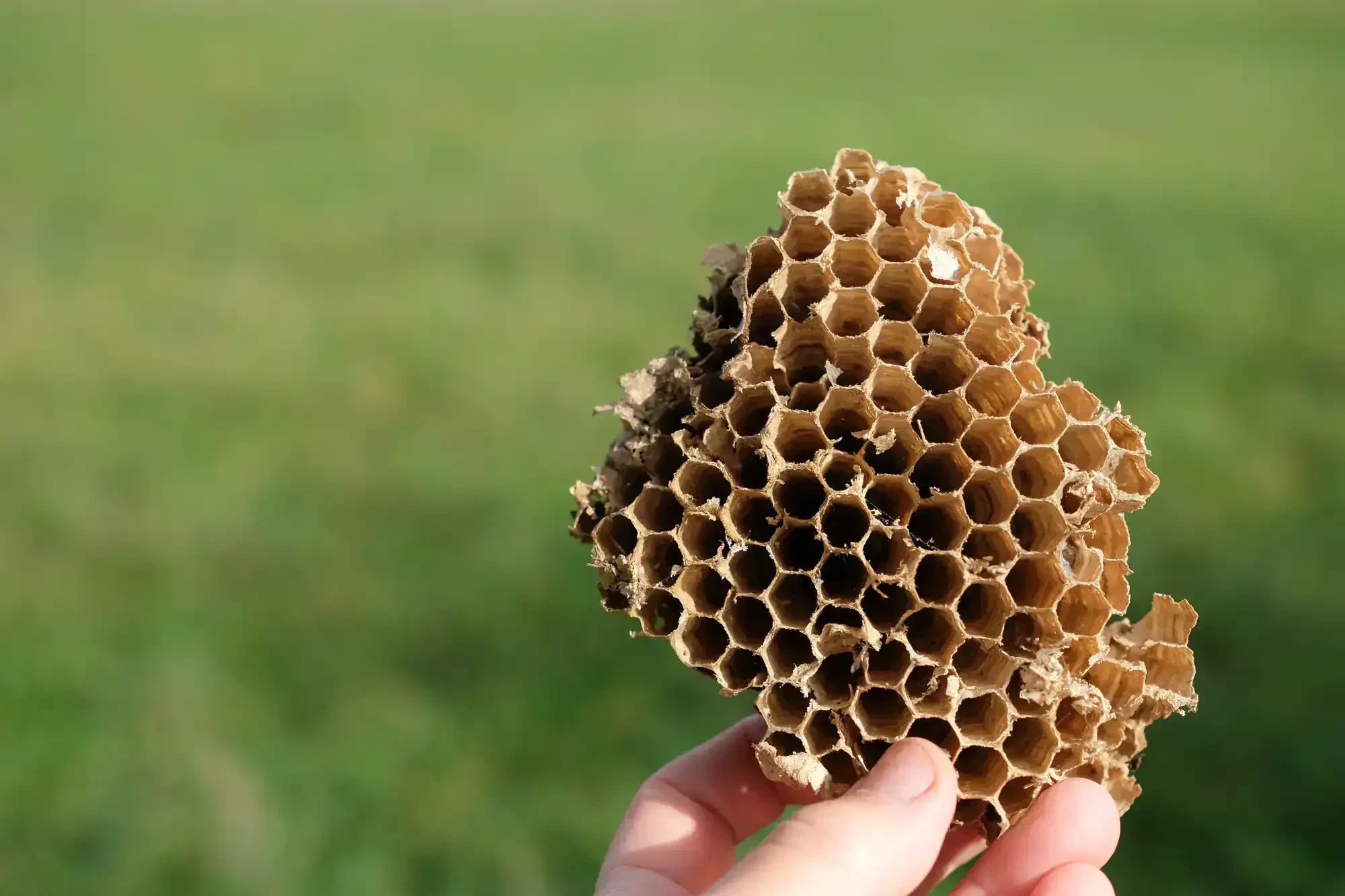
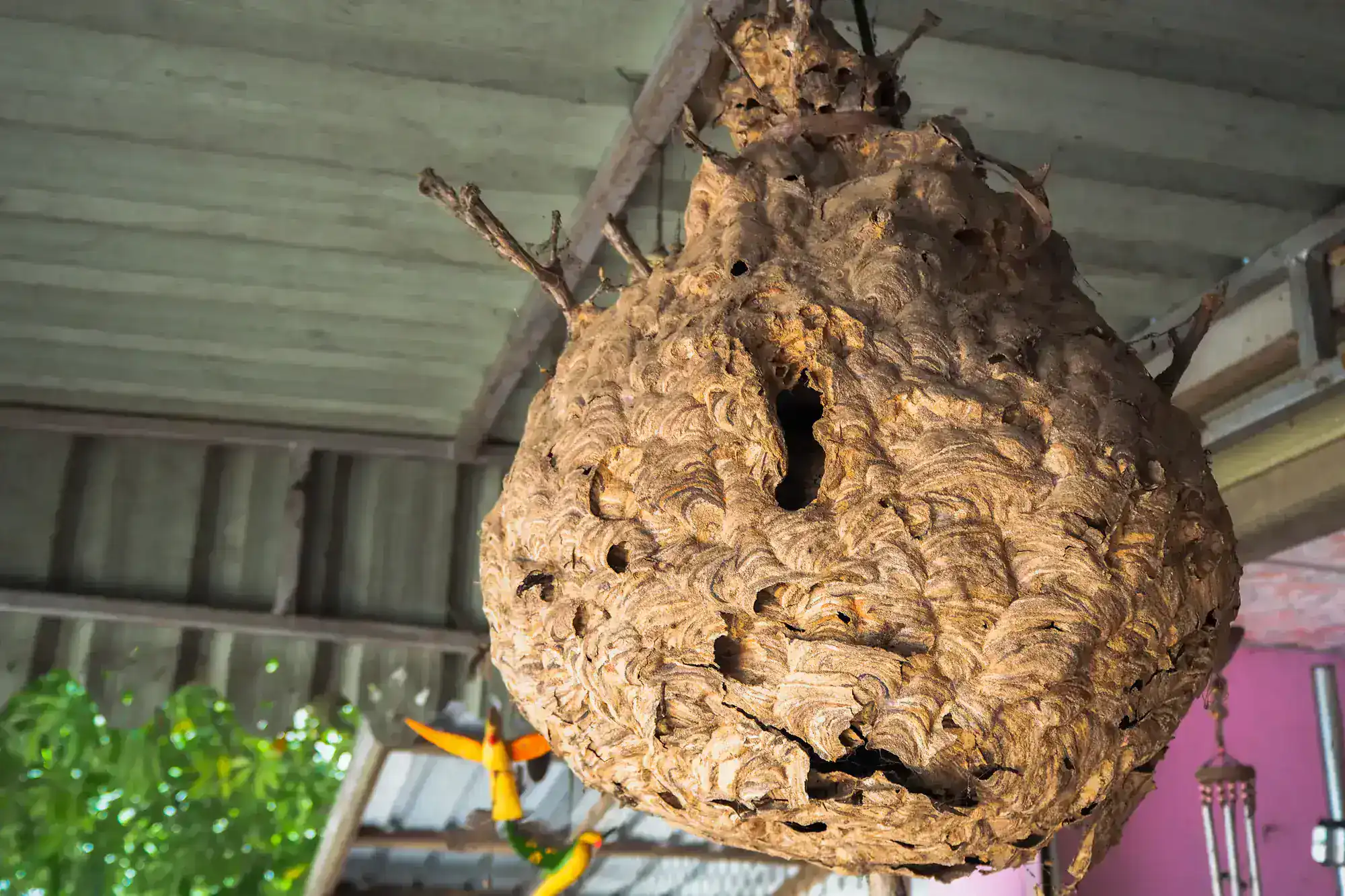
The most common hornet you’ll encounter on wooded properties in Hunters Creek is the bald-faced hornet. Despite the name, it’s technically a large yellow jacket — but it behaves differently and builds a very different nest. Bald-faced hornets construct large, enclosed paper nests that hang from tree branches, attach to building overhangs, or sit up in the canopy where they’re easy to miss until the colony is well established. On the larger, tree-heavy lots along Hunters Creek Road and Plum Creek Road, these nests can grow to the size of a basketball before a homeowner spots them.
You’ll also run into European hornets, which are true hornets and tend to nest in hollow trees, wall voids, and attic spaces — more common in the older housing stock throughout Hunters Creek. Yellow jackets are the other frequent offender, nesting in the ground or inside structural voids. Knowing which species you’re dealing with matters because the treatment is different for each one. Our licensed technicians can identify the species on-site and apply the right approach rather than guessing.
Hornet removal costs in the Lapeer County area generally fall between $300 and $700, depending on the species, nest location, and how far the infestation has progressed. Bald-faced hornet removal tends to run on the higher end — around $500 to $650 — because the nests are often elevated, require proper protective equipment, and need to be treated at the right time of day to be effective. A nest that’s accessible under a roofline is a simpler job than one that’s twenty feet up in a tree on a wooded acreage lot.
One thing worth knowing: a small nest found in spring — when the colony is just getting started — is significantly cheaper to remove than the same nest in late August when it’s at full population. Early-season removal on a Hunters Creek property can run $200 to $300. That same nest, left until peak summer, can cost two to three times more and carries a much higher risk of defensive stings during removal. We provide flat-rate, upfront pricing before any work begins, and we’ll match a reasonable competitor quote if you have one.
The honest answer is: it depends on the nest, and most of the time the risks aren’t worth it. A small, newly formed paper wasp nest under a deck rail is one thing. A bald-faced hornet nest the size of a volleyball hanging in a tree — or a yellow jacket colony that’s been building inside a wall void for six weeks — is a completely different situation. Bald-faced hornets are aggressive defenders and will pursue a perceived threat well beyond the nest perimeter. The CDC reports an average of 62 deaths per year in the US from hornet, wasp, and bee stings, and a meaningful portion of those involve people who disturbed a nest without realizing how large or active it was.
On the larger, wooded lots common to Hunters Creek, nests in tree canopy are often not visible until they’re already at significant size. Attempting to treat an elevated nest without the right equipment — and without knowing exactly what species you’re dealing with — creates real risk. Beyond personal safety, an incomplete DIY treatment often agitates the colony without eliminating it, making a follow-up professional removal more complicated and more expensive than if you’d called first.
Yes — and this is one of the most common follow-up questions after a removal job. Once a colony is treated and the nest is gone, the original workers don’t return. But hornets are drawn to the same general areas year after year for a reason: the location offers the right conditions for nesting. On Hunters Creek properties, that often means a specific tree branch, a particular soffit line, or a gap in an outbuilding that’s been there for decades. New queens — which overwinter in protected spots on your property — will scout those same locations the following spring.
The best way to reduce the likelihood of a repeat infestation is to address the conditions that made the location attractive in the first place. That means sealing entry points in older structures, trimming back tree branches that overhang rooflines, and having a technician assess the property for secondary nesting sites during the original removal visit. We assign the same technician to your property each season, so they’re already familiar with where activity has occurred before and can flag early signs of new nest formation before the colony gets established.
The best time is as early as you spot activity — and in Lapeer County, that window typically opens in April and May when queens emerge from winter and begin building new nests. At that stage, a colony might have fewer than a dozen workers and a nest the size of a golf ball. Removal is faster, less expensive, and significantly safer than waiting until midsummer. The challenge on wooded properties like those in Hunters Creek is that early nests in tree canopy or along wooded perimeters are easy to miss — they’re small, partially obscured by foliage, and not yet producing the visible flight activity that gets homeowners’ attention.
By July and August, a bald-faced hornet colony can have 400 to 700 workers. That’s when nests become dangerous to approach without proper equipment and protective gear, and when the cost of removal increases substantially. If you’re seeing hornets consistently flying in and out of a specific area — a tree line, a soffit, a gap in your siding — that’s your signal to call before the colony reaches peak size. Don’t wait for a sting to confirm what you already suspect.
Yes — we offer discounts for seniors, veterans, and first responders. Lapeer County has one of the older median age profiles in southeast Michigan, with nearly one in five residents aged 65 or older, and Hunters Creek has a significant share of long-term homeowners and retirees who have lived on their properties for decades. For that part of the community, the combination of a fixed income and a large wooded property with recurring stinging insect pressure is a real consideration when deciding whether to call a professional or attempt to handle it themselves.
The discount is straightforward — ask about it when you call to schedule. It applies to qualifying customers and stacks with our flat-rate, upfront pricing model, so you’ll know the full cost before anyone shows up. If you’ve also received a quote from a local competitor, we’ll match it if it’s reasonable. The goal is to make professional hornet removal accessible to the Hunters Creek residents who need it most, not just those with the flexibility to absorb a surprise bill.
Useful Links