
Hear from Our Customers
A hornet nest doesn’t stay small for long. What starts as a golf ball-sized structure in May can grow into a colony of 700 workers by late August. In Ortonville, where properties back up to wooded hillsides, Kearsley Creek corridors, and the dense tree canopy of the Ortonville Recreation Area, that growth happens fast — and it happens close to where your family actually spends time.
The wooded, hilly terrain around Brandon Township is ideal habitat for bald-faced hornets. They build in tree lines, under eaves, inside wall voids, and in the rafters of detached garages and outbuildings — exactly the kind of structures that are common on properties throughout the 48462 zip code. When a nest is tucked into the soffit of a barn near Seymour Lake Road or hanging in the tree line behind a home on Bald Eagle Lake, a can of spray from the hardware store isn’t going to cut it.
Professional hornet removal in Ortonville means the nest gets identified correctly, treated with the right method for its location, and followed up on if needed — all without putting you, your kids, or your pets at risk. The goal isn’t just to knock down a nest. It’s to get your yard, your deck, and your property back to what you moved here for.
We’ve been serving Michigan homeowners since May 31, 2005 — and in 2025, that’s 20 years of showing up, solving problems, and standing behind the work. Owner Roger brings 26 years of hands-on pest control experience to every job. This isn’t a franchise where your call gets routed to whoever’s available. It’s a family-owned business where the owner’s name is on the line every single time.
What sets us apart from the Metro Detroit companies that occasionally make the drive up M-15 is consistency. You get the same technician year after year — someone who learns your property, remembers where hornets have nested before, and knows the difference between a wall void treatment and an eave nest approach. That kind of continuity matters on the larger, wooded lots common throughout Brandon Township and Groveland Township, and it’s especially valuable for Ortonville residents dealing with properties that back up to the Ortonville Recreation Area.
We hold Michigan Pesticide Application Business License #250081, IPM training certification recognized by MDARD, and have earned awards from both Angie’s List and HomeAdvisor. Discounts are available for seniors, veterans, and first responders — and pricing is flat-rate and upfront, with no hidden charges.
When you reach out, the first step is a straightforward conversation about what you’re seeing — where the nest is, how long it’s been there, and whether you’ve noticed increased activity. That information helps us determine the right approach before anyone pulls into your driveway.
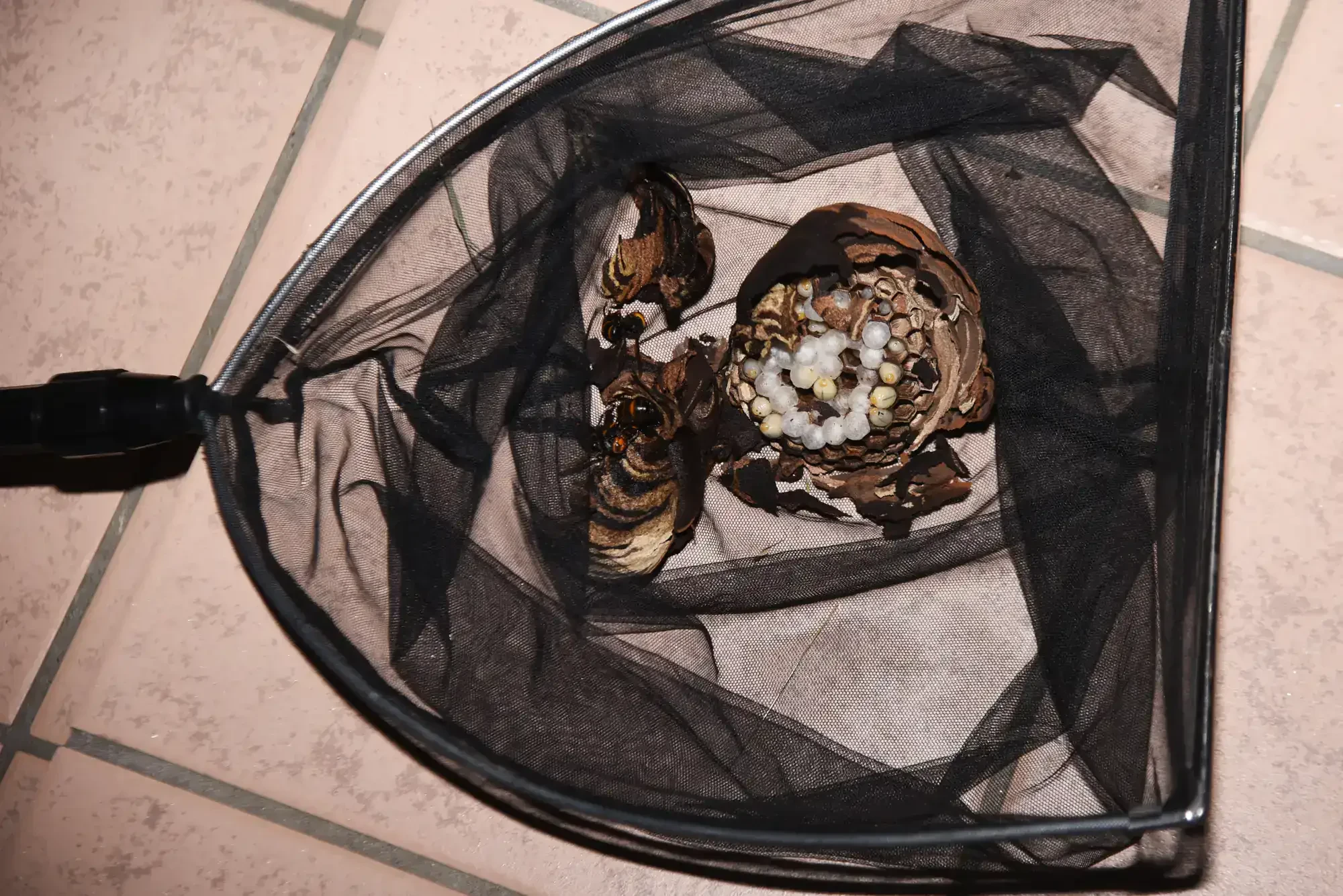
On the day of service, your technician inspects the nest and the surrounding area. In Ortonville, that often means checking more than just the obvious spot. Properties with mature trees, older wooden eaves, detached garages, and outbuildings — all common in the 48462 area — can have secondary nesting sites that aren’t visible from the ground. Bald-faced hornets in particular can build satellite activity near a primary nest, and missing that means the problem comes back. The treatment method depends on nest location and size. An exposed eave nest is handled differently than a wall void nest or a nest buried in a shrub line along a wooded property border. We use targeted applications — including dust treatments for enclosed spaces where liquid sprays can’t reach — based on what’s actually in front of the technician, not a one-size-fits-all protocol.
After treatment, you’ll know exactly what was done and what to expect. If the colony requires a follow-up visit to fully resolve, that’s handled at no additional cost. Timing matters too — late summer treatments in north Oakland County deal with colonies at peak size and peak aggression, which is why the process is deliberate and thorough, not rushed.
Ready to get started?
Hornet removal in Ortonville looks different than it does in a standard subdivision. Older homes near the village center, lakefront properties along Bald Eagle Lake and Lake Louise, rural parcels with barns and outbuildings, and wooded lots bordering the Ortonville Recreation Area all present nesting scenarios that require real experience — not a technician who’s only ever worked tract housing.
We handle the full range of stinging insect situations common to this area: bald-faced hornet nests in trees and eaves, European hornets in wall voids and structural cavities, and yellow jacket colonies in ground nests and outbuilding gaps. Every service includes a thorough inspection of the identified nest and the surrounding structure, targeted treatment appropriate for the nest type and location, and a return visit at no additional charge if the colony isn’t fully resolved on the first treatment.
We’re IPM-certified, which means the approach is always targeted — not a blanket chemical application across your property. For a community that borders the Ortonville Recreation Area and values the natural environment that makes this area worth living in, that distinction matters. Michigan Pesticide Application Business License #250081 is the state-issued credential that confirms every application is lawful, trained, and accountable. Flat-rate pricing means you know the cost before work begins — no surprises after the fact.
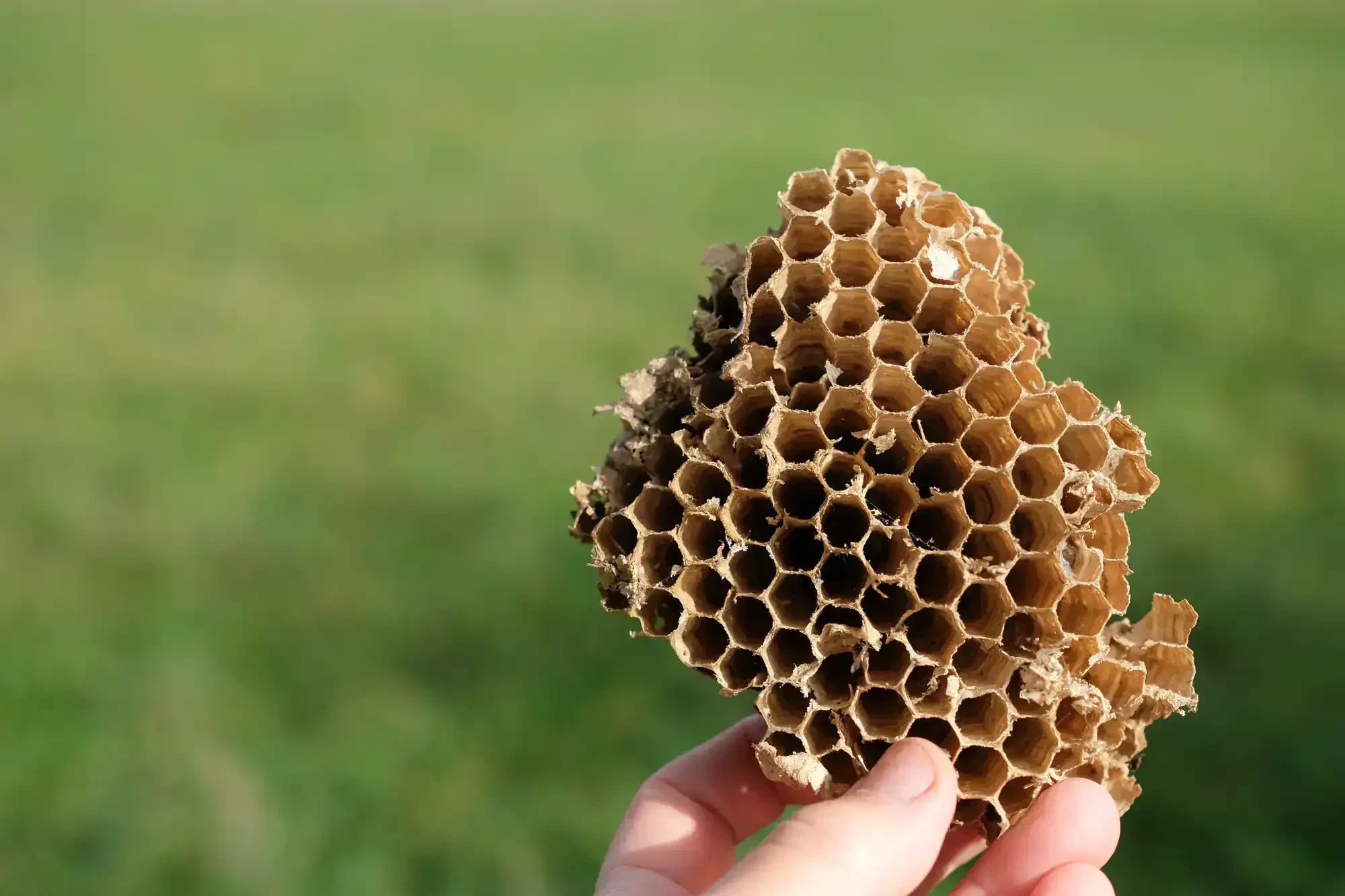
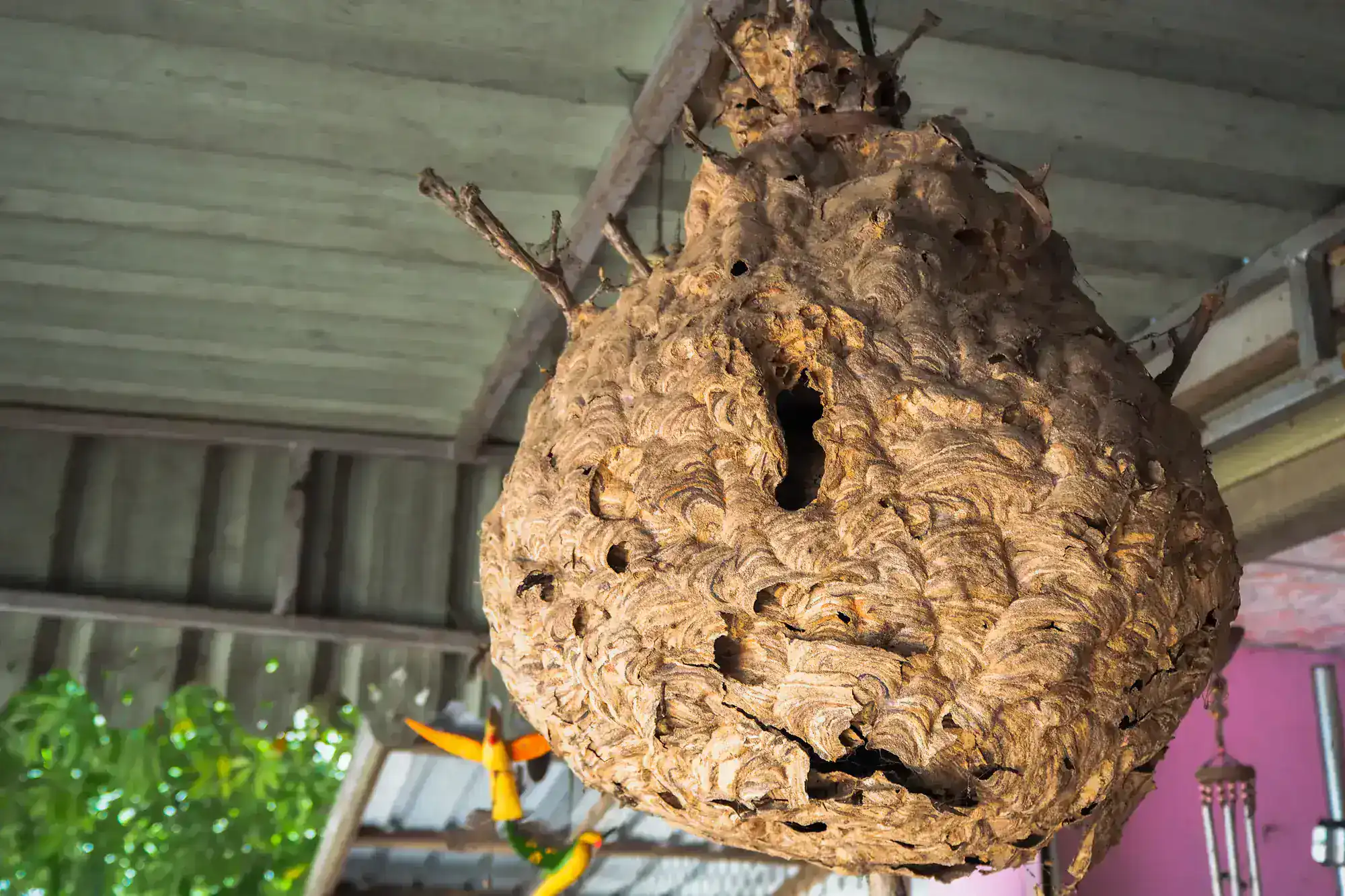
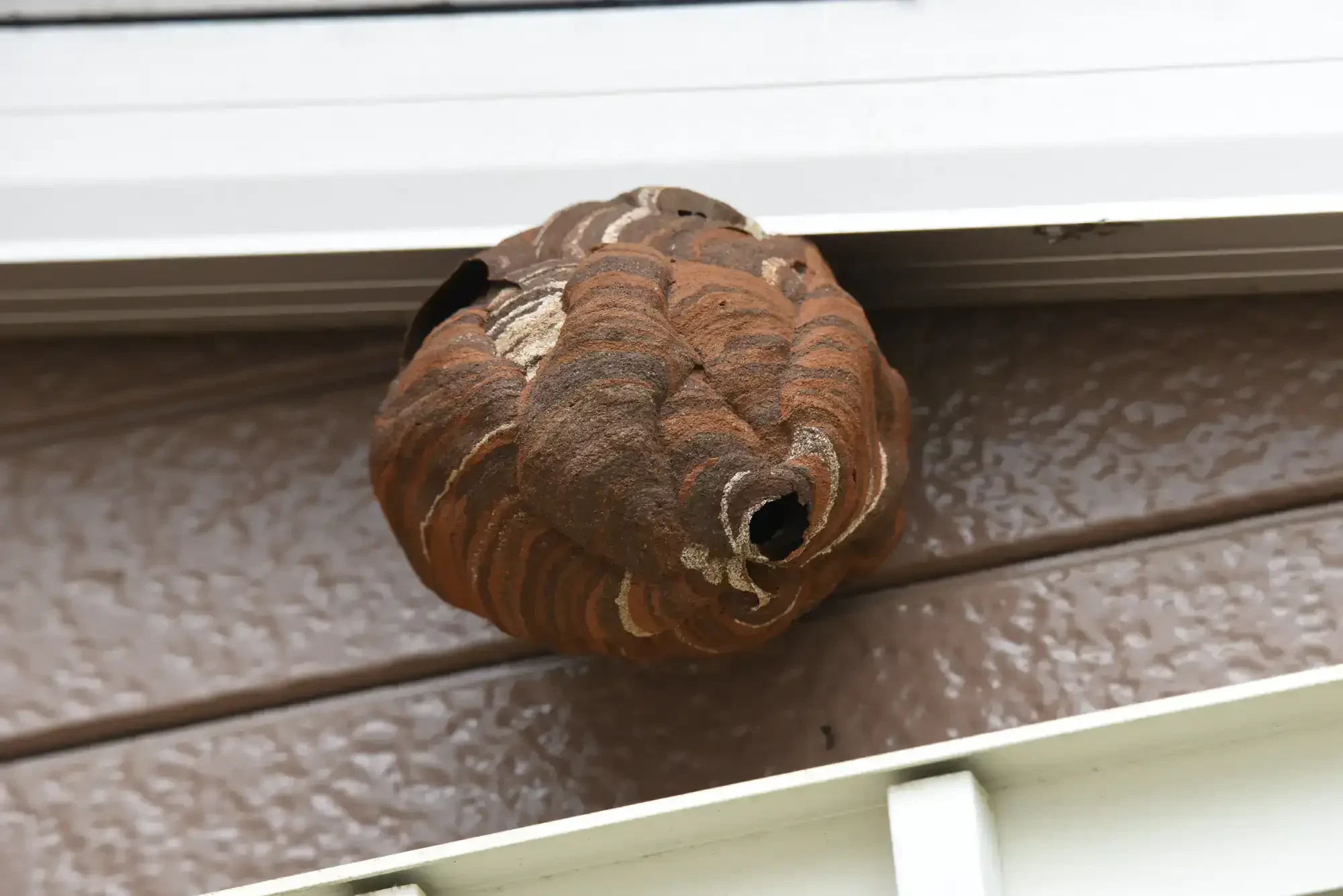
The most common stinging insect on Ortonville-area properties is the bald-faced hornet. They build large, enclosed paper nests — the gray, football-shaped structures you’ve probably seen hanging in trees, under eaves, or attached to the side of a structure. By late summer, a mature colony can hold 400 to 700 workers, and they defend the nest aggressively if they sense a threat within several feet of it.
European hornets are also present in north Oakland County, though less common. They tend to nest in hollow trees, wall voids, and attic spaces — which makes them harder to spot until the colony is well established. Yellow jackets round out the picture, often nesting underground near tree roots or in gaps in older foundation structures. Given the wooded, hilly terrain throughout Brandon Township and the abundance of mature trees and older outbuildings in the 48462 area, all three are possibilities — which is why correct identification before treatment is the first step, not an afterthought.
For a very small, early-season nest in an accessible location with no one nearby who has a known allergy, some homeowners do attempt removal on their own. The honest answer is that the risk goes up significantly once the nest is larger than a softball, located in an elevated or enclosed space, or discovered in late summer when colonies are at peak size and defensive behavior is at its worst.
In Ortonville, many of the nests that get called in are in exactly those high-risk situations — tucked into the eave line of a two-story home, inside a barn wall, or hanging in the tree canopy at the edge of a wooded lot. Getting stung multiple times in a single incident is not rare when a large colony is disturbed without the right protective equipment and treatment approach. If there’s any doubt about the size, location, or accessibility of the nest, a professional call is the straightforward answer.
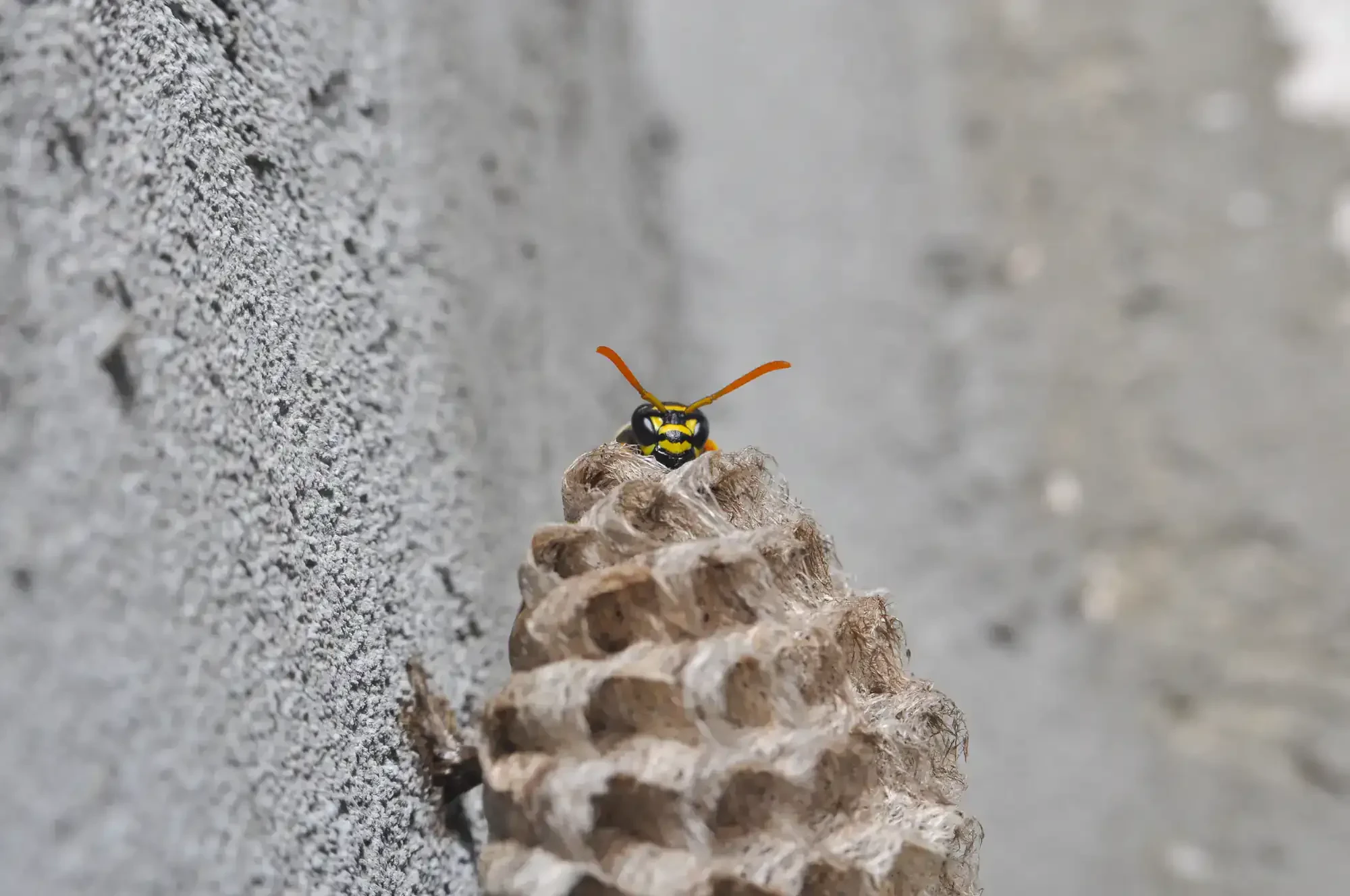
Early spring is the best window — April through May — when a new queen has just started building and the colony is still small. A nest that’s the size of a golf ball in May with only a handful of workers is significantly easier and less risky to treat than the same nest in August when it’s housing several hundred workers.
The challenge in Ortonville and the broader north Oakland County area is that most nests go unnoticed until they’re already large. You’re out in the yard in July, reach for a garden tool near the shed, and suddenly realize there’s been a colony growing in the eave above you all spring. At that point, the nest is well established and professional removal is the right call. The good news is that late-season removal is completely doable — it just requires the right approach for a mature colony. Waiting until October when the colony naturally dies off is an option for nests in low-traffic areas, but any nest near a door, play area, or high-use outdoor space should be addressed as soon as it’s found.
Wall void and attic nests are common in older homes, and Ortonville has plenty of them — the village has been around since 1848, and many properties throughout Brandon Township have older construction with gaps in siding, deteriorating soffit boards, and unscreened attic vents that give hornets an easy entry point.
The signs to watch for are consistent buzzing or scratching sounds coming from inside a wall, especially in late afternoon when workers are most active. You might also notice increased hornet traffic around a specific spot on your exterior — a gap in the siding, a soffit joint, or a utility penetration — without seeing an obvious external nest. European hornets in particular prefer enclosed cavities and can establish a significant colony inside a wall before the homeowner realizes what’s happening. If you’re seeing any of these signs, don’t probe the area or try to seal the entry point yourself. Sealing an active nest inside a wall can force hornets deeper into the structure or cause them to chew through drywall into your living space. A professional inspection is the right first step.
The colony that’s removed won’t return — once it’s treated and the workers are gone, that specific nest is finished. The longer-term question is whether a new queen will establish a nest in the same area the following spring, and the honest answer is that it’s possible. Bald-faced hornet queens overwinter in protected sites — bark crevices, leaf litter, and structural voids — and they tend to return to the same general territory where they emerged. In wooded areas like those throughout the Ortonville Recreation Area’s perimeter and the broader Brandon Township landscape, there’s no shortage of overwintering habitat nearby.
What reduces the likelihood of a repeat nest is addressing the structural access points that made the location attractive in the first place — open soffit joints, gaps in siding, unscreened vents. Your technician can point out those vulnerabilities during the service visit. Early-season monitoring in April and May is also the most effective way to catch a new nest before it becomes a late-summer problem. A small nest treated in spring costs far less — in time, money, and stress — than a mature colony in August.
Yes — we offer discounts for seniors, veterans, and first responders. In a community like Ortonville and the surrounding Brandon Township area, where military families, retired residents, and local first responders from the Brandon Fire Department make up a meaningful part of the population, those discounts are a genuine part of how we do business — not a footnote.
Beyond the discounts, pricing is flat-rate and upfront across the board. You’ll know what the service costs before the technician starts work — no fuel surcharges added at the end, no charges for a return visit if the colony requires follow-up treatment. If you’ve already received a quote from another licensed pest control company in the area, we’ll match reasonable competitor rates. The goal is straightforward: give you a clear number, do the job right, and stand behind it. If you’re unsure whether you qualify for a discount or want to ask about pricing before booking, just call and ask — it’s a simple conversation.
Useful Links