
Hear from Our Customers
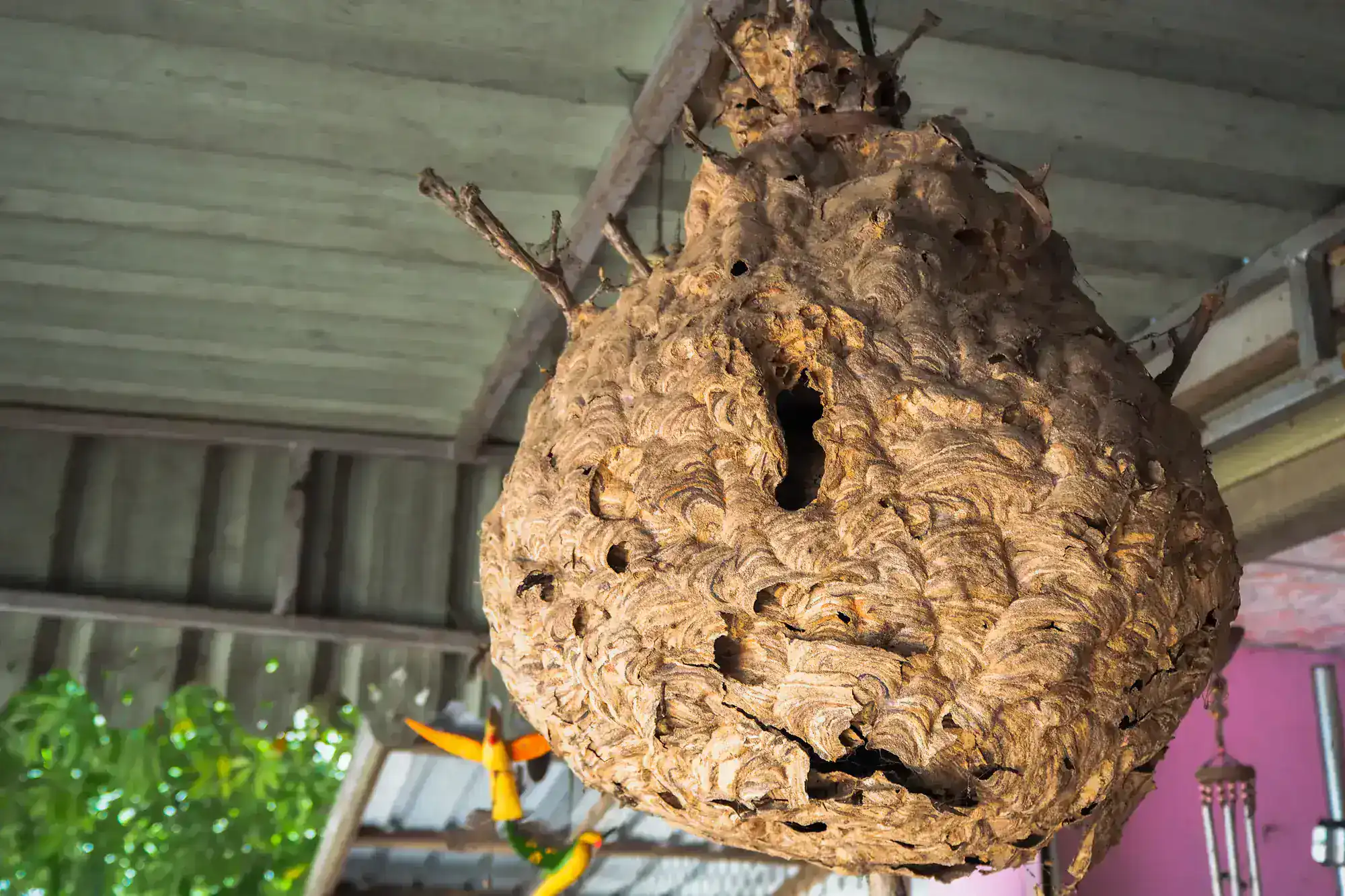
Hornets don’t just make your yard uncomfortable — they make it dangerous. A colony that’s had all summer to grow can have 400 to 700 workers by August, and they don’t take kindly to anyone getting close. Whether the nest is hanging from a branch, tucked under an overhang, or buried inside a wall void, the risk of a DIY attempt goes up fast when the colony is that size.
Pine Run’s semi-rural character means most properties here have the exact conditions hornets love — mature tree lines, detached garages, older outbuildings, and enough wooded perimeter that nests can grow well-hidden until they’re already a serious problem. By the time you notice workers coming and going near the roofline of your barn or the back corner of your shed, you’re likely dealing with an established colony, not a new one.
Professional removal doesn’t just take the nest down. It addresses the infestation at the source, including wall voids that a spray can simply can’t reach. When the job is done right, you get your yard, your outbuildings, and your outdoor routine back — without a trip to urgent care in between.
We were founded on May 31, 2005 — which means 2025 marks 20 years of serving homeowners across Genesee County, including the semi-rural properties throughout Pine Run and Vienna Township. Roger, our owner, has 26 years of hands-on pest control experience. That’s not a marketing line — it’s the kind of depth that only comes from doing this work, not managing it from a desk.
One thing that sets First Choice apart: you get the same technician every time. Your tech learns your property — where the hornets nested last summer, which eaves they favor, what the tree line at the back of your lot looks like. That continuity matters on a property in Pine Run, where the conditions that attract hornets don’t change much year to year.
We’re also BBB accredited, Angie’s List and HomeAdvisor award-winning, and hold a 4.7-star Google rating — built over two decades of consistent work in this county, not overnight.
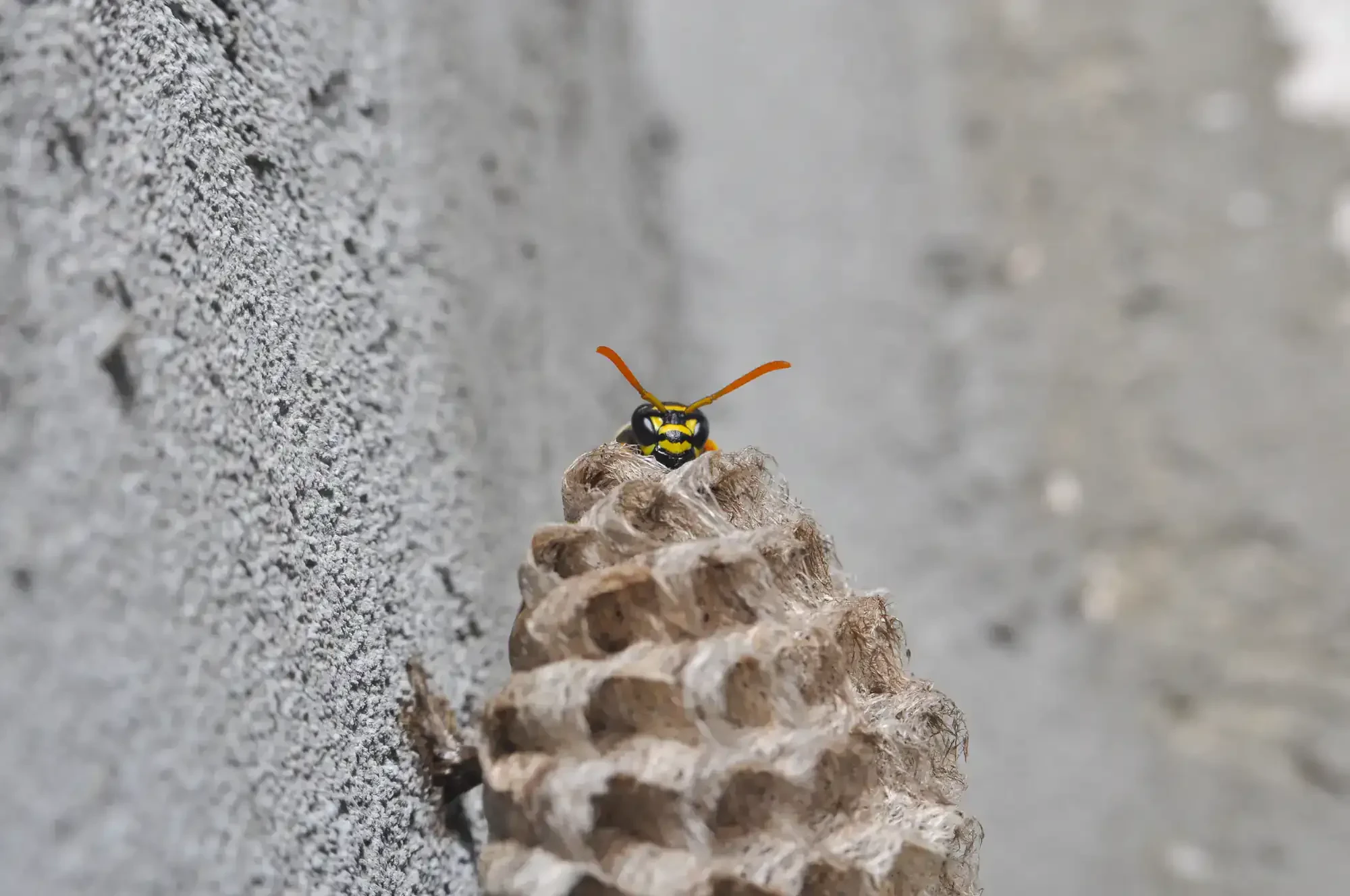
It starts with a proper inspection. Before anything gets treated, your technician identifies the species, locates the nest, and assesses how established the colony is. That matters more than most people realize — bald-faced hornets and European hornets behave differently, nest in different locations, and require different treatment approaches. European hornets, which are common in the wooded, agricultural areas around Pine Run, are active at night and often nest inside wall voids or hollow trees, which means the entry point isn’t always obvious.
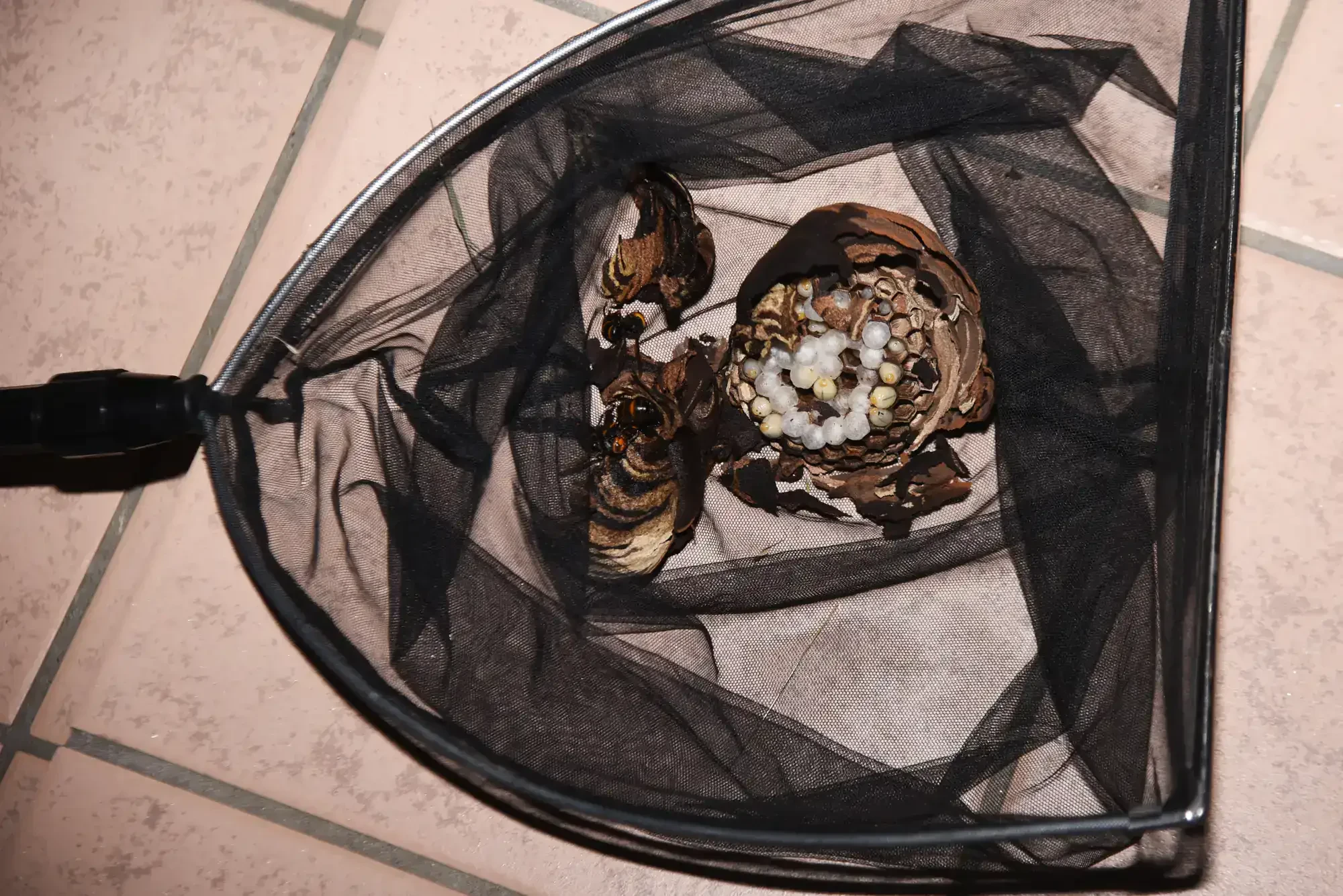
Once the nest is located and the species is confirmed, treatment is applied using the method appropriate to that specific situation. Accessible nests on eaves or branches are treated directly. Wall void infestations — common in the older homes and outbuildings throughout Vienna Township — require a dust application that penetrates the void without tearing into your walls. Elevated nests require the right equipment and protective gear, not a ladder and a can of hardware store spray.
After treatment, your technician walks you through what to expect in the following days and what steps make sense going forward. Because we use an IPM-certified approach, the goal isn’t just to knock down the current colony — it’s to understand why your property keeps attracting them and address that, too. Spring is the best window to get ahead of the problem before colonies grow. But if you’re calling in August, we handle that too.
Ready to get started?
Every hornet removal service from First Choice starts with a thorough inspection — not a quick glance from the driveway. Your technician identifies the species, locates all active nesting sites, and determines the right treatment method before anything is applied. On properties in and around Pine Run, that often means checking outbuildings, tree lines, wall voids, and roof eaves — all the spots that get overlooked on a surface-level walkthrough.
Treatment is targeted and appropriate to the specific infestation. We hold IPM training certification through the Michigan Department of Agriculture and Rural Development, which means the approach is science-based and uses the least invasive method that actually works — not a blanket spray across your entire property. That’s especially relevant if you have kids, pets, or a garden on your land, which is common on the larger lots throughout Vienna Township.
Pricing is flat-rate and upfront — you know what you’re paying before the technician arrives. We’ll also match reasonable competitor quotes, including those from other Genesee County pest control providers. Discounts are available for seniors, veterans, and first responders. Given that Vienna Township skews older than the county average, with a median age of 44.8, those discounts apply to a real portion of the homeowners we serve here. No contracts, no hidden fees, and no part-time seasonal technicians — just licensed, experienced professionals who know this area.
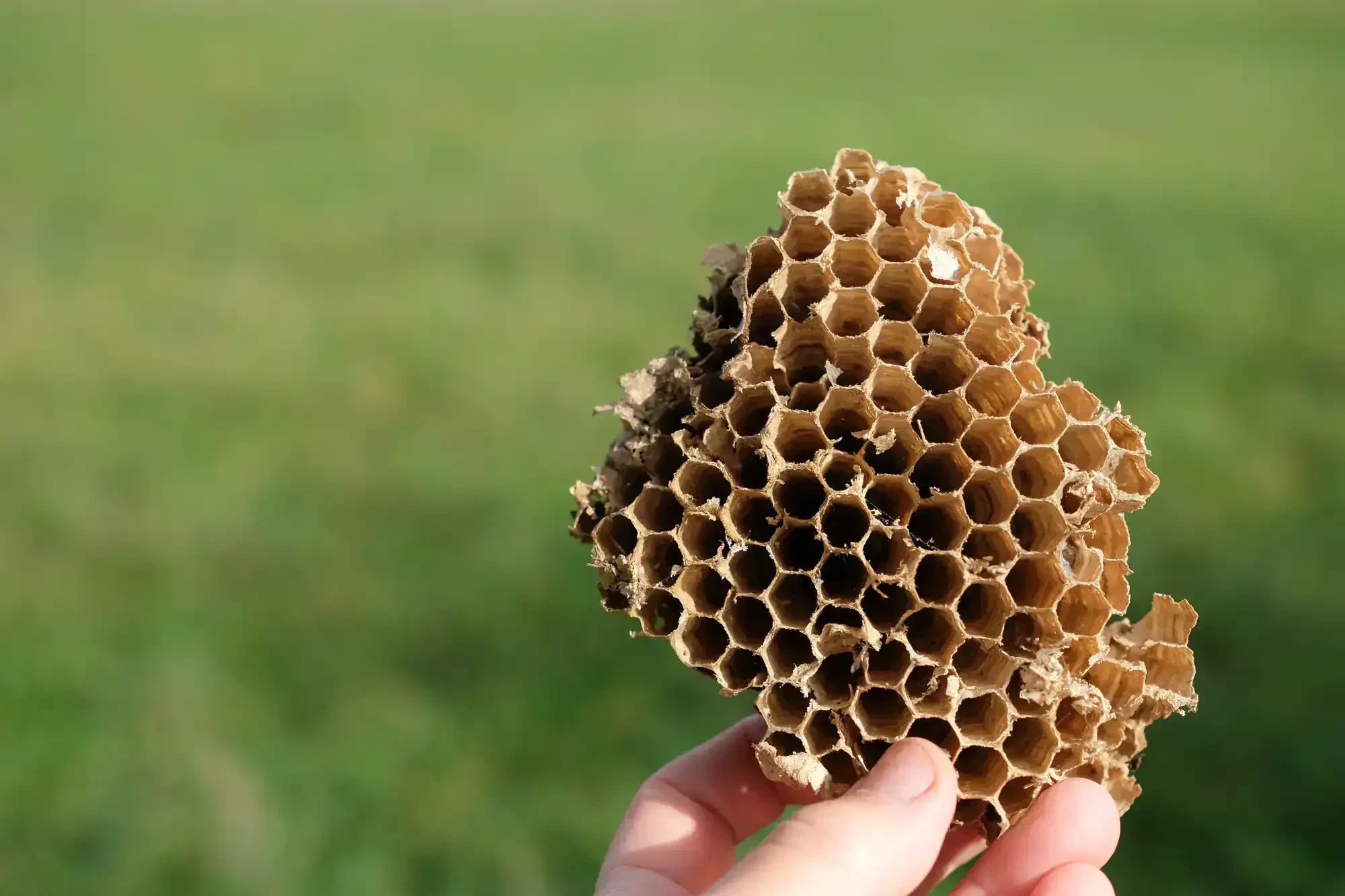
If you can see a nest and workers are actively coming and going, it’s already large enough to be dangerous to remove on your own. A visible nest in late spring might still be small, but by midsummer — especially on a semi-rural property with mature trees and outbuildings like most in Pine Run — colonies grow fast and become highly defensive. Bald-faced hornets, the most common species in this area, will attack aggressively if they sense a threat to the nest, and they can sting multiple times.
The other scenario worth calling about is when you’re seeing a lot of hornet activity but can’t find the nest. That often means it’s inside a wall void, in a hollow tree, or up in a tree canopy where it’s not visible from the ground. European hornets, which are active at night and common in the wooded areas around Vienna Township, frequently nest inside wall voids of older homes and outbuildings. If you’re hearing buzzing inside a wall or noticing workers entering a gap in your siding or fascia board, that’s a professional job — not a DIY one.
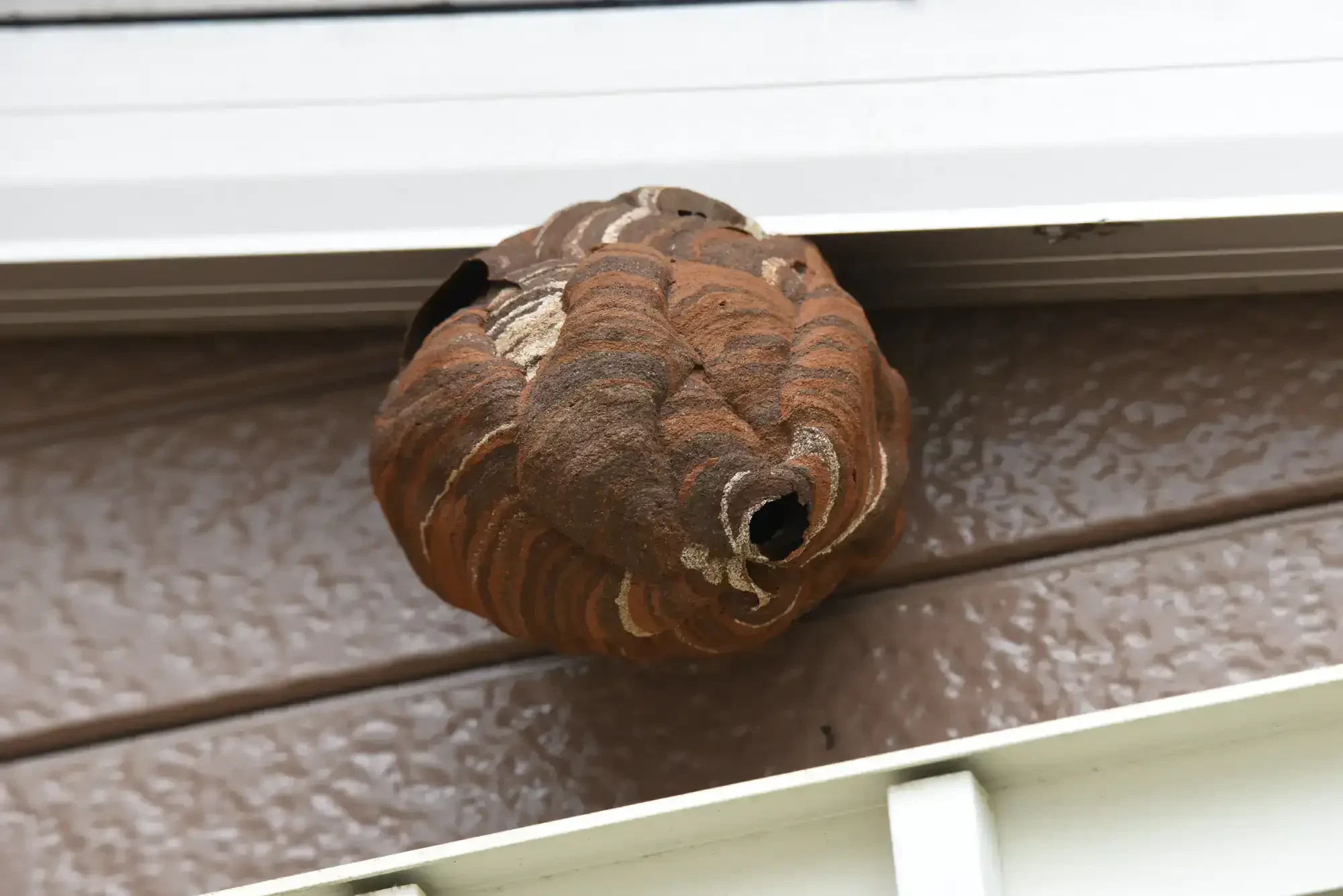
Yes, it does. Hornets are a subset of wasps, but the two most common stinging insects you’ll encounter on properties in and around Pine Run — bald-faced hornets and European hornets — behave and nest differently than the yellow jackets or paper wasps people often lump them with. Bald-faced hornets build large, enclosed gray paper nests that hang from tree branches, eaves, or overhangs. They’re aggressive defenders and will pursue a threat well away from the nest. European hornets are the only true hornet species in North America, are significantly larger, and are active after dark — which is often how homeowners first notice them, by the sound near a porch light at night.
Treatment varies based on where the nest is and which species you’re dealing with. An exposed nest on a branch gets treated differently than a wall void infestation. A colony that’s been established for two months needs a different approach than one that’s just getting started. That’s why a proper inspection — species ID, nest location, colony size — comes before any treatment at First Choice. Guessing and spraying is how people get stung.
Waiting almost always makes it worse. A nest that costs $200–$300 to remove in May can easily triple in removal cost by August, simply because the colony is larger, more defensive, and in some cases has expanded into structural voids. In Michigan’s climate, hornet colonies begin building in April or May when overwintering queens emerge from their hibernation sites — and on properties with wooded perimeters and agricultural land like much of Pine Run and Vienna Township, there are plenty of sheltered spots for queens to overwinter close to where they’ll build.
By late summer, colonies are at peak population and workers become significantly more aggressive, especially as the season winds down and larvae are no longer present to feed. That’s when you’re most likely to get stung doing something completely unrelated to the nest — mowing near a tree line, opening a shed door, or walking past an eave. If you’ve spotted a nest or noticed heavy activity, earlier in the season is always the better call.
They can, particularly European hornets nesting in wall voids. European hornets chew through wood to expand their nesting space, and they’re drawn to the older wood-framed structures common throughout the Pine Run area — detached garages, sheds, barns, and older farmhouses with aging soffits and fascia boards. A colony that’s been active inside a wall void for a full season can cause meaningful damage to insulation, framing, and interior wall surfaces.
Beyond structural damage, a large colony inside a wall void creates a secondary problem: if the nest is treated but not fully removed, the decaying nest material and dead insects can attract other pests — beetles, flies, and in some cases rodents — into the same void. That’s one reason why professional removal that addresses the full infestation, not just the visible entry point, matters on properties with older construction. If you’re dealing with a wall void situation on your Pine Run property, it’s worth getting it handled before the colony has another full season to expand.
Possibly — and understanding why helps you get ahead of it. Hornet colonies don’t survive winter. The workers and the original queen all die off. But the fertilized queens produced at the end of the season overwinter in sheltered spots — tree bark, fence rows, wood piles, and the kind of dense wooded perimeter that’s common on semi-rural properties throughout Vienna Township. Come spring, those queens emerge and begin building new colonies, often returning to the same general area where the prior nest was located.
That’s why the same-technician model at First Choice actually matters for repeat hornet issues. Your tech knows your property — where last year’s nest was, which structures have been targeted before, and what conditions on your specific lot keep drawing queens back. Over time, that knowledge translates into earlier detection and smarter prevention, not just reactive removal each summer. If you’re seeing hornets return to the same area year after year, that’s a conversation worth having when your technician is on-site.
Yes — we offer discounts for seniors, veterans, and first responders. Vienna Township has a median age of 44.8 years, which is notably higher than both the county and state averages, and Pine Run’s older, more established homeowner base reflects that. A meaningful number of the homeowners we serve in this area are retirees, veterans, or former first responders who have invested significantly in their properties and want to maintain them without overpaying for services.
If you or someone in your household qualifies, just mention it when you call to schedule. We’ll also match reasonable competitor quotes — so if you’ve already gotten a price from another Genesee County pest control provider, bring it up. The goal is straightforward: give Pine Run homeowners access to experienced, licensed hornet removal at a fair price, with flat-rate upfront quotes and no surprise charges at the end of the job.
Useful Links