Hear from Our Customers
When a hornet nest shows up in your eaves or along your fence line, your outdoor space stops feeling like yours. You stop letting the kids play in the backyard without checking first. You avoid that corner of the porch. You spend the whole summer watching a problem grow instead of enjoying what you actually moved to Williamston for.
Professional hornet removal changes that. Once we eliminate the colony and treat the nest, you get your space back — fully. No more second-guessing whether it’s safe to open the back door. No more watching a golf-ball-sized nest turn into something the size of a football by August. That’s what a resolved problem actually looks like.
Williamston’s older homes — the Victorian-era properties near downtown and along the historic corridors — tend to have deep eaves, aging soffits, and wood-framed wall cavities that hornets find year after year. If your property backs up to the Red Cedar River corridor, you’re dealing with riparian habitat that supports elevated stinging insect populations all season long. Understanding your specific environment matters. A technician who knows both Williamston’s architecture and its seasonal pest pressure changes the outcome.
We founded First Choice Pest Control on May 31, 2005 — which means this year marks 20 years of eliminating pest problems across southeast and central Michigan. Roger, who leads the company, brings 26 years of hands-on pest control experience to every service call. This isn’t a franchise operation with a call center and rotating crews. We’re a family-owned business where the same technician comes back to your Williamston property year after year, building real knowledge of your home and how it behaves seasonally.
We hold Michigan Pesticide Application Business License #250081 through MDARD, carry IPM certification, and have earned awards from both Angie’s List and HomeAdvisor based on verified customer reviews — not paid placement. Our 4.7-star Google rating across 67 reviews and 96% Facebook recommendation rate reflect two decades of consistent, accountable work.
Williamston sits in Ingham County, right along M-43 and a quick shot from I-96 at exit 117 — well within our established service corridor. Whether you’re in the historic district, near McCormick Park, or anywhere along the Red Cedar River, we know the area and the pest pressure that comes with it.
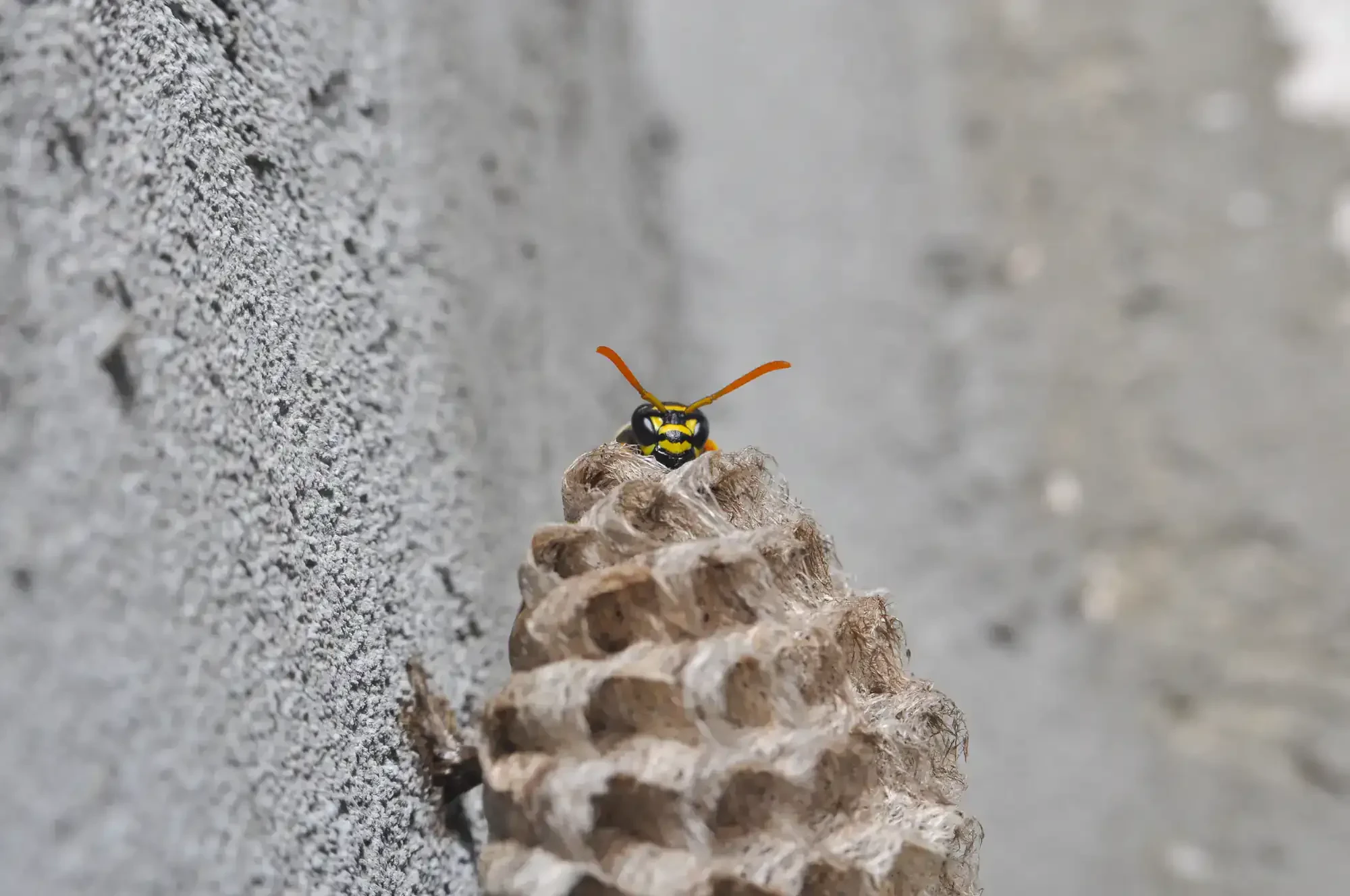
It starts with a proper inspection. Before anything gets treated, our technician identifies the species, locates the nest — including any satellite nests you may not have spotted — and assesses the size and activity level of the colony. Bald-faced hornets and paper wasps behave differently, nest in different locations, and require different approaches. Getting that identification right is what separates a resolved problem from a repeat call.
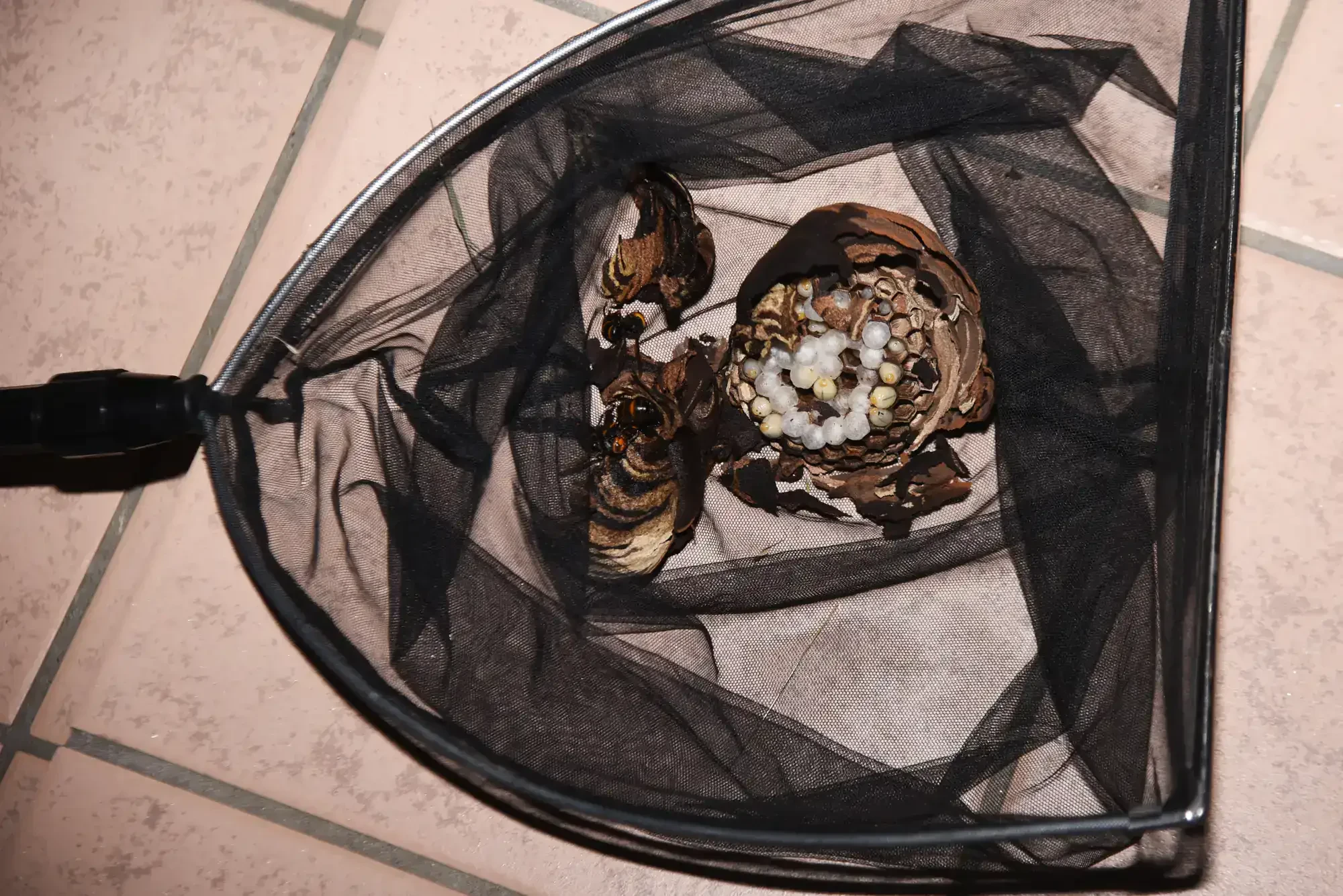
From there, treatment is selected based on what’s actually in front of our technician. Exposed nests in trees or eaves are handled differently than wall void infestations, which are common in Williamston’s older housing stock. When a colony has established itself inside a wall — something that happens frequently in Victorian-era homes with aging siding gaps and deteriorating soffit boards — we apply dust treatment directly into the void. This reaches the colony without requiring the wall to be opened. It’s a method that works precisely because it’s targeted, not broad.
Michigan’s hornet season runs from late spring through early fall, with colonies reaching peak size in August and September. In Williamston, that timing overlaps with outdoor events along the Red Cedar River corridor and heavy use of spaces like McCormick Park. Early-season removal — when the nest is still small and the colony is manageable — is faster, safer, and significantly less expensive than waiting until late summer. We hold IPM certification through MDARD, which means treatment is always calibrated to the specific situation — not the most aggressive option available.
Ready to get started?
This isn’t a spray-and-leave situation. When we handle hornet removal in Williamston, MI, the job includes a full property inspection, species identification, nest location — including hidden or wall void nests — and the appropriate treatment method for what’s found. If the nest is accessible, we treat and remove it. If it’s inside a wall or structural cavity, we apply dust treatment directly to eliminate the colony at the source. Our goal is complete elimination, not a temporary knockdown.
We serve both residential and commercial customers throughout the Williamston area. If you own a business in the downtown historic district, run an agrotourism operation near Williamstown Township, or manage a property with outdoor-facing spaces, stinging insects are a liability issue — not just a nuisance. The same thorough approach applies regardless of property type.
Pricing is upfront and flat-rate. You’ll know the cost before any work begins. For customers who’ve already received a quote from another local provider, we’ll match reasonable competitor rates. We offer discounts for seniors, military veterans, and first responders — a straightforward acknowledgment of the working professionals and retirees who make up a significant part of Williamston’s community. Every technician assigned to your property is a trained, career professional — not a seasonal hire filling summer routes.
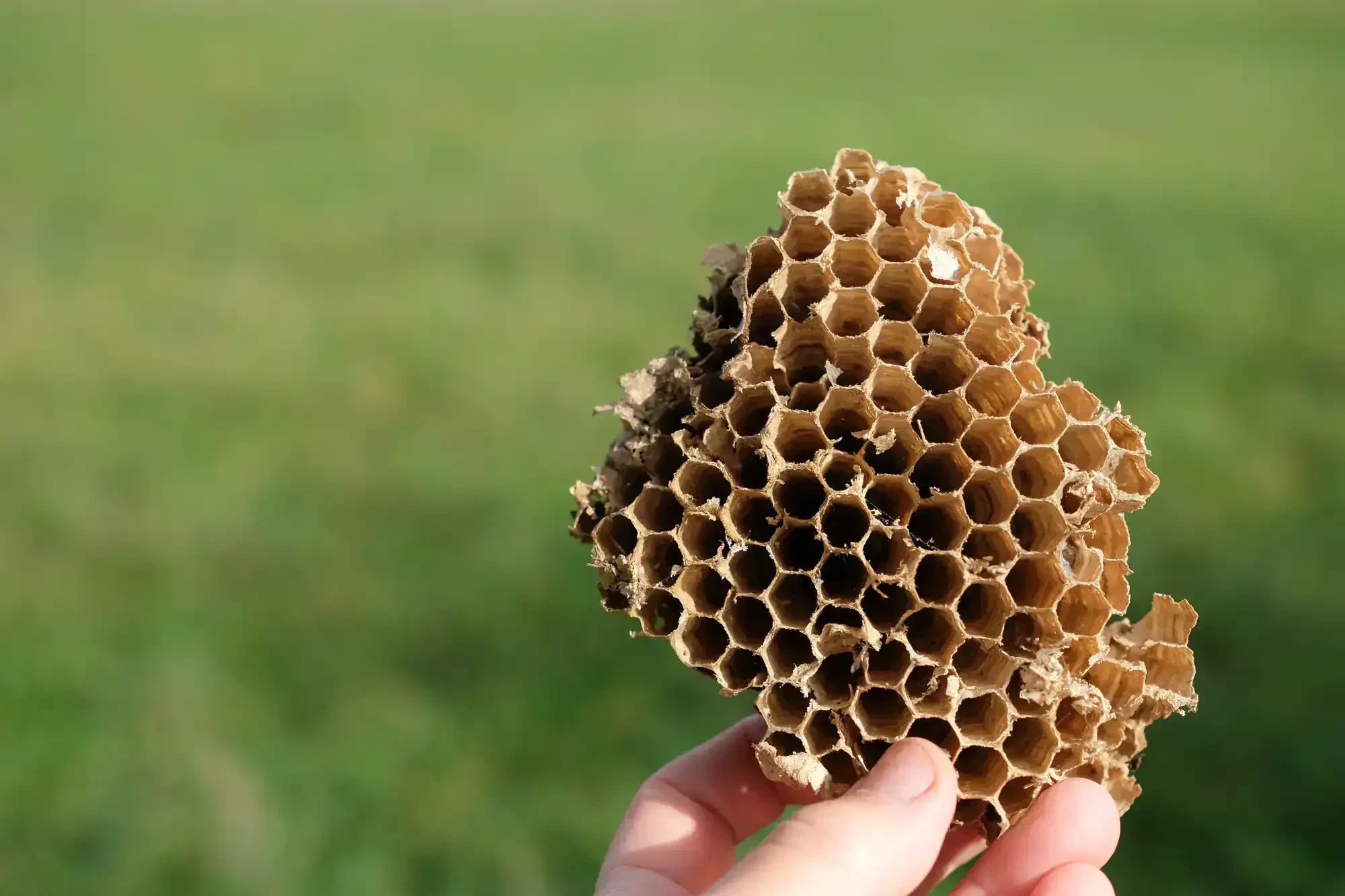
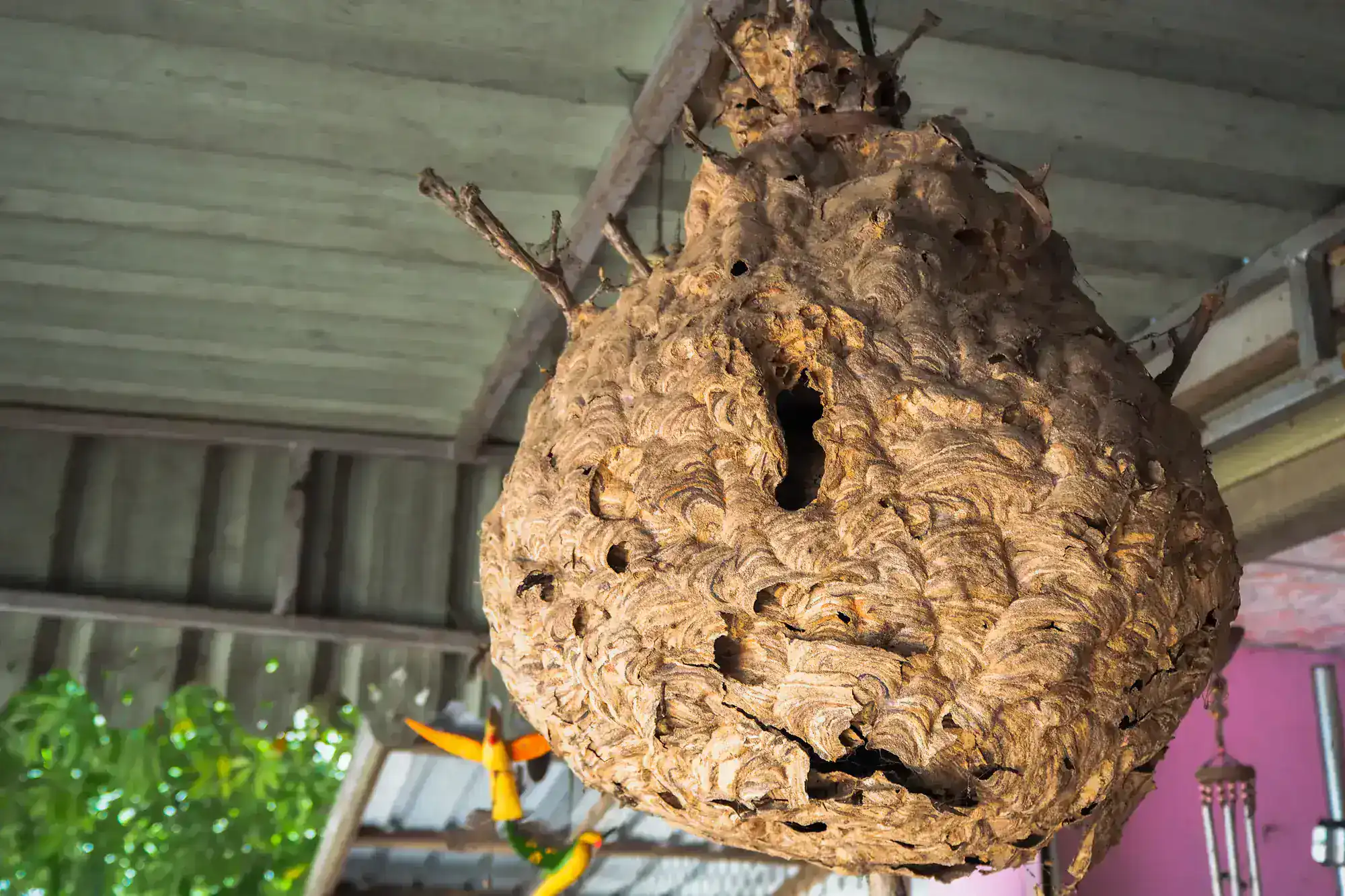
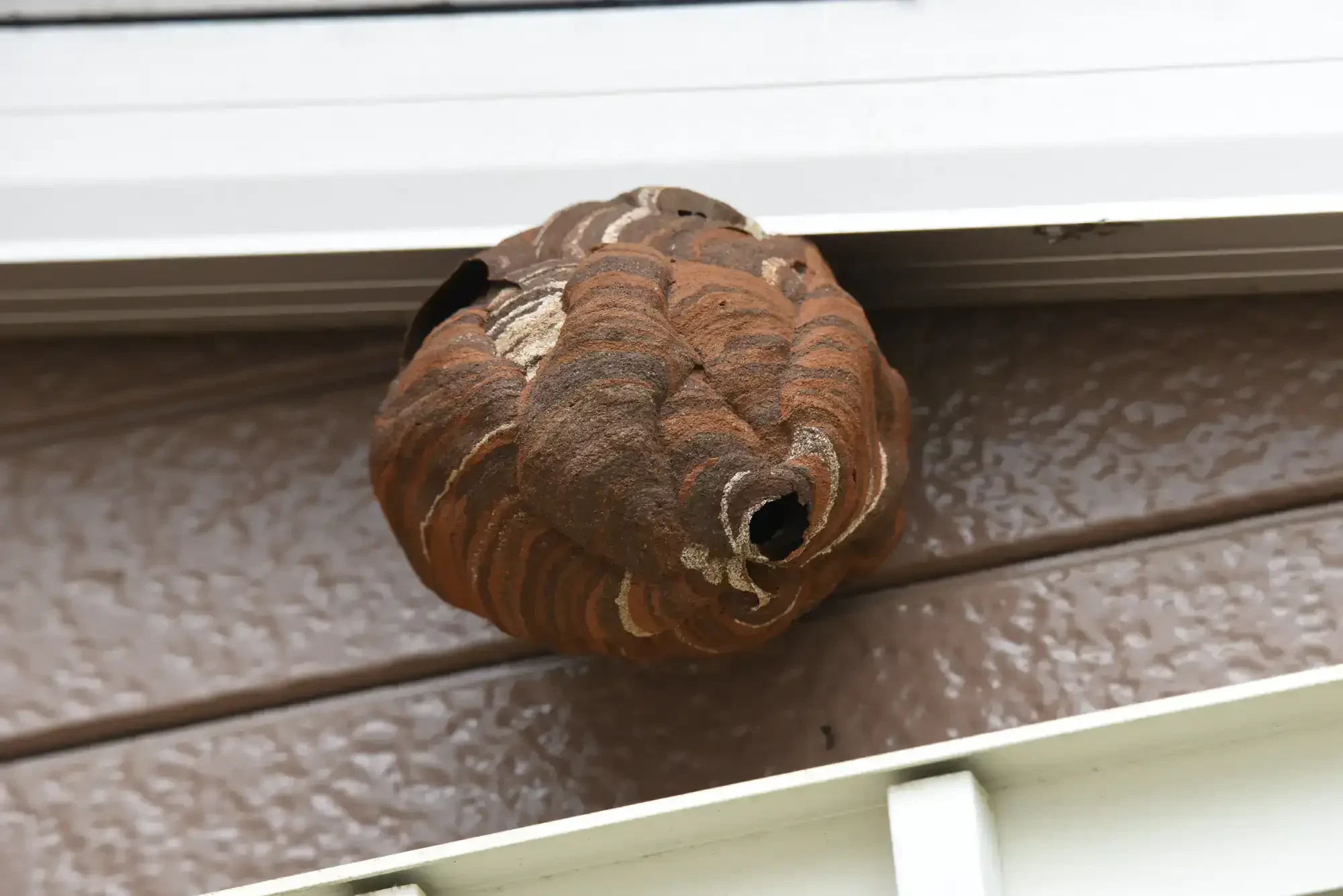
The most frequently encountered stinging insect in the Williamston area is the bald-faced hornet — technically a yellowjacket relative, but larger, more aggressive when disturbed, and capable of building nests that reach 14 inches in diameter by late summer. You’ll typically find their paper nests hanging from tree branches, roof overhangs, and the eaves of older Williamston homes. Paper wasps are also common and tend to build smaller, open-comb nests under eaves, on porch ceilings, and in window frames.
Yellow jackets are the third major type in this region, and they’re often the most problematic because they frequently nest underground or inside wall voids — making them harder to locate and more likely to be disturbed accidentally. Williamston’s older housing stock and its proximity to the wooded Red Cedar River corridor create conditions that support all three species throughout the warm season. Correct identification matters because treatment methods differ by species, nest location, and colony size.
Hardware store sprays can work on small, exposed nests — but only under specific conditions. The nest needs to be small, fully accessible, and treated at night when the colony is less active. Even then, a partial knockdown often leaves surviving workers that become significantly more aggressive in the days that follow. If the nest is larger than a softball, located in a wall void or attic, or positioned somewhere that requires you to get close to it, DIY removal carries real risk.
The CDC documents an average of 62 deaths per year in the US from hornet, wasp, and bee stings — and that number reflects incidents where people underestimated a colony’s defensive response. A bald-faced hornet nest in peak season can house 400 or more workers, all of which will mobilize when the nest is threatened. Professional hornet removal in Williamston, MI means the job gets done with the right equipment, the right treatment method, and without putting you or your family in the middle of a defensive swarm.
Cost depends on a few variables: the species involved, the size of the colony, and where the nest is located. A small, accessible paper wasp nest treated early in the season is straightforward and less expensive. A large bald-faced hornet nest in a wall void or high eave — which is common in Williamston’s Victorian-era homes — requires more specialized treatment and typically falls in the $300–$700 range nationally, with complex infestations running higher.
The most reliable way to control cost is timing. A nest found in May or early June is a fraction of the size it will be by August. Early-season removal is faster, requires less product, and carries less risk — all of which keeps the price lower. We provide upfront, flat-rate pricing before any work begins, so you know exactly what you’re paying. If you’ve already received a quote from another local provider, bring it — we’ll match reasonable competitor rates.
The most common signs are audible and visual. If you’re hearing a low buzzing or chewing sound coming from inside a wall, especially in an older Williamston home with wood-framed construction, that’s a strong indicator. You may also notice workers entering and exiting through a small gap in your siding, soffit, or around a window or door frame — often a crack or opening no larger than a finger width.
This scenario is particularly common in Williamston’s older residential neighborhoods, where aging siding, deteriorating soffit boards, and settling masonry create entry points that weren’t there when the home was built. Wall void infestations don’t resolve on their own — the colony will continue to expand, and in some cases workers will chew through drywall into interior living spaces. If you’re seeing any of these signs, a professional inspection is the right next step. Dust treatment applied directly into the void is the standard method we use for eliminating these colonies without opening the wall.
Hornets don’t reuse old nests — the colony dies off in fall, and the paper structure is abandoned. But the queen that survives winter will often return to the same general area the following spring to start a new colony. If your eave, wall cavity, or tree line hosted a nest this year, there’s a meaningful chance it will again next year — especially if the structural gaps or conditions that made it attractive in the first place haven’t been addressed.
This is one reason why our same-technician model matters more than it might seem. When the same tech returns to your Williamston property year after year, they remember where last season’s nest was, which entry points were used, and which areas of your property have a history of activity. That continuity builds property-specific knowledge over time — and it’s the difference between reactive removal every August and a proactive approach that catches problems earlier and keeps them from becoming expensive.
Yes. We offer service discounts for seniors, military veterans, and first responders. Williamston has a median age of 40 and a strong base of working professionals, retirees, and public servants — many of whom commute to state government jobs, healthcare facilities, and Michigan State University in the Lansing area. These discounts reflect a straightforward recognition of the people who make up this community, not a promotional tactic.
If you’re unsure whether you qualify, just ask when you call. The process is simple, and the savings are applied directly to your service. We also offer price matching for reasonable competitor quotes, so if you’ve already gotten a number from another local provider, you don’t have to choose between going with the company you trust and staying within your budget. Both options are available to you.
Useful Links