
Hear from Our Customers

Living near the Shiawassee River in Middletown means your mosquito problem resets every time it rains hard. The river deposits standing water across low-lying areas of Caledonia Township, and within days, that water becomes a breeding ground. By the time you notice the swarms, they’ve already been building for weeks. Our professional barrier spray program gets ahead of that cycle instead of chasing it.
When treatment is applied correctly and on schedule — every 21 days through Michigan’s active season — you can realistically expect up to a 90% reduction in mosquito activity on your property. That’s not a rough estimate. It’s what happens when you treat the full lifecycle: adults resting in vegetation, larvae developing in standing water, and the perimeter where new mosquitoes enter from neighboring areas.
For Middletown homeowners, especially those over 60 who face higher complication risks from West Nile Virus, this isn’t just about comfort. Eastern Equine Encephalitis has been confirmed in Shiawassee County horses. West Nile has shown up in Michigan every summer since 2002. Reclaiming your yard is the goal — protecting your family is the reason it matters.
We founded First Choice Pest Control on May 31, 2005 — which makes 2025 our 20th year serving families across Shiawassee County and the surrounding region, including Middletown and Caledonia Township. Roger, who leads every program here, has 26 years of hands-on pest control experience in Michigan. He knows what a wet spring does to mosquito populations along the Shiawassee River corridor. That kind of knowledge doesn’t come from a training manual.
This is a family-owned business, not a franchise. There’s no rotating crew, no part-time seasonal hires, and no corporate office somewhere else making decisions about how your yard gets treated. You get the same trained technician, year after year — someone who learns your property and shows up knowing it.
With a 4.7-star rating from more than 363 verified customers, Angie’s List and HomeAdvisor recognition, and IPM certification backing every program, we’ve earned the trust of this community the old-fashioned way: by actually doing the work right.
It starts with a property assessment. Before anything gets applied, your technician walks the yard to identify where mosquitoes are breeding, where they’re resting, and where pressure is coming in from the outside. For properties near the Shiawassee River corridor in Caledonia Township, that assessment almost always turns up standing water, dense vegetation holding moisture, and shaded areas along the perimeter that mosquitoes use as daytime resting sites. Knowing what you’re dealing with before you spray is what separates a treatment that works from one that doesn’t.
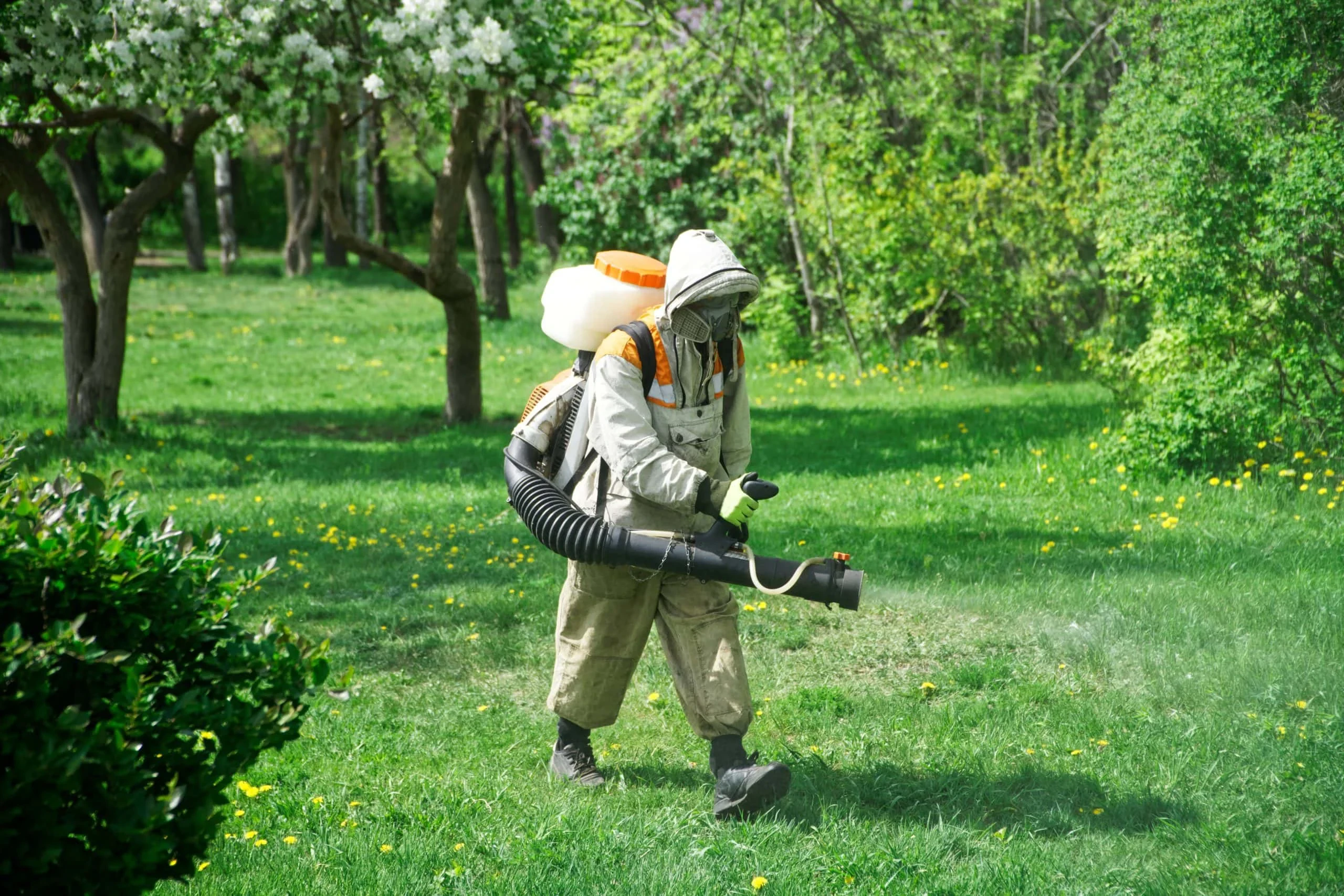
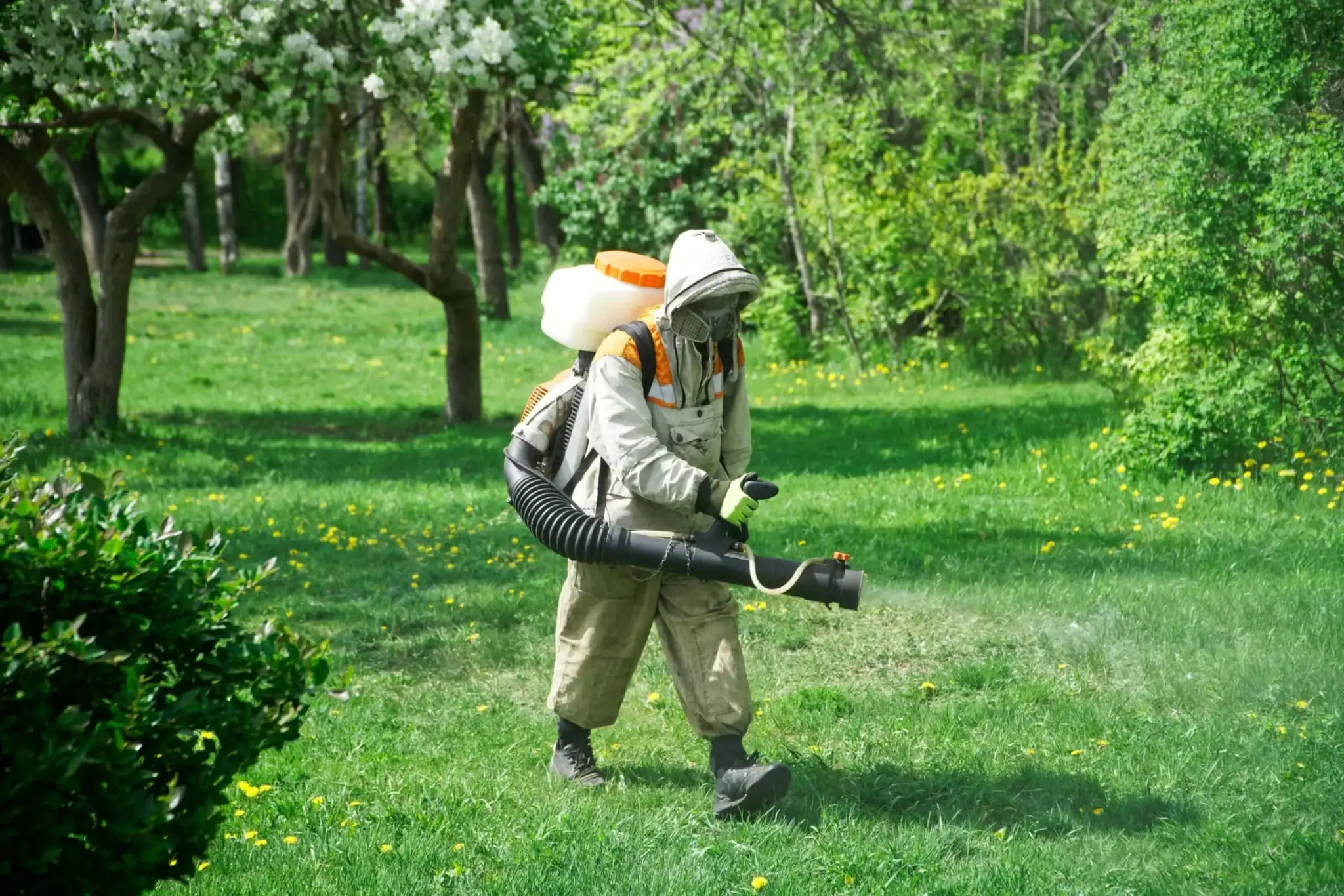
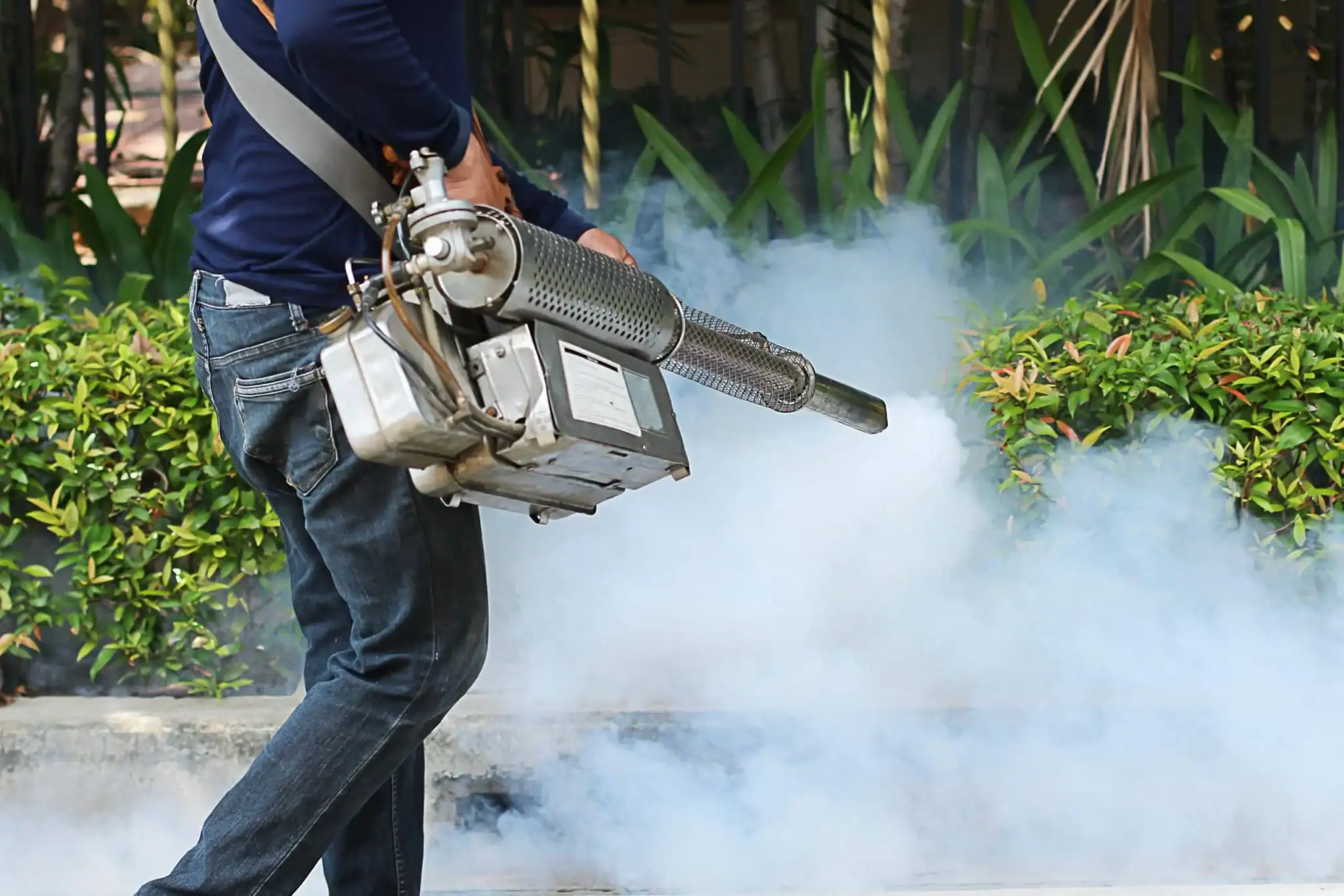
From there, treatment targets the full mosquito lifecycle — not just the adults you can see flying around. Larvae in standing water, eggs in moist soil near the property line, and adult mosquitoes resting in shrubs and ground cover all get addressed in a single visit. EPA-registered products are applied by an IPM-certified technician, which means the right product in the right place at the right amount — not a blanket chemical dump across your lawn.
Because Michigan’s mosquito season runs hard from May through September, we schedule treatments every 21 days to maintain continuous protection. Your flea and tick treatment is included in every visit at no extra charge — something most companies in the Owosso and Corunna area charge separately for, or skip entirely. If a competitor offers a lower rate, we’ll match it. You shouldn’t have to choose between quality and fair pricing.
Ready to get started?
Middletown is an unincorporated community. There’s no city mosquito abatement program, no township truck coming through to spray the neighborhood. If you want reliable mosquito control in Middletown, private professional service is the only real option — and what’s included in that service matters more than the name on the truck.
Every mosquito control program we offer includes a full barrier treatment targeting adult mosquitoes, larval breeding sites, and property perimeter entry points. Flea and tick treatment is included in every visit — not as an add-on, not as an upsell, just included. For families with dogs running through tall grass along the M-71 corridor or kids playing in larger rural yards, that full-yard protection is the difference between a yard you can actually use and one you avoid after 6 p.m.
We serve both residential and commercial properties throughout the Middletown area, including properties in Caledonia Township and the surrounding Shiawassee County communities. Discounts are available for seniors, veterans, and first responders — because in a community like this one, those aren’t marketing checkboxes. They’re real people who live here. Every program we build is around your specific property, your yard size, and what the season is actually doing — not a one-size-fits-all package pulled off a shelf.
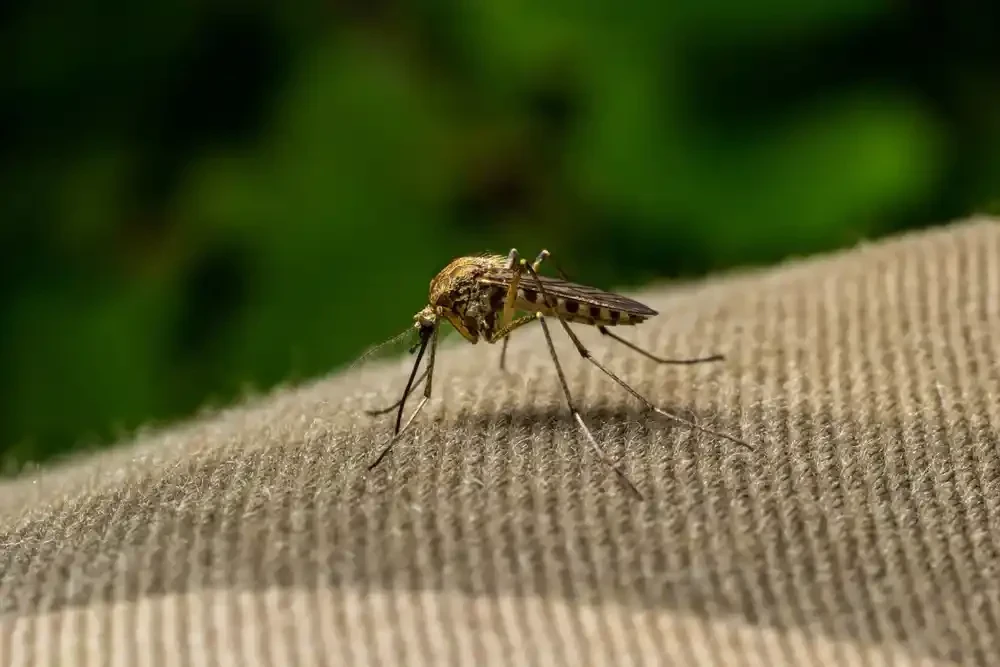
Yes — and honestly, professional treatment is more necessary near the river, not less. The Shiawassee River creates a persistent, renewable source of mosquito breeding habitat that doesn’t go away when you empty a bird bath or clean a gutter. Slow-moving water, seasonal flooding, and marshy banks along the river corridor in Caledonia Township give mosquitoes exactly what they need to breed continuously through the season.
Our professional barrier spray program works by interrupting that cycle at multiple points — treating adult mosquitoes in resting areas, larvae in standing water, and the perimeter where new mosquitoes migrate in from adjacent habitat. Applied every 21 days, this approach can reduce mosquito activity on your property by up to 90%. That’s what consistent, lifecycle-targeted treatment produces when it’s done correctly by a trained technician who knows the area.
The earlier you start, the better your results for the full season. In Michigan, mosquitoes become active when overnight temperatures consistently stay above 50°F — which in the Middletown area typically happens in late April to early May. Starting treatment before the first population surge means you’re establishing a barrier before mosquitoes have a chance to build up, rather than trying to knock down a problem that’s already exploded.
This timing matters even more in years with heavy spring rainfall. When the Shiawassee River floods and recedes, it leaves behind standing water that can produce massive mosquito hatches within a week or two. If your first treatment hasn’t gone down yet, you’re already behind. We recommend scheduling your first visit in late April or early May, then maintaining the every-21-day schedule through September when West Nile Virus risk is highest and populations are at their seasonal peak.
This is one of the most common questions we get, and it’s a fair one — especially in a community like Middletown where yards are bigger, dogs are outside more, and kids have real space to run around. Every product we use is EPA-registered and applied by an IPM-certified technician. IPM certification means we use the least-invasive approach that gets the job done — the right product, the right amount, the right location. Not a blanket chemical application across everything.
After treatment, there is a standard dry time before the yard is safe for re-entry — typically around 30 minutes to an hour once the application has dried, though your technician will give you the specific guidance for the products used that day. Once dry, the treated areas are safe for children and pets. We also follow Michigan’s Pesticide Notification Registry protocols, which allow sensitive residents near application sites to request advance notice — something we’re happy to accommodate if that’s a concern for your household.
Yes — and that’s actually one of the things that makes our program different from most providers in the Owosso and Shiawassee County area. Flea and tick treatment is included in every mosquito control visit at no additional charge. Most companies either skip it entirely or charge it as a separate line item. We include it because mosquitoes, fleas, and ticks share the same habitat — shaded vegetation, moist ground cover, tall grass along property edges — and treating one without the others leaves real gaps in your yard’s protection.
For Middletown properties that border natural vegetation, have dogs that spend time outside, or sit near the kind of rural landscape common along the M-71 corridor and into Caledonia Township, ticks are a genuine concern, not an afterthought. Lyme disease-carrying ticks are active in mid-Michigan, and the same barrier treatment that targets mosquitoes does meaningful work against tick populations in the same areas. You get complete yard protection in a single program — no separate appointments, no separate bill.
Pricing depends on the size of your property, but for a standard residential lot in the Middletown area, individual treatment visits typically range from $50 to $150 per application. Larger properties or those with more complex habitat — like yards that back up to natural vegetation near the Shiawassee River — may fall toward the higher end of that range based on what it takes to treat the full perimeter and breeding areas effectively.
What’s worth knowing is that our program includes flea and tick treatment at no extra charge, which is a real cost savings compared to companies that bill those separately. We also offer price matching for reasonable competitor rates, so if you’ve gotten a quote from another provider in the Corunna or Owosso area, bring it to us. Seniors, veterans, and first responders receive discounts as well. The goal is straightforward pricing with no surprises — you should know what you’re paying and why before anyone shows up at your door.
It’s a real risk — and Shiawassee County specifically has the documented history to back that up. West Nile Virus has been confirmed in Michigan every summer since 2002. Eastern Equine Encephalitis, which is significantly more severe, has been confirmed in Shiawassee County horses in prior seasons. These aren’t statewide statistics being loosely applied to your zip code — they’re county-level confirmed cases in the region where you live.
The mosquito species that transmit both diseases are active in mid-Michigan through the late summer months, with August and September representing the highest-risk window. For residents over 60 — a significant portion of Middletown’s homeowner population — West Nile complications carry elevated risk compared to younger adults. Reducing the mosquito population on your property doesn’t eliminate exposure entirely, but a 90% reduction in activity is a meaningful, measurable layer of protection. That’s what a properly maintained seasonal barrier program delivers, and it’s why the timing and consistency of treatment matters as much as the treatment itself.
Useful Links