
Hear from Our Customers
Out here along the Saginaw Road corridor near Farrandville, a lot of properties have the kind of setup that wasps genuinely love — wooded lot borders, older outbuildings, fence rows, barns with gaps in the siding, crawlspaces that haven’t been touched in years. That’s not a criticism, it’s just reality for semi-rural Vienna Township homes, and it’s exactly the kind of environment where yellow jacket colonies grow fast and go unnoticed until someone gets stung.
Once a nest is properly treated and removed, you get your outdoor space back. You can mow without scanning the ground for ground nests. Your kids can play outside. Your dogs can be in the yard. If you have livestock or a barn, you’re not managing around an aggressive colony every time you go in and out.
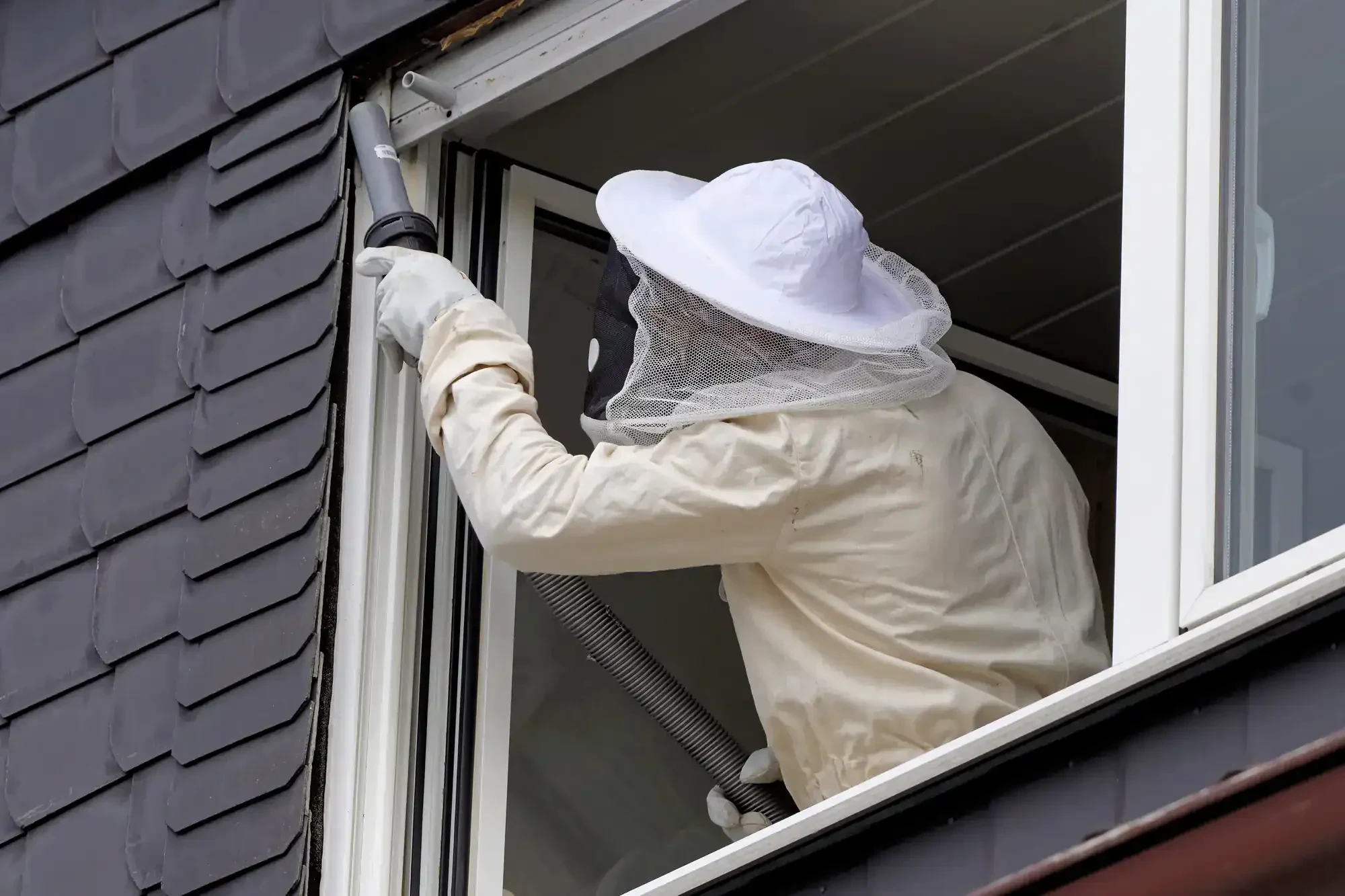
The older housing stock in the Farrandville area also means wall void nests are more common than people expect. German yellow jackets specifically target those gaps in aging siding and soffits — and a colony inside a wall is not something a hardware store spray reaches. Professional treatment gets to the source. That’s the difference between solving the problem and just irritating the colony.
We’re based in Swartz Creek — right here in Genesee County, along the same M-54 corridor that runs through Farrandville. Founded in 2005, we’ve spent 20 years building a reputation in this county one job at a time. Roger, our owner, brings 26 years of hands-on pest control experience to every service call — not a call center, not a seasonal crew, not a franchise playbook.
One thing that matters a lot to homeowners in the Farrandville area: you get the same technician every time. Not whoever’s available that week. Someone who knows your property, knows your layout, and knows what showed up last season. That continuity makes a real difference when you’re on a rural lot with a barn, a treeline, and a crawlspace that all need attention.
We hold Integrated Pest Management training, carry awards from Angie’s List and HomeAdvisor, and offer discounts for seniors, veterans, and first responders — because a lot of the folks we serve in the Vienna Township area have earned that.
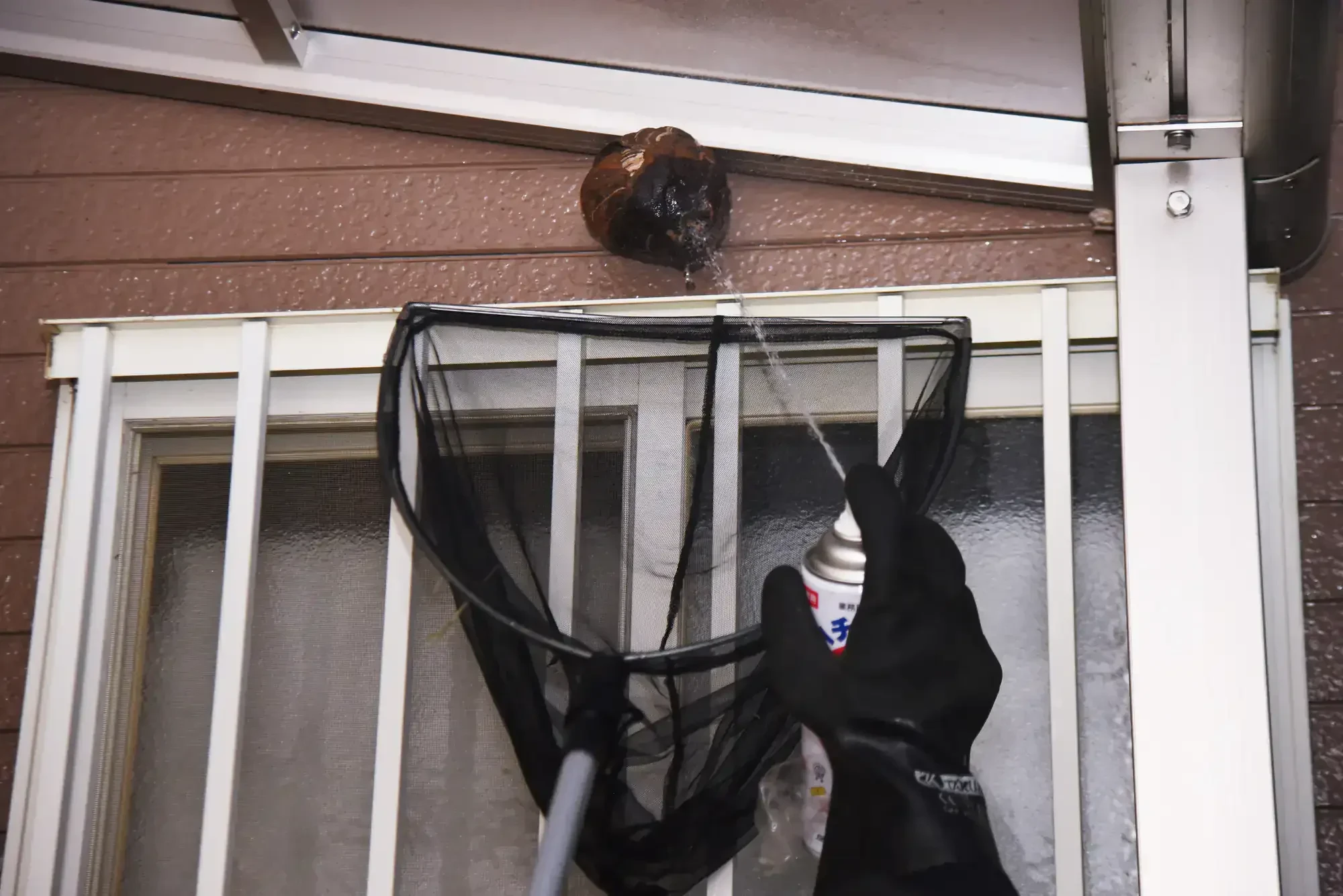
It starts with an inspection. Before anything gets treated, we identify exactly what species you’re dealing with, where the nest is located, and how accessible it is. That matters more than most people realize — a paper wasp nest under the eaves is a completely different situation than a yellow jacket colony in a ground burrow or inside a wall void of an older home. The approach has to match the problem.
Once we know what we’re working with, we treat the nest using the right products for the right location. Timing matters here too. In northern Genesee County around Farrandville, August and September are the peak danger months — colonies are at full size and workers get aggressive when food sources start to thin out. If you’re calling during that window, we treat accordingly. If you’re catching it earlier in the season, we can often address it before the colony reaches that level.
After treatment, we walk you through exactly when it’s safe to be back in that area — specific guidance based on what was used and where. If you have dogs, farm animals, or kids using the yard, you’ll know the answer before we leave. No vague “give it a few hours.” Real information, clearly communicated.
Ready to get started?
Wasp nest removal near Farrandville covers more ground than a single nest on a suburban porch. Properties out here along the Vienna Township grid often have multiple structures — a house, a garage, a shed, maybe a barn — and nests can show up in any of them. What you’re getting is a technician who looks at the full picture, not just the one spot you called about.
We handle yellow jacket nest removal, paper wasp removal, and bald-faced hornet nests — the large paper nests you’ll find in tree lines and shrubs along lot borders are common on properties backing up to wooded areas near Farrandville. Each species gets treated differently, and that specificity is what makes the treatment stick.
There are no binding contracts here. You’re not signing up for a program you didn’t ask for. If you need a nest removed, that’s what you get. If you want ongoing wasp control services or seasonal protection for your property, that conversation happens on your terms. We also match reasonable competitor rates — so if you’ve already gotten a quote, bring it. We’re not trying to be the most expensive option in Genesee County. We’re trying to be the one that actually solves the problem.
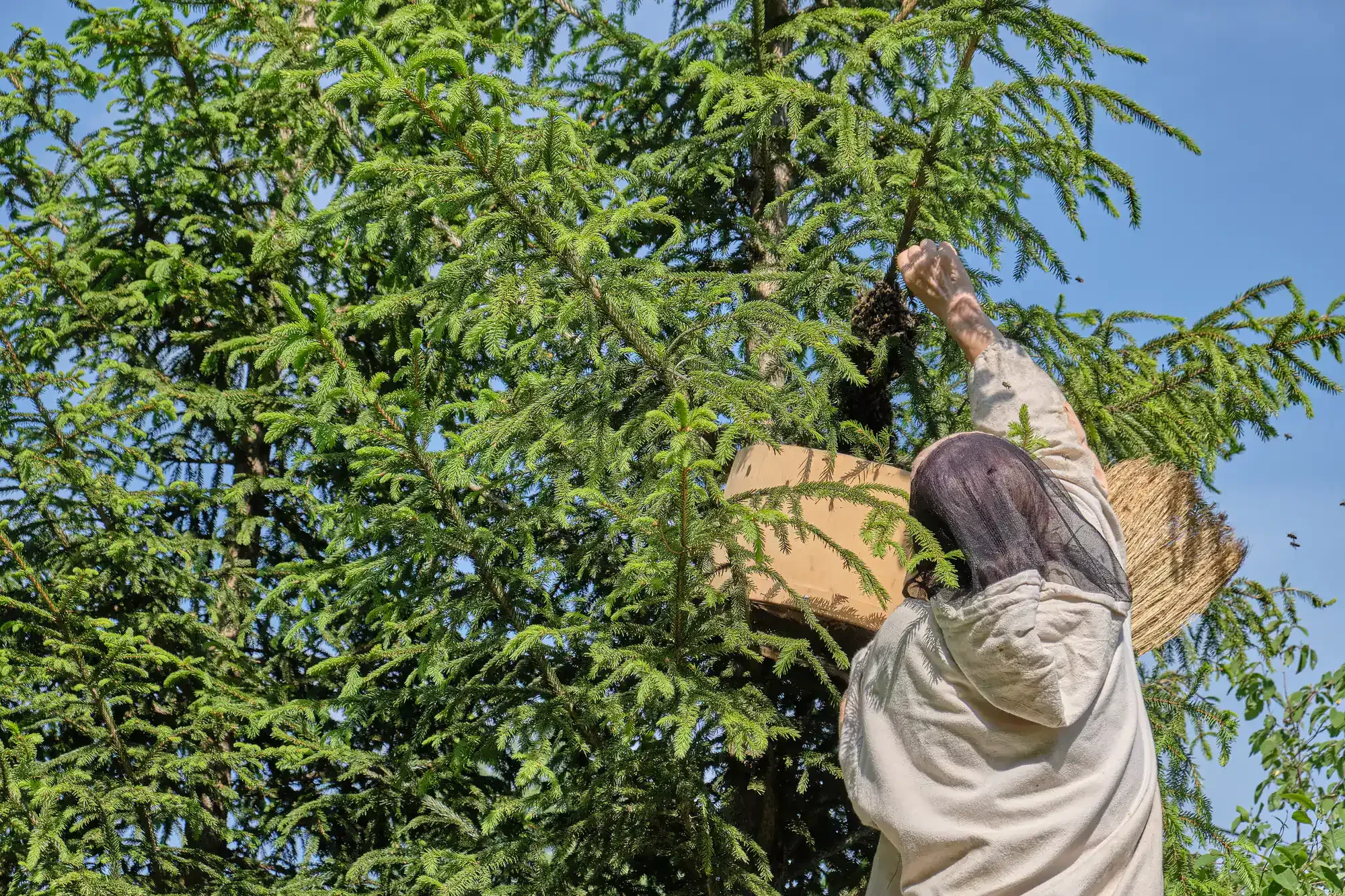
The short answer: if the nest is near a door, a path, a play area, a barn entrance, or anywhere people or animals pass regularly, it needs to be handled professionally. Yellow jackets in particular are not predictable — a colony that’s been quiet all summer can turn aggressive seemingly overnight, especially in August and September when their numbers peak and food sources get scarce.
The other factor is nest location. Ground nests are especially common on rural Vienna Township lots around Farrandville, and they’re almost impossible to treat effectively without the right products and approach. Hardware store sprays don’t reach the queen chamber underground, and disturbing the nest without eliminating it often makes the colony more defensive. If you’ve already tried a DIY spray and it didn’t work — or made things worse — that’s a strong sign it’s time to call us.
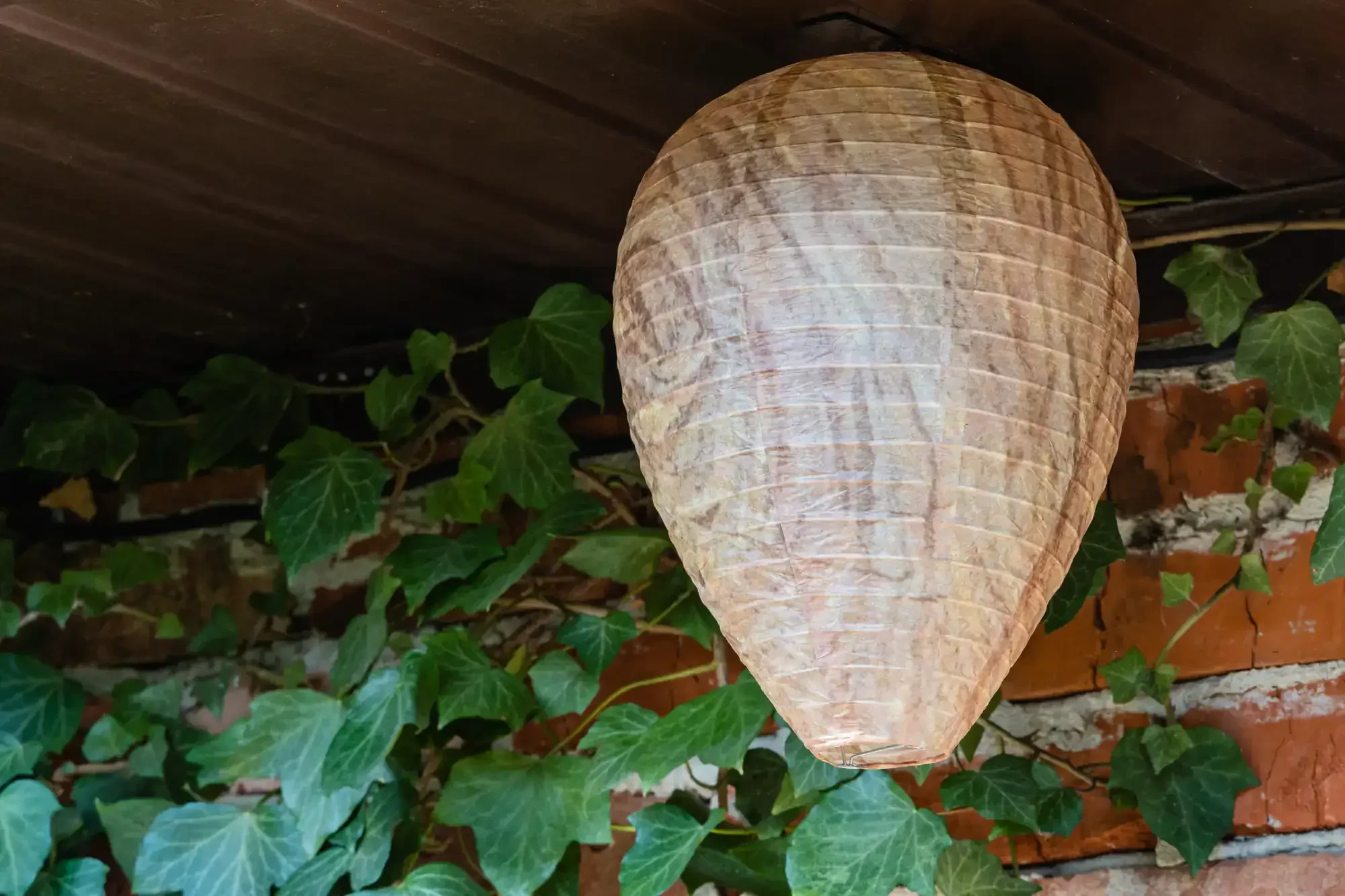
It matters quite a bit, actually. Paper wasps build the small, open-celled nests you typically see under eaves, on porch ceilings, or on fence rails — they’re defensive but not nearly as aggressive as yellow jackets. Yellow jackets are the ones most people in the Farrandville area are dealing with when things get serious. They nest in the ground, in wall voids, and in enclosed spaces, and they can sting repeatedly without dying. A colony can reach thousands of workers by late summer.
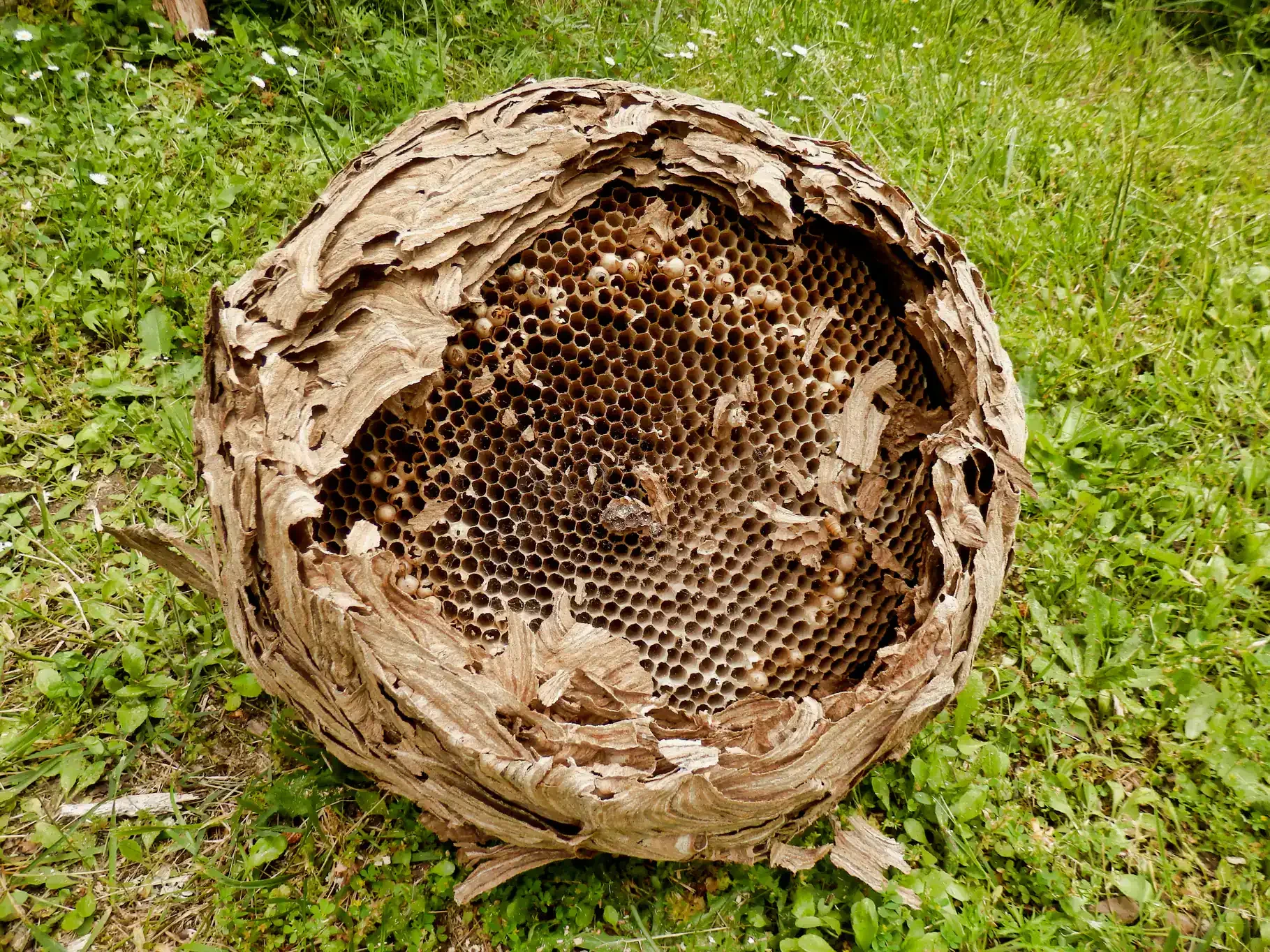
Bald-faced hornets are the third common species in northern Genesee County — they build the large, football-shaped paper nests in trees and shrubs. They’re aggressive defenders of their nest and have a longer stinging range than most people expect. Each of these requires a different treatment approach, different product selection, and different timing. Treating a yellow jacket wall void nest the same way you’d treat a paper wasp nest under the eaves won’t work — and that’s exactly why species identification is the first step we take.
This is one of the most common questions we get from homeowners in the Vienna Township area, and it’s a fair one — especially on properties with dogs, farm animals, or livestock that are in and out of the yard all day. The answer depends on what was used and where the nest was located, which is exactly why we give you specific re-entry guidance before we leave, not a generic estimate.
For outdoor areas like yards, barn perimeters, or fence rows, re-entry times are typically shorter than for enclosed spaces like wall voids or crawlspaces. We’ll tell you exactly what applies to your property based on the treatment performed. If you have animals that can’t be easily kept away from a treated area, let us know before the appointment — that’s information that affects how we approach the job, and we’d rather know upfront than have you figuring it out after the fact.
Yes, they can — and it’s worth understanding why. Wasps don’t reuse old nests, but they do return to favorable nesting sites. If a location worked well for a colony last year — good shelter, nearby food sources, a protected entry point — a new queen may scout that same area in spring and start building again. This is especially relevant for older homes along the Farrandville corridor where gaps in siding, deteriorating soffits, or unsealed crawlspace vents gave the original colony easy access.
The best way to reduce the chances of a repeat situation is to seal entry points after treatment. We can identify the likely access points during the service visit and point out what should be addressed. We don’t do the structural sealing work ourselves, but knowing where to focus is half the battle. Calling early in the season — April or May, when queens are just starting to build — is also significantly easier and less expensive than waiting until August when a colony is at full strength.
Nationally, wasp nest removal averages anywhere from $375 to over $700 depending on the species, nest location, and complexity of the job. Yellow jacket removal — especially ground nests or wall void nests — tends to run on the higher end of that range because of the access and product requirements involved. A paper wasp nest under the eaves is a simpler job than a German yellow jacket colony inside the wall of a 40-year-old farmhouse.
What we can tell you is that we match reasonable competitor rates. If you’ve gotten a quote from another licensed pest control company in Genesee County, bring it and we’ll work with you. We’d rather earn your business on the quality of the work than lose it over a price difference. One professional treatment done correctly is almost always less expensive than multiple failed DIY attempts — plus the cost of a sting-related medical visit, which isn’t a small thing if anyone in your household has an allergy.
Yes, and it’s straightforward. We offer discounts for seniors, veterans, and first responders — no complicated process, no fine print. Vienna Township and the communities around Farrandville have a real population of people who’ve served, whether in the military, in emergency response, or who are now retired on a fixed income. These discounts reflect what we actually believe about the people we’re working for, not a line on a flyer.
If you or someone in your household qualifies, just mention it when you call. We’ll apply it to your service. It won’t change the quality of the work, the technician you get, or how the job gets handled — it just means you pay a little less for the same professional wasp nest removal that every other customer in Genesee County receives.
Useful Links