
Hear from Our Customers
A wasp nest doesn’t stay small for long. What starts as a handful of workers in April can grow to several thousand by August — right when you’re trying to use your backyard, your deck, or your front entrance. By the time most Flint homeowners call, the colony is already at full strength and the wasps are aggressive. That’s when it stops being a nuisance and starts being a real risk.
Flint’s housing stock makes this worse than it sounds. Many homes in neighborhoods like Mott Park and Woodcroft Estates were built during the automotive boom of the 1920s through 1960s. Older homes mean more entry points — deteriorating fascia, gaps in soffits, worn caulking around windows — all of which give wasps exactly the kind of sheltered void they need to build a colony inside your walls or attic without you knowing until it’s a serious problem.
There’s also the vacant property angle that’s unique to Flint. As blighted structures continue to come down across the city, displaced yellow jacket colonies — especially ground-nesting species — don’t disappear. They relocate. If you live near a recently demolished property or an overgrown lot, your yard may be absorbing colonies that no longer have a home next door. Getting ahead of that with a professional inspection and treatment isn’t overcautious. It’s just smart.
We founded First Choice Pest Control on May 31, 2005 — which means we’ve been serving Genesee County homeowners for two full decades. Through the plant closures, through the water crisis, through every chapter Flint has lived. We’re based in Swartz Creek, about 15 miles southwest of downtown Flint via I-69, and this community is our community.
Roger Chinault, who founded the company and still leads it, brings 26 years of hands-on pest control experience to every service call. He’s not a distant executive — he’re an active professional who built this from the ground up and stands behind every job. First Choice holds awards from both Angie’s List and HomeAdvisor, is licensed through MDARD, and carries full insurance. None of that is fluff — it’s the baseline you should expect from anyone coming to your property.
What actually sets us apart is simpler: you get the same technician every year. Not a rotating temp. Not a part-time college student filling a summer schedule. A career professional who knows your property, remembers what happened last season, and shows up accountable.
When you call, the first thing we do is ask the right questions — where you’re seeing activity, what time of day it’s heaviest, whether it’s near an entry point, a roofline, or coming from the ground. That information tells us a lot before we even arrive. Yellow jackets nesting underground behave differently than paper wasps building under your eaves, and the treatment approach is different too. Knowing what you’re dealing with before we pull up saves time and gets better results.
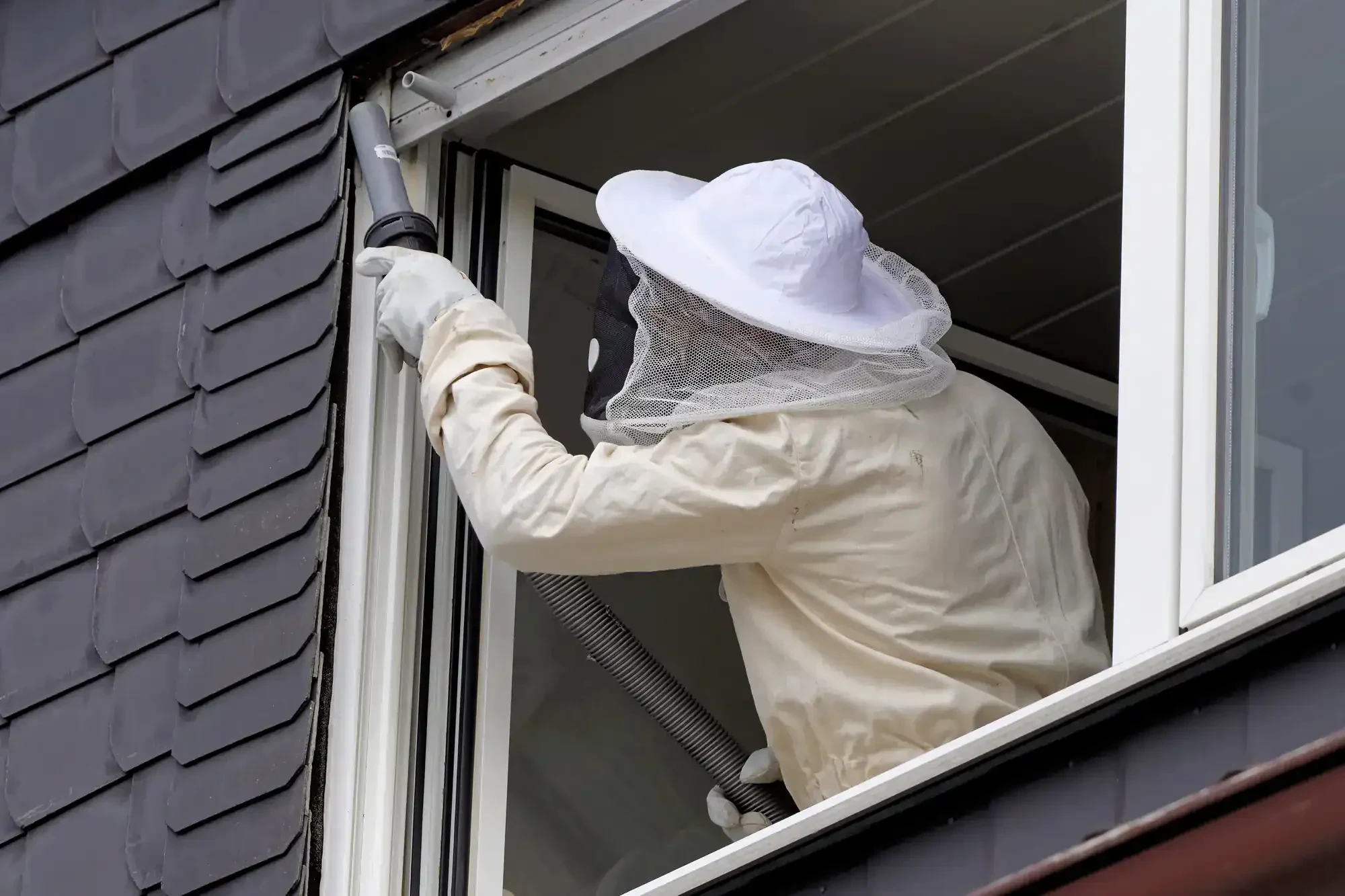
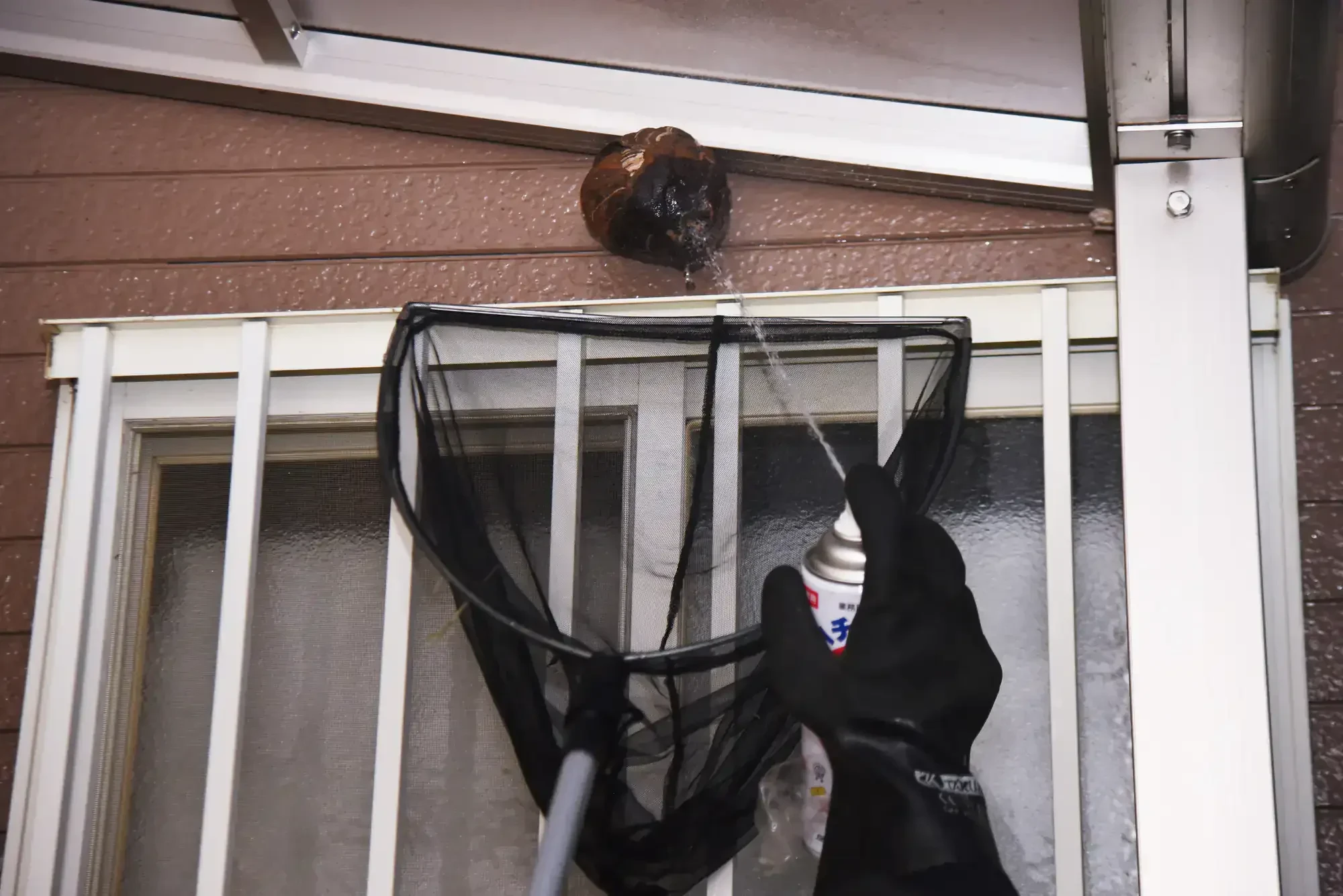
On-site, we locate the nest — including any secondary access points you may not have noticed — and apply professional-grade treatment directly to the colony. We don’t spray around the perimeter and hope for the best. The goal is full colony elimination, which means reaching the nest itself, not just the workers flying around outside it. In Flint’s older homes, that sometimes means treating inside a wall void or a structural cavity that a hardware store spray can’t reach. After treatment, we seal the entry points to cut off future access.
Timing matters here too. Flint’s humid summers push colonies to peak size between late July and early September — that’s when yellow jackets are at their most aggressive and most likely to sting without much provocation. If you’re calling during that window, we move quickly. And if wasps return to a treated site, we return too — no argument, no additional charge.
Ready to get started?
Every wasp nest removal in Flint starts with a proper inspection — not a glance at the obvious spot and a quick spray. We identify the nest location, the species involved, how established the colony is, and what structural conditions may be contributing to the problem. In Flint, that often means checking the areas that older homes are most vulnerable in: soffits, fascia boards, attic access points, and the foundation perimeter where ground-nesting yellow jackets like to establish in undisturbed soil.
Treatment is targeted and thorough. We use professional-grade products applied directly to the nest and the surrounding entry points — not a broad chemical application that treats everything in the area indiscriminately. Our technicians are trained in Integrated Pest Management, which means the approach is deliberate and focused on eliminating the actual threat. We’ll tell you exactly what was used, how long to wait before your family and pets return to the treated area, and what to watch for in the days following treatment. No vague reassurances — specific, honest answers.
We serve both residential and commercial customers across Flint and the surrounding Genesee County area. Whether it’s a single-family home off Clio Road, a rental property near the University of Michigan–Flint campus, or a commercial building along Dort Highway, the standard of service is the same. We also offer price matching on reasonable competitor rates, along with discounts for seniors, veterans, and first responders — because professional wasp control should be accessible to the people who’ve invested in this community the longest.
It does matter, because different species nest differently and require different treatment approaches. In Flint, the two most common threats are German Yellow Jackets and Eastern Yellow Jackets. German Yellow Jackets frequently nest inside wall voids, attics, and enclosed structural cavities — which is a particular issue in Flint’s older housing stock, where gaps in aging construction give them easy access. Eastern Yellow Jackets build underground, often in abandoned animal burrows or disturbed soil, and they’re the ones most likely to surprise you while mowing the lawn.
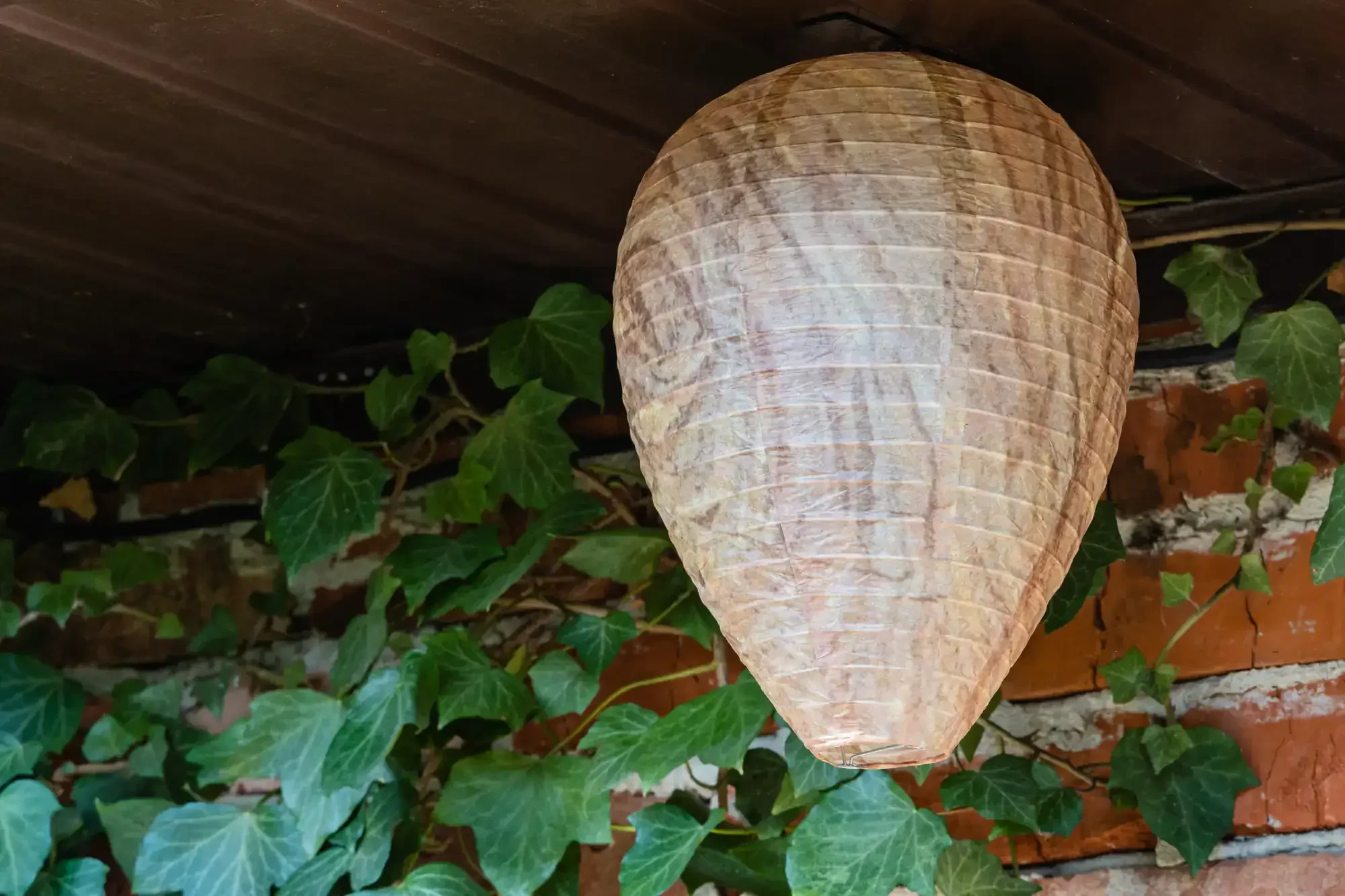
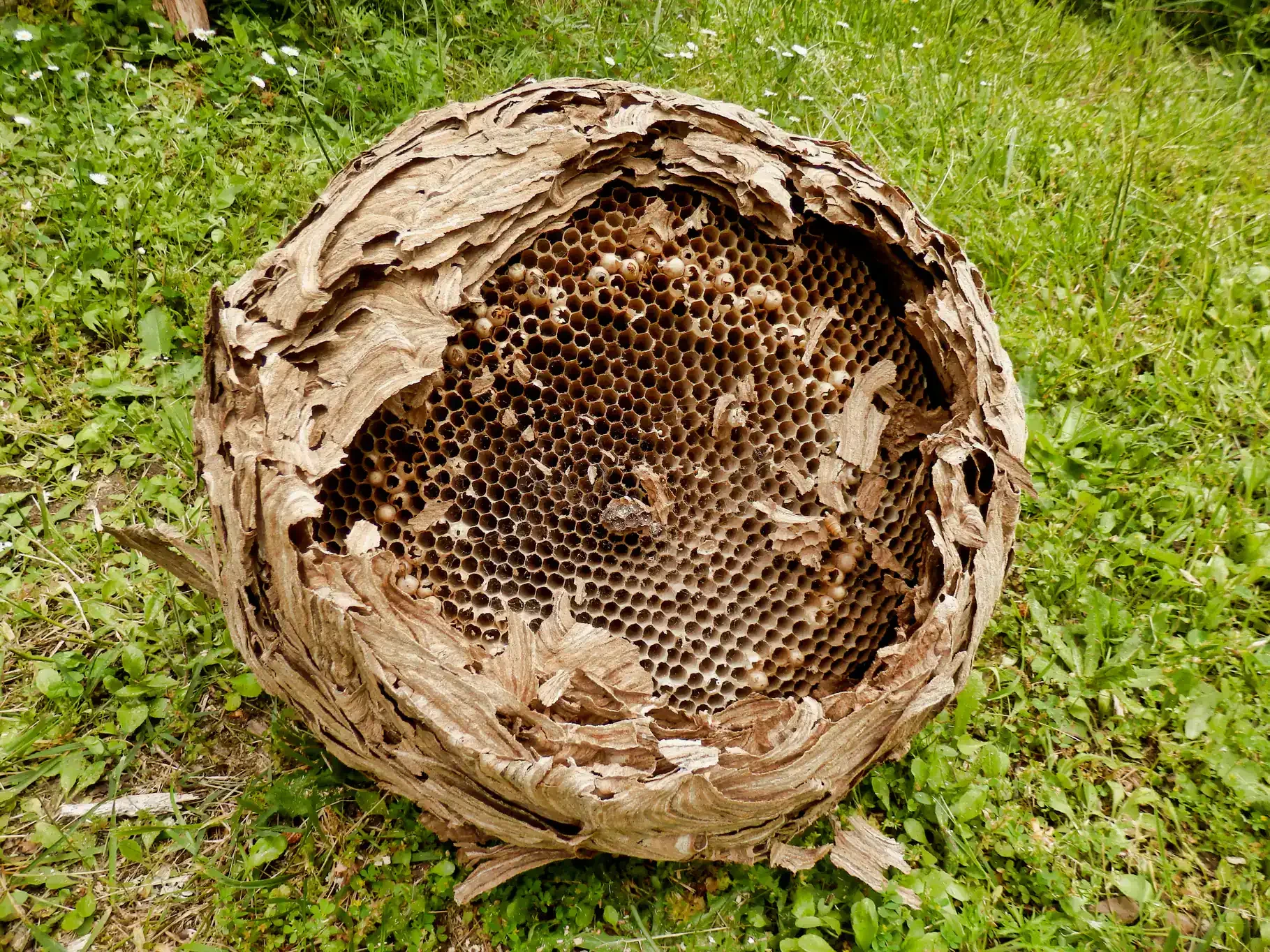
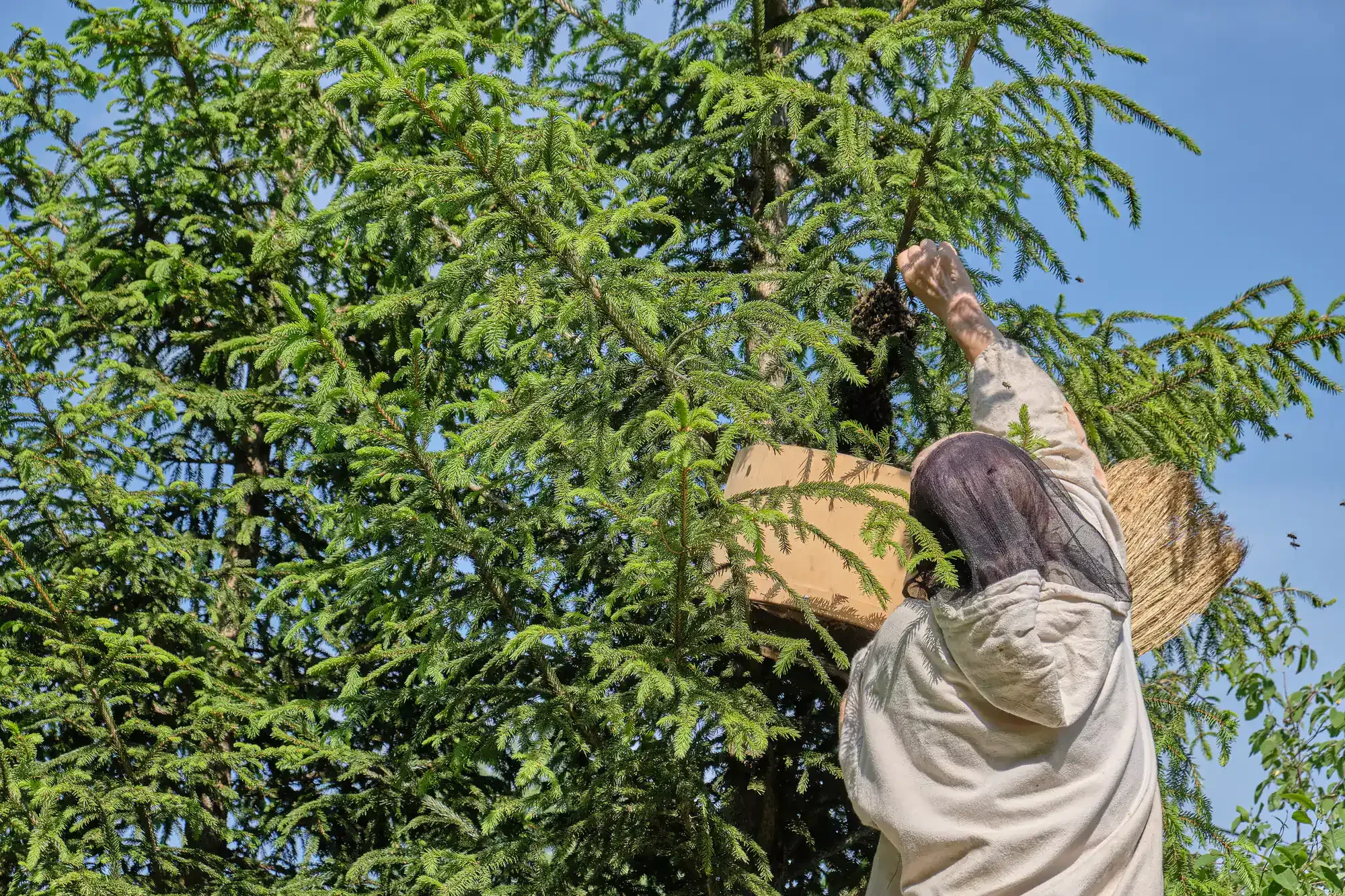
Paper wasps are also common and tend to build the open, umbrella-shaped nests you’ll see under eaves, on porch ceilings, or along rooflines. They’re less aggressive than yellow jackets but will sting if they feel threatened. Bald-faced hornets build the large, gray, papery aerial nests you sometimes see hanging from tree branches or attached to the side of a structure — those colonies can reach several hundred workers and should not be approached without professional equipment. Knowing which species you’re dealing with before treatment begins is the difference between a targeted solution and a wasted attempt.
The honest answer is that it depends on the nest — its location, the species, how established the colony is, and how accessible it is. A paper wasp nest under an eave is a straightforward job. A yellow jacket colony inside a wall void of an older home in Mott Park or a ground nest buried several feet deep in the backyard is a different scope of work entirely. Nationally, professional wasp removal runs anywhere from $375 to $525 for a standard nest, with yellow jacket removal averaging higher — around $725 — due to the aggression involved and the difficulty of reaching underground colonies.
What we can tell you is that we match reasonable competitor rates for wasp nest removal in Flint. If you’ve gotten a quote from another local company, bring it to us. We also offer discounts for seniors, veterans, and first responders — which matters in a city where a lot of long-term homeowners are on fixed incomes and shouldn’t have to choose between safety and affordability. One thing worth keeping in mind: a single emergency room visit for an anaphylactic reaction costs far more than professional removal. For roughly 1 in 100 adults, a sting isn’t just painful — it’s a medical emergency.
Yes — and this is something Flint homeowners deal with more than most. The Genesee County Land Bank has been actively demolishing blighted structures across Flint for years, with thousands of properties already down and more underway. When a structure that housed a yellow jacket colony in its walls or foundation is demolished, that colony doesn’t disappear. The workers scatter, and if there’s suitable habitat nearby — undisturbed ground, a gap in a neighboring structure, an overgrown lot — they’ll establish a new nest within a relatively short distance.
If you live near a recently demolished property, a long-vacant lot, or an area where blight remediation is actively happening in Flint, your risk of encountering a displaced yellow jacket colony is genuinely elevated compared to neighborhoods where housing stock is stable. It’s worth doing a perimeter inspection of your property in late spring and early summer, paying particular attention to ground-level areas, foundation gaps, and any undisturbed soil near the property line. If you’re seeing yellow jacket activity near the ground and can’t locate a clear entry point, call before you start digging around — disturbing an underground nest without proper protection is how people end up in the ER.
This is one of the most common questions we get, and it deserves a straight answer — not a vague “once it’s dry, you’re fine.” The safety window depends on the specific product used, the location of the nest, and how the treatment was applied. For exterior nest treatments, the standard wait time before the area is safe for children and pets is typically two to four hours after the product has dried completely. For treatments inside wall voids or enclosed spaces, the guidance may be different, and we’ll tell you exactly what applies to your specific situation before we leave.
Flint residents have every reason to ask pointed questions about what’s being applied to their property — that’s not being difficult, that’s being responsible. Our technicians are trained in Integrated Pest Management, which means we use targeted professional-grade products applied directly to the nest and entry points, not broad applications across your yard or garden. We’ll tell you the product name, the application method, and the specific re-entry timeframe before we pack up. If you have a child with asthma, a dog that spends time in the treated area, or any other specific concern, tell us upfront — we’ll factor that into how we approach the job.
The honest answer is as soon as you find it — but timing does affect what you’re dealing with. In Flint’s climate, queen wasps emerge in April and May and begin building new nests from scratch. At that stage, a colony might have fewer than 50 workers and is much easier and less expensive to treat. If you catch it early, the job is straightforward and the risk to you during treatment is significantly lower.
By late July through early September, Flint’s humid continental summers have pushed most yellow jacket colonies to their peak size — anywhere from 5,000 to 15,000 workers, depending on the species. At that point, the workers are also shifting their diet from protein to sugar, which makes them more aggressive and more likely to sting without much warning. That’s when calls spike and when the job becomes more involved. If you’ve been watching a nest and hoping it would go away on its own, it won’t — colonies don’t abandon active nests mid-season. The longer you wait, the larger the colony and the higher the risk. After the first hard frost in late October or November, workers die off and the nest goes dormant, but waiting until then means spending your entire outdoor season avoiding part of your own yard.
Yes — we offer discounts for seniors, veterans, and first responders. Flint has a significant population of long-term homeowners, many of whom are retired or on fixed incomes, and a community with deep ties to military service and public safety. These discounts exist because we think professional pest control should be within reach for the people who’ve put the most into this city over the years — not just for newer residents or higher-income households.
If you qualify, just mention it when you call. There’s no paperwork process or hoops to jump through. Combined with our price-matching policy — where we’ll match any reasonable competitor’s rate for wasp nest removal in Flint — the goal is straightforward: make sure cost isn’t the reason someone leaves a yellow jacket nest untreated in their backyard all summer. We serve both residential and commercial customers across Genesee County, and the same pricing transparency applies across the board. If you’re a property manager, landlord, or business owner dealing with a wasp problem on a commercial property near downtown Flint or along one of the major corridors, reach out — we handle those accounts the same way we handle every job, with a career professional and a clear scope of work from the start.
Useful Links