
Hear from Our Customers
A wasp nest that goes untreated in August isn’t a minor inconvenience — it’s a colony that can hold thousands of workers at peak aggression, right when you’re trying to use your yard, your barn, or your garden. By the time most Morseville homeowners call, they’ve already had a close call. The goal isn’t just to knock down a nest. It’s to make sure the problem doesn’t come back to the same eave, the same wall void, or the same corner of your outbuilding next season.
Rural properties in Taymouth Township come with more exposure than most. Large lots, wooded edges along the river corridor, pole barns, sheds, older outbuildings — every one of those is a potential nesting site, and most of them go unchecked until someone stumbles into the wrong spot. The moist, wooded habitat near the Flint River is exactly the kind of environment where yellow jackets build ground nests that are nearly invisible until you’re standing on top of them.
When the job is done correctly, you’re not just sting-free for the week. Entry points are sealed. The nest structure is gone. And you have a clear picture of what to watch for next spring before a new colony gets established.
We’ve been serving mid-Michigan homeowners since May 31, 2005 — and in those 20 years, we’ve built our reputation the old-fashioned way: by solving the problem the first time and being accountable when something needs a second look. Roger Chinault founded First Choice Pest Control and brings 26 years of hands-on pest control experience to every service call. That’s not a corporate bio — that’s someone who has personally treated more wasp and yellow jacket infestations across Genesee and Saginaw counties than most technicians will see in a career.
Morseville sits at the edge of our service territory, and that proximity matters. We understand the rural property profile that defines Taymouth Township — the aging outbuildings, the wooded lot lines, the river corridor exposure — because it’s the same profile we’ve been working with for two decades across mid-Michigan. You get the same technician every time, someone who learns your property and doesn’t have to start from scratch each visit. No rotating crews, no part-time seasonal hires. Career professionals only. Angie’s List and HomeAdvisor have both recognized us for consistent service quality, and the work speaks for itself.
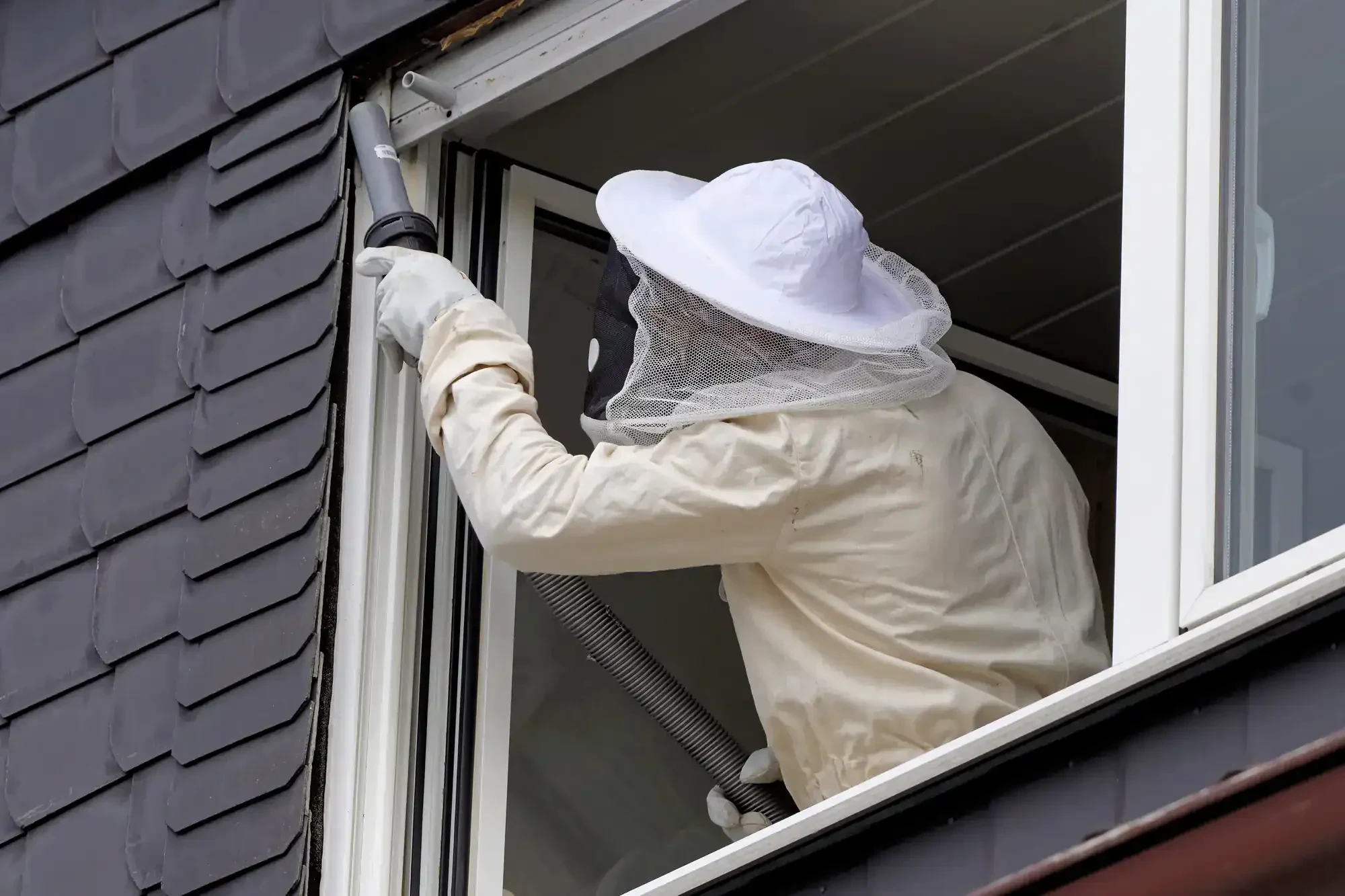
It starts with a thorough inspection of your property — not just the obvious nest you can see, but the eaves, the soffits, the outbuilding gaps, the ground edges along your wooded property line, and anywhere else a colony could be building without you knowing. On rural Morseville lots near the Flint River, that inspection matters more than it does on a tight suburban lot. There’s more ground to cover, more structures to check, and more nesting environments that can hide a colony until it’s reached a dangerous size.
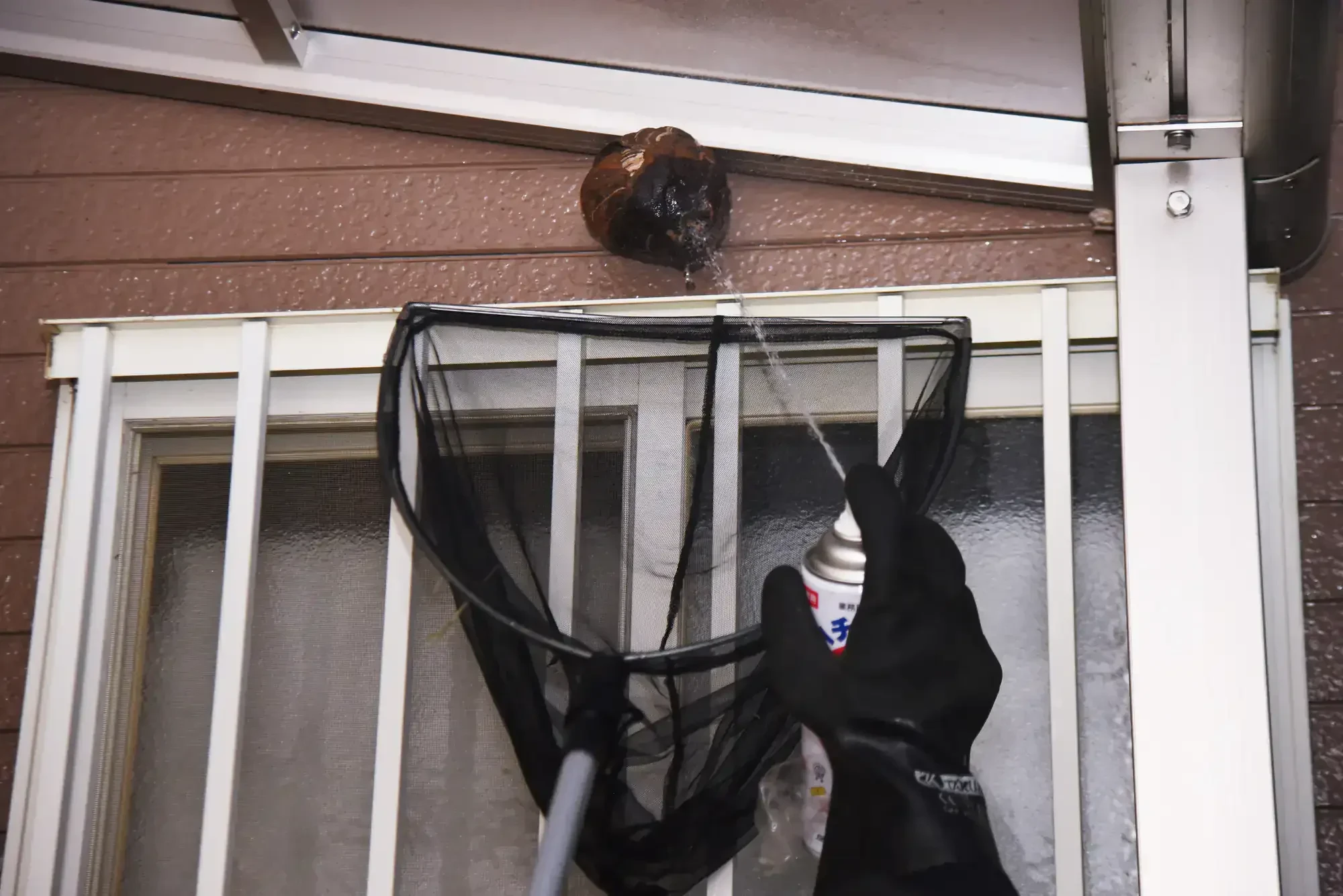
Once the inspection is complete, treatment is targeted to the specific species and nest location. Ground nests — common in the moist, riparian soil near the river — are treated with professional-grade insecticidal dust applied directly into the nest entrance. Aerial nests, wall voids, and eave nests each require a different approach, and the right call depends on the species, the nest size, and how the structure is built. After the colony is eliminated, the nest structure is physically removed and entry points are sealed to prevent re-nesting in the same location.
Michigan’s wasp season peaks hard in August and September, when yellow jacket colonies reach maximum size and aggression. If you’re calling during that window, urgency is real. We move quickly, and if activity returns after treatment, we come back — no argument, no additional charge.
Ready to get started?
Every wasp nest removal service we provide covers the full scope — inspection, targeted treatment, physical nest removal, and entry point sealing. There’s no half-job here. For properties in Taymouth Township with multiple structures, that means the barn gets checked alongside the house. The shed gets looked at. The wooded edge along your back lot line doesn’t get skipped because it’s inconvenient to reach.
Species identification matters more than most homeowners realize. Paper wasps, yellow jackets, and bald-faced hornets each behave differently, nest differently, and require different treatment approaches. Yellow jackets in particular — the species most likely to cause problems in the Morseville area given the river corridor habitat — are the most aggressive and the most likely to nest in locations you can’t see: underground, inside wall voids, under barn floors. Treating them without knowing exactly what you’re dealing with is how DIY attempts go wrong.
We hold Integrated Pest Management (IPM) training, which means treatment is precise and targeted — not a blanket chemical application across your property. That matters when you have a garden, a well, livestock nearby, kids, or pets. Seniors, veterans, and first responders in the Morseville area receive a discount on services, and we’ll match any reasonable competitor’s rate. No binding contracts, ever. You’re not locked in — you’re just taken care of.
This is one of the most common questions, and it’s a fair one — especially on a rural Morseville property where kids and pets have a lot more space to roam than a suburban backyard. The short answer is yes, but the timeline depends on where the nest was located and what treatment method was used. For exterior eave and aerial nests, most treated areas are safe to return to within a few hours once the product has dried. For ground nests or wall void treatments, you’ll get a specific re-entry window based on what was applied and where.
We use Integrated Pest Management principles, which means the treatment is targeted to the nest location — not broadcast across your entire yard. That matters when you’re dealing with a garden, a well, or animals on the property. Your technician will walk you through exactly what was used, where it was applied, and when it’s safe to resume normal activity in each area of your property. No guessing, no vague timelines.
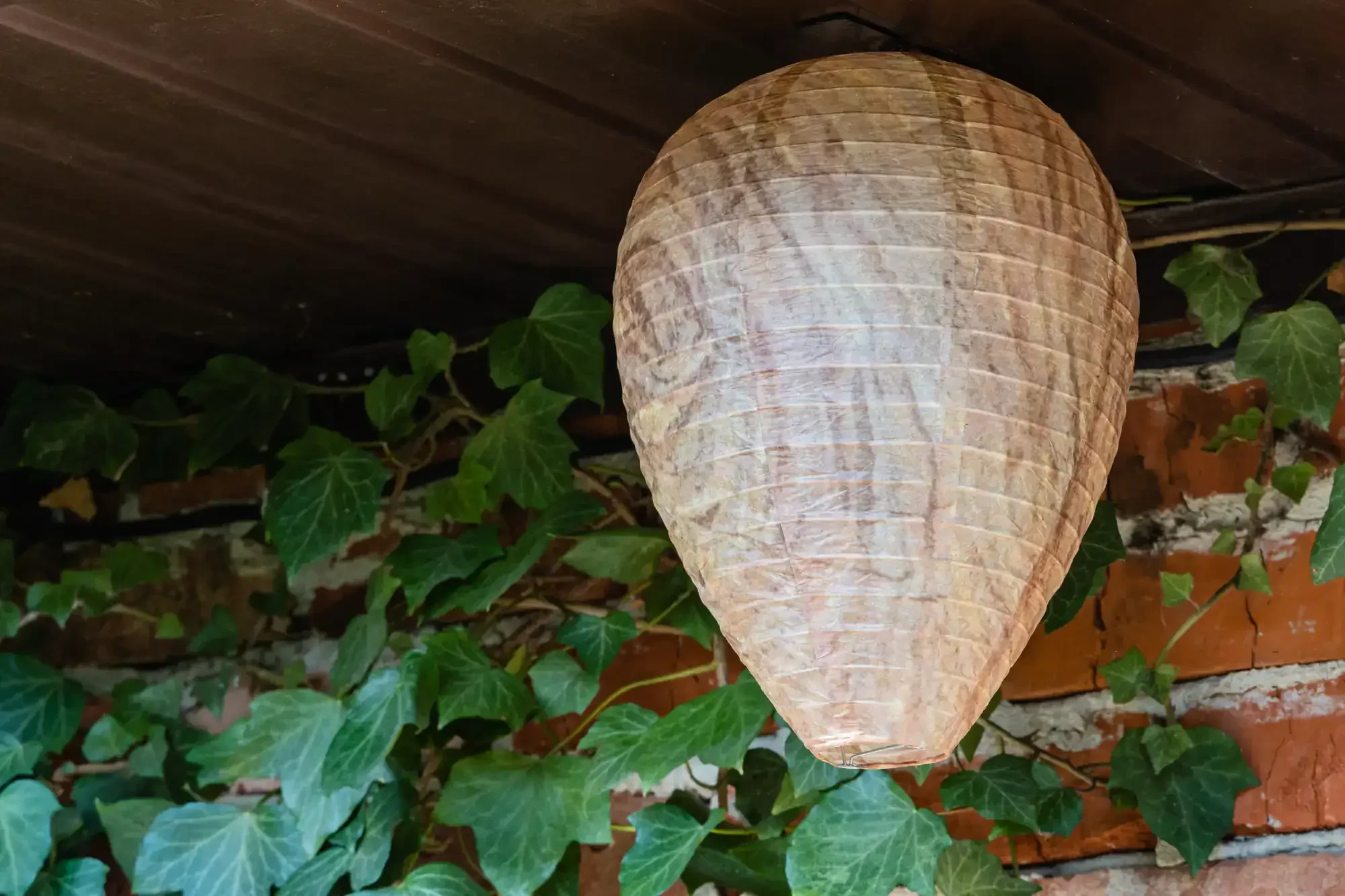
The difference matters a lot when it comes to treatment. Paper wasps build the open, umbrella-shaped nests you typically see under eaves, on porch ceilings, or on the rafters of outbuildings. They’re defensive but not usually aggressive unless you get very close. Yellow jackets are a different situation entirely. They build enclosed nests — often underground, inside wall voids, or in the insulation cavities of older structures — and they’re significantly more aggressive, especially from August through September when colonies are at peak size.
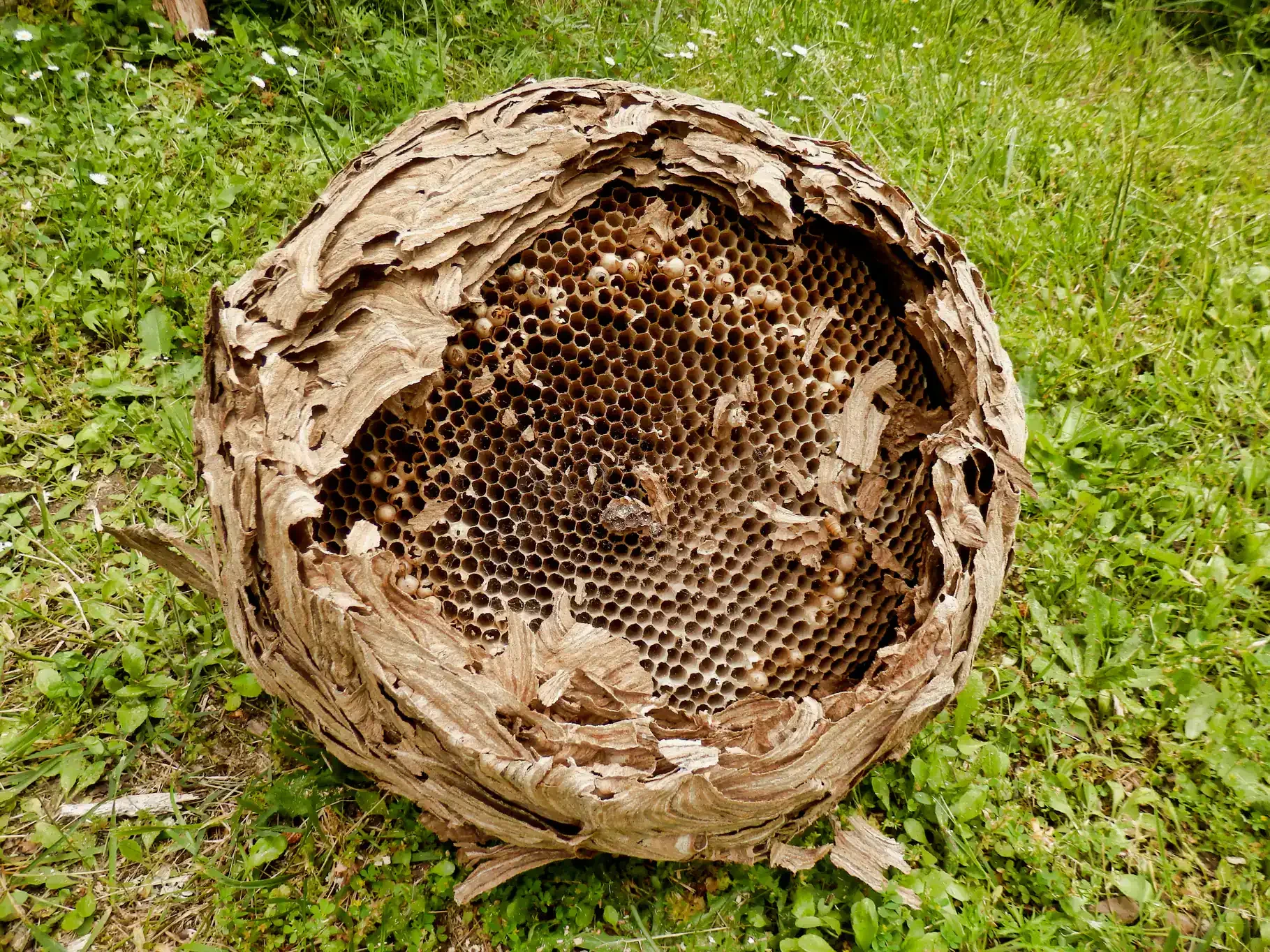
In the Morseville area, yellow jacket ground nests are especially common near the Flint River corridor, where the moist, wooded soil gives them ideal conditions for burrowing. These nests are hard to spot until you’ve already disturbed one, which is when stings happen. Bald-faced hornets build the large, papery aerial nests you’ll sometimes see in tree canopies or on the sides of barns. Each species requires a different treatment approach, which is why correct identification before treatment is the first step — not an afterthought.
You can try, and a lot of Morseville homeowners do before they call. The problem is that hardware store sprays are designed for small, accessible nests that you can directly hit from a safe distance. They don’t reach deep into ground nests, they don’t penetrate wall voids, and they don’t eliminate the queen — which means the colony can rebuild. Worse, a partial application on a large colony, especially a yellow jacket nest in late summer, often triggers a mass defensive response before the spray takes effect.
The other issue is protective equipment. A can of wasp spray gives you range, but it doesn’t protect you if you’re standing over a ground nest with thousands of workers when the colony responds. Professional technicians use the right protective gear, professional-grade products, and application methods designed for the specific nest type and location. For a small paper wasp nest on an accessible eave early in the season, DIY might be reasonable. For anything underground, inside a wall, or at peak summer colony size, the risk-to-reward math doesn’t work in your favor.
August and September are the peak danger months across Michigan, and Morseville is no exception. Yellow jacket colonies that started with a single queen in April can reach 5,000 to 15,000 workers by late summer. At that size, the colony is maximally defensive, and workers are also shifting toward scavenging behavior — which is why you start seeing them around outdoor meals, garbage, and garden areas as summer winds down. The agricultural surroundings near Taymouth Township add to this pressure, since farmland provides abundant late-season foraging that keeps colonies active and aggressive longer.
That said, the best time to call is actually earlier — late spring or early summer, when colonies are small and easier to treat. A nest with 50 workers is a very different job than one with 5,000. If you’re spotting increased wasp activity around a specific area of your property in May or June, that’s worth a call before it becomes an August emergency. And if you’re already in the August-September window, don’t wait — colonies don’t slow down on their own until the first hard frost.
The colony itself won’t survive once it’s been properly treated — the workers die off and the queen is eliminated. What can happen, though, is that a new queen finds the same location attractive the following spring. Wasps don’t reuse old nests, but they do scout for protected nesting sites, and if the same entry point, eave gap, or ground burrow is still accessible, a new colony can establish itself in the same general area. This is why sealing entry points after treatment is part of the job, not an optional add-on.
On older Morseville properties with aging outbuildings, weathered soffits, or gaps in barn siding, there are often multiple potential entry points that need attention. Your technician will identify the ones that were used and seal them as part of the service. If you want a broader assessment of your property’s vulnerability to re-infestation — especially heading into the following spring — that’s a conversation worth having during the service visit. Knowing where the next colony is likely to try before it tries is a lot easier than treating it after it’s established.
Yes. We offer discounts for seniors, military veterans, and first responders throughout the service area, including Morseville and the surrounding Taymouth Township community. Taymouth Township skews older — the median age is 46 and a lot of longtime homeowners have been on their properties for decades. If you or your spouse are a senior, a veteran, or a first responder, mention it when you call and it’ll be applied to your service.
We also match reasonable competitor rates. So if you’ve already gotten a quote from another company serving Saginaw County — Beck’s, Orkin, or anyone else — bring it to the conversation and we’ll work with you on pricing. There are no binding contracts, which means you’re not signing anything that locks you in. You call because you have a problem, the problem gets solved, and you decide what comes next based on the experience.
Useful Links