
Hear from Our Customers
A wasp nest that looked manageable in June can house thousands of workers by August. Yellow jacket colonies in Michigan regularly grow to 5,000 or more workers by late summer, right when families in New Lothrop are most active outside. That’s the window when most stings happen, most ER visits occur, and most homeowners realize the can of spray from the hardware store wasn’t enough.
On a rural property in Hazelton Township — with kids running through the yard, dogs exploring the field edges, and outbuildings that haven’t been opened since last fall — the risk is higher than it is for a typical suburban lot. Barns, wood piles, old fence posts, and undisturbed ground along field edges are exactly where yellow jackets and paper wasps build. You may not know a ground nest exists until someone walks over it.
What changes after professional wasp nest removal is simple: you stop managing the threat and start using your property again. No more rerouting around the back of the garage. No more keeping the kids away from the swing set. No more wondering if the nest in the barn eave is getting bigger. The problem gets handled completely — and you get a straight answer on when it’s safe for your family and animals to go back outside.
We’ve been serving Michigan homeowners since May 31, 2005 — and this year marks 20 years of doing this work the same way: one technician, one property, no shortcuts. Roger Chinault founded First Choice Pest Control and brings 26 years of hands-on pest control experience to every job. That means when you call about a wasp nest near your home in New Lothrop or a yellow jacket colony buried in the ground on a rural Hazelton Township property, someone who actually knows what they’re looking at is handling it.
We’re family-owned, MDARD-licensed, fully insured, and trained in Integrated Pest Management. You won’t get a seasonal temp or a rotating technician who’s never been to Shiawassee County. The same professional comes back year after year, learns your property, and knows where to look before problems escalate. Awards from Angie’s List and HomeAdvisor reflect what our customers already know: this is a company that earns repeat business because we do the job right.
It starts with a call. You describe what you’re seeing — where the nest is, how long it’s been there, whether anyone’s been stung — and we give you a straight answer on what comes next. No vague estimates, no pressure. If you’ve already gotten a quote from another company, ask about price matching. If it’s reasonable, we’ll match it.
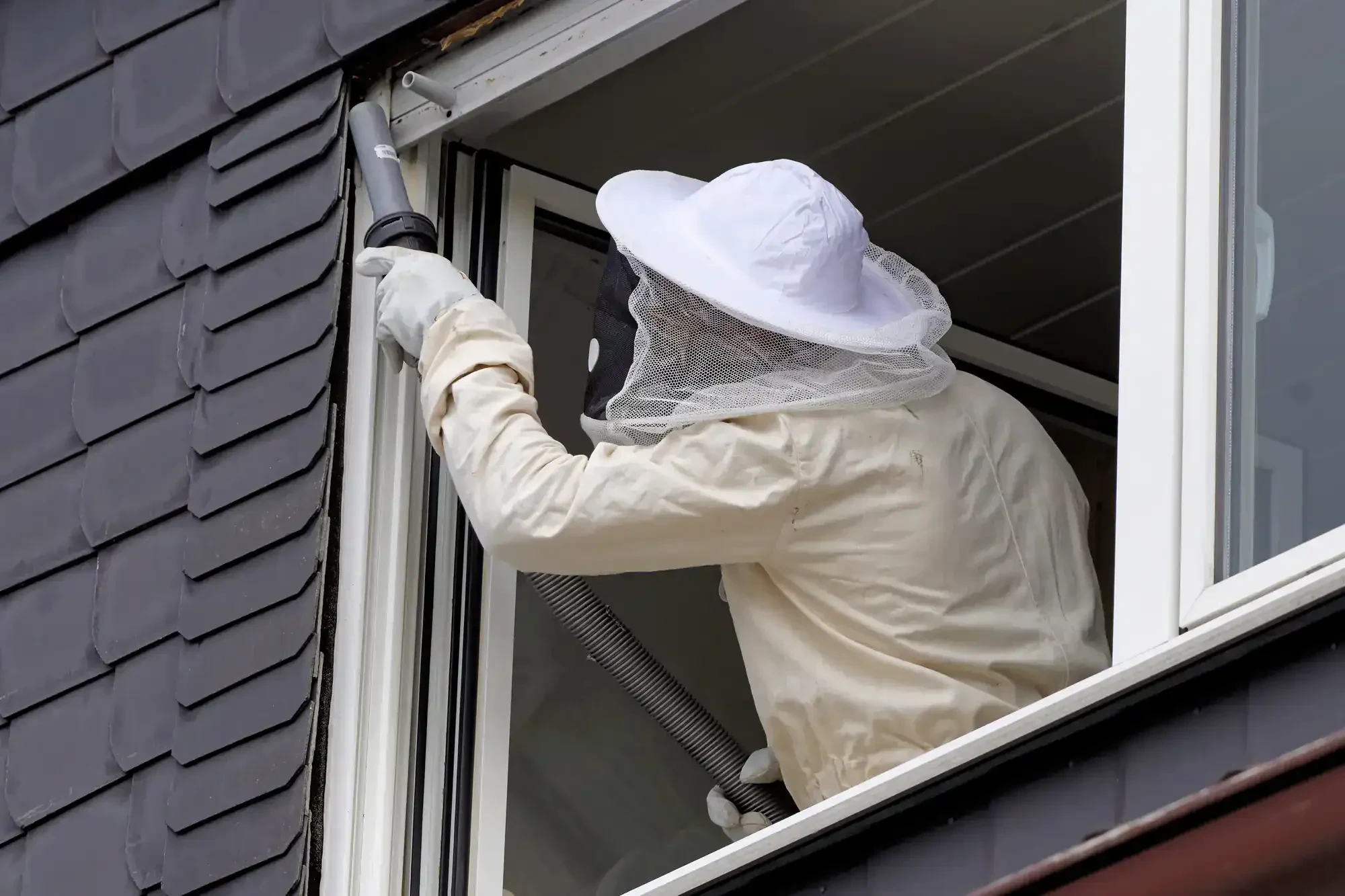
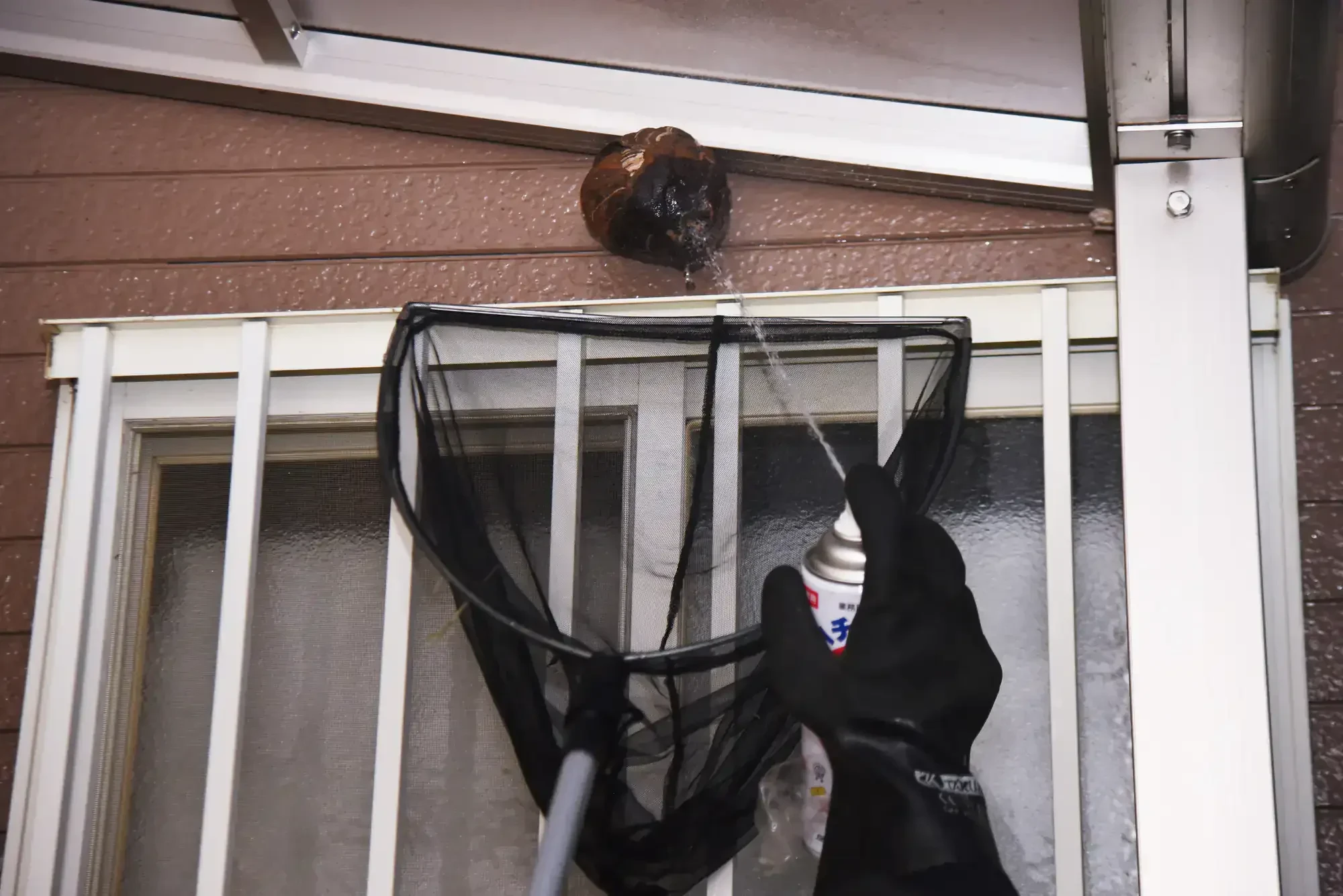
When our technician arrives, the first step is a thorough inspection — not just of the visible nest, but of the surrounding area. On rural properties in and around New Lothrop, that matters more than it might in a denser neighborhood. Older outbuildings, barn eaves, wood piles, and soft ground near field edges are all places a secondary nest can go unnoticed. The technician identifies the species, locates the colony, and determines the right treatment approach based on where the nest is and how established it is. Ground nests, wall voids, and aerial nests each require a different method — and the approach is always targeted, not a blanket chemical application across your property.
After treatment, you’ll get a clear, specific answer: what was used, what to expect over the next 24–48 hours, and exactly when it’s safe for children, pets, and livestock to return to the treated area. That last part isn’t an afterthought — in a community where many families have animals and kids who use the yard daily, it’s one of the most important things you’ll hear.
Ready to get started?
We handle the full range of stinging insect problems common to properties in and around New Lothrop — paper wasps under eaves and in barn rafters, yellow jacket ground nests in open yards and field edges, bald-faced hornets in aerial nests near tree lines, and European hornets in wall voids and hollow trees common to older homes in the village. This isn’t a one-size-fits-all spray job. The treatment is specific to the species, the nest location, and the layout of your property.
For homeowners in August Meadows or on village lots with newer construction, the concern is usually nests under soffits, around window frames, or in attic vents. For those on rural acreage in Hazelton Township, the picture is different — more structures, more undisturbed ground, more places for colonies to establish before anyone notices. We account for that difference. The same MDARD-licensed technician who treats your property this season will know it next spring, which means early-season nests get caught before they become late-summer emergencies.
There are no binding contracts. We offer discounts for seniors, veterans, and first responders — and in a community with strong agricultural and military family roots like New Lothrop, that’s not a footnote. We also serve commercial properties throughout the area, so if you’re managing a farm operation, a rental property, or a business with a stinging insect problem, the same professional-grade service applies.
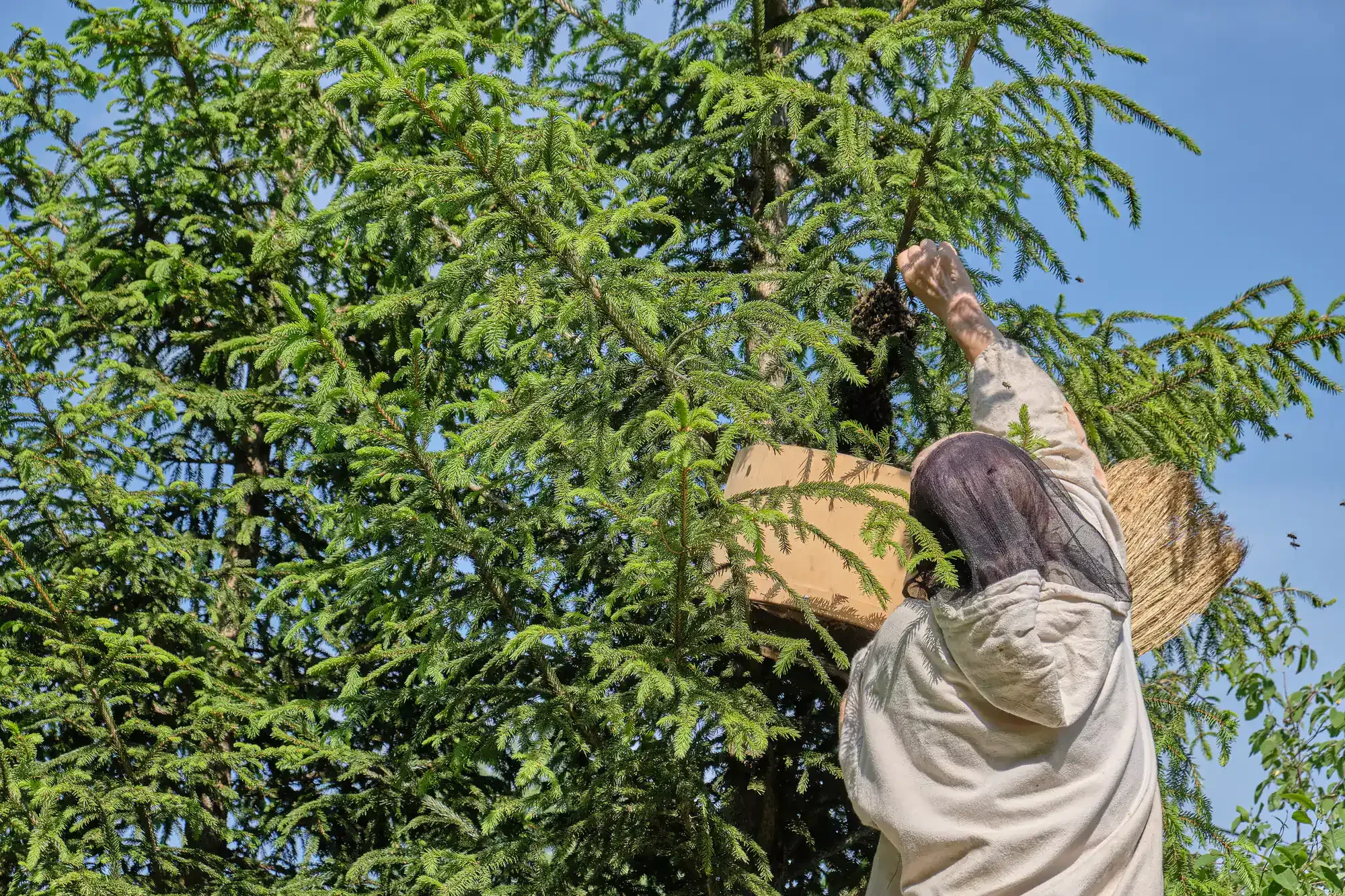
Size and location are the two biggest factors. A small paper wasp nest under an eave in May — maybe the size of a golf ball with a handful of workers — is a very different situation than a yellow jacket ground nest in August with thousands of workers defending it aggressively. Paper wasps are generally less reactive unless you get close to the nest. Yellow jackets are another story entirely, especially later in the season when their food sources dry up and they become territorial about everything near the colony.
On rural properties in Hazelton Township, ground nests are the most dangerous because they’re easy to stumble into accidentally — while mowing, letting the dog out, or walking through tall grass near a fence line. If you’ve noticed wasps flying low to the ground in a specific area, or if you’ve already been stung without seeing a visible nest, there’s a good chance there’s a ground colony nearby. That’s the situation where you call a professional before anyone else gets hurt, not after.
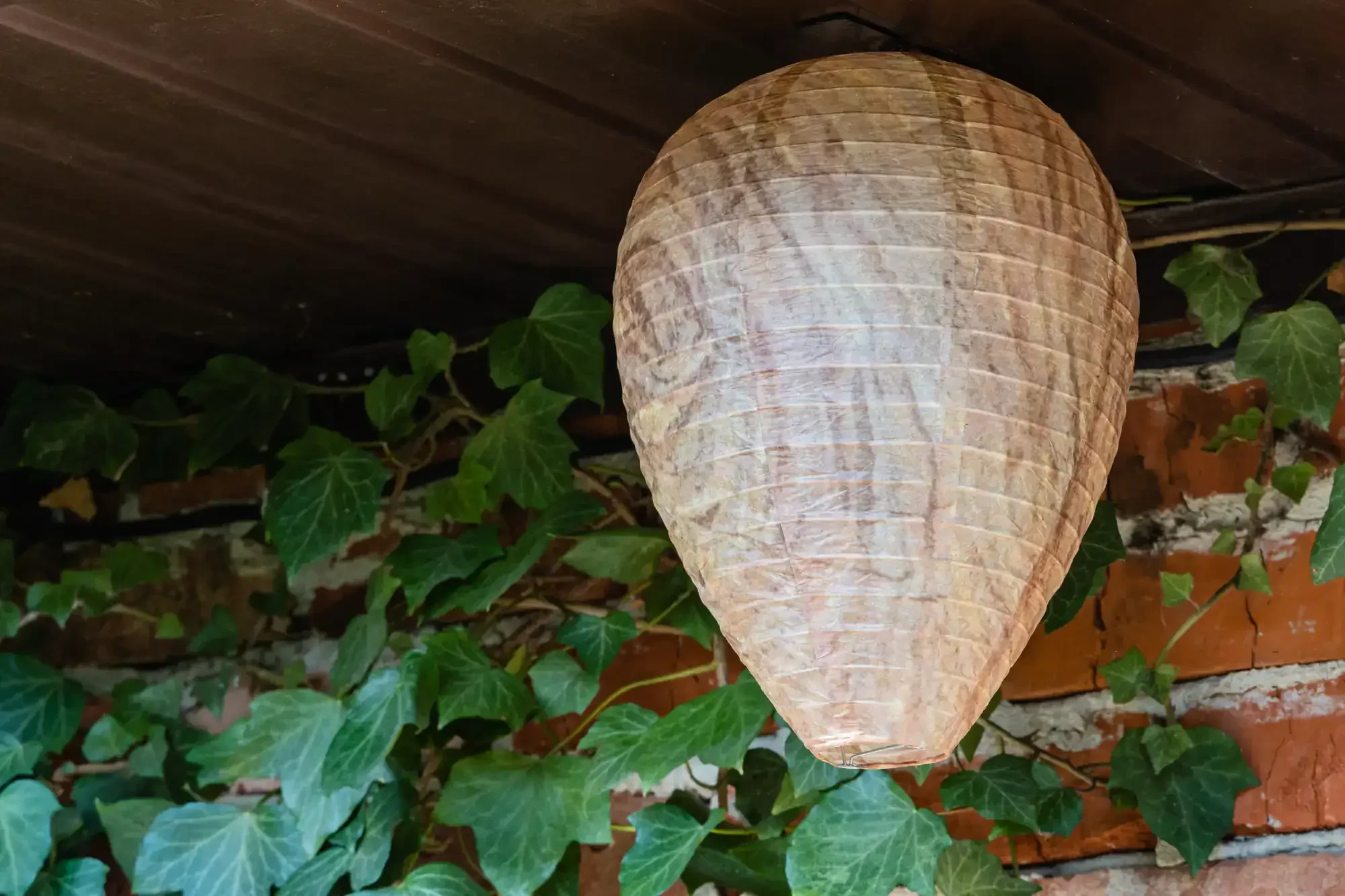
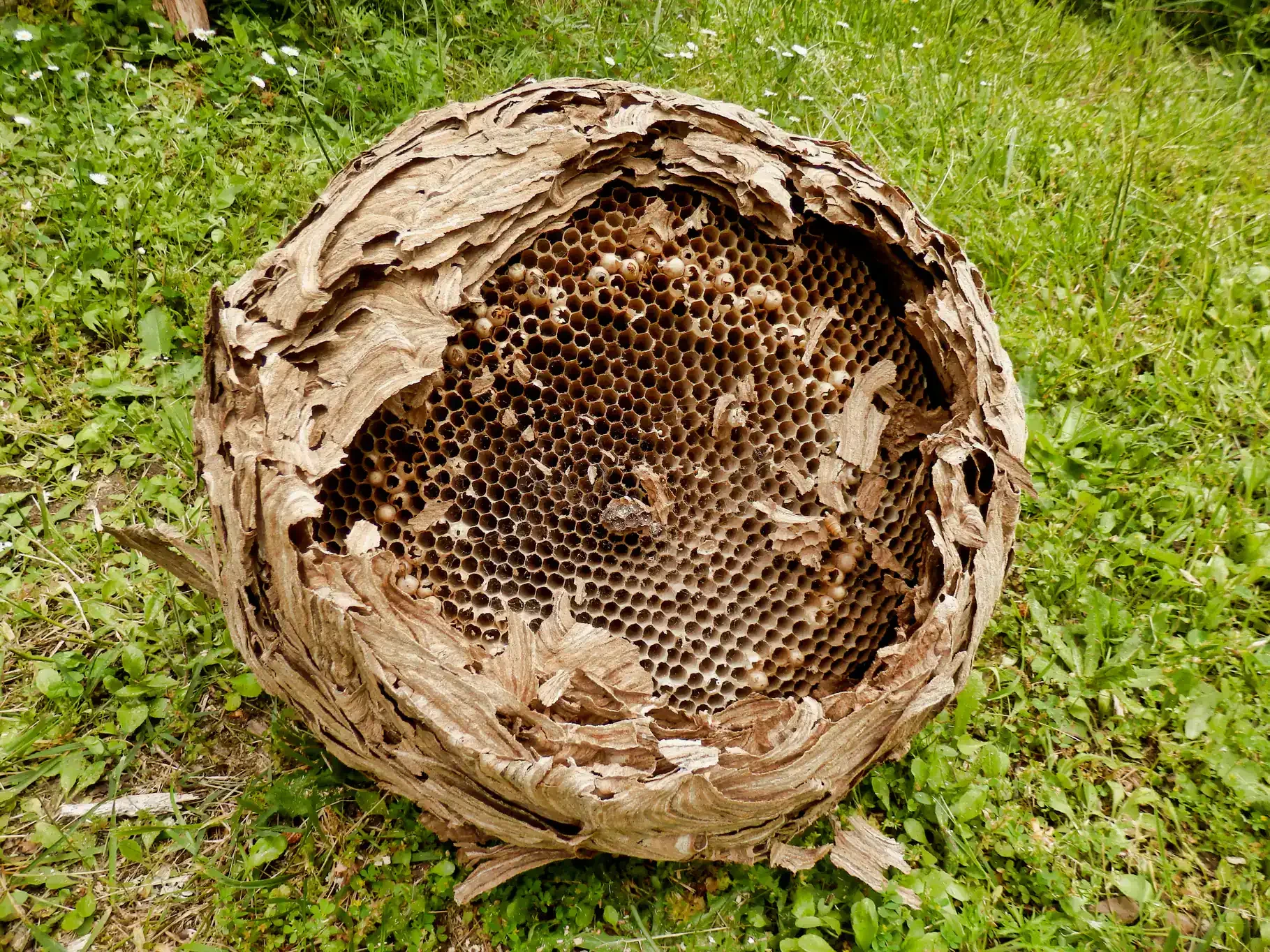
It matters a lot, actually — both for how aggressive the colony will be and how the removal is handled. Paper wasps build the open, umbrella-shaped nests you usually see under eaves or in barn rafters. They’re relatively docile unless the nest is directly disturbed. Yellow jackets are smaller, faster, and significantly more aggressive — they nest in the ground or in wall voids, and a disturbed colony will chase. Bald-faced hornets build the large, gray, football-shaped aerial nests you might see hanging from a tree or the corner of an outbuilding. European hornets are Michigan’s only true hornet species and prefer hollow trees and wall cavities, which are common in older homes throughout New Lothrop village.
Each species requires a different treatment approach. Ground nests need to be treated differently than aerial nests, and wall void infestations require locating the entry point before any treatment is applied. Misidentifying the species — or treating a wall void nest the wrong way — can drive the colony deeper into the structure or cause wasps to emerge inside the home. We identify exactly what you’re dealing with before anything is applied.
For a very small, newly formed paper wasp nest in an accessible location — and if you’re not allergic to stings — some homeowners do handle it themselves early in the season. But that’s a narrow window and a narrow set of circumstances. By midsummer, most nests are well-established enough that a DIY attempt is genuinely risky. Yellow jacket ground nests in particular are responsible for the majority of serious stinging incidents — they react fast, they sting multiple times, and they can pursue someone a significant distance from the nest.
The other issue with DIY treatment is that over-the-counter sprays often don’t reach the full colony, especially in ground nests or wall voids. You may knock back the visible activity without eliminating the queen or the core of the colony, which means the nest rebounds within days. For families in New Lothrop with children, livestock, or anyone with a known sting allergy, the risk of an incomplete treatment is real. Professional treatment eliminates the colony, not just the surface activity — and gives you a clear answer on when the area is actually safe.
Late July through September is the peak danger window for stinging insects in Shiawassee County and across Michigan. Yellow jacket colonies that started with a single queen in April can reach 5,000 to 15,000 workers by August. At the same time, natural food sources start to decline, which makes colonies more aggressive and more likely to forage near people — outdoor food, beverages, livestock feed, and compost all become targets.
This timing is particularly relevant in New Lothrop because it overlaps with the Shiawassee County Fair season and the end of summer, when families are spending the most time outdoors. Agricultural properties with animals, feed storage, or open compost areas see elevated yellow jacket pressure during this window because of the food sources available. The practical takeaway: if you notice a nest in June, don’t wait to see if it gets worse. It will. Treating a small colony early in the season is faster, less expensive, and far less risky than dealing with a full-size colony in August.
Most wasp nest removal visits take between 30 minutes and an hour, depending on the nest location, the species, and whether there are secondary nests on the property. A straightforward paper wasp nest under an eave is a quicker job than a yellow jacket ground nest that requires locating the full extent of the colony or a wall void infestation that needs careful entry-point identification.
After treatment, the timeline for returning to the area depends on what was used and where. For most exterior treatments, the area is safe for children and pets within a few hours once the product has dried. For indoor or enclosed space treatments, that window may be longer. We give you a specific answer before we leave — not a vague “give it a little while.” If you have livestock or working animals on the property, that’s something to mention when you call so the technician can factor it into the treatment plan and give you an accurate re-entry window for those animals specifically.
Yes — we offer discounts for seniors, veterans, and first responders. New Lothrop and the surrounding Hazelton Township area have a strong tradition of agricultural and military family roots, and many of the homeowners calling about wasp problems on rural properties fall into one of those categories. The discount is straightforward — mention it when you call and it gets applied.
We also offer price matching for reasonable competitor rates. If you’ve already gotten a quote from another company serving the Shiawassee County area, call and share it. If it’s a fair number, we’ll match it. The goal is to make sure cost isn’t the reason someone puts off dealing with a wasp colony that’s getting bigger every week. There are no binding contracts attached to any service, so you’re not signing up for anything beyond the job at hand.
Useful Links