
Hear from Our Customers
When a wasp nest is gone — really gone, not just sprayed — you stop planning your day around it. You mow without watching your step. Your kids go back outside. You open the shed without bracing yourself. That’s the actual outcome. Not a treatment receipt. A property that works for you again.
Otisville properties carry specific risks that a lot of pest companies aren’t built to handle. The housing stock here is old — much of it predates World War II — which means gaps in soffits, aging wood frames around windows, and wall cavities that wasps treat like permanent real estate. A paper wasp colony that gets into a wall void in an older home on East Main Street is a completely different job than a nest under a suburban deck in Flint. It requires the right equipment, the right product, and someone who actually knows what they’re looking at.
The rural character of Forest Township adds another layer. If your property includes a detached garage, a barn, a shed, or a wooded perimeter, you have more nesting exposure than a standard residential lot. Yellow jackets build ground nests in undisturbed soil — exactly the kind of soil you find on larger rural parcels around Otisville. One pass with a mower over an unmarked ground nest is all it takes for an afternoon to turn into an emergency. Getting ahead of it matters, and getting it handled completely matters even more.
First Choice Pest Control was founded in 2005 by Roger Chinault, who brought 26 years of hands-on pest control experience with him on day one. Twenty years later, it’s still a family-owned operation — no franchise structure, no rotating staff, no call center. When you reach out, you’re reaching a real person who knows Genesee County and has been working in Otisville and the surrounding area for two decades.
We serve Forest Township and the surrounding area with a model that’s deliberately different from the big national names. The same technician comes back to your property year after year. That means the person who handles your wasp nest this summer already knows your layout, your outbuildings, and your history by next spring. That kind of continuity isn’t common in this industry — but it’s standard practice here.
We hold MDARD licensing, carry full insurance, and have earned recognition from both Angie’s List and HomeAdvisor based on verified customer reviews. There are no binding contracts. You’re not locked into anything. The work either earns your trust or it doesn’t — and that’s how we prefer it.
It starts with a call. You describe what you’re seeing — where the nest is, how much activity you’ve noticed, whether it’s near a door, a play area, or an outbuilding — and we’ll give you a straight answer about what comes next. No runaround, no pressure to book a package you don’t need.
When our technician arrives, the first step is a full property inspection, not just a look at the obvious nest. On rural Otisville lots, that means checking outbuildings, eave lines, ground-level entry points, and wooded perimeter areas where secondary colonies can go unnoticed for weeks. This matters because treating one visible nest while missing a second active colony nearby is how callbacks happen. The inspection is how that gets avoided.
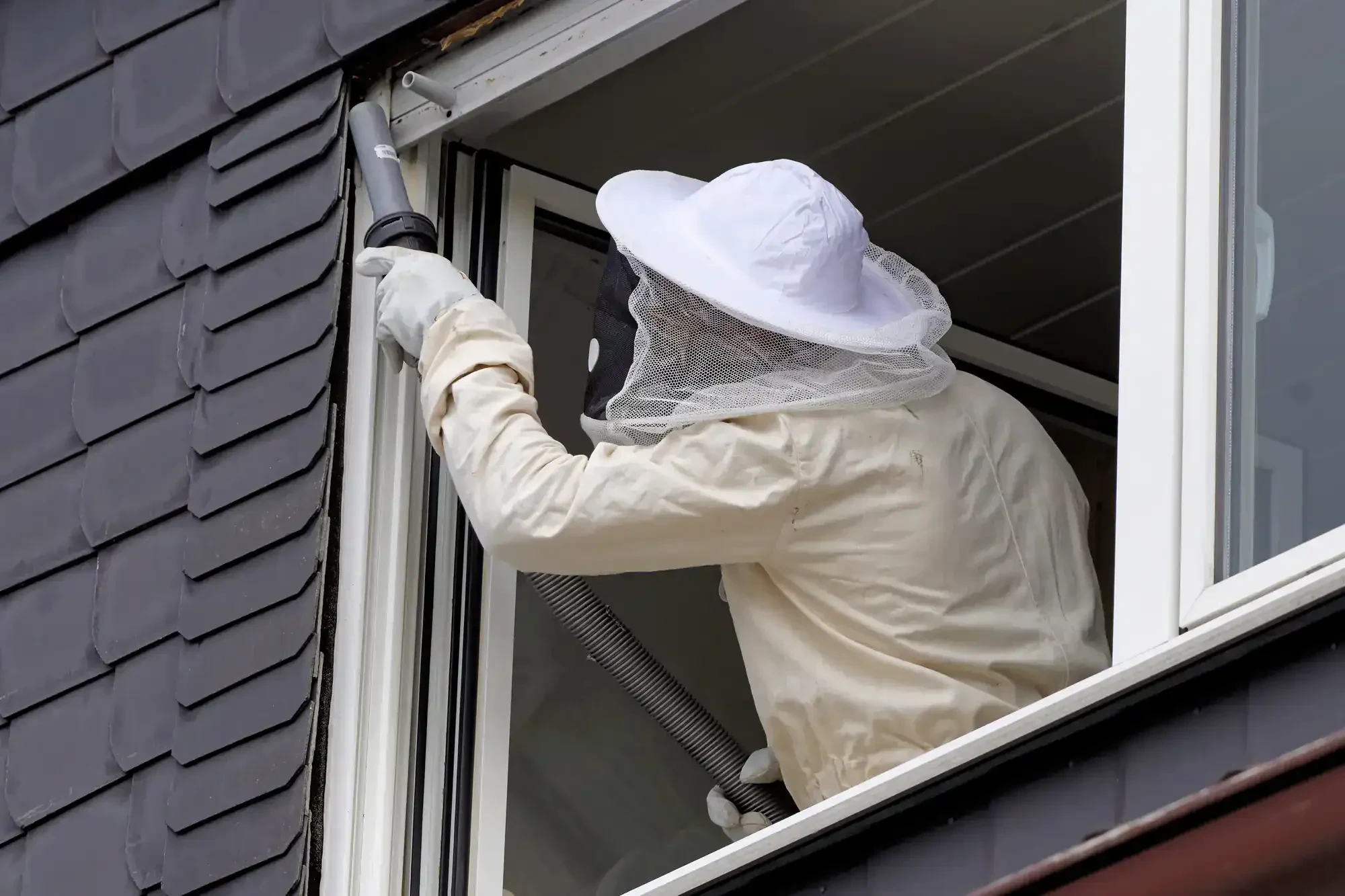
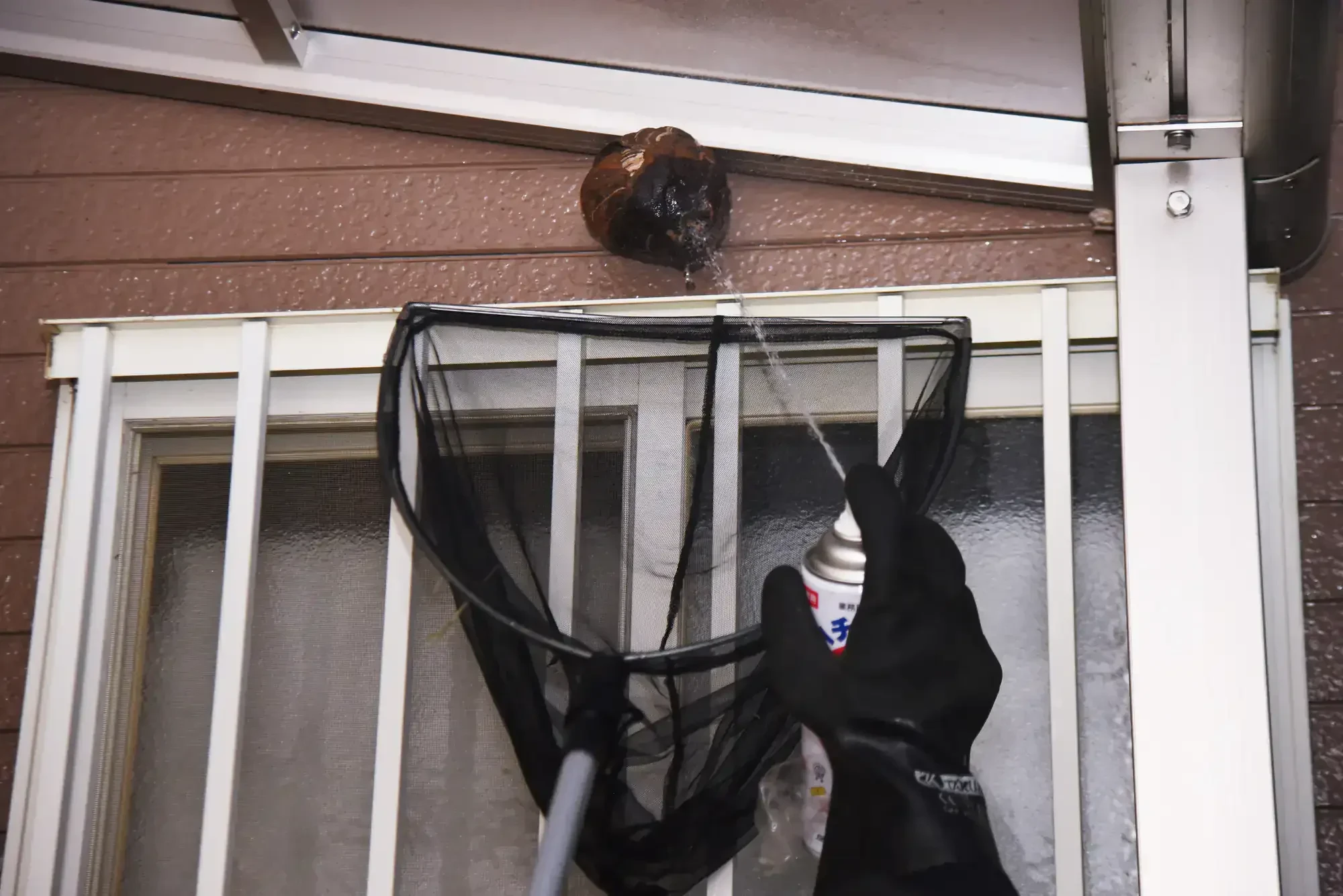
Treatment uses professional-grade products that aren’t available at hardware stores — applied directly to the colony to eliminate it at the source. Once the colony is gone, the nest structure is physically removed. Then the entry point gets sealed. That last step is especially important in Otisville’s older homes, where an unsealed gap in the siding or soffit is an open invitation for next year’s queen to choose the same spot. The job isn’t done when the wasps stop flying. It’s done when the conditions that attracted them are gone.
Ready to get started?
Our wasp nest removal service covers the full scope — inspection, treatment, physical nest removal, and entry point sealing. That’s not four upsells. That’s one job done correctly. A lot of companies stop at the spray. The nest stays, the entry point stays open, and the same location gets recolonized the following spring. That cycle ends when the whole job gets done.
In Otisville and across Forest Township, the most common scenarios we handle include paper wasp nests under eaves and in barn rafters, yellow jacket ground nests on larger rural parcels, bald-faced hornet nests in tree lines and shrubs near property edges, and wall void infestations in older pre-war homes where wasps have found their way inside the structure itself. Each situation gets assessed on its own terms — the approach for a wall void in a 1930s-era home near the village center is not the same as the approach for a ground nest in an open field off Hamill Road.
We also offer price matching for reasonable competitor rates, and discounts are available for seniors, veterans, and first responders — a meaningful offer in a community like Otisville where a lot of people have earned that recognition. No contracts are required for any service.
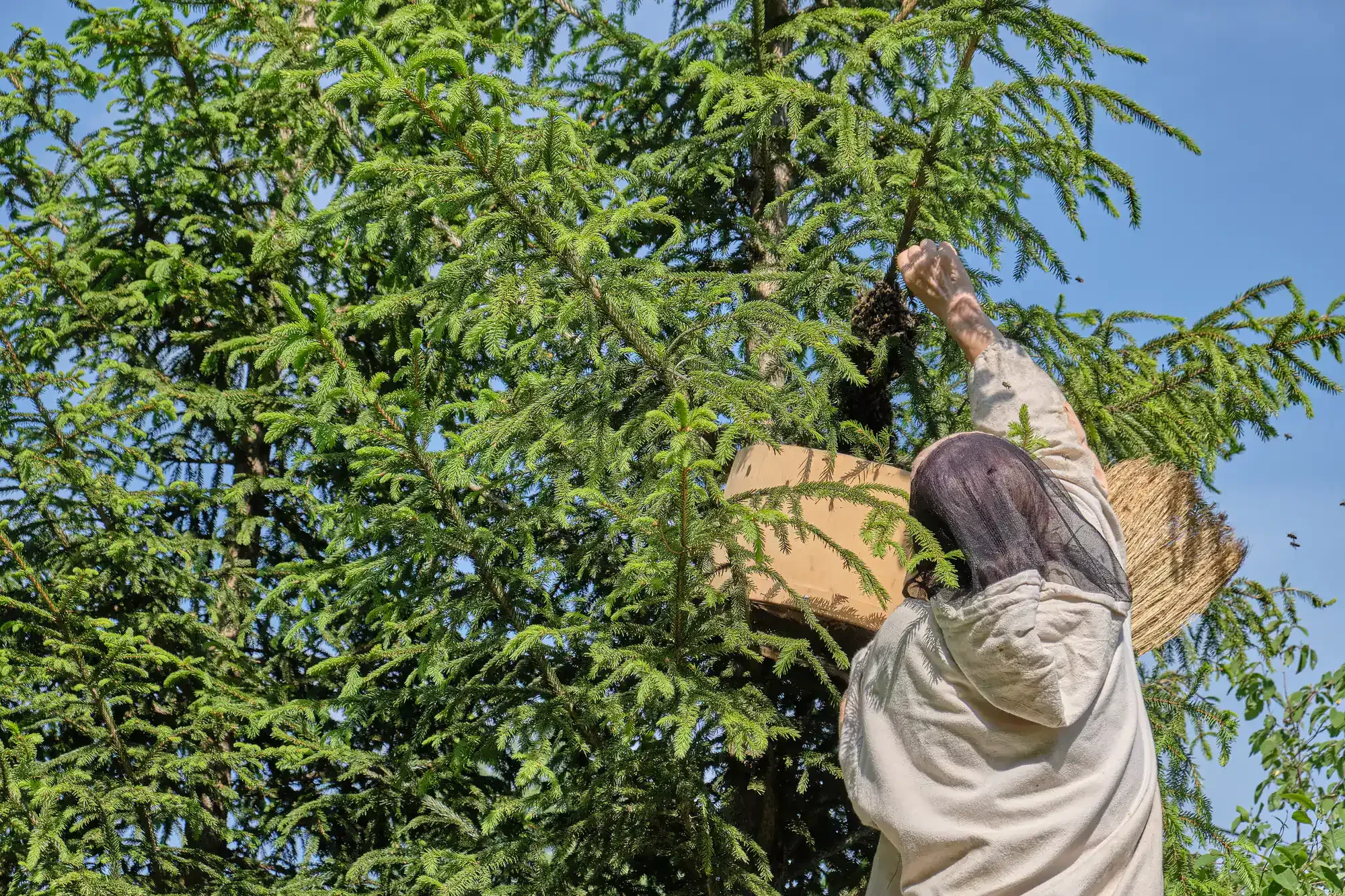
Wall void infestations are one of the trickier situations in pest control, and they’re more common in Otisville’s older housing stock than most homeowners expect. Pre-war construction often has gaps around window frames, deteriorating soffits, and uninsulated wall cavities that give wasps direct access to the interior structure of the home. The signs to watch for are a consistent line of wasp traffic going in and out of a specific point on the exterior — usually a small gap in the siding, a crack near a window frame, or an opening where two building materials meet. You might also hear a faint buzzing from inside a wall, or notice wasps appearing inside a room without an obvious entry point.
If you’re seeing either of those signs, don’t attempt to seal the opening yourself. Sealing an active nest inside a wall without treating the colony first traps thousands of wasps inside — and they will find another way out, sometimes through the interior. The correct sequence is treatment first, then removal, then sealing. A professional inspection will confirm whether you’re dealing with a wall void situation and what the right approach looks like for your specific home.
Late summer — August and September — is consistently the most dangerous window for wasp activity in Genesee County, and Otisville is no exception. By that point in the season, a yellow jacket colony that started with a single queen in April can have anywhere from 5,000 to 15,000 workers. At the same time, natural food sources start declining, which pushes foraging wasps to become more aggressive and more likely to sting without much provocation. Outdoor gatherings, lawn maintenance, and any activity near a nest entrance become significantly riskier in late summer than they were in June.
The practical takeaway is that if you spot a nest in June or early July, that’s the ideal time to call — the colony is smaller, the treatment is more straightforward, and you avoid the August surge entirely. Waiting until the nest is large and the wasps are at peak aggression makes the job harder and the risk higher. If you’re already in August and you’ve been watching a nest grow, don’t wait any longer. The colony isn’t going to calm down on its own before the first frost.
DIY wasp removal is genuinely dangerous, and rural properties around Otisville add specific complications that make it riskier than a standard suburban situation. On a larger lot with outbuildings, wooded edges, or undisturbed soil, there’s a real chance that the nest you can see isn’t the only one. Yellow jackets build ground nests in areas that are easy to miss — a patch of tall grass, a stretch of field near a fence line, or a burrow entrance hidden under leaf litter near the tree line. Disturbing one nest while standing near a second one you didn’t know existed is how people end up with multiple stings in seconds.
Beyond the physical risk, hardware store sprays are not the same as professional-grade products. They can agitate a colony without eliminating it, which makes the wasps more defensive and the situation more dangerous for the next several days. If you have children or pets on the property — and a lot of Otisville families do — the margin for error on a DIY attempt is very small. Professional removal eliminates the colony completely, removes the nest, and seals the entry point, which is the only outcome that actually ends the problem.
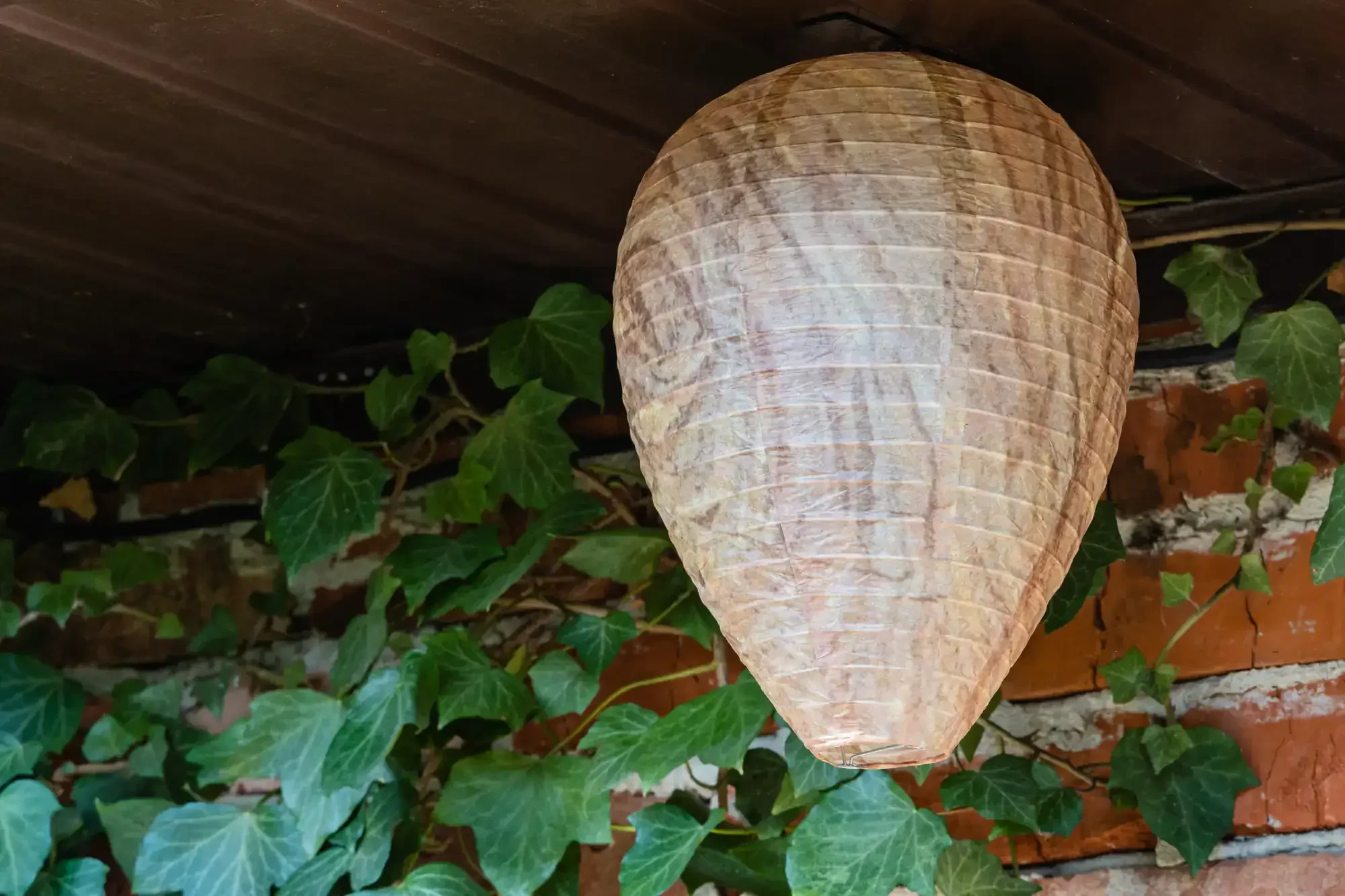
The three species that come up most consistently on properties in and around Otisville are paper wasps, yellow jackets, and bald-faced hornets. Paper wasps are the ones you’ll most often see building open, umbrella-shaped nests under eaves, in barn rafters, and along the underside of deck structures. They’re not typically aggressive unless the nest is directly disturbed, but a nest near a doorway or a frequently used outbuilding is still a problem that needs to be addressed.
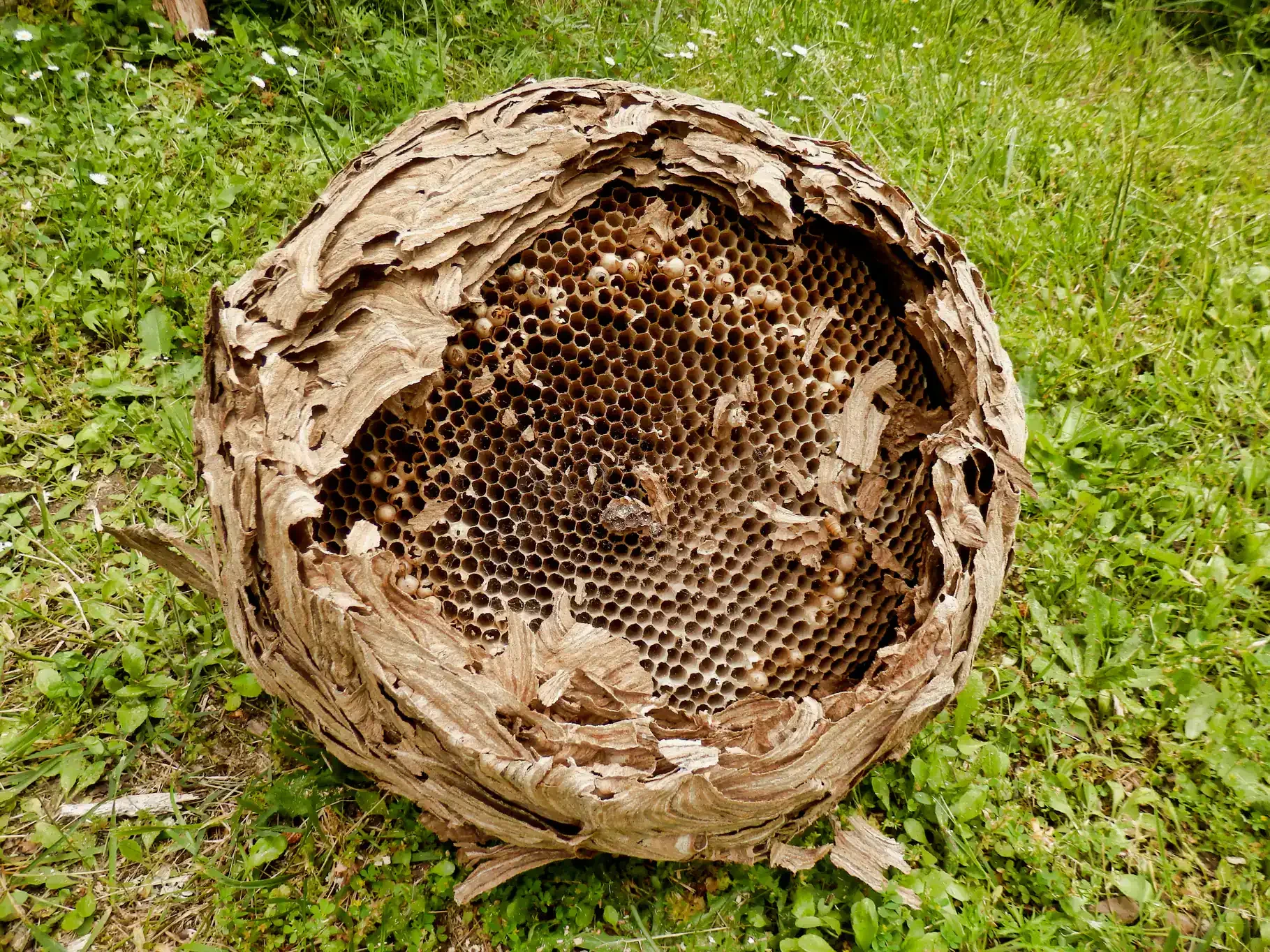
Yellow jackets are the more urgent situation. They nest in the ground, in wall voids, and in enclosed spaces — and they’re significantly more aggressive than paper wasps, especially later in the season. On rural parcels throughout Forest Township, ground nests are a consistent issue because undisturbed soil near field edges, fence lines, and wooded areas gives them exactly the kind of protected nesting environment they prefer. Bald-faced hornets build the large, papery aerial nests you’ll sometimes see in tree lines and shrubs near property edges. They’re highly defensive of the nest and will respond aggressively to any perceived threat within several feet. All three require different treatment approaches, which is part of why a proper inspection before treatment is essential.
Wasps don’t reuse the same physical nest the following year — the colony dies off with the first hard frost, and the nest is abandoned. But they do frequently choose the same location again the following spring, because whatever made that spot attractive the first time — a gap in the siding, a protected eave, a ground burrow entrance — is still there. In Otisville’s older homes especially, this is a real pattern. A soffit gap that wasn’t sealed after last year’s removal is exactly where a new queen will look when she’s scouting nesting sites in April.
This is why entry point sealing is a standard part of the removal process at First Choice, not an optional add-on. Treating the colony and removing the nest without sealing the access point is an incomplete job. It solves this year’s problem and sets up next year’s. If you’ve had recurring wasp activity in the same area of your home or property for multiple seasons, that’s usually a sign the entry point was never properly sealed after a previous removal — and it’s something that can be corrected as part of the service.
Yes — we offer discounts for seniors, veterans, and first responders. In a community like Otisville, where a meaningful share of residents are on fixed incomes or have served in ways that don’t always come with a lot of financial cushion, that discount is a real offer, not a footnote. If you or someone in your household qualifies, just mention it when you call.
We also match reasonable competitor rates for wasp nest removal. If you’ve already gotten a quote from another company serving the Otisville area, bring it to the conversation and we’ll work with you on price. The goal is to make professional wasp removal accessible without cutting corners on the job itself — full inspection, full treatment, physical nest removal, and entry point sealing, regardless of what the final number looks like. There are no binding contracts attached to any service, so you’re not agreeing to anything beyond the job in front of you.
Useful Links