
Hear from Our Customers
You stop walking on eggshells around your own property. That might sound simple, but if you’ve been avoiding a section of your barn, keeping kids away from the back of the yard, or rushing past a corner of the house every time you go outside — you know exactly what that tension feels like. When the nest is properly treated and the colony is eliminated, that part of your property becomes yours again.
For farm operators and rural homeowners in and around Duplain Township, yellow jacket pressure isn’t just a backyard nuisance. It’s a real hazard. Yellow jackets are drawn to the protein sources, organic material, and open ground that come with working agricultural land. A ground nest near a milking area, a feed lot, or a field where workers are running equipment is a liability — not just an inconvenience. Getting it treated by someone who actually understands agricultural properties makes a meaningful difference in how the job gets done.
Elsie’s older homes and farm structures also carry a specific risk that newer suburban builds don’t: more gaps, more weathered wood, more places for German Yellowjackets to move into wall voids and attics and stay hidden until the colony is thousands deep. Treating that kind of infestation correctly — not just spraying at the entry point and hoping — is what separates a real solution from a temporary fix.
First Choice Pest Control is a family-owned Michigan company founded in 2005 — 20 years of continuous operation serving homes and agricultural properties across the region, including Elsie and the broader Clinton County area. I’m Roger Chinault, and I’ve personally handled 26 years of hands-on pest control work. Not oversight. Not management. I’ve treated the kinds of complex, multi-structure rural properties that are common throughout Duplain Township — the old farmhouses, the barns, the equipment sheds, the outbuildings where yellow jackets find their way in and set up for the season.
We hold MDARD Pesticide Application Business License #250081 and have completed Integrated Pest Management (IPM) training — a science-based approach that matters especially on properties near livestock, crops, or water sources like the Maple River. No binding contracts. No rotating seasonal hires. The same trained technician handles your property year after year, so you’re not re-explaining your situation to someone new every time.
It starts with a call and a real conversation — not a form submission that disappears into a queue. When you reach out to us, you talk to someone who can actually assess what you’re dealing with and get you scheduled without the runaround. For Elsie-area properties, that often means asking a few questions upfront: Is this a structure nest or a ground nest? Have you seen activity near livestock areas? How old is the building? Those details shape the entire approach before anyone shows up.
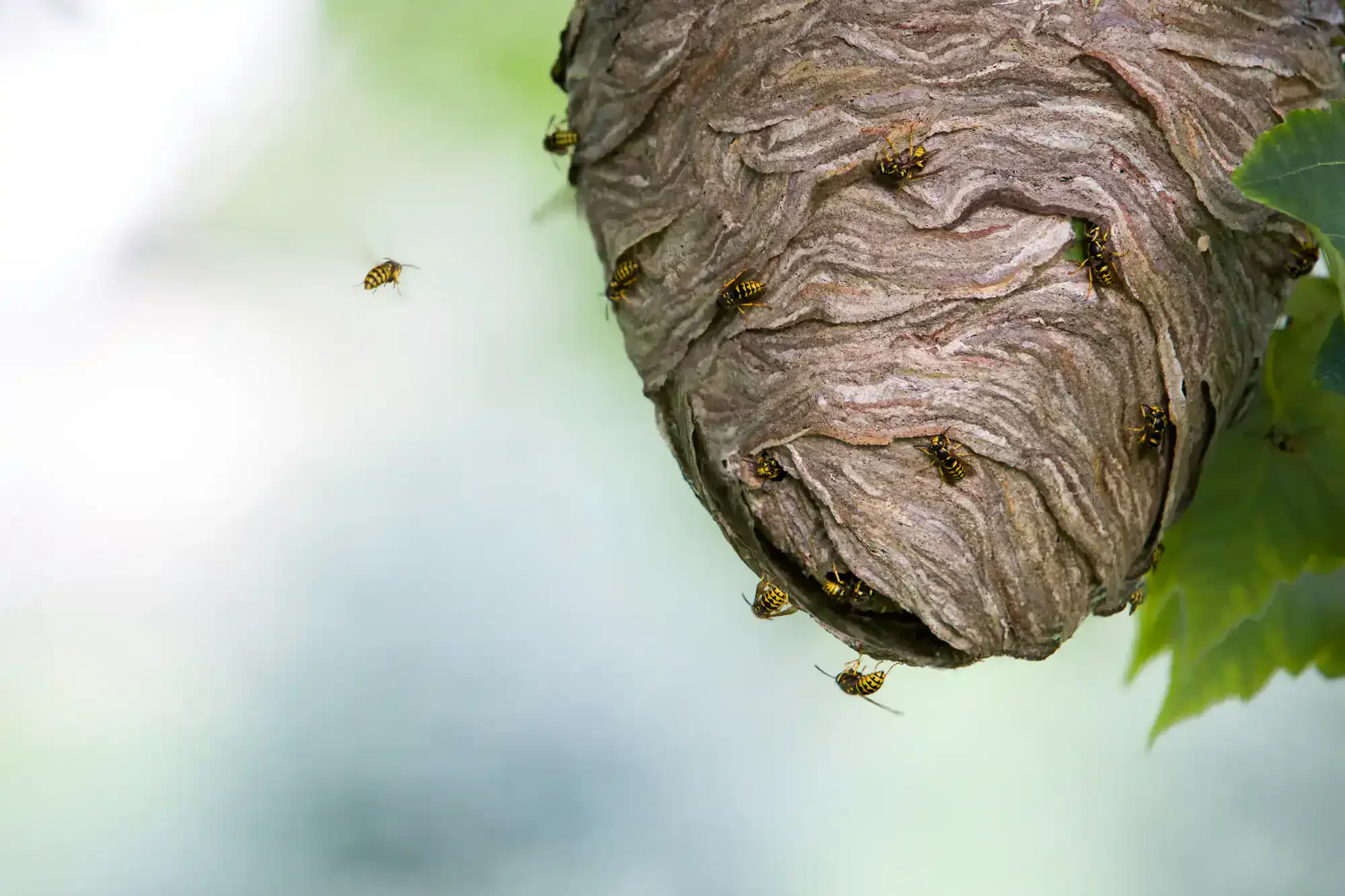
When our technician arrives, the first step is correct identification. Michigan has two primary yellow jacket species that behave very differently. The Eastern Yellowjacket nests underground — common in the disturbed soil around Elsie’s active farmland and field margins. The German Yellowjacket nests in enclosed cavities: wall voids, attics, soffits, and the kind of structural gaps you find in older farm buildings throughout Clinton County. Treating the wrong type the wrong way doesn’t just fail — it can drive the colony deeper and make the situation significantly worse.
Once the nest location and species are confirmed, treatment is applied directly and precisely. After treatment, we walk you through what to expect over the next 24 to 72 hours, what signs to watch for, and what the 1-year service guarantee covers if activity returns. Attic yellow jacket removal in Elsie often requires a follow-up assessment of entry points — especially in older structures — to prevent the same spot from being reused by a new queen next spring.
Ready to get started?
Yellow jacket pest control in Elsie isn’t a one-size job. The service is shaped by what’s actually on your property — and in a community like Elsie, that can mean a farmhouse, a dairy barn, a machine shed, and a grain storage building all on the same parcel, each one a potential nesting site. We assess every structure that needs it, not just the one you called about.
Treatment covers both common yellow jacket scenarios in this area: ground nest extermination for the underground colonies that show up in field margins, fence rows, and disturbed soil throughout Duplain Township, and structural nest treatment for the wall-void and attic infestations that are especially common in Elsie’s older building stock. Every treatment is backed by a 1-year service guarantee — if yellow jacket activity returns to the treated site within the guarantee period, we come back at no additional charge.
We also offer price matching for reasonable competitor rates, so if you’ve gotten another quote from a company serving the Clinton County area, bring it. Discounts are available for seniors, veterans, and first responders — and with Elsie’s median age and the community’s deep ties to agricultural and military service, those aren’t afterthoughts. They reflect who actually lives and works here. We serve both residential and commercial properties, including working farm operations where yellow jacket removal in Elsie requires a more careful, context-aware approach than a standard suburban treatment.
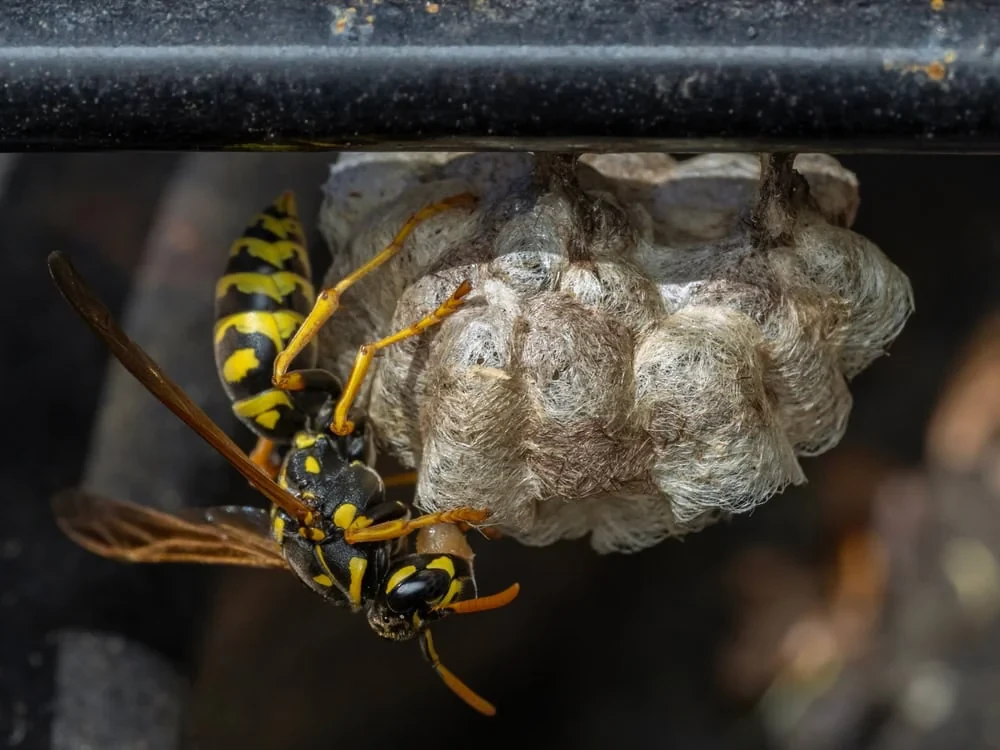
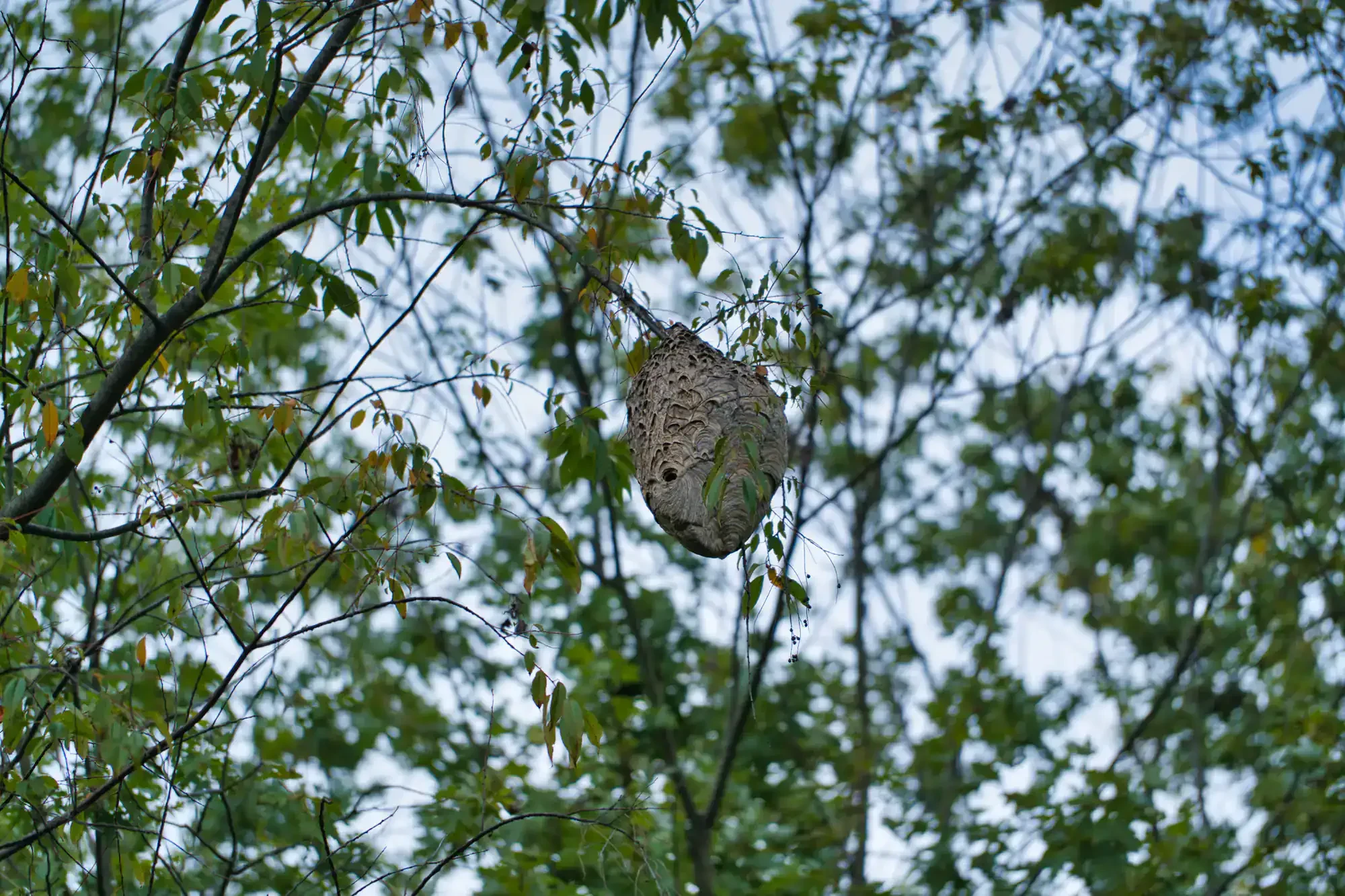
The most common sign is a consistent line of yellow jackets entering and exiting through a small gap — usually around window frames, soffit edges, siding joints, or gaps near the roofline. You might also hear a faint buzzing or crackling sound from inside the wall, especially in the evening when the colony is most active inside the nest. In older farmhouses throughout Elsie and Duplain Township, these entry points are often pre-existing gaps that have been there for years — the yellow jackets didn’t create them, they just found them.
What makes wall-void nests particularly dangerous is that the colony is hidden. By the time most homeowners in Elsie realize what’s happening, the nest may already have thousands of workers. If you’re seeing yellow jackets consistently coming from the same spot on your exterior, don’t probe the gap or seal it yourself — sealing an active entry point traps the colony inside and can force them to chew through drywall to find a new exit. Call us, get the colony treated first, and seal the entry point after.
Yes — and it’s not random. Yellow jacket colonies grow throughout the spring and summer, but by August and September they’ve hit peak population. The queen has stopped laying eggs, food sources are becoming scarce, and the workers shift from hunting insects to aggressively seeking sugary carbohydrates. That behavioral shift makes them significantly more reactive to vibration, movement, and perceived threats.
For farm workers in the Elsie area, this timing creates a real occupational hazard. Operating equipment near a ground nest, moving hay bales that sit over an underground colony, or working near a barn wall with an active void nest during August and September puts workers at serious risk of a coordinated stinging response. A colony at peak size can have 1,000 to 5,000 workers — and they don’t give much warning. If you’ve noticed yellow jacket activity on your property heading into late summer, treating it before peak season is the right call.
The colony itself will die off with the first hard frosts in late October or November — but the problems don’t necessarily end there. The dead nest material left inside a wall void or barn structure attracts rodents and flesh flies, which creates a secondary pest issue. More importantly, the entry point stays open. Yellow jackets don’t reuse old nests, but a new queen will absolutely reuse a favorable site — meaning the same gap in your barn siding or farmhouse wall that hosted a colony this year is an open invitation for a new one next spring.
On working agricultural properties in Clinton County, an untreated nest also carries liability exposure. If a worker, a family member, or livestock is stung near an active nest on your property, that’s a situation that could have been avoided. Structural nests inside older barns and outbuildings can also grow large enough over multiple seasons — if the site keeps getting reused — to cause cosmetic damage to insulation and interior wall materials. Treating it now and sealing the entry point afterward is the straightforward fix.
It’s a legitimate concern, and one that doesn’t come up in pest control conversations outside of agricultural communities. Yellow jackets are attracted to the protein-rich and sugary materials found around dairy operations — feed areas, organic waste, composting material — which means large-scale dairy farms like those operating in and around Elsie can see unusually high yellow jacket pressure compared to standard residential properties.
Livestock that are stung repeatedly near an active nest can become stressed and agitated, which in dairy operations can directly affect milk production and animal welfare. Workers managing animals in close quarters near an active nest face the same escalating risk as the season progresses. Our IPM-certified approach is particularly relevant here — treatment is applied in a targeted, context-aware way that accounts for the presence of livestock, proximity to water sources, and the operational realities of a working farm. If you’re managing a dairy operation in Duplain Township and you’re seeing yellow jacket activity near your barn or milking areas, it’s worth a call before peak season hits.
Nationally, professional yellow jacket extermination runs between $500 and $1,300 depending on nest location, colony size, and how accessible the nest is. Ground nests in open areas are generally on the lower end. Structural nests — inside wall voids, attics, or enclosed spaces in older buildings — tend to run higher because of the complexity involved in treating them safely and completely.
For Elsie-area properties, the range can also shift based on the number of structures being assessed, whether the property is residential or a working agricultural operation, and whether follow-up sealing is part of the scope. We offer price matching for reasonable competitor rates, so if you’ve received a quote from another company serving the Clinton County area, that’s worth bringing up when you call. The more important cost to think about is what you’re avoiding: an ER visit, structural damage from an untreated wall-void colony, or a repeat infestation next season because the entry point was never sealed.
Yes — we offer discounts for seniors, veterans, and first responders. In a community like Elsie, where a meaningful portion of residents are older long-term homeowners and where agricultural and military service are woven into the fabric of daily life, these discounts apply to a real cross-section of the people calling. If you or someone in your household qualifies, just mention it when you call and ask about current availability.
Beyond discounts, we don’t require binding contracts — which matters in a rural market where residents are often skeptical of service agreements that lock them in regardless of results. The 1-year service guarantee on yellow jacket treatments means that if activity returns to the treated site within the guarantee period, we come back at no charge. That’s the kind of straightforward commitment that fits how people in Elsie expect to do business — based on the quality of the work, not the fine print of a contract.
Useful Links