
Hear from Our Customers
Yellow jackets don’t give you a warning. One wrong step near a ground nest on a wooded acreage property in Farmers Creek — or one wasp emerging from inside a farmhouse wall — and the situation escalates in seconds. The goal isn’t just to knock down a nest. It’s to make sure your property is actually clear, and that you’re not dealing with the same problem again in three weeks.
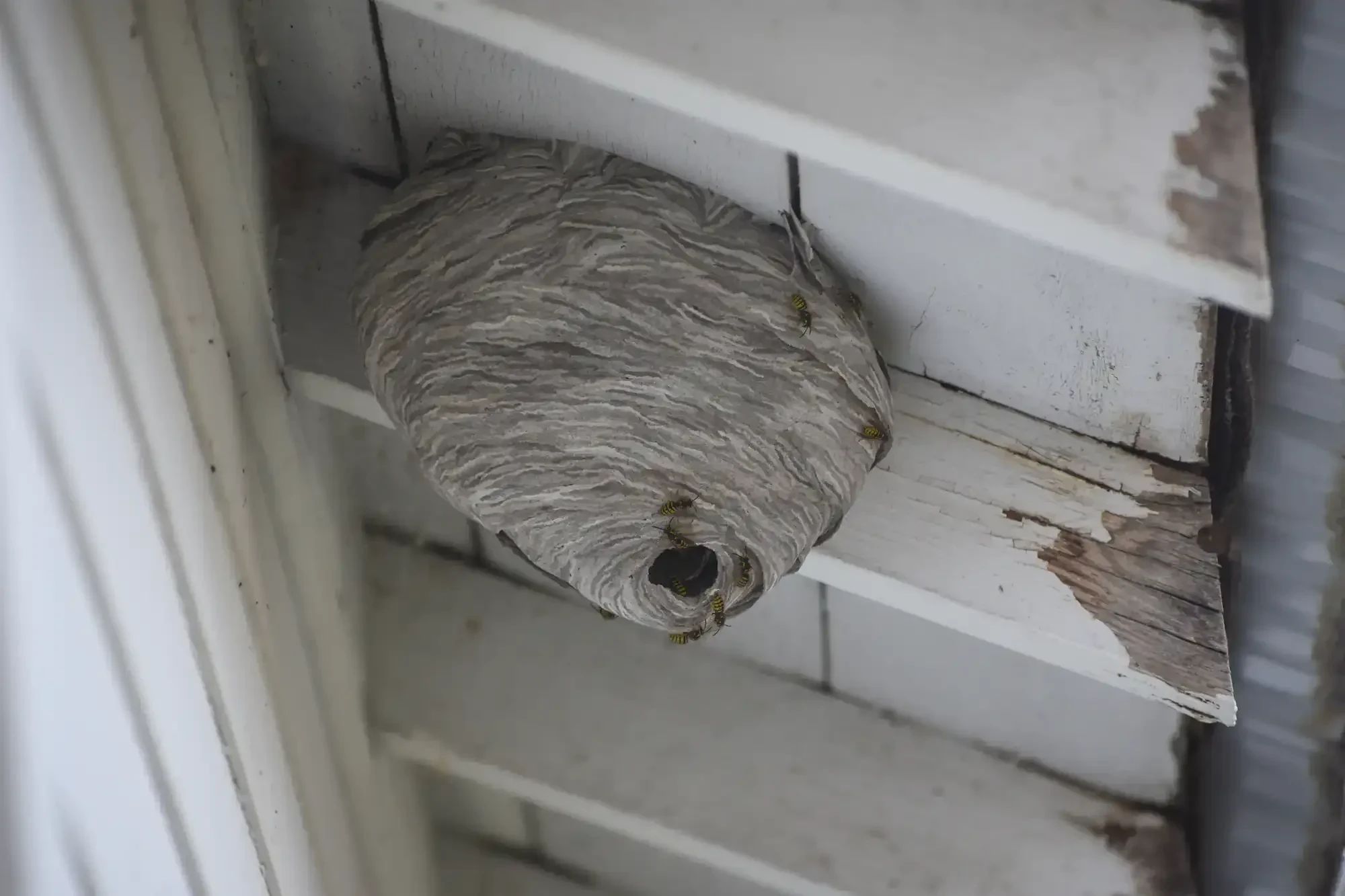
For Farmers Creek homeowners, the risk is higher than most people realize. The wooded, wildlife-active landscape throughout Hadley Township creates exactly the kind of abandoned animal burrows that Eastern Yellowjackets use to start colonies underground. You may not find a nest until you’ve already walked over it. And if your home is an older farmhouse — the kind with aging siding, loose soffits, or gaps around the roofline — German Yellowjackets can establish a colony inside your walls before you ever see a single wasp inside.
When the nest is gone and the entry points are sealed, you get your yard back. Your kids can play outside. Your dogs can roam. You can fire up the grill without watching over your shoulder.
First Choice Pest Control has been operating in Southeast Michigan since May 31, 2005 — which means we’ve been serving Lapeer County properties, including homes throughout Farmers Creek and Hadley Township, for two full decades. Roger Chinault founded this company and has 26 years of hands-on pest management experience. That’s not a number on a website. That’s someone who has walked rural Farmers Creek properties and knows exactly where yellow jackets hide on acreage lots with wooded edges and older structures.
We don’t rotate technicians. The same professional who treats your property this year will be the one who comes back next year — someone who already knows your home, your outbuildings, and your land. We hold MDARD Pesticide Application Business License #250081, carry IPM certification, and have earned awards through both Angie’s List and HomeAdvisor. We also offer discounts for seniors, veterans, and first responders, because this community deserves straightforward service at a fair price.
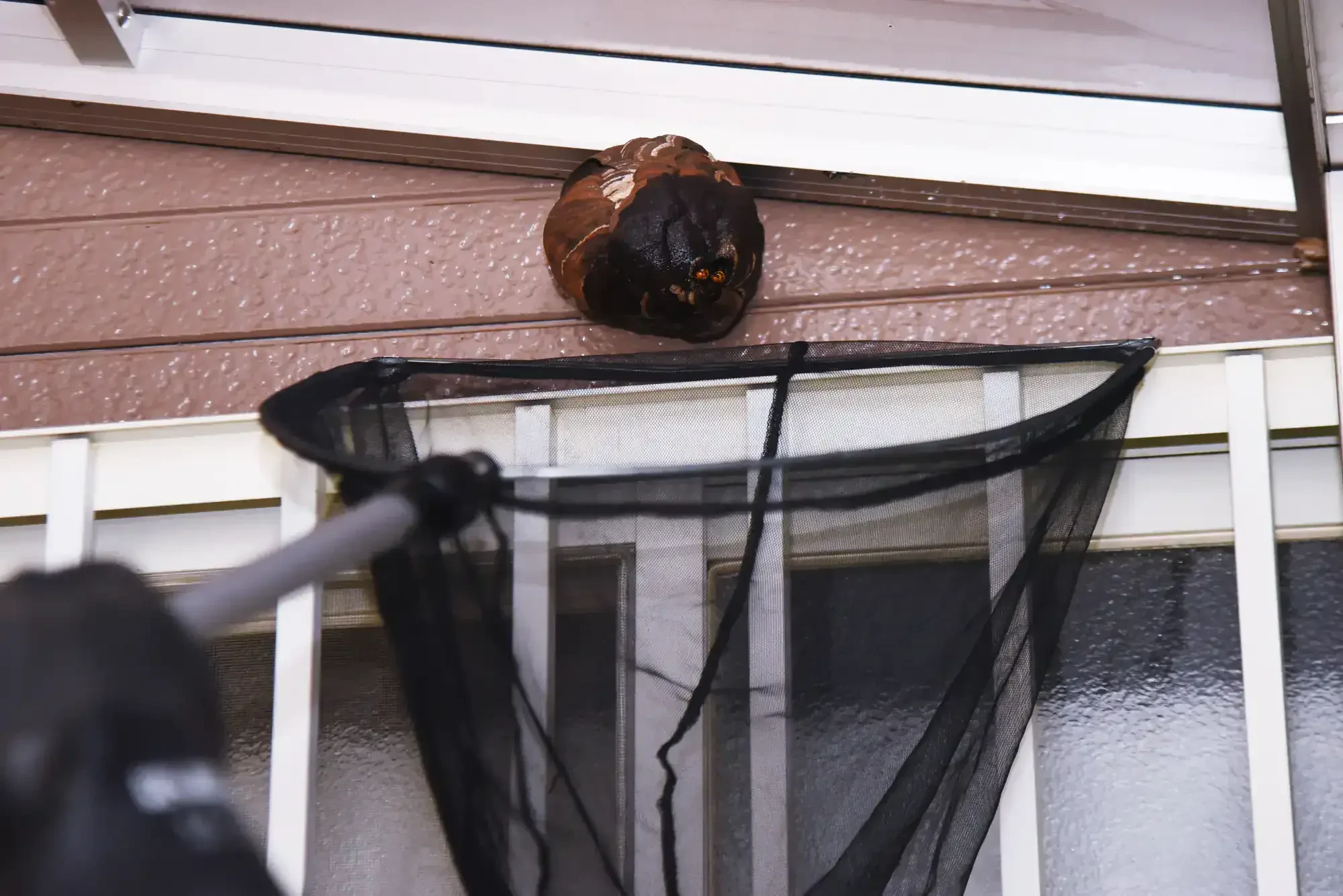
It starts with a call. You tell us what you’re seeing — wasps coming out of the ground near the tree line, activity around a soffit, or yellow jackets emerging from inside a wall. From there, we schedule your service quickly. We know rural Lapeer County homeowners are used to waiting on contractors. We don’t make you wait long.
When we arrive, the first thing we do is identify the species and locate the nest. This matters more than most people think. Eastern Yellowjackets nest underground in abandoned animal burrows — common on Hadley Township acreage where groundhogs, moles, and chipmunks are active. German Yellowjackets nest inside structures, behind siding, inside wall voids, and in attics. Treating a ground nest like a wall nest — or the reverse — doesn’t work. We inspect first, identify correctly, then treat with the right method.
Treatment typically happens after dark, when the full colony is present inside the nest. This is when it’s most effective and when re-entry is least likely to cause a defensive response. After treatment, we seal entry points where applicable and walk you through what to watch for in the days ahead. Because we’re licensed under MDARD and trained in Integrated Pest Management, every step is targeted — not just a blanket spray and a handshake at the door.
Ready to get started?
Every job starts with a thorough inspection. On rural Lapeer County properties — especially older farmhouses and homes with multiple outbuildings — that inspection covers more ground than a standard suburban service call. We’re looking at the structure itself, the perimeter, the wooded edges, and any outbuildings like barns or equipment sheds where yellow jackets commonly nest. You don’t get a technician who walks to the front door, spots one entry point, and calls it done.
For structural infestations — yellow jackets in your attic, wall voids, or behind siding — we use insecticide dust applied directly into the nest cavity. This is not a surface spray. It reaches the colony where it lives. For ground nests, treatment targets the nest entrance and the tunnel system below, timed for after dark when the entire colony is home. Both approaches are followed by entry point sealing where structurally appropriate, and guidance on preventing re-establishment the following spring.
Your service is backed by a one-year guarantee. If yellow jacket activity returns within the guarantee period, we come back at no additional charge. We also match reasonable competitor rates — so if you’ve gotten a quote from another licensed provider in the area, bring it to us. You shouldn’t have to choose between experience and a fair price. We serve both residential and commercial customers, including agricultural properties and rural outbuildings throughout Farmers Creek and the surrounding area.
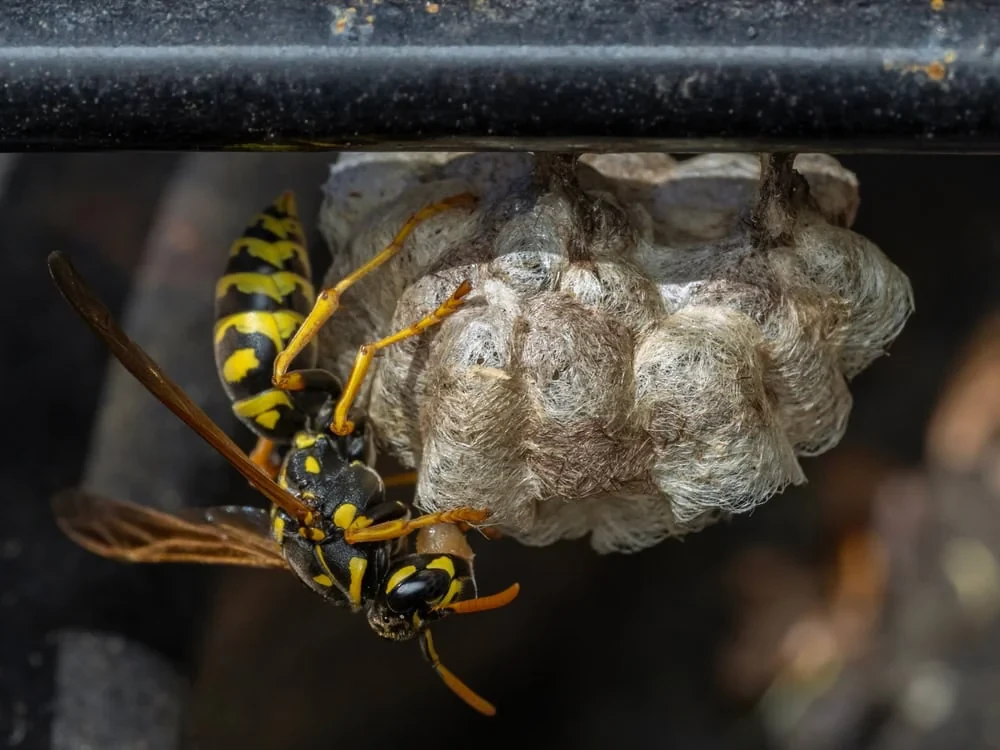
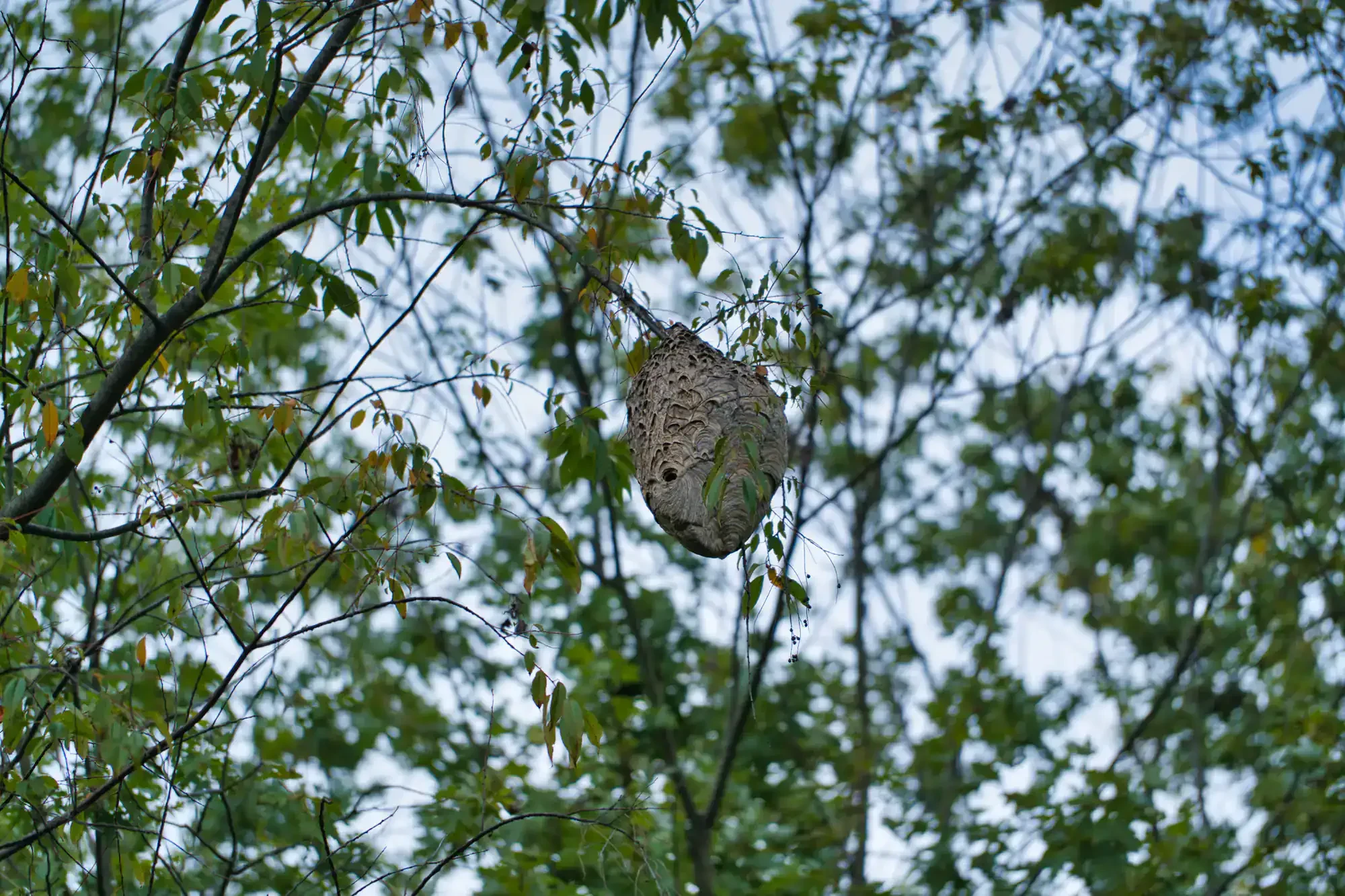
Yellow jackets don’t reuse old nests, but they do reuse favorable locations. If your Farmers Creek property has wooded areas, old animal burrows, or structural gaps in an older farmhouse or outbuilding, those conditions will attract a new queen every spring. She’s looking for a protected, ready-made cavity to start her colony — and if the entry points that allowed last year’s nest weren’t sealed, or if the wildlife activity on your acreage is creating new burrows each season, you’re going to keep seeing yellow jackets in the same spots year after year.
The fix isn’t just treating the active colony — it’s addressing the conditions that keep drawing them back. That means sealing structural entry points on your home and outbuildings, and understanding where on your property the ground-nesting risk is highest. On larger rural lots like the ones common throughout Hadley Township and Farmers Creek, that’s often along the property line where mowed lawn meets wooded edge. A thorough inspection after treatment can identify those high-risk zones and give you a clear picture of what to watch for the following spring.
Yellow jacket removal cost depends on a few factors: where the nest is located, how large the colony has grown, and whether the infestation is in the ground or inside a structure. Ground nest removal is typically more straightforward. Structural infestations — yellow jackets inside a wall void, attic, or behind the siding of an older farmhouse — require more time, more precise treatment, and sometimes follow-up work to seal entry points properly. Those jobs cost more, and for good reason.
For Farmers Creek homeowners, the more important cost question is what happens if you don’t treat it. A wall-void colony left untreated through late summer can grow to several thousand workers. When the colony dies off in winter, the dead nest material, moisture, and residual pheromones can attract other pests and cause structural issues in older construction. The cost of treating a yellow jacket infestation professionally is almost always less than the cost of dealing with the downstream damage. We match reasonable competitor rates and offer discounts for seniors, veterans, and first responders — so call us before you assume it’s out of reach.
The clearest sign of a structural infestation is consistent, concentrated wasp traffic at a single point on your home’s exterior — usually a gap in the siding, a crack in the soffit, a space around a window frame, or a hole near the roofline. Foraging yellow jackets move around. They’re visiting your yard for food and then leaving. Structural nesters have a home base, and you’ll see them entering and exiting the same spot repeatedly, especially in the morning and late afternoon when worker activity peaks.
On older farmhouses in the Farmers Creek area — the kind with wood siding, aging trim, and the natural settling gaps that come with decades of Michigan winters — there are more potential entry points than most homeowners realize. If you’re seeing yellow jackets inside your living space, that’s a strong indicator the nest is inside the wall or attic, not outside. Don’t spray the entry crack with store-bought aerosol. It won’t reach the nest, it will trigger an alarm response in the colony, and it often forces wasps to find alternate exits — sometimes directly into your home’s interior. Call us and let the inspection tell you exactly what you’re dealing with.
Technically, you can attempt it. But the failure rate on DIY ground nest treatment is high, and the consequences of getting it wrong on a rural property are more serious than most people expect. Store-bought aerosol sprays are designed to knock down visible insects — they don’t penetrate deep enough into the tunnel system to reach the queen. If the queen survives, the colony rebuilds. Meanwhile, the disturbed colony is now significantly more aggressive, and on a multi-acre property in Hadley Township, you may not even know where all the nest activity is concentrated.
The other issue is timing. Effective ground nest treatment happens after dark, when the full colony has returned to the nest. Most homeowners attempting DIY treatment do it during the day, when thousands of workers are still out foraging and will return to a disturbed nest site. We treat at the right time, with the right product concentration, applied directly into the nest opening. On larger rural properties near areas like the Metamora-Hadley State Recreation Area — where wildlife activity is high and ground-nesting conditions are ideal — professional treatment isn’t just more effective. It’s genuinely safer.
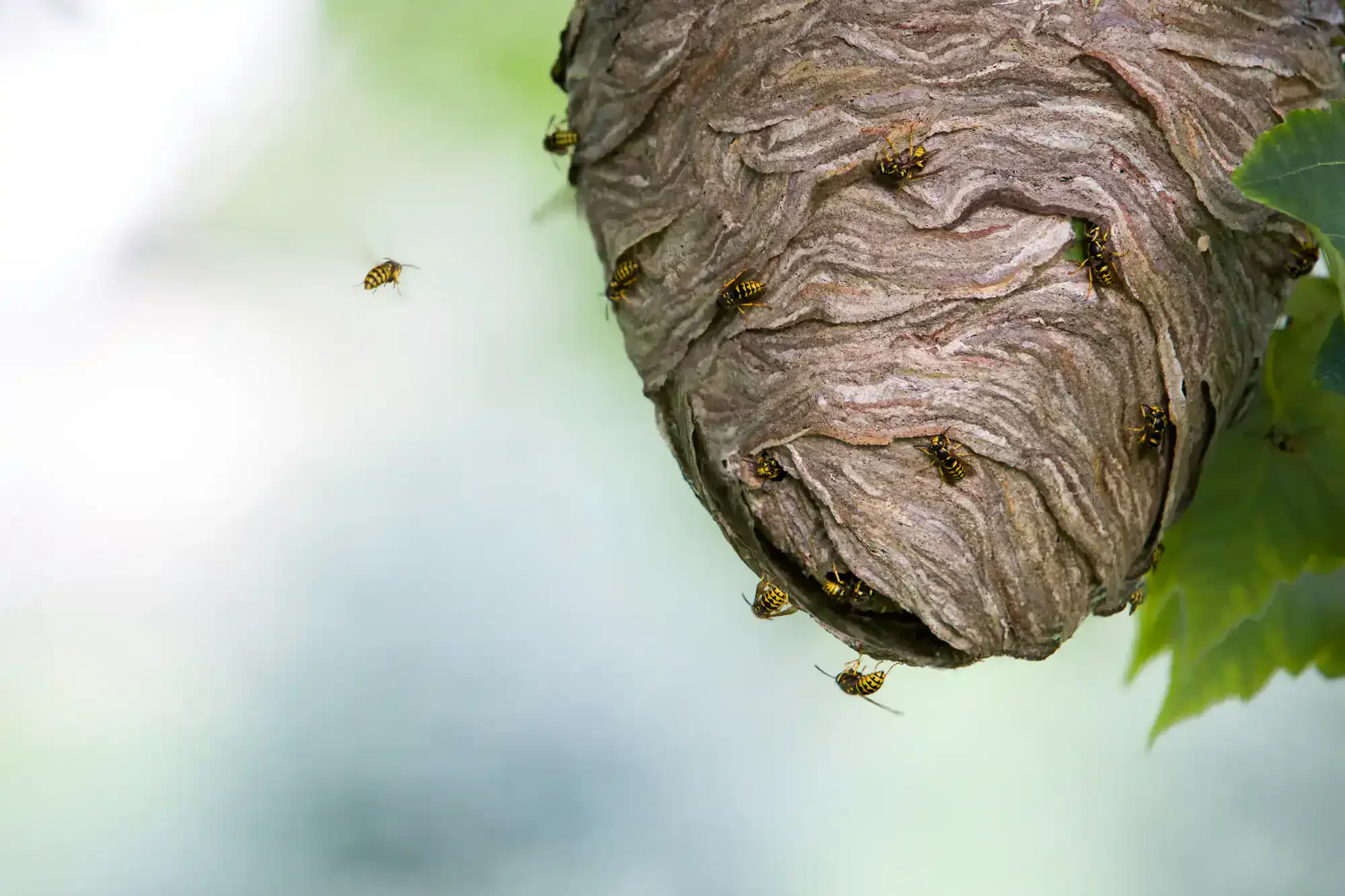
Yellow jackets are wasps, not bees. The distinction matters because they behave very differently, and the treatment approach is completely different. Bees — including honeybees and bumblebees — are generally docile, sting only when directly threatened, and in the case of honeybees, can sometimes be relocated rather than exterminated. Yellow jackets are aggressive, can sting multiple times without dying, and will defend their colony with very little provocation, especially in late summer when colonies are at peak population.
In Lapeer County, the two yellow jacket species most relevant to pest control are the German Yellowjacket and the Eastern Yellowjacket. Neither should be mistaken for a bee. If you’re seeing smooth, slender, black-and-yellow insects moving quickly and aggressively — especially near a ground opening or a structural gap — you’re almost certainly looking at yellow jackets. If you’re unsure, don’t treat until you know. Applying bee-specific products to a yellow jacket nest, or attempting relocation on an aggressive wasp colony, can make a bad situation significantly worse. A proper inspection and species identification is always the first step, and it’s something every First Choice service call includes before any treatment begins.
In Lapeer County, yellow jacket season runs from early spring through the first hard frost — typically late October or November. A fertilized queen emerges in late March or April and starts building a new colony from scratch. Through May and June, colony size is relatively small and yellow jacket activity is easy to miss. By July, worker populations are growing fast. August and September are the peak danger months. That’s when colonies can reach anywhere from 1,000 to 5,000 workers, food sources start to thin out, and yellow jackets shift from hunting insects to aggressively scavenging for sugar — which is exactly when your backyard barbecue, garden, or fruit trees become a target.
For Farmers Creek residents, this peak window overlaps directly with the most active outdoor season. If you’re spending time in the yard, gardening, doing property maintenance, or enjoying the trails near the Metamora-Hadley State Recreation Area, you’re most exposed during the same weeks the colonies are largest and most aggressive. The best time to treat a yellow jacket nest is as soon as you find it — not after the colony has grown through the summer. If you’re finding nests in late August or September, treatment is still effective, but the risk during the inspection and treatment process is higher simply because there are more wasps present.
Useful Links