
Hear from Our Customers
You stop second-guessing your own backyard. You stop steering around a corner of your yard, keeping the kids inside, or avoiding the shed. When a yellow jacket colony is fully eliminated — not sprayed at and irritated — daily life on your property goes back to normal. That’s the actual outcome. Not a temporary fix. Gone.
For Farrandville homeowners, this matters more than it might in a newer subdivision. Most homes in our service area were built between the 1940s and 1960s. That means aging soffits, original wood siding, and gaps in the roofline that a yellow jacket queen doesn’t need a second invitation to use. A colony that gets into a wall void in a mid-century Farrandville home isn’t just a nuisance — it grows. By late summer, you’re looking at thousands of workers chewing through insulation and drywall to expand.
The other thing that changes is your peace of mind heading into fall. Yellow jackets in Genesee County are at their most aggressive in August and September, when colony size peaks and food sources shift. If you’ve got a nest in your structure right now, that window is exactly when it becomes a real safety problem. Getting it handled before that peak isn’t just smart — it’s the difference between a controlled treatment and an emergency.
We’re a family-owned company based out of Swartz Creek, and we’ve been serving Genesee County — including Farrandville and the surrounding Vienna Township area — since 2005. Roger Chinault founded this company and has 26 years of hands-on pest control experience. That’s not a number on a website. That’s someone who has personally identified and eliminated yellow jacket colonies in hundreds of homes just like yours in Farrandville.
One thing that doesn’t happen here: you don’t get a different technician every time you call. We keep the same professional assigned to your property year after year. They learn your home — where the vulnerabilities are, what was treated before, what to watch for next season. That kind of continuity doesn’t exist at the national chains, and it makes a real difference when you’re dealing with a recurring pest pressure like yellow jackets in an older rural property.
We hold MDARD Pesticide Application Business License #250081, we’re IPM-certified, and we’ve earned recognition from both Angie’s List and HomeAdvisor. We also offer discounts for seniors, veterans, and first responders — because this community has earned that.
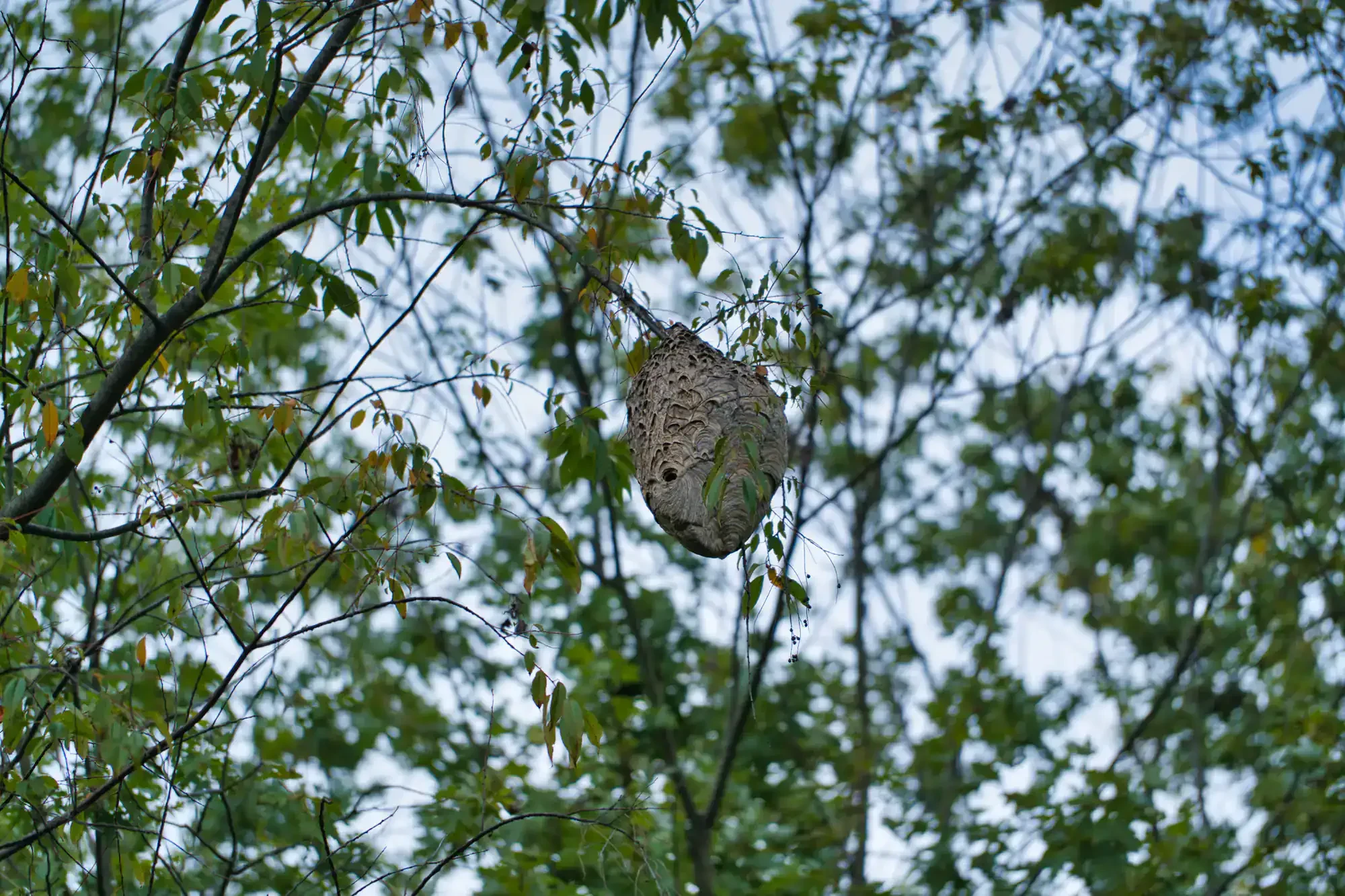
It starts with a proper inspection. Before anything gets treated, we identify the species. That step matters more than most people realize. Michigan is home to multiple yellow jacket species, and the German Yellowjacket — the one most likely living in the wall voids and attics of Farrandville’s older housing stock — requires a completely different treatment approach than the Eastern Yellowjacket nesting underground in your yard. Treating the wrong species the wrong way doesn’t solve the problem. It makes it worse.
Once we’ve confirmed what we’re dealing with and located the colony, we apply a targeted treatment using IPM-certified methods. That means the right product, in the right place, at the right concentration — not a broad spray that misses the nest and sends the colony deeper into your walls. For void-nesting colonies in older Farrandville homes, this precision is what separates a treatment that holds from one that fails within a week.
After treatment, we walk you through what to expect over the next several days and flag any structural entry points that made your home vulnerable in the first place. Given the age of most homes in the Farrandville area, that post-treatment conversation often includes specific things to watch for heading into the next season. And if anything comes back within the guarantee window, we come back too — no additional charge, no argument.
Ready to get started?
Every yellow jacket job starts with a full property inspection — not a quick look at the entry point and a quote. We assess where the colony is, how it’s getting in, and how established it’s become. In Farrandville, where homes often have original soffits, aging chimney mortar, and crawlspace gaps that have never been addressed, that inspection step frequently reveals entry points you didn’t know existed.
Treatment is targeted and species-specific. Whether you’re dealing with a German Yellowjacket colony inside your wall or attic, or an Eastern Yellowjacket nest underground in your yard or near an outbuilding, we match the approach to what’s actually there. Vienna Township’s mix of residential lots and agricultural-adjacent land means we regularly encounter both — sometimes on the same property. We handle both.
Every treatment comes backed by a 1-year service guarantee. If the colony returns within that window, we return and re-treat at no additional cost. We also offer price matching for reasonable competitor rates — so if you’ve already gotten a quote from another licensed provider in the Genesee County area, bring it. You shouldn’t have to choose between the most experienced option and the most affordable one. And if you’re a senior, a veteran, or a first responder, ask about our community discount when you call.
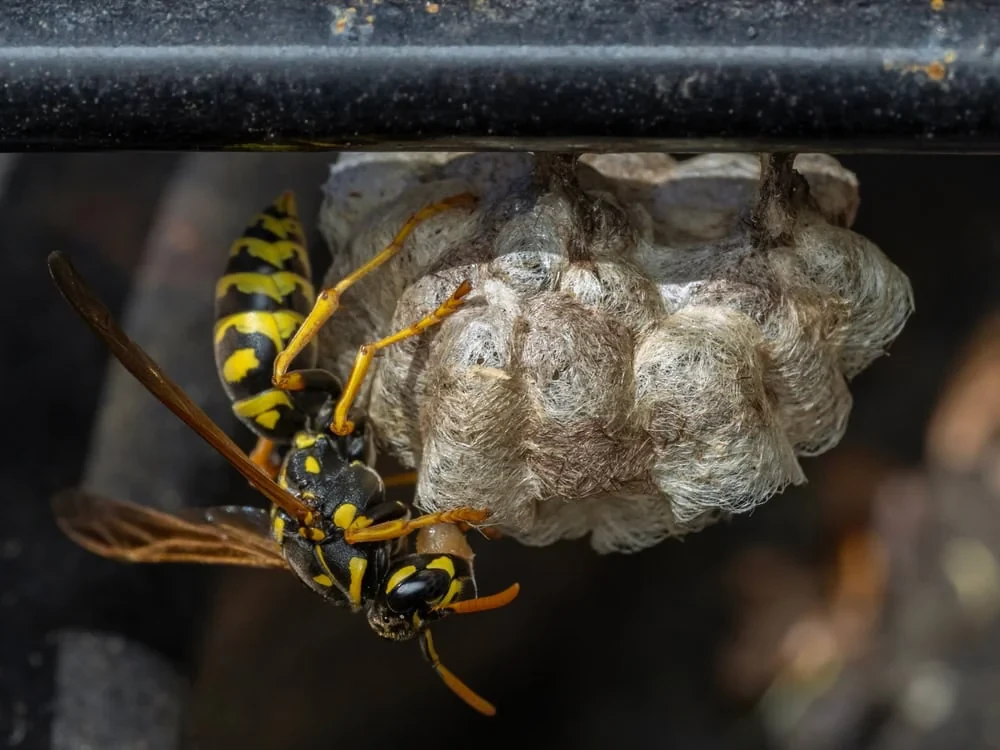
The most common signs are workers appearing consistently in one area of your home’s interior — especially near windows, light fixtures, or baseboards — and a steady stream of activity around a single entry point on the exterior. In older Farrandville homes built between the 1940s and 1960s, that entry point is often a gap in the original wood siding, a deteriorated soffit joint, or a crack in the chimney mortar. You might also hear a faint chewing or buzzing sound inside the wall itself as the colony expands.
What you don’t want to do is seal that entry point before treatment. Blocking it traps the colony inside, and they’ll chew through drywall to find another way out — sometimes into your living space. If you’re seeing consistent yellow jacket activity around a specific spot on your home’s exterior, that’s the time to call. The sooner a wall-void colony is treated, the smaller it is and the easier it is to eliminate completely.
Store-bought sprays can work on small, exposed nests that you can reach safely and treat from a distance at night. But for anything inside a wall, in an attic, underground in a high-traffic area, or near a door or window your family uses regularly, DIY treatment carries real risk. Yellow jackets don’t give much warning before they sting, and a colony of several thousand workers — which is common by late summer in Michigan — can respond to a perceived threat faster than most people expect.
There’s also the misidentification problem. If you’re treating a German Yellowjacket colony in a wall void with a product designed for exposed aerial nests, you’re not going to reach the nest. You’ll agitate the colony and drive them deeper into the structure, which makes professional treatment harder and more expensive later. If there’s any doubt about what you’re dealing with or where the nest is located, a licensed exterminator is the right call. The cost of a professional treatment is a fraction of what structural repair runs if a colony is left to expand unchecked.
Yellow jackets in Genesee County follow a predictable seasonal pattern. Queens emerge in late March or early April and begin building new colonies. Through spring and early summer, the colony grows steadily but stays relatively small. By August, you’re looking at peak colony size — anywhere from 1,000 to 5,000 workers depending on the species and location — and that’s when behavior shifts. Food sources change from protein to sugar, foraging range expands, and the colony becomes significantly more defensive.
For Farrandville residents, that late-summer window lines up directly with outdoor activities — backyard cookouts, garden harvesting, work on rural outbuildings. It’s also when most sting incidents happen and when phones start ringing. The best time to address a yellow jacket problem is before August, when the colony is smaller and less aggressive. But if you’re already in the thick of it, don’t wait it out. A colony inside your home’s structure won’t die off cleanly in winter — the nest dies, but the structural damage and entry points remain, and a new queen will use the same access point next spring.
Cost depends primarily on where the nest is located and how established the colony has become. A straightforward ground nest in an open area of your yard is generally on the lower end. A German Yellowjacket colony inside a wall void or attic — which is the more common scenario in Farrandville’s older housing stock — involves more access complexity and typically runs higher, with professional treatments in the region ranging from a few hundred dollars up to $1,000 or more for difficult structural situations.
What matters most isn’t finding the lowest quote — it’s making sure the treatment actually works. A partial treatment on a wall-void colony that doesn’t reach the nest means you’re paying again in a few weeks, usually for a colony that’s now harder to treat and more aggressive. We offer price matching for reasonable competitor rates, so if you’ve already gotten a quote from another licensed provider in the area, we’ll work with you on price. What you won’t get is a cut-rate approach that leaves the problem half-solved.
Yes — and this is especially relevant for the mid-century homes that make up most of Farrandville’s housing stock. When a German Yellowjacket colony establishes inside a wall void or attic, the nest is built from chewed wood fiber. As the colony grows through summer, workers actively chew through surrounding materials — insulation, drywall, even interior wall surfaces — to expand the nest cavity. A colony that goes undetected from spring through late summer can cause meaningful structural damage that goes well beyond the pest control bill.
There’s also a moisture issue. Abandoned nests left inside walls after winter can absorb moisture and create conditions that attract other pests or promote mold growth. The nest itself doesn’t just disappear cleanly — it breaks down over time inside your wall. Getting the colony treated and the entry point properly sealed is the complete solution. Treating the colony without addressing how they got in leaves the same vulnerability open for next season, and in an older Farrandville home with original exterior materials, that’s a cycle worth breaking.
Yes. We offer discounts for seniors, veterans, and first responders. Farrandville is a working-class, owner-occupied community where a lot of people have put real years into their homes and their service — and the pricing reflects that. Just mention it when you call and we’ll apply it to your service.
Beyond the community discounts, we also offer price matching for reasonable competitor rates. Genesee County has a handful of pest control providers operating in the area, and if you’ve already gotten a quote from a licensed competitor, bring it. The goal isn’t to be the cheapest option on the market — it’s to make sure cost isn’t the reason someone ends up with a less experienced provider handling a job that carries real safety stakes. A yellow jacket colony in your wall or attic isn’t the place to cut corners, and you shouldn’t have to choose between quality and a fair price.
Useful Links