
Hear from Our Customers
Once a yellow jacket colony is properly eliminated, the difference is immediate. No more watching where you step in the lawn. No more cutting a cookout short because something keeps dive-bombing the food. No more telling the kids to stay off the back half of the yard. That tension lifts the moment the nest is gone and the entry point is sealed.
For Milford homeowners specifically, this matters more than people might expect. The village sits right at the edge of Kensington Metropark and Proud Lake State Recreation Area — two massive natural corridors where yellow jacket queens overwinter and spread out every spring. That kind of habitat pressure doesn’t just create one nest. It creates conditions where nests show up year after year in the same spots if the root cause isn’t addressed. A thorough treatment paired with proper exclusion work breaks that cycle.
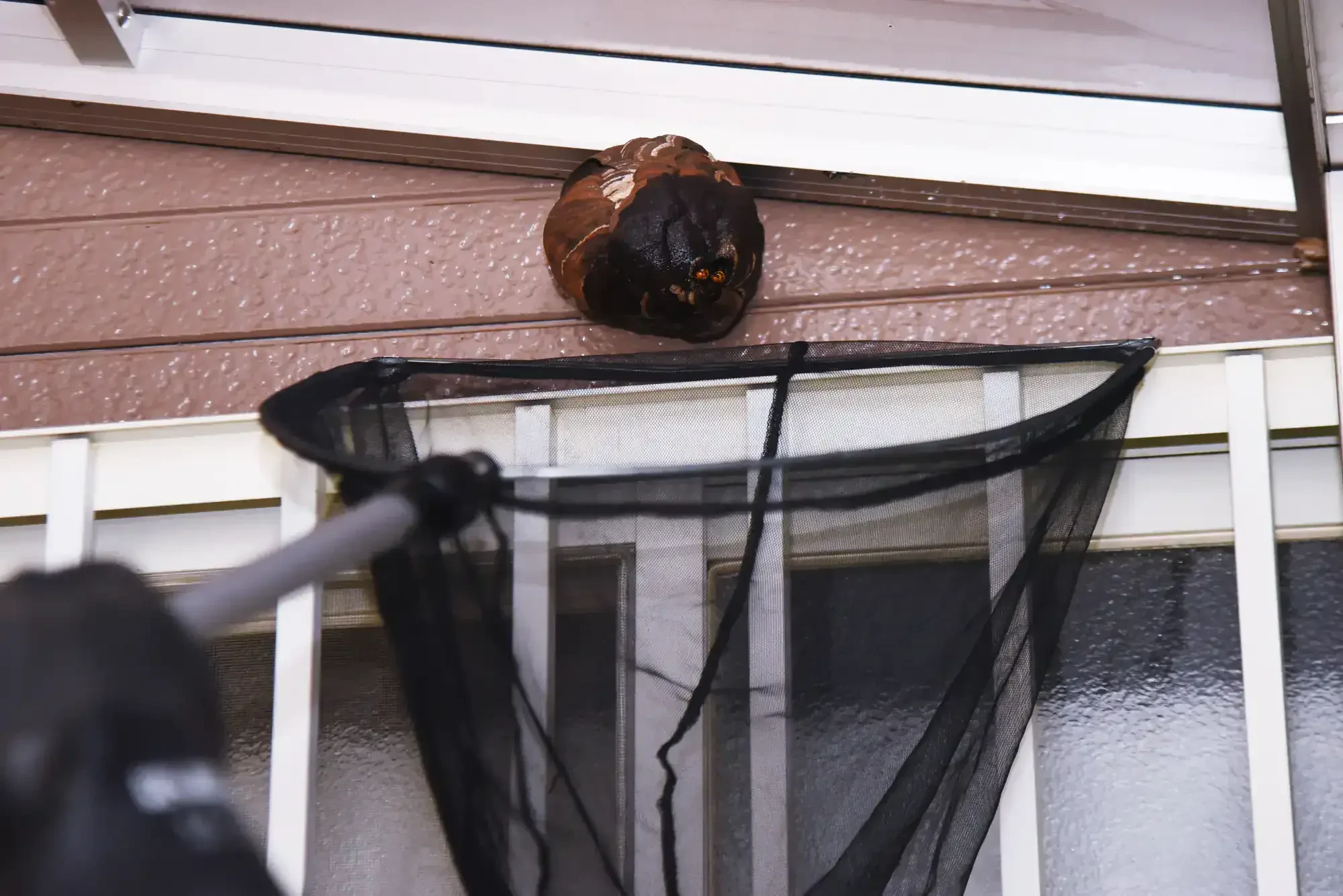
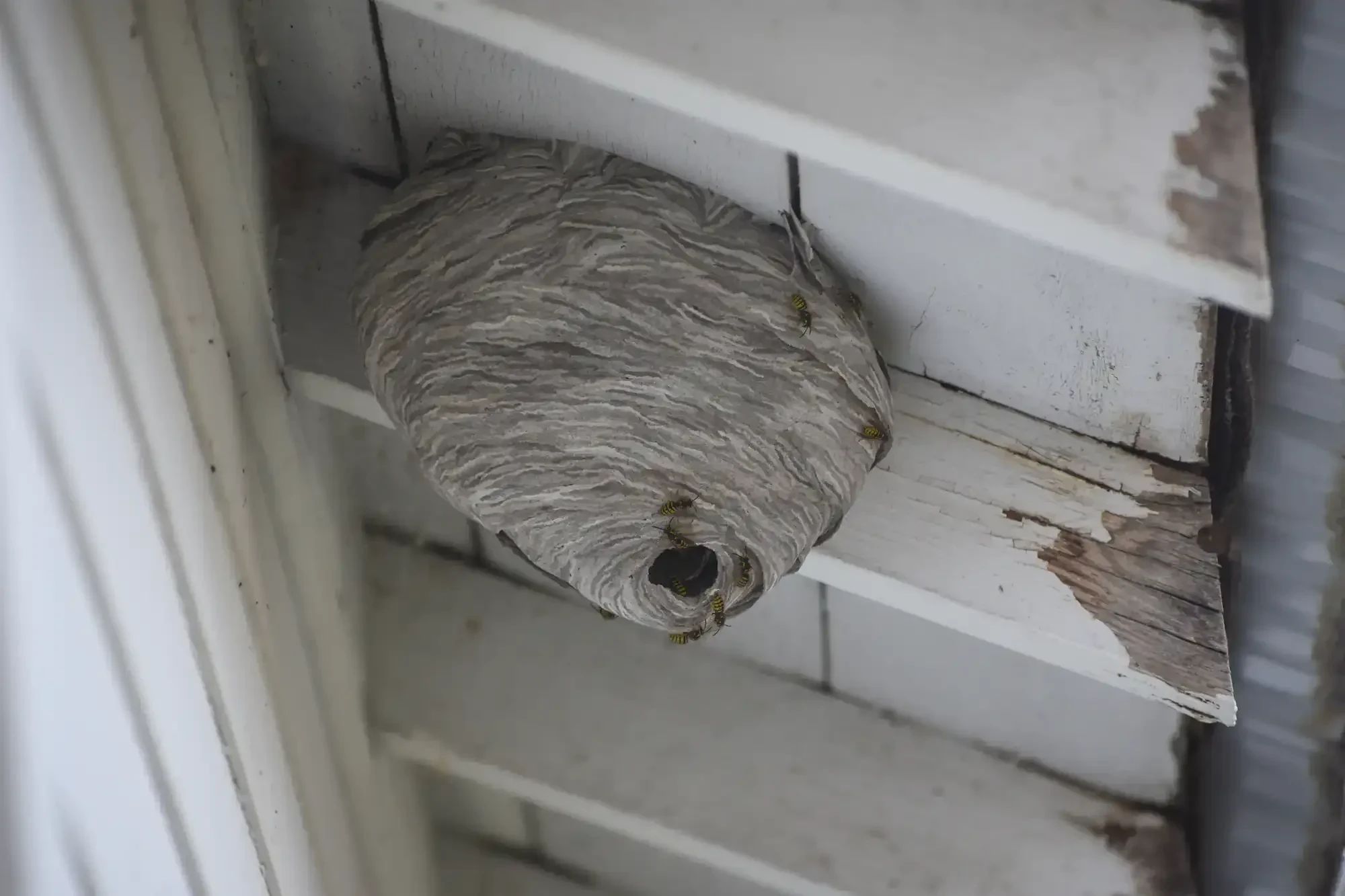
Older homes in the Milford village core face a different version of the problem. Aging soffits, weathered siding, and gaps around rooflines give German yellowjackets exactly what they need to build inside wall voids and attics — sometimes for weeks before a homeowner notices. Getting that handled early keeps a manageable situation from turning into a structural headache.
We’ve been serving Southeast Michigan since May 31, 2005 — and this year marks 20 years in business. That’s not a number thrown around for marketing. It means we’ve been treating Milford and Oakland County homes through every kind of pest season Michigan throws at you, long enough to know what works and what doesn’t.
Roger brings 26 years of personal, hands-on experience to every job. He’s not the guy behind a desk while someone else figures out your problem. We also hold MDARD Pesticide Application Business License #250081, carry full insurance, and have completed Integrated Pest Management training — a science-based certification that means treatment is targeted, not excessive.
Homeowners in Heritage Hills, Milford Glen, and throughout the surrounding township have trusted us because the same technician comes back year after year. No retraining a new face on your property’s history. No explaining where the last nest was. Just consistent, accountable service from someone who already knows your home.
It starts with identification, and that step matters more than most people realize. Michigan has multiple yellow jacket species, and the two most common in Milford behave very differently. The German yellowjacket nests inside enclosed cavities — wall voids, attics, and the aging soffits common in Milford’s older village-core homes. The Eastern yellowjacket nests underground, often in the abandoned animal burrows that are abundant in the wooded lots throughout Milford Township. Treating one like the other is how a manageable nest becomes a bigger, angrier problem.
Once the species and nest location are confirmed, we apply treatment directly and precisely. For ground nests, that means getting the product into the colony itself — not just the entrance. For wall-void and attic nests, it means reaching the colony without driving it deeper into the structure, which is exactly what store-bought aerosol sprays do when used incorrectly.
After treatment, the focus shifts to preventing recurrence. We identify entry points and address them so next spring’s queens — which disperse from the natural corridors surrounding Milford every year — don’t find the same gap they used before. The whole process is explained to you clearly before anything is applied, and our 1-year service guarantee means if activity returns within that window, so do we.
Ready to get started?
Yellow jacket pest control in Milford means more than showing up with a can of spray. We treat the full scope of the problem — ground nests, wall-void infestations, attic colonies, and nests built into landscaping, decks, and structural gaps. Every service includes species identification before treatment, targeted product application, and a post-treatment walkthrough so you know exactly what was done and what to expect.
For Milford properties near the Huron River corridor or backing up to wooded lots along Milford Township’s established subdivisions, that post-treatment conversation often includes specific guidance on what’s attracting yellow jackets to your property and what structural or landscaping changes reduce the odds of a return visit. That’s not a sales pitch for an add-on — it’s part of doing the job correctly.
We also offer discounts for seniors, veterans, and first responders — a straightforward acknowledgment that Milford’s community includes a lot of people who’ve earned it. And if you’ve already gotten a quote from another provider, ask about price matching. You don’t have to choose between the best service in Oakland County and a fair price.
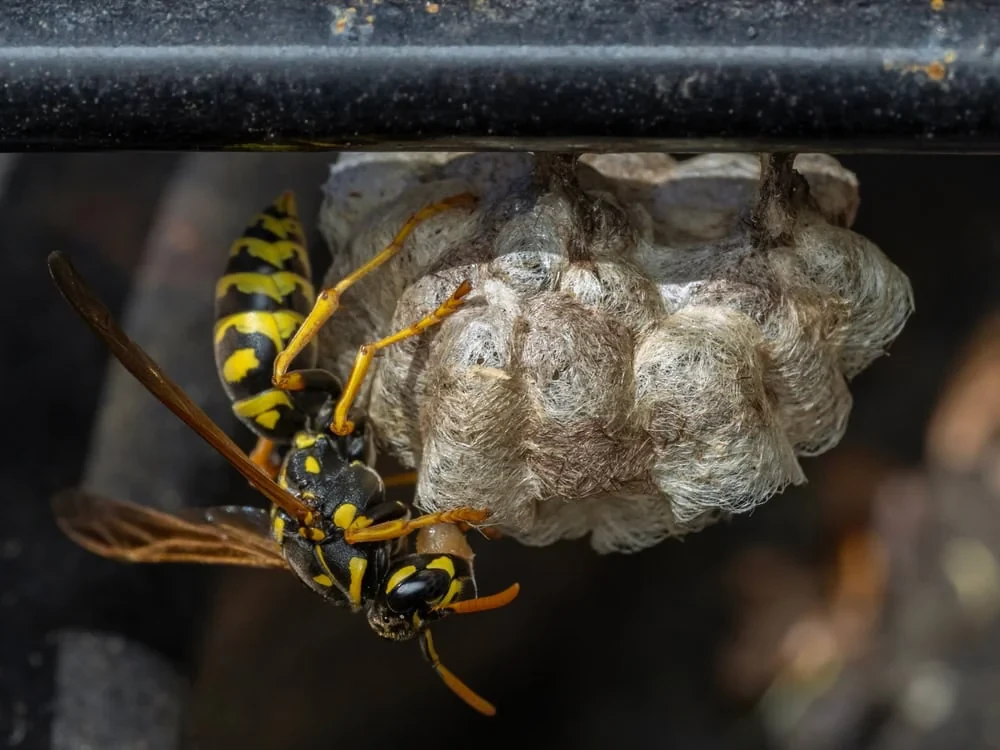
The most telling sign is yellow jackets appearing inside your living space — coming out of a light fixture, a baseboard gap, or a wall crack — without any obvious way they could have flown in through a window or door. That almost always means there’s a colony established inside a wall void or attic space, not just foragers wandering in from outside. You might also hear a faint buzzing or chewing sound from inside the wall, particularly in late summer when colonies are at their largest.
In Milford’s older village-core homes, this is more common than people expect. Structures built decades ago have natural gaps around rooflines, soffits, and window frames that have widened over time — exactly the kind of entry points German yellowjackets exploit. If you’re seeing yellow jackets inside the house, don’t attempt to seal the entry point yourself before treatment. Blocking the exit without eliminating the colony traps thousands of workers inside the wall, and they will chew through drywall to find another way out. Call us first.
For most residential yellow jacket treatments in Milford, you’re looking at a range of roughly $300 to $800 depending on nest location, colony size, and accessibility. Ground nests in open lawn areas tend to be on the lower end. Wall-void and attic infestations — which are more common in Milford’s older housing stock and require more involved treatment — typically run higher, sometimes reaching $1,000 or more if the colony is large and well-established inside the structure.
What affects cost most is how long the nest has been active and where it’s located. A colony discovered in June is smaller and easier to treat than one found in late August at peak size. Milford’s proximity to Kensington Metropark and Proud Lake State Recreation Area means queens have abundant overwintering habitat nearby, and new colonies establish early each spring — which is why catching them sooner rather than later saves money. We offer price matching for reasonable competitor quotes, so if you’ve already received an estimate, it’s worth a conversation before you decide.
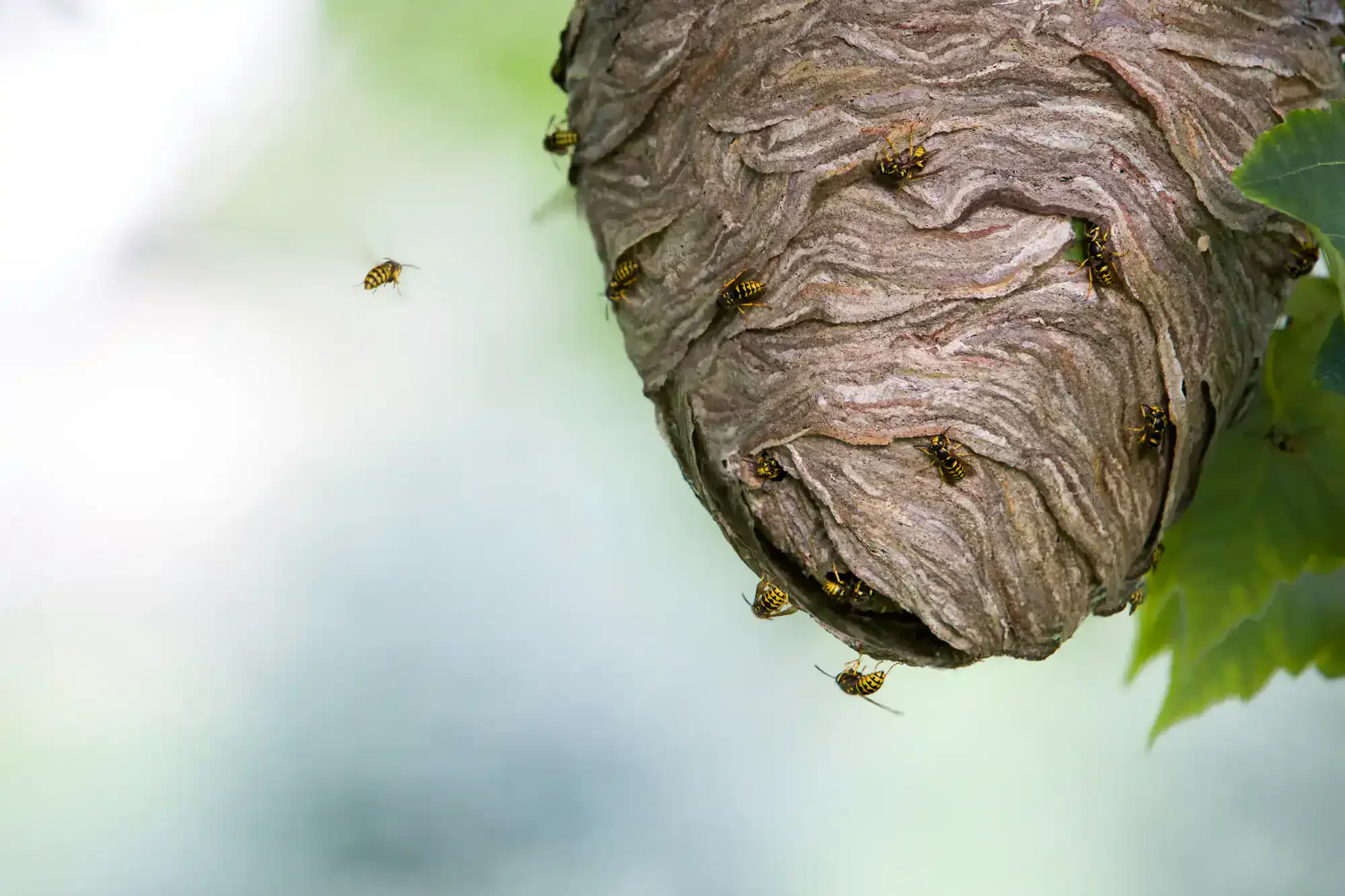
For a small, exposed nest early in the season — say, a paper nest the size of a golf ball under an eave in May — some homeowners handle it without incident. But by mid-summer, that calculation changes significantly. A mature yellow jacket colony in a Milford yard can contain anywhere from 1,000 to 5,000 workers by August, all capable of stinging repeatedly, and all wired to respond instantly to the alarm pheromone triggered when the nest is disturbed.
The bigger risk with DIY treatment isn’t just getting stung — it’s making the problem structurally worse. Store-bought aerosol sprays applied to a wall-void or attic nest don’t reach the queen, don’t eliminate the colony, and often drive workers deeper into the structure. Homeowners who’ve tried this route frequently call a professional a week later with a more aggressive colony and a harder-to-treat situation. If the nest is in the ground, in a wall, in an attic, or anywhere you can’t see the full extent of it, professional treatment is the right call from the start.
Yellow jackets don’t reuse old nests, but they absolutely return to familiar locations. Fertilized queens that survive the winter — often in the wooded edges of properties backing up to Milford Township’s natural corridors — emerge in spring and instinctively seek out the same structural features and environmental conditions that supported a colony before. If a wall-void entry point wasn’t sealed after last year’s treatment, or if the ground conditions that attracted the original nest weren’t addressed, a new queen will find it.
Milford’s geography makes this cycle more persistent than in fully developed suburban areas. The direct trail connection to Kensington Metropark and the Proud Lake State Recreation Area to the north means overwintering queens have large, undisturbed natural habitat nearby. They spread out every spring and forage into adjacent residential properties. Eliminating the colony is step one. Sealing entry points and addressing the conditions that made your property attractive — whether that’s a structural gap, a food source, or a ground disturbance — is what actually breaks the cycle.
Late July through September is consistently the most dangerous window for yellow jacket activity in Milford, and the timing isn’t random. By late summer, colonies have reached their maximum size — sometimes thousands of workers — and the colony’s food needs shift. Earlier in the season, yellow jackets hunt insects and largely leave people alone. By August, they’re scavenging for sugars and proteins, which means outdoor food, beverages, and garbage become targets. Workers are more aggressive, less predictable, and quicker to sting with less provocation.
This peak aggression window lines up directly with Milford’s most active outdoor season — backyard entertaining, river recreation along the Huron River corridor, trail use connecting to Kensington Metropark, and community events. That combination of maximum colony size and maximum human outdoor activity is exactly why late-summer calls for yellow jacket pest control in Milford spike so sharply. If you’ve spotted a nest on your property before July, treating it early — when the colony is still small — is significantly safer and less expensive than waiting.
Yes. We offer discounts for seniors, military veterans, and first responders. Milford has a long-established community of retirees and long-term homeowners, and a real presence of veterans and active service members throughout Oakland County. These discounts reflect a straightforward recognition of that community, not a promotional add-on.
Beyond the discount programs, we also match reasonable competitor rates. If you’ve already received a quote from another licensed pest control provider in the Milford area, bring it to the conversation. The goal is to make sure cost isn’t the reason you end up choosing a less experienced provider for a job that genuinely requires expertise — especially when you’re dealing with a wall-void infestation or a large late-season colony on a wooded Oakland County property. Call to ask about current eligibility and what applies to your specific situation.
Useful Links