
Hear from Our Customers
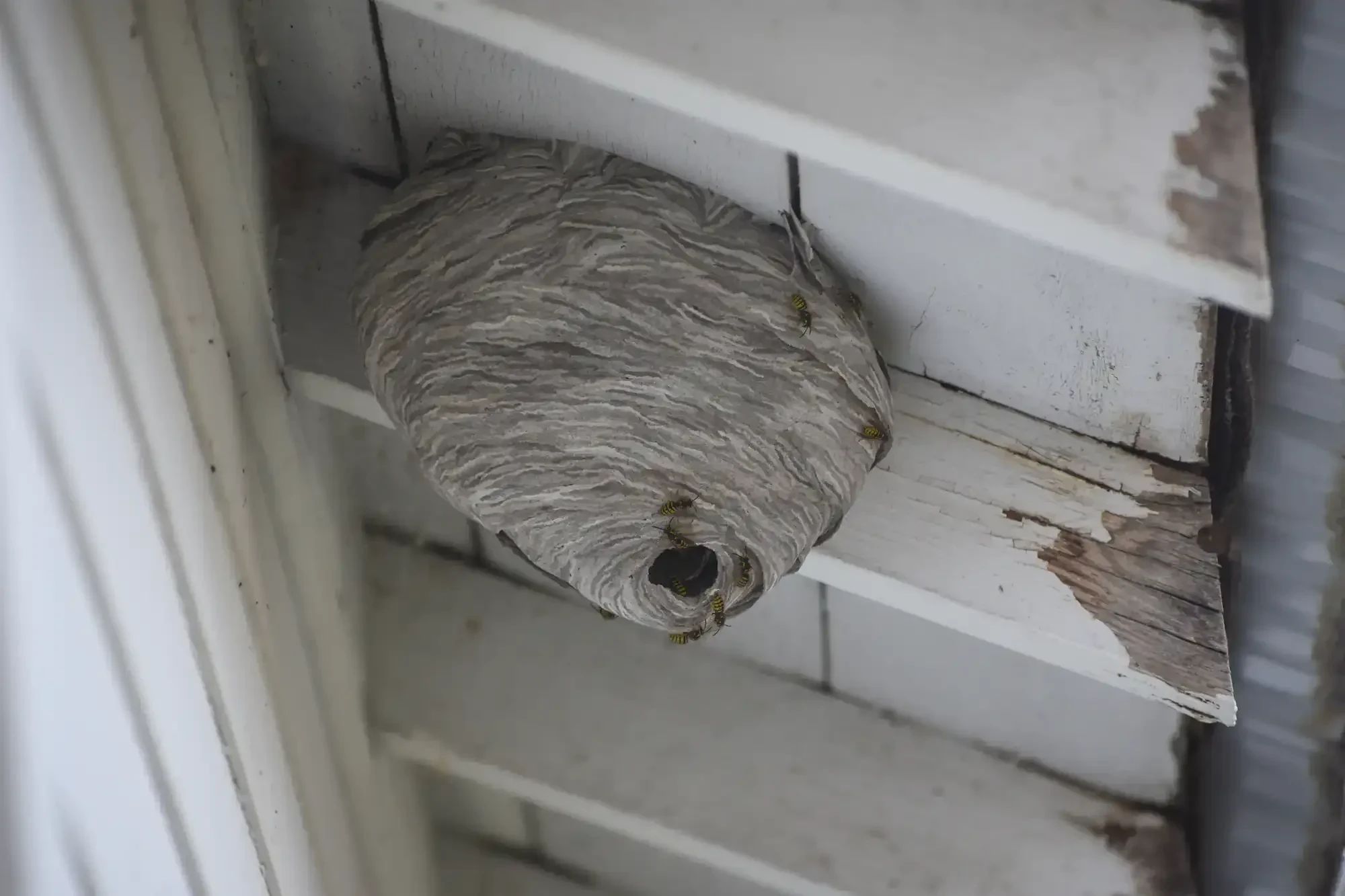
Yellow jackets don’t give you a lot of warning. One day you’re mowing the lawn or pulling weeds near the garden bed, and the next you’ve stumbled into a ground nest with hundreds of workers ready to defend it. In Webberville, that scenario plays out constantly — because the farmland, open fields, and wooded edges surrounding the village are exactly the kind of terrain where Eastern Yellowjackets build underground colonies that can grow to thousands of workers by late summer.
If you live in one of the older homes near downtown Webberville or along M-43, the threat looks different but it’s just as serious. German Yellowjackets — the species most likely to nest inside your walls — find their way in through gaps in aging soffits, cracks in old siding, or openings around chimneys. You might not see a nest at all. You just start noticing wasps coming and going from the same spot on your exterior, or worse, finding them inside your home. By the time most people call us, the colony is already well established.
After a proper treatment, that changes fast. No more watching where you step in the backyard. No more keeping the kids away from the side of the house. No more dreading outdoor time on your own property — which, in a community like Webberville where large lots and open-air living are part of why people chose to live here, matters more than it might somewhere else.
We’ve been family-owned and operated since May 31, 2005 — twenty years of protecting Southeast Michigan homes, including the rural communities of Ingham County and Webberville. Roger Chinault founded the company and brings 26 years of hands-on pest control experience to every job. This isn’t a national franchise routing your call to whoever’s available. It’s a small, focused operation where the person who treats your home this year is the same person who comes back next year — because they already know your property, your entry points, and your history.
We hold MDARD Pesticide Application Business License #250081 and have completed Integrated Pest Management training — which means correct species identification before any treatment begins, not a one-size-fits-all approach. Whether you’re on a large lot off Pardee Road, in one of the historic homes in Webberville’s Central Core, or out on a rural acreage property near the farmland edges of Leroy Township, the treatment is built around what’s actually happening on your property. Angie’s List and HomeAdvisor have both recognized First Choice, and our 4.7 out of 5 rating on Angi reflects what Webberville customers consistently say: fast, professional, and thorough.
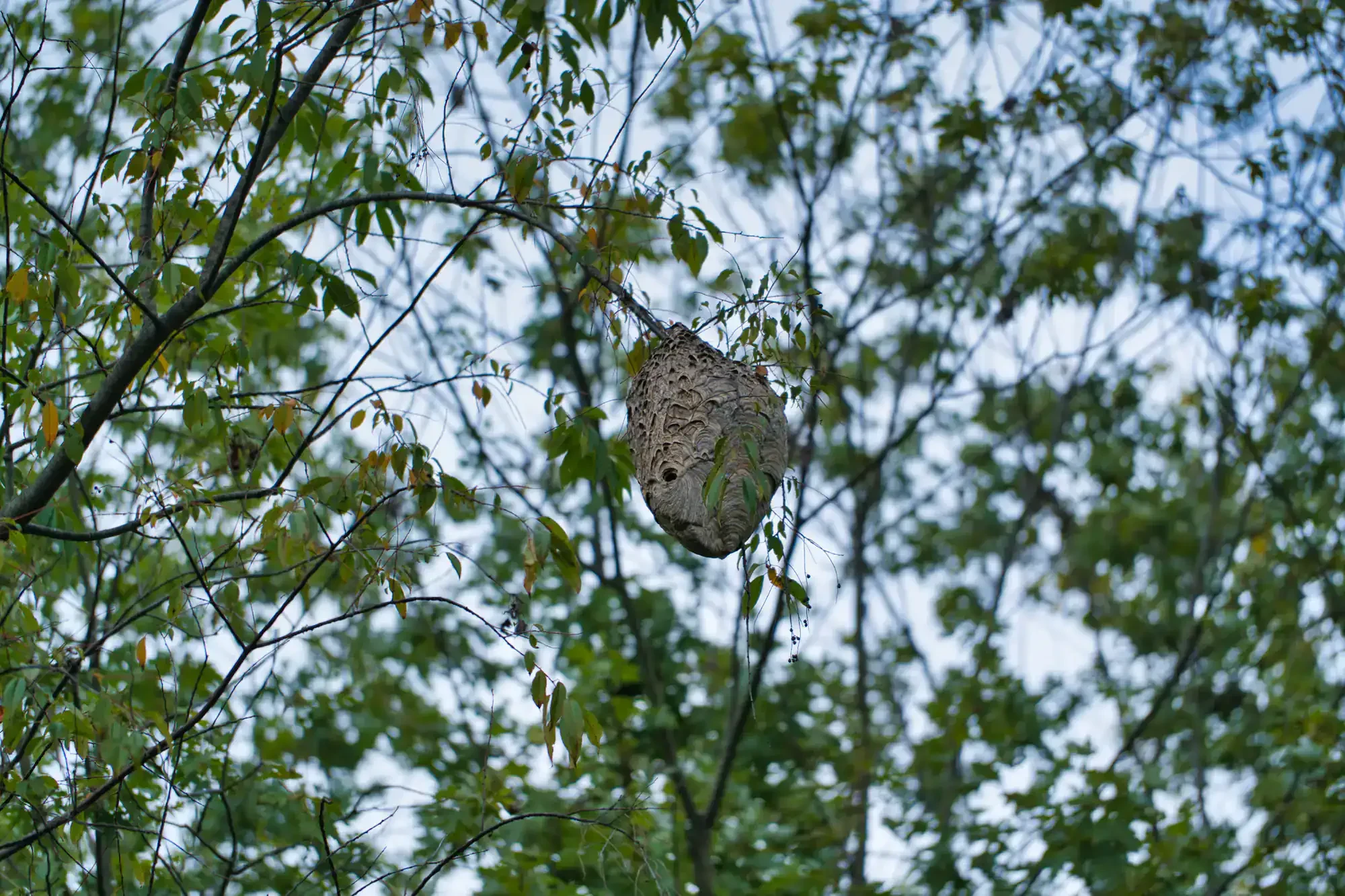
The first thing that happens when we come to your Webberville property is an inspection — not a quick glance, but a real assessment of where the nest is, what species you’re dealing with, and how the colony is accessing your structure or yard. That step matters more than most people realize. Eastern Yellowjackets nesting underground in your lawn or garden require a completely different approach than German Yellowjackets that have built a colony inside a wall void in your home. Treating the wrong way doesn’t just fail — it can drive the colony deeper into your structure or increase aggression significantly.
Once the nest location and species are confirmed, we apply treatment using professional-grade products that reach the full colony — including the queen. Timing matters here too. Applications are most effective when workers are inside the nest, which is why we schedule treatments accordingly rather than just showing up and spraying the entry point. For wall-void infestations common in Webberville’s older homes, this precision is what separates a treatment that works from one that sends wasps looking for a new exit through your interior walls or ceiling.
After treatment, you’ll know exactly what to expect: when the activity will stop, what to watch for, and what’s covered under our 1-year service guarantee. If yellow jackets come back within the guarantee period, so do we — at no additional charge. Michigan’s agricultural surroundings create ongoing pressure, and that guarantee is there because we know it.
Ready to get started?
Every yellow jacket job with us starts with a proper inspection — no assumptions, no skipping steps. For Webberville homeowners, that means accounting for the specific conditions that make this area different from a dense suburban neighborhood. Large lots with garden beds and lawn areas adjacent to farmland are prime territory for Eastern Yellowjacket ground nests. Older homes in the Central Core near Grand River Avenue carry elevated risk for German Yellowjacket wall-void and attic infestations, where colonies can grow inside your structure for weeks before you notice any activity. Both scenarios are handled — and handled differently.
Treatment is performed by a trained, full-time professional — not a seasonal hire. We don’t use part-time college students, and that’s a deliberate policy. The technician on your property has the experience to identify the species correctly, apply the right product in the right location, and explain every step of the process before we start. We offer discounts for seniors, veterans, and first responders in the Webberville community, and we’ll match any reasonable competitor’s rate — so you’re not paying more for better service. No binding contracts, no hidden fees, and a 1-year guarantee that stands behind the work.
Timing is worth mentioning: if you’re planning to be outside for Webberville’s Farmer’s Field Day in late September — which falls directly in peak yellow jacket aggression season — scheduling treatment well before that window is the smart move. Colonies are largest and most defensive in August and September, and an untreated nest near an outdoor gathering is a real risk.
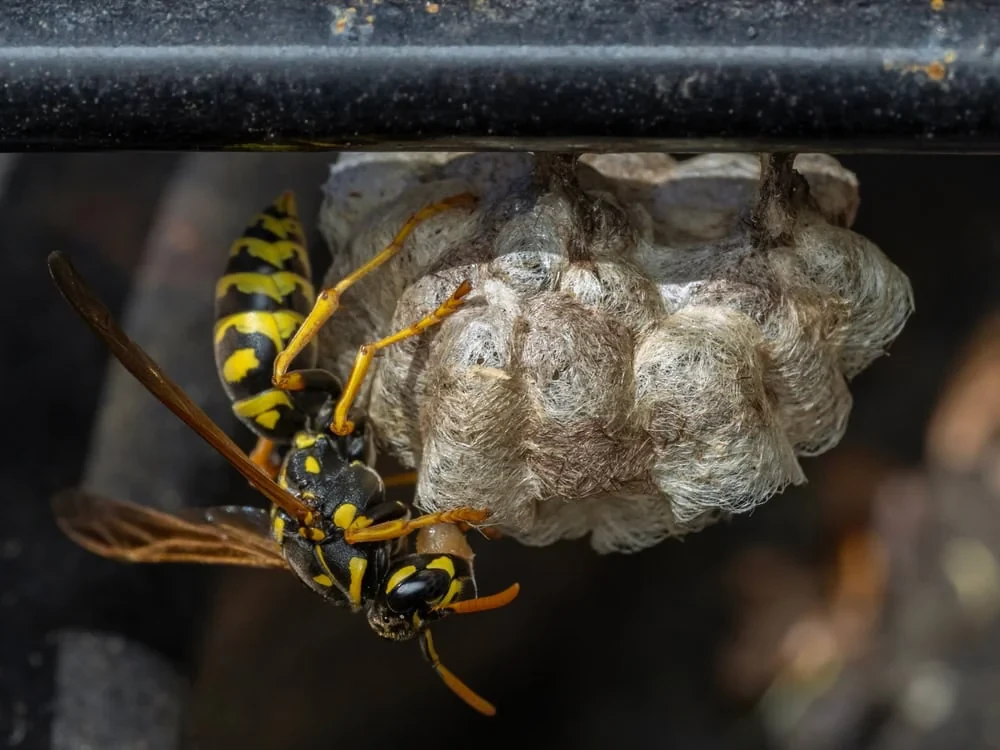
The most common sign is consistent wasp activity at a single point on your exterior — the same gap in the siding, the same crack near a soffit, the same opening around a window frame — day after day. You’re not seeing random wasps flying by. You’re watching workers leave and return to a specific entry point, which means there’s a colony on the other side of that wall. In some cases, you’ll also hear a faint buzzing or chewing sound from inside the wall, especially in quieter rooms adjacent to the exterior.
In Webberville’s older homes — particularly those in the Central Core near Grand River Avenue — aging siding, deteriorating soffits, and gaps around chimneys give German Yellowjackets plenty of access points. These colonies can grow to several thousand workers before the homeowner realizes what’s happening. If you’re noticing wasps inside your living space with no obvious outdoor entry, that’s often a sign the colony has chewed through drywall or insulation and found a secondary exit into your home. At that stage, a professional inspection is the only way to understand the full scope of what you’re dealing with.
Yes — significantly. Ground nests in Webberville are typically Eastern Yellowjackets, which build underground colonies in abandoned animal burrows, lawn areas, garden beds, and the open field edges that border many properties in Leroy Township. These nests are treated by applying a professional-grade product directly into the nest entrance, ideally in the evening when workers are inside. The goal is to reach the full colony, including the queen, so the nest is eliminated rather than just disrupted.
Wall-void and attic nests are a different situation entirely. German Yellowjackets nesting inside a structure require treatment that penetrates the cavity where the colony is living — not just a spray at the entry point. Applying the wrong product at the surface can seal workers inside, increase aggression, and force the colony to find new exits, sometimes directly into your living space. We identify the nest type and location before any product is applied, which is what makes the treatment effective rather than just temporary. The approach is built around what’s actually there, not a standard protocol applied the same way every time.
It is, and the timing is worth understanding. Yellow jacket colonies in Michigan start small in spring — a single queen building a nest and laying eggs. By July, workers have taken over and the colony is growing steadily. By August and into September, a mature colony can contain anywhere from 1,000 to 5,000 workers, and the behavior shifts. As natural food sources decline and the colony becomes food-stressed, yellow jackets get more aggressive and start scavenging near human activity — outdoor meals, garbage cans, sweet drinks, anything available.
For Webberville specifically, that peak aggression window lines up directly with Farmer’s Field Day, which takes place on the fourth weekend of September. If there’s an untreated nest on or near your property — or near any outdoor gathering space — late September is when it becomes a genuine safety concern, not just a nuisance. Scheduling treatment in July or early August, before colonies hit maximum size, keeps your outdoor spaces safe during the time of year when you’re using them most.
Store-bought wasp spray works in very specific situations — a small, exposed nest under an eave with clear access, treated at night, by someone who knows exactly what they’re doing. For the majority of yellow jacket situations Webberville homeowners actually face, it’s not the right tool. Ground nests in your lawn or garden beds require the product to reach deep into the underground cavity where the colony lives, not just the entrance. Wall-void infestations need treatment that penetrates the interior cavity — and if you seal the entry point without eliminating the colony, you can drive thousands of workers to find a new exit, sometimes into your living space.
Beyond the treatment itself, misidentification is a common problem with DIY attempts. Yellow jackets are frequently confused with paper wasps and even some bee species, and the treatment approach is different for each. Getting it wrong means a failed treatment, a more aggressive colony, and the same problem a few weeks later — sometimes worse. A professional inspection takes the guesswork out of it, and our 1-year guarantee means that if the problem comes back, so do we. For a rural community like Webberville where yellow jacket pressure from surrounding farmland is ongoing, that kind of backup matters.
The national average for professional yellow jacket extermination runs around $725, with more complex jobs — wall-void infestations, attic colonies, or large ground nests on rural properties — trending toward the $500 to $1,300 range depending on nest location, size, and accessibility. For Webberville homeowners, the more useful comparison isn’t between pest control companies. It’s between the cost of treatment and the cost of what happens if you don’t treat.
A single emergency room visit for an anaphylactic reaction to a yellow jacket sting can exceed $1,000 — and between 0.5% and 4% of people experience anaphylaxis from stinging insect venom, often without knowing they’re at risk until it happens. A wall-void infestation left untreated can result in structural damage — chewed drywall, compromised insulation, moisture intrusion — that runs $2,000 to $10,000 in repairs. We match reasonable competitor rates, so you’re not overpaying, and our 1-year service guarantee means your investment is protected if yellow jackets return. Seniors, veterans, and first responders in the Webberville area also qualify for discounts — ask when you call.
They can, and in Webberville’s environment, the conditions that attracted them in the first place don’t go away after one treatment. Yellow jacket colonies die off each fall — only newly fertilized queens survive winter, sheltering in woodpiles, tree cavities, and the natural woodland areas surrounding much of the village. In spring, those queens emerge and start building new colonies. They don’t reuse old nests, but they absolutely reuse favorable locations — the same gap in your siding, the same underground burrow in your lawn, the same attic void with easy access.
What reduces the likelihood of repeat infestations is sealing the entry points after treatment and addressing the conditions that made your property attractive in the first place. Our IPM-trained technicians can walk you through what those conditions look like on your specific property — whether that’s an opening in your exterior that needs to be sealed before next spring, or a section of your lawn near the field edge that’s prone to ground nesting. Our 1-year guarantee covers you if yellow jackets return within that window, and the same technician who treated your home will be the one who comes back — already familiar with your property and what was done before.
Useful Links