If you’ve searched for a natural bug exterminator, you already know what you want: someone who can solve the problem without turning your home into a chemistry experiment. That’s a completely reasonable thing to want, especially if you have kids, pets, or just don’t love the idea of a technician fogging every room and telling you to stay out for four hours.
Here’s the thing nobody in the industry wants to say out loud: “natural,” “eco-friendly,” and “green” are marketing terms. They’re not regulated. There’s no licensing body checking whether a company that calls itself a green pest exterminator is actually doing anything differently. What does exist—and what actually matters—is a methodology called Integrated Pest Management. That’s where this conversation starts.
What “Eco Exterminator” Actually Means—and What It Doesn’t
The phrase eco exterminator sounds like it should mean something specific. In practice, it means whatever the company using it wants it to mean. There’s no federal or Michigan state regulation that defines “eco-friendly” pest control, which means a company can slap that label on their website without changing a single thing about how they treat your home.
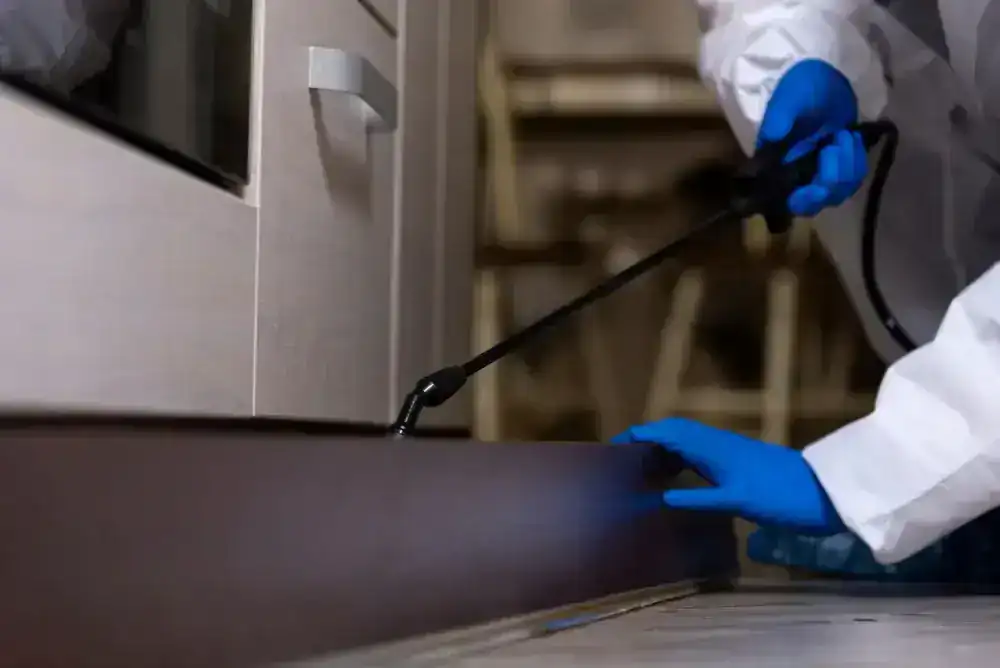
What does carry real meaning is IPM—Integrated Pest Management. It’s the framework endorsed by the U.S. Environmental Protection Agency, and it’s built around a straightforward idea: before you apply anything, you inspect. You identify the pest, find out where it’s getting in, understand what conditions are making your home attractive to it, and then choose the least invasive solution that will actually work. Chemical treatment is a tool, not a default.
We’re licensed in IPM. That’s not a tagline—it’s a credential that required actual training and reflects how we approach every service call in Genesee County.
Green Pest Exterminator: What Legitimate Credentials Actually Look Like
When someone calls themselves a green pest exterminator, the first question worth asking is: what does that mean in practice? Not on the website—in practice. What do they inspect before they treat? What are they applying, where, and why? Can they tell you the re-entry time and explain why that specific product was chosen over alternatives?
A company that can answer those questions clearly is doing something real. A company that responds with vague reassurances about “plant-based” or “all-natural” formulas without explaining their methodology is doing marketing.
Here’s a counterintuitive truth the industry rarely admits: naturally occurring substances are not automatically safer than synthetic ones. Some botanical pesticides are more acutely toxic than certain synthetic alternatives. What determines safety is the application method, the concentration, the target specificity, and the experience of the person applying it. A licensed technician using a targeted synthetic product in a precise location may pose far less risk to your family than someone broadcasting a “natural” spray across every surface in your kitchen.
The legitimate markers of a responsible pest control company aren’t the adjectives on their homepage. They’re the license number we can give you (ours is MDARD Pesticide Application Business License #250081), the certifications our technicians hold, and whether we can explain our process before we start—not after.
One more thing worth knowing: pest resistance is real. Insects and rodents exposed to the same chemical treatments repeatedly develop tolerance over time. IPM-based approaches rotate methods and address root causes, which is why they tend to work better over time—not just in the short term.
Rodent Repellent Pet Safe Options: What IPM Looks Like for Families with Animals
For homeowners with dogs, cats, or small children, the concern behind the “natural” search is usually this: what’s actually going to be in my home after the technician leaves? It’s a fair question, and a good pest control company should be able to answer it specifically.
Under an IPM framework, rodent control doesn’t start with poison. It starts with inspection—finding out where mice or rats are entering the structure, what’s attracting them, and what harborage conditions exist. Exclusion comes first: sealing entry points, addressing gaps around pipes and utility penetrations, removing food sources. Trapping follows. Chemical rodenticides, when used at all, are placed in tamper-resistant bait stations in locations inaccessible to pets and children—not broadcast across the floor.
This matters especially in Genesee County, where older housing stock in communities like Flint, Davison, and Burton tends to have more structural gaps and aging utility penetrations than newer construction. A house built in the 1950s or 1960s wasn’t designed with modern rodent exclusion in mind, and a one-time poison treatment without addressing entry points will just mean a new population moves in within weeks.
Mouse removal done right is a process, not a single visit. It involves a thorough inspection, targeted treatment, exclusion work, and follow-up monitoring to confirm the problem is resolved. We assign the same technician to your property for every visit—which means the person coming back in six weeks actually remembers what they found the first time, knows where the gaps are, and isn’t starting from scratch.
That consistency is one of the most practical things we do, and it’s something most national pest control companies can’t offer because they rotate whoever is available.
Michigan Pest Seasons Most Homeowners Don’t Plan For
One of the most common mistakes Genesee County homeowners make is treating pest control as a warm-weather concern. The logic makes sense on the surface—bugs come out in summer, winter kills them off, problem solved. The reality is more complicated, and in Michigan’s climate, the gaps in that logic can cost you.
Fall is actually the most critical pest management window of the year. As temperatures drop, rodents start looking for warmth inside structures. Stinging insects become more aggressive as their colonies die off. And the fleas that were active on your pets all summer don’t disappear—they move inside with the animals and settle into your carpets and furniture. Michigan’s dramatic seasonal swings don’t eliminate pest pressure; they redirect it.
Tick Season Michigan: Longer Than Most People Realize
Most people think of ticks as a summer problem. In Michigan, that assumption leaves you exposed for months on either end of the season. Black-legged deer ticks are active from approximately March through November, with peak activity in spring (April through June) and again in fall (August through November). The shoulder seasons—when people are outside but not thinking about ticks—are actually when exposure risk is highest.
For families in wooded communities like Goodrich, Linden, and Grand Blanc, or for anyone with a dog that spends time in the yard, tick control isn’t a summer add-on. It’s a year-round consideration. Lyme disease cases are tracked across Michigan by the state Department of Health and Human Services, and the wooded, lake-adjacent lots throughout Genesee County create real exposure conditions.
Effective tick control under an IPM approach targets the areas where ticks actually live and wait for hosts—leaf litter, tall grass, the edges between lawn and wooded areas—rather than broadcasting treatment across the entire yard. We include flea and tick treatment in our mosquito program at no extra charge, which means you’re not paying separately for coverage that should come standard.
Do Fleas Live Through Winter: What Michigan Pet Owners Get Wrong
This is one of the most common misconceptions we run into, and it leads to a lot of preventable infestations every February and March. The short answer: yes, fleas absolutely survive Michigan winters—because they’re not outside. They’re in your home.
Flea pupae can lie dormant in carpet fibers, upholstery, floor cracks, and pet bedding for months. They don’t need warmth to survive that dormant stage—they need warmth and vibration to hatch. Which means a home that felt flea-free in January can have an active infestation by March, triggered by nothing more than the heat coming back on and people walking across the floor.
Do fleas live in cold temperatures outdoors? Generally not for long. But that’s beside the point for indoor pets. A cat or dog that never goes outside can still harbor fleas year-round if the infestation was established indoors before the cold set in. The fleas aren’t coming from outside in February—they’ve been in the carpet since October.
This is why stopping flea treatment in the fall is a mistake. The population you see in summer is only part of the picture. Flea eggs, larvae, and pupae in the environment can outnumber the adult fleas on your pet by a ratio of roughly 95 to 5. Treating the pet without treating the environment—and then stopping treatment when it gets cold—leaves the next generation waiting in your floors.
A professional flea removal service addresses both the animal and the environment, and it follows up to catch the next hatch cycle before it becomes a reinfestation. If you’re in Genesee County and you stopped flea treatment when the leaves fell, it’s worth having someone take a look before spring.
How to Choose a Natural Bug Exterminator That Actually Backs Up the Claim
If you take one thing from this page, let it be this: the word “natural” on a pest control website means nothing on its own. What means something is a verifiable state license, documented IPM training, a technician who can explain exactly what they’re applying and why, and a company that treats your home like we’ll be coming back—because we will.
For homeowners in Genesee County and Shiawassee County, the local conditions matter. The creek corridors around Swartz Creek, the wooded lots in Goodrich and Linden, the older housing stock in Flint and Davison, the agricultural edges of Shiawassee County where field mice migrate in every fall—these aren’t generic pest problems, and they don’t respond well to generic pest solutions.
We’ve been working in this specific area since 2005. If you want to talk through what’s actually going on at your property and what a responsible, IPM-based approach would look like, we’re a straightforward call or message away.