If you’ve found yourself Googling bed bug treatments at midnight, you already know the problem — there’s no shortage of information, but very little of it actually helps you figure out what to do next. Prices range wildly. Every company claims to be the best. And half the articles you find are written for someone living in a different city with a different housing situation. This page is different. We’re going to walk through the real options for bed bug remediation, what each one costs, why those costs vary, and what actually works — so you can make a clear-headed decision without the runaround.
Beginning Signs of Bed Bugs: What to Look For Before Calling Anyone
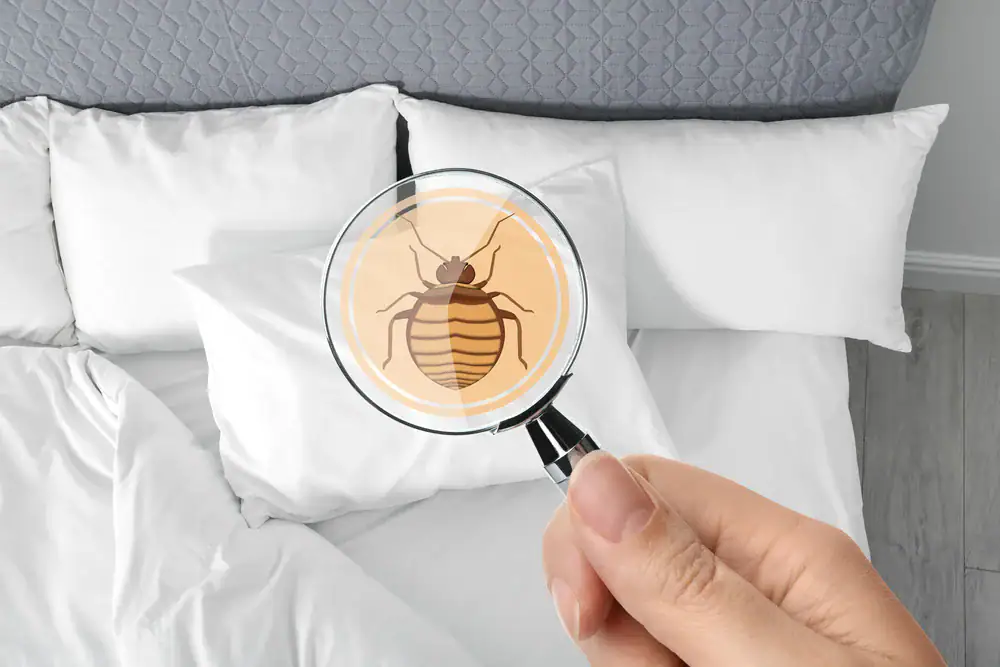
Before you can figure out which treatment you need, you have to know what you’re dealing with. Bed bugs are small, flat, and good at hiding — which is exactly why so many infestations go unnoticed until they’ve spread well beyond one room.
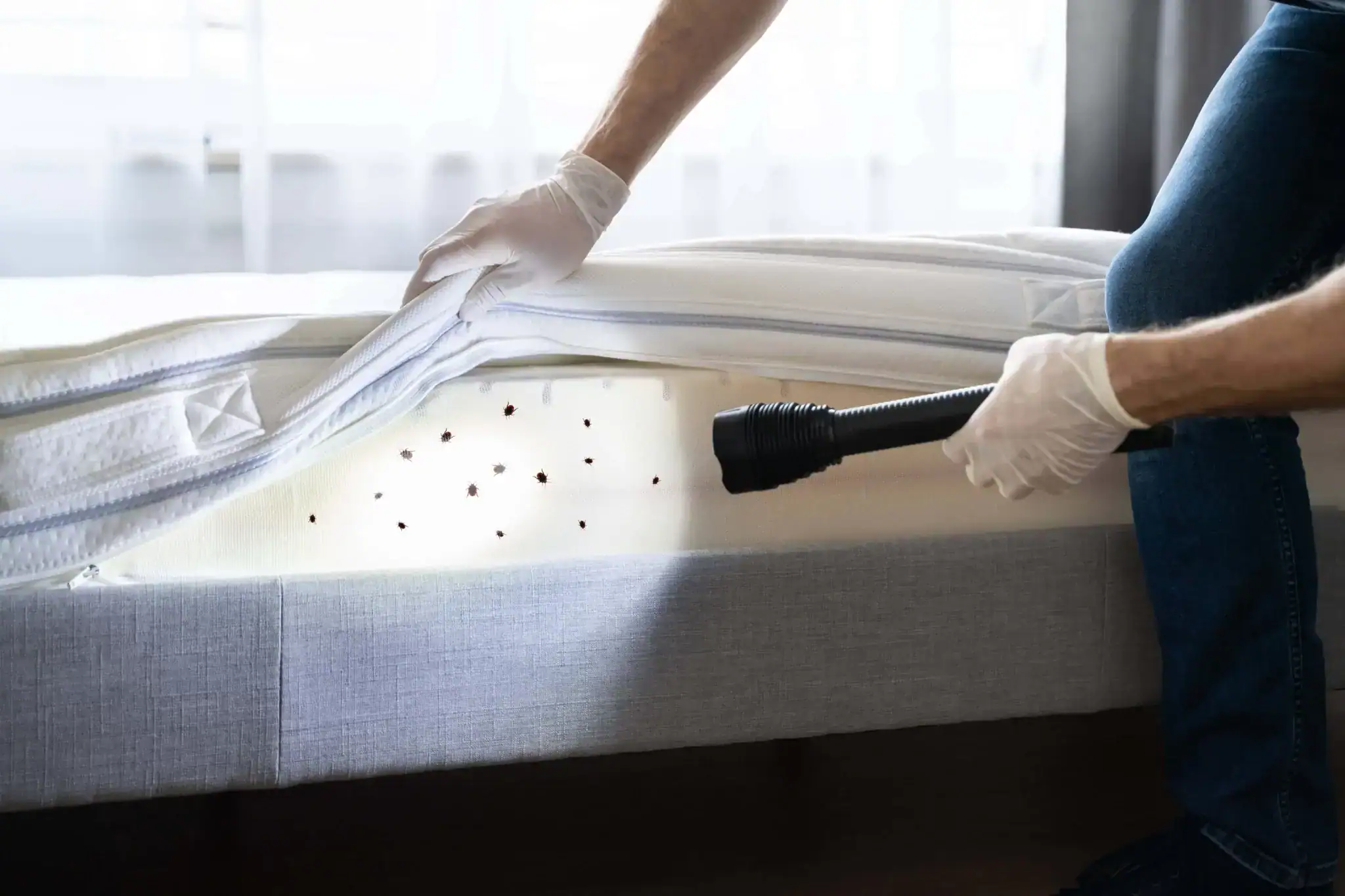
The most common early signs are rust-colored stains or small dark smears on your sheets or mattress seams. Those marks are either dried blood from a crushed bug or fecal spotting — neither is something you want to ignore. You might also notice tiny, translucent shed skins near baseboards, inside dresser joints, or along the piping of a mattress.
Bites are often the first thing people notice, but they’re also the least reliable indicator on their own. Bed bug bites tend to appear in clusters or a rough line, often on exposed skin like arms, shoulders, or the neck. The tricky part is that reactions vary — some people welt up immediately, others don’t react at all, and the bites are easy to confuse with mosquito or flea bites.
How Fast Do Bed Bugs Spread If You Wait?
This is where a lot of people get caught. You spot a bite or two, assume it’s a fluke, and decide to wait and see. A few weeks later, you’re finding bugs in the hallway, the living room couch, and the guest bedroom. That’s not bad luck — that’s just how bed bugs work.
A fed female can lay one to seven eggs per day under ideal conditions. Those eggs hatch in roughly six to ten days. Within a few weeks, what started as a localized problem in one bedroom can become a whole-home infestation. And the cost difference between the two scenarios is significant — catching it early, when it’s confined to one or two rooms, might run $800 to $1,200. The same home treated six months later, with bugs in every room, could easily reach $3,500 to $5,000 or more.
Bed bugs also don’t require a dirty home to thrive. They’re hitchhikers. They come in on luggage after a hotel stay, on used furniture picked up from a garage sale or Facebook Marketplace, on secondhand clothing, or even on a guest’s bag. In Genesee County, where the used-furniture market is active and multi-unit housing is common, that’s not a hypothetical — it’s a regular story we hear from homeowners and renters alike.
Cold Michigan winters don’t solve this problem either. Bed bugs live indoors in heated spaces. They don’t slow down in January. They just keep feeding and reproducing while you wait for spring. If you’re seeing signs, the right move is to get a professional inspection — not to wait it out.
Why Canine Bed Bug Inspection Finds What Human Eyes Miss
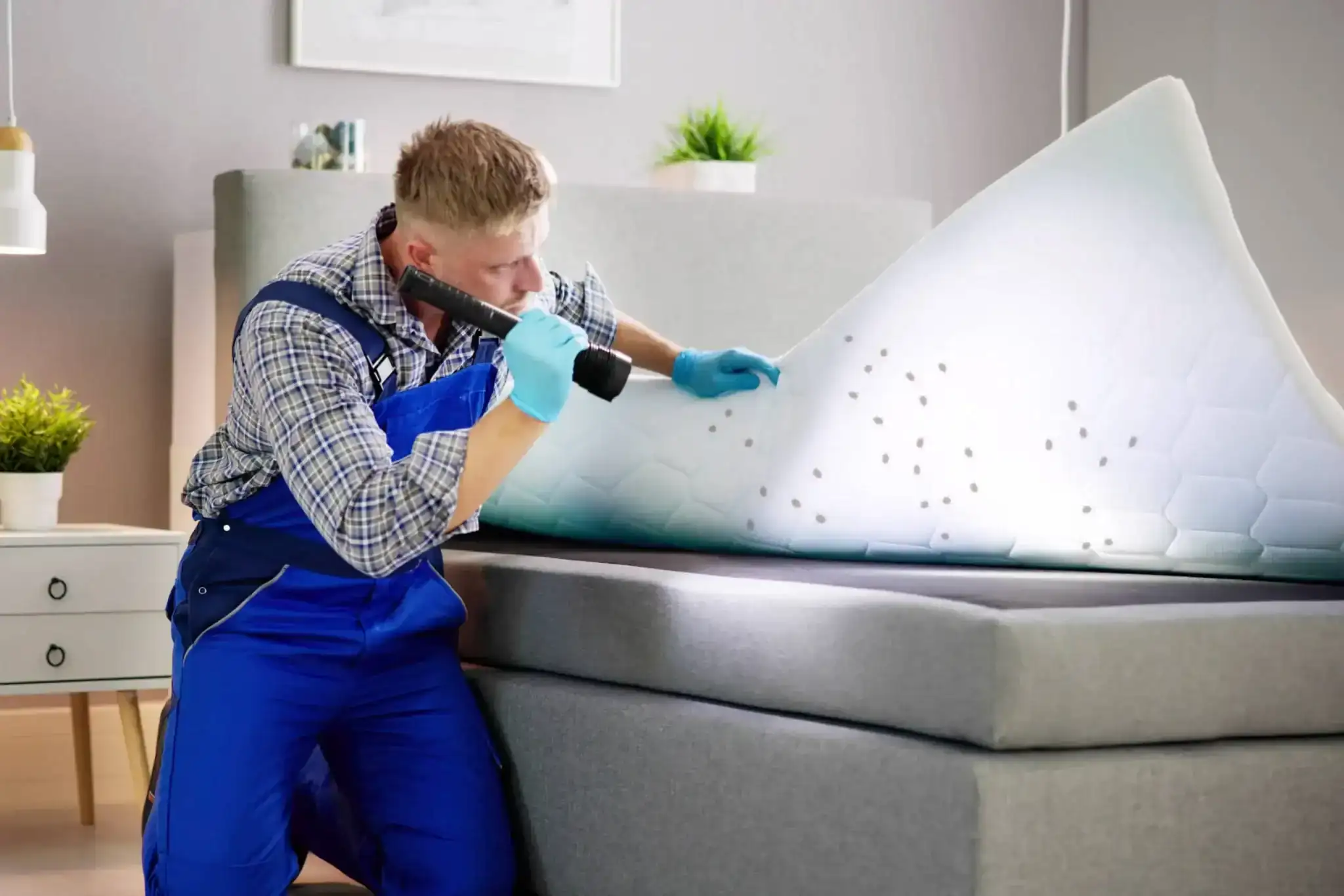
A standard visual inspection involves a technician going room by room, checking mattress seams, baseboards, furniture joints, and other common hiding spots. It’s useful, but it has real limits. Bed bugs can squeeze into a gap thinner than a credit card. They hide inside wall voids, behind outlet covers, inside the hollow legs of bed frames. A human inspector working visually can miss an early-stage infestation entirely — not because of carelessness, but because there’s simply not much to see yet.
Canine detection works differently. A trained bed bug detection dog uses scent to locate live bugs and viable eggs, even in places no visual inspection would reach. In controlled studies, certified detection dogs have shown accuracy rates around 97 to 98 percent. That’s the result of rigorous training and third-party certification standards set by organizations like NESDCA, the National Entomology Scent Detection Canine Association.
We’re one of fewer than 100 companies in the United States offering certified canine bed bug detection. That’s not something you’ll find at most pest control companies in Genesee County, or anywhere in Michigan for that matter. The reason this matters practically: an accurate inspection determines which treatment you actually need. If a dog confirms the infestation is limited to one bedroom, you’re not paying for a whole-home heat treatment. If the inspection reveals bugs have spread further than you thought, you know before you underinvest in a treatment that won’t hold.
For older homes — and Genesee County has plenty of pre-1960 and pre-1980 housing stock with more cracks, gaps, and harborage points than newer construction — canine detection is especially valuable. The dog doesn’t care how many layers of old paint are on the baseboard trim. It finds what’s there.
Average Cost of Bed Bug Treatment: What Each Method Actually Runs
Pricing for bed bug remediation is one of the most confusing parts of the whole process. National averages get thrown around constantly, but they don’t reflect what you’d actually pay in Genesee County, where prices typically run 20 to 30 percent below the national benchmarks you’ll see on sites like Angi or HomeAdvisor.
The short version: treatment costs depend on the method you use, the size of the infestation, and the size of your home. A single-room chemical treatment is a very different investment than a whole-home heat treatment. Here’s what each approach looks like in practice.
Bed Bug Heat Treatment Services: How It Works and What It Costs
Heat treatment is exactly what it sounds like. Specialized equipment raises the temperature inside your home — or specific rooms — to between 118 and 122 degrees Fahrenheit and holds it there long enough to kill bed bugs at every life stage: eggs, nymphs, and adults. Unlike chemical treatments, heat penetrates mattresses, furniture, wall voids, and the inside of electronics. There’s nowhere for bugs to hide from it.
The practical advantage is that it’s done in a single day. You prep your home the morning of the treatment, the process runs for several hours, and by evening you’re back inside. For homeowners who’ve already gone through one or two chemical treatments and seen bugs return, this is often the turning point — one thorough treatment versus an ongoing cycle of visits.
Nationally, whole-home heat treatment runs between $2,000 and $4,000, with larger homes pushing higher. In the Flint and Swartz Creek area, you’re typically looking at something below that range. It’s more upfront than a single chemical visit, but when you factor in the cost of two or three chemical treatments, plus the time, the preparation, and the disruption of multiple visits, heat treatment often comes out comparable — and with a much higher success rate. Studies put heat treatment success rates at 95 to 99 percent when properly executed.
Heat treatment is also the chemical-free option, which matters a lot to households with young children, pets, or family members with respiratory sensitivities. Nothing is sprayed. No residue is left behind. The heat does the work, and when the temperature drops back to normal, your home is just your home again.
Bed Bug Inspection Cost and Chemical Treatment: What to Expect
A professional bed bug inspection is where every treatment plan should start. Visual inspections typically run $75 to $200, and we often include an initial visual inspection as part of the consultation process. Canine inspections carry a higher cost that reflects the training and certification involved, but for a repeated or uncertain infestation, the accuracy is worth it. Getting the inspection right means you’re paying for the treatment you actually need, not a guess.
Chemical treatment is the most common approach and, on a per-visit basis, the most affordable entry point. A single room or apartment typically runs $300 to $900 nationally; a full home falls somewhere between $1,000 and $3,000 depending on size and severity. Genesee County pricing tends to come in below those figures.
The catch with chemical treatment is that it almost always requires multiple visits — typically two or three, spaced about two weeks apart. The reason is biological, not arbitrary. Eggs hatch six to ten days after they’re laid, and most chemical products can’t penetrate the egg casing. The follow-up visits are there to catch the newly hatched nymphs before they mature and reproduce. Skip a visit, or space them too far apart, and the cycle continues.
Quality chemical treatment also uses multiple modes of action — meaning different classes of chemistry — to address pesticide resistance. Bed bugs have developed significant resistance to many common pesticides over the past few decades, which is why hardware-store sprays so rarely work. A professional program isn’t the same product in a bigger bottle. It’s a targeted approach designed to work around resistance patterns.
For Flint and the surrounding Genesee County area, this matters more than most people realize. Orkin’s 2025 data ranked Flint #16 in the nation for bed bug infestations — up from #23 just a year earlier. Michigan as a whole ranks second in the country. Detroit came in at #3 nationally, Grand Rapids at #7. The region has a real bed bug problem, and it’s trending in the wrong direction. That context doesn’t mean you should panic, but it does mean that a half-measure treatment is more likely to fail here than somewhere with lower infestation pressure.
Choosing the Right Bed Bug Remediation Approach in Genesee County
The honest answer is that the right method depends on what you’re actually dealing with — and you can’t know that without a proper inspection first. What we can tell you is that the cost of waiting almost always exceeds the cost of acting early, and that the cheapest option per visit isn’t always the cheapest option overall.
We’ve been doing this work in Genesee and Shiawassee County since 2005. Roger has 26 years of hands-on experience, and the technician who comes to your home will be the same one who follows up — someone who knows your property, not a rotating crew working off a checklist. We offer heat treatment, chemical programs, and certified canine detection, and we’ll tell you honestly which one fits your situation.
If you’re ready to stop guessing and get a straight answer, reach out to First Choice Pest Control. We’ll start with an inspection and go from there — no pressure, no upsell, just a clear picture of what you’re dealing with and what it’ll take to fix it.