Most people don’t think much about pest control until something forces them to. Then they’re searching fast, comparing names they recognize with names they don’t, and trying to figure out who’s actually going to solve the problem — not just show up, spray something generic, and hand them a contract.
If you’re somewhere in that process right now, this page is worth a few minutes. We’re going to walk through what actually separates local pest control companies from national chains — not the marketing version, but the version that holds up when you’re standing in your kitchen at 7 a.m. wondering why the ants are back again.
How to Choose a Pest Control Company That Actually Gets the Job Done
The first thing most people do is Google a name they’ve seen on a truck or a TV ad. That’s understandable. Brand recognition feels like a proxy for reliability. But in pest control, it’s not. The company that spent the most on advertising isn’t necessarily the one that knows how mice get into your crawl space in October or why your yard floods with mosquitoes every June.
What actually matters is whether we’re licensed in Michigan, carry insurance, use treatments tailored to your specific situation, and send someone who knows what they’re doing — every single time. Those four things filter out a lot of noise, regardless of whether the name on the truck is local or national.
Why the Pest Control Technician Assigned to Your Home Matters More Than the Brand
Here’s something the pest control industry doesn’t advertise: technician turnover runs at about 30% annually across the country. That means roughly one in three technicians at any given company won’t be there next year. For national chains operating across wide service areas, this is a staffing reality, not a policy choice. They’re constantly onboarding new people, training them to follow standardized protocols, and sending them out to homes they’ve never been to before.
What that looks like from your end is a different face at your door every visit. You explain the problem again. You mention that the back corner of the basement is where they always seem to come in. You remind them about the dog. And the new technician — who may be perfectly capable — is starting from scratch on a property they’ve never seen.
Technician continuity isn’t a small thing. A pest control professional who has treated your home multiple times knows where the entry points are, what worked last season, and what to watch for before it becomes a problem. That institutional knowledge is genuinely valuable, and it’s something a rotating crew can’t replicate no matter how good their training manual is.
We’ve kept the same technicians assigned to the same customers for years. Roger Chinault, who leads our team and brings 26 years of hands-on experience to every job, has been watching how pests behave across Genesee County and Shiawassee County through every season for two decades. He knows that field mice from Shiawassee County’s agricultural land start pushing into homes as temperatures drop in fall. He knows that the riparian corridor along Swartz Creek creates mosquito and yellow jacket pressure that’s specific to that geography. That’s not something you learn from a corporate training module — it comes from showing up in the same communities, year after year, and paying attention.
We also want to be straightforward about something: we don’t use part-time or seasonal technicians. The people treating your home are career pest control professionals. That distinction matters more than it might sound.
Local Knowledge vs. Standardized Protocols — What the Difference Looks Like in Practice
National chains operate the same way across dozens of states. That consistency has value for basic, predictable problems. But pest behavior is local. The pests showing up in a Swartz Creek ranch home with a crawl space are behaving differently than the ones in a Flint apartment building or an Owosso farmhouse sitting at the edge of a cornfield. The treatments that work best in one setting aren’t automatically right for another.
Michigan’s climate has shifted meaningfully over the past century — average temperatures are up two to three degrees Fahrenheit, and annual rainfall has increased by around five inches. That’s not an abstraction. It means mosquitoes are emerging earlier in the spring than they used to, that pest seasons are less predictable, and that the old calendar-based approach to treatment scheduling doesn’t always hold anymore. A company that only operates in this region notices those shifts and adjusts. A national chain running the same seasonal protocol across the Midwest may not.
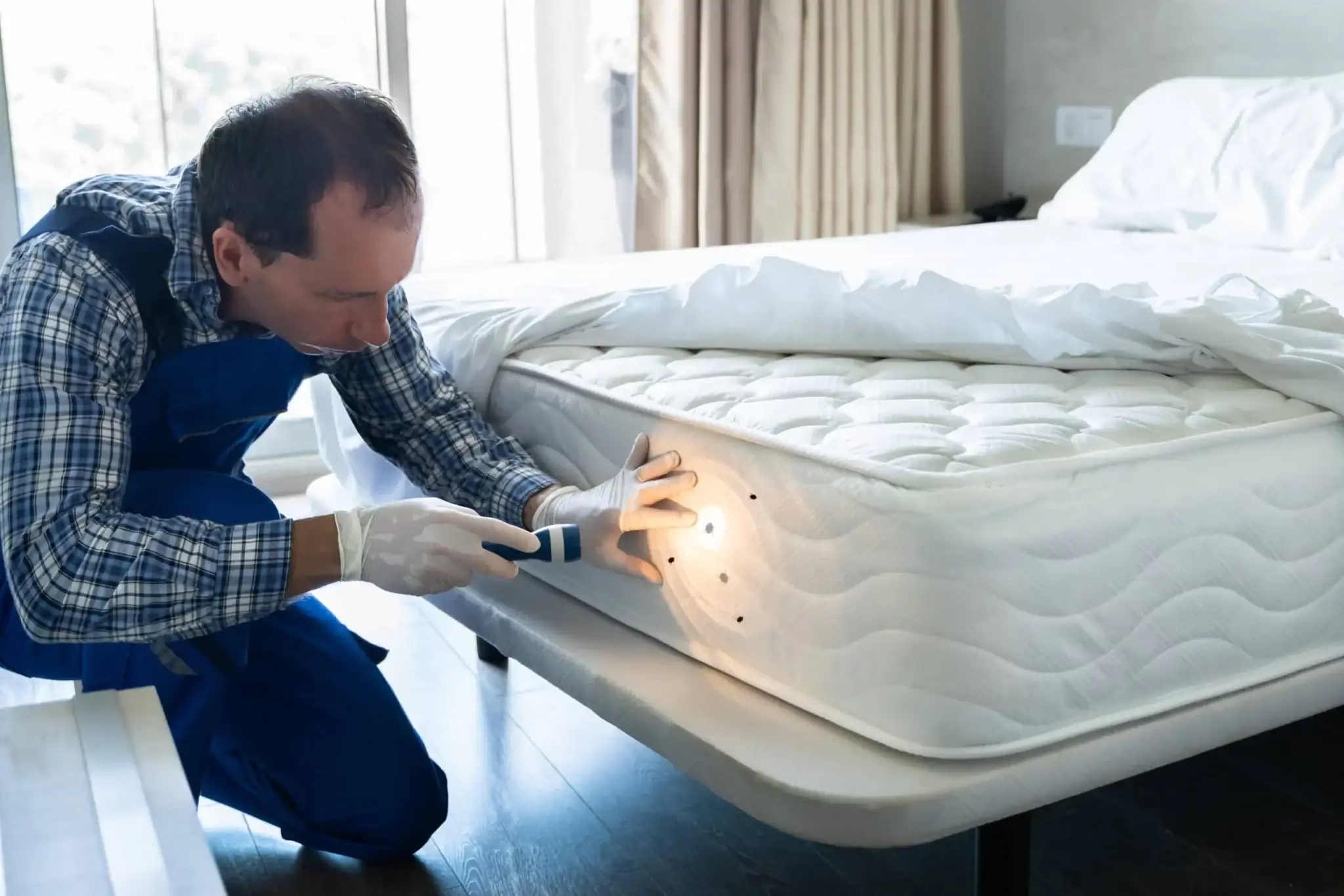
Genesee County’s housing stock adds another layer. Older homes in Flint and the inner suburbs have more entry points, more harborage areas, and more structural complexity than newer construction. Bed bugs in particular — which don’t follow any seasonal pattern because they live in climate-controlled environments year-round — require a level of detection precision that generic visual inspections often miss. That’s why we invested in canine bed bug detection. Our trained detection dogs find infestations with 95–98% accuracy. A standard human visual inspection catches bed bugs somewhere between 40–60% of the time. We’re one of fewer than 100 companies in the entire country offering certified K-9 bed bug detection, and it’s a direct response to what we’ve seen in this market — not a service we added because a corporate office told us to.
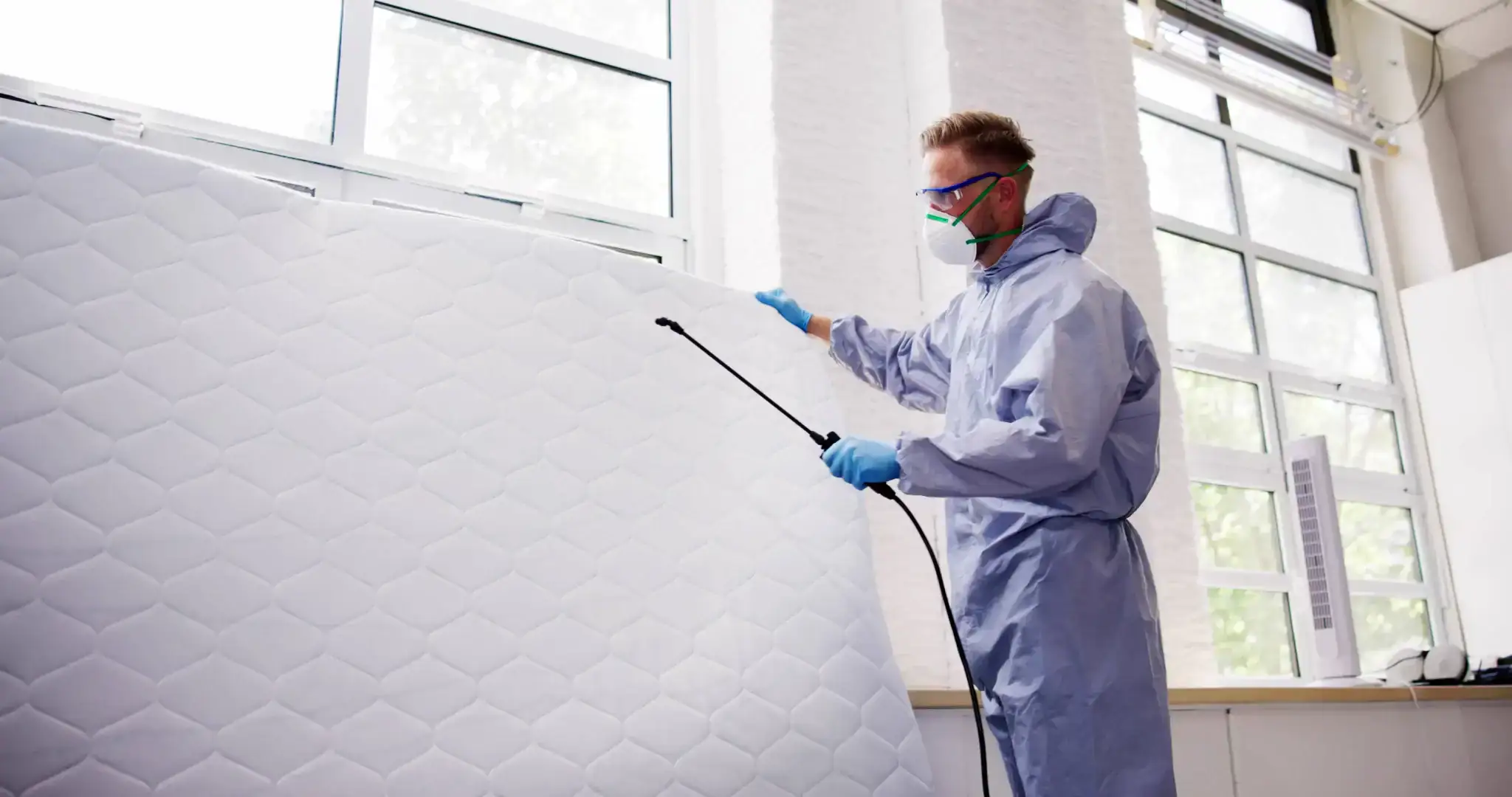
Custom treatment programs matter for the same reason. Every property we service gets a program built around its specific pest pressure, structure, and circumstances. There’s no package pulled off a menu. That’s what Integrated Pest Management actually looks like when it’s applied honestly — assess the real situation, use the least invasive effective method, and adjust based on results.
What to Know About Pest Control Contracts Before You Sign Anything
Contracts are one of the most common frustrations people bring up when they’re switching away from a national chain. The introductory offer looked reasonable. The technician seemed knowledgeable. Then the pest problem came back, the service felt inconsistent, and they found out that getting out of the agreement came with a cancellation fee.
It’s worth understanding what you’re agreeing to before the first treatment happens. Some companies — particularly larger national chains — rely on 12-month or multi-year service agreements as a core part of their business model. That’s not automatically a problem, but it does mean you’re committed regardless of whether the results justify it.
No-Contract Pest Control — What It Actually Means for You
We don’t require binding contracts. That’s a deliberate choice, and it’s worth explaining why.
When a pest control company locks you into an annual agreement, they’re managing their revenue. When we operate without contracts, we’re managing our reputation. The only reason a customer keeps coming back without a contractual obligation is because the service is actually working. That’s the model we’ve built over 20 years, and it’s the reason we’re still here.
For homeowners in Genesee County and Shiawassee County, this matters practically. If you’re a senior on a fixed income in Grand Blanc, a veteran in Davison, or a first responder in Flushing, you shouldn’t have to worry about being locked into a service that isn’t delivering. We offer discounts for seniors, veterans, and first responders — and we offer programs you can adjust or discontinue without penalty. You stay because the problem is solved, not because you’re contractually required to.
We also match reasonable competitors’ rates. If you get a quote from another licensed, insured company and it’s lower than ours, bring it to us. We’re confident enough in what we deliver to compete on price without cutting corners on the service itself. The goal isn’t to be the cheapest option — it’s to be the one that’s actually worth it over time.
One thing that’s worth asking any pest control company before you hire them: are the people assessing your problem technicians or salespeople? Some national chains separate the sales function from the technical function, which means the person who diagnoses your infestation may be working on commission, not expertise. That’s a meaningful distinction when you’re deciding who to trust with your home.
Questions to Ask a Pest Control Company Before You Hire Them
Most people don’t know what to ask, and companies that rely on that tend to do well right up until the treatment fails. Here are the questions that actually tell you something useful.
Ask whether the company is licensed by Michigan’s MDARD — the state agency that regulates commercial pesticide applicators. Licensing isn’t optional in Michigan; it’s a legal requirement. Ask whether we carry general liability insurance and workers’ compensation. If something goes wrong during a treatment and we’re not insured, that becomes your problem.
Ask specifically who will be treating your home and how long they’ve been doing this work. “Our trained technicians” is not an answer — it’s a deflection. A company confident in its people will give you a name and a credential. Ask whether the same person will come back on follow-up visits, and what happens if the treatment doesn’t work. Re-treatment policies vary significantly, and you want to know before you need one.
Ask about the products we use and why. All registered pesticides in the U.S. have publicly available labels — there’s no legitimate reason for a pest control company to be vague about what they’re applying in your home. If you have children, pets, elderly family members, or anyone with chemical sensitivities in the household, those concerns should be part of the conversation before anything gets sprayed, not after.
For bed bug concerns specific to Genesee County’s older housing stock — which are a real and persistent issue — ask whether we offer canine detection. The accuracy gap between K-9 detection and standard visual inspection is significant enough that it changes the outcome. Missing an infestation because of an inadequate inspection means the problem grows, spreads, and becomes considerably more expensive to treat. Early detection is the single biggest factor in keeping bed bug treatment manageable.
And finally, ask about contracts. Know what you’re agreeing to, what the cancellation terms are, and whether the pricing changes after the introductory period. A company that’s straightforward about all of this upfront is one that’s planning to earn your business long-term, not just capture it.
Choosing Between Local and National Pest Control — The Bottom Line
The honest answer is that both categories have good and bad operators. What matters is whether the company you hire is licensed, insured, experienced, and actually accountable to the results they deliver in your specific home — not just in theory, across a national service area.
For homeowners in Genesee County and Shiawassee County, the local advantage is real and specific. It’s the difference between a technician who knows your property and one who’s reading your address off a work order for the first time. It’s the difference between a treatment plan built around your home and a protocol designed for a national average. And it’s the difference between a company that’s been watching how pests behave in Swartz Creek, Grand Blanc, Davison, and Owosso for 20 years — and one that services this region the same way it services everywhere else.
If you’re weighing your options and want a straight conversation about what your situation actually calls for, we’re worth a call. No pressure, no contract required to get started — just 20 years of local experience applied to your specific problem.