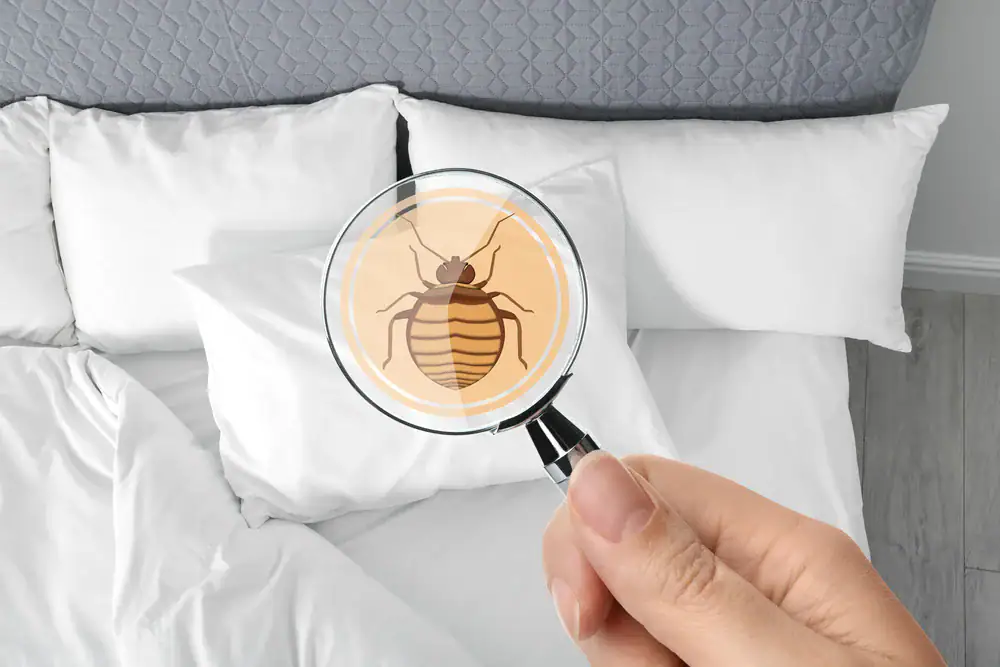
Bed bugs don’t give you a lot of time to think. Once you’ve found the bites, the blood spots, or the telltale dark smears on your mattress, the instinct is to call someone immediately and get it handled. That urgency is understandable — but it’s also exactly when people end up hiring the wrong company and spending good money on a treatment that doesn’t work.
The pest control industry isn’t short on options. What it is short on is transparency. These five questions will help you cut through the noise, ask the right things, and recognize a real bed bug specialist when you find one.
What Makes a Real Bed Bug Specialist Different
Not every pest control company that offers bed bug service is actually a bed bug specialist. There’s a meaningful difference between a generalist who treats ants, rodents, and the occasional bed bug call versus a company that has invested in the training, equipment, and methods specifically designed for bed bug detection and elimination.
A real specialist understands bed bug biology — how they hide, how fast they reproduce, which life stages are hardest to kill, and why certain treatments fail. We can explain our methodology clearly, offer more than one treatment option, and back our work with a documented guarantee. If a company can’t do those three things, keep looking.
Question 1: How Accurate Is Your Bed Bug Inspection Method?
This is the first question worth asking, and most people never think to ask it. Before any treatment happens, someone needs to confirm you actually have bed bugs — and confirm where they are. That sounds straightforward, but it’s where a lot of companies fall short.
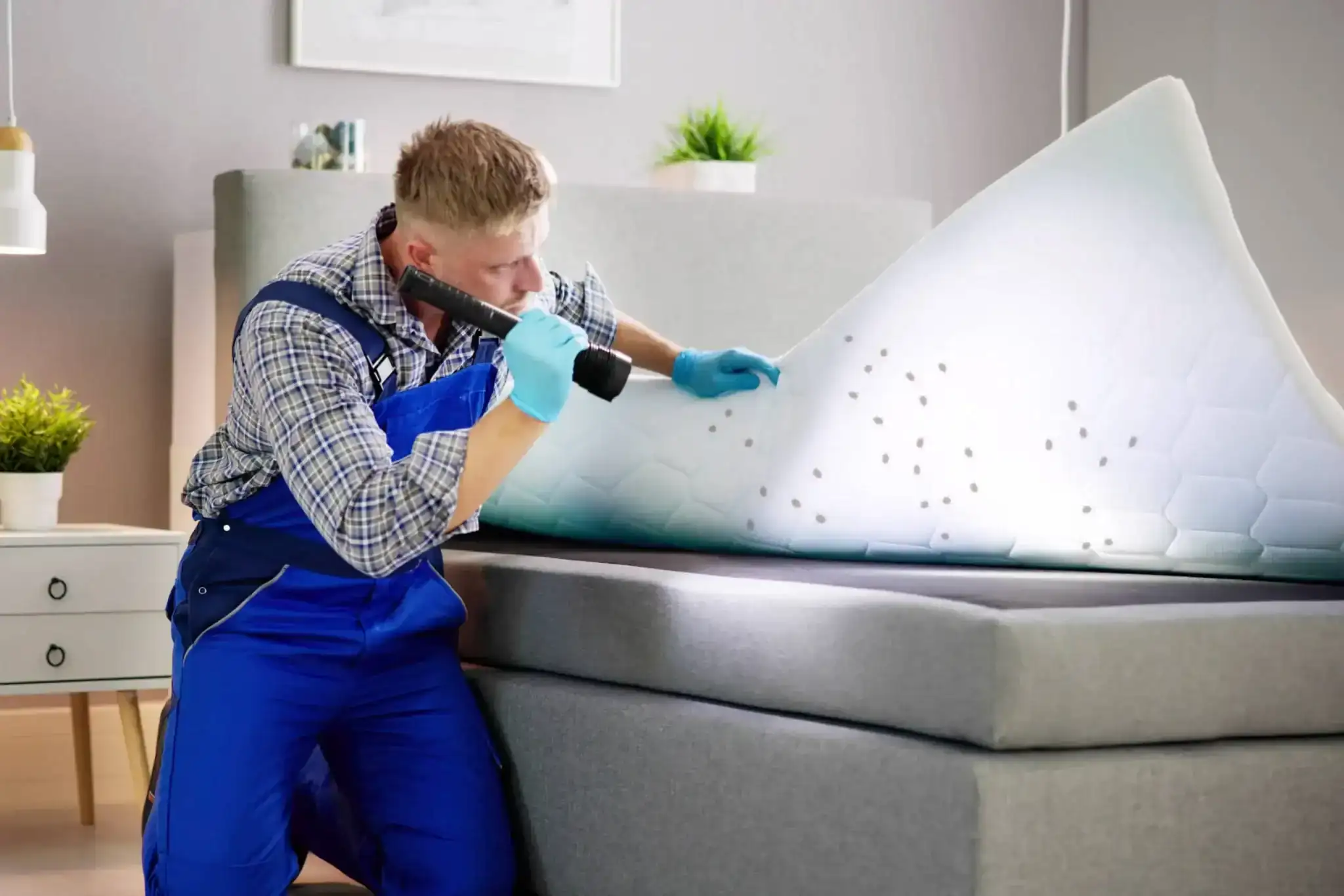
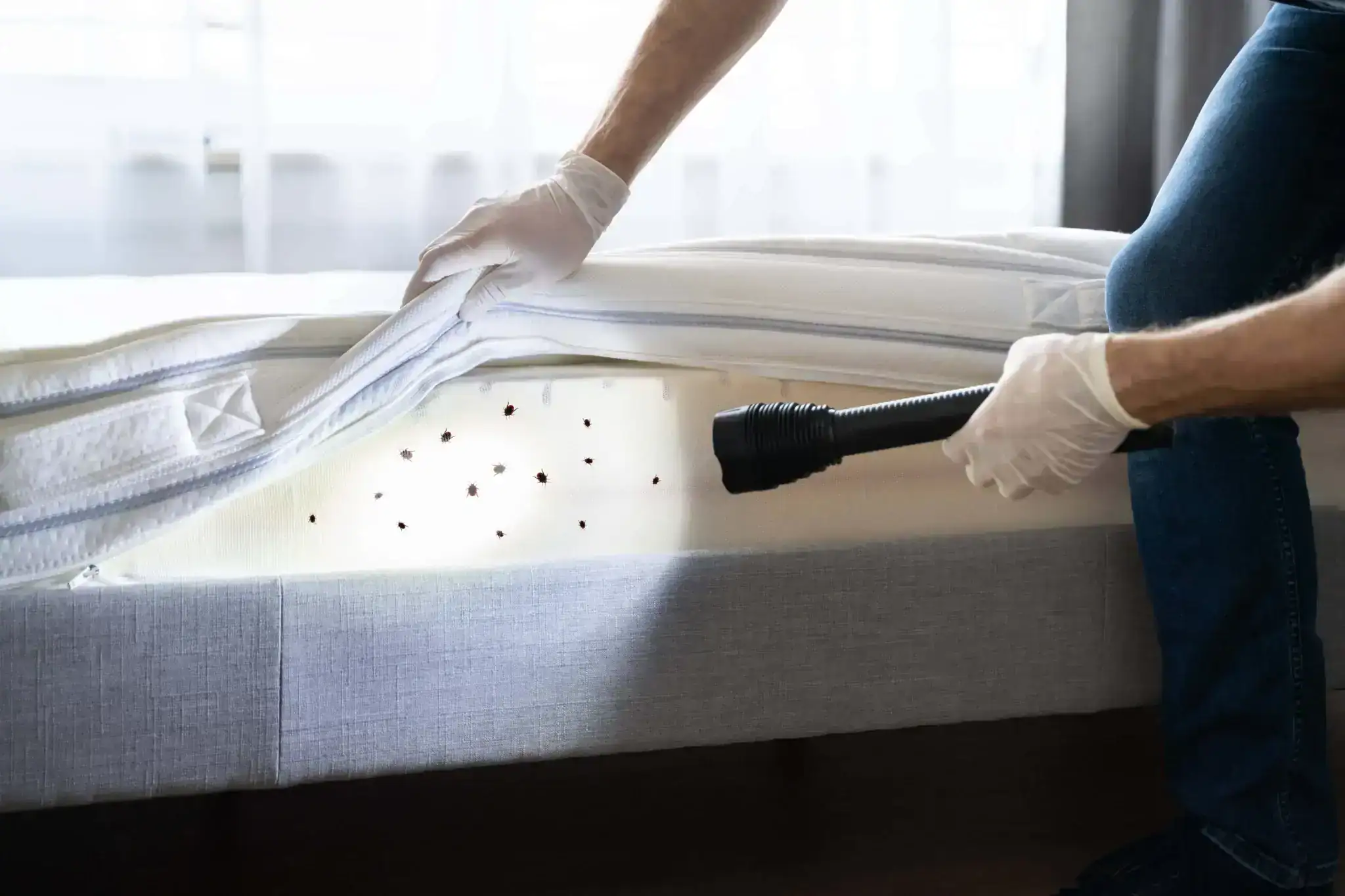
A standard human visual inspection is accurate roughly 30 to 50 percent of the time. Bed bugs are small, flat, and exceptionally good at hiding. They tuck into mattress seams, behind baseboards, inside electrical outlets, and deep inside furniture — places a flashlight and a trained eye won’t reliably reach. If a company sends a technician to do a quick visual walkthrough and then quotes you a treatment, that’s not enough.
The most accurate inspection method available right now is canine detection. Trained dogs locate live bed bugs by scent, and they can detect them through mattresses, sealed furniture, and walls. The accuracy rate sits around 97 percent — a dramatic improvement over what human inspection alone can achieve. Fewer than 100 companies in the entire United States offer this service. It’s not a gimmick; it’s a fundamentally different level of certainty before you commit to a treatment plan.
We use trained detection dogs as part of our inspection process here in Genesee County. When you’re weighing whether to spend $1,000 or more on heat treatment, knowing with near-certainty that you have an active infestation — and exactly where it is — changes the entire conversation. Ask any company you’re considering how they inspect. If the answer is “we take a look around,” that’s worth knowing before you hand over your credit card.
Question 2: What Treatment Methods Do You Offer — and Why Are You Recommending This One?
A company that offers only one treatment method isn’t giving you options — they’re giving you whatever they happen to sell. A real bed bug specialist should be able to walk you through multiple approaches and explain why a particular method makes sense for your specific situation.
Heat treatment is widely considered the gold standard. It raises the temperature in the affected space to between 118 and 145 degrees Fahrenheit, which kills bed bugs at every life stage — eggs, nymphs, and adults — in a single visit. The success rate is 95 to 99 percent. For homeowners who want a one-visit solution that doesn’t leave chemical residue, heat is often the right call. We use the Heat Assault 500X system, which is designed specifically for this kind of work.
Chemical treatment is a legitimate alternative, particularly for infestations that are caught early or for situations where heat isn’t practical. It typically requires two to three visits and uses multiple modes of action to address pesticide resistance, which is a real issue — bed bugs have developed resistance to most common pesticides, and a company using a single-product approach is working against the science. The key is that a good specialist uses chemicals strategically, not as a default.
For severe infestations, combining heat with targeted chemical application gives you the best of both: heat penetrates the hiding spots chemicals might miss, while chemicals address any stragglers in areas the heat may not have reached as effectively. Ask the company to explain their reasoning. If they can’t, or if they push one option without acknowledging the others, that’s a red flag.
Finding the Best Bed Bug Exterminator in Genesee County
Detroit ranked sixth on Orkin’s 2024 list of the most bed bug-infested cities in the country. Genesee County sits in that same regional risk zone — same housing stock, same travel patterns, same dynamics that make southeast Michigan one of the higher-risk areas in the Midwest. That context matters when you’re choosing who to call.
Finding the best bed bug exterminator isn’t about who has the flashiest website or the lowest quote. It’s about credentials you can verify, experience you can confirm, and a track record you can read in real reviews from real people in your community. Here’s what to look for.
Question 3: Can You Show Me Your License and Insurance?
In Michigan, pest control companies are required to hold a commercial pesticide applicator business license through the Michigan Department of Agriculture and Rural Development — MDARD. This isn’t optional. A licensed company has passed certification exams covering pesticide safety, label comprehension, environmental protection, and pest biology. We’re legally authorized to apply the treatments that actually work on bed bugs, including restricted-use pesticides that unlicensed operators can’t legally touch.
Ask for the license number. A reputable company will give it to you without hesitation. Ours is MDARD Pesticide Application Business License #250081 — you can look it up. That’s not a line we throw in to sound official; it’s a public credential that tells you we’ve met Michigan’s legal requirements to do this work in your home.
Insurance matters just as much. If something goes wrong during treatment — a damaged piece of furniture, an unexpected issue with the property — you want to know we carry liability coverage and that you’re protected. We’re fully insured, and we’ll provide documentation if you ask for it. Any company worth hiring will hand it over without hesitation.
We also hold Integrated Pest Management (IPM) certification through MDARD, which means we’re trained to evaluate and use the least invasive, most environmentally responsible approach first. For families with kids or pets who are concerned about chemical exposure, that’s not a small thing.
Question 4: Who Will Actually Be in My Home — and Will It Be the Same Person Every Time?
This question catches a lot of people off guard, but it’s one of the most practical things you can ask. Large franchise pest control companies often rotate technicians — different person every visit, no one who knows your home, no continuity between appointments. You end up re-explaining the problem from scratch each time, and the person treating your property has no context for what was tried before or what worked.
We’ve operated in Genesee County and Shiawassee County since May 31, 2005 — twenty years this year. One of the things we’ve always done differently is assign the same technician to each customer’s account, year after year. That person knows your property. They know your pest history. They’re not starting from zero on visit two.
We also don’t use part-time college students as technicians. Every person we send to your home is a trained professional — not someone learning on your property while they wait for summer to end. Roger Chinault, who leads this company, has 26 years of hands-on pest management experience. That standard carries through to everyone on the team.
In a market like Flint and the surrounding communities — where older homes, higher rental turnover, and proximity to a major metro create real, ongoing bed bug pressure — you want someone who knows the local landscape. Not a call center two states away routing a stranger to your door. If the company you’re considering can’t tell you who will show up or whether it’ll be the same person each visit, that’s worth factoring into your decision.
Question 5: What Guarantee Do You Offer in Writing?
A written guarantee tells you the company stands behind their work. We offer a documented guarantee on our bed bug treatments — if you follow our pre-treatment and post-treatment instructions and bed bugs return within the guarantee period, we come back and retreat at no charge. That’s not marketing language; that’s us putting money where our mouth is.
Ask any company you’re considering what their guarantee covers, how long it lasts, and whether it’s in writing. If they’re vague or won’t put it in writing, that’s a signal they’re not confident in their results.
What to Do After You Ask These Questions
You don’t need to interrogate every company you call. But asking these five questions — about inspection accuracy, treatment options and reasoning, licensing, technician continuity, and guarantees — will tell you almost everything you need to know about whether a company is actually equipped to solve your problem.
The right specialist will answer these questions clearly, without hesitation, and without making you feel like you’re being difficult for asking. They’ll give you specifics: a license number, a named technician, a documented guarantee, a real explanation of why they’re recommending a particular treatment for your particular situation.
If you’re in Genesee County or Shiawassee County and want to talk through what’s going on in your home, First Choice Pest Control has been doing this work here for twenty years. Reach out and ask us anything — including these five questions.