
Most pest control companies don’t publish their prices. You have to call, wait for a callback, sit through a sales pitch, and hope the number they give you is actually what you’ll pay. It’s frustrating — and it’s why so many people turn to a search engine first just to get a baseline.
This page gives you that baseline. Real cost ranges for real services, specific to Michigan, with enough context to help you decide what kind of treatment makes sense for your situation. No pressure, no vague ranges, no “call for pricing.” Just the information you should have had before you picked up the phone.
How Much Does Pest Control Cost in Michigan?
Nationally, the average pest control visit runs around $171, with most homeowners landing somewhere between $108 and $261 for a standard treatment. In Michigan, local data puts the average general pest control cost at around $266 in areas like Swartz Creek and Grand Blanc, with Flint coming in slightly lower at $237. Those numbers reflect real completed projects, not estimates pulled from thin air.
Annual pest control plans typically range from $300 to $900 per year depending on the service frequency, the size of your property, and the pest types you’re dealing with. A one-time treatment for a specific pest problem can run anywhere from $100 to $600. Bed bug treatments sit in their own category — more on that below.
What you actually pay depends on a handful of factors: the pest type, how far along the infestation is, the square footage of your home, and whether you’re looking for a one-time fix or ongoing prevention. The range looks wide because it is — but understanding what drives the cost makes it much easier to evaluate any quote you receive.
What Does an Exterminator Cost by Pest Type?
The pest itself is one of the biggest cost drivers, and it’s worth knowing the ranges before you call anyone. Here’s where prices typically land in Michigan for the most common pest problems.
General pest control — ants, spiders, beetles, pantry pests — runs between $100 and $300 for a standard treatment. Carpenter ant treatment, which is a persistent problem in Genesee County given the area’s older housing stock and wet Michigan springs, typically falls between $185 and $400 depending on the extent of the infestation and whether structural areas need to be addressed. Carpenter ants don’t just show up — they’re usually a sign of moisture-damaged wood somewhere in the structure, so a thorough inspection matters here more than with most pests.
Rodent extermination — mice and rats — ranges from $200 to $2,500. That’s a wide spread, and it reflects how differently a minor mouse problem and a full-blown rodent infestation are handled. In Genesee County, rodent pressure picks up significantly in the fall as temperatures drop and mice start looking for warmth inside older homes. Catching it early is almost always cheaper than waiting.
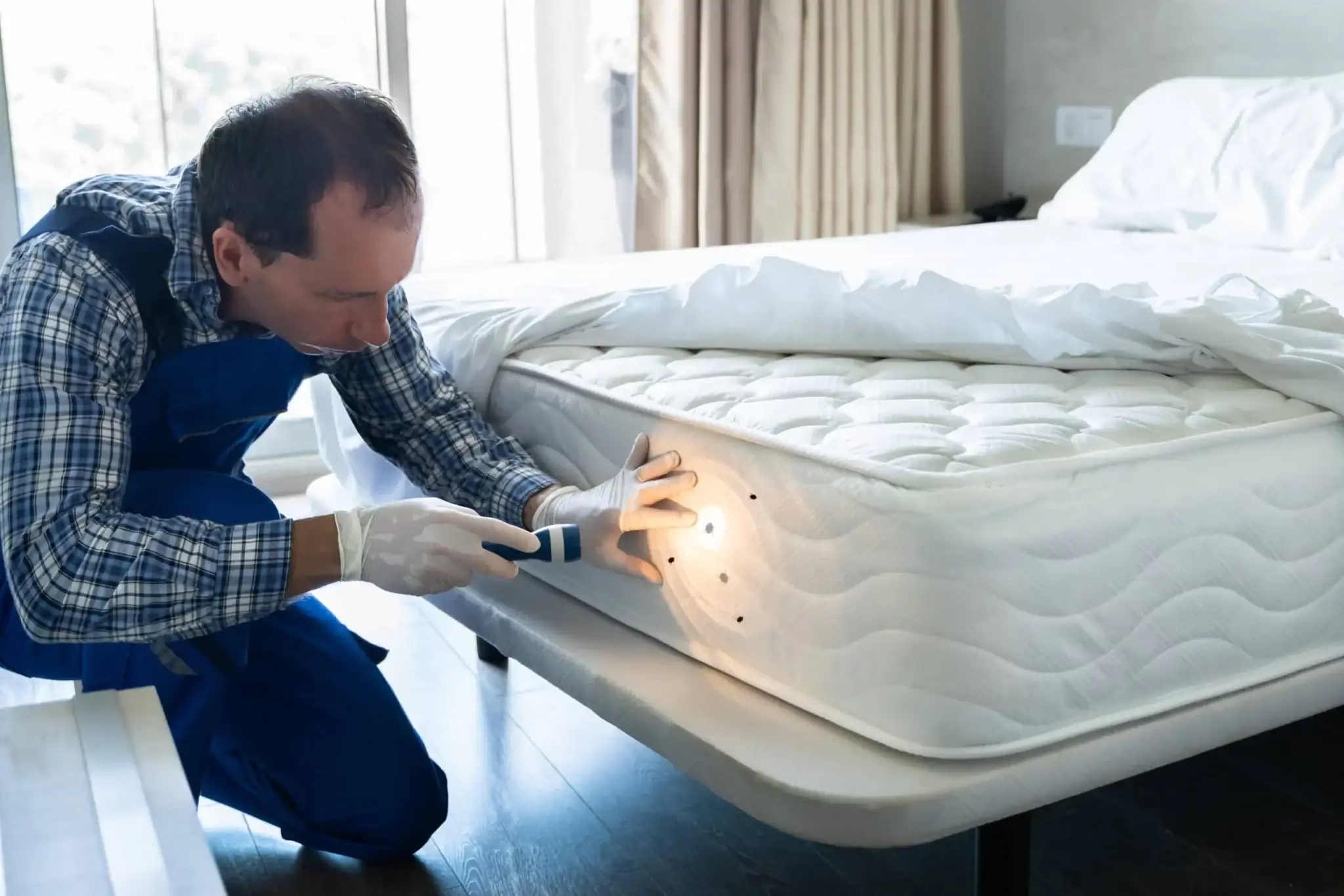
Bed bug treatment runs $350 to $1,200 nationally, and costs in the Detroit metro area track closely with that range. Mosquito control programs run $49 to $200 per treatment. Bee, wasp, and hornet removal falls between $100 and $1,500 depending on nest location and size. Flea treatment typically runs $185 to $400 — though if you’re signing up for a mosquito program with us, flea and tick treatment is included at no extra charge, which is worth factoring into any comparison.
One number that surprises people: the initial inspection fee. Most professional pest control companies charge $150 to $300 for a thorough inspection before any treatment begins. That fee isn’t arbitrary. A proper inspection identifies the pest species, the extent of the infestation, entry points, and harborage areas — all of which determine what treatment will actually work. Skipping the inspection or choosing a company that skips it doesn’t save money. It usually costs more in the long run when the first treatment misses the source.
One Time Pest Control vs. Ongoing Service: Which One Do You Actually Need?
This is a question worth answering honestly, because not every pest problem requires a recurring service plan — and a company that tells you otherwise isn’t giving you straight advice.
One-time pest control makes sense when you’re dealing with a specific, contained problem: a wasp nest, a flea infestation following a pet issue, or a single rodent entry point that’s been identified and sealed. A one-time treatment for a 1,500 square foot home in the Detroit metro area typically runs $315 to $575. You get the treatment, you get a warranty period, and if the problem is resolved and doesn’t come back, you’re done. No contract required.
Ongoing service — monthly, quarterly, or an annual plan — makes more sense when you’re dealing with pest pressure that doesn’t have a single source or a clear endpoint. Michigan’s climate creates exactly that kind of pressure. Mosquitoes breed in the standing water left by snowmelt and spring rains along the Flint River and Swartz Creek waterways from May through September. Carpenter ants swarm in spring when moisture levels rise. Rodents start probing for entry points every fall. Stink bugs show up in early autumn looking for overwintering spots. If you’ve lived in Genesee County or Shiawassee County for any length of time, you already know pest pressure here isn’t a one-season problem.
Monthly service typically runs $40 to $75 per visit. Quarterly service — which is the most common ongoing plan — runs $100 to $300 per visit. Annual plans bundle everything into a single yearly cost of $300 to $900 depending on what’s included. The value of a recurring plan isn’t just the treatment itself. It’s prevention — stopping infestations before they start, rather than reacting after they’ve taken hold. A quarterly program that keeps carpenter ants out of your sill plates costs far less than the structural repair bill if a colony goes undetected for two or three seasons.
One thing to pay attention to when evaluating any recurring service: contract terms. The Michigan Attorney General issued a cease-and-desist order in April 2024 against a pest control company for deceptive contract practices — specifically for failing to disclose cancellation rights and showing customers only the signature field on a tablet. Before you sign anything, make sure you understand what you’re agreeing to, how long the term is, and what it costs to cancel. A company that’s confident in its work doesn’t need to trap you in a contract to keep your business.
Monthly Pest Control Service Cost: What You’re Actually Paying For
When someone looks at a pest control invoice and thinks “that was 20 minutes of work,” they’re not wrong about the time. They’re wrong about what the time represents. A technician with 26 years of hands-on experience doesn’t take longer because they’re slower — they take less time because they know exactly where to look and what to do when they get there.
What you’re paying for isn’t labor hours. It’s expertise, professional-grade product, state licensing, insurance, and the guarantee that if the problem comes back within the warranty period, we return at no extra charge. That combination is what separates a $150 professional treatment from a $30 bottle of store spray that treats what you can see while the actual colony keeps growing behind your walls.
Is Monthly Pest Control Worth It for Michigan Homeowners?
For some homes and some pest situations, yes. For others, quarterly or annual service is the better fit. The honest answer depends on your property, your pest history, and the specific pressures your neighborhood faces.
In Genesee County, homes near waterways — along Swartz Creek, near the Flint River, or around any of the area’s small lakes and retention ponds — face sustained mosquito pressure that makes a seasonal program genuinely worthwhile. Older homes in Flint, Burton, and surrounding communities with mid-century construction often have the kind of moisture-prone wood and aging foundation gaps that make carpenter ant and rodent prevention an ongoing need rather than a one-time fix.
Monthly service makes the most sense when pest pressure is consistent and the cost of an infestation is high. Bed bugs are a year-round risk in multi-unit housing — they don’t have a season, and they spread fast. A monthly or quarterly general pest program that includes regular monitoring can catch early signs of activity before a small problem becomes a large one. For homeowners in Grand Blanc or Flushing with newer construction and lower structural vulnerability, a quarterly program might be more than enough.
The key is that your service plan should match your actual situation — not a template that gets applied to every house on the block. Every property has different entry points, different pest history, and different risk factors. A program that works for a 1960s ranch in Flint isn’t necessarily the right fit for a newer build in Davison. That’s why an inspection matters before any service recommendation gets made.
What Makes Pest Control Pricing Vary So Much in Genesee County?
The same pest problem can cost very different amounts depending on who you hire and what they actually do — and understanding why helps you evaluate quotes more clearly.
Experience level is the most significant variable. A technician with deep hands-on pest control experience in Michigan homes is going to identify the source of a carpenter ant problem faster, treat it more precisely, and require fewer follow-up visits than someone doing their second season in the field. That expertise is reflected in the price, and it’s worth paying for. The same logic applies to equipment — professional-grade formulations applied with commercial equipment penetrate harborage areas that consumer products can’t reach.
The scope of the inspection also affects cost. A company that sends someone to spray a perimeter and leave isn’t providing the same service as one that inspects the crawl space, checks the sill plates, identifies moisture damage, and explains what they found before they treat anything. We inspect both the interior and exterior, explain the problem and the plan before starting work, and that thoroughness is reflected in customer reviews. That level of inspection takes time, and time from someone with real expertise isn’t cheap. But it’s why the treatment actually works.
Service frequency and contract structure also affect the per-visit cost. A quarterly plan typically costs less per visit than a one-time call because the relationship is ongoing and the technician already knows the property. If the same technician comes every time — which is how we operate — each visit builds on the last. They know what was treated, what was found, and what to watch for. That continuity produces better outcomes than rotating whoever’s available, and it’s one of the clearest differences between a family-owned local company and a national chain.
Finally, the pest type and infestation severity drive cost more than almost anything else. A preventive treatment is always less expensive than a remediation. Catching a mouse problem in October when one or two entry points are active costs a fraction of what it costs in January when a colony has established itself in the wall cavities. Early action is almost always the better financial decision.
How to Choose a Pest Control Company in Michigan That’s Actually Worth the Cost
Price matters, but it’s not the only thing. The lowest quote doesn’t always mean the best value — especially when the difference between a $150 treatment and a $300 one is whether the technician actually found the source of the problem or just treated the symptoms.
When you’re evaluating pest control companies in Genesee County or Shiawassee County, look for MDARD licensing, real insurance, a written estimate, and a warranty that the company will actually honor. Look for reviews that name the technician specifically — that’s a sign of real accountability, not just a good marketing page. And look for a company that’s been in your community long enough to know it.
We’ve been serving Swartz Creek, Davison, Flint, Grand Blanc, Owosso, and the surrounding area since 2005. If you’re ready to get an honest quote with no pressure and no mystery pricing, we’re a straightforward call away.