
You probably didn’t think much of it at first. Maybe a bite you assumed was a mosquito. A small dark spot on your sheets you figured was nothing. A faint smell you couldn’t quite place. That’s exactly how most bed bug infestations go undetected for weeks — sometimes months. The signs are real, but they’re easy to dismiss if you don’t know what you’re looking at. This guide is here to change that. We’ll walk you through the seven signs that routinely get missed, explain what each one actually looks like in plain terms, and help you figure out what to do next if something doesn’t feel right.
Early Signs of Bed Bugs That Are Easy to Explain Away
The frustrating thing about early-stage bed bug infestations is that the evidence is genuinely ambiguous. A small rust-colored smear on your pillowcase could be a lot of things. A bite mark that shows up three days after you slept could easily be blamed on a mosquito from your evening walk. That ambiguity is exactly what allows infestations to grow — people see something, rationalize it, and move on.
What makes this worse is that bed bugs are built for concealment. They feed at night, inject a mild anesthetic so you don’t feel the bite, and retreat into cracks thinner than a credit card before you wake up. By the time most people are certain they have a problem, the infestation has already had weeks to establish itself. Knowing what to look for — and taking it seriously early — is the only way to get ahead of it.
What Do Bed Bug Signs in Your Bed Actually Look Like?
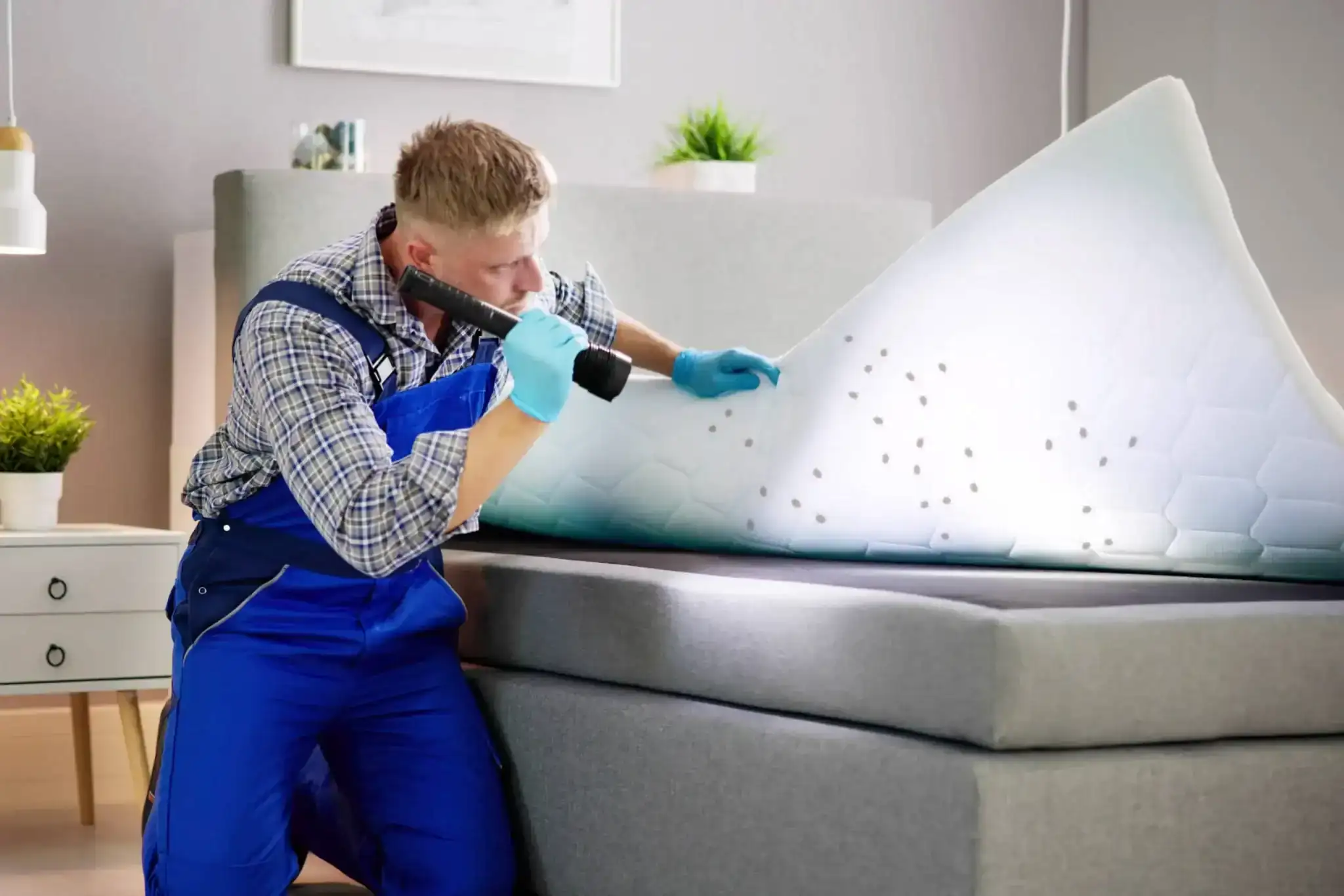
Start with the mattress. Run your fingers along the seams — the piped edges where the top and bottom panels meet — and look closely at the fabric folds. Bed bugs congregate in those seams because they offer darkness, warmth, and proximity to a food source. What you’re looking for isn’t necessarily a live bug. In early infestations, you’re more likely to find the evidence they leave behind.
Fecal spots are one of the most reliable early indicators. They look like tiny dark dots — roughly the size of a period at the end of a sentence — and they cluster in groups rather than appearing as isolated marks. Here’s the detail most guides leave out: if you press a damp cloth against one of those spots and it smears like ink, that’s a strong indicator it’s bed bug waste, not a stain from something else. That smearing behavior is distinctive.
Blood stains are another sign, and they show up as small rusty or brownish spots on your sheets or pillowcase. These happen when a feeding bug gets crushed as you shift in your sleep, or when a bite site continues to bleed slightly after the bug has moved on. They’re easy to miss because they’re small, and because most people’s first instinct is to assume they nicked themselves or had a minor skin irritation.
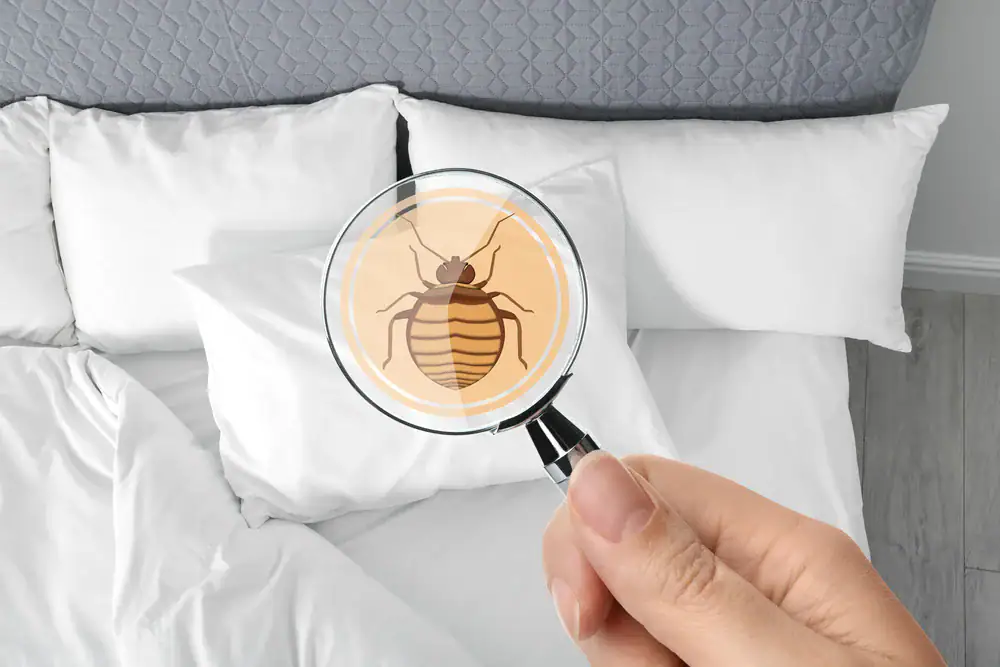
Shed exoskeletons are something most homeowners don’t think to look for at all. Bed bugs molt five times before reaching adulthood, and each molt leaves behind a hollow shell that retains the shape of the bug. These shells are translucent, papery, and fragile — they crumble easily when touched. Finding them in the seams of your mattress, in the folds of your box spring, or along the edge of your bed frame is a clear sign that bugs have been living and growing in your sleeping area for some time.
Eggs are the hardest sign to spot with the naked eye. They’re about one millimeter long — barely visible — and they’re pearly white, almost translucent. A female bed bug can lay one to seven eggs per day under the right conditions. That’s why timing matters so much: a small infestation of a dozen bugs can become hundreds within a few weeks.
Bed Bug Signs Beyond the Mattress That Most People Never Check
The mattress is the obvious place to look, but it’s far from the only place bed bugs live. They tend to stay within about eight feet of where people sleep, which means the entire sleeping environment is fair territory — not just the mattress itself.
The box spring is often more heavily infested than the mattress because it’s darker, more enclosed, and less frequently disturbed. Pull the fabric covering off the underside of your box spring and look at the wooden frame inside. Fecal staining along the edges, shed skins caught in the corners, or live bugs in the joints are all signs of an active infestation that’s been going on longer than you might think.
The bed frame itself — especially if it’s wood — is another common hiding spot. Bed bugs squeeze into cracks in the wood, into screw holes, and into any gap where two pieces of the frame meet. If you have a headboard that attaches to the wall, check behind it. That narrow gap between the headboard and the wall is one of the most common places bugs are found and one of the least commonly inspected.
From there, think about the furniture closest to your bed. Nightstands, dressers, upholstered chairs — all of these can harbor bed bugs if the infestation has had time to spread. Pull out drawers and look at the back panels. Check the underside of upholstered furniture where the fabric meets the frame. Behind electrical outlet covers and along the baseboard directly adjacent to the bed are two more spots that consistently get overlooked.
And then there’s the smell. A significant bed bug infestation produces a musty, faintly sweet odor — sometimes described as similar to overripe berries or wet towels. It’s subtle in early infestations and easy to attribute to something else, but if your bedroom has a smell you can’t explain and you’ve already noticed one or two other signs, that odor is worth taking seriously.
Bed Bug Signs Homeowners in Flint Get Wrong Most Often
There are a handful of misconceptions that cause people in Flint and throughout Genesee County to miss infestations entirely — or to delay getting help long enough that a manageable problem becomes a serious one. These aren’t obscure edge cases. They’re the exact mistakes we see most often when we’re called in to assess a home in Flint, Swartz Creek, Davison, or anywhere else in the area.
The most common one is assuming that bed bugs only happen in dirty homes. They don’t. Bed bugs are found in five-star hotels, spotless apartments, and well-kept family homes. They’re hitchhikers — they get into your home through luggage, secondhand furniture, or a visitor’s bag. Cleanliness has nothing to do with it.
Why Bites Alone Can’t Confirm — or Rule Out — a Bed Bug Problem
Bites are the sign most people think of first, but they’re actually one of the least reliable indicators on their own. Bed bug bites and mosquito bites look nearly identical to the untrained eye. Both cause red, itchy welts. Both can appear on exposed skin. The difference is context — bed bug bites tend to appear in clusters or rough lines, they show up on skin that was exposed while you slept, and they appear consistently over multiple nights rather than sporadically.
Here’s the part that catches most people off guard: bed bug bites can take up to two weeks to appear on the skin. The bug’s saliva contains a mild anesthetic, so you don’t feel the bite when it happens. Some people develop visible welts within a day or two. Others take much longer. And some people — a meaningful portion — show no visible reaction at all. If you’re one of those people, you could have a growing infestation and never develop a single bite mark.
That last point matters a lot in Flint, where we’ve been doing this work for 20 years. We’ve walked into homes where the resident had no bites, no obvious stains, and no reason to suspect anything — and our certified detection dog found an active infestation in under ten minutes. Visual inspection alone catches infestations roughly 50% of the time. That’s not a knock on your ability to look — it’s a reflection of how well bed bugs conceal themselves in early stages. A trained detection dog, working with a certified handler, finds a single bug or viable egg with 95 to 98% accuracy. That gap is significant when you’re trying to know for certain whether you have a problem.
We’re one of fewer than 100 companies in the entire country offering certified canine bed bug detection. It’s not a novelty — it’s the most accurate detection method available, and it’s the reason we catch infestations that other approaches miss entirely.
Why DIY Sprays Aren’t Working for Flint-Area Homeowners
If you’ve already tried a hardware store spray and the problem didn’t go away, you’re not doing it wrong. Bed bug populations in Flint and throughout Genesee County have developed documented resistance to the active ingredients found in most consumer-grade pesticides. This is a local reality, not a general warning — it’s specific to this area, and it changes the math on DIY treatment entirely.
Store-bought sprays were never designed to eliminate an established infestation. They can slow surface-level activity, but they don’t reach the bugs hiding inside box springs, behind baseboards, or in the wall voids adjacent to your sleeping area. And because bed bug eggs are naturally resistant to most chemical treatments, even a spray that kills adult bugs on contact won’t prevent the next generation from hatching.
This is why professional-grade treatment — particularly heat treatment, which kills bugs at all life stages in a single session — produces results that consumer products simply can’t replicate. Heat penetrates into the spaces where bugs actually live. There’s no hiding from it, and there’s no resistance to develop against it.
The cost-of-waiting math is also worth understanding clearly. A female bed bug lays one to seven eggs per day under favorable conditions. A small infestation that might take a single treatment to resolve today can become a much larger problem within four to six weeks. Every week you spend trying a product that isn’t working is a week the population is growing. Early intervention isn’t just less stressful — it’s consistently less expensive than treating an infestation that’s had time to spread through multiple rooms.
What to Do If You Think You Have Bed Bugs in Your Home
If you’ve read through this and something is clicking — a stain you noticed, a smell you couldn’t explain, bites that showed up after sleeping — trust that instinct. The worst outcome of getting a professional inspection is finding out you don’t have a problem. The worst outcome of waiting is finding out you do, and that it’s been growing for months.
Don’t throw out furniture before you know what you’re dealing with. Don’t keep spraying products that aren’t working. And don’t assume that because you can’t see anything obvious, there’s nothing there.
If you’re in Flint, Genesee County, or Shiawassee County and you want a straight answer, we’ve been doing this work in this community since 2005. Our owner, Roger Chinault, has 26 years of hands-on experience, and our certified detection dog can give you a clear answer faster and more accurately than any visual inspection. Give us a call — we’ll tell you exactly what you’re dealing with and what it takes to fix it.