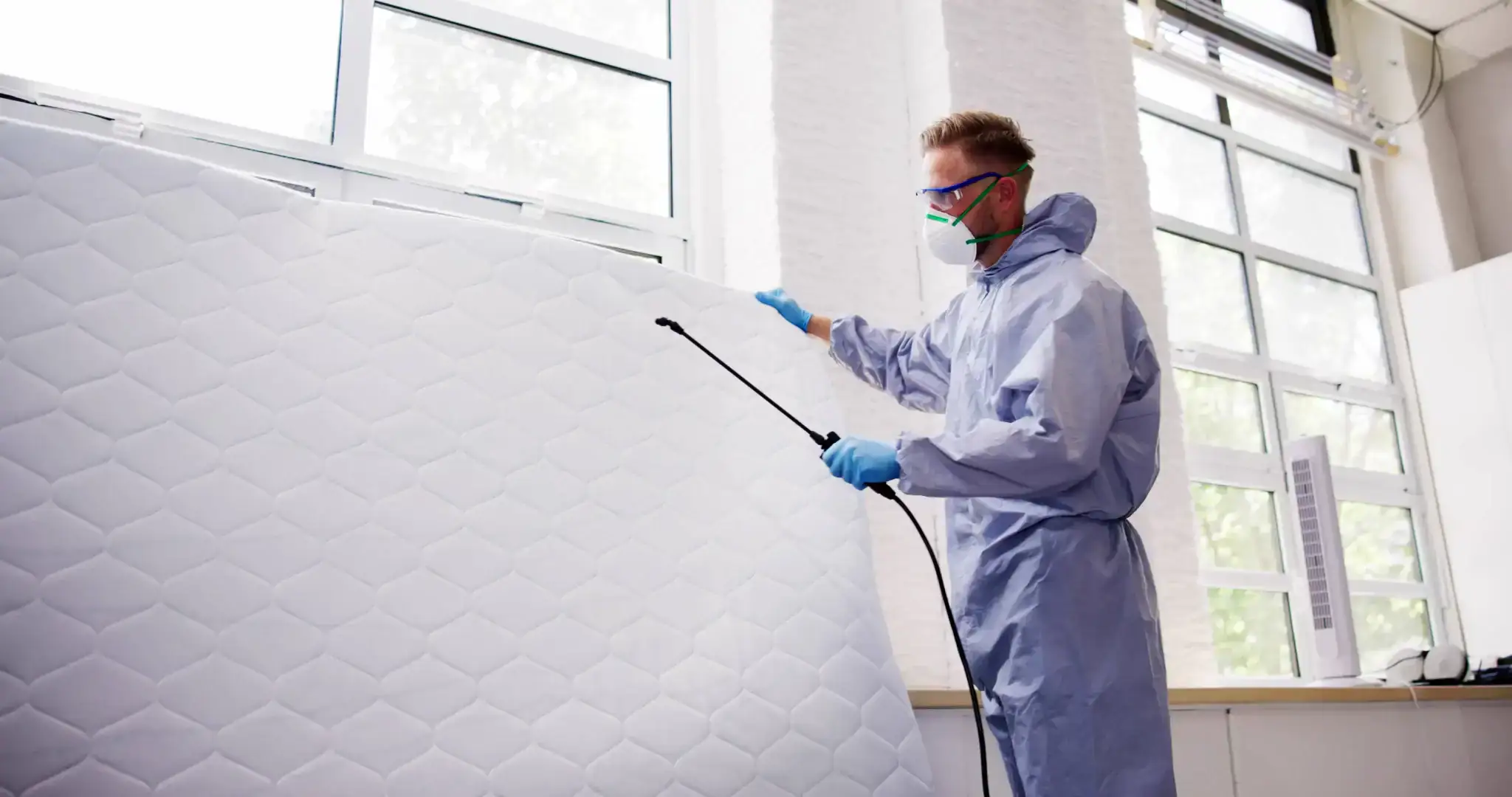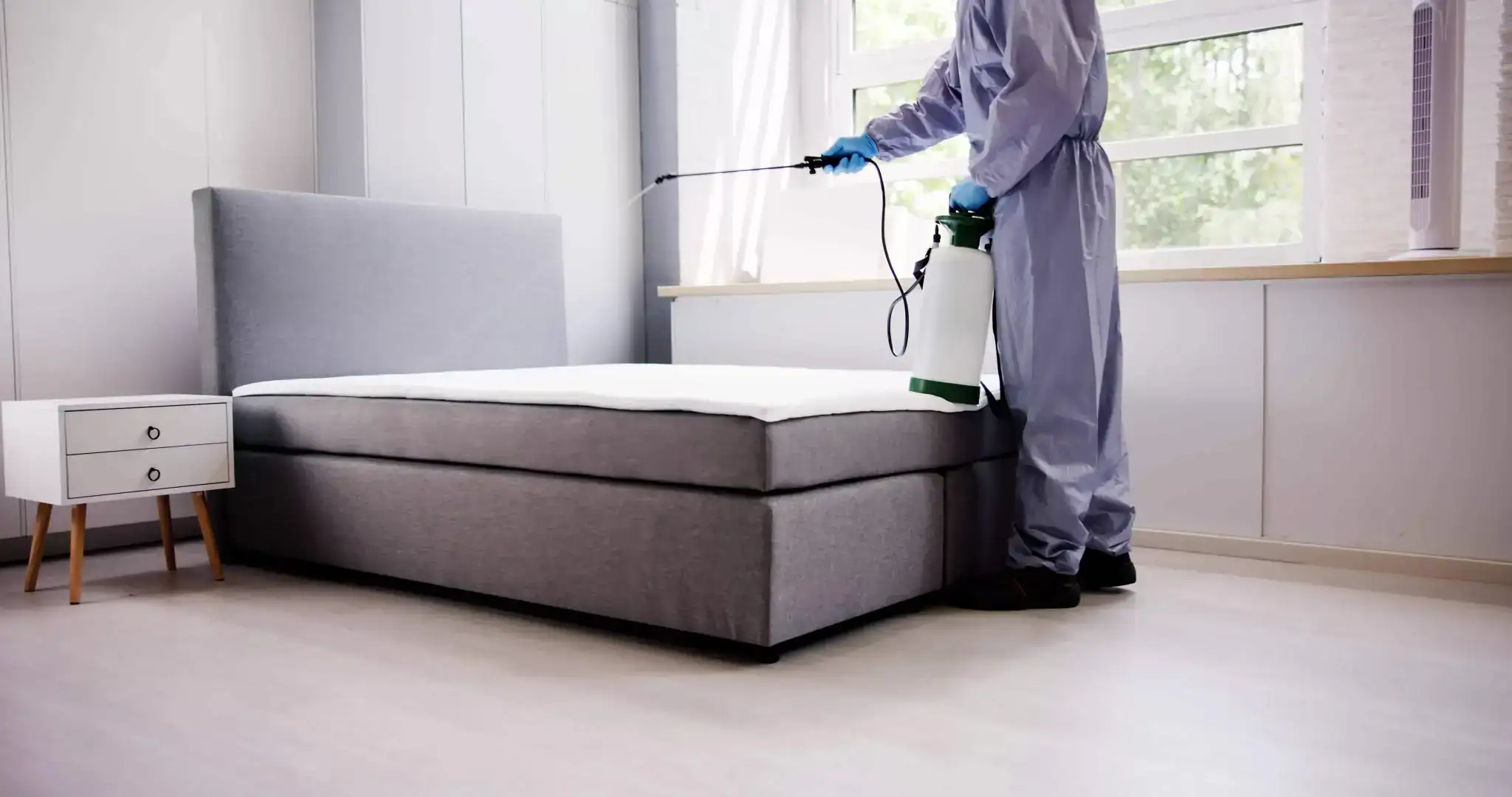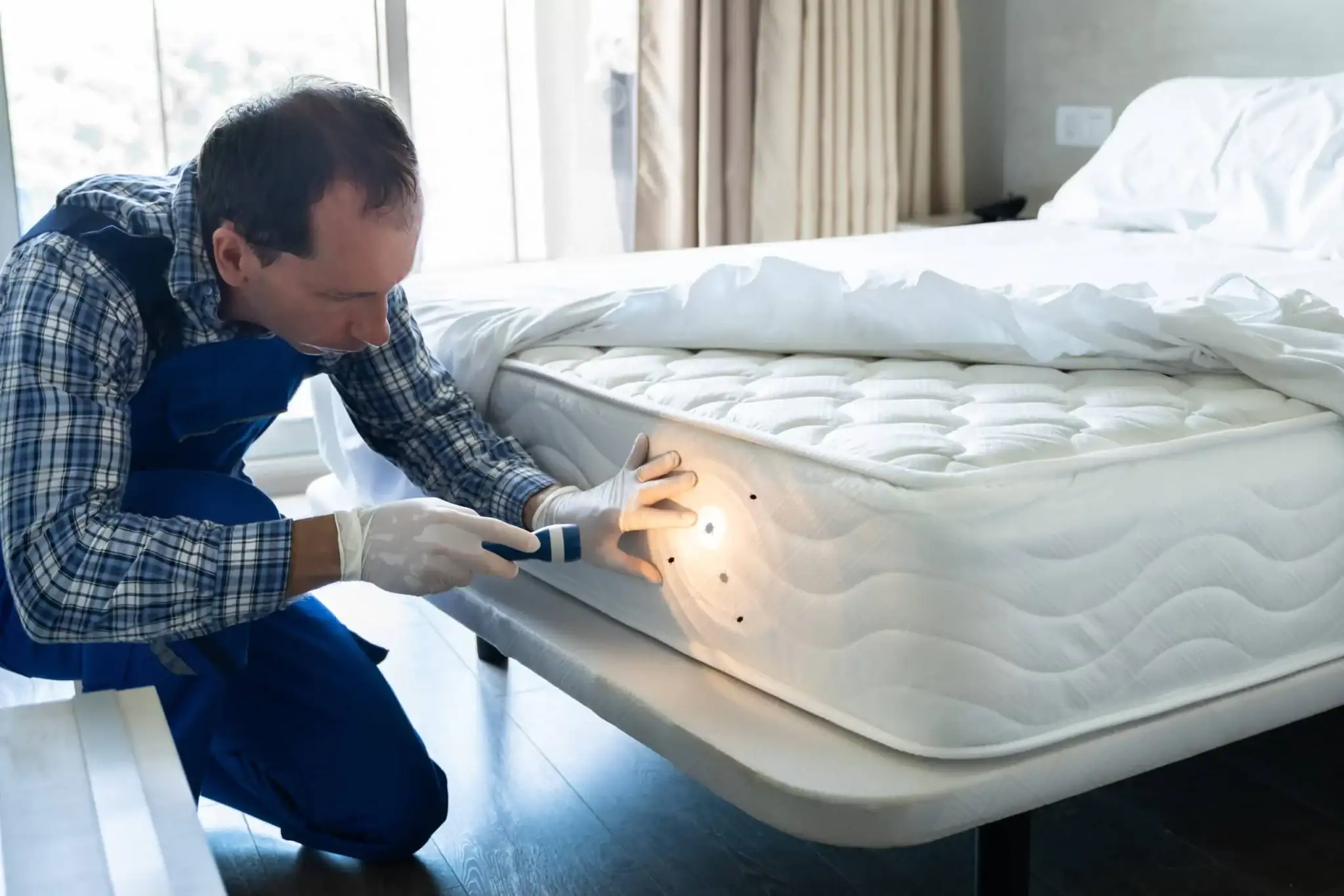

Most people searching for an eco-friendly exterminator aren’t anti-pest-control. They just want to know what’s going in their house — especially when kids or pets are involved. That’s a completely reasonable thing to want, and it’s a question the pest control industry does a poor job of answering.
The problem is that “eco-friendly,” “green,” and “natural” are unregulated terms. Any company can print them on a truck. So how do you tell the difference between a company that’s genuinely changed how they work and one that just changed how they talk?
That’s what this page is about. We’ll walk through what eco-friendly pest control actually looks like in practice, what it can and can’t handle, and what to look for when you’re comparing your options in Genesee County or Shiawassee County.
What Is an Eco Exterminator — and How Is It Different From Standard Pest Control?
Standard pest control has traditionally worked like this: a technician shows up on a schedule, applies a broad-spectrum chemical to the perimeter and common areas, and comes back in 30 or 90 days to do it again — whether there’s active pest activity or not. It works, to a point. But it treats the symptom, not the problem, which is why the same issues tend to resurface season after season.
We operate differently. Instead of defaulting to chemical application, our starting point is inspection — figuring out what pest you’re dealing with, where it’s getting in, what conditions are attracting it, and what the least invasive effective solution looks like. That framework has a name: Integrated Pest Management, or IPM. It’s backed by the EPA and it’s the methodology that separates genuinely eco-conscious pest control from companies that just use the language.
The practical difference isn’t just philosophical. It changes what gets applied, where, and how often.
How Does IPM Actually Work in a Real Home?
IPM isn’t a product — it’s a process. It starts with a thorough inspection of the property before anything is applied. Our trained technicians identify the pest species, locate entry points, look for harborage areas (places where pests are nesting or sheltering), and assess the conditions that are making the property attractive in the first place. That information shapes everything that follows.
From there, we layer in solutions based on what’s actually needed. Physical exclusion — sealing gaps, cracks, and entry points — often comes first, because no treatment lasts if pests can walk right back in. Sanitation recommendations address what’s drawing pests to the space. When a product does need to be applied, our preference is for targeted, lower-risk options: botanical-based sprays, gel baits, mineral dusts, or biological controls that affect the target pest without broad collateral impact.
Here’s where it gets practically relevant for homeowners with kids or pets: many of the products we use in an IPM program have very short re-entry times. We’re talking minutes in most cases, not hours. That’s a real, daily-life difference when you’re trying to manage a household.
The other thing worth understanding is that IPM is not a no-chemical approach. It’s a minimum-necessary-chemical approach. For most common pests — ants, spiders, roaches, mosquitoes — our eco-friendly methods handle the job well and often produce more durable results than conventional spraying because they address what’s causing the problem. For more complex situations like bed bugs or termites, a hybrid approach that combines eco methods with selectively applied conventional products is sometimes the most responsible answer. That’s not a failure of the eco-friendly model; it’s IPM working exactly as it’s designed to.
The key distinction is precision. Products go where they’re needed, in the amount that’s needed, for the pest that’s actually present. Not everywhere, not on a fixed calendar, not as a precaution.
Does Eco-Friendly Pest Control Actually Work on Common Pests Like Ants?
This is the question most people are really asking when they search for an eco-friendly exterminator. And the honest answer is yes — with some nuance worth understanding.
For ant control, eco-friendly methods don’t just work, they often outperform conventional surface spraying. Here’s why: when a technician sprays the visible ant trail, they’re killing the workers — the ones you can see. But the colony, which can contain tens of thousands of ants, is untouched. A few weeks later, you’re back to square one. Our IPM-based ant control uses targeted bait systems instead. Worker ants carry the bait back to the colony, which eliminates the source rather than just the symptom. That’s a fundamentally more effective approach, and it uses far less product in the process.
For carpenter ants specifically — which are a significant problem in Genesee County, especially in older homes — our IPM approach goes one step further. Carpenter ants are almost always drawn to moisture. They don’t eat wood; they excavate it, and they prefer wood that’s already been softened by water damage. A good IPM program identifies those moisture conditions and addresses them as part of the treatment plan. Killing the ants without fixing the moisture problem is like bailing a boat without plugging the hole.
Mosquitoes, spiders, roaches, and earwigs all respond well to our eco-friendly methods. Our approach is particularly well-suited to mosquito control in areas like Genesee County, where the Flint River watershed and surrounding wetlands create consistent breeding pressure throughout the warm months. Targeted applications focused on resting and breeding areas — rather than blanket coverage — protect pollinators and reduce chemical runoff into the watershed, which matters in a community that’s already been through enough water-related stress.
Where eco-friendly methods require more nuance is with bed bugs and termites. Both are complex infestations that often benefit from a hybrid plan. The good news is that with bed bugs specifically, precision detection changes everything — which is something we’ll get to in a moment.
What to Look for in a Green Pest Exterminator — and What Should Raise a Red Flag
Because “eco-friendly” and “green” aren’t regulated terms, the label alone tells you nothing. What matters is the methodology behind it. When you’re evaluating a green pest exterminator, there are a few concrete things worth asking about before you book anything.
The first is credentials. IPM certification or training is the clearest signal that a company has actually changed how they work, not just how they market. It’s a specific, verifiable methodology — not a brand position. Ask whether the technician who will be treating your home is IPM-trained. If they can’t answer that question clearly, that tells you something.
The second is transparency about products. A company operating with genuine eco-friendly principles should be able to tell you what we’re applying, why we chose that product for your specific situation, and what the re-entry time is. Vague answers here are a red flag.
Why the Same Technician Every Visit Matters More Than You’d Think
This one doesn’t get talked about enough, and it’s directly relevant to eco-friendly pest control specifically.
IPM is a property-specific approach. It works because the technician understands your home — where the entry points are, what conditions were present last season, what exclusion work was done, what changed. That knowledge builds over time. When it’s the same person coming back visit after visit, the program gets more effective, not less, because they’re not starting from scratch every time.
The pest control industry has a well-known technician turnover problem. Large national companies often rotate whoever’s available. You get someone different every quarter, you explain your situation again, and the new technician follows the same checklist the last one did. For a conventional spray program, that’s inconvenient. For an IPM-based program, it fundamentally undermines the approach.
We’ve operated on a same-technician model since we opened in 2005. Roger, our lead technician with 26 years of experience, and the rest of our team are career professionals — not seasonal workers filling a schedule. When you call us, you’re not getting whoever’s available. You’re getting someone who knows pest control and, after the first visit, someone who knows your property.
That continuity also means that when something changes — a new entry point opens up after winter frost heave, or a moisture issue develops in a crawl space — the person coming to your home is equipped to notice it. That’s not something a rotating technician can do, regardless of how good they are individually.
For homeowners in Genesee County and Shiawassee County, this matters in a very specific way. Older homes in the Flint metro area — many built before 1970 — have more structural variability than newer construction. Freeze-thaw cycles open and close gaps in foundations every winter. What was sealed last spring may not be sealed this spring. A technician who knows your home catches that. A technician seeing it for the first time doesn’t know what’s new and what’s been there for years.
How Do You Know a Company Is Genuinely Eco-Friendly and Not Just Using the Label?
This is the question that doesn’t have a simple answer — but it has a practical one.
Start with licensing. In Michigan, any company commercially applying pesticides must hold an MDARD Pesticide Application Business License. That’s the legal baseline. If a company can’t confirm they hold it, stop there. It’s not a differentiator — it’s a floor. What matters is what’s above the floor.
IPM certification or training is the next level. It means the company has been trained in the specific methodology that defines responsible, targeted pest control. Not all licensed Michigan pest control companies are IPM-trained. Ask directly. If the answer is vague or they pivot to talking about “natural products” without explaining their process, that’s worth noting.
Then ask about the inspection process. A company doing genuine eco-friendly work inspects before it treats. If the first thing a technician does when they arrive is open a spray tank, that tells you the inspection isn’t really shaping the treatment — the treatment is just the treatment.
Ask about product transparency. What specifically will be applied? Why that product for this pest? What’s the re-entry time? A company that can answer these questions clearly and specifically is operating differently than one that says “don’t worry, it’s safe.”
One thing we do that reinforces this approach is canine bed bug detection. We’re one of fewer than 100 companies in the entire United States offering K-9 detection, with accuracy rates up to 98%. The reason this matters in the context of eco-friendly pest control is that it’s the ultimate expression of inspect-before-you-treat. A trained detection dog identifies exactly where the problem is — precisely — before any product is applied. That protects families from unnecessary treatment exposure and ensures that what does get applied goes exactly where it needs to go.
We also match reasonable competitors’ rates, which addresses the assumption that eco-friendly pest control automatically costs more. It doesn’t have to. And for seniors, veterans, and first responders in Genesee County and Shiawassee County, we offer additional discounts — because those are the people who built this community, and we’ve been part of it for 20 years.
Choosing an Eco-Friendly Exterminator in Genesee County and Shiawassee County
The real difference between eco-friendly and standard pest control isn’t the color of the truck or the language on the website. It’s whether the company inspects before it treats, uses targeted products where they’re actually needed, addresses what’s causing the problem — not just what’s visible — and sends someone who knows your property, not whoever’s free that day.
Those aren’t small distinctions. Over time, they determine whether your pest problem gets solved or just managed on a recurring basis.
If you’re in Genesee County or Shiawassee County and you want pest control that’s genuinely built around your home, your family, and your situation — not a template plan applied to every house on the route — reach out to us at First Choice Pest Control. We’ve been doing this work in this community since 2005, and we’re happy to walk you through exactly what our approach looks like for your specific situation before you commit to anything.