
Hear from Our Customers
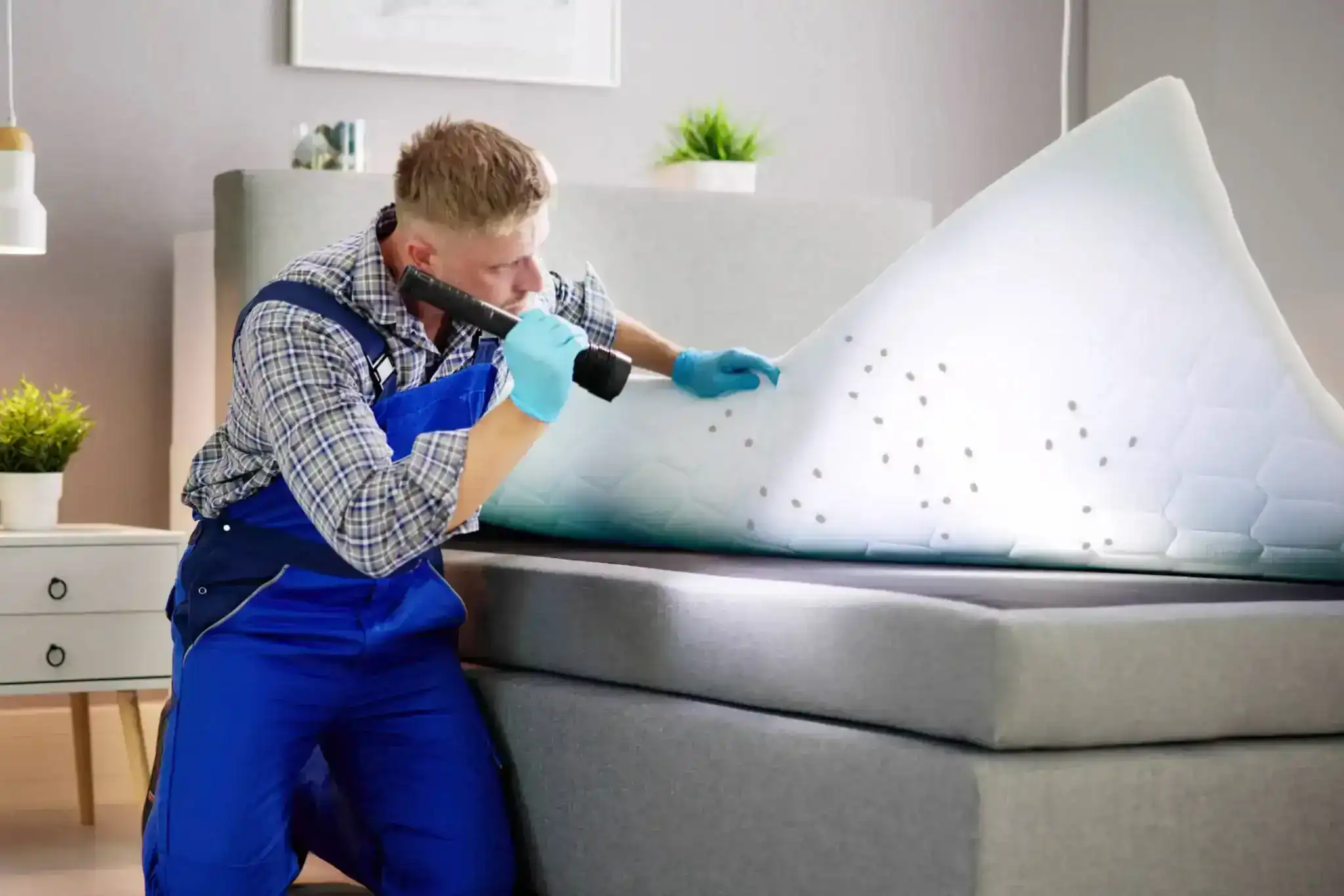
When a bed bug problem gets treated based on a guess, it doesn’t go away — it spreads. The bugs you didn’t find end up in the next room, the next floor, or the next unit. That’s the reality of a missed inspection, and it’s exactly what happens when someone relies on a visual sweep alone. Human visual inspection catches bed bugs at a rate of 17 to 40 percent. Certified canine detection lands between 90 and 98 percent. That gap is the difference between solving the problem and repeating it.
In Columbiaville specifically, that accuracy gap matters more than it would in a newer subdivision. Homes here were built in a different era — plaster walls, original hardwood floors with gaps between planks, aging baseboards with decades of paint layered over them. Bed bugs don’t need much space. They find the voids behind your walls and under your floors that no flashlight and no set of human eyes is going to reach. Our K-9 team trained for this work finds them anyway.
Once the inspection gives you a clear picture, treatment is targeted. You’re not guessing at coverage area, and you’re not over-treating spaces that don’t need it. You get a plan based on what’s actually there — and that’s what leads to a result that holds.
We founded First Choice Pest Control on May 31, 2005 — which means 2025 marks 20 years of serving Michigan families, including the Columbiaville area and surrounding Lapeer County communities. This is a family-owned business, not a franchise. Roger, our owner, has 26 years of hands-on pest control experience, and when you call, you’re talking to someone who has actually done this work — not a scheduling center routing you to whoever’s available.
We hold Integrated Pest Management training credentials, have earned recognition from Angie’s List and HomeAdvisor, and offer discounts for seniors, veterans, and first responders. In a community like Columbiaville — where people have lived on the same streets for decades and trust is built the old-fashioned way — that kind of accountability means something. You get the same technician assigned to your home year after year. No rotating strangers, no part-time fill-ins.
We serve both homeowners and landlords throughout the Lapeer County area, including communities along the Marathon Township corridor. If you own rental property in Columbiaville or manage units near the Holloway Reservoir, we understand the landlord-tenant side of this too.
It starts with a conversation. When you reach out to us, you’ll talk through what you’ve noticed — where you’re seeing signs, how long it’s been going on, and what the layout of your home looks like. For older homes in Columbiaville, that last part matters. A house built in the 1930s or 1940s has a different structural profile than a newer build, and that shapes how the inspection gets approached from the start.
From there, our K-9 inspection team comes in. The dog works room by room, flagging areas of live activity and viable eggs with a level of accuracy that a visual inspection simply can’t match. This step is what separates a targeted treatment plan from a broad-coverage guess. Once the inspection is complete, you know exactly where the problem is — and where it isn’t.
Treatment follows based on what the inspection found. We use an IPM-trained approach, which means the method fits the infestation rather than applying a one-size blanket treatment across the whole home. After the work is done, you’ll know what was treated, why, and what to watch for. No contracts lock you in — if you have questions or need a follow-up, you call the same technician who was already in your home.

Ready to get started?
Bed bug control in Columbiaville isn’t a one-size situation, and we don’t treat it like one. Our service covers both residential and commercial properties — whether you own your home on Pine Street, manage a rental unit in the village, or run a small business near the reservoir. Michigan law places the responsibility for bed bug treatment on landlords, and we provide the documentation you need to stay compliant and get units back in service.
For homeowners in the 48421 ZIP code, our inspection and treatment process accounts for the structural realities of older Lapeer County housing stock. That means checking behind plaster walls, under original flooring, inside aging electrical conduit, and along baseboards where decades of settling have opened up gaps. These are the places a standard visual inspection misses. Our K-9 team doesn’t.
We also offer price matching for reasonable competitor rates — so if you’ve gotten a quote from another provider in the Lapeer County area, bring it. Seniors, veterans, and first responders receive a discount, because in a community like Columbiaville, those aren’t afterthought categories. There are no binding contracts. The work is guaranteed by the results it delivers, not by paperwork that keeps you locked in regardless of outcome.
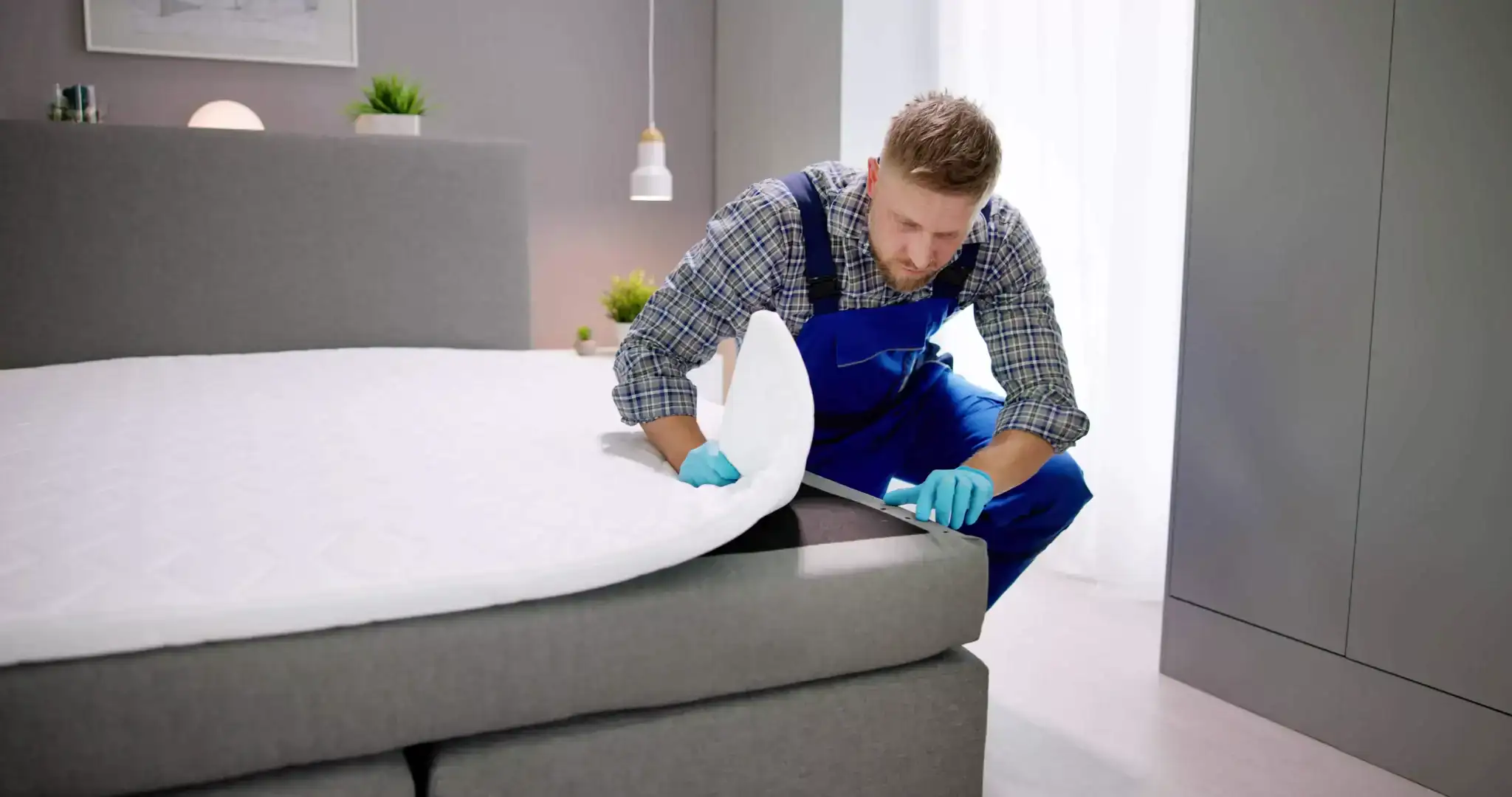
Columbiaville’s housing stock is genuinely old. The median year homes were built here is 1952, and a significant portion of the village predates World War II. That kind of construction — plaster walls, original hardwood floors, layered baseboards, crawl spaces, and aging foundation work — creates structural complexity that gives bed bugs dozens of places to hide that a human inspector will never physically access without tearing into walls.
A certified K-9 detection team changes that dynamic entirely. Trained dogs detect live bed bugs and viable eggs through scent, which means they find harborage behind surfaces rather than just on them. In a pre-war Columbiaville home, that difference isn’t a minor upgrade — it’s the entire foundation of whether your treatment plan is built on real information or a partial picture. Starting with accurate detection is the single most important step in actually resolving the problem.
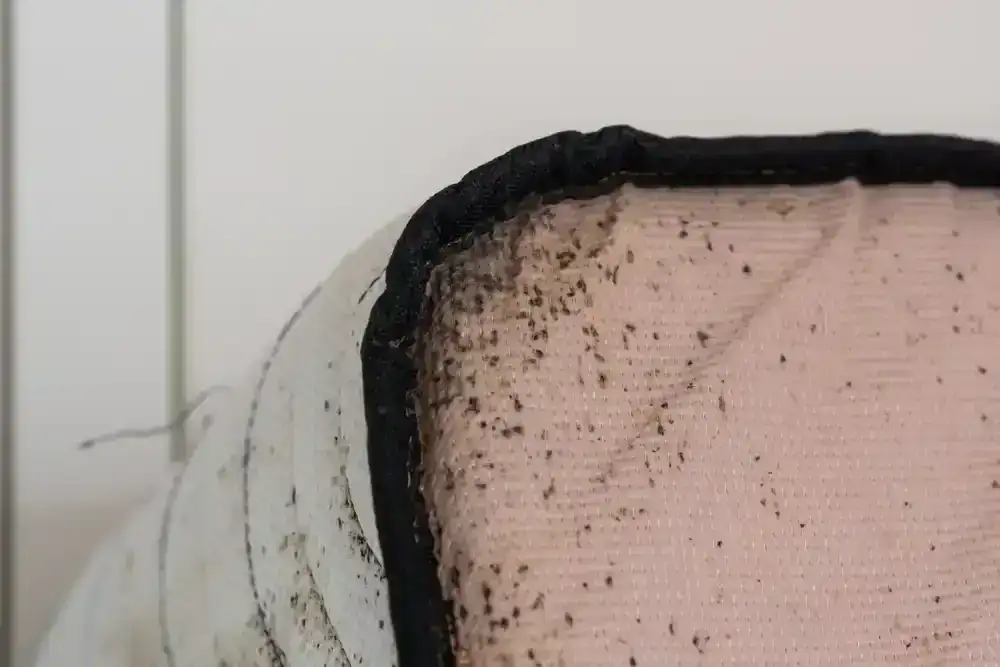
The signs most people notice first aren’t the bugs themselves — it’s what they leave behind. Small rust-colored stains on sheets or mattress seams, tiny dark specks along baseboards or behind headboards, and shed skins are all indicators. Bites alone aren’t reliable because reactions vary widely from person to person, and some people show no reaction at all even with an active infestation.
If you’re in an older Columbiaville home and you’ve spotted anything that looks suspicious, the right move is a professional inspection rather than a DIY treatment attempt. Over-the-counter sprays often scatter bugs deeper into wall voids and structural gaps rather than eliminating them — which is a particular problem in pre-war construction where there are far more places for bugs to retreat. A K-9 inspection gives you a definitive answer before any treatment decisions are made, so you’re not guessing at a problem that may be larger or more contained than it appears.
Bed bugs are a year-round problem in Michigan, full stop. Unlike outdoor pests that slow down or go dormant in cold weather, bed bugs live entirely indoors — in your bedding, your walls, your furniture — where the temperature stays consistent regardless of what’s happening outside. A Columbiaville winter doesn’t affect them at all.
What does change seasonally is how bed bugs get introduced into homes in the first place. Summer brings recreational traffic to the Holloway Reservoir area — visitors, seasonal renters, and people coming and going from the marina and waterfront. That movement creates the same kind of transmission risk that hotel stays create for travelers. The back-to-school period in late August, when LakeVille Community Schools resumes, mirrors the college move-in spike seen in university towns. Holiday travel in November and December brings another round of introduction risk. The point is that there isn’t a safe season to ignore the signs — if something looks off, it’s worth a call regardless of the time of year.
Under Michigan law, landlords are responsible for addressing bed bug infestations in rental properties promptly and professionally. Tenants are legally required to notify their landlord as soon as they discover or reasonably suspect a bed bug problem, and once that notification happens, the clock starts. Failing to respond with professional treatment creates liability exposure that goes beyond the infestation itself.
For landlords managing units in Columbiaville — whether that’s a single rental home or a small multi-unit property — we provide documented treatment records that support your compliance obligations. The K-9 inspection component is especially valuable in a landlord context because it gives you a defensible record of what was found, where, and how the treatment was targeted. In a village of roughly 336 total housing units, approximately 69 are renter-occupied. Multi-unit situations carry added risk because bed bugs travel through shared walls and common areas, and a missed infestation in one unit rarely stays contained. Getting an accurate inspection from the start protects your tenants and your property.
The cost of bed bug treatment varies based on the size of the infestation, the square footage of the home, and how many areas require treatment. For a single-room or contained infestation in a smaller Columbiaville home, treatment costs typically start in the range of a few hundred dollars. Larger or multi-room infestations in older homes with more structural complexity can run higher — sometimes into the $1,000 to $2,000 range depending on what the inspection reveals and what the treatment plan requires.
We offer price matching for reasonable competitor rates, so if you’ve already gotten a quote from another provider in the Lapeer County area, bring it. You shouldn’t have to choose between an experienced, properly equipped company and staying within your budget. It’s also worth understanding the real cost comparison: a DIY treatment that scatters bugs deeper into an old home’s wall voids will cost you more in the long run than a professional inspection and targeted treatment done right the first time. Seniors, veterans, and first responders also receive a discount — ask about it when you call.
Yes. We serve Columbiaville and the surrounding Marathon Township area as part of our broader Lapeer and Genesee County service territory. We’re headquartered in Swartz Creek — about 25 to 30 miles from the village via the county road network — which puts Columbiaville well within our regular service area, not on the outer edge of it.
Columbiaville sits at the boundary between Lapeer and Genesee Counties, and we have long-standing experience serving communities on both sides of that line. Our team is familiar with the housing stock, the rural geography, and the seasonal patterns that affect pest pressure in villages like this one. Whether you’re on Pine Street, out near the Holloway Reservoir, or in the surrounding rural areas of Marathon Township, the response time and service quality are the same. If you’re unsure whether your specific address falls within the service area, a quick call will confirm it — and in most cases, the answer is yes.
Useful Links