
Hear from Our Customers
Bed bugs don’t announce themselves. Most Durand homeowners don’t know they have a problem until the bites have been going on for weeks — and by then, the infestation has had time to spread into places that are genuinely hard to reach. It’s just how these things work, especially in pre-war housing stock where original plaster walls, aged baseboards, and older electrical outlets give bugs a dozen places to hide that no flashlight can find.
What changes after professional bed bug treatment isn’t just the absence of bugs — it’s the absence of that low-grade anxiety that follows you to bed every night. You stop inspecting the mattress seams. You stop wondering if the itch on your arm means something. Your home feels like yours again, not like something you’re sharing with a problem you can’t solve.
For Durand residents, that peace of mind carries a specific weight. In a town of 3,500 people, a bed bug problem isn’t just uncomfortable — it’s the kind of thing people feel embarrassed about, even though one in five American households has dealt with it. Clean homes get infested. Careful people get infested. Anyone who travels the Blue Water Amtrak route between Chicago and Port Huron, stays in a hotel, or brings home secondhand furniture is exposed. The goal here isn’t to alarm you. It’s to make sure that if it happens to you, you have a clear path to actually fixing it.
We founded First Choice Pest Control on May 31, 2005 — which means this year marks 20 consecutive years of serving Michigan homeowners and businesses, including Durand and throughout Shiawassee County. Roger, our owner, has 26 years of hands-on pest control experience and built this company around a model that national chains structurally can’t replicate: the same trained technician, assigned to your home, year after year. Not whoever’s available. Not a part-time hire filling a schedule gap. The same person who knows your house, your history, and your situation.
That matters everywhere, but it matters more in Durand. This is a community where people know their neighbors and make decisions based on trust built over time — not a coupon or a five-second ad. We’ve earned Angie’s List and HomeAdvisor awards, hold Integrated Pest Management training credentials, and are fully licensed and insured through Michigan’s MDARD. We offer senior discounts, veteran discounts, and first responder discounts — and with Durand’s notable veteran population and the number of households here with older residents living alone, those aren’t afterthoughts. They’re part of how we operate.
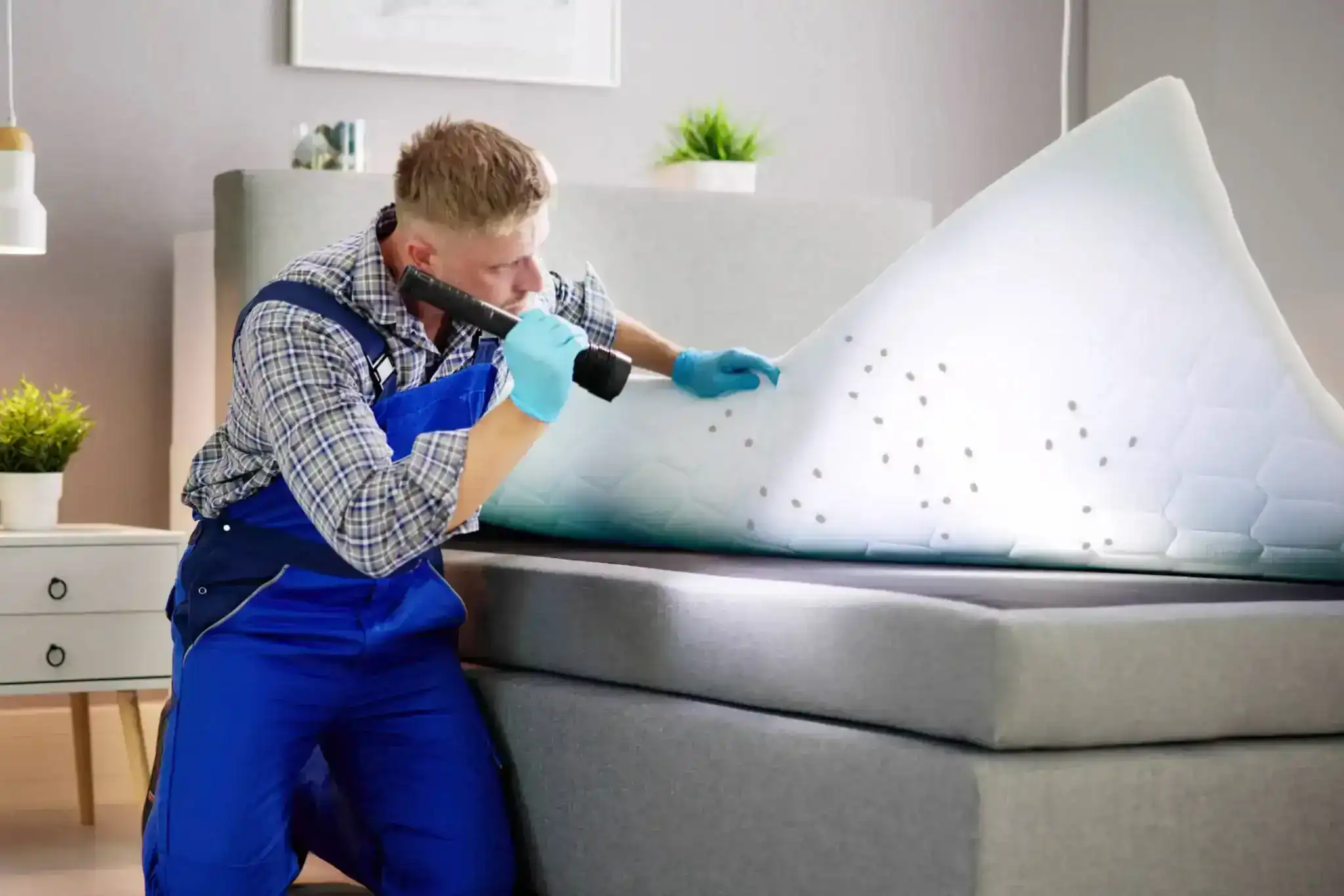
The first thing that sets our process apart from what most companies offer is the detection phase. Before any treatment begins, we deploy a certified K-9 bed bug detection team — one of fewer than 100 in the entire United States. The dog isn’t a novelty. It’s a trained tool that locates live bugs and viable eggs with 90 to 98% accuracy, compared to 17 to 40% for human visual inspection alone. In a Durand home built before World War II — with original plaster walls, decades-old baseboards, and older wiring — that difference in accuracy is the difference between treating the actual infestation and treating your best guess.
Once detection confirms where the problem lives, we build treatment specifically around your home and the scope of what was found. We use an IPM-trained approach, which means targeted application rather than blanket chemical coverage. The goal is to eliminate bugs at every life stage — adults, nymphs, and eggs — while being precise about where and how products are applied. Most moderate to severe infestations require two to four visits over three to six weeks, because eggs that survive the first round will hatch, and a follow-up is what closes that gap.
After treatment, you’ll know what to expect and when. There’s no vague “call us if it comes back” handoff. We explain the process clearly, set the timeline, and if something needs to be revisited, that conversation happens before you’re left wondering. No contracts required. No pressure to sign anything. Just a clear plan and accountability for the result.

Ready to get started?
Our bed bug pest control services aren’t built around a generic checklist. What you get starts with the K-9 inspection — the most accurate detection method available, and one that’s especially relevant in Durand’s older housing stock where bugs can establish themselves in wall voids, original hardwood floors, and aged furniture that’s been in the family for decades. You’re not paying for treatment based on a hunch. You’re paying for treatment based on confirmed, precise findings.
From there, we personalize the treatment plan to your property. Residential homes in Durand — whether you’re in a pre-war house near downtown or out in Vernon Township — get a different approach than a commercial property, a rental unit, or a multi-unit building. We serve both residential and commercial customers throughout Shiawassee County, and the program is adjusted accordingly. If you’re a landlord managing rental units, Michigan’s Housing Law puts the responsibility for pest-free conditions on your side of the lease — and having a documented, professional treatment record matters if that ever becomes a question.
We price transparently, and we match reasonable competitor rates. If you’ve gotten a quote from another provider serving the Durand area, bring it. The goal isn’t to be the cheapest option — it’s to make sure cost isn’t the reason someone avoids getting a real infestation handled by people who actually know what they’re doing.
Yes — and it’s worth taking seriously. Durand Union Station is an active stop on the Blue Water Amtrak line running daily between Chicago and Port Huron. Train cars, coach seats, sleeping compartments, and the station waiting areas themselves are all documented environments where bed bugs transfer to clothing, luggage, and personal items. This isn’t unique to Amtrak — any form of travel that involves shared seating or sleeping surfaces carries the same risk. But Durand is one of the few communities in this region with a working daily Amtrak stop, which means this exposure vector is more relevant here than in most surrounding towns.
If you’ve traveled recently and started noticing bites or small rust-colored spots on your bedding, that’s worth investigating. The same applies if you’ve hosted a visitor who came in by train. Early detection — before an infestation has time to spread into walls and furniture — is significantly easier to treat than one that’s been established for months.
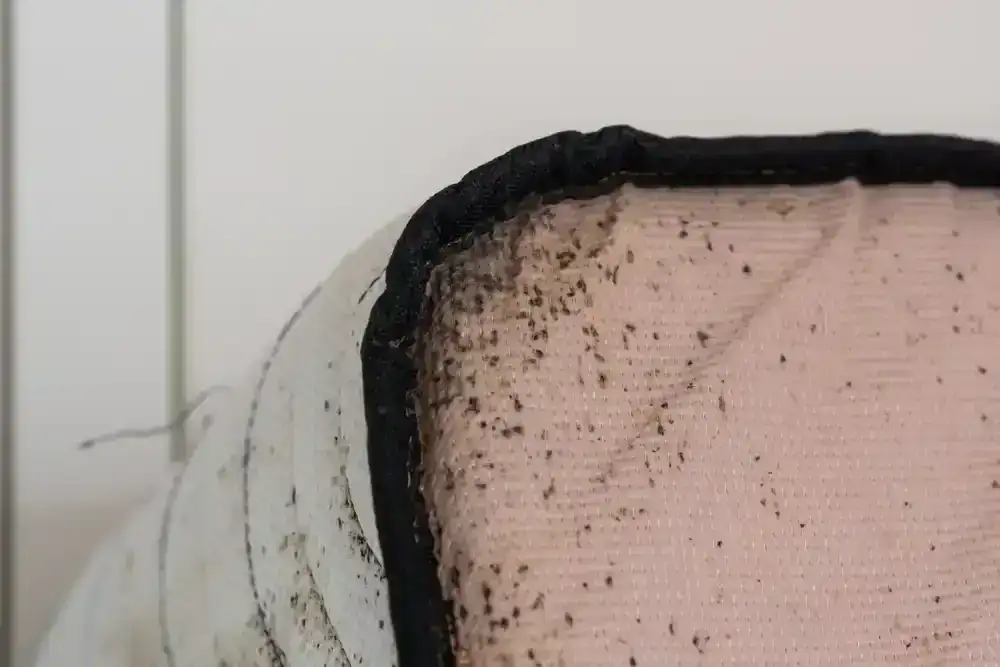
The most common signs are small, rust-colored or dark staining on your mattress seams or box spring, tiny shed skins near where you sleep, and bites that appear in clusters or lines — usually on exposed skin like arms, shoulders, or neck. The bites themselves aren’t always a reliable indicator because people react differently; some people show welts immediately and others barely react at all. That’s part of what makes self-diagnosis so unreliable.
In older Durand homes with original wood floors, plaster walls, and furniture that’s been around for decades, bugs can be well-established in spots that are genuinely invisible to the naked eye. If you’re seeing signs but can’t find the source, that’s not unusual — it’s actually one of the strongest arguments for professional canine detection before you spend money on treatment that may not be targeting the right areas. Our K-9 team can confirm presence, rule out a false alarm, and tell you exactly where the infestation is concentrated.
Bed bugs are an indoor pest, which means Shiawassee County winters don’t phase them at all. They live where you live — inside your heated home — and they’re not affected by what’s happening outside. If anything, Michigan winters work in their favor. You’re spending more time indoors, using more bedding, hosting more overnight guests, and the cold months tend to bring more secondhand furniture purchases and estate sale finds into the home. All of those are documented ways infestations spread.
There’s no off-season for bed bugs in Durand. Summer brings the highest travel exposure risk — especially with Amtrak activity picking up — and fall brings college students home from university dorms, which are among the highest-risk environments in the country. Winter and spring carry their own vectors. If you’re seeing signs, the time of year doesn’t change whether you should act. It just changes which exposure source is most likely.
Professional bed bug treatment typically ranges from $1,500 to $5,000 for a whole-home treatment, depending on the size of the home, the severity of the infestation, and how many visits are needed to fully resolve it. Most moderate to severe cases require two to four treatment visits over three to six weeks — not because the first treatment fails, but because eggs that survive the initial application will hatch, and a follow-up is what closes that gap. Skipping the follow-up is one of the most common reasons people end up dealing with the same infestation twice.
For Durand homeowners, we match reasonable competitor rates — so if you’ve already gotten a quote from another provider serving Shiawassee County, it’s worth a call before you book. The cost of professional treatment, while real, is worth comparing against the cost of not treating: infestation spread, furniture replacement, months of disrupted sleep, and the compounding difficulty of treating a larger, more established problem later.
Most infestations require two to four treatments spaced over three to six weeks. The reason isn’t that a single treatment doesn’t work — it’s that no product currently available can penetrate and kill bed bug eggs on contact. The eggs that survive the first round will hatch within one to two weeks, and a follow-up treatment targets that next generation before they mature and reproduce. Skipping that step is how a treated infestation comes back.
The number of visits also depends on how far the infestation has spread. In a compact Durand home, a localized infestation caught early may resolve in two visits. In a larger home — or one where bugs have moved into wall voids, multiple rooms, or original plaster construction — it may take more. The K-9 detection phase at the start of the process gives a much clearer picture of scope than a visual inspection alone, which means the treatment plan is built around what’s actually there rather than a broad assumption.
Yes — we offer discounts for seniors, veterans, and first responders. In Durand specifically, those categories cover a meaningful portion of the community. The city has a notably high concentration of Vietnam-era veterans, and more than 13% of Durand households include someone 65 or older living alone — often on a fixed income, often in an older home where a bed bug problem is both harder to detect and more stressful to deal with financially. These discounts exist because the people who’ve given the most — to their country, their community, or their neighbors — shouldn’t have to absorb the full cost of a problem that can happen to anyone.
When you call, just mention your status. It’s a straightforward part of how we operate, not something you have to negotiate for or find a promo code to access.
Useful Links