
Hear from Our Customers
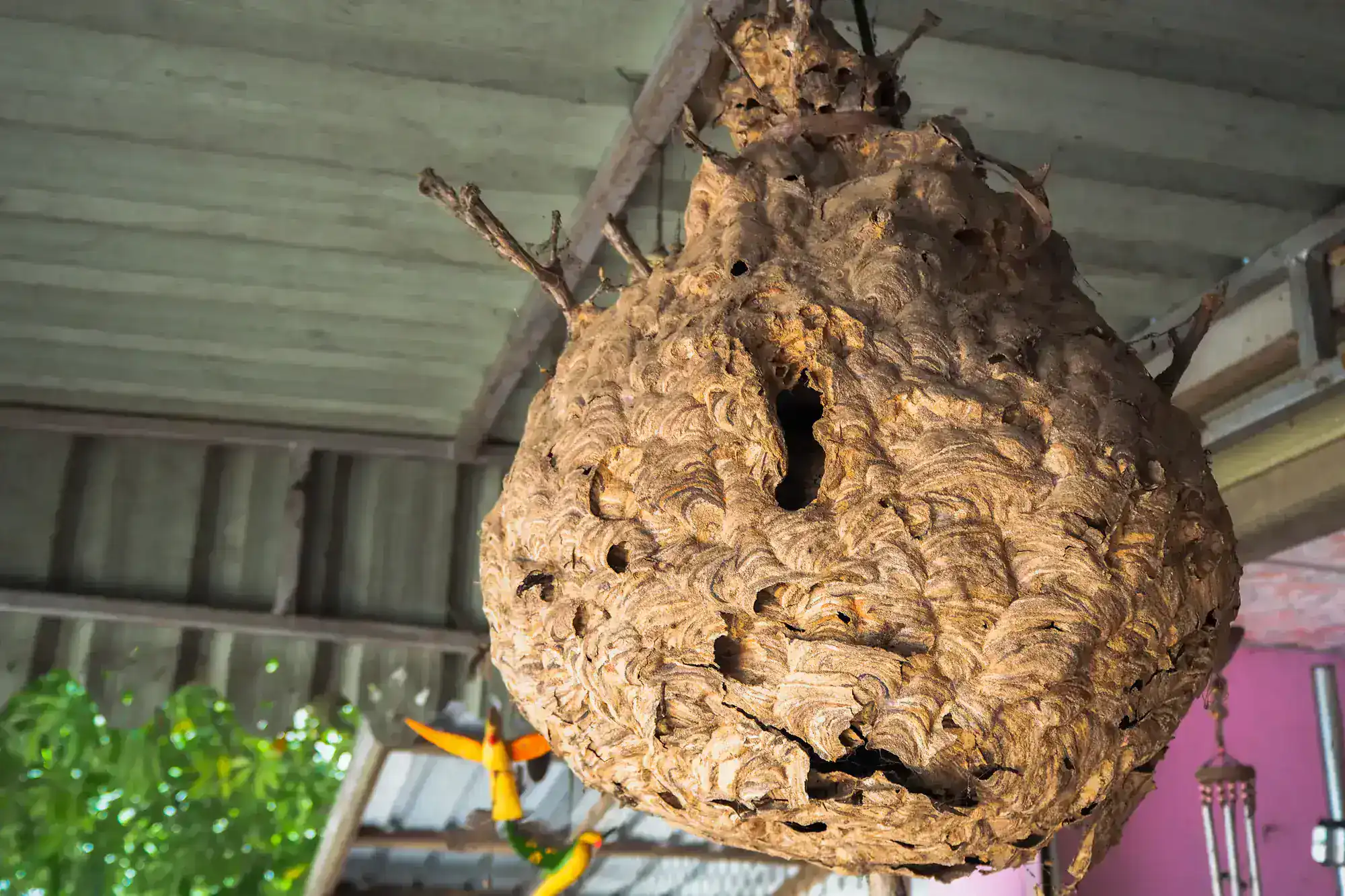
Most Durand homeowners don’t call about hornets until the problem is already serious. You spotted them coming and going from a gap in your siding. You found a nest the size of a basketball hanging from the soffit. Maybe you got too close mowing the lawn and found out the hard way. By the time it’s obvious, the colony has been building for weeks — and spraying it yourself at that point is genuinely dangerous.
Durand’s older housing stock creates more entry points than most homeowners realize. Wood-framed soffits, aging caulk lines, gaps around utility penetrations — these are exactly the spots hornets use to get inside wall voids and attic spaces. A can of hardware store spray won’t reach a nest that’s two feet inside your wall. It’ll agitate the colony and make the situation worse.
When the job is done right, you stop thinking about it. Kids play in the yard again. You open the shed without bracing yourself. You get home after that commute and walk to your front door without watching your step. That’s what professional hornet nest removal in Durand actually delivers — not just a dead nest, but your property back.
We’ve been operating since May 31, 2005 — which means this year marks 20 years of serving homeowners across Durand, Shiawassee County, and the surrounding region. Roger, our owner, brings 26 years of hands-on pest control experience to every job. That’s not a marketing line. That’s the difference between a technician who’s seen three hornet seasons and one who’s seen twenty-six.
You won’t get a different face every time you call. We assign the same technician to your property year after year. They learn your home — where the pressure points are, what came back last season, what didn’t. In Durand, where this kind of consistency matters, that’s how we’ve built our reputation.
We hold Michigan Pesticide Application Business License #250081, have earned awards from Angie’s List and HomeAdvisor, and carry IPM training certification through MDARD. Licensed, accountable, and actually local.
It starts with a call. You describe what you’re seeing — where the nest is, how long it’s been there, whether you’ve tried anything already. From there, we schedule a visit, usually fast, because hornets don’t wait and neither should we.
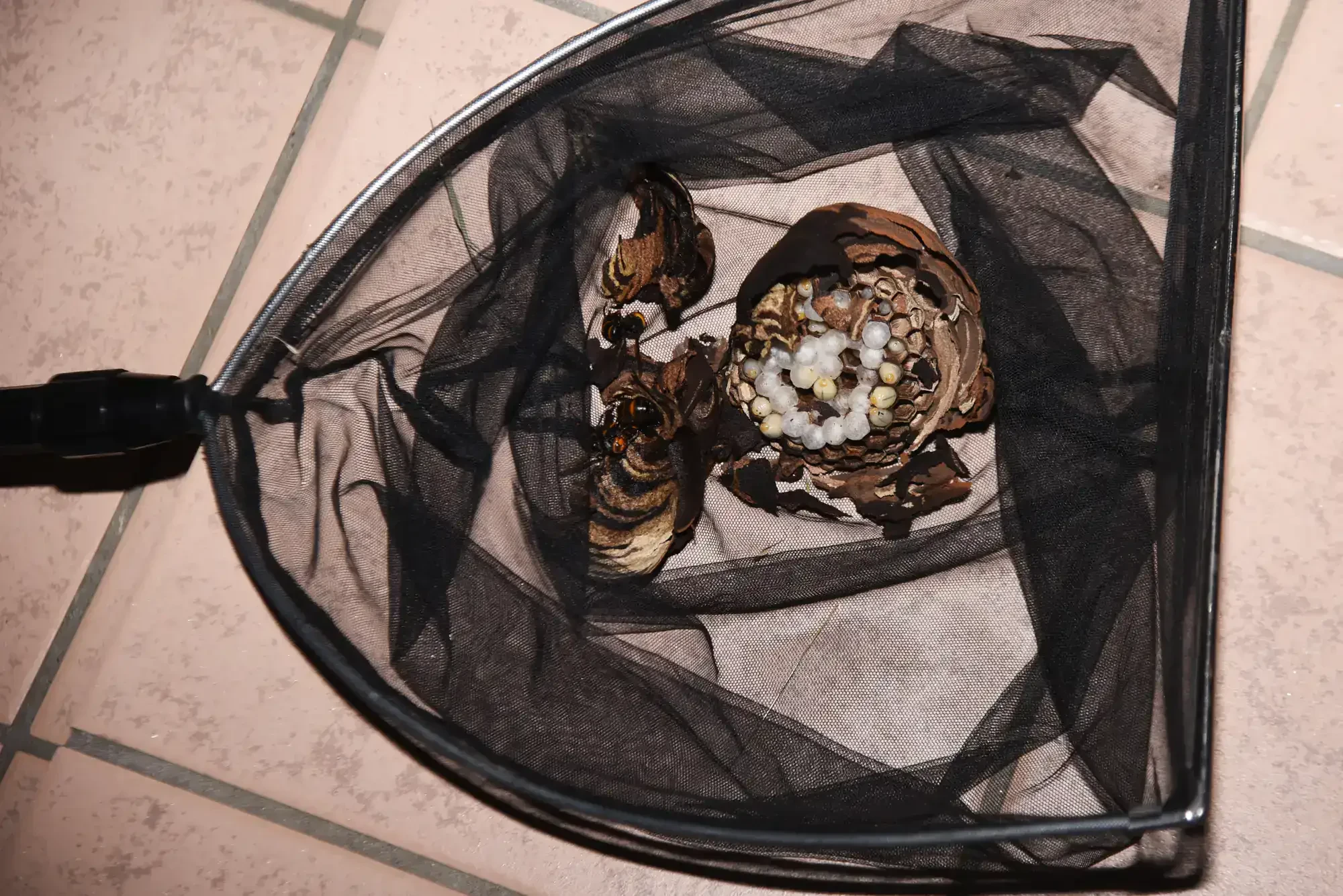
On-site, our technician assesses the full situation before treating anything. That means identifying the species — bald-faced hornets, European hornets, and yellow jackets all behave differently and respond to different treatment approaches. It also means checking for secondary nesting sites, because a visible nest on the eave isn’t always the only one. In Durand’s older homes, wall void nests are common and require professional-grade dust treatments to reach — not aerosol sprays that stop at the surface.
Treatment is targeted and applied with the precision that IPM certification requires. That means the right product, at the right concentration, in the right location — not a broad chemical application across your whole yard. After treatment, you’ll know what was found, what was done, and what to watch for. If the problem isn’t resolved, we come back at no additional charge. No fine print on that — it’s just how we work.
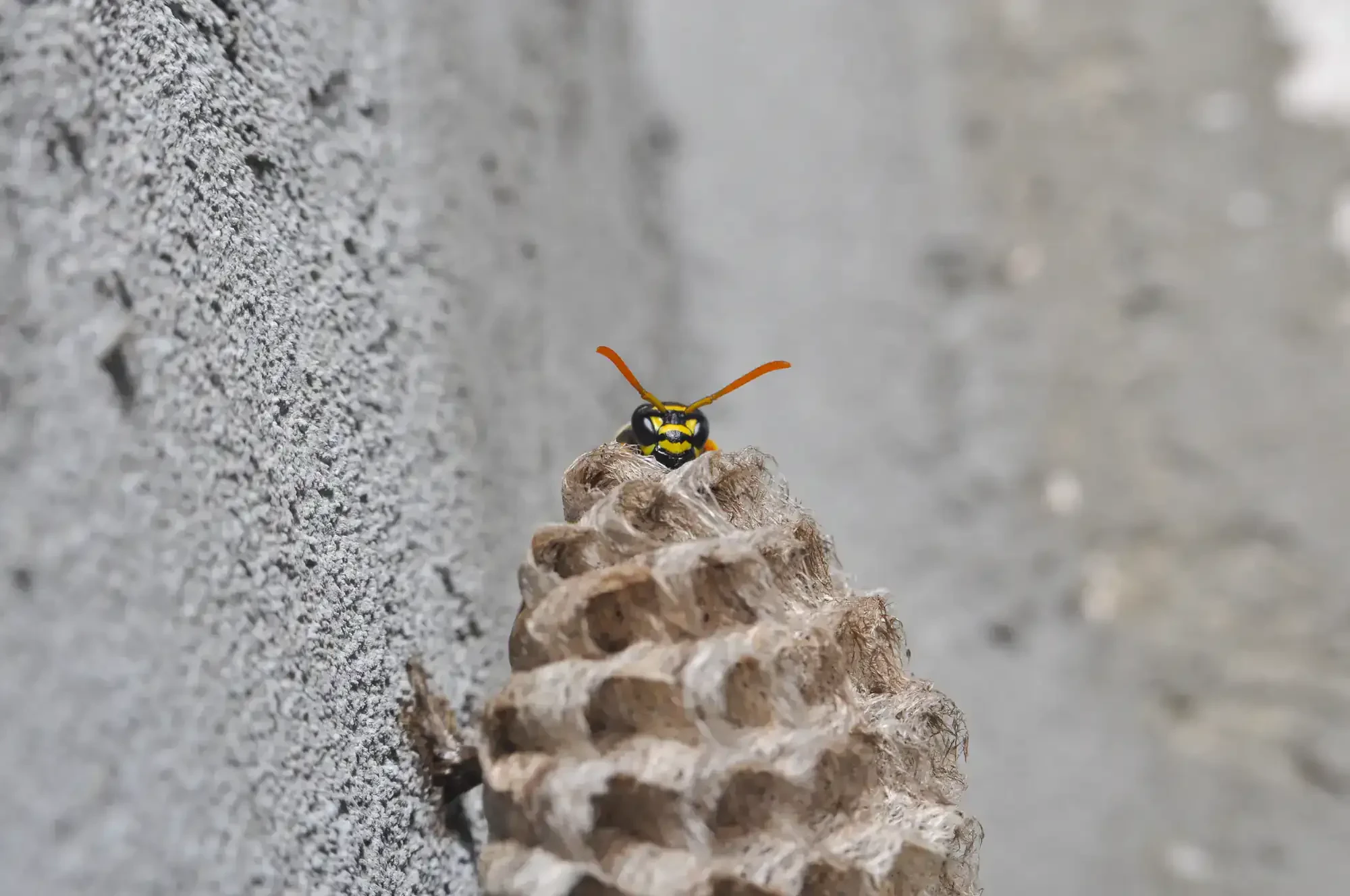
In Shiawassee County, peak hornet season runs from mid-July through September. If you’re reading this in spring, that’s actually the best time to act — a nest the size of a golf ball in April can hold hundreds of workers by August, and the cost and complexity of removal grows with it.
Ready to get started?
Hornet removal in Durand isn’t a single-size job. A bald-faced hornet nest hanging from a tree branch is a different situation than a European hornet colony that’s been living inside your wall for a month. We handle both — and everything in between.
Every service call includes a full on-site assessment, species identification, targeted treatment, and a follow-up guarantee. If the colony isn’t eliminated, we return. For wall void and attic infestations — which are especially common in Durand given the area’s older housing stock — treatment includes professional dust application that reaches deep into the cavity where the nest is actually located. For accessible exterior nests, treatment is direct and typically resolves in a single visit.
We also offer discounts for seniors, veterans, and first responders — groups that are well-represented in this community and shouldn’t have to overpay to keep their homes safe. If you’ve already received a quote from another local provider, ask about price matching. Our goal is to give you the best professional hornet removal in Durand at a price that makes sense — without cutting corners to get there.
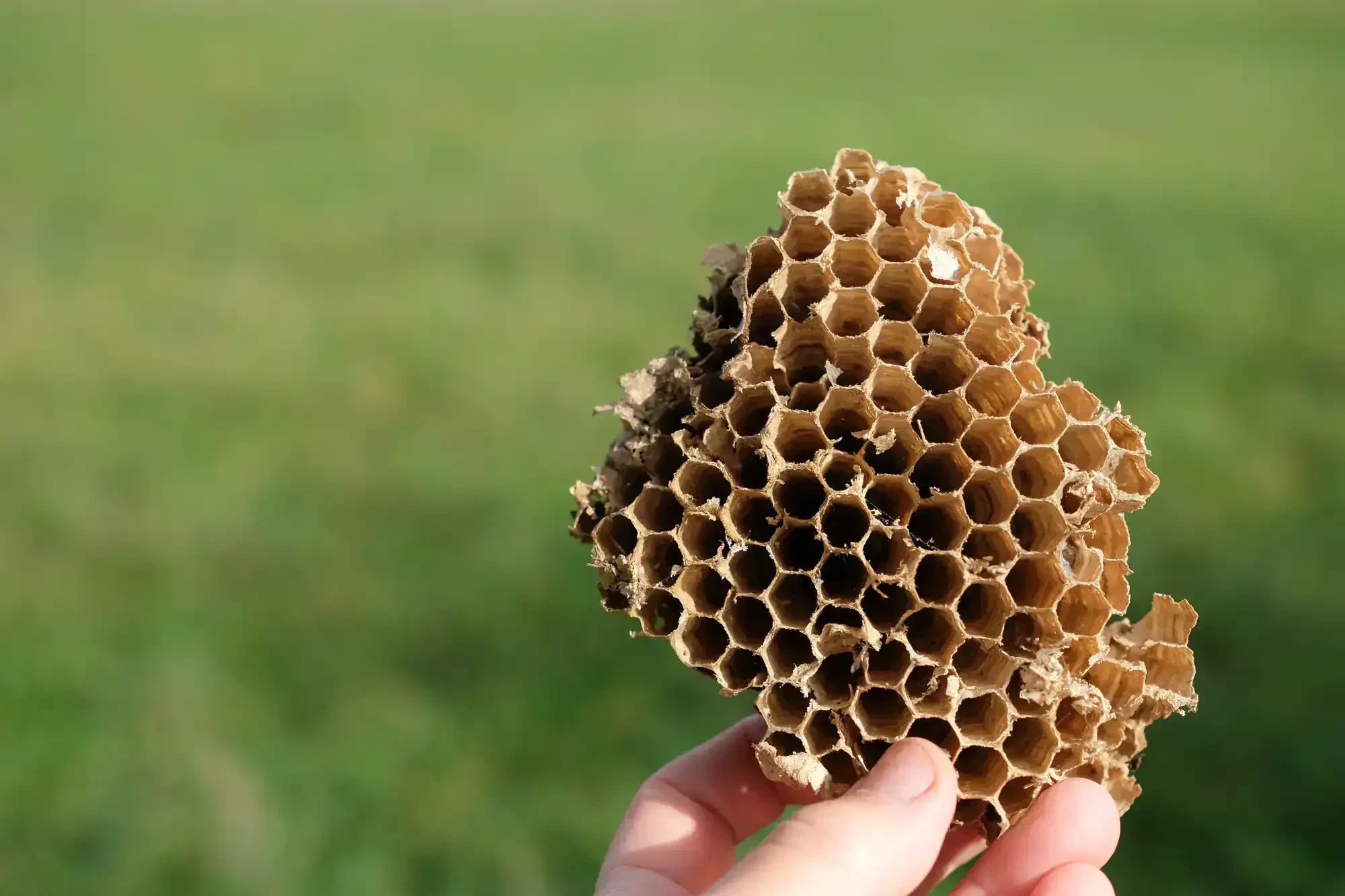
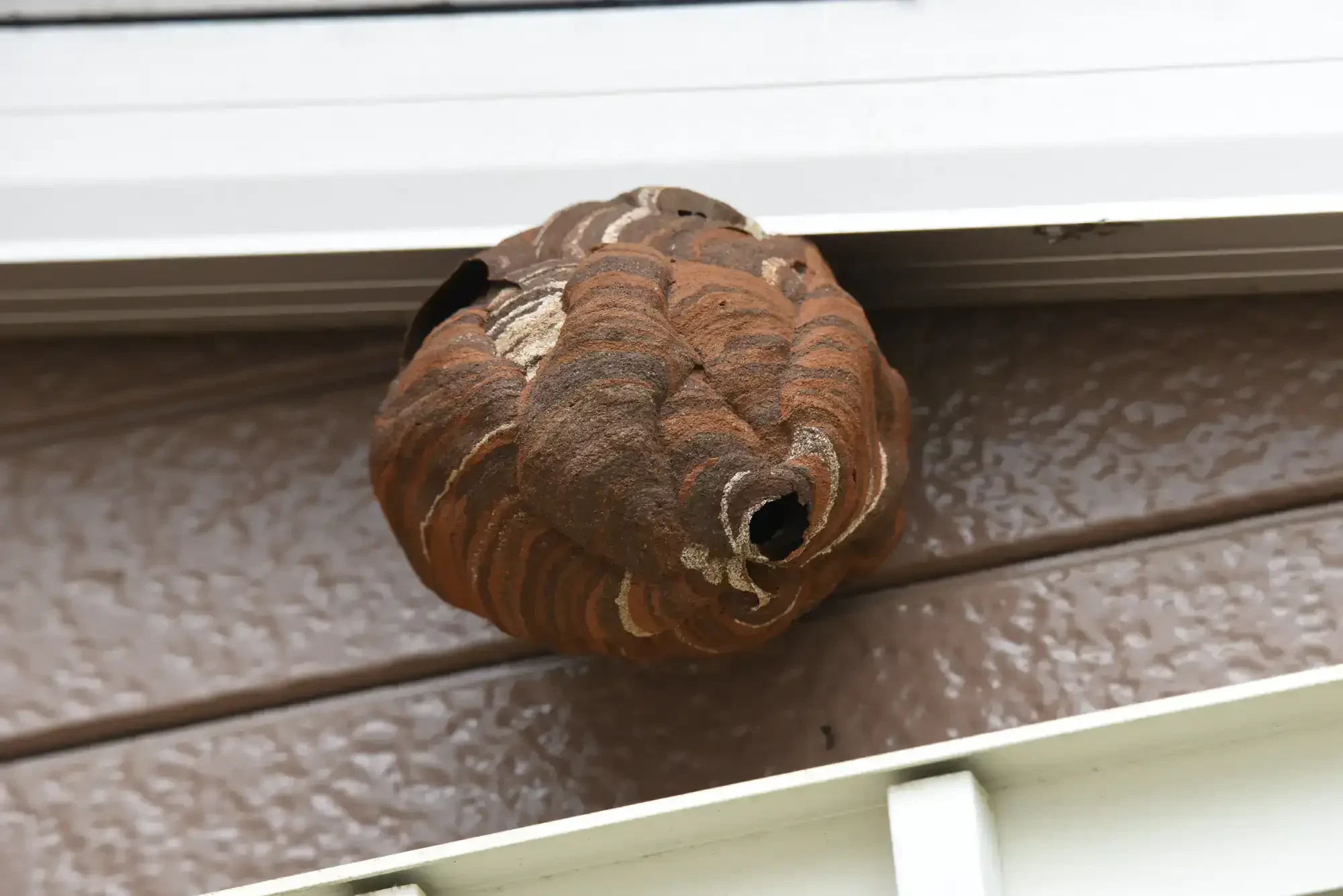
The two you’re most likely to encounter in Durand are bald-faced hornets and European hornets. Bald-faced hornets aren’t technically true hornets — they’re a type of yellow jacket — but they build large enclosed paper nests and defend them aggressively. By late summer, a single bald-faced hornet nest can hold several hundred workers. You’ll typically find their nests hanging from trees, attached to the side of a house, or tucked under roof overhangs.
European hornets are the only true hornets in North America, and they’re larger than most stinging insects you’ll encounter in mid-Michigan — adults can reach up to an inch and a half in length. What surprises most Durand homeowners is that European hornets are active at night, which means you might not notice a colony until it’s well-established. Both species will sting repeatedly when they feel threatened, and for anyone with an allergy, a single encounter can be a medical emergency. The CDC documents an average of 62 deaths per year in the U.S. from stinging insect encounters — a reason to take a large colony seriously.
Cost depends on where the nest is and how large the colony has grown. A small, accessible exterior nest treated early in the season — April or May, when the queen has just started building — typically runs in the $200–$300 range. A large bald-faced hornet nest in a hard-to-reach location, or a wall void infestation in one of Durand’s older homes, can run $400–$700 or more depending on the complexity of the treatment.
The most common mistake homeowners make is waiting. A nest that costs $200 to treat in May can easily cost three times that by August, when the colony is at full strength and the job requires more product, more time, and sometimes multiple visits. We provide upfront pricing before any work begins — no surprises on the bill, no add-ons after the fact. And if you’ve already gotten a quote from another provider serving the Durand area, we’ll match reasonable competitor rates.
Yes, and it’s more common than most people expect — especially in older homes. Durand’s housing stock skews older, and older homes tend to have more entry points: gaps around utility penetrations, deteriorating caulk around windows and doors, small openings in wood soffits and fascia. Hornets, particularly European hornets, will find these gaps and build inside wall voids, attic spaces, and even between floors.
The signs to watch for are a consistent buzzing sound coming from inside a wall, hornets entering and exiting from a specific gap or crack in your siding, or finding hornets inside your home near that same area. A wall void nest cannot be treated with a hardware store aerosol spray — the product won’t penetrate far enough to reach the colony, and agitating the nest from the outside can cause hornets to chew through drywall and enter your living space. Professional treatment for wall void infestations uses dust-based products that travel through the cavity and reach the nest directly. It requires the right equipment and the right technique, and it’s not something to improvise.
For very small nests — a newly started queen nest in early spring, no larger than a golf ball, with minimal worker activity — some homeowners do treat successfully on their own with appropriate protective gear and a quality aerosol product applied at night when the colony is least active. That’s the narrow window where DIY is a reasonable option.
Once a colony has been building through summer, the risk calculus changes significantly. By July and August in Shiawassee County, bald-faced hornet nests can hold hundreds of workers, and European hornets are active even after dark, which eliminates the nighttime advantage. Hornets are more aggressive late in the season as the colony begins to deteriorate in fall — they sting more readily and with less provocation. For any nest that’s larger than a softball, located near a door or high-traffic area, or suspected to be inside a wall or attic, professional removal is the right call. The cost of treatment is significantly less than an ER visit, and a licensed exterminator carries the equipment and product access that makes the job safe and effective.
The short answer is: the same colony won’t, but a new one might. Once a hornet colony is treated and eliminated, those specific hornets are gone. The old nest itself won’t be reused — hornets don’t reoccupy abandoned nests. However, if the conditions that made your property attractive in the first place haven’t changed — an open gap in the soffit, a sheltered overhang, a wooded lot with abundant nesting material — a new queen can establish a new colony in the same area the following spring.
In Durand, where many homes have mature trees, older wood-framed exteriors, and outbuildings like sheds and garages, the conditions that attract hornets tend to be persistent. After treatment, it’s worth having our technician identify and note the specific entry points or nesting sites so you can address them before the next season. Sealing gaps, replacing deteriorating wood trim, and removing old nest material from outbuildings all reduce the likelihood of a repeat problem. Our technicians will walk you through what they found and what to watch for — that’s part of the job, not an upsell.
Yes. We offer discounts for seniors, veterans, and first responders. In a community like Durand — where the median age is over 42, where the Eagles Aerie is active, and where working families are stretching a household income to cover real costs — those discounts reflect something genuine about how we operate, not just a line on a website.
If you’re a senior homeowner dealing with a hornet nest you can’t safely address yourself, or a veteran who just wants a straight quote from a company that will actually show up, those discounts are real and worth asking about when you call. We also offer price matching for reasonable competitor rates, so if you’ve already gotten a quote from another pest control provider serving the Durand area, bring it up. Our goal is to make professional hornet removal in Durand accessible without making you feel like you have to fight for a fair price to get it.
Useful Links