

Hear from Our Customers
You stop finding droppings in the kitchen. You stop hearing something move in the walls at night. You stop wondering whether that soft spot near the window frame is carpenter ant damage or just old wood settling. When pest control is done right, you don’t have to think about it anymore — and that’s exactly the point.
For homeowners in Village of Clarkston, the stakes are higher than in most places. The historic homes along Buffalo Street and Church Street aren’t just houses — they’re significant investments with original wood framing and aging foundations that carpenter ants and moisture-driven insects treat as open invitations. Solving the problem means understanding the structure, not just spraying the perimeter.
The wooded environment here adds another layer. Living near Independence Oaks County Park or along the edges of Deer Lake means your yard is adjacent to active wildlife habitat — deer ticks, mosquitoes breeding in lake-edge wetlands, raccoons moving through tree lines, and rodents looking for warmth the moment Michigan temperatures drop. A pest control program that accounts for all of that — not just the ants you saw last Tuesday — is the kind that actually holds.
We founded First Choice Pest Control on May 31, 2005 — which means 2025 marks 20 years of protecting Michigan homes and businesses. Roger, our owner, brings 26 years of hands-on pest control experience to every service call. He’s not a franchise investor managing technicians from a distance. He knows the work, knows the pests, and built this company around doing the job right the first time.
We hold an MDARD Pesticide Application Business License and a Nuisance Animal Control License — both required credentials for the kind of work that Village of Clarkston’s wooded, wildlife-adjacent environment demands. Integrated Pest Management training means our treatments are targeted and science-based, not just chemical-heavy. Angie’s List and HomeAdvisor awards reflect what customers have said over two decades of service.
Whether you’re in the historic village district or in a residential neighborhood off Sashabaw Road in the surrounding Independence Township area, you get the same technician assigned to your property every time — someone who learns your home, tracks its history, and doesn’t need to be re-briefed on what was treated last season.

It starts with a thorough inspection. Before any treatment happens, our technician walks the property to identify what’s present, where it’s coming from, and what conditions are making it worse. In Village of Clarkston, that often means checking the structural entry points common in older homes — aged soffits, deteriorating wood trim, stone foundation gaps — alongside the yard conditions created by proximity to Deer Lake and the surrounding wooded areas of Independence Township.
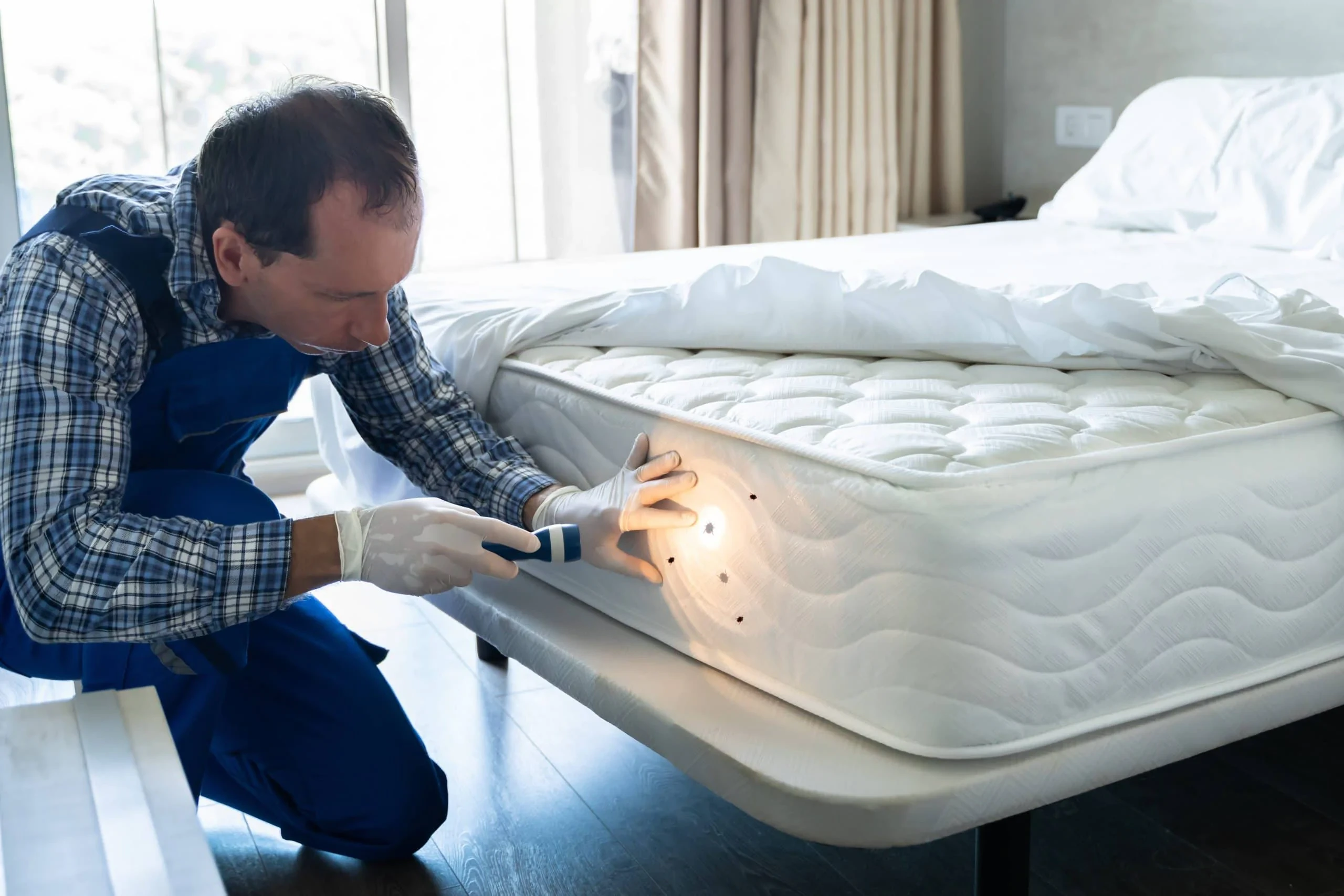
From there, we build a treatment plan around what’s actually happening at your property. That might mean a targeted interior treatment for a rodent entry point, a perimeter application for carpenter ants, a mosquito and tick program for the yard, or canine bed bug detection if there’s any concern about an infestation that a standard visual inspection might miss. The plan reflects your situation — not a one-size package pulled off a shelf.
After treatment, you’ll know what was done, what to watch for, and when to expect follow-up. If something comes back, our workmanship guarantee means we come back too. Pest control in a four-season Michigan climate isn’t a single event — it’s a seasonal rhythm, and the same technician returning each time means the program gets sharper, not more generic, over time.

Ready to get started?
We handle the full range of pest issues documented in the Village of Clarkston area — carpenter ants in aging wood structures, rodents exploiting foundation gaps when Michigan winters arrive, mosquitoes breeding along the wetland edges of Deer Lake, fleas and deer ticks in wooded residential yards, stinging insects, spiders, stink bugs, bed bugs, and wildlife including raccoons, squirrels, skunks, and bats. Bats are legally protected under Michigan wildlife law and cannot simply be exterminated — they require a licensed nuisance animal control operator, which we are.
Our mosquito control program includes flea and tick treatment at no extra charge — a meaningful difference for anyone with a yard that backs up to the wooded corridors near Independence Oaks County Park. And for homeowners who want the highest level of bed bug certainty, we’re one of fewer than 100 companies in the entire United States offering certified canine bed bug detection, with accuracy rates above 90% in real-world conditions — including wall voids and upholstered furniture that visual inspections routinely miss.
Pricing is straightforward. We’ll match reasonable competitor rates, and discounts are available for seniors, veterans, and first responders. With more than 22% of Village of Clarkston residents aged 65 or older, the senior discount isn’t a footnote — it applies directly to a significant share of the community. Every service is backed by our workmanship guarantee, and we serve residential and commercial customers across the Oakland County area.

The pest pressure in Village of Clarkston is shaped by two things that make this area different from most: the historic building stock and the wooded, lakeside environment. Carpenter ants are one of the most common and most damaging pests here — they target old, damp, or softened wood, and the 19th-century homes throughout the Clarkston Village Historic District give them plenty to work with. Rodents are a consistent issue as well, especially in fall and winter when mice and Norway rats look for warmth and find it through gaps in aging foundations and deteriorating exterior trim.
Beyond the structures themselves, the proximity to Deer Lake and Independence Oaks County Park drives mosquito, deer tick, and flea activity throughout spring and summer. Raccoons, squirrels, skunks, and bats regularly move into attics and crawl spaces of older homes with accessible eaves. Stink bugs and boxelder bugs are a well-known fall nuisance in Village of Clarkston, and bed bugs are a genuine risk given the volume of visitors the area draws to DTE Energy Music Theater and the historic downtown each year.
Carpenter ants are larger than most household ants — typically black, and ranging from about a half inch to nearly an inch long. But size alone isn’t always enough to tell the difference, especially if you’re only seeing a few at a time. The more telling sign is where you’re finding them. Carpenter ants don’t eat wood the way termites do — they tunnel through it to nest. So if you’re seeing them near window frames, door casings, baseboards, or anywhere moisture has softened the wood over time, that’s a meaningful indicator.
In Village of Clarkston, carpenter ants are particularly active in spring when they emerge from overwintering sites inside walls and wood framing. Older homes in the historic district are especially vulnerable because the original wood has had decades to absorb moisture and soften in ways that newer construction hasn’t. If you’re seeing winged ants inside your home — especially in late spring — that’s a sign of an established colony, not just foragers coming in from outside, and it warrants a professional inspection rather than a store-bought spray that won’t reach the nest.
Yes — and this isn’t just a liability disclaimer. In Michigan, bats are legally protected under state wildlife law, which means they cannot be killed as a pest control measure. Removing them requires a licensed Nuisance Animal Control operator, a separate credential from a standard pest control license. We hold both. Attempting to seal bats out of your home without proper exclusion work — or doing it at the wrong time of year — can trap them inside the structure, which creates a much worse problem.
The older homes throughout Village of Clarkston and the surrounding Independence Township area are particularly prone to bat entry because of the accessible eaves, aged soffits, and deteriorating exterior trim common in 19th-century construction. Bats typically enter through gaps as small as three-eighths of an inch. The correct approach is a professional exclusion — sealing all secondary entry points while leaving the primary exit open with a one-way device, then completing the seal after the bats have left on their own. Timing matters too: Michigan has restrictions on exclusion work during bat maternity season, typically May through mid-August, when flightless young are present.
Honestly, yes — lake-adjacent and wetland-adjacent properties do experience heavier mosquito pressure than properties in more developed, drier areas. Mosquitoes breed in standing water, and the shoreline vegetation, low-lying wet areas, and drainage patterns around Deer Lake create consistent breeding habitat that gets replenished every time it rains. The mosquito season in this part of Michigan runs from roughly May through September, and properties within a few hundred yards of the lake or the surrounding wetlands tend to see activity earlier in the season and later into fall than homes farther from water.
The good news is that a targeted yard treatment program — applied to the shrubs, tree lines, and shaded areas where mosquitoes rest during the day — significantly reduces the population on your property even when breeding habitat nearby can’t be eliminated. Our mosquito program includes flea and tick treatment at no extra charge, which matters in a wooded, wildlife-adjacent area like Village of Clarkston where deer ticks are a documented Lyme disease risk. If your yard backs up to the wooded corridors near Independence Oaks County Park or sits close to the lake, a seasonal program rather than a single treatment will give you far better results.
The biggest difference is detection. Most pest control companies rely on a visual inspection to confirm or rule out bed bugs — a technician looks at the mattress seams, box spring, and nearby furniture. That works when an infestation is well established and visible. It doesn’t work well for early-stage infestations, and it’s particularly unreliable when bugs are hiding inside wall voids, electrical outlets, or deep in upholstered furniture.
We’re one of fewer than 100 companies in the entire United States offering certified canine bed bug detection. Trained K-9 teams can locate a single bug or viable egg cluster with accuracy above 90% in real-world conditions — in spaces no human inspection can reliably reach. For Village of Clarkston homeowners, this matters more than it might seem. The Clarkston area draws significant visitor traffic every year through DTE Energy Music Theater, short-term rentals, and the historic downtown dining and entertainment scene. Bed bug exposure doesn’t require a dirty home or careless habits — it requires being in the wrong place at the wrong time. Catching it early, before it spreads to multiple rooms, is where canine detection pays for itself.
Yes — we offer discounts for seniors, veterans, and first responders. In a community where more than one in five residents is 65 or older, the senior discount reflects something real about who lives here and what they’ve invested in their properties. Many of Clarkston’s long-term homeowners are on fixed incomes while managing homes that require more maintenance, not less — older structures with the kinds of vulnerabilities that make consistent pest control genuinely important, not optional.
The veteran and first responder discounts apply the same way — no complicated process, no fine print. If you qualify, you get the discount. We’ve been serving Michigan homeowners for 20 years, and the people who’ve spent their careers protecting others shouldn’t have to overpay for a company to protect their home. If you want to confirm what applies to your situation before booking, just ask when you call — it’s a straightforward conversation.
Useful Links
Other Services we provide in Village Of Clarkston