
Hear from Our Customers
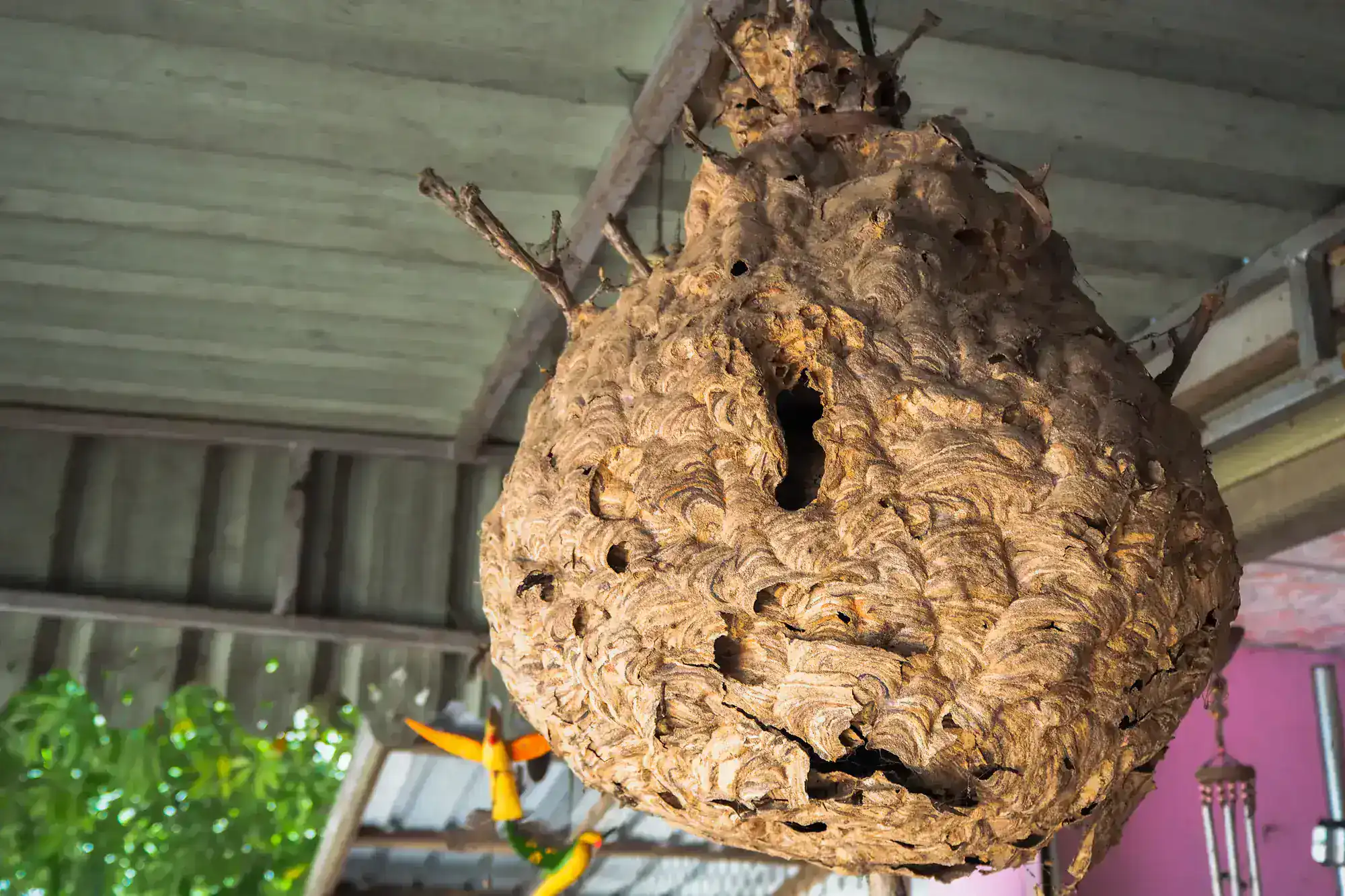
A hornet nest doesn’t stay small. What starts as a golf ball-sized structure in early spring can house hundreds of workers by August — and that’s when most people in Village Of Clarkston finally make the call. By then, the colony is at full strength, the workers are aggressive, and the job is harder and more expensive than it needed to be. Calling early matters.
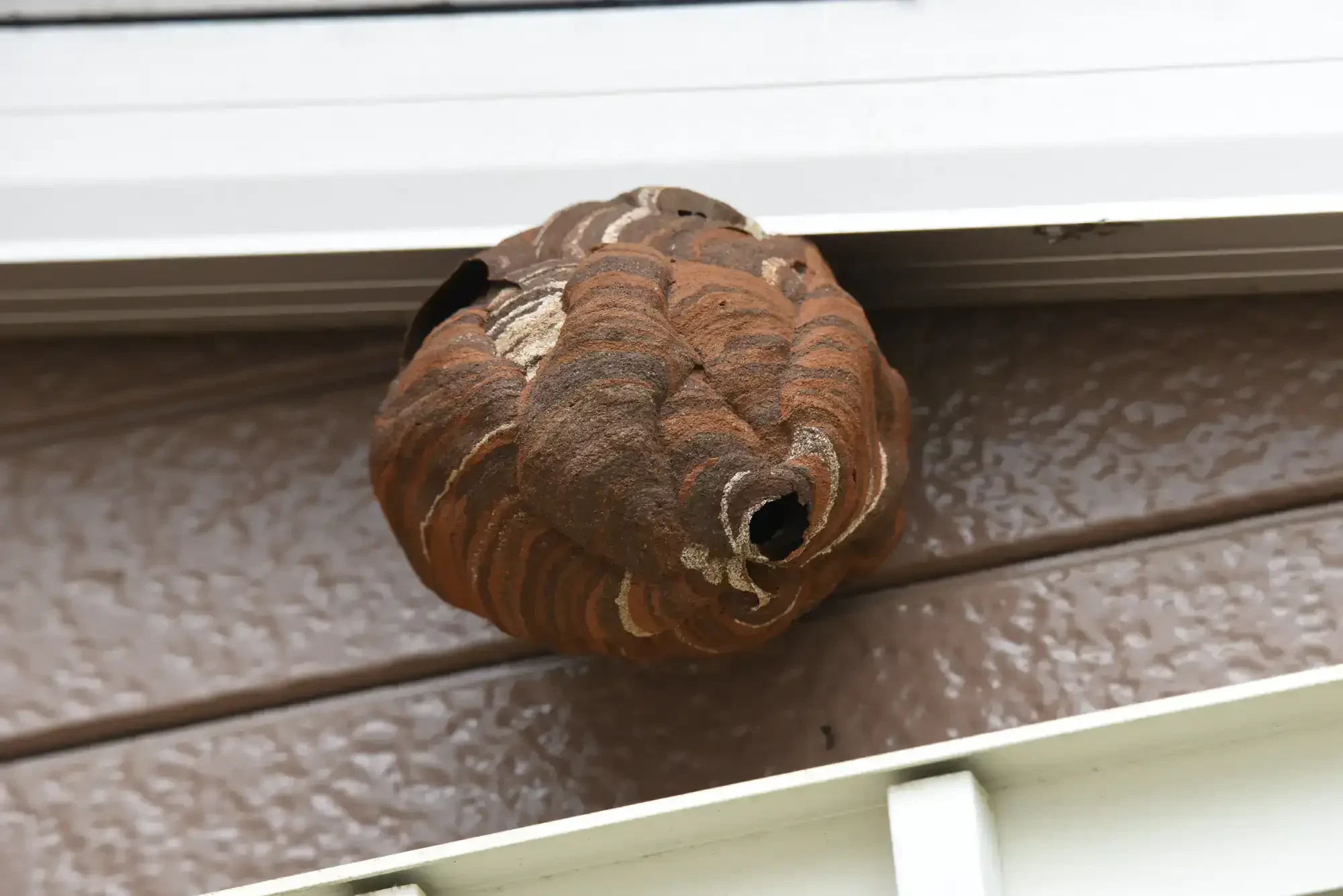
Village Of Clarkston’s wooded surroundings, mature tree canopy, and proximity to Deer Lake and Park Lake create exactly the kind of environment bald-faced hornets prefer. They build their large paper nests in trees, under roof overhangs, and inside the structural gaps that are common in older homes. With over a third of housing in this area built before 1940, those gaps exist in a lot of properties — original soffits, settling wood frames, aged eaves that have been there for decades.
Once the nest is gone, you’re not just relieved — you’re back outside. Back on the patio, back near the water, back using the spaces that made Village Of Clarkston worth living in. That’s the real outcome here. Not just a dead nest, but a home that feels safe again.
We’ve been handling hornet removal and pest control across southeast Michigan since May 31, 2005. That’s two decades of real work — not a franchise, not a call center, not a rotating crew of seasonal hires. Roger, our owner, has 26 years of personal pest control experience and is still hands-on with how we operate and how jobs get done.
One thing that separates us from a lot of other options you’ll find serving Village Of Clarkston and Oakland County: you get the same technician every time. Not whoever’s available that week — the same person, who knows your property, knows your history, and has a stake in getting it right. In a community as tight-knit as Clarkston, that kind of consistency isn’t just convenient. It’s the difference between a vendor and someone you actually trust.
We hold Michigan Pesticide Application Business License #250081, have earned awards from Angie’s List and HomeAdvisor, and carry IPM training certification from MDARD — meaning treatments are targeted, not broad-spray guesswork.
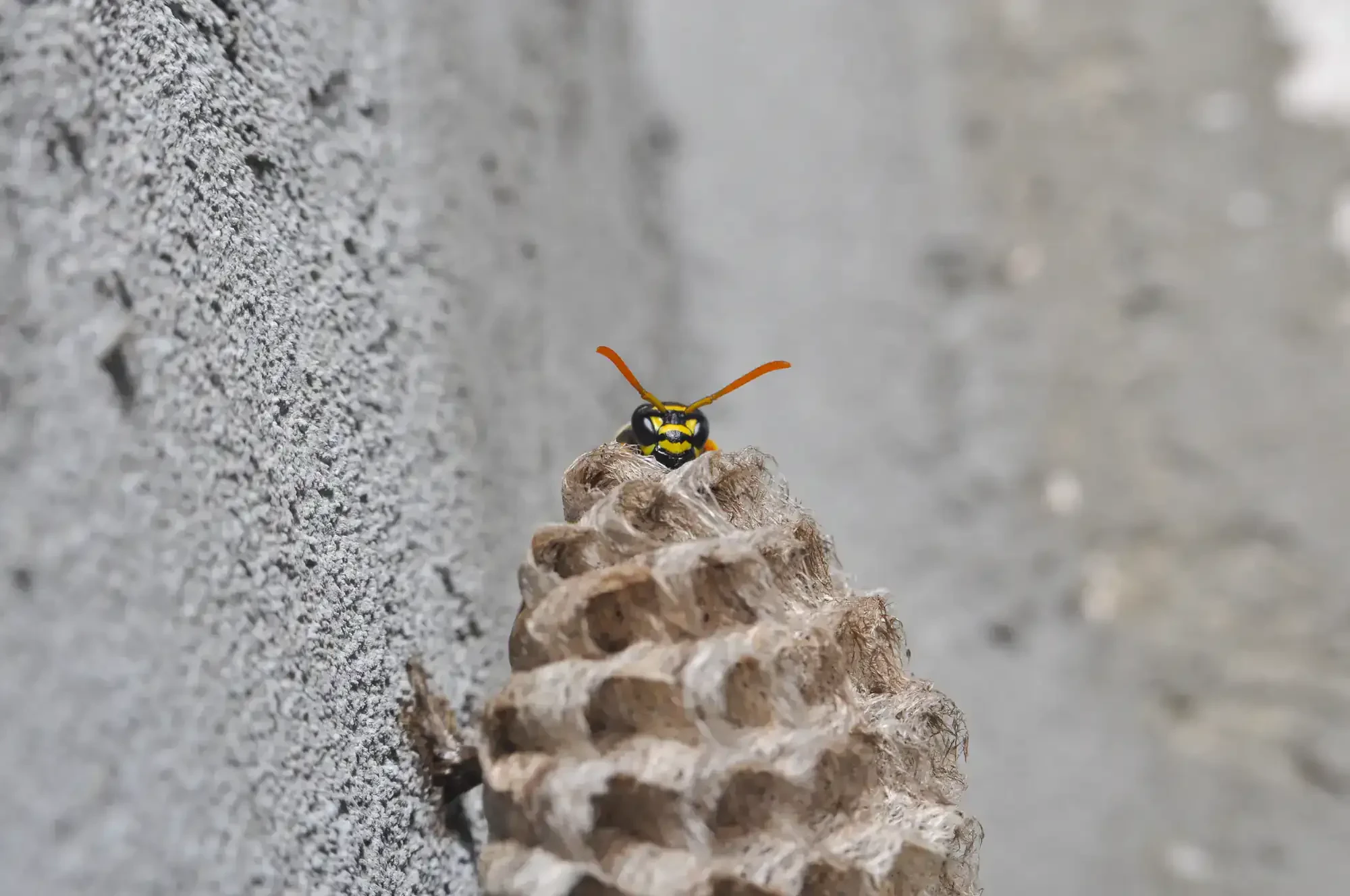
It starts with a real conversation — not a chatbot, not a form that disappears into a queue. You describe what you’re seeing, where the nest is, and how active it looks. From there, a licensed technician is scheduled to come out and assess the situation in person.
On-site, the technician identifies the species, locates the full extent of the nest — including any satellite activity — and chooses the right treatment method for the specific situation. In Village Of Clarkston, that often means dealing with nests built into the eaves or wall voids of older homes. These aren’t situations where a hardware store spray does anything useful. Wall void infestations in pre-1940 structures require targeted dust treatments that reach the colony without tearing into historic building material. That’s a meaningful distinction when you’re talking about a home in the Clarkston Village Historic District.
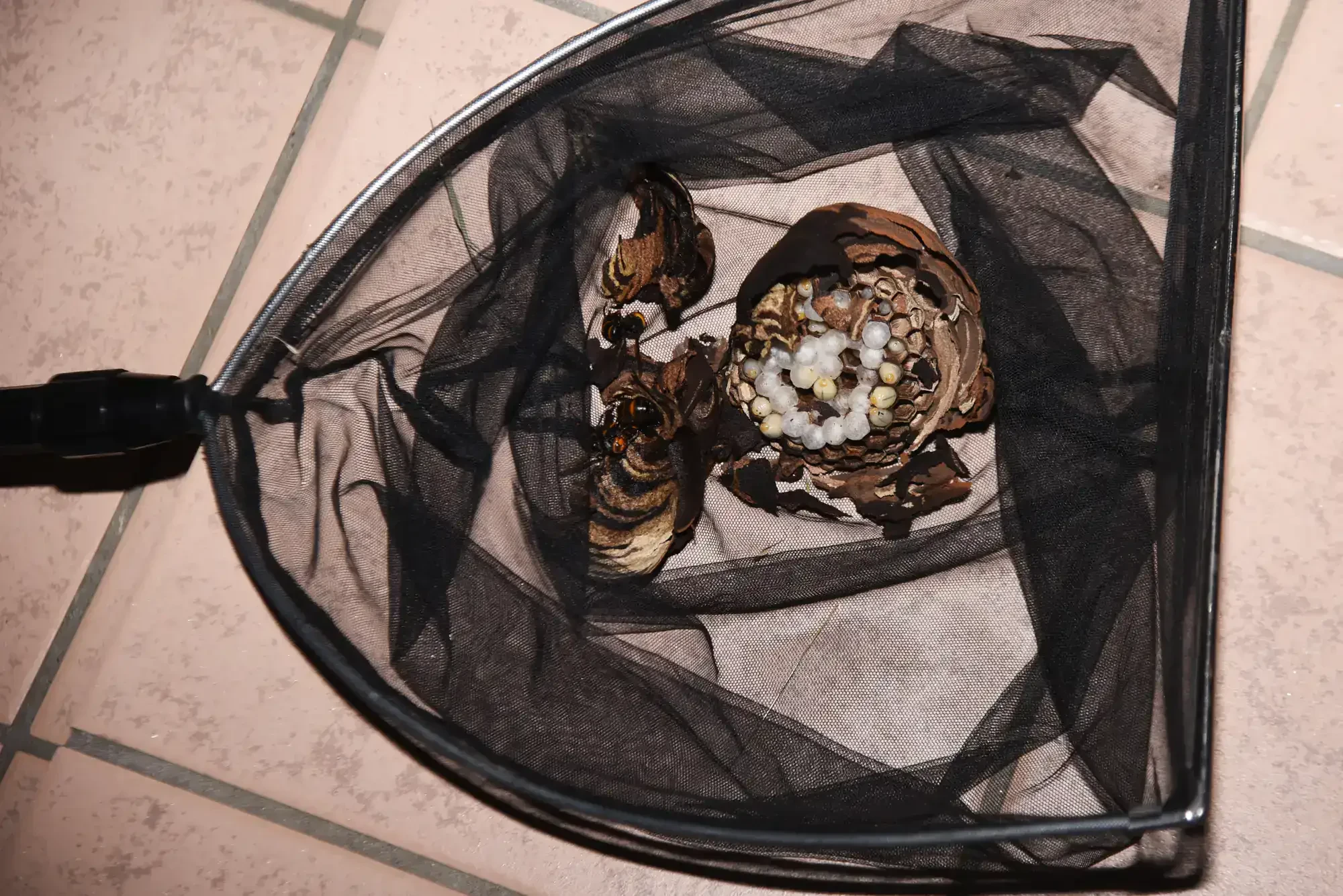
After treatment, the technician walks you through what was done, what to expect in the following 24 to 48 hours, and whether a follow-up visit is warranted. If the hornets aren’t gone, we come back — no additional charge. That’s not a policy buried in fine print. It’s how we’ve operated for 20 years.
Ready to get started?
Every hornet removal service call in Village Of Clarkston starts with a full property assessment — not just a glance at the visible nest. Our technicians look for secondary nesting activity, entry points in the structure, and any conditions that are likely to attract a new colony in the same spot next season. That last part matters more than most people realize. A queen that overwinters near your property will return to the same area in spring and start the cycle over.
For homes near Deer Lake, Park Lake, or the wooded lots throughout the Independence Township area surrounding the village, the environment is particularly hospitable to bald-faced hornets and European hornets throughout the full season — May through October. Treatments are selected based on nest location and species. Above-ground paper nests in trees or on structures are handled differently than colonies that have moved into a wall void or attic space. Our IPM-certified approach means the right treatment is used in the right place — not a blanket application that ignores what’s actually happening.
Seniors, veterans, and first responders in Village Of Clarkston receive a discount on our services — and if you’ve received a quote from another licensed provider in the area, we’ll match it. We serve residential and commercial properties, which matters during the summer concert season at Pine Knob when outdoor businesses and venues near the village have zero tolerance for active nests near guests.
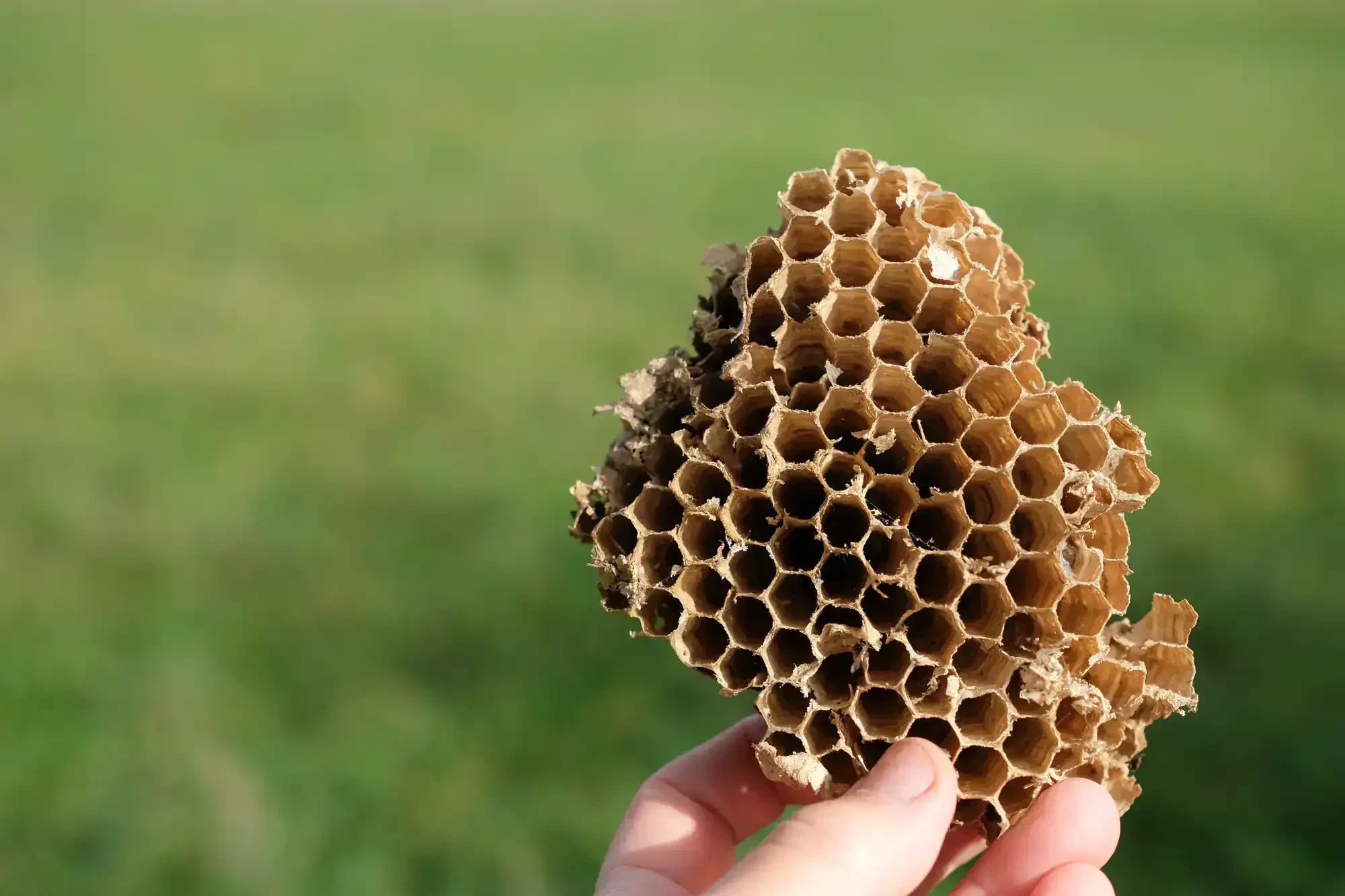
The bald-faced hornet is the most frequently encountered stinging insect in the Village Of Clarkston area. Despite the name, it’s technically a yellowjacket — but it behaves like a hornet, builds large enclosed paper nests, and will aggressively defend the colony if disturbed. Mature colonies can reach 400 to 700 workers by late summer, and a nest that size near your home or yard is not a minor inconvenience.
The European hornet is also present in Oakland County and is the only true hornet species in North America. It’s larger than most stinging insects and notably active at night — which surprises a lot of homeowners who start noticing hornets entering gaps in their siding or eaves after dark. Given how much of Clarkston’s housing stock dates back to before 1940, those entry points are more common here than in newer construction. If you’re seeing activity at night around your home’s exterior, a European hornet nest inside the wall or structure is a real possibility.
Hornet removal costs vary depending on where the nest is located, how large the colony is, and how accessible the site is. Nationally, professional hornet removal runs anywhere from $300 to $700 for a standard above-ground nest. Bald-faced hornet removal tends to run higher — around $500 to $625 — because nests are often elevated and harder to reach safely.
In Village Of Clarkston specifically, the older housing stock adds another variable. A nest inside a wall void of a pre-1940 home requires more time and a different treatment approach than a visible nest hanging from a tree branch. That complexity can affect price. The more important number, though, is the cost of waiting. A small spring nest that might cost $200 to $300 to remove can triple in scope by late summer when the colony is at full size. We provide upfront pricing before any work begins, and will match a reasonable competitor quote if you’ve already gotten one.
For a small, early-season nest that’s fully visible and easy to access — say, a golf ball-sized structure hanging from a low branch — some homeowners do handle it themselves with a store-bought aerosol spray. That’s a calculated risk, and it sometimes works. But there are a few situations where DIY is a genuinely bad idea, and they come up more often in Village Of Clarkston than in newer communities.
If the nest is inside a wall void, behind siding, or in a soffit of an older home, a hardware store spray won’t reach the colony. Worse, it can drive workers deeper into the structure, making the infestation harder to treat and potentially causing them to chew through interior drywall. If the nest is elevated — in a tree canopy or on a second-story eave — getting close enough to spray puts you in the strike zone of a colony that can sting repeatedly without dying. And if anyone in your household has a known allergy to stinging insects, the risk calculus changes entirely. In those situations, calling a licensed professional isn’t overcautious — it’s the right call.
The original colony won’t return — once a nest is treated and the workers are gone, that specific colony is done. But the location can absolutely attract a new queen the following spring, and that’s the part most people don’t think about until they’re calling again a year later.
Bald-faced hornets and European hornets are drawn to the same types of sites year after year: sheltered eaves, wooded edges, structural gaps in older buildings, and areas near water. In Village Of Clarkston, with its mature tree canopy, proximity to Deer Lake and Park Lake, and significant share of pre-1940 homes, those conditions don’t go away after one treatment. A licensed technician can identify the specific conditions that made your property attractive and walk you through what, if anything, can be done to reduce the likelihood of a new colony establishing in the same spot next season. That conversation is part of what we include in every service call.
Spring is the best time — no question. From April through early May, queen hornets are just beginning to build new nests, colonies are tiny, and the risk of an aggressive defensive response is minimal. A nest treated in early spring might involve a handful of workers. That same nest left until August could have 500 or more.
In the Village Of Clarkston area, hornet season runs roughly May through October, with peak colony size hitting in August and September. That window lines up directly with the summer concert season at Pine Knob and the stretch when most residents are using their outdoor spaces most heavily — patios, yards, Deer Lake Beach, Depot Park. If you spot a nest forming in spring, that’s the moment to call. If you’ve already got a full-size colony on your hands, don’t wait any longer thinking it will slow down on its own. It won’t until the first hard frost, and that’s months away.
Yes — we offer discounts for seniors, veterans, and first responders. In Village Of Clarkston, where more than one in five residents is 65 or older, the senior discount is relevant to a large share of the community. For older homeowners managing a historic property on a fixed income, professional hornet removal is already a necessary expense — paying less for the same quality service is a straightforward benefit.
The veteran and first responder discount reflects the same logic. These are people who’ve put in real service, and a reduced rate on pest control is a small but genuine acknowledgment of that. Beyond the discounts, we also offer price matching for reasonable competitor quotes. If you’ve already called Quality Pest Control or another licensed provider serving the Clarkston area and gotten a number, bring it to us. If it’s a fair quote for comparable work, we’ll match it. The goal is to make sure price isn’t the reason someone ends up with a less experienced technician handling a complex job on a home that deserves better.
Useful Links
Other Services we provide in Village Of Clarkston