
Hear from Our Customers
Most Argentine homeowners don’t find the nest in spring. They find it in August — when they’re heading down to the water, when the kids are outside, when guests are over for the weekend. By then, the colony has been building since April and can house several hundred workers that are at their most aggressive. It’s the collision between peak hornet season and peak outdoor season on Lobdell Lake.
When the nest is gone, you get your property back. The dock is accessible again. The back deck isn’t something you approach carefully. You stop doing that mental calculation every time someone walks near the shed. For families using their Argentine property all summer, that’s not a small thing.
Argentine’s wooded, lake-adjacent lots create more nesting pressure than most people expect. Mature trees, weathered outbuildings, older lake cottages with gaps in the siding — these are exactly the environments hornets look for. If you’ve had a nest once, the same conditions that invited it are still there. Getting ahead of it with a professional who knows what to look for is the difference between a quick spring call and an emergency in late July.
We founded First Choice Pest Control on May 31, 2005 — which makes 2025 our 20th year serving homeowners across Genesee County, including the lake communities in the southern end of the county where Argentine sits. Owner Roger has 26 years of hands-on pest control experience, and this is not a company where the owner is removed from the work. When you call, you’re reaching a business where the person at the top is still accountable for every job.
We hold a Michigan Pesticide Application Business License (#250081) issued by MDARD, along with Integrated Pest Management (IPM) certification — which matters for Argentine residents whose properties border Lobdell Lake and its connected waterways. IPM means the most targeted treatment for the specific situation, not a blanket spray-and-go approach.
First Choice has earned awards from both Angie’s List and HomeAdvisor, carries BBB accreditation, and holds a 4.7-star rating across verified Google reviews. We offer discounts for seniors, veterans, and first responders — a real consideration for the many longtime lake-property owners in Argentine who have been on Lobdell Lake for decades.
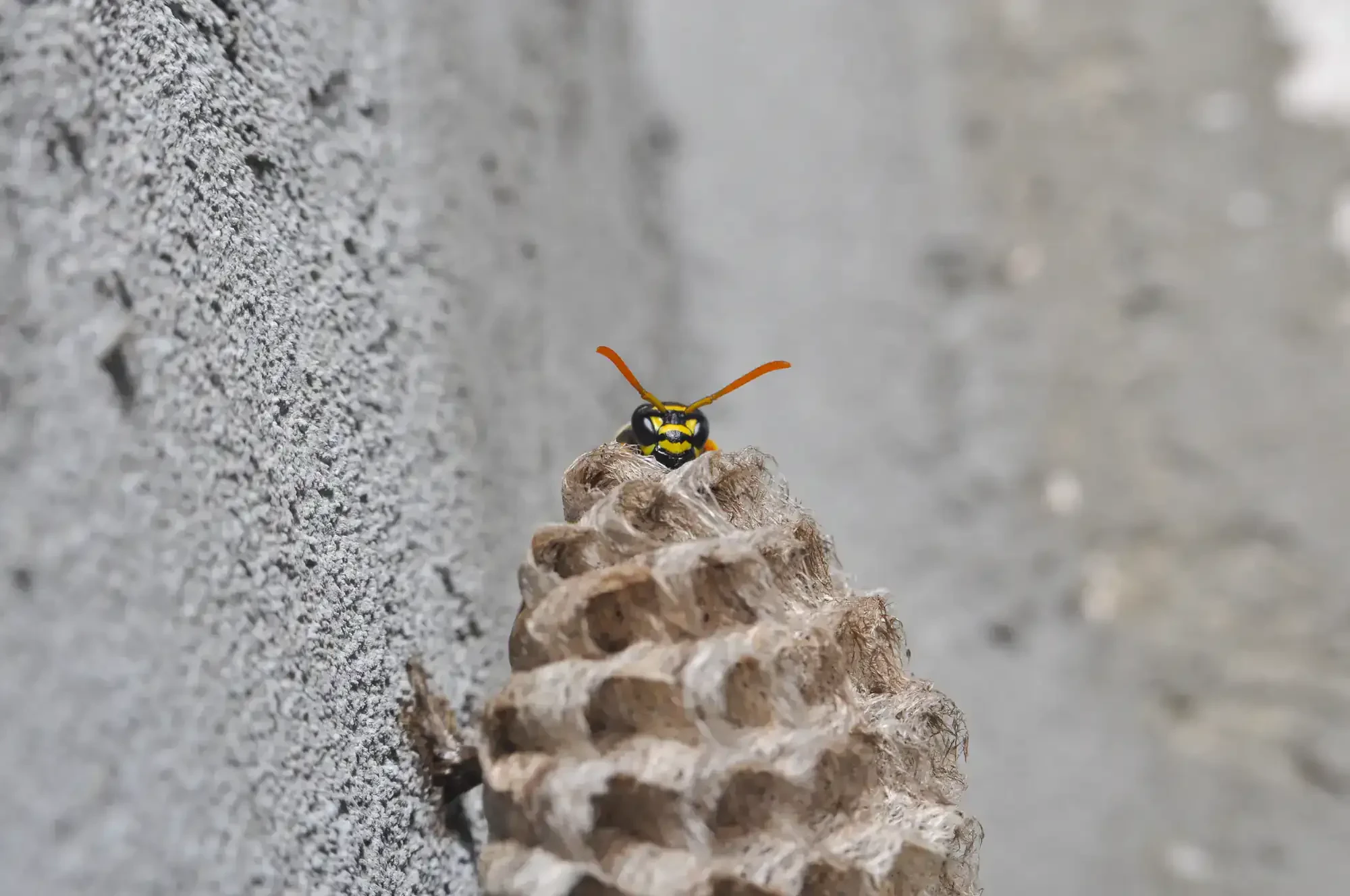
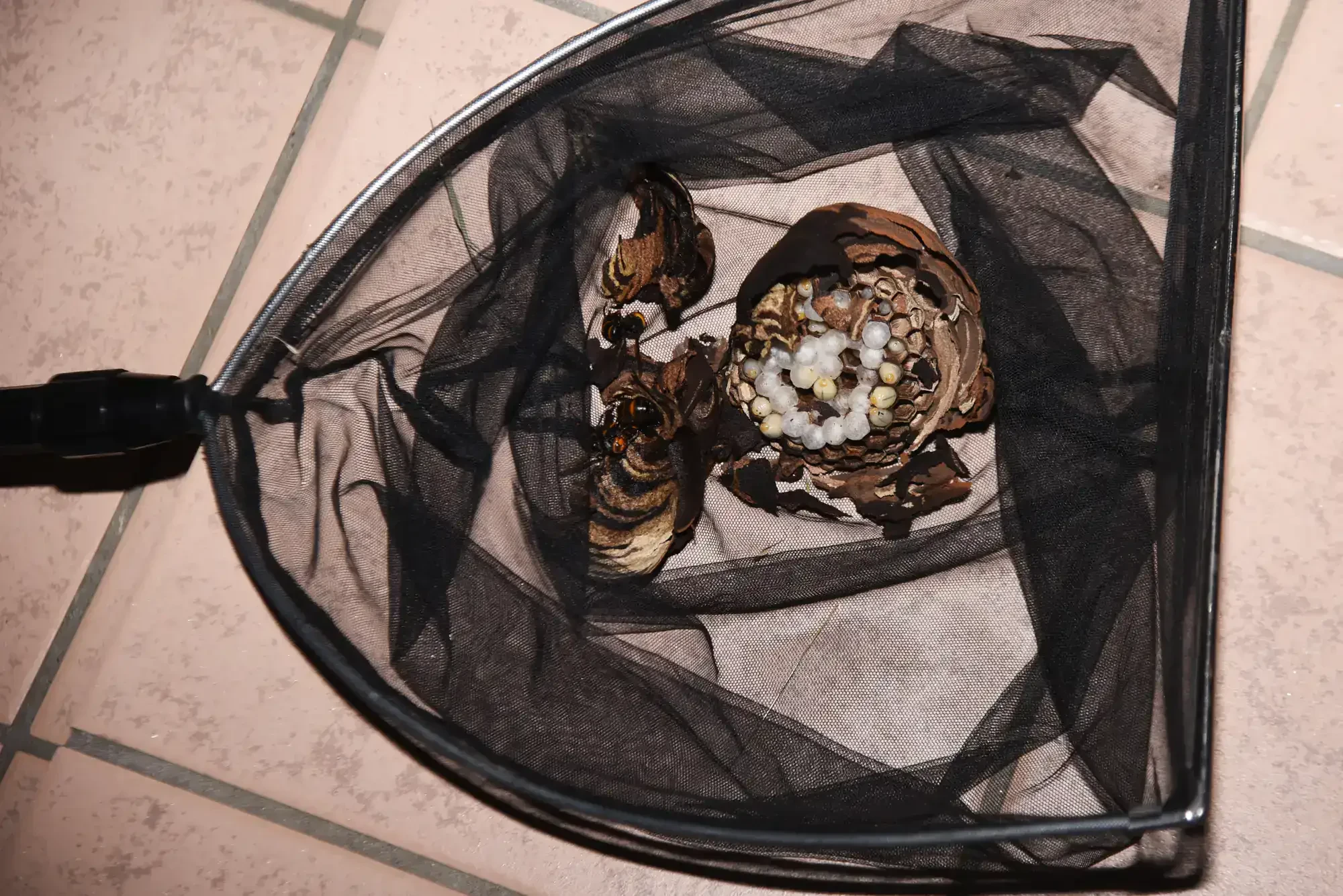
The first thing our technician does when they arrive at your Argentine property is identify exactly what you’re dealing with. Bald-faced hornets, European hornets, and yellow jackets all behave differently, nest differently, and require different treatment approaches. Misidentifying the species — or skipping that step entirely — is one of the most common reasons a DIY attempt makes the problem worse. Your technician will locate the nest, assess its size, and determine the safest, most effective way to treat it before anything is applied.
From there, the treatment is matched to the nest location. An exposed aerial nest in a tree near your dock is handled differently than a nest inside the wall void of an older lake cottage or tucked under the eave of a detached garage. For wall void nests — which are common in Argentine’s older lakefront building stock — we use dust treatment to reach the colony where sprays simply can’t penetrate. This is a step that separates a trained professional from a store-bought can.
After treatment, your technician will walk you through what to expect in the following days, including whether a follow-up visit is warranted. Argentine’s heavy vegetation and wooded lot character means nesting pressure doesn’t disappear after one removal — your technician can flag other vulnerable areas on your property so you’re not surprised again mid-summer. Return visits, when needed, are included at no additional cost.
Ready to get started?
Every hornet removal in Argentine starts with a proper species identification and nest assessment — not a one-size-fits-all treatment applied on arrival. The specific product, application method, and follow-up plan are all determined by what’s actually in front of the technician. That’s what IPM certification means in practice: the right treatment for the right situation, applied responsibly near the water and wildlife that make Argentine worth living in.
For Argentine homeowners, that often means addressing nest locations that go beyond the obvious. Hornets in Genesee County regularly establish colonies in tree canopies overhanging lakefront yards, inside the wall voids of mid-century cottages along Lobdell Lake, under dock structures, in detached garages, and in boat sheds that sit unused through the week. Each of these requires a different approach, and our technicians have the equipment and training to handle all of them — including the dust applications required for enclosed void nests that sprays can’t reach.
We quote flat-rate pricing upfront. If you’ve received a reasonable quote from another provider, we’ll match it. Senior discounts, veteran discounts, and first responder discounts are all available. The same technician is assigned to your property year after year, so the person who shows up in June already knows your yard, your outbuildings, and where the pressure points are — which is exactly the kind of continuity that lake-property owners in Argentine need.
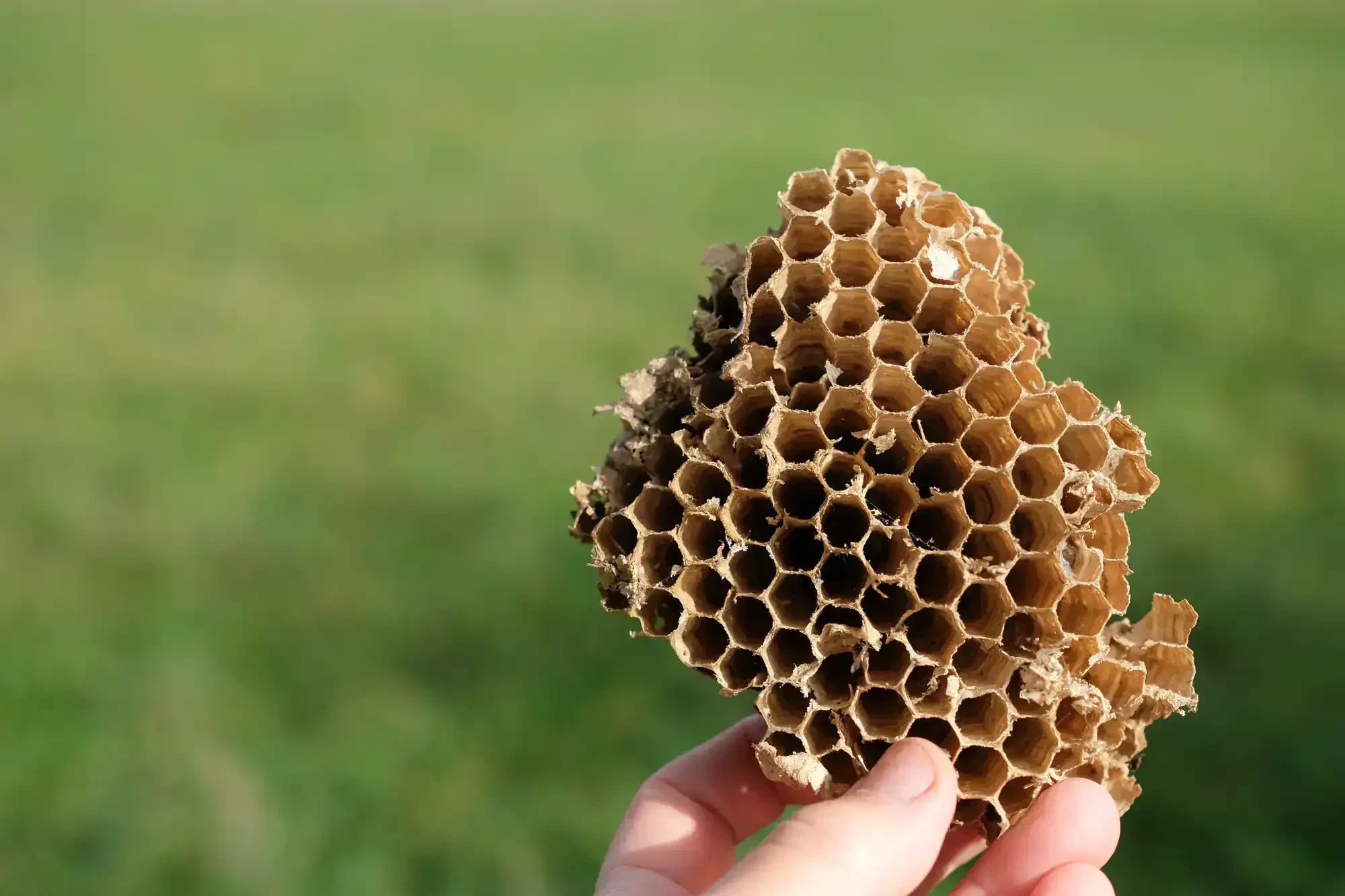
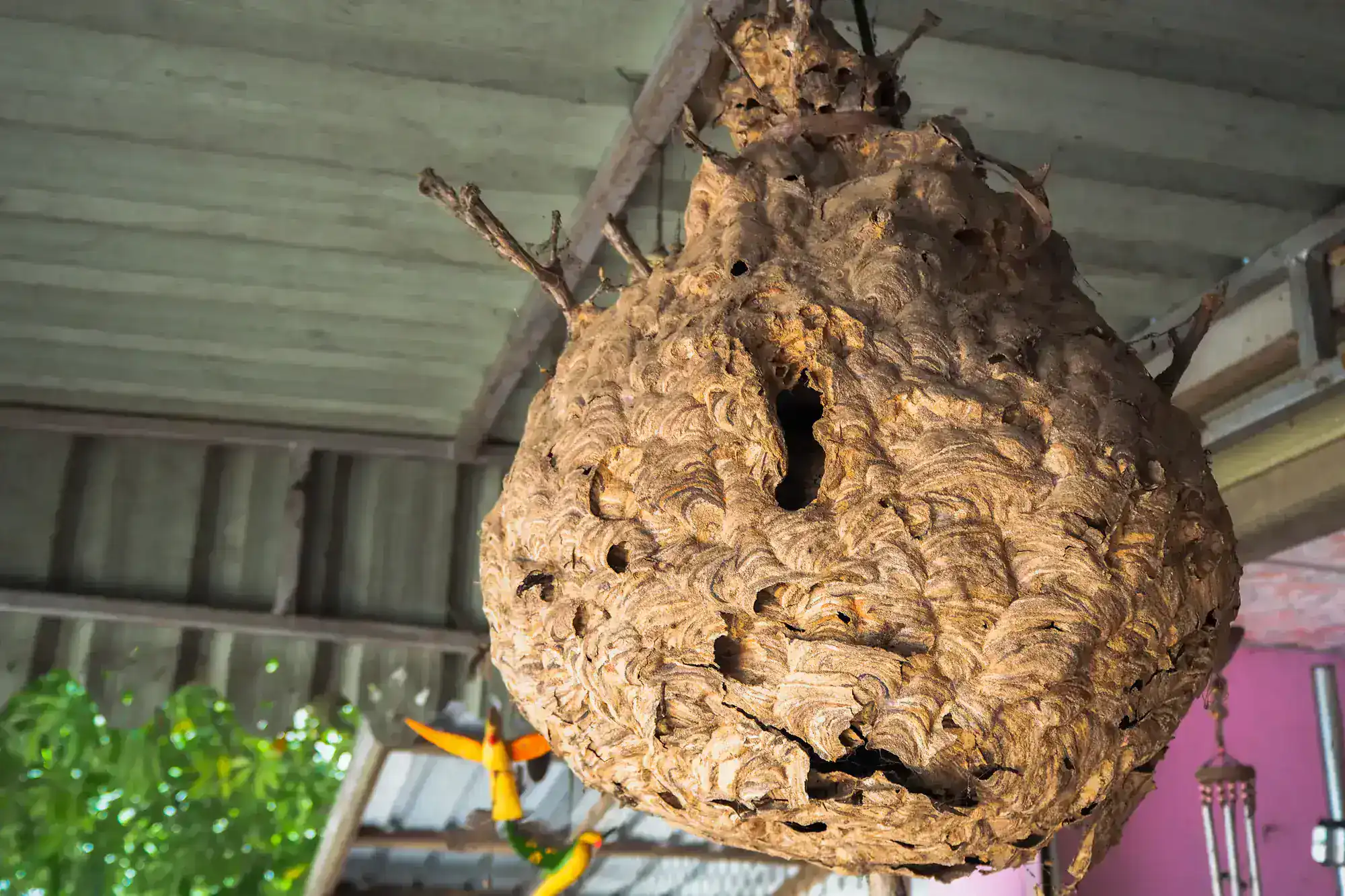
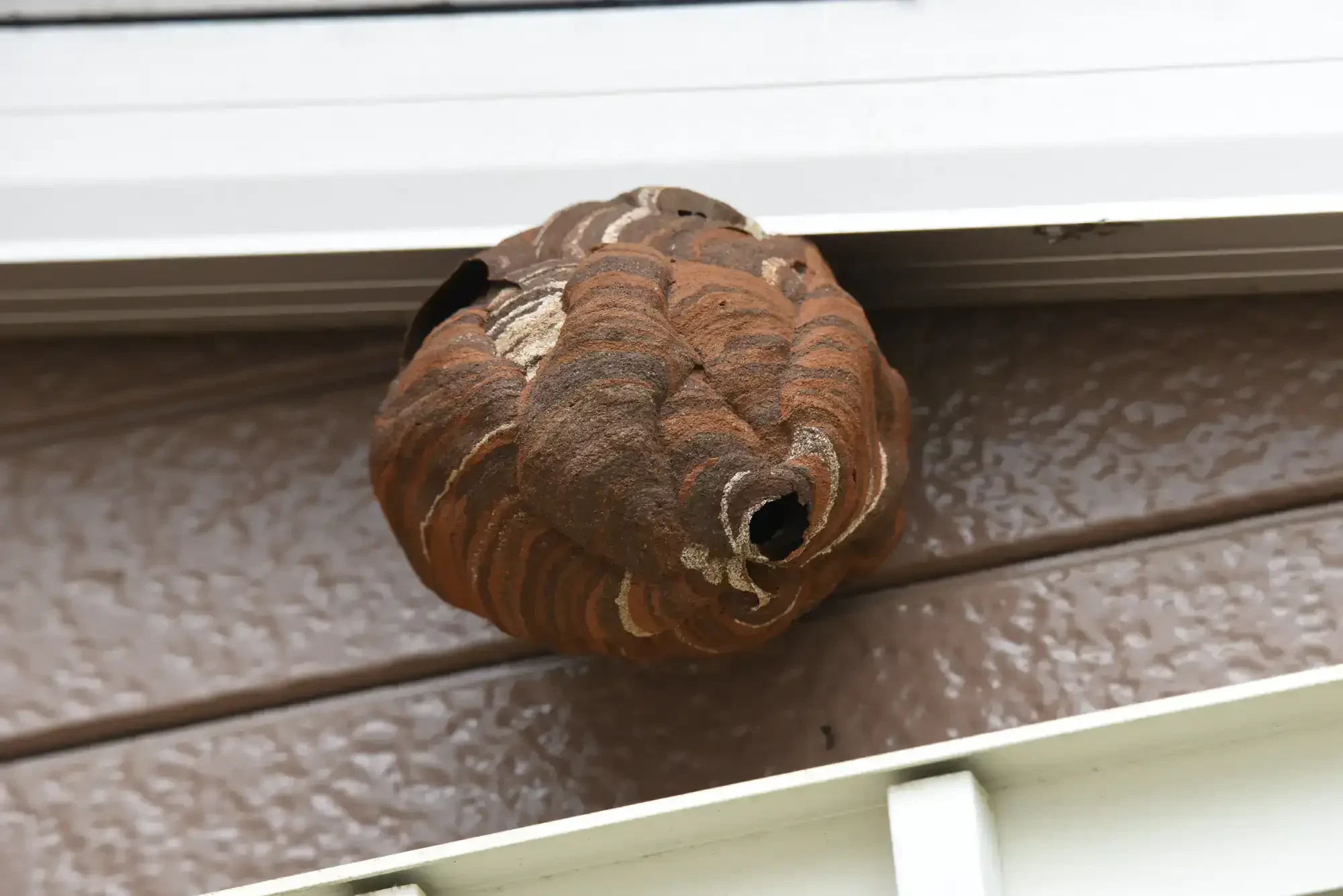
The most common hornet in Argentine and throughout Genesee County is the bald-faced hornet. Despite the name, it’s technically a close relative of yellow jackets — but it behaves more aggressively and builds those large, enclosed, football-shaped paper nests you’ll see attached to tree branches, shrubs, or the eaves of structures. A mature bald-faced hornet colony can reach 700 workers by late summer, which is why a nest that looked manageable in June can feel genuinely dangerous by August.
European hornets are also present in Michigan and tend to nest in hollow trees, wall voids, and attic spaces — making them a particular concern for Argentine’s older lake cottages and outbuildings. They’re larger than bald-faced hornets and are one of the few stinging insects that remain active at night, which surprises a lot of homeowners. Knowing which species you’re dealing with changes how the nest should be treated, which is why identification always comes before any treatment decision.
The short answer is: it’s risky, and the risks are higher near water. When a hornet colony is disturbed — even partially — the workers respond aggressively and in large numbers. If that happens near a dock or on a lakefront deck in Argentine, you have fewer escape routes than you would in an open yard. People have been seriously injured attempting DIY hornet removal in situations that seemed straightforward. The CDC reports an average of 62 deaths per year in the US from hornet, wasp, and bee stings, and most of those aren’t from people who knew they had an allergy.
Beyond the physical risk, store-bought sprays are also genuinely ineffective for certain nest types. A nest inside a wall void, under dock boards, or in an enclosed outbuilding structure can’t be reached with surface sprays — and partially treating a colony often makes the surviving workers more defensive without solving the problem. We handle it once, correctly, without putting you or your family in the middle of it.
The best time is as early as possible — ideally spring, when the queen has just started building and the nest is still small. In Michigan, queen hornets emerge from hibernation and begin construction in April and May. At that stage, the colony might have a handful of workers and a nest the size of a golf ball. Treatment at that point is faster, less expensive, and carries far less risk than treating a full colony in August.
For Argentine homeowners, this timing is especially relevant because lake season and hornet season peak at exactly the same time. By late July and August, when your property is getting the most use — weekends on Lobdell Lake, guests on the deck, kids in the yard — hornet colonies are at their largest and most defensive. If you spot a nest forming in spring, even if it seems small and far from the house, calling then is almost always the right call.
Yes, and it’s more common than most people realize. European hornets in particular seek out enclosed, protected spaces — hollow trees, attic voids, gaps behind weathered siding, and spaces inside wall cavities. Argentine’s lakefront building stock includes a significant number of mid-century cottages and older structures with the kind of small gaps, worn siding, and uninsulated wall spaces that give hornets easy access. Once inside, the colony builds out of sight and can grow substantially before the homeowner realizes what’s happening.
Wall void nests are among the most important to have treated professionally. Store-bought sprays applied at the entry point don’t reach the colony — they may kill the workers coming and going, but the nest itself and the queen remain active. The correct treatment for a wall void nest is a dust application that penetrates the void and reaches the colony directly. Our technicians carry the equipment to do this properly, without unnecessary damage to your home’s structure. If you’re hearing buzzing inside a wall or noticing unusual activity around a gap in your siding, that’s worth a call.
Hornets don’t reuse old nests — each colony builds a new one from scratch every spring. However, the same queen or her offspring can return to the same general area if the conditions that made it attractive are still there. A tree with the right branch structure, an eave with consistent shade, a gap in a garage wall — these features don’t go away after one removal. For Argentine homeowners with wooded lots, mature trees, and older outbuildings, the same property can generate a new nest in a similar location the following season.
This is one of the reasons the same-technician model at First Choice matters in practice. When the same person comes back to your Argentine property each year, they already know where last season’s nest was, which structures on your property are most vulnerable, and what to look for during an inspection. That kind of continuity means you’re not starting from scratch every time — you’re building on what’s already known about your specific property. Preventative awareness is genuinely more effective than reactive treatment year after year.
We offer discounts for seniors, veterans, and first responders — and in a community like Argentine Township, where a significant portion of longtime lake-property owners are retirees and where many residents have served in the military or as first responders, those discounts reflect a real commitment to the people who make up this community. If you’ve owned your Lobdell Lake property for twenty years and you’re on a fixed income, a senior discount on hornet removal isn’t a token gesture — it’s a meaningful difference in what you pay.
Beyond those discounts, we also offer price matching for reasonable competitor quotes. If you’ve already received a quote from another licensed pest control provider serving the Argentine area and it’s lower, bring it to us and we’ll match it. Pricing is flat-rate and quoted upfront, so there are no invoice surprises after the job is done. You’ll know what you’re paying before the technician arrives at your property, and that number won’t change when the work is complete.
Useful Links