
Hear from Our Customers
Argentine isn’t the kind of place where you spend summer indoors. You’re on the water, you’re in the yard, and if you’ve got a barn or outbuilding, you’re out there too. A wasp nest changes all of that fast — especially when it’s sitting between you and the dock you use every weekend from June through September.
The problem with yellow jackets in particular is the timing. By August, when Lobdell Lake is busiest and outdoor entertaining is at its peak, a colony that started with a single queen in April can have thousands of workers defending it. That’s not a problem you want to poke at yourself. It’s also not one you want to ignore, because they don’t get smaller on their own — they get bigger, more aggressive, and harder to treat.
What you get when the job is done right isn’t just a dead nest. It’s the ability to mow your lawn, let your kids play in the yard, host people on your deck, and use your dock without keeping one eye on the roofline. That’s the actual outcome — not a spray job, but your property back in full use. For Argentine homeowners with multiple structures, outbuildings, or waterfront access, that matters more than it does almost anywhere else.
We’ve been operating in Genesee County since May 31, 2005 — that’s 20 years of learning this region’s pest patterns, property types, and seasonal cycles. Roger Chinault, our founder, brings 26 years of hands-on experience to every job. When you call First Choice, you’re not getting a rotating crew or a franchise tech who’s never been to Argentine Township. You’re getting a career professional who knows southern Genesee County and the specific challenges Argentine residents face with waterfront properties and rural acreage.
We’re family-owned, owner-operated, and built around one simple idea: the same technician stays with your account. That means the person who treats your property this summer already knows — or will come to know — where the activity is, what structures are most at risk, and what your specific property needs. That kind of continuity doesn’t exist with national chains.
We hold Integrated Pest Management training credentials, are licensed and insured through MDARD, and have earned recognition from both Angie’s List and HomeAdvisor. No binding contracts. No pressure. And if a competitor near Linden or Fenton gives you a lower quote, ask us to match it — we will if it’s reasonable.
It starts with a call and a property inspection. Argentine homes aren’t simple lots — many have a main residence, a detached garage, a barn, a lakeside deck, a dock structure, or a boathouse. Each one of those is a potential nesting site, and treating the one nest you can see without checking the others is how problems come back. We cover every structure on your property, not just the obvious one.
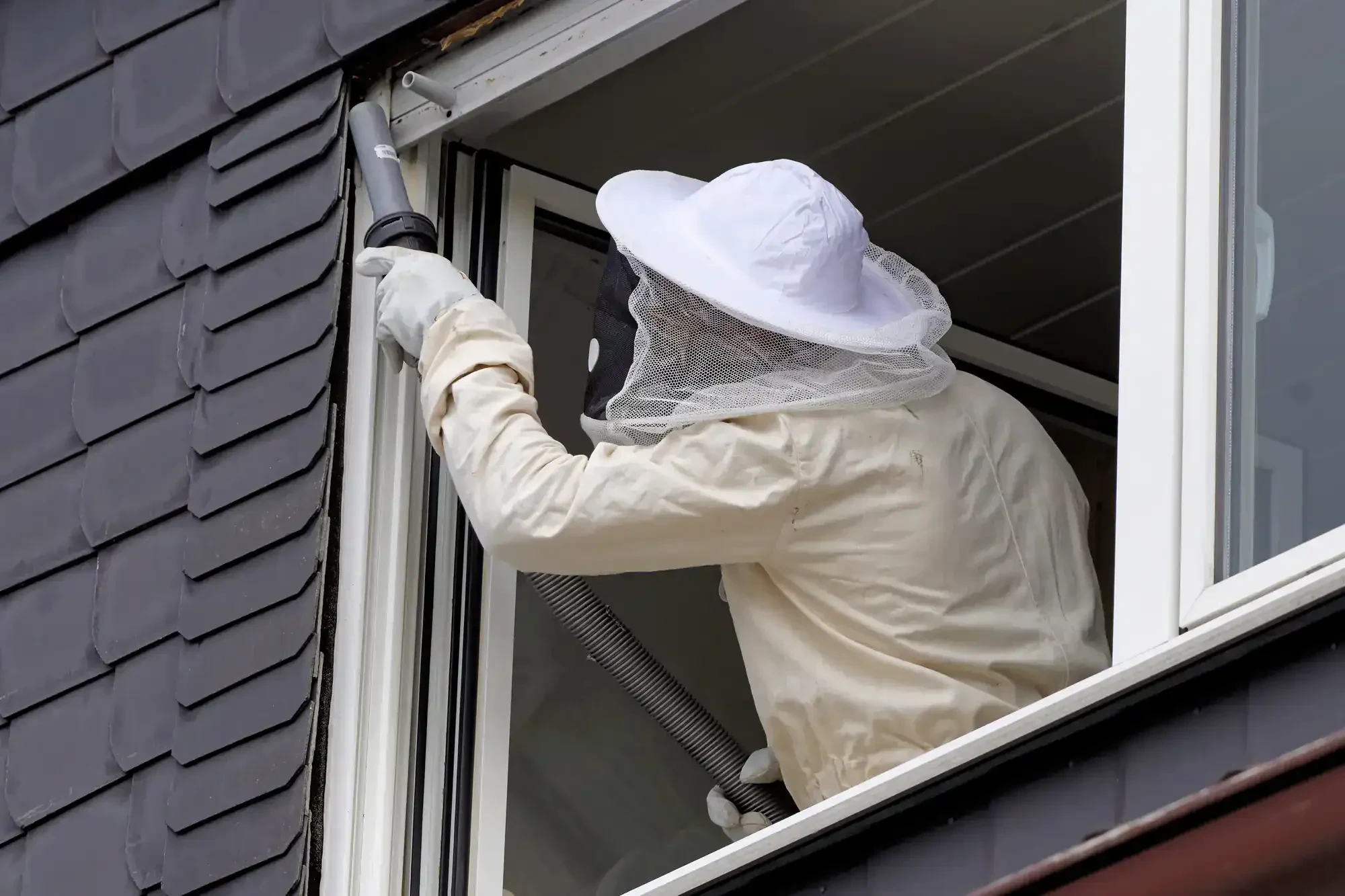
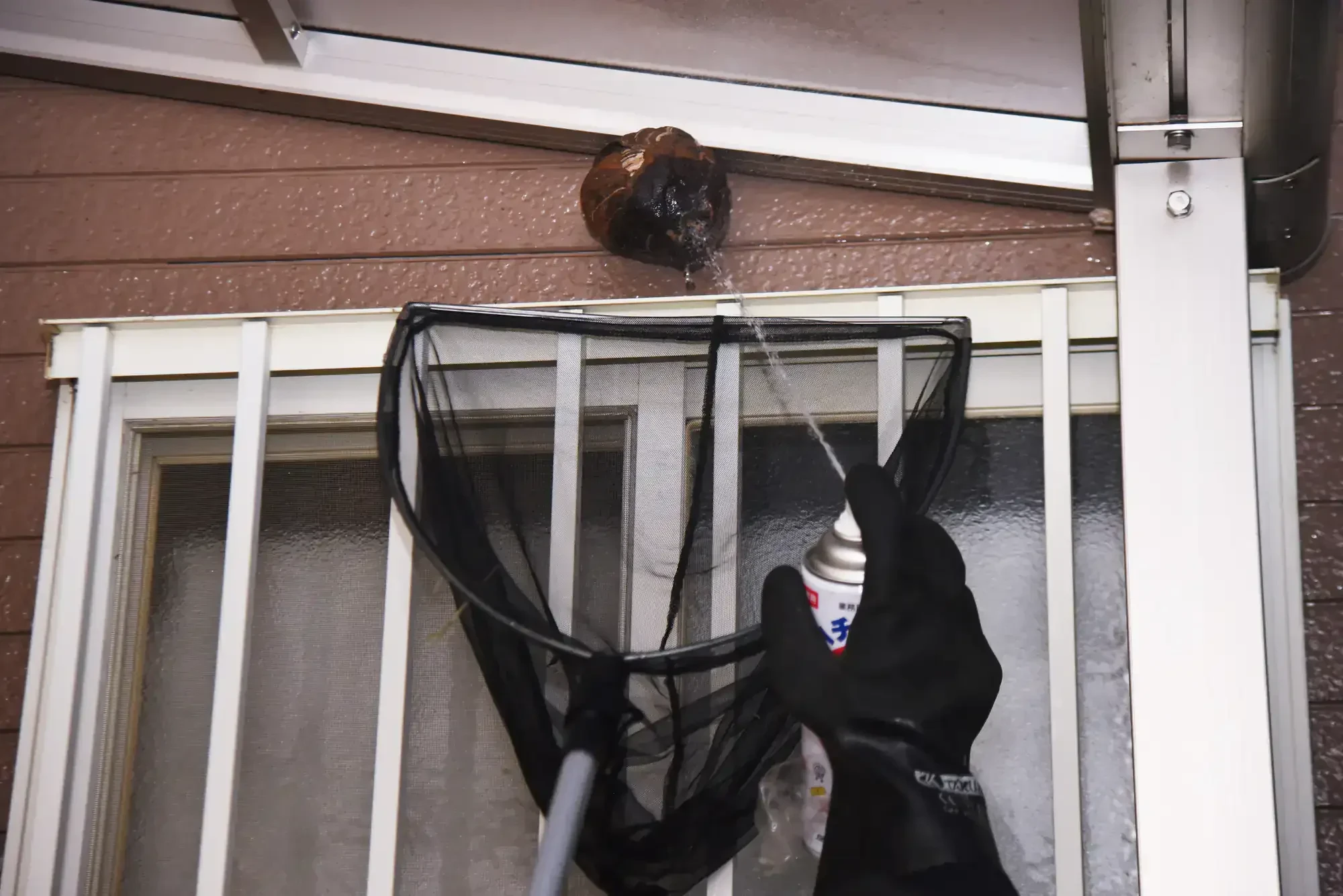
Once we’ve identified every active nest, we apply treatment directly and precisely. For aerial nests — the ones under eaves, porch ceilings, deck boards, and roof overhangs — we use professional-grade insecticide to eliminate the colony at the source. For ground nests, which are common on Argentine’s larger rural lots and along the Shiawassee River corridor, we apply insecticidal dust directly into the nest opening and it works through the colony within 24 to 48 hours. After the colony is eliminated, we remove the physical nest and seal entry points to reduce the chance of a new colony moving into the same spot next season.
No permit is required for residential pest control services in unincorporated Argentine Township — all licensing is handled at the state level through MDARD, and we carry that licensing in full. From your first call to a cleared property, the process is straightforward, and you’ll know exactly what was found, what was treated, and what to watch for going forward.
Ready to get started?
Argentine’s mix of waterfront homes, rural acreage, and agricultural outbuildings creates more wasp nesting opportunities per property than most communities in Genesee County. Paper wasps target the undersides of deck boards, porch ceilings, and roof overhangs. Yellow jackets build underground in loose soil — often in old animal burrows — and inside wall voids, attics, and the interior walls of barns and outbuildings. A property on Lobdell Lake with a dock, boathouse, and detached garage has at least four separate structures that need to be assessed, not just the one you noticed.
We treat all common stinging insect species found in Argentine Township: paper wasps, Eastern yellowjackets, German yellowjackets, bald-faced hornets, and European hornets. The treatment approach is matched to the species and the nesting location — aerial nests, ground nests, and wall void nests each require a different method to eliminate the colony completely rather than just disrupting it temporarily.
We offer discounts for seniors, veterans, and first responders — no hoops to jump through, just ask when you call. There are no binding contracts, and our price-matching guarantee means you don’t have to spend a week shopping around to know you’re getting a fair rate. One call, one thorough inspection, one company that actually knows Argentine.
It comes down to colony size and food source. Through spring and early summer, yellow jacket colonies are focused on hunting insects to feed their larvae — they’re busy, but not especially confrontational. By August and into September, the larvae have developed and the colony no longer needs protein. Workers shift to scavenging sugary foods instead, which is exactly when they start showing up at your outdoor meals, around your trash cans, and near any food or drinks on your lakeside deck.
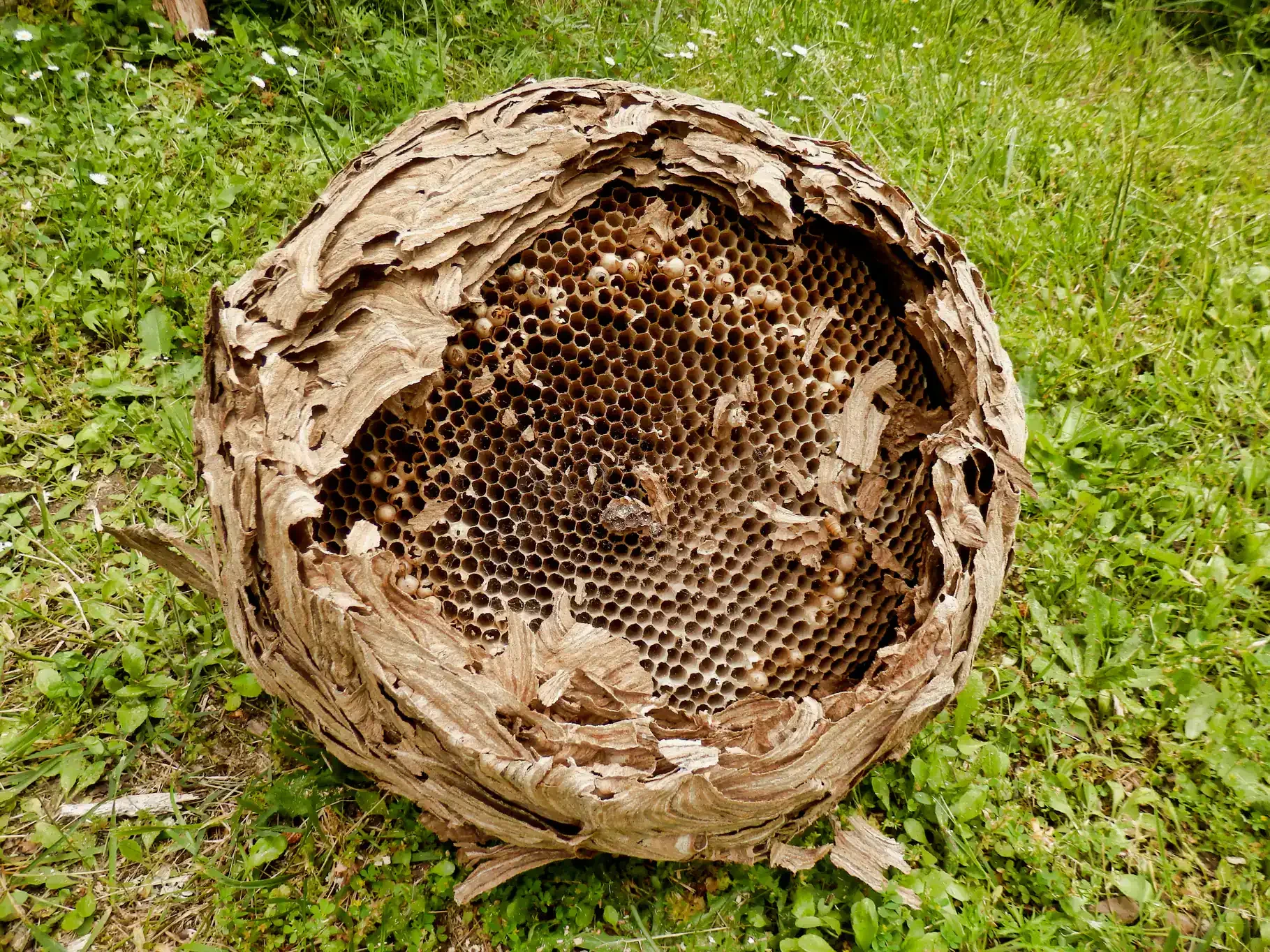
At that point, the colony has also reached its maximum size — anywhere from a few thousand to over ten thousand workers depending on the species and how undisturbed the nest has been. A yellow jacket nest that went unnoticed through June and July becomes a genuine hazard by the time Lobdell Lake’s summer season is in full swing. That collision between peak colony aggression and peak outdoor activity is what makes late-summer yellow jacket removal calls so common for Argentine properties. If you’re noticing increased activity around your deck, dock, or yard in August, the nest has likely been there for months — and it’s not going to calm down on its own.
For small, early-season paper wasp nests — the open, umbrella-shaped ones with fewer than a dozen workers — a DIY approach with a store-bought aerosol at dusk is sometimes manageable. But that’s a narrow window. Once a colony is established, the risk of a DIY attempt goes up significantly, and yellow jacket nests in particular are not a good candidate for it under almost any circumstances.
Ground-nesting yellow jackets are especially dangerous because the nest entrance gives you no visual indication of how large the colony is beneath the surface. Disturbing it — even accidentally, while mowing or walking nearby — can trigger an immediate defensive response from hundreds of workers at once. Wall void nests carry a different risk: if you spray into a wall cavity without fully eliminating the colony, the surviving wasps can chew through drywall into your living space looking for an exit. On Argentine’s rural properties with older barns and outbuildings, wall void nests are common and often much larger than they appear from the outside. A professional inspection costs far less than an ER visit or a wall repair.
The most common sign is consistent wasp traffic entering and exiting a single point on the exterior — a gap in siding, a crack near a window frame, a space under a soffit, or an opening where two materials meet. If you’re seeing wasps going in and out of the same spot repeatedly over several days, there’s almost certainly a nest inside. You might also hear a faint buzzing or papery crackling from inside the wall during warmer parts of the day.
On Argentine’s agricultural properties and horse facilities, barn walls and older outbuildings are among the most common locations for established yellow jacket and paper wasp colonies. These structures often have gaps, aging wood, and undisturbed cavities that make ideal nesting environments — and because barns aren’t always checked daily, nests can develop for weeks before anyone notices the activity. A colony inside a wall void can reach thousands of workers before it becomes visible from the outside. If you’re seeing consistent entry and exit traffic around any structure on your property, that’s enough reason to have it inspected before the colony gets any larger.
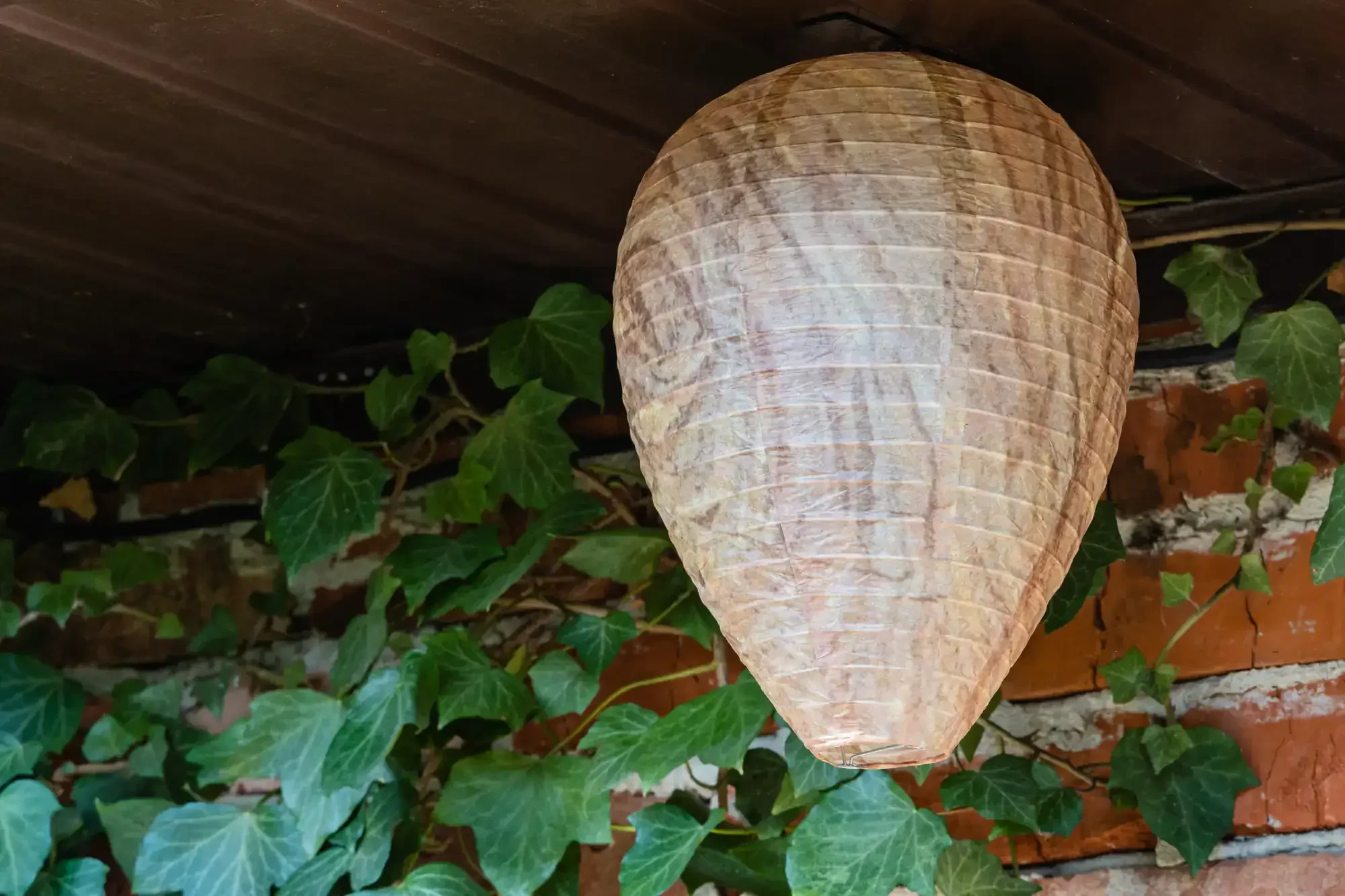
Yes, it changes the treatment approach significantly. Paper wasps build the open, honeycomb-style nests you typically see hanging under eaves, porch ceilings, and deck overhangs. These are exposed nests, which makes them more straightforward to treat — a direct application of professional-grade insecticide at the right time of day eliminates the colony quickly. Paper wasp colonies are also smaller, usually a few dozen to a couple hundred workers.
Yellow jackets are different. Eastern yellowjackets, which are common throughout Argentine Township and Genesee County, build underground in abandoned animal burrows or in wall voids. German yellowjackets prefer enclosed spaces — wall cavities, attics, and the interior of structures. Both species form much larger colonies than paper wasps, and both require the insecticide to reach the interior of the nest to be effective. For ground nests, that means applying insecticidal dust directly into the nest opening. For wall void nests, it means locating the entry point and treating into the cavity. Treating a yellow jacket nest the same way you’d treat a paper wasp nest doesn’t work — and it’s one of the most common reasons DIY attempts fail and the problem gets worse.
The cost depends on the species, the number of nests, and where they’re located on your property. A single aerial paper wasp nest is generally on the lower end of the range. Yellow jacket removal — especially for ground nests or wall void nests — runs higher because of the additional labor, the treatment method required, and the complexity of fully eliminating a larger colony. Nationally, professional wasp and yellow jacket removal averages between $375 and $525 for a standard treatment, with more complex yellow jacket situations reaching higher.
For Argentine properties specifically, the cost can be influenced by the number of structures that need to be inspected and treated. A Lobdell Lake waterfront home with a main residence, a boathouse, a detached garage, and a dock structure has more ground to cover than a single-structure suburban lot — and a thorough inspection of all of them is part of what you’re paying for. We offer price matching for reasonable competitor quotes, so if you’ve already gotten an estimate from another Genesee County provider, call and ask. The goal is to make sure cost isn’t what pushes you toward a DIY attempt that ends up being more expensive in the long run.
Yes — we extend discounts to seniors, military veterans, and first responders throughout our service area, including Argentine Township. Argentine has a strong community of homeowners who’ve served in the military or in local first responder roles, and these discounts are a straightforward acknowledgment of that. You don’t need to jump through any process to access them — just mention it when you call and it gets applied.
Beyond the discounts, our price-matching policy means that if you’ve received a quote from another licensed pest control provider serving the Argentine or Linden area, we’ll match it if it’s reasonable. There are no binding contracts, so you’re not committing to anything beyond the service you’re calling about. For homeowners in Argentine who are weighing the cost against a DIY attempt, it’s worth knowing that a professional treatment — done once, done correctly, with the nest removed and the entry point sealed — is almost always less expensive than a failed DIY attempt followed by a professional call anyway.
Useful Links