
Hear from Our Customers
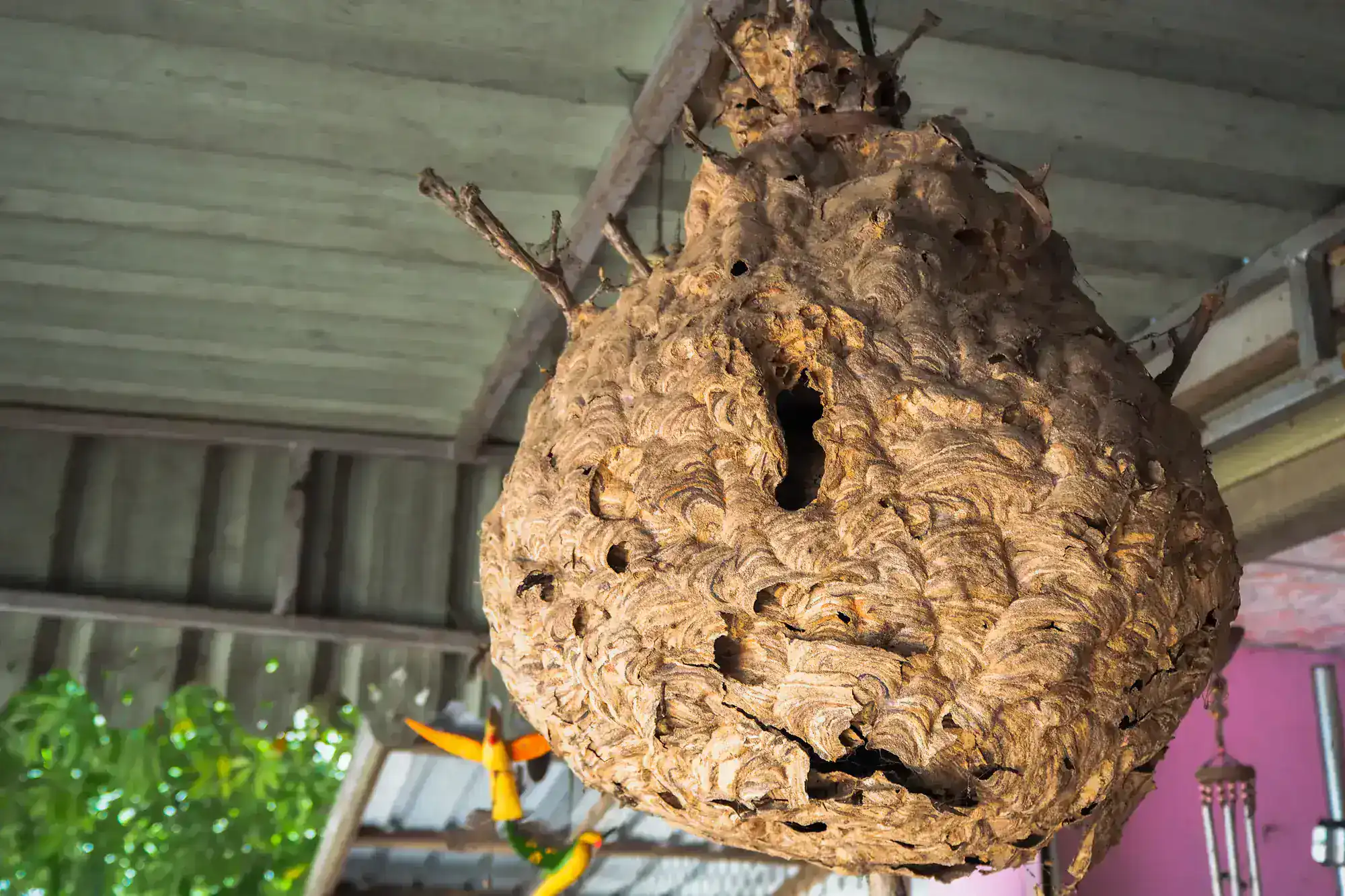
A hornet nest that gets ignored in May becomes a 700-worker colony by August. That’s just how bald-faced hornets operate in Michigan. And by the time most homeowners in Burnt notice the problem, the colony is already at full strength and at its most aggressive. Professional hornet removal stops that cycle before it gets dangerous.
Out here, the risk isn’t just a nest over the back porch. It’s the one tucked into the rafters of a hay loft, buried in the wall void of a century-old farmhouse, or hanging from a silver maple along the Shiawassee River bottomland at the edge of your property. These aren’t situations a can of hardware store spray handles safely — and attempting it often makes things worse.
When the job is done right, you’re not just getting rid of a nest. You’re getting your property back. Your outbuildings are safe to work in again. Your yard is accessible. Your dogs, your kids, and your livestock aren’t at risk every time someone walks past the wrong corner of the barn. That’s the outcome that matters.
We founded First Choice Pest Control on May 31, 2005 — which means 2025 marks 20 years of serving homeowners across southeast Michigan, including the rural communities of Shiawassee County and Burnt. Our company is led by Roger, who brings 26 years of hands-on pest control experience to every job. This isn’t a franchise with rotating managers. It’s a family-owned business where the owner is still involved and the reputation is personal.
One thing that sets us apart: you get the same technician every time. Not a different face each season, not a part-time hire who was trained last week. Someone who learns your property, knows your layout, and shows up prepared. For homeowners in Burnt and the Byron area — where trust is built slowly and a bad experience gets remembered — that kind of consistency is not a small thing.
We hold Michigan Pesticide Application Business License #250081, carry IPM training certification recognized by MDARD, and are BBB Accredited. Angie’s List and HomeAdvisor have both recognized our company for service quality. The credentials are real, and so is the track record.
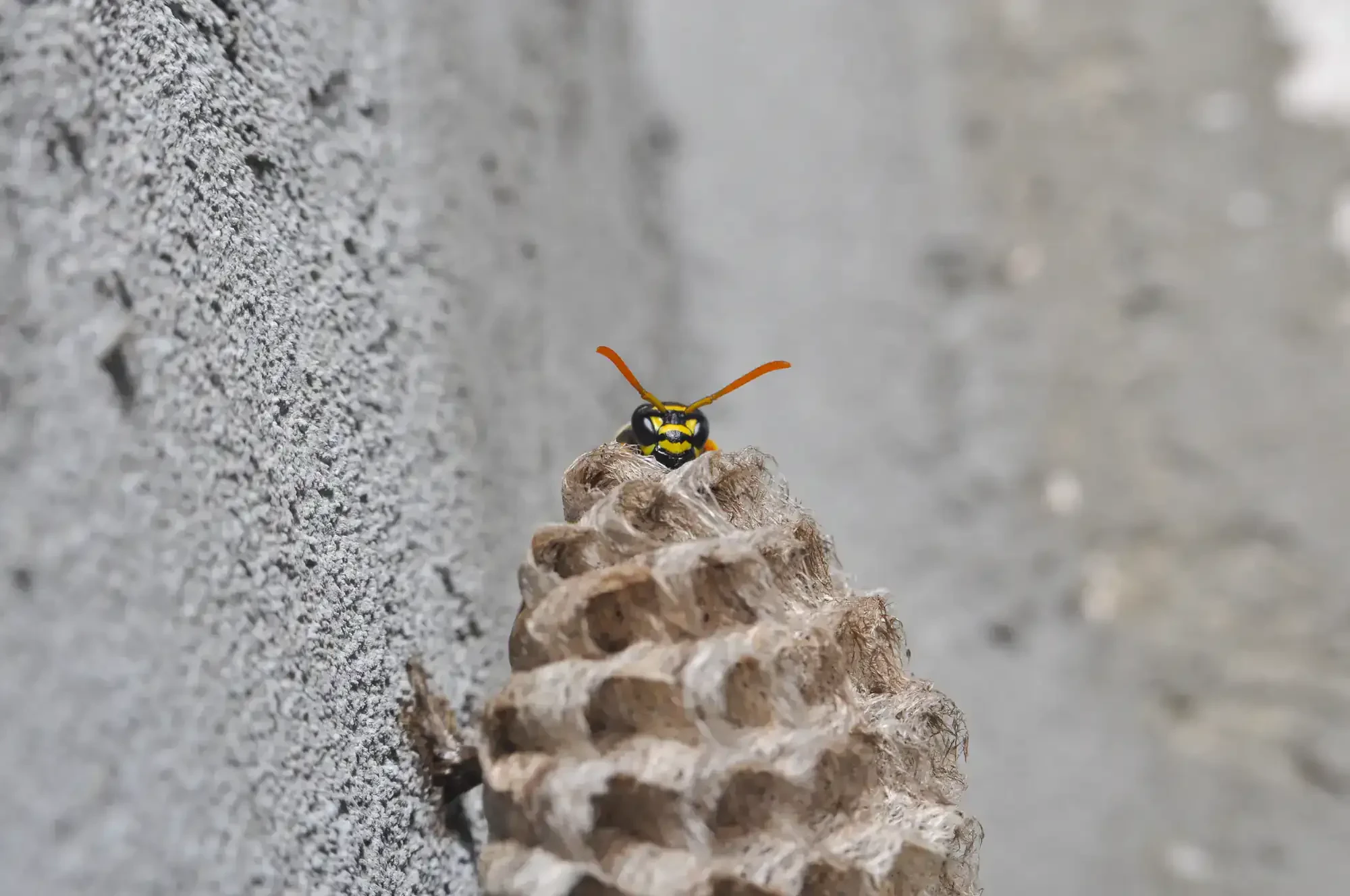
It starts with a call and a straightforward conversation about what you’re dealing with — where the nest is, how long it’s been there, and whether you’ve noticed any secondary activity nearby. On rural properties in Burnt, it’s not uncommon to find more than one nest, especially when mature tree lines, outbuildings, and river corridor habitat are all in play. Knowing what we’re walking into matters before anyone shows up.
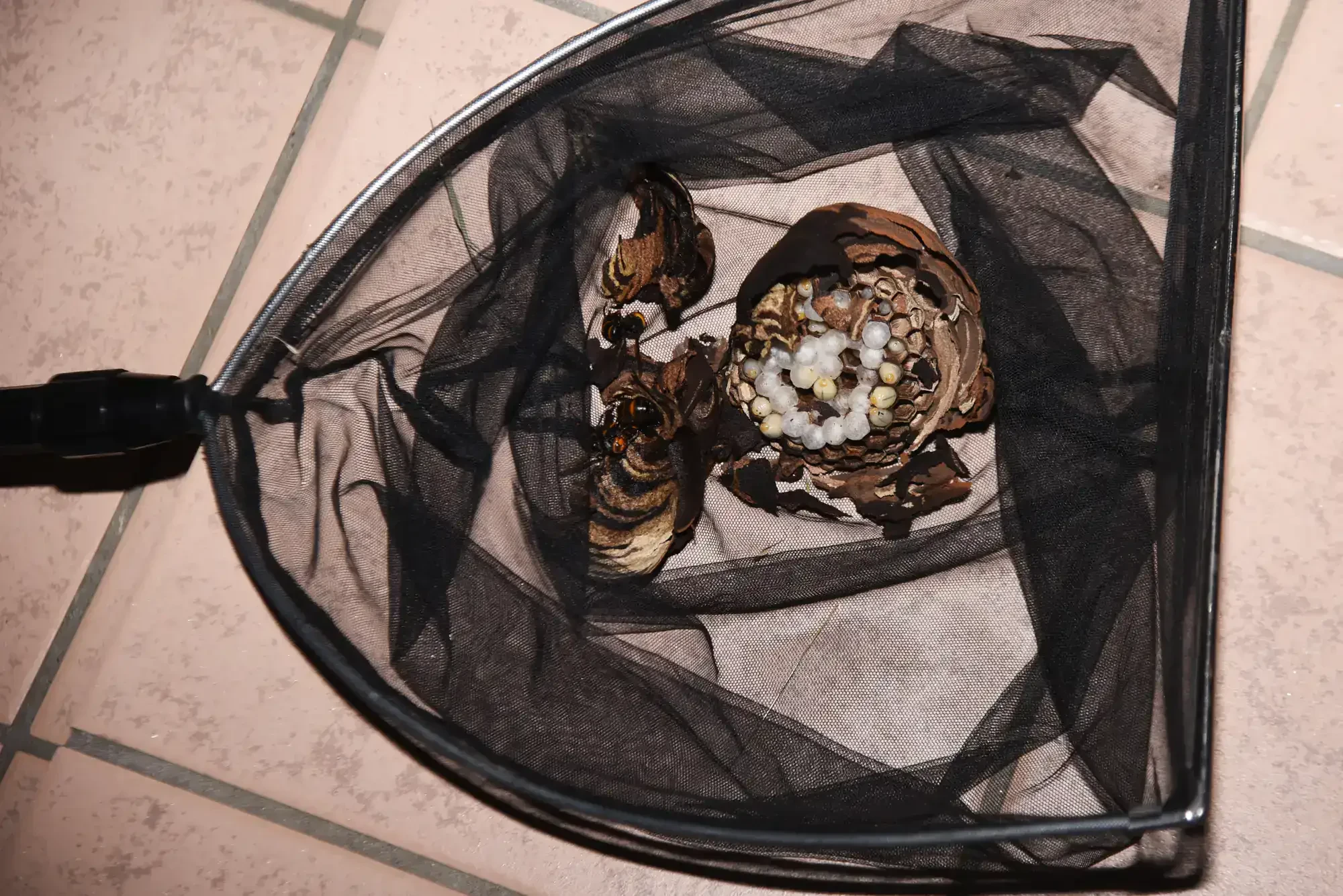
When our technician arrives, the first step is a thorough assessment of the nest location, size, and access conditions. A bald-faced hornet nest in an open tree is a different job than one inside a wall void of an old farmhouse or under the eave of a metal-roofed equipment shed. We apply treatment using IPM methodology — meaning the right product in the right place, not a blanket spray across your entire property. That matters when you have animals on the land.
After treatment, you’ll know exactly what we did, what to expect in the following 24 to 48 hours, and whether a follow-up visit is warranted. We stand behind our work — if the problem isn’t resolved, we come back at no additional cost. Michigan’s hornet season runs hard from July through September, and timing matters. Getting this handled before peak colony size is always the better outcome.
Ready to get started?
We offer flat-rate, upfront pricing on hornet removal in Burnt, MI. You know the cost before our technician pulls into your driveway — no add-ons discovered mid-job, no invoice that looks different from the quote. For homeowners in the 48418 zip code who are used to comparing value carefully before committing, that kind of pricing transparency isn’t just appreciated — it’s expected.
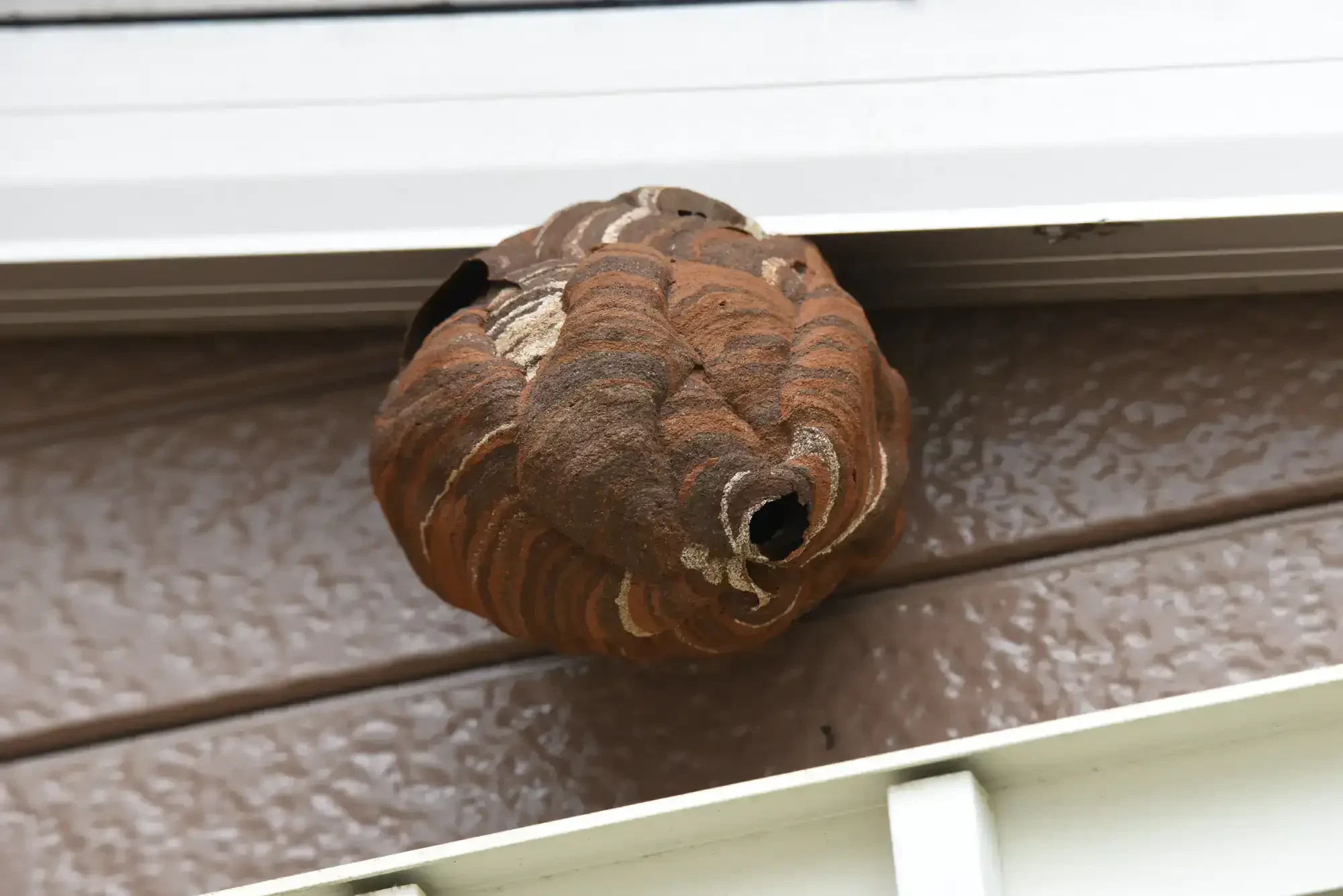
Our service covers hornet nest removal for all common Michigan species: bald-faced hornets, European hornets, and yellow jackets. We adapt our treatment approach to the specific conditions of your property, whether that’s an elevated nest in a mature oak along the Shiawassee River corridor, a ground nest in an open field, or a colony that’s worked its way into a wall void in an older structure. Rural properties in Burnt tend to have more access complexity than suburban homes — outbuildings, aging construction, and wooded lot lines all factor into how the job gets done.
We also offer price matching for reasonable competitor quotes, so if you’ve already gotten a number from another company, it’s worth a call. Discounts are available for seniors, veterans, and first responders — groups that are well-represented in this community and genuinely appreciated by us. Both residential and commercial properties are served.
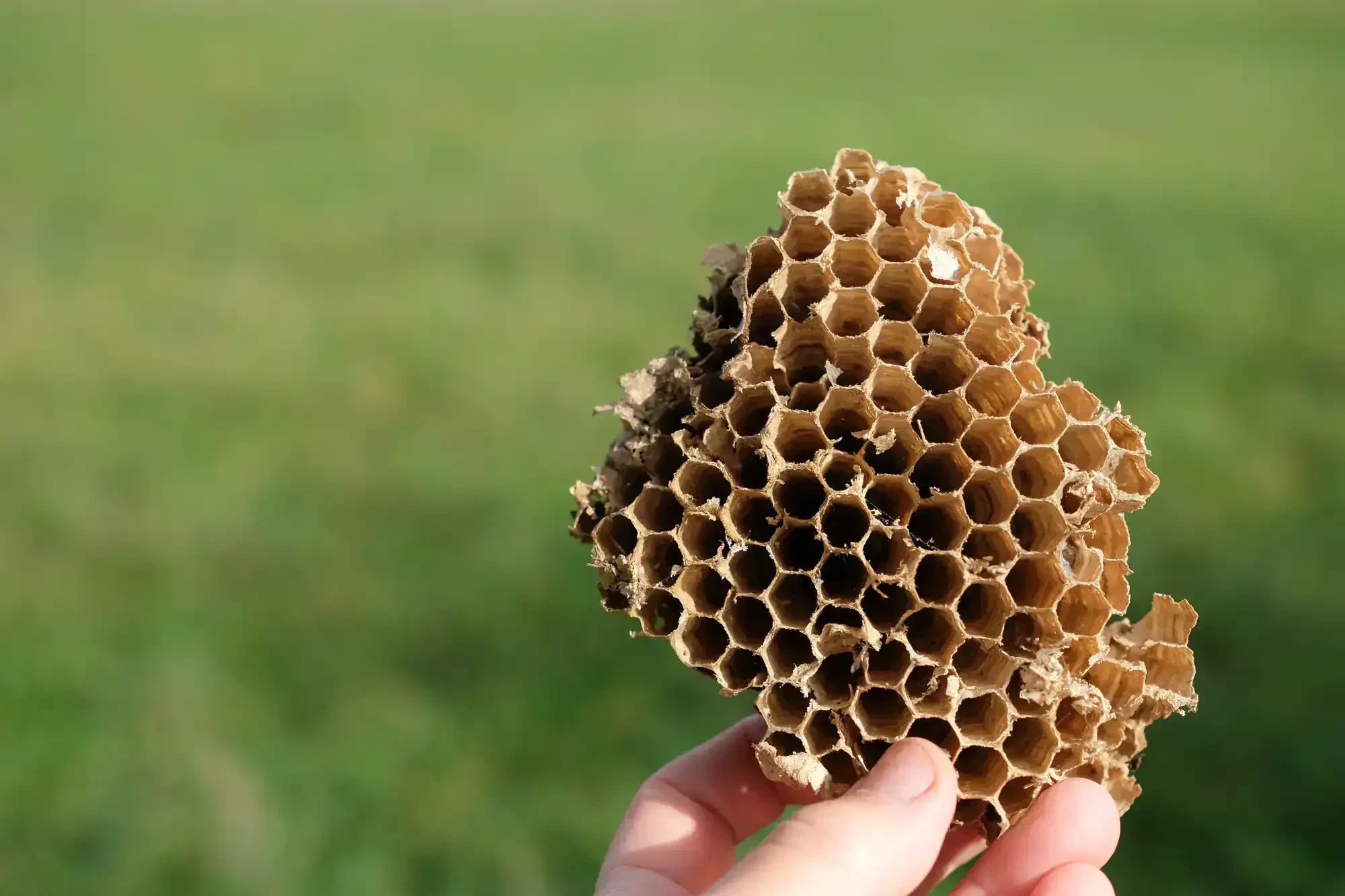
Size and location are the two factors that matter most. A small nest in early spring — roughly the size of a golf ball — is a newly started colony and much easier to treat. By midsummer, that same nest can be the size of a basketball or larger, housing hundreds of workers that will defend it aggressively if they feel threatened. Bald-faced hornets, which are the most common species in this part of Michigan, are particularly reactive. They don’t need to be provoked in the traditional sense — vibration from a lawnmower, a door slamming on an outbuilding, or a dog running past can be enough to trigger a defensive response.
Location adds another layer of risk. A nest high in a tree away from foot traffic is a different situation than one in the eave above your back door, inside the wall of a barn you work in daily, or along a fence line your kids cut through after school. On rural properties in Burnt, where people spend real time outdoors and around outbuildings, the risk of accidental disturbance is genuinely higher than in a suburban yard. If the nest is anywhere near regular human or animal activity, treating it professionally — rather than waiting or attempting DIY — is the right call.
Nationally, professional hornet removal ranges from $300 to $700, with bald-faced hornet removal averaging closer to $625 due to the elevated nest locations and colony sizes typical of this species. The actual cost for your property depends on a few specific factors: where the nest is located, how large the colony has grown, and how accessible the treatment site is for our technician.
On rural properties in Burnt, access complexity is a real variable. A nest in an open tree is straightforward. A nest inside the wall void of an older farmhouse, under the metal roofing of a machine shed, or in a hay loft with limited entry points takes more time and more specialized treatment. We provide upfront, flat-rate pricing before any work begins, so you’re not guessing. We also match reasonable competitor quotes — so if you’ve already gotten a number from another licensed company serving the Shiawassee County area, bring it to the conversation.
This is one of the most common questions homeowners ask, and the honest answer is: yes, they can — but not because the same colony survived. Hornet colonies in Michigan don’t overwinter. Worker hornets die off in fall, and the colony itself is gone by the time the first hard frost hits. What does survive is the fertilized queen, who finds a protected spot to hibernate through winter — and that spot is often inside the walls, attics, or structural voids of the same buildings where the colony was active.
In spring, that queen emerges and begins building a new nest. She doesn’t always return to the exact same location, but she often returns to the same general area — the same tree line, the same outbuilding, the same eave — because the conditions that made it attractive the first time haven’t changed. On older properties in Burnt with aging construction and plenty of protected overwintering spots, repeat nesting in familiar locations is genuinely common. Preventative treatment in spring, when the colony is small and the queen is just getting started, is significantly easier and less expensive than waiting until August.
You can attempt it, but the risk-to-reward calculation changes significantly depending on where the nest is and how large the colony has grown. Small nests in accessible, open locations — early in the season, before the colony reaches significant size — are sometimes manageable with the right product and protective gear. Most hardware store aerosol sprays are designed for exactly that scenario: a small, visible nest you can approach from a safe distance and treat quickly.
The problem is that most homeowners don’t discover a nest until it’s already a serious colony. By the time you notice the traffic pattern of hornets going in and out of a wall void, or spot a basketball-sized nest in the rafters of your barn, the colony is well past the point where a can of spray is a safe or effective solution. Bald-faced hornets are aggressive defenders, and disturbing a large colony without proper protective equipment and the right treatment product can result in a mass stinging event. When the nest is in a hard-to-reach location or has been growing all summer, calling a licensed professional is the straightforward answer.
It increases it, in a meaningful way. The Shiawassee River corridor running through Burns Township supports mature riparian tree canopy — large cottonwoods, silver maples, willows, and box elders — that provide exactly the kind of elevated, protected nesting sites bald-faced hornets prefer. The brushy understory along river banks also supports yellow jacket ground nesting. If your property borders the river, backs up to the wooded bottomland, or sits along one of the county roads that cuts through the river corridor, you’re in an area with consistently elevated stinging insect pressure.
This doesn’t mean you’re guaranteed a nest every season, but it does mean the habitat conditions on and around your property are favorable year after year. Mature trees don’t go away. River corridor brush doesn’t thin out. The environmental factors that make the Shiawassee bottomland attractive to hornets are persistent — which is why homeowners in this part of Burnt often deal with recurring nest activity in the same general areas of their property. Knowing where to look, and treating early in the season before colonies establish, makes a real difference in managing that pressure over time.
Yes — we offer discounts for seniors, veterans, and first responders. Burnt has an older median age than the Michigan average, and the community has a strong representation of people who have served — in the military, in emergency services, and in the kind of long-term, quiet commitment to a rural community that doesn’t always get recognized. These discounts reflect that. They’re not a promotional tactic — they’re a straightforward acknowledgment of the people who make up a large part of this area’s homeowner base.
When you call to schedule hornet removal in Burnt, MI, just mention which discount applies to you. We also offer price matching for reasonable competitor quotes, so if you’ve already done your homework and gotten a number from another licensed pest control company serving the Shiawassee County area, that conversation is worth having before you book. The goal is to make professional hornet removal accessible for the people who actually need it — not to price people out of a service that protects their property and their family.
Useful Links