
Hear from Our Customers
You stop dreading the walk to your shed. You mow your field margins without watching your step. Your kids are back in the yard, your dogs aren’t on edge, and you’re not mentally mapping around a section of your own property. That’s what professional wasp nest removal in Burnt actually delivers — not just a dead colony, but your property back.
The older homes and working outbuildings throughout Burns Township create more nesting opportunities than most people realize. Gaps in aging siding, deteriorating eave boards, uninsulated attic spaces — these are exactly the entry points that yellow jackets and paper wasps exploit year after year. A professional treatment that includes entry point sealing closes those doors so the same spot doesn’t become a problem again next spring.
And timing matters here more than most places. Michigan’s yellow jacket colonies hit peak size — sometimes 5,000 to 15,000 workers — right in the middle of late-summer harvest activity. That’s when you’re outside the most and when they’re the most aggressive. Getting ahead of it before that window closes isn’t just smart. In an area like Burnt, where the nearest emergency room is a significant drive away, it’s genuinely the safer call.
We were founded on May 31, 2005, and have been serving Shiawassee County ever since. That’s not a marketing line — it means Roger and our team have been treating properties across this region for two decades, including the rural agricultural land, older farmhouses, and working outbuildings that define the Burns Township and Burnt area. We know this landscape because we’ve worked it.
Roger brings 26 years of hands-on pest control experience to every job. We’re not sending a rotating crew of part-timers to your property. We keep the same technician on your account year after year, so whoever shows up knows your land, your structures, and your situation — not just your address. We hold Angie’s List and HomeAdvisor awards, carry full MDARD licensing and insurance, and are trained in Integrated Pest Management, which matters when you’ve got gardens, livestock, or working dogs on the property.
Based in Swartz Creek, just across the Genesee County line, we’re genuinely local to the Burnt area — not a national franchise dispatching from somewhere far off.
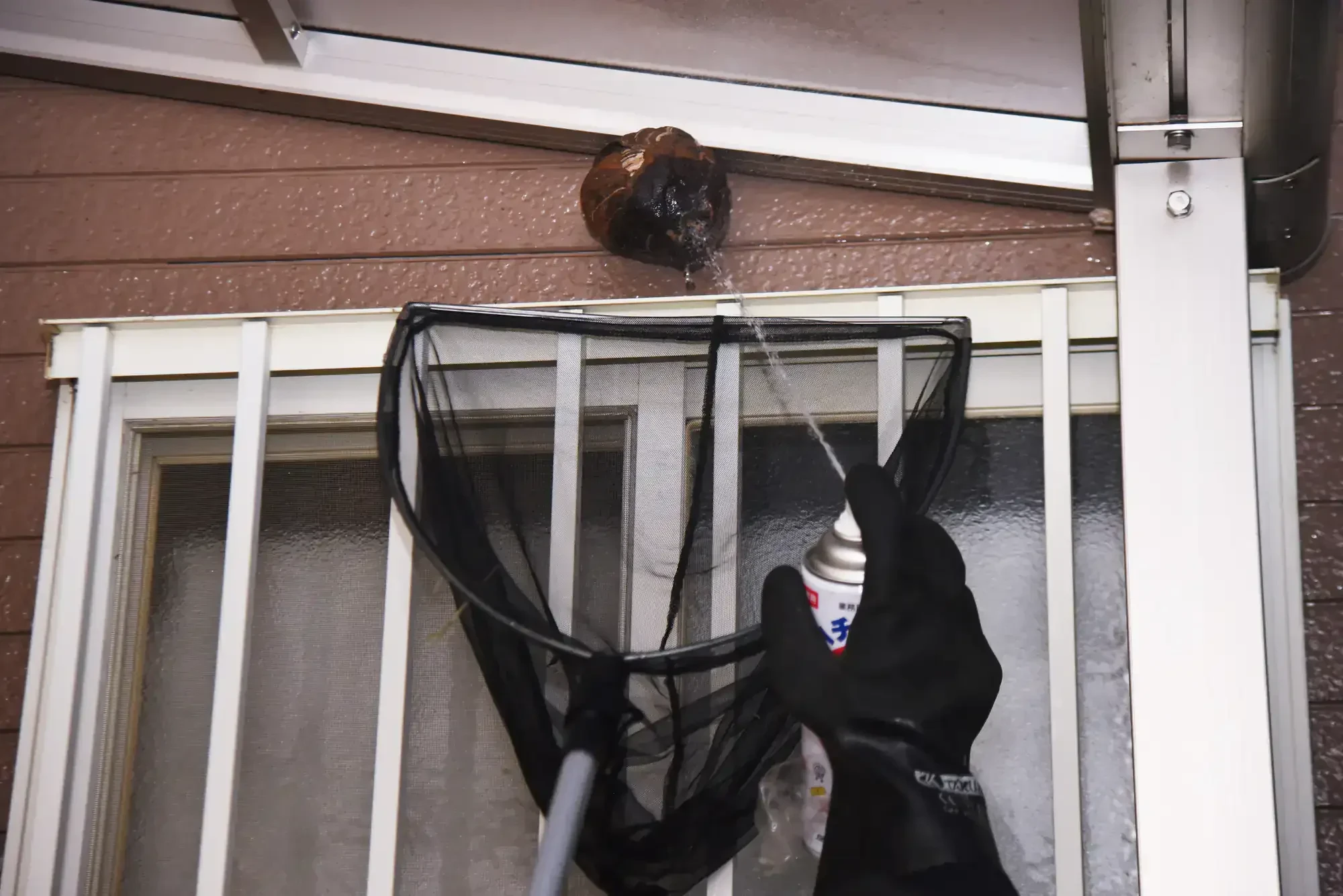
It starts with identifying exactly what you’re dealing with. Yellow jackets, paper wasps, and bald-faced hornets all behave differently, nest differently, and require different approaches. On rural properties in the Burnt area — especially those with older structures, woodlot edges, or untended ground along field margins — the nest location isn’t always obvious. Part of the job is finding it before treating it.
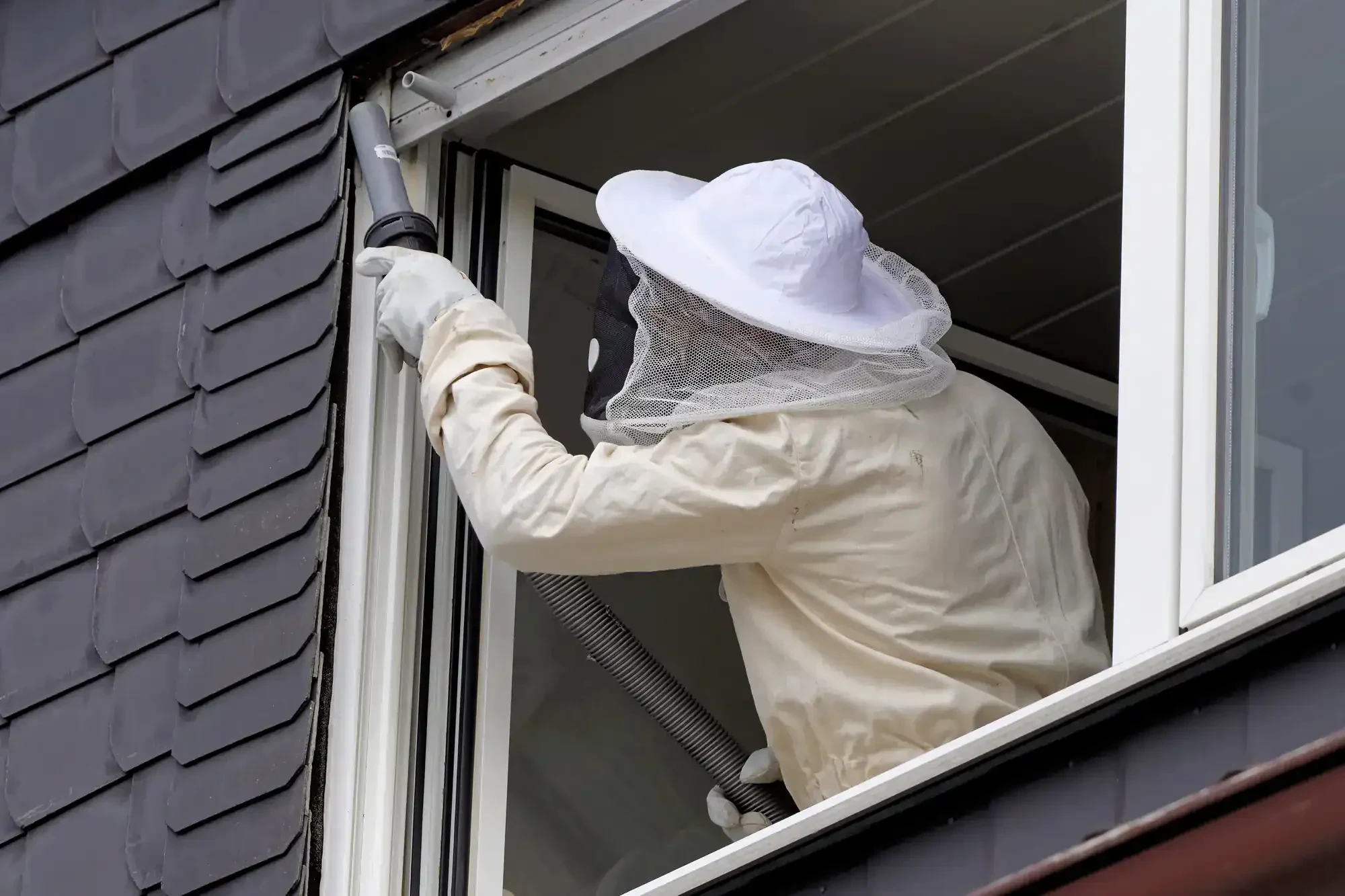
Once the nest is located and the species confirmed, the right treatment goes in. For wall voids and structural nests common in Burns Township’s older housing stock, that means getting the product into the cavity where the colony actually lives — not just spraying the entry point and hoping for the best. Ground nests along field edges get treated at the source. The colony is eliminated, the physical nest structure is removed where accessible, and entry points are sealed to prevent a new colony from moving into the same spot next season.
Michigan’s peak wasp season runs August through September, which lines up directly with the busiest stretch of outdoor work on agricultural properties. If you’re noticing activity now, that’s the right time to call — not after the colony has grown another month. We serve rural Burnt addresses. That’s not a given with every provider, but it’s standard for us.
Ready to get started?
We handle the full range of stinging insect problems that show up on Shiawassee County properties — yellow jackets, paper wasps, bald-faced hornets, and ground-nesting colonies that don’t announce themselves until something disturbs them. For properties in the Burnt area, that last category is especially common. Agricultural land, field margins, and untended areas around outbuildings are prime ground-nesting habitat, and those nests are the ones that catch people completely off guard.
Every service includes colony elimination, nest removal where physically accessible, and sealing of entry points to reduce re-nesting. That last step — the sealing — is what separates a complete job from a temporary fix. On older homes and farm structures throughout Burns Township, there’s rarely just one entry point. A thorough inspection finds the others before they become next year’s problem.
We offer price matching for reasonable competitor rates, so you’re not overpaying for quality work. Discounts are available for seniors, veterans, and first responders — and given the demographics of the Burns Township area, those aren’t small categories. There are no binding contracts. You’re not signing up for a recurring program you didn’t ask for. You’re getting the problem solved, completely, by a licensed and insured professional who has been doing this work in this county for twenty years.
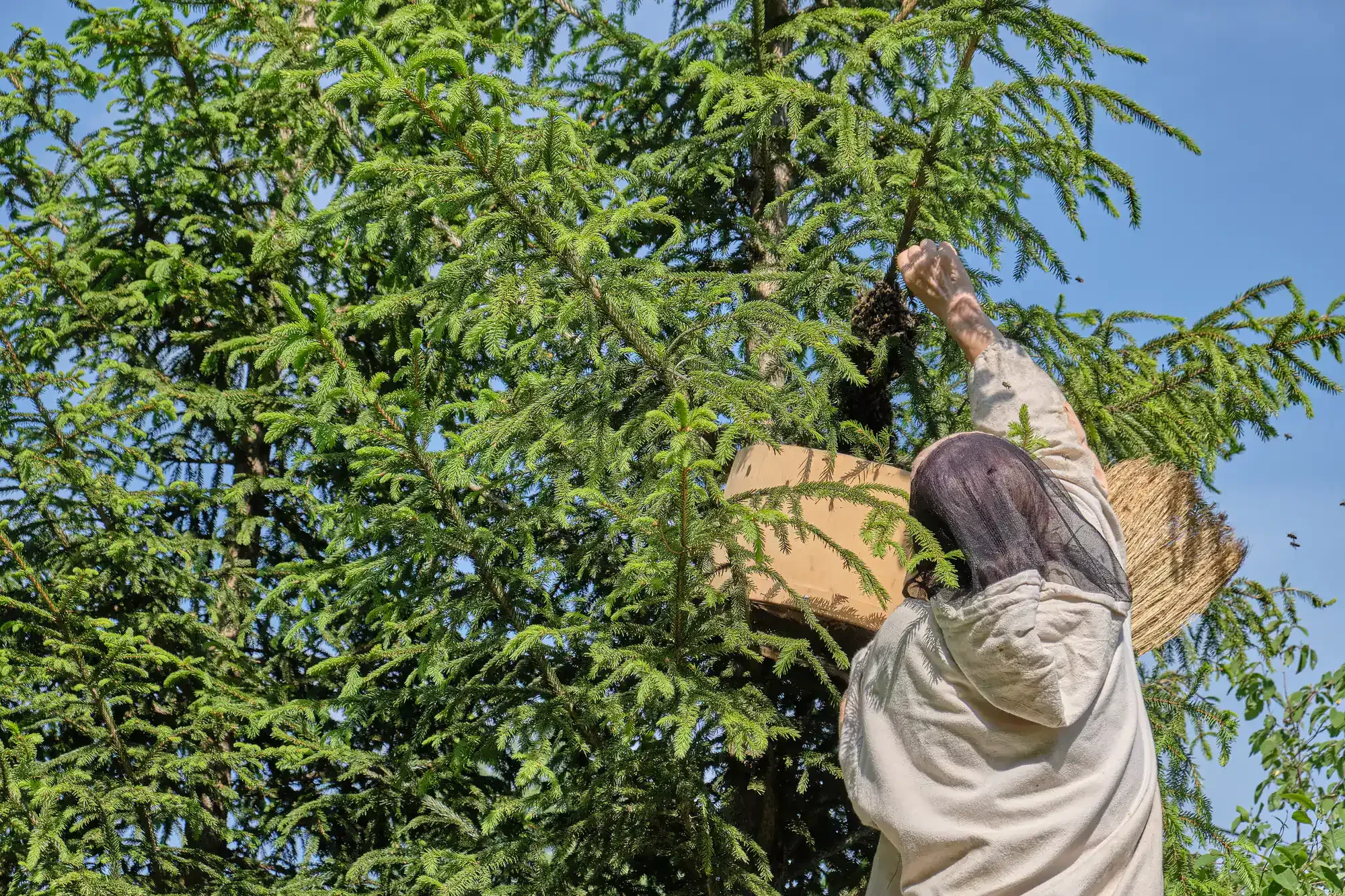
For a small, newly established nest that’s easy to see and easy to reach, some homeowners do handle it on their own. But that’s a narrow set of circumstances, and most calls we get in the Burnt area don’t fit that description. A colony that’s been building since spring — especially one that’s moved into a wall void, a barn eave, or a ground nest along a field margin — is a different situation entirely. By late summer, you could be dealing with thousands of workers, and disturbing that nest without the right equipment and protective gear puts you at serious risk.
The distance factor matters here too. If something goes wrong on a rural Burns Township property, the nearest emergency care is in Owosso or Lansing — not around the corner. For anyone with an unknown sensitivity to stings, or a household member who’s already had a reaction, that’s not a risk worth taking. We handle it safely, completely, and without leaving you with a disrupted, angry colony that’s now harder to deal with than before.
Yellow jackets are the most frequent call we get from properties in the Burnt and Burns Township area. They nest in the ground, in wall voids, in old equipment sheds, and under decks — and they’re the most aggressive species, especially from August through October when the colony is at full size and natural food sources start running low. A colony disturbed by a lawnmower or tractor during that window can respond fast and in large numbers.
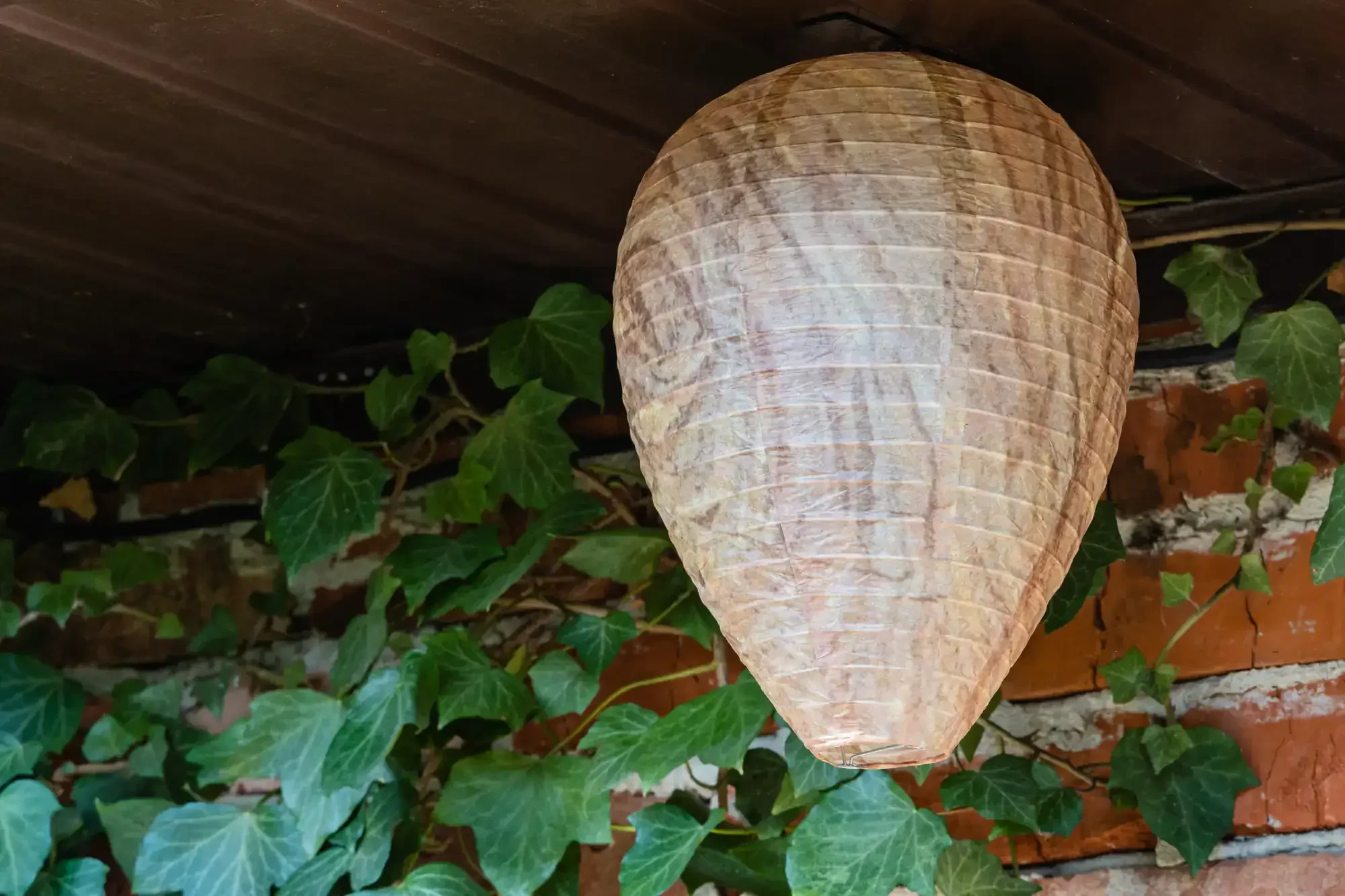
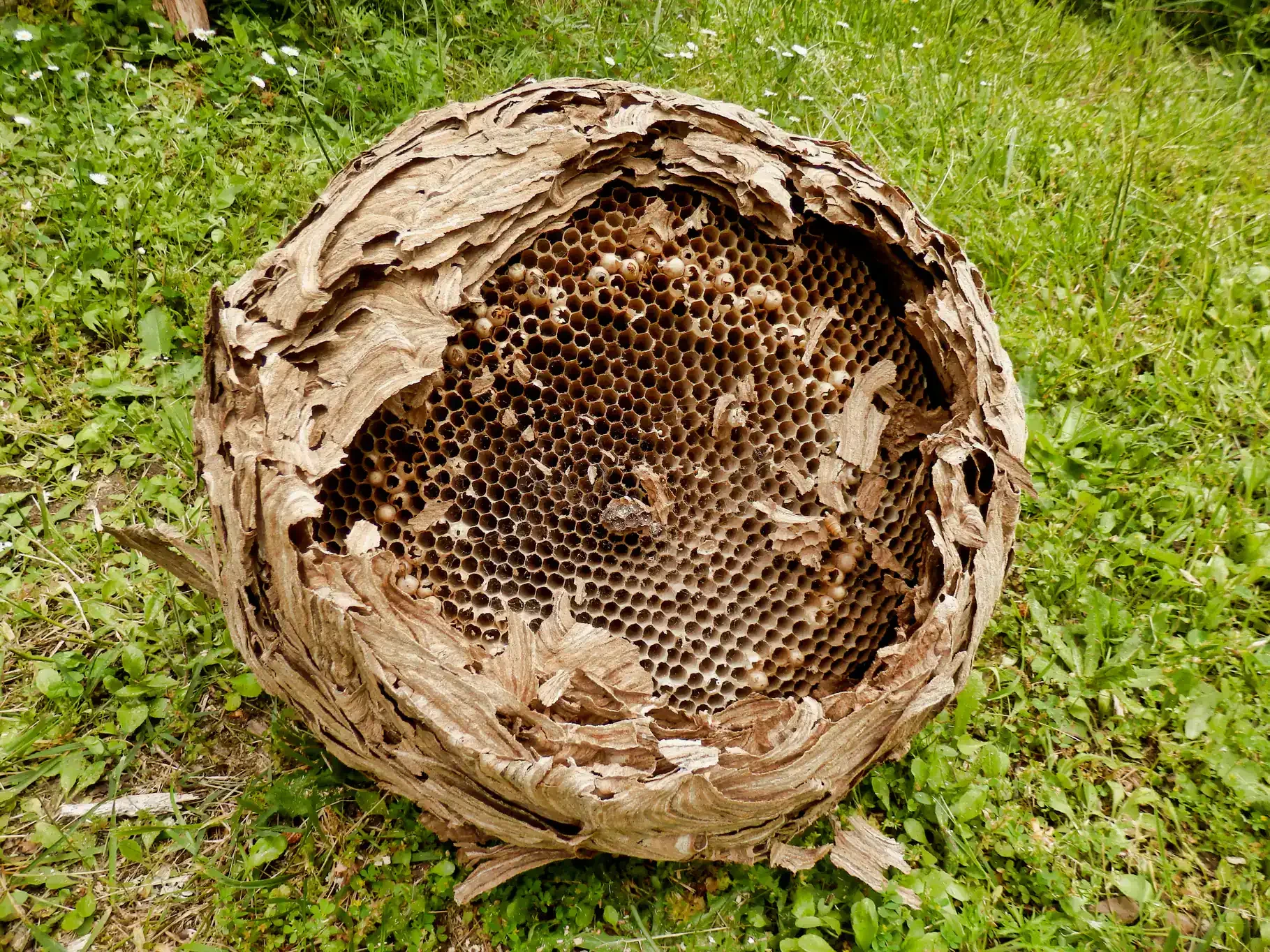
Paper wasps are also common and tend to build open, umbrella-shaped nests under eaves, in doorframes, and along the rafters of outbuildings. They’re less aggressive than yellow jackets but will sting if the nest is threatened. Bald-faced hornets build the large, gray, papery aerial nests you’ll sometimes see hanging from tree branches or the corners of barn roofs — those colonies can hold several hundred workers and are not something to approach without protection. Knowing which species you’re dealing with changes how the treatment is approached, which is one reason a professional assessment matters before anything else happens.
For a standard above-ground wasp or paper wasp nest, professional removal generally runs in the range of $375 to $525. Yellow jacket removal — especially ground nests or nests inside wall voids — tends to run higher, often around $725, because the work is more involved and requires more protective equipment and product to do safely and completely.
What affects the price on rural properties in the Burnt area specifically is access and nest location. A nest on the exterior of a house that’s easy to reach is a straightforward job. A nest buried inside a barn wall, under a concrete slab, or at the end of a field margin where equipment can’t easily get close adds complexity. We offer price matching for reasonable competitor rates, so if you’ve gotten a quote elsewhere, it’s worth a call. The goal is fair pricing for a complete job — not the cheapest number with a result that leaves you calling again in two weeks.
The honest answer is as soon as you notice the nest. Early in the season — May through early July — colonies are smaller, workers are less defensive, and treatment is faster and less complicated. A nest with a few dozen workers is a very different job than the same nest in late August when it’s grown to several thousand.
That said, the most urgent window for Burns Township residents is August and September. That’s when Michigan yellow jacket colonies hit peak population, when they’re at their most aggressive, and when outdoor activity on agricultural properties is also at its highest — harvest prep, equipment maintenance, fieldwork. That combination is where most serious stinging incidents happen. If you’ve been putting off the call, late summer is not the time to keep waiting. We serve rural Burnt addresses and can get out to your property during this window. Don’t let peak season turn a manageable problem into an emergency.
This is one of the most common questions from rural property owners in the Burns Township area, and it’s a fair one. Our technicians are trained in Integrated Pest Management, which means the approach is targeted — the right product, in the right location, at the right concentration for the specific pest and situation. It’s not a broad-spectrum spray applied across your property.
For households with dogs, chickens, gardens, or other animals, the technician will walk through what’s being applied, where, and any precautions to take during and after treatment. In most cases, treated areas are safe for pets and livestock within a short period after application, but that varies based on product and location. The point of IPM training is that you don’t use more than what’s needed, and you don’t apply it where it doesn’t need to go. If you have specific concerns about a garden bed near the nest site or animals that can’t easily be moved, mention that when you call — the treatment plan can account for it.
Yes — we offer discounts for seniors, veterans, and first responders. Burns Township has an older median population, a strong community of veterans, and residents who’ve spent careers in public service. These discounts exist because Roger built this company around the idea that the people who’ve contributed most to their communities shouldn’t have to choose between professional service and affordability.
Beyond the discounts, we also offer price matching for reasonable competitor rates. So if you’ve already gotten a quote from another provider, bring it up when you call. There are no binding contracts, either — you’re paying for the service, not locking into a program. For homeowners in the Burnt area who are used to getting the runaround from providers who either don’t serve rural addresses or charge a premium for the drive, we’re straightforward: fair price, complete job, same technician who knows your property going forward.
Useful Links