
Hear from Our Customers
You stop watching where you walk. You open the shed without bracing for a swarm. Your kids are back in the yard, and you’re not running a mental calculation every time someone heads toward the back of the property. That’s what professional hornet nest removal in Byron, MI actually delivers — not just a dead nest, but a property that feels like yours again.
Byron’s landscape makes this more complicated than it sounds. The older homes throughout Burns Township — many built around 1981 — have aging eaves, worn soffits, and gaps in the fascia that hornets treat like an open door. A colony that gets inside a wall void isn’t something you can spray from the outside. It requires the right treatment applied in the right place, or the problem just moves deeper.
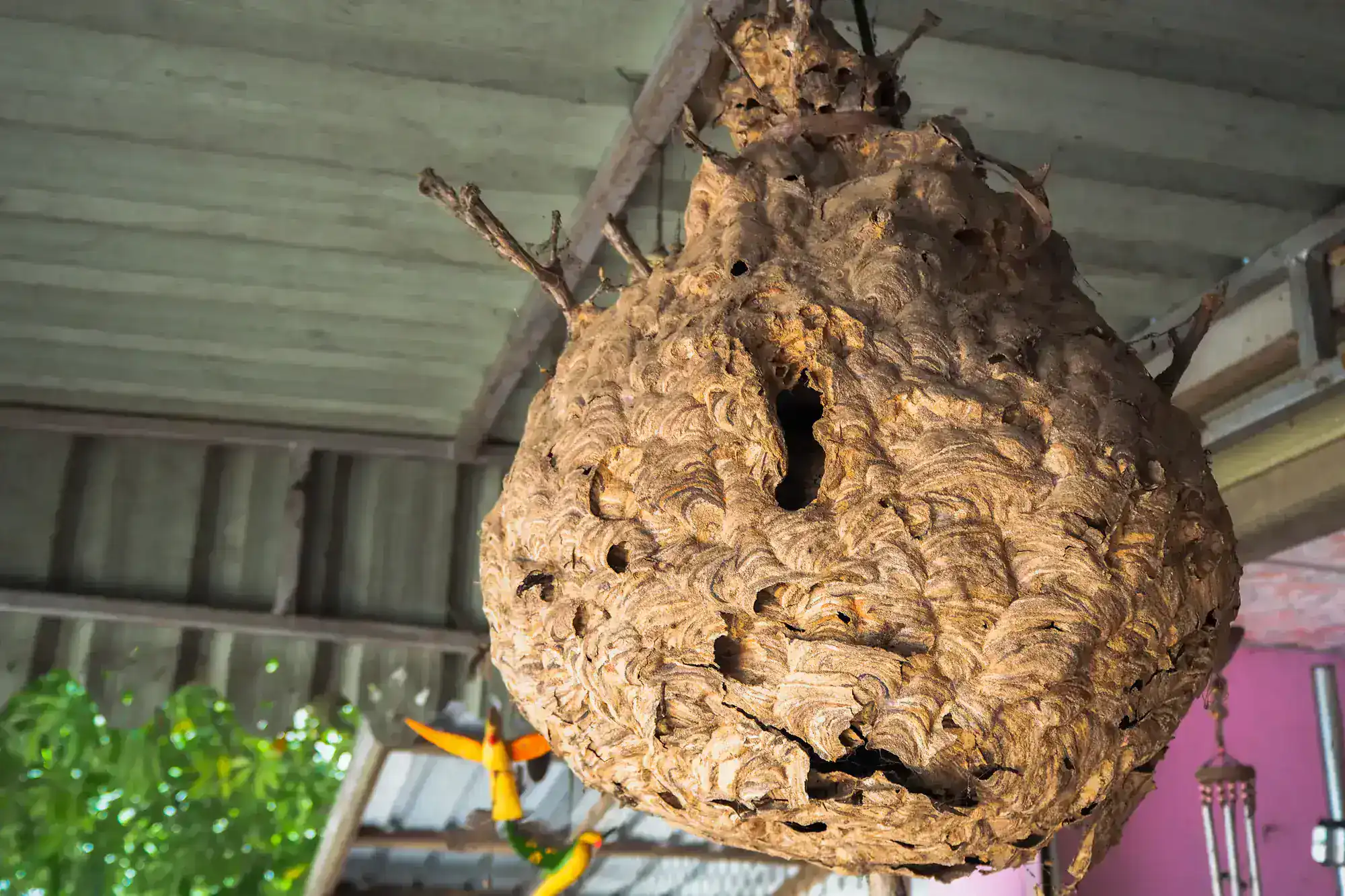
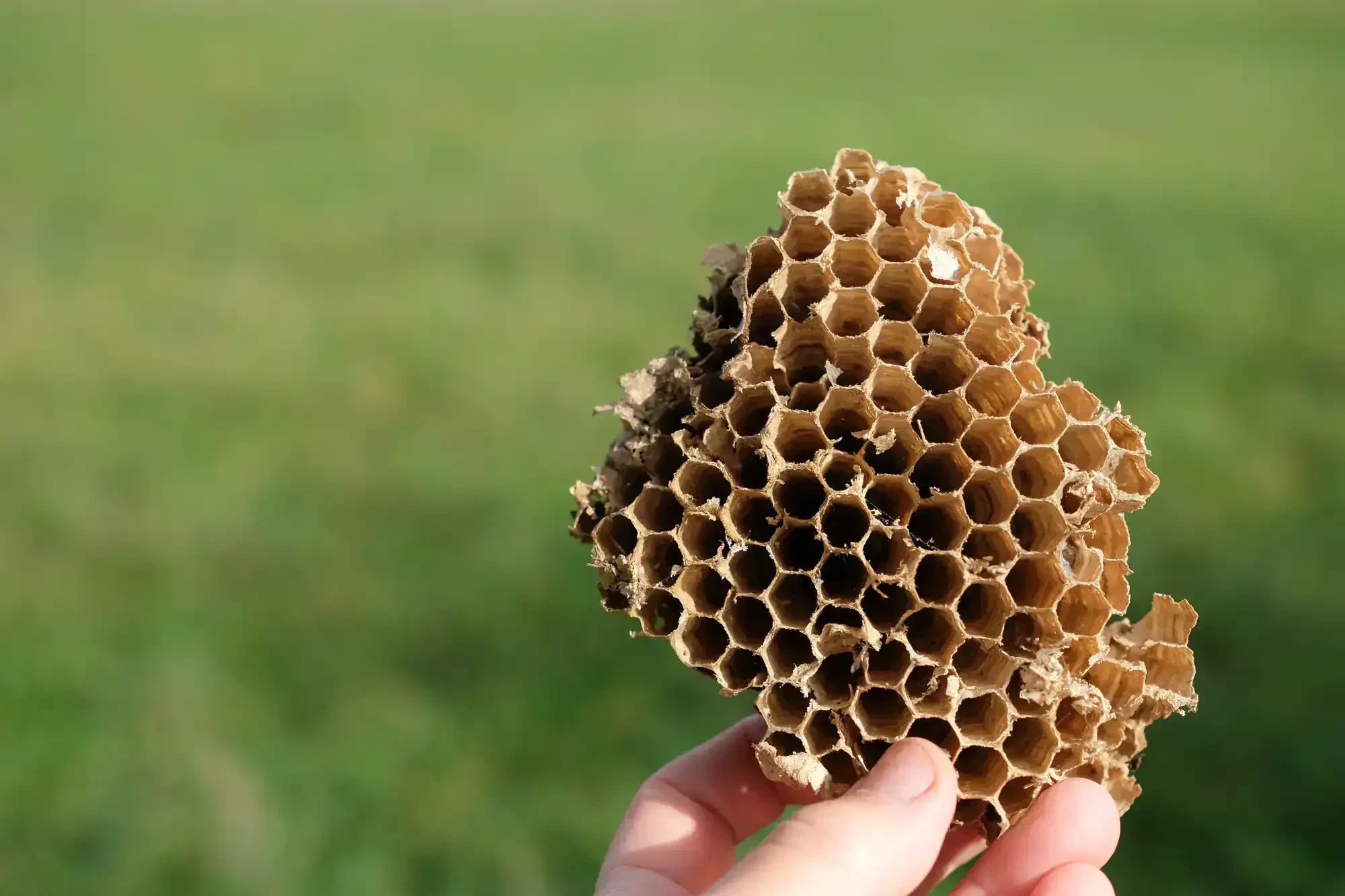
The farmland and mature tree lines surrounding Byron also give bald-faced hornets exactly what they need to build large, enclosed nests — raw wood fiber, sheltered branches, and undisturbed outbuildings. By late summer, a colony that started as a golf-ball-sized structure in April can hold hundreds of workers, every one of them capable of stinging more than once. Getting ahead of it early is always the better call. But when you’re already past that point, professional hornet removal in Byron, Michigan is the only real option.
We’ve been serving Byron and mid-Michigan homeowners since May 31, 2005. That’s two decades of showing up, solving problems, and building a reputation in communities across Shiawassee and Genesee County — including Byron and the surrounding Burns Township area. We’re not a franchise. We’re not a directory that hands your number to whoever’s available. We’re a real Michigan company with a real track record.
Roger, our owner, has 26 years of hands-on pest control experience and is still active in the business. We hold Michigan Pesticide Application Business License #250081 — issued by MDARD — along with IPM training certification, Angie’s List recognition, HomeAdvisor recognition, and BBB accreditation. Every technician who shows up at your Byron property is a trained professional. We don’t rotate in part-time seasonal help, and we assign the same technician to your property year after year — so someone who knows your home is the one treating it.
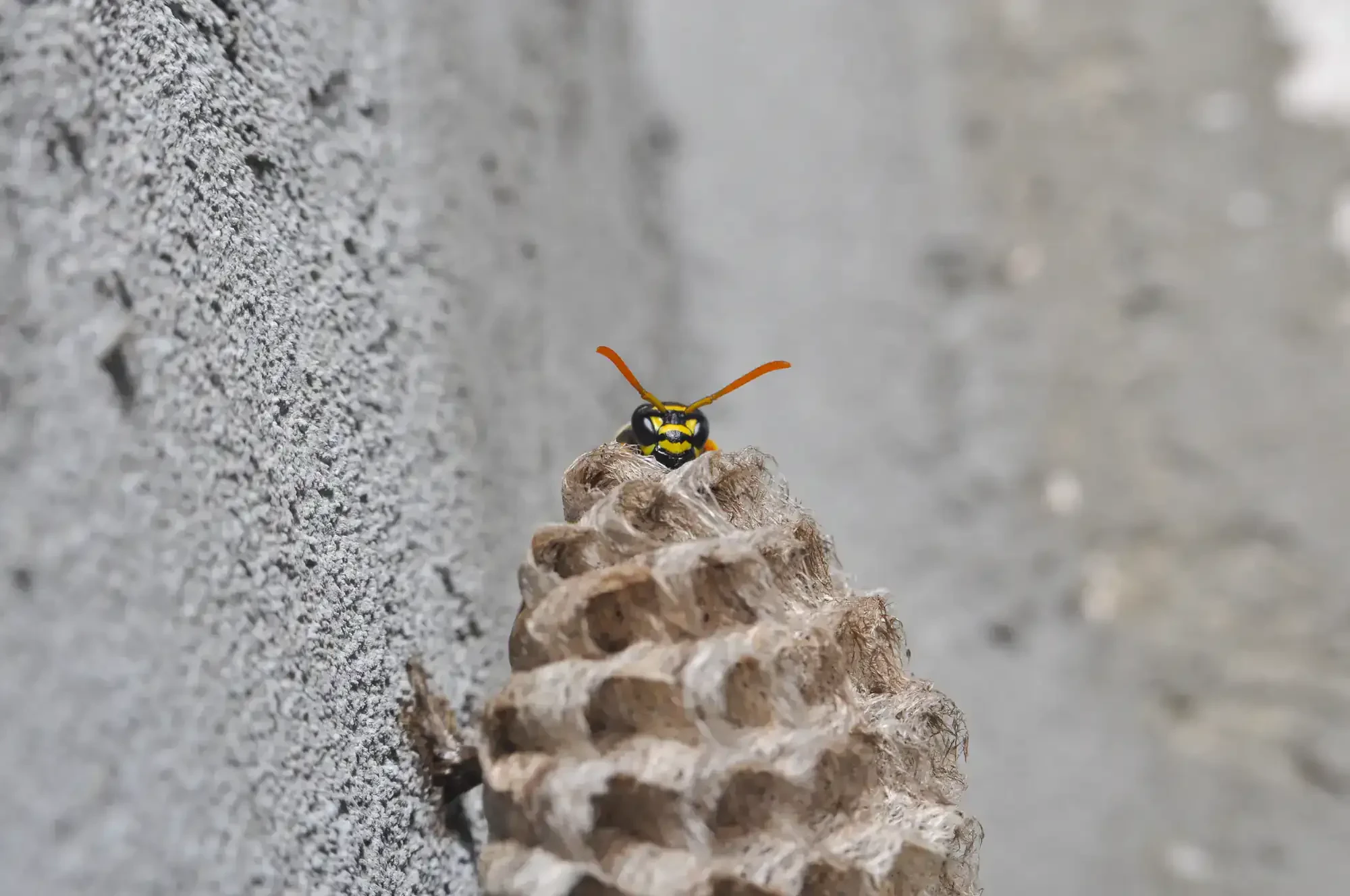
It starts with a proper inspection. Before anything gets treated, our technician identifies the species, locates the nest — whether it’s visible on your eaves or hidden inside a wall void — and assesses how established the colony is. In Byron, that often means checking outbuildings, tree lines along fence rows, and the older structural gaps that are common in homes of this age. A correct diagnosis is what determines the right treatment, and skipping that step is exactly why DIY attempts usually fail.
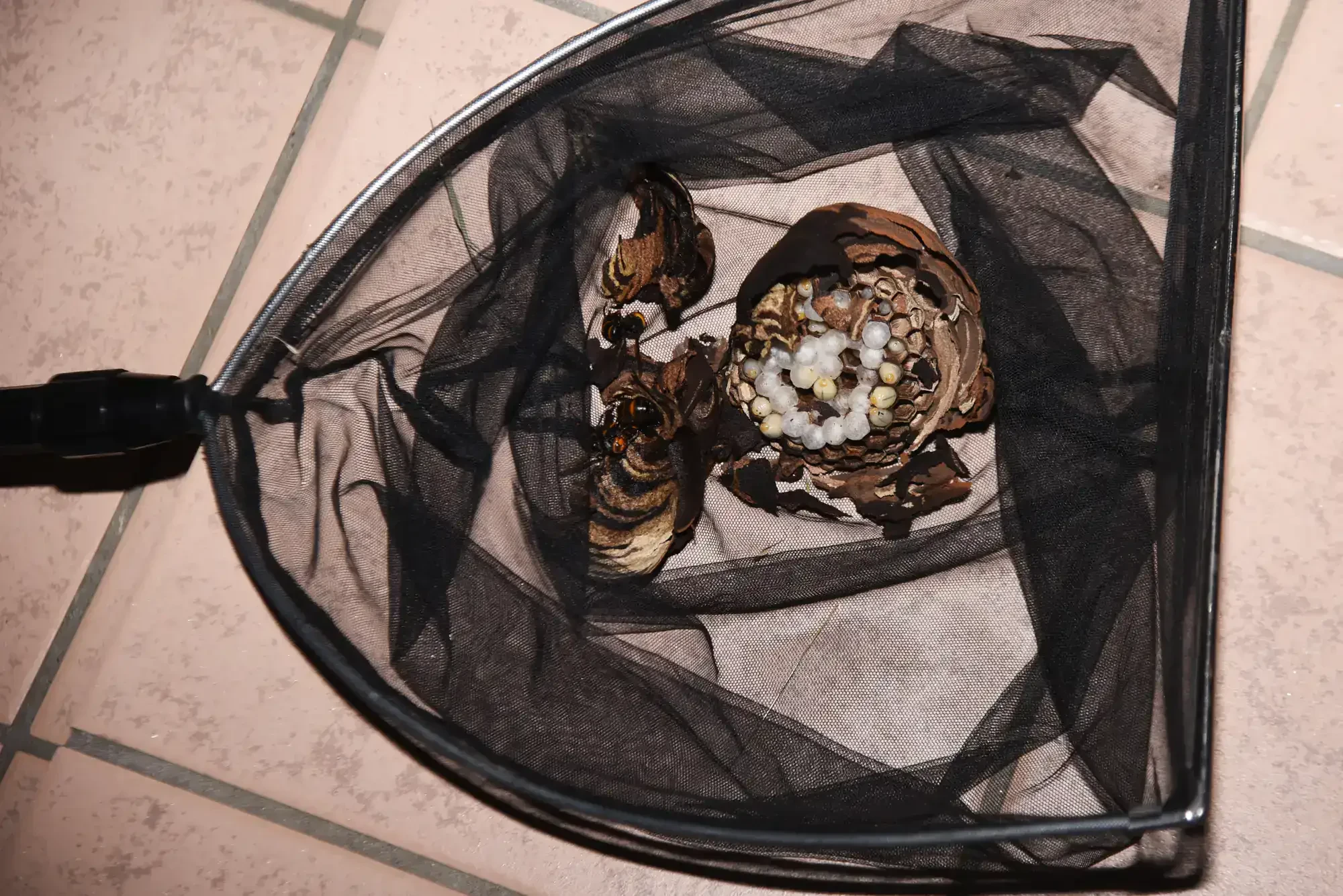
From there, the treatment is matched to the situation. A visible exterior nest gets a direct application that eliminates the colony at the source. A nest inside a wall void or structural cavity gets a professional dust treatment that penetrates the space and works through the colony without requiring you to tear open a wall. Both approaches are targeted — we hold IPM certification, which means the treatment is specific to the pest and the location, not a blanket chemical application across your entire property.
After the treatment, you’ll know what was done, where the nest was, and what to watch for going forward. If activity continues and a follow-up visit is needed, we come back. That’s not a conditional promise buried in fine print — it’s how we operate. Flat-rate, upfront pricing means you know the cost before anyone shows up, and discounts are available for seniors, veterans, and first responders.
Ready to get started?
Hornet control in Byron, MI isn’t one-size-fits-all — and we don’t treat it that way. Our service covers the full range of stinging insect situations that come up on rural and semi-rural properties in this area: bald-faced hornet nests on eaves and in trees, colonies established inside wall voids or attic spaces, nests in agricultural outbuildings and storage sheds, and late-season infestations that have grown well beyond what a store-bought product can safely address. Whatever the situation looks like on your property, the approach is built around it.
Bald-faced hornets are the most common and most aggressive stinging insect in Michigan, and the Burns Township area gives them everything they need — mature trees, open farmland, and aging structures with plenty of entry points. A colony that goes untreated from spring to late summer can reach several hundred workers. That’s not a problem you want to get closer to than you have to. We’re fully licensed under Michigan Pesticide Application Business License #250081, which means every treatment performed in Byron and across Shiawassee County meets state legal requirements — something worth confirming with any provider you consider.
Pricing is flat-rate and quoted upfront, so there’s no ambiguity about what you’re paying. We also offer price matching for reasonable competitor quotes, and if you’re a senior, veteran, or first responder, ask about available discounts when you call. Byron residents work hard for what they have — our pricing structure is built around fairness and transparency, not squeezing more out of a stressful situation.
Yes — Byron and the surrounding Burns Township area are within our service territory. We’re headquartered in Swartz Creek, Genesee County, and the Byron ZIP code (48418) extends into portions of Genesee County, which puts some Byron-area addresses in the same county as our base of operations. The broader Shiawassee County service area is also covered.
This is worth addressing directly because Byron is a small, rural village, and residents here are used to being told they’re outside a provider’s range. That’s not the case with us. When you call, you’re reaching a real Michigan company — not a national lead-generation site that will pass your number to an unknown contractor. We’ll confirm your address and get you scheduled. If you’ve been told before that Byron is too far out, it’s worth making the call and finding out for yourself.
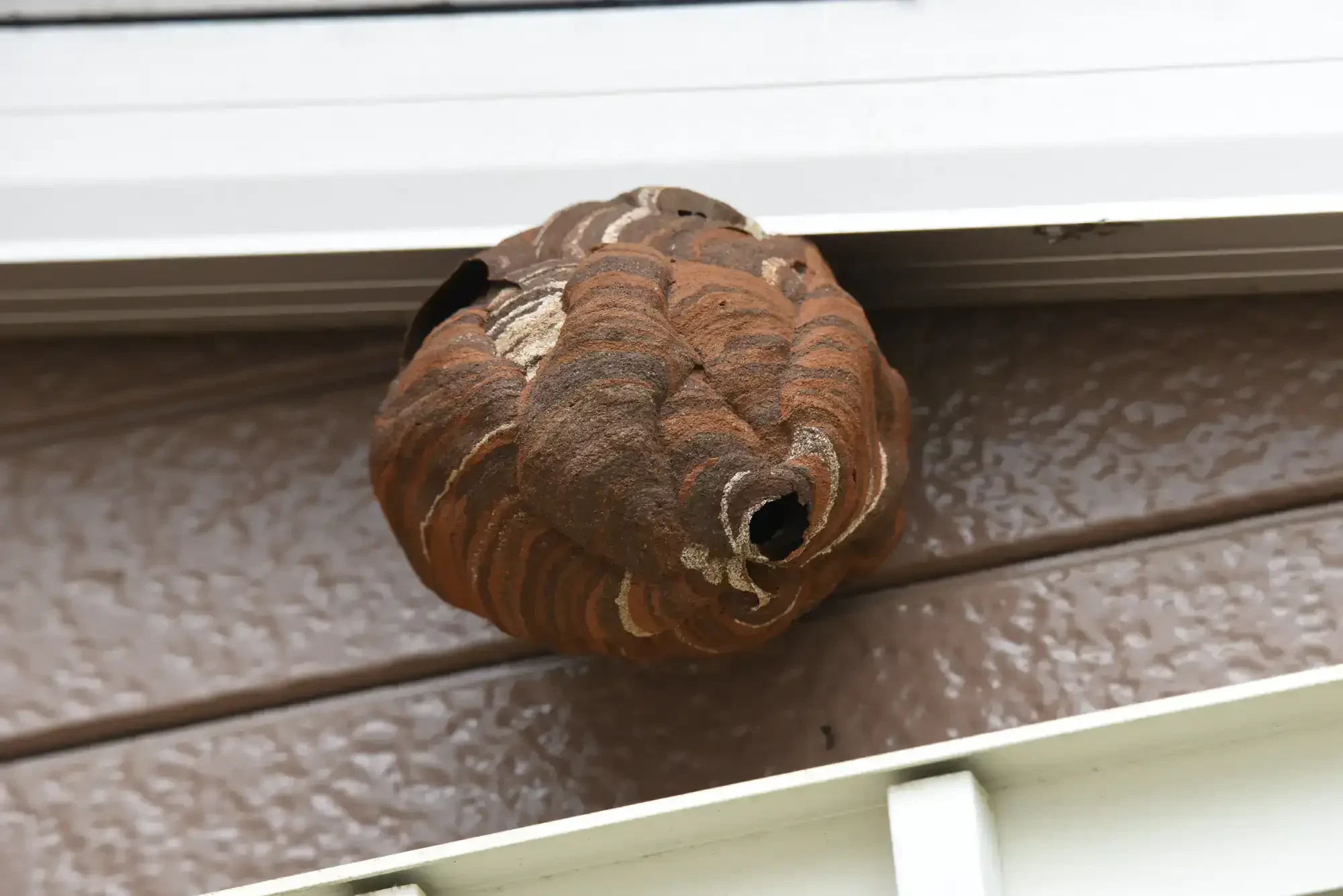
It does, and getting the identification right is one of the reasons professional hornet nest removal matters more than people realize. Bald-faced hornets — the most common aggressive stinging insect in Michigan — build large, enclosed, teardrop-shaped paper nests that hang from trees, eaves, and overhangs. Yellow jackets typically nest in the ground or inside wall voids and structural cavities. Both are aggressive when disturbed, but the treatment approach, the product selection, and the application method differ depending on which species you’re dealing with.
In Byron, both are common. The farmland and mature trees throughout the Burns Township area are prime bald-faced hornet habitat. The older homes in Byron — many with aging soffits, deteriorating fascia, and gaps in exterior walls — are common yellow jacket entry points. Our technicians identify the species before any treatment begins, which is the only way to make sure the right product gets applied in the right location. Treating a yellow jacket colony in a wall void the same way you’d treat a visible hornet nest on a branch won’t work — and can make the infestation worse.
For small nests caught very early in spring — think golf ball size, minimal activity — some homeowners do attempt treatment on their own. But there’s a real risk calculation involved, and most of the time it tips toward calling a professional. Bald-faced hornets are genuinely aggressive defenders of their colony. Unlike honeybees, they can sting multiple times without losing their stinger, and a disturbed nest can send dozens of workers at you within seconds. The CDC reports an average of 62 deaths per year in the U.S. from hornet, wasp, and bee stings — and that number includes people who had no prior history of severe allergic reaction.
In Byron specifically, the nests that tend to get called in are not the small, early-season ones. They’re the ones that went unnoticed through spring and early summer — in a shed that wasn’t opened until July, under an eave on the back of the house, or inside a wall that started buzzing. By that point, the colony is large, the workers are at peak aggression, and a hardware store spray applied at the wrong angle in the wrong conditions is more likely to provoke an attack than solve the problem. If you’re unsure, the cost of a professional assessment is a lot less than an ER visit.
Hornet removal costs vary depending on the nest location, the species, and how established the colony is. Nationally, professional hornet removal averages between $300 and $700, with bald-faced hornet removal — which often involves elevated or hard-to-reach nests — averaging closer to $625. A small spring nest that’s caught early can cost $200–$300 to treat. That same nest left until late summer, when the colony has grown to several hundred workers, can easily triple in removal cost.
We quote flat-rate, upfront pricing before any work begins. You know what you’re paying before the technician arrives — no surprises, no charges added after the fact. We also offer price matching for reasonable competitor quotes, so if you’ve already received a quote from another provider, bring it up when you call. For Byron residents who are price-conscious and want to know exactly what they’re committing to, that transparency matters. Discounts are also available for seniors, veterans, and first responders — ask when you schedule.
The honest answer is as early as possible — ideally spring, when overwintered queens are just starting to build new nests. At that stage, a colony might have only a handful of workers and a nest no larger than a tennis ball. Treatment is faster, less expensive, and carries far less risk than dealing with a full late-summer colony. If you spot a small paper structure forming on your eaves, in a shrub, or on an outbuilding in April or May, that’s the moment to call.
In Byron, the problem is that many properties include outbuildings, storage sheds, and barns that don’t get opened until late spring or early summer — and by then, a colony that established itself quietly over the prior weeks is already well underway. The agricultural character of the Burns Township area means there’s no shortage of undisturbed nesting sites. Once you’re into August and September, colonies are at peak population and workers are at their most defensive. That’s when most calls come in, and it’s the most expensive and most dangerous time to deal with the problem. If you’re seeing activity now, don’t wait to see if it resolves on its own — it won’t.
Yes. We offer discounts for seniors, veterans, and first responders. Byron is a working community — many households here are on fixed incomes, have served in the military, or include people who show up every day in roles that don’t always come with a lot of financial cushion. The discounts aren’t a marketing hook. They reflect how a family-owned business with 20 years in mid-Michigan actually thinks about the people we serve.
When you call to schedule hornet removal in Byron, MI, mention your status and ask about what’s available. Beyond the discount programs, we also offer price matching for reasonable competitor quotes — so if you’ve already done some shopping around and found a lower price from a licensed provider, bring it up. The goal is straightforward: you get a fair price, a licensed technician who knows what they’re doing, and a result that holds. That’s the standard we’ve operated by since 2005, and it applies just as much in Byron as anywhere else in our service area.
Useful Links