
Hear from Our Customers
Rural properties in and around Byron don’t just have one spot to worry about. You’ve got eaves, outbuildings, old fence lines, garden beds, and ground cover that wasps treat like prime real estate. By August and September — when yellow jacket colonies in Michigan can swell to 15,000 workers — the pressure on a Byron property is at its worst. That’s not when you want to be guessing.
When the nest is gone and the entry points are sealed, you can mow your lawn without watching your step. You can walk into the barn without bracing for it. The kids can be outside again. That’s the actual outcome — not just a sprayed nest, but a property where you’re not managing around a hazard every single day.
Homes in the 48418 ZIP code were largely built in the 1960s and 1990s, and decades of weathering mean gaps in soffits, fascia, and siding that yellow jackets find fast. Add in the Shiawassee River corridor running through Burns Township and the moisture-rich environment it creates, and you’ve got conditions that support large, persistent colonies. Knowing what’s driving the problem here — not just what’s visible — is what makes the difference between a treatment that holds and one that doesn’t.
We founded First Choice Pest Control on May 31, 2005 — which means this year marks 20 years of serving Byron, Shiawassee County, and the communities surrounding it. Roger Chinault started this company and has run it the same way since day one: career technicians only, no part-time fill-ins, and the same person assigned to your property year after year. That consistency matters more than it sounds when you’re dealing with a rural Byron property that has multiple structures, a few acres, and pest pressure that changes season to season.
We hold full MDARD licensing, carry Integrated Pest Management training credentials, and have earned recognition from both Angie’s List and HomeAdvisor — not through paid placement, but through verified customer reviews over time. If you’re a senior, veteran, or first responder, ask about available discounts when you call. And if you’ve already gotten a quote from someone else, ask about price matching.
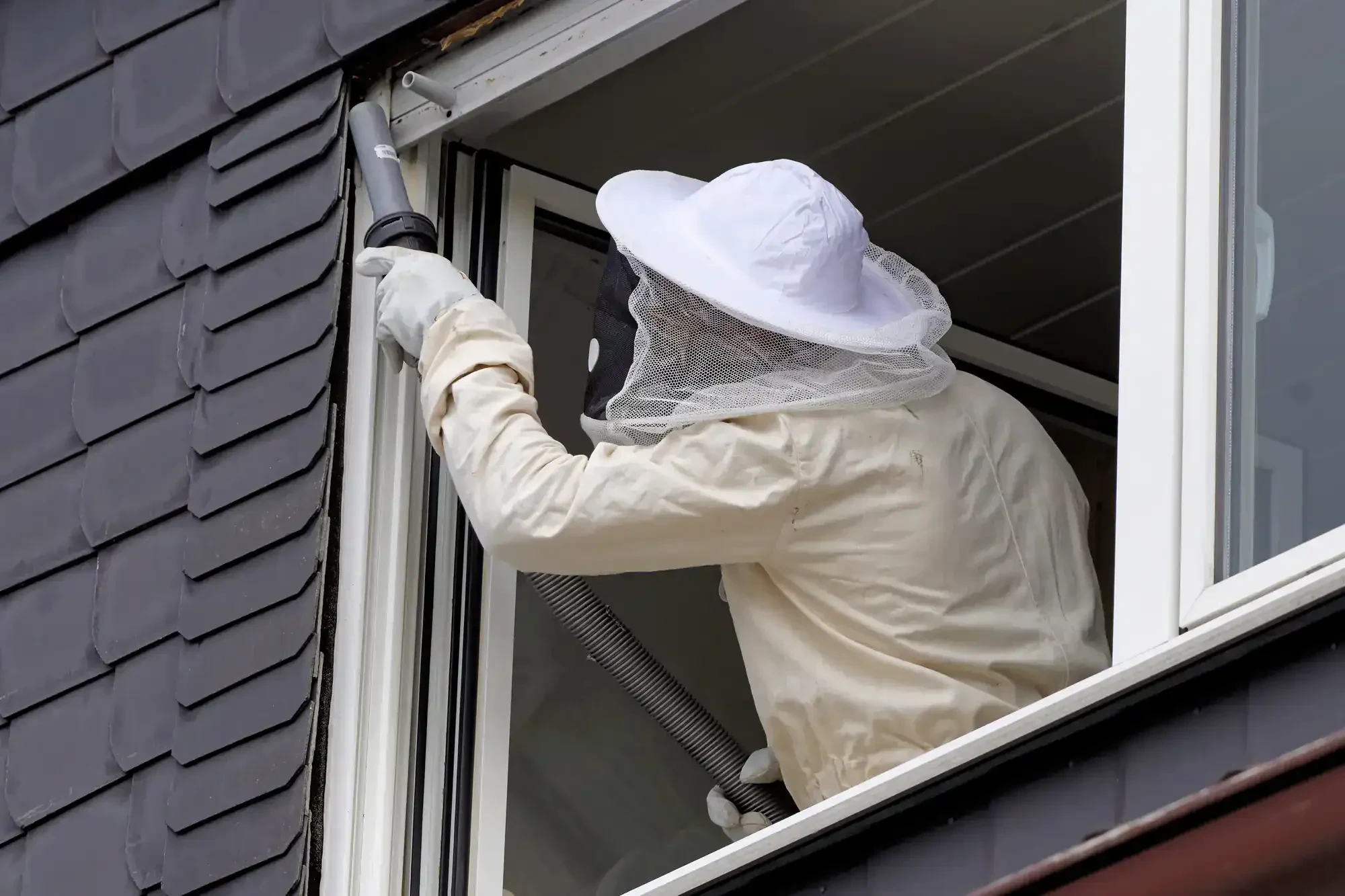
It starts with a thorough inspection — not a quick walk around the front of the house. On a rural Byron property, that means checking the obvious spots and the ones most people miss: wall voids in older siding, open beam areas in sheds and barns, ground nests tucked into lawn edges or garden beds, and tree canopy nests that only become visible once you’re looking for them. Missing a second nest means the problem isn’t solved, and that’s not a call you want to be making a week later.
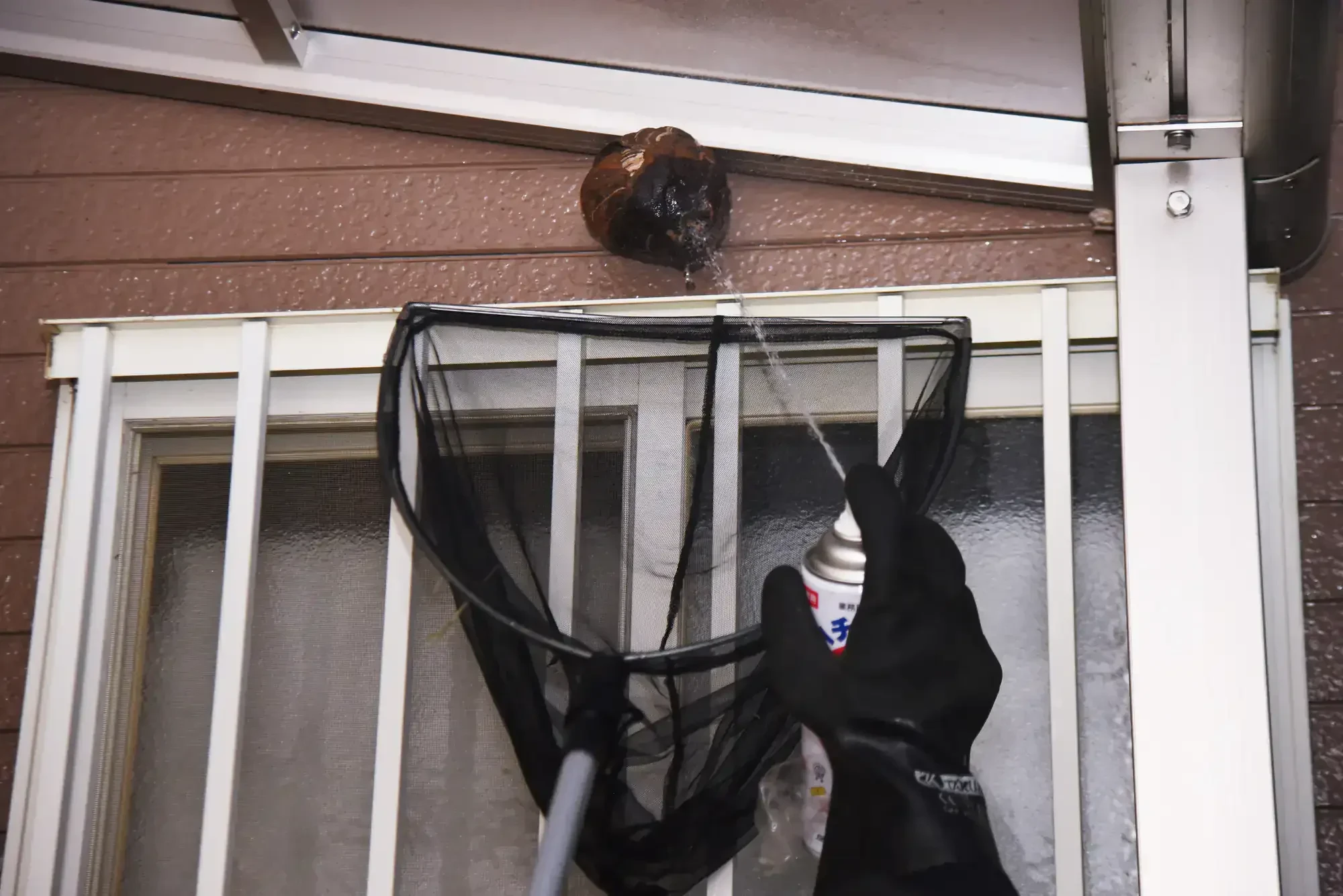
Once the full picture is clear, we target treatment to the species and the location. Eastern yellow jackets nesting in the ground get a different approach than paper wasps building under an eave or bald-faced hornets up in a shrub line. After the colony is treated, we remove the nest structure and seal entry points — because yellow jackets don’t reuse old nests, but they absolutely return to the same favorable location if it’s left open.
Michigan’s pest control licensing requirements under MDARD mean that any professional working on your property needs to be a registered, licensed applicator — not a referral from a national aggregator site that can’t verify who’s actually showing up. We meet that standard and then some. If stinging insects return to a treated area, we return too.
Ready to get started?
Wasp nest removal in Byron, MI covers the full range of stinging insects common to Shiawassee County: eastern yellow jackets, German yellow jackets, paper wasps, and bald-faced hornets. Each one nests differently, behaves differently, and requires a different treatment approach. A one-size-fits-all spray is how you end up with a partially treated colony that’s now agitated and looking for a way out through your walls.
What you get from us is a complete service — inspection, species identification, targeted treatment, physical nest removal where accessible, and entry point sealing to reduce the chance of re-nesting in the same location. For Byron properties near the Byron Millpond or along the Shiawassee River corridor, where moisture and dense vegetation create ideal conditions for large colonies, that thoroughness isn’t optional — it’s the only approach that actually holds.
Wasp pest control in Byron, MI also means knowing the seasonal window. Late summer is when colonies are largest and most aggressive, and it’s when the risk of a sting incident on a rural property peaks. If you’re mowing, working on equipment, or maintaining outbuildings in August or September and you’ve noticed heavy activity, that’s not the time to wait and see. We serve both residential and commercial properties across Shiawassee County — and if you’ve already gotten a quote elsewhere, ask about price matching before you book.
The cost of wasp nest removal in Byron, MI depends on a few key factors: the species involved, where the nest is located, how large the colony has grown, and how many nests are present on the property. A single paper wasp nest under an eave is a straightforward job. A yellow jacket colony that’s built inside a wall void of a 1970s farmhouse — common in the 48418 ZIP code given the age of the housing stock — is a more involved treatment that takes more time, more precision, and more material.
Across Shiawassee County, pest control services for stinging insects typically range from around $85 on the low end for minor treatments to several hundred dollars or more for complex infestations. We offer price matching for reasonable competitor quotes, so if you’ve already gotten a number from someone else in Byron, it’s worth a call before you book. Transparency on cost before any work begins is standard — no surprises after the fact.
Technically, yes — you can attempt it. But the risk calculus on a rural Byron property is different than it is in a suburban backyard. When you’re dealing with a yellow jacket ground nest in a lawn edge or a colony that’s built into an outbuilding wall, a can of hardware store spray often agitates the colony without eliminating it. Yellow jackets that are disturbed but not killed will defend aggressively, and on a property where you might be 50 yards from your back door, that’s a real problem.
Approximately 1 to 3 percent of adults can develop anaphylaxis from stinging insect venom — a potentially life-threatening reaction that requires emergency care. If you’ve had a prior severe reaction to a sting, the risk of anaphylaxis on the next exposure is significantly higher. For anyone in that category, DIY removal near an active colony is genuinely dangerous. Our professional treatment eliminates the colony, removes the nest, and seals the entry point so the situation doesn’t repeat.
August and September are the peak danger months for wasp and yellow jacket activity across Michigan, including Shiawassee County and Byron. Queen wasps emerge in spring and begin building colonies, which grow steadily through June and July. By late summer, a yellow jacket colony can hold anywhere from 5,000 to 15,000 workers — and as natural food sources start to decline heading into fall, those workers become more aggressive and more likely to sting with minimal provocation.
For Byron residents who spend time outdoors during that window — mowing, gardening, working around barns or sheds, or just using the backyard — late summer is when the risk is highest. The first hard frost in October will kill off the workers, but waiting until fall to deal with an active nest near a high-traffic area of your property is a gamble that isn’t worth taking. If you’re seeing heavy activity in August, that’s the time to call — not after someone gets stung.
The most common stinging insect problem on rural properties in and around Byron is the eastern yellow jacket. They prefer to nest in the ground — often in lawn edges, garden beds, compost areas, and soil disturbed by foot traffic or equipment. Because their nests are underground, homeowners frequently don’t notice them until they’ve accidentally disturbed one while mowing or working in the yard. German yellow jackets are also common in Michigan and tend to nest in wall voids, which makes them particularly problematic in older Byron homes with aging siding and soffits.
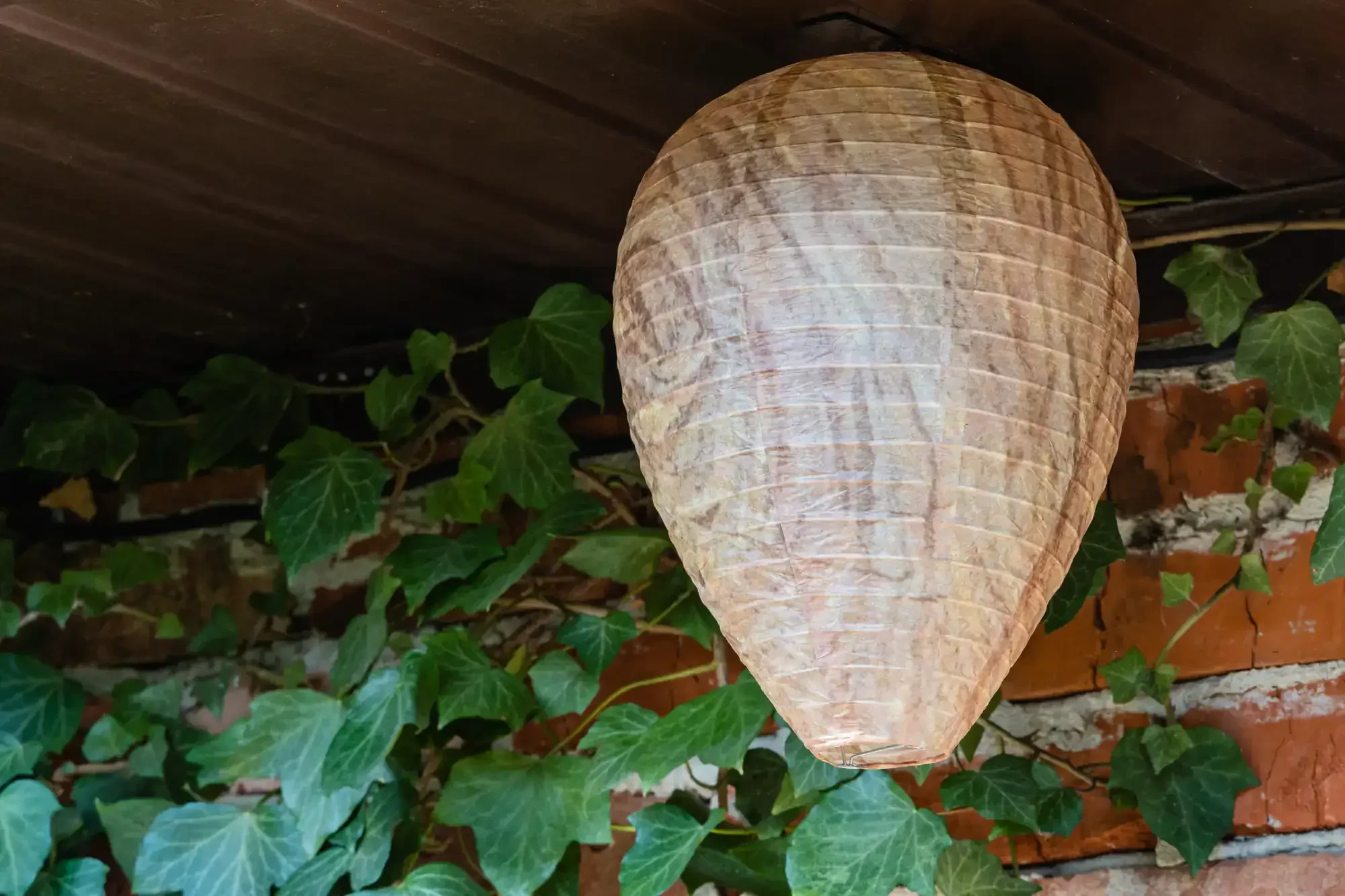
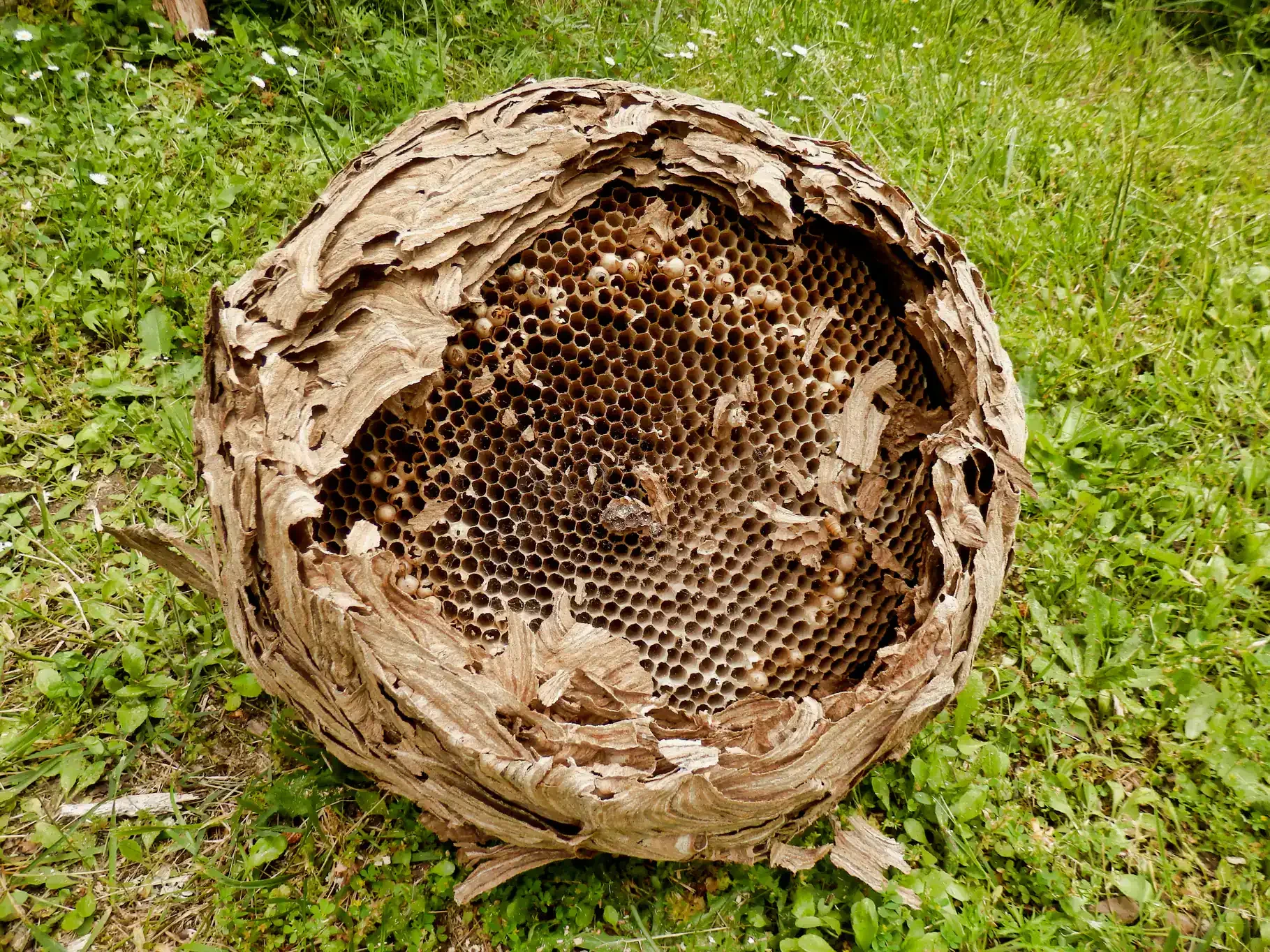
Paper wasps are the ones most people recognize — they build the open, honeycomb-style nests that hang under eaves, in barn rafters, and along fence lines. They’re less aggressive than yellow jackets but will sting if the nest is threatened. Bald-faced hornets build the large, papery gray nests you’ll sometimes see in tree canopy or dense shrubs, and they’re notably aggressive defenders. Knowing which species you’re dealing with matters because each one requires a different treatment approach to resolve effectively.
Yes — and it’s one of the more common scenarios on properties in the 48418 ZIP code. Homes built in the 1960s through 1990s, which make up a significant portion of Byron’s housing stock, develop gaps in fascia boards, soffits, and siding over time as materials age and shift. Yellow jackets in particular are drawn to these entry points and will build large colonies inside wall voids, sometimes numbering in the thousands before the homeowner realizes what’s happening.
Wall void nests are among the most difficult and potentially costly to treat because the colony is hidden, the entry point isn’t always obvious, and a poorly executed treatment can drive workers further into the wall rather than eliminating them. In some cases, if a colony dies inside a wall without proper treatment and removal, the decaying nest can attract secondary pests. A thorough inspection that locates the entry point, treats the colony correctly, and seals the opening afterward is the only approach that fully resolves the problem.
We offer discounts for seniors, veterans, and first responders. Byron is a small, rural community in Shiawassee County where a meaningful number of residents fall into one or more of those categories — and the discount is a straightforward acknowledgment of that. It’s applied when you call and mention it, no paperwork required.
Beyond the discount, we also offer price matching for reasonable competitor rates. So if you’ve already gotten a quote from another wasp exterminator serving the Byron, MI area, call and share that number before you book. The goal is to make sure cost isn’t the reason someone leaves an active wasp nest untreated on their property — especially heading into late summer when colony size and aggression are at their peak. We have no binding contracts, so you’re not committing to anything beyond the service you need right now.
Useful Links