
Hear from Our Customers
A hornet nest doesn’t stay small. What looks manageable in May turns into a colony of several hundred workers by August — right when Davidson kids are outside every day before school starts back up. That’s Michigan’s climate doing exactly what it does every year, compressing hornet colony growth into a short, intense warm season that catches most homeowners off guard.
Davidson housing stock makes this harder to catch early. The older Colonial-era homes along established neighborhoods feature aging fascia boards, weathered wood trim, and soffit gaps that bald-faced hornets treat like an open invitation. Newer craftsman builds near the Irish Road corridor aren’t immune either — garage door frames, fresh mulch beds, and open deck structures are common nesting spots on properties that look brand new. The nest location determines the treatment, and getting that wrong is how you end up with a bigger problem than you started with.
Professional hornet removal means you’re not guessing, not spraying a can from ten feet away, and not hoping it works. You get a trained technician who identifies the species, locates the full extent of the nest, and applies a targeted treatment that’s safe for the people and pets using that space. The nest gets handled. Your outdoor space becomes yours again.
We were founded on May 31, 2005, and have been serving communities across Genesee County — including Davidson — for two decades. We’re headquartered in Swartz Creek, which means when you call, you’re talking to a company that knows M-15, knows Irish Road, and knows the difference between the property types Davidson actually has. This isn’t a national chain routing your call through a 1-800 number.
Roger, our owner, brings 26 years of hands-on pest control experience to every job. He built this business on a straightforward idea: keep the same technician assigned to each customer year after year, don’t cut corners with untrained seasonal workers, and customize every treatment to the specific property. That approach has earned us a 4.7-star Google rating, recognition from Angie’s List and HomeAdvisor, and BBB accreditation — but more than that, it’s earned repeat customers throughout Davidson and the surrounding township.
We also hold Michigan Pesticide Application Business License #250081 and IPM training certification recognized by MDARD. Those aren’t just credentials on a wall. They’re the reason our treatments are targeted, responsible, and built around your family’s safety — not a one-size-fits-all spray schedule.
It starts with a call. You describe what you’re seeing — where the nest is, how long it’s been there, whether you’ve noticed increased activity. That information matters because hornet behavior in Davidson shifts significantly between June and September. A nest spotted in a backyard tree in July is a different situation than one found inside a wall void of an older home on East Coldwater Road in August. Our technician needs to know what they’re walking into.
When our technician arrives, the first step is identification. Bald-faced hornets and European hornets are both present in Genesee County, and they nest differently, behave differently, and require different treatment approaches. Misidentifying the species — or missing a satellite nest nearby — is the most common reason a DIY attempt or an under-qualified service call fails. Our technician is trained to assess the full picture before applying anything.
Treatment is targeted and applied with your household in mind. We use IPM-certified methods, which means the least invasive, most effective approach for your specific situation — not a blanket chemical application across your yard. Wall void nests in older Davidson homes typically require a dust treatment applied directly into the void. Elevated nests in trees or under eaves are treated with appropriate equipment and timing. After treatment, you’ll know what to expect in the following 24 to 72 hours, and if a follow-up is needed, we come back at no additional charge.
Ready to get started?
Every hornet removal service we provide in Davidson starts with a proper inspection — not a quick glance from the driveway. Our technician assesses the nest location, species, colony size, and any structural access points that may be contributing to the problem. For Davidson older Colonial-era homes, that often means checking fascia boards, attic vents, and exterior wall gaps that have been slowly weathering for decades. For newer builds near the township’s growing commercial corridors, it means checking garage structures, deck framing, and landscaping beds where ground-level activity is easy to miss.
Treatment is customized to what’s actually there. There’s no flat script. Bald-faced hornet nests in elevated locations — trees, second-story eaves, roof overhangs — require different equipment and timing than a European hornet colony that has moved into a wall void. We carry the tools and training to handle both, including situations where structural access is limited or the nest is in a location a hardware store spray can simply can’t reach safely.
The service also includes guidance on what to watch for after treatment and whether any follow-up is warranted. Davidson properties that border the agricultural fields along the township’s edges, or that sit near active construction zones like the Irish Road development corridor, can see recurring pressure from displaced colonies. We’ll tell you honestly whether a one-time removal is enough or whether a prevention plan makes more sense for your specific property — and if you’ve received a reasonable quote from another local provider, we’ll match it.
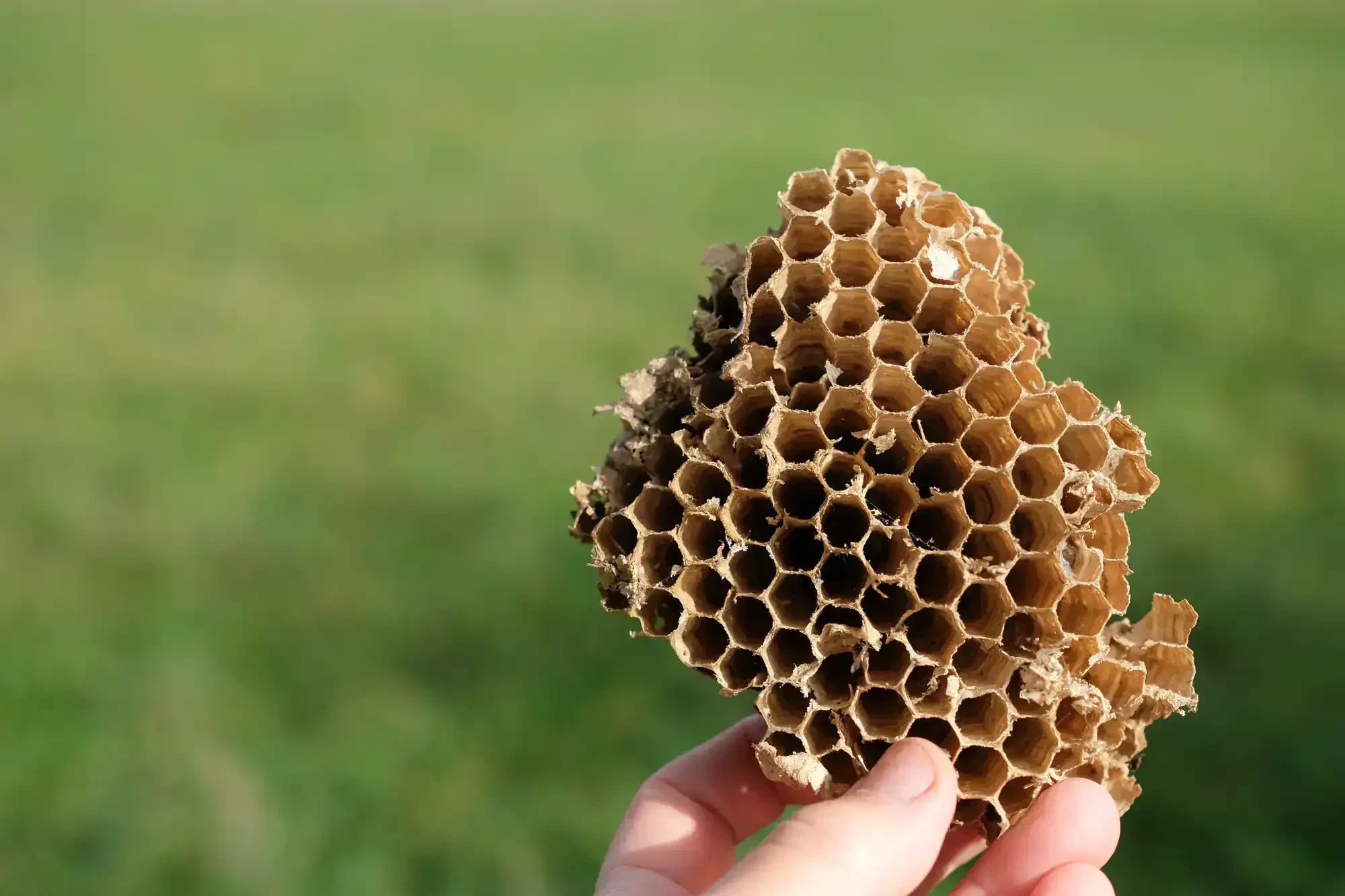
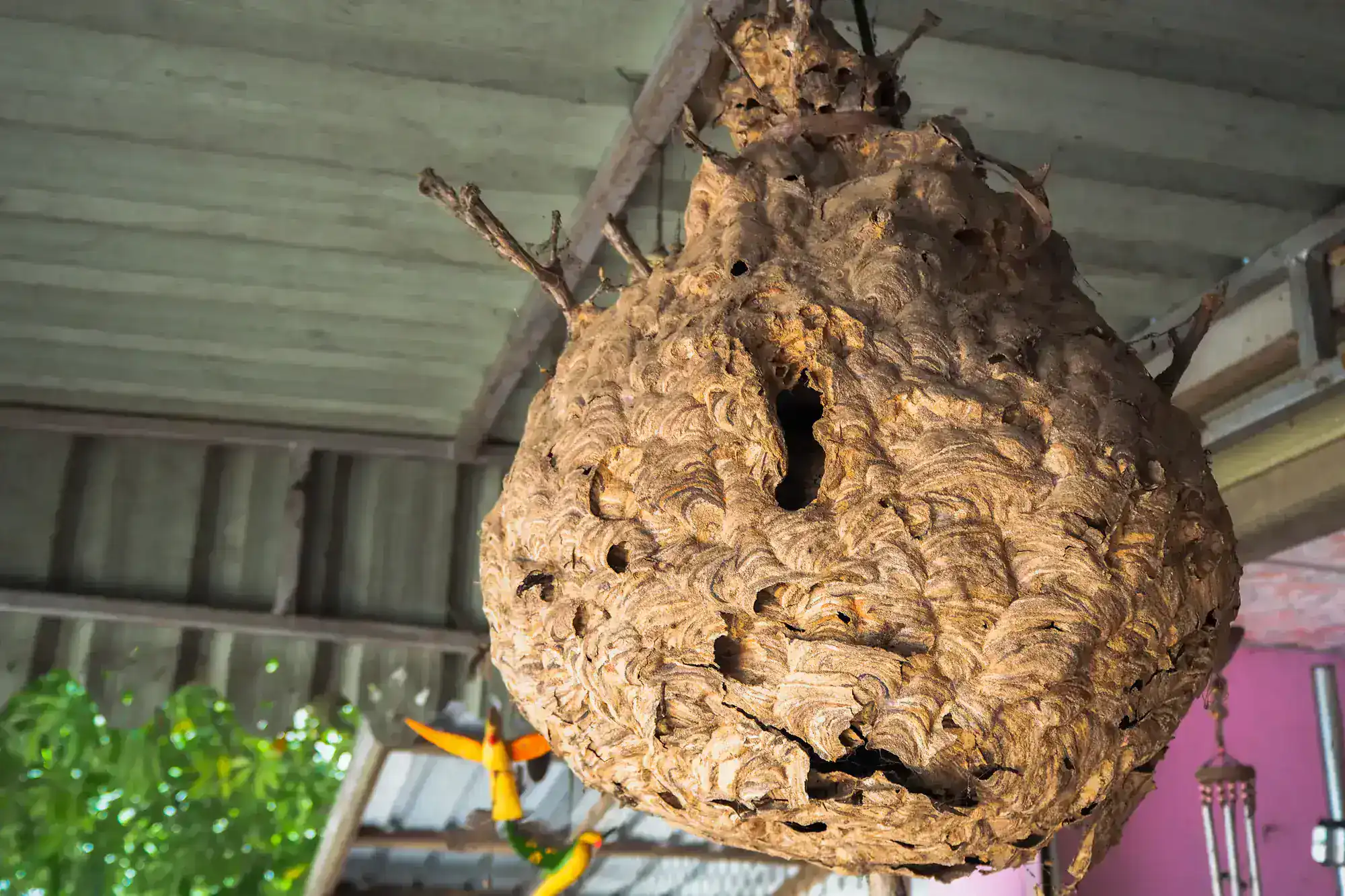
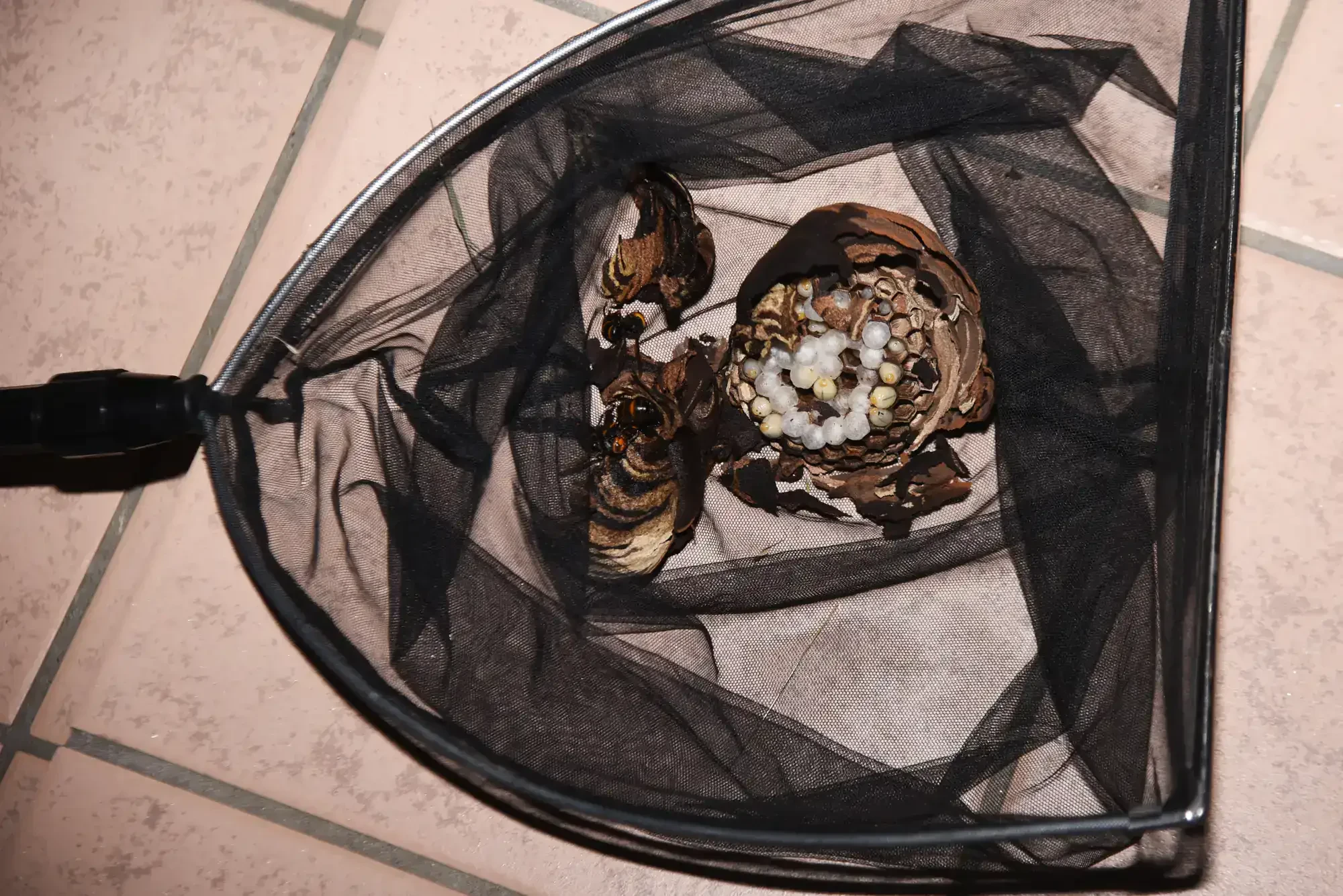
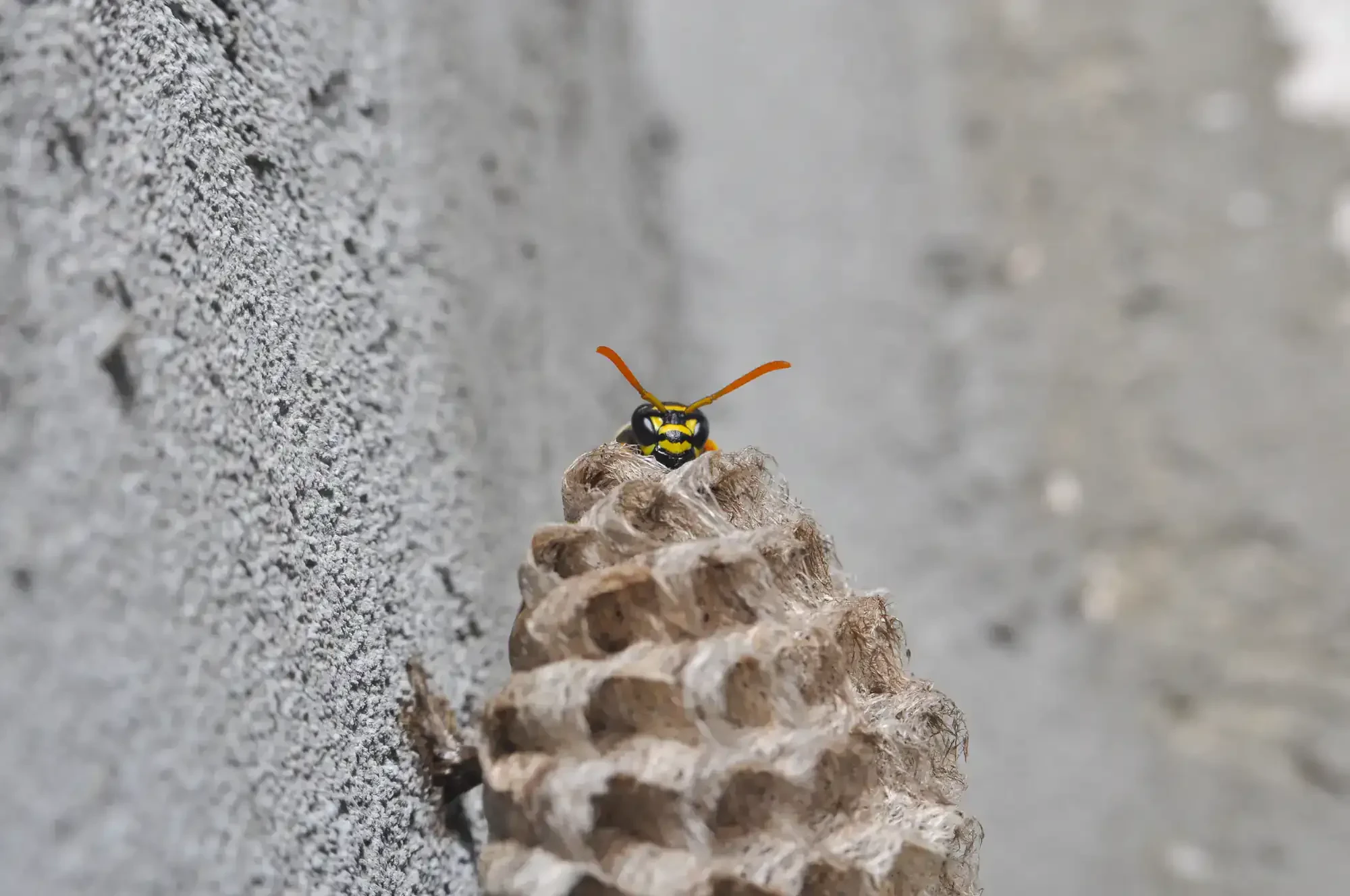
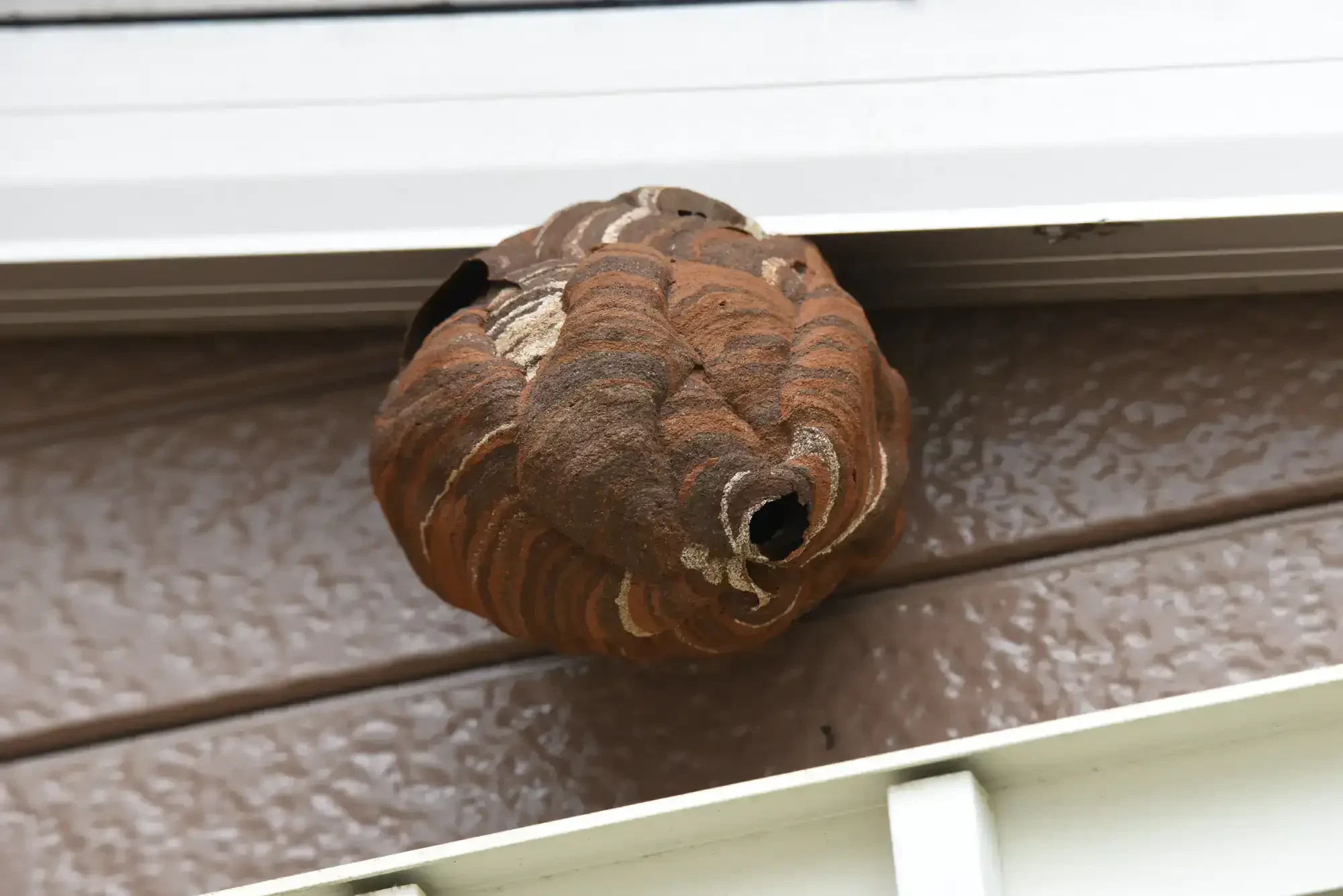
The two species you’re most likely to encounter in Davidson are bald-faced hornets and European hornets. Bald-faced hornets are the most common — they build the large, gray, paper-like nests you’ll often spot in trees, under eaves, or attached to the side of a structure. They’re not true hornets scientifically, but they’re aggressive defenders of their nest and can sting multiple times without losing their stinger. European hornets are the only true hornet species in North America and tend to nest in hollow trees, wall voids, or attic spaces — which makes them harder to spot until the colony is well established.
Both species become significantly more aggressive in late summer. By August in Genesee County, colonies are at their largest and workers are actively defending diminishing food sources. That’s the time of year when accidental contact — walking near a nest you didn’t know was there, or disturbing one while doing yard work — is most likely to result in multiple stings. For anyone with a known allergy to insect venom, that’s a genuine medical risk, not just an inconvenience.
Technically, you can try — but the failure rate is high enough that it’s worth understanding what you’re taking on before you buy a can of spray at the hardware store. Most consumer-grade aerosols require you to be within a few feet of the nest, which puts you directly in the defensive zone of a colony that can have hundreds of workers. Bald-faced hornets, which are common throughout Davidson and Genesee County, are particularly aggressive when the nest is disturbed. A partial treatment that doesn’t eliminate the queen or the colony core often results in the surviving hornets relocating to a spot that’s harder to find and treat.
The situations where DIY almost always fails: nests inside wall voids, nests in elevated locations on two-story homes, and any nest that’s been active for more than a few weeks and has a large established colony. In those cases, the risk to you is real, and the likelihood of fully resolving the problem without professional equipment and training is low. A licensed exterminator has the protective gear, the right product formulations, and the experience to treat the nest completely — including checking for satellite activity nearby that a homeowner would typically miss.
For most residential hornet removal jobs in the Davidson area, you’re looking at a range of roughly $300 to $700, depending on the species, nest location, size of the colony, and how accessible the nest is. Bald-faced hornet nests in elevated locations — second-story eaves, tall trees, roof overhangs — tend to land toward the higher end of that range because of the equipment and safety precautions involved. Ground-level nests or smaller, early-season colonies are typically on the lower end.
What affects the price most is how long the nest has been there and where it’s located. A nest found in May when the queen is just getting started is a much simpler job than the same nest in August when the colony has grown to full size. Davidson older Colonial-era homes can also add complexity when nests are inside wall voids or attic spaces, since those require a different treatment method than an exposed exterior nest. We provide upfront pricing before any work begins, and if you’ve received a reasonable quote from another licensed provider in the area, we’ll match it.
The most common sign is sound — a low buzzing or humming coming from inside a wall, particularly in the morning or evening when hornet activity is highest. You might also notice hornets repeatedly entering and exiting a small gap in your siding, around a window frame, or near a soffit vent. In Davidson older neighborhoods, where homes from the 1960s have decades of weathering on their exterior materials, those entry points are easy to miss because they often look like normal wear rather than an active access point.
If you’re seeing hornets inside your home — not just outside near a window, but actually inside living spaces — that’s a strong indicator of a wall void nest. Hornets chewing through drywall to expand their nest into interior space is uncommon but does happen with established colonies. Don’t seal the entry point yourself before treatment. Blocking the exit without eliminating the colony first forces hornets to find another way out, which sometimes means into your living space. A professional inspection will locate the nest, assess its size, and treat it with a dust application designed specifically for enclosed void spaces — the only approach that reliably works in this situation.
The honest answer is as early as you spot the problem. In Michigan’s climate, hornet queens emerge from overwintering in April and May and begin building new nests immediately. If you catch a nest in late spring when it’s still small — roughly the size of a golf ball or tennis ball — treatment is simpler, faster, and typically less expensive. The colony is small, the queen is accessible, and the risk of aggressive defensive behavior is much lower than it will be in two months.
By August, which is peak season in Genesee County, a bald-faced hornet colony can contain 400 or more workers. That’s also the month Davidson Community Schools students return to class, which means kids are back at bus stops, in yards, and walking routes where nests may have been growing unnoticed all summer. Scheduling removal in June or July — before the colony hits its peak and before back-to-school activity picks up — is the window that gives you the most control over the situation. If you’re already in August or September, don’t wait. Hornets become more aggressive in fall as the colony begins to decline and food sources get scarce, which makes late-season nests more dangerous, not less.
Yes. We offer discounts for senior citizens, military veterans, and first responders. Genesee County has a strong presence of all three — retirees who’ve lived in Davidson for decades, veterans who settled here after service, and the firefighters, police officers, and EMS personnel who serve communities throughout the township and surrounding area. These discounts aren’t an afterthought. They reflect the kind of community we’ve been operating in for 20 years and the people we’ve been serving since 2005.
If you’re not sure whether you qualify, just ask when you call. The process is straightforward — no paperwork hoops or complicated verification. We also offer price matching for reasonable competitor quotes, so if you’ve already gotten an estimate from another licensed pest control provider in the Davidson area, bring it up during your call. The goal is to make professional hornet removal accessible without making you feel like you’re negotiating for a fair price.
Useful Links