
Hear from Our Customers
When hornets set up in a wall void or under the eave of an outbuilding, they don’t just stay there. Workers defend a wide radius, and on a Gratiot County property where you’re moving between a house, a barn, a shed, and open fields every day, that radius matters. You shouldn’t have to reroute your morning just to avoid a nest near the back door or the equipment shed.
Out here in Deer Creek, where nearly 80% of the land is actively farmed and most properties have structures that were built decades ago, hornets find more places to nest than they would on a newer suburban lot. Older siding gaps, unfinished soffits, wooden outbuildings with open eaves — these are exactly the conditions bald-faced hornets look for. A hardware store spray can’t reach a nest inside a wall cavity, and agitating a colony of 400 workers without the right treatment makes the situation worse, not better.
Professional hornet removal means the nest is treated at the source, the colony is eliminated, and you’re not left wondering whether they’ll be back in the same spot next season. That’s the outcome — not just a visit, but a solved problem.
We’ve been serving central and southeast Michigan since May 31, 2005. Roger, our owner, brings 26 years of hands-on pest control experience to every job — not from a management office, but from the field. That kind of experience means he’s handled the hard cases that show up on Deer Creek properties: nests buried in farmhouse walls, colonies established deep in barn siding, and late-season bald-faced hornet nests the size of a basketball hanging from a tree line along a Gratiot County fence row.
We hold Michigan Pesticide Application Business License #250081 and are IPM-certified through the Michigan Department of Agriculture and Rural Development — the same agency that oversees agricultural practices across Gratiot County. That matters on farm properties where chemical safety near crops, livestock, or well water isn’t a preference, it’s a requirement.
We’ve earned awards from both Angie’s List and HomeAdvisor, carry a 4.7-star rating across 67+ verified Google reviews, and have been the same family-owned operation since day one. No franchise. No rotating staff. The same technician comes back to your property year after year.
It starts with a call. You describe what you’re seeing — where the nest is, how long it’s been there, whether it’s accessible or tucked into a wall. That conversation matters because the treatment approach for a visible paper nest in a tree line is completely different from a colony living inside the wall void of an older farmhouse. Knowing which one you’re dealing with before our technician arrives means the right materials come with them on the first visit.
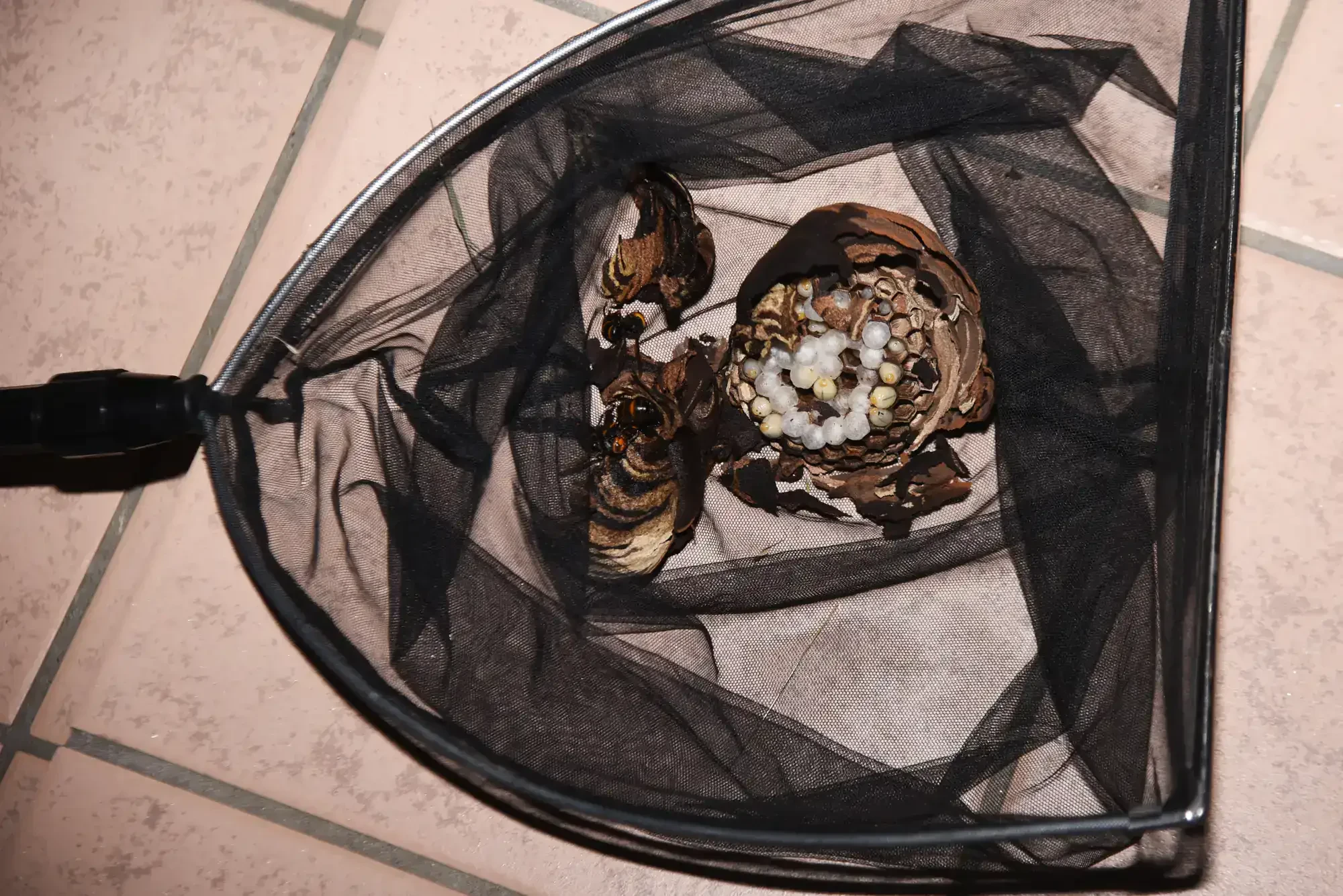
On-site, our technician identifies the species — bald-faced hornets and European hornets behave differently and require different treatment timing and methods. Bald-faced hornets are the most common in this part of Michigan, and their enclosed paper nests in eaves and outbuildings are best treated with a professional dust application that penetrates the nest cavity. Sprays available at hardware stores don’t reach the interior of a wall void nest, and a disturbed colony in an enclosed space is significantly more dangerous than one that was left alone.
After treatment, you’ll get a clear picture of what was done, what to expect in the next 24 to 48 hours, and what follow-up looks like if needed. If the job needs a second visit — which can happen with large or multi-entry wall void nests common in older rural structures — that’s handled at no additional cost. The goal is a resolved problem, not a completed ticket.
Ready to get started?
Hornet removal in Deer Creek, MI through our company covers the full scope of what a rural property actually needs — not just a spray at the nest entrance and a handshake. Our technician identifies the species, locates all active entry points, and applies the appropriate treatment for the nest type and location. For wall void nests in older farmhouses or outbuildings — which are common throughout Gratiot County’s aging rural housing stock — that means a professional dust treatment that reaches the interior of the colony, not just the surface.
We provide flat-rate pricing given upfront. No surprises based on property size, ladder work, or second-story access. If you’ve received a quote from another company, we’ll match reasonable competitor pricing. Seniors, veterans, and first responders receive discounts — and in a county with Gratiot’s agricultural and military heritage, that’s not a footnote, it’s a real part of how we do business.
Every treatment is performed under Michigan Pesticide Application Business License #250081 with IPM-certified methods — meaning the approach is targeted, not a blanket chemical application that puts your garden, livestock, or well water at risk. If you’re on a farm property near active crops or livestock areas, that distinction is worth asking about when you call.
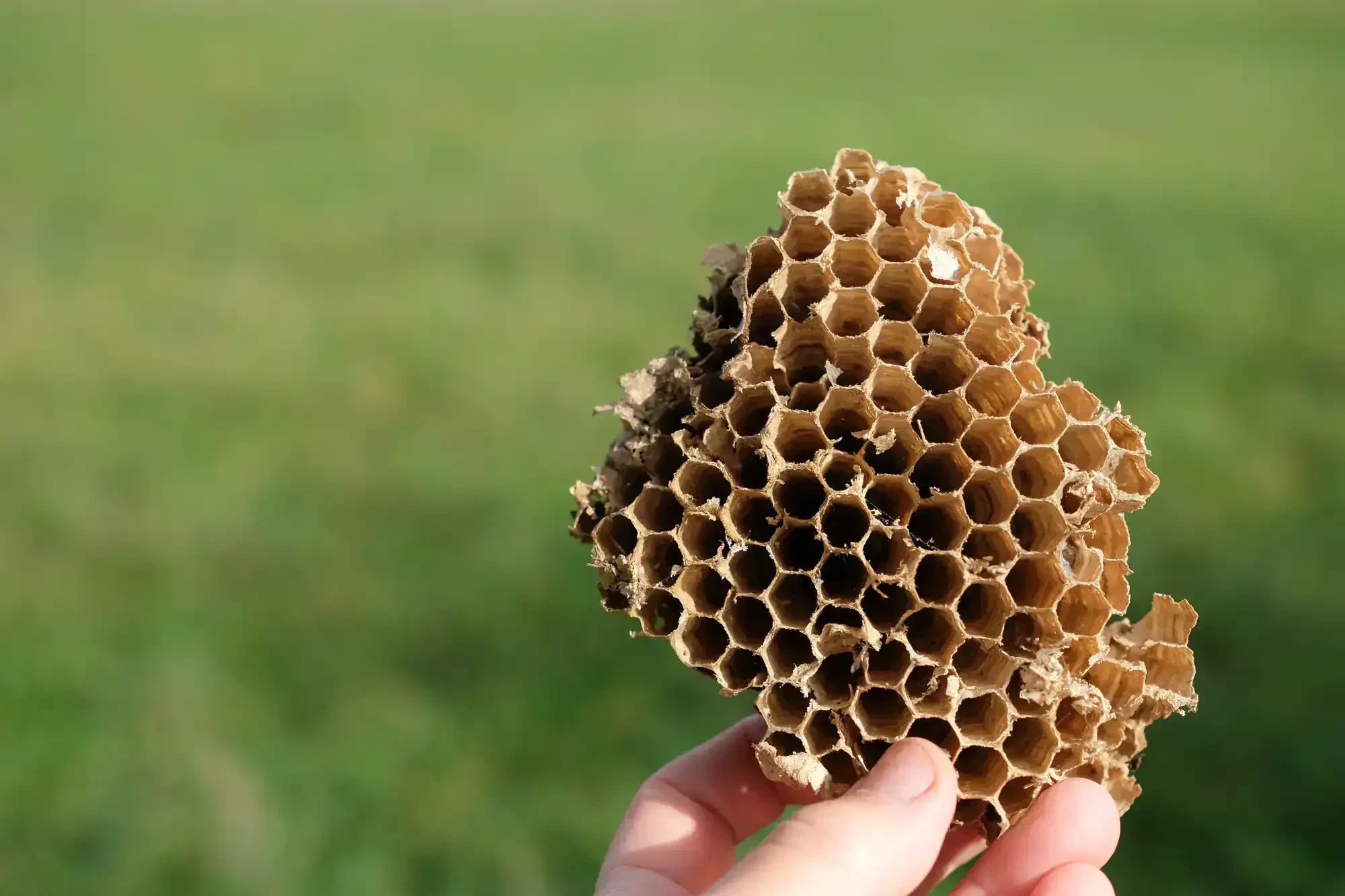
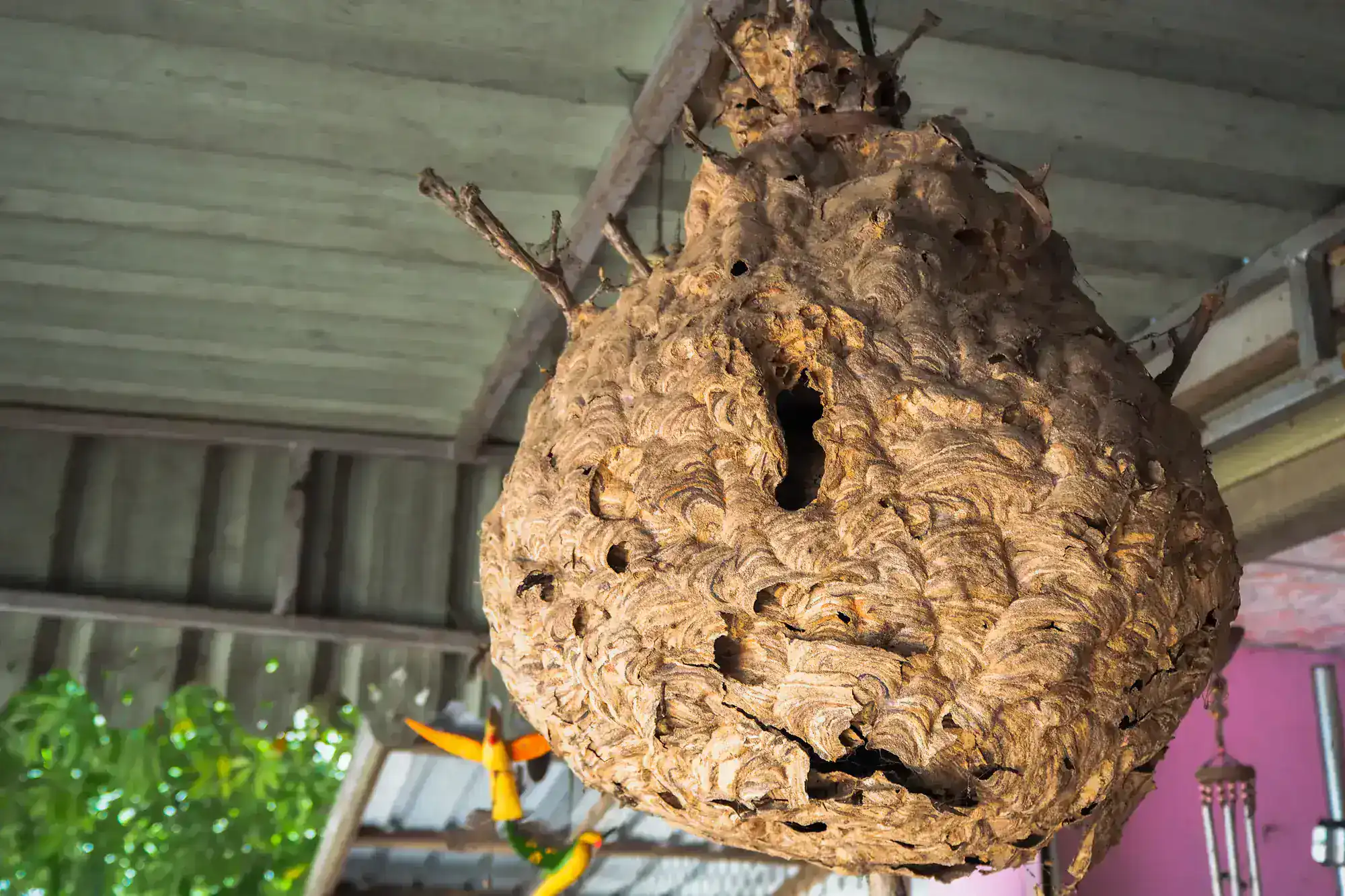
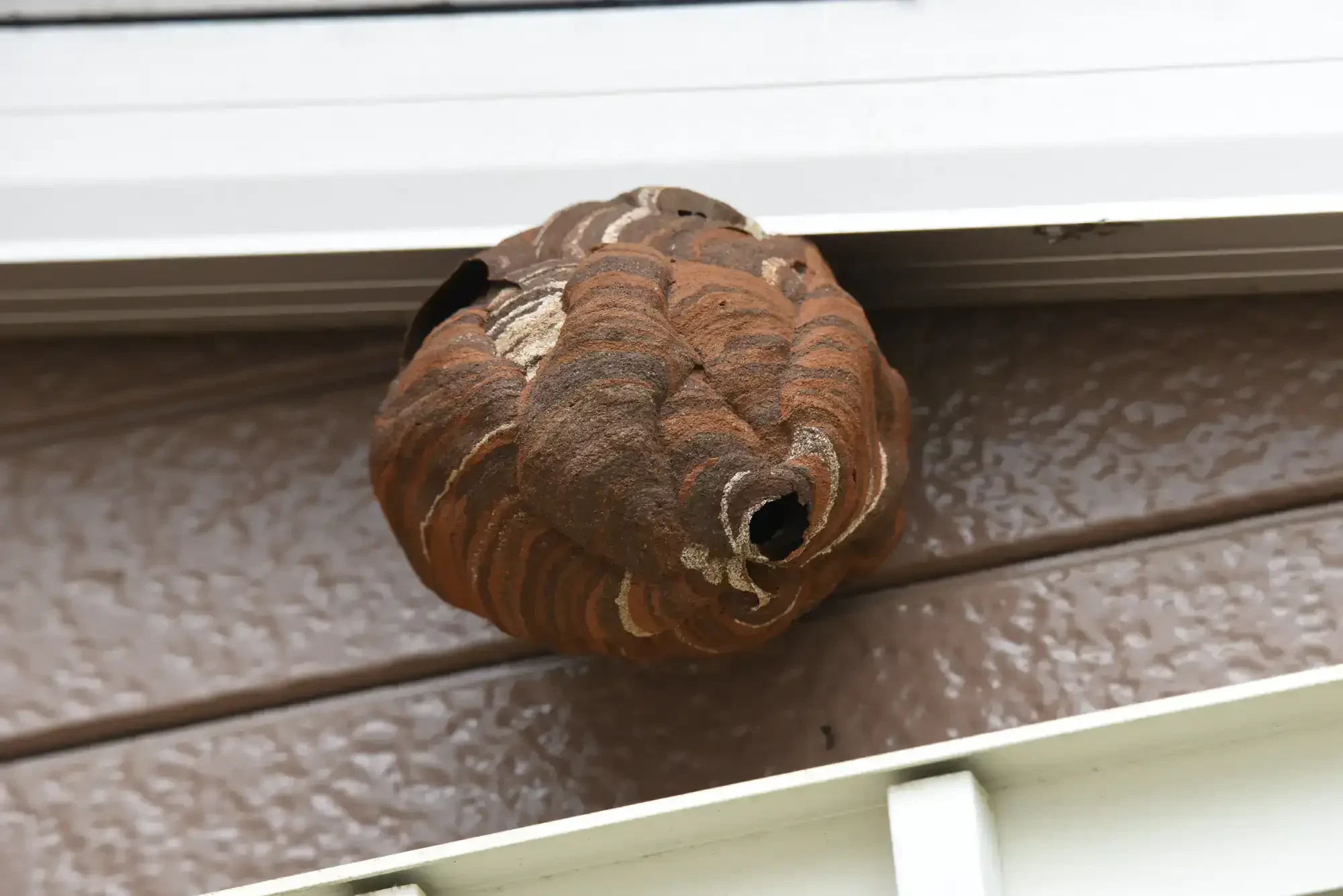
The bald-faced hornet is by far the most common species you’ll encounter on properties throughout Deer Creek and Gratiot County. Despite the name, it’s technically a large yellowjacket — but it builds the large, enclosed gray paper nests you’ve probably seen hanging from trees, eaves, and outbuilding overhangs. By late summer, a single colony can hold 400 to 700 workers, and they’re aggressive defenders of the nest, especially in August and September when the colony is at peak size.
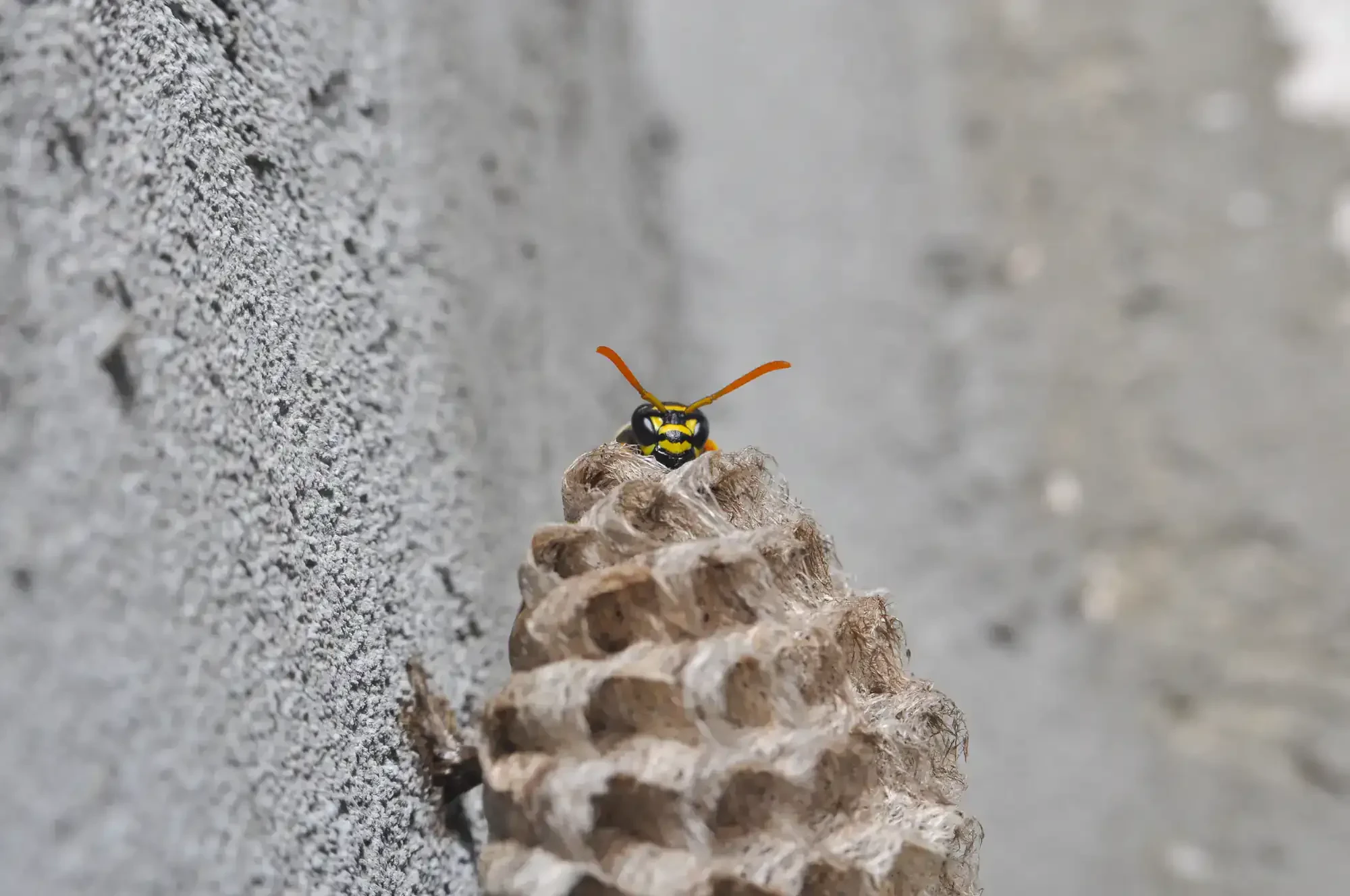
The European hornet is the only true hornet species in North America and is less common but worth knowing about — it’s larger than a bald-faced hornet and is one of the few stinging insects that’s active at night. If you’re noticing large insects flying around your porch light or barn entrance after dark, that’s a sign worth taking seriously. Both species require professional treatment, but the approach differs, which is why proper identification before treatment is the first step in any removal job.
For a small, newly established nest in early spring — a golf ball-sized structure with just a queen and a handful of workers — some homeowners do handle it themselves without incident. But that window is short. By midsummer, most nests on rural Gratiot County properties are well past the point where DIY removal is a reasonable option. A colony of several hundred workers defending a nest inside a barn wall or under a farmhouse eave is a genuinely dangerous situation, especially if anyone on the property has a known allergy or if the nest is in a location that requires a ladder.
The bigger risk with DIY attempts on established nests is that a failed treatment — one that agitates the colony without eliminating it — makes the situation significantly worse. Hornets that feel threatened become more aggressive, and a disturbed wall void nest can push workers further into the structure. Professional hornet removal uses the right materials for the right nest type, applied in a way that eliminates the colony rather than just moving the problem.
Nationally, professional hornet removal runs between $300 and $700 depending on nest size, location, and accessibility. Bald-faced hornet nests — the kind most commonly found on rural properties in Gratiot County — average around $625 when the nest is elevated or requires specialized treatment, like a wall void application. A small nest caught early in the season is considerably less expensive than a late-summer colony that’s had months to grow.
We use flat-rate, upfront pricing, so you’ll know the cost before anything starts — no variables added after the fact for ladder work, outbuilding access, or follow-up visits. If you’ve already received a quote from another company, price matching is available on reasonable competitor estimates. Discounts apply for seniors, veterans, and first responders. The most cost-effective time to call is spring or early summer, when nests are small and treatment is straightforward — waiting until August when the colony is at full size is when the job gets harder and more expensive.
The colony itself doesn’t survive winter — workers and males die off as temperatures drop, and only fertilized queens overwinter. But those queens don’t go far. They hibernate in protected locations like wood piles, under bark, in the insulation of outbuildings, or inside the walls of older structures — exactly the kind of spaces that are common on rural properties throughout Deer Creek Township. When spring arrives and temperatures consistently hit the 50s, those queens emerge and begin building new nests, often in the same general area where they hatched.
So while the same physical nest won’t be reused — bald-faced hornets build a new nest each season — the same property, the same tree line, the same barn eave, or the same wall void can attract a new colony year after year if the conditions that made it attractive haven’t changed. Preventative treatment in early spring, before new nests are established, is the most effective way to break that cycle on a rural property where nesting habitat is abundant.
Yes, and it’s one of the more common scenarios on rural properties in Gratiot County. Older farmhouses and agricultural outbuildings — the kind that make up a large portion of the residential and working structures in Deer Creek Township — often have gaps in siding, deteriorating fascia boards, unfinished soffits, and other entry points that give hornets access to wall cavities and attic spaces. Once inside, they build nests in the insulation or wall void where they’re protected from weather and largely out of sight until the colony is well established.
The sign most homeowners notice first is sound — a faint buzzing or tapping inside a wall, particularly on warm afternoons when worker activity is high. By the time you can hear them clearly, the nest is usually large enough that a surface spray won’t solve it. Wall void nests require a professional dust treatment applied directly into the cavity, which is something we’re specifically equipped to handle. Attempting to seal entry points without first eliminating the colony can trap workers inside the structure, which creates a different and more serious problem.
Yes. Seniors, veterans, and first responders all qualify for discounts on hornet removal in Deer Creek, MI and across our service area. Gratiot County has a strong agricultural and working-class identity, and a meaningful number of residents and their families have served in the military or in public safety roles — this is a community where those discounts reflect something real, not just a line on a website.
Beyond those specific discounts, we also offer price matching on reasonable competitor quotes. So if you’ve already called around and received an estimate from another company, bring it to the conversation — the goal is to make sure you’re getting real value from a licensed, experienced local company, not just the lowest number from whoever happened to answer the phone. Flat-rate pricing means what you’re quoted is what you pay, with no adjustments after the technician sees the property.
Useful Links