
Hear from Our Customers
The moment a wasp nest is handled correctly, something shifts. You stop mentally mapping which parts of your yard to avoid. Your kids go back outside without you holding your breath. Your dog runs the field again. That is what this is actually about — not just eliminating a nest, but getting your property back.
In Deer Creek, that matters more than it does in a typical suburb. Properties here are open, active, and surrounded by exactly the kind of environment wasps thrive in — wooded lots, old outbuildings, meadow margins, and the riparian corridors along the Shiawassee River tributaries that cut through Deerfield Township. A ground nest in a farm field is invisible until someone walks through it. A bald-faced hornet nest in a mature oak along your tree line can grow to the size of a basketball before you ever notice it. These are not the same problems a homeowner in a subdivision faces.
By late August and into September, yellow jacket colonies in this part of Michigan can hold anywhere from 5,000 to 15,000 workers — and they get more aggressive as the season goes on. Waiting makes it worse. Getting it handled by someone who knows rural Michigan properties makes it a solved problem, not a recurring one.
We were founded on May 31, 2005 — which means this year marks 20 years of continuous service across Mid-Michigan. We are based in Swartz Creek, Genesee County, directly north of Deerfield Township across the Argentine Township border. That proximity is not a coincidence. This is the region we know — the same climate, the same wasp species, the same seasonal patterns that Deer Creek residents deal with every year.
Roger Chinault, who founded our company and leads it today, brings 26 years of hands-on pest control experience to every service standard. But what tends to matter most to customers is something simpler: the technician who comes to your property this year will be the same one who comes next year. No rotating crews. No part-time seasonal workers. The same career professional who already knows your barn, your tree line, and where the problem showed up last time.
We are Angie’s List and HomeAdvisor recognized, IPM-trained, and fully licensed under Michigan’s MDARD standards. No binding contracts. We offer price matching on reasonable competitor rates. Discounts for seniors, veterans, and first responders — because in a community like Deer Creek, those things matter.
When you call us for wasp nest removal near Deer Creek, MI, the first thing that happens is a real conversation — not a scripted intake. You describe what you are seeing, where it is, how long it has been there, and whether anyone has already been stung or tried to treat it. That information shapes everything that follows.
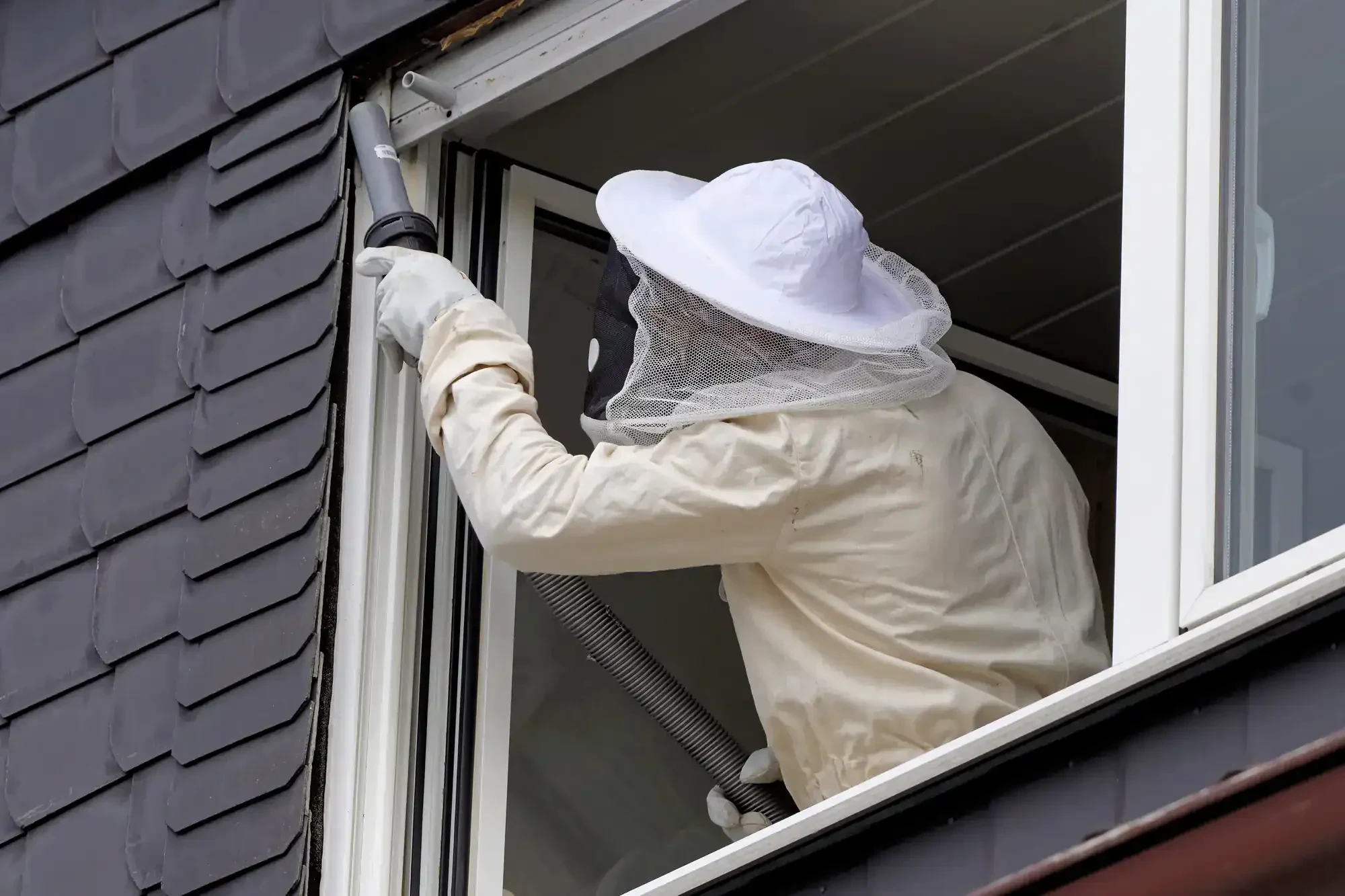
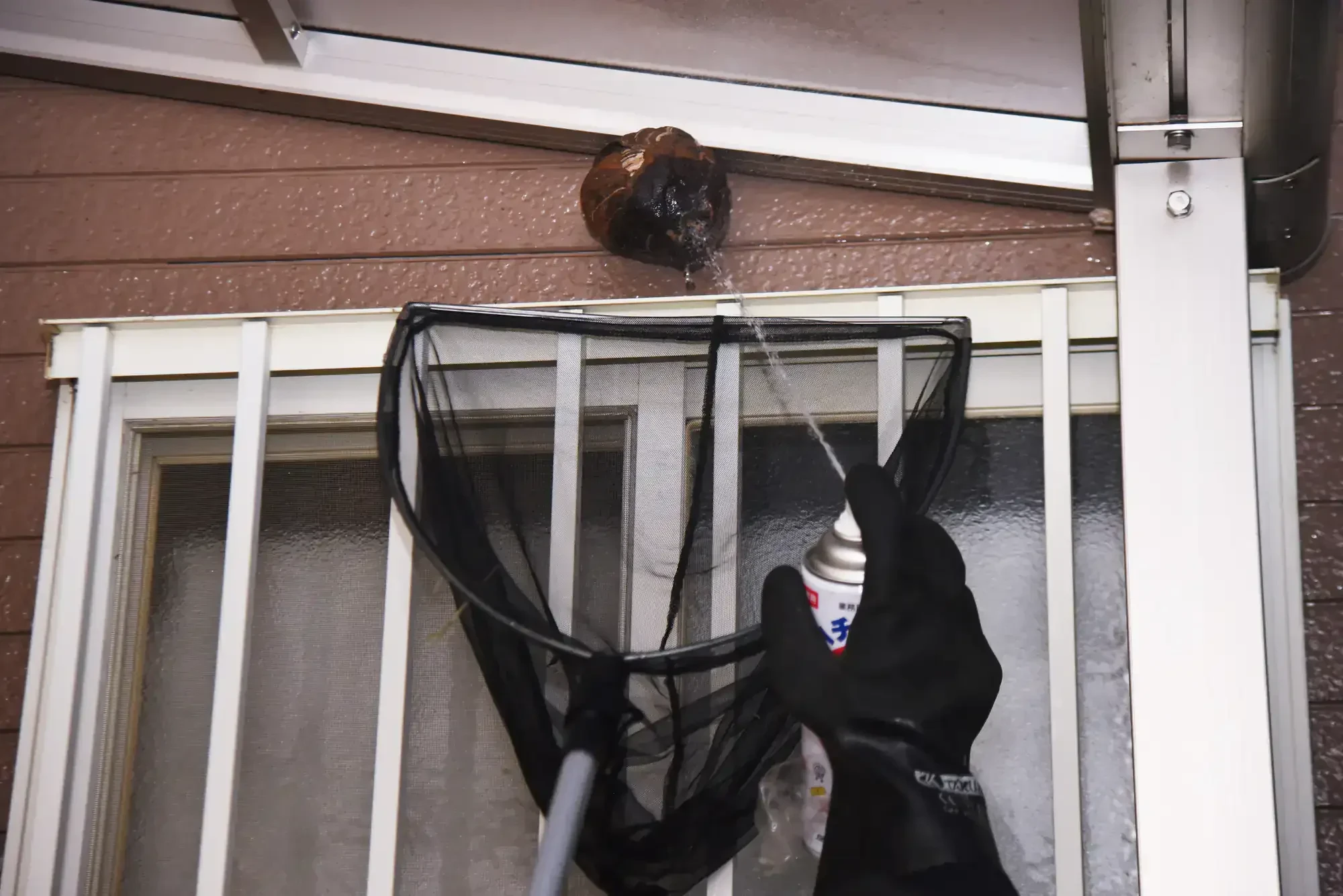
When our technician arrives, the first step is a full property assessment. On a rural Deerfield Township property, that means checking more than just the visible nest. It means looking at the outbuildings, the eaves, the wood piles, the field margins, and any structural gaps that could be hiding a secondary colony. Ground nests in particular require careful identification before any treatment begins — disturbing one without a plan is how people get hurt. Once the colony is fully mapped, professional-grade treatment is applied to eliminate the queen and all workers, not just the foragers you can see flying around. The nest structure is then physically removed where accessible.
After treatment, your technician will walk you through exactly when it is safe for your kids and animals to return to the treated area — a specific window, not a vague “give it some time.” Entry points are identified and sealed where possible, and you will get a clear picture of what attracted wasps to that location in the first place, whether that is a fruit tree, a structural gap, or a ground cavity that needs to be addressed before next spring.
Ready to get started?
Wasp nest removal on a Deer Creek property is not the same job it is on a quarter-acre suburban lot. The properties here are larger, the nesting sites are more varied, and the pest pressure comes directly from the land — agricultural fields, wooded corridors, aging outbuildings, and orchards all create exactly the conditions that yellow jackets, paper wasps, and bald-faced hornets prefer. We are built for that reality.
Every wasp nest removal service we provide includes a full property inspection, targeted colony elimination using IPM-approved professional-grade treatments, physical nest removal where accessible, entry point sealing to reduce the chance of re-nesting in the same location, and a specific post-treatment safety briefing so you know exactly when your property is safe to use again. No contracts are required, and if you have received a quote from another provider, we will match any reasonable competitor rate for the same scope of work.
There are no municipal permits required for residential wasp nest removal in Deerfield Township — this is an unincorporated community, and the applicable standard is MDARD commercial pesticide applicator licensing, which we hold in full. If you are dealing with a nest inside an old barn, under a concrete slab, or in a ground cavity in a farm field — the kinds of situations that show up regularly on properties along Wiggins Road and Cohoctah Road — this is the service built for exactly that.
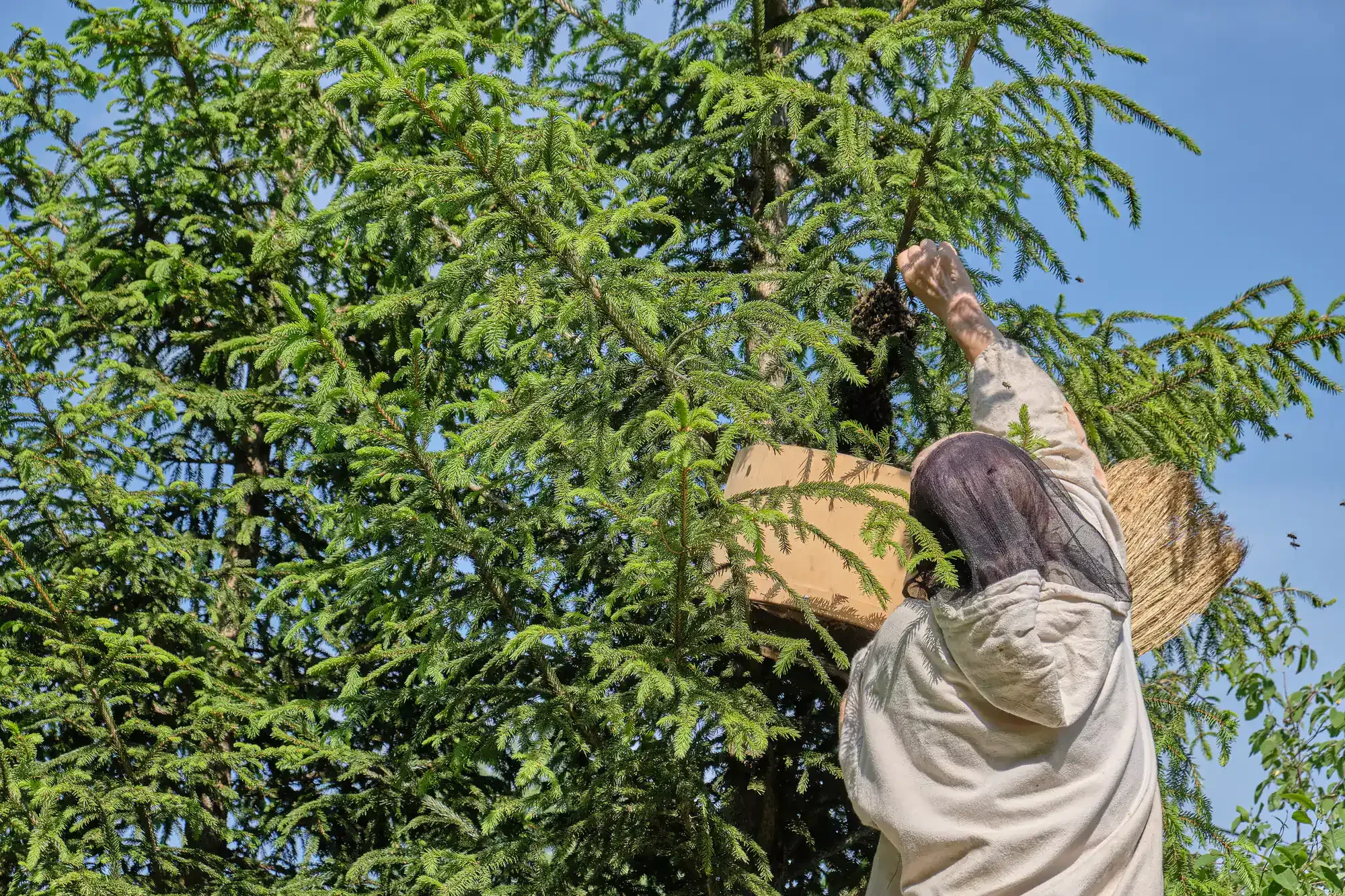
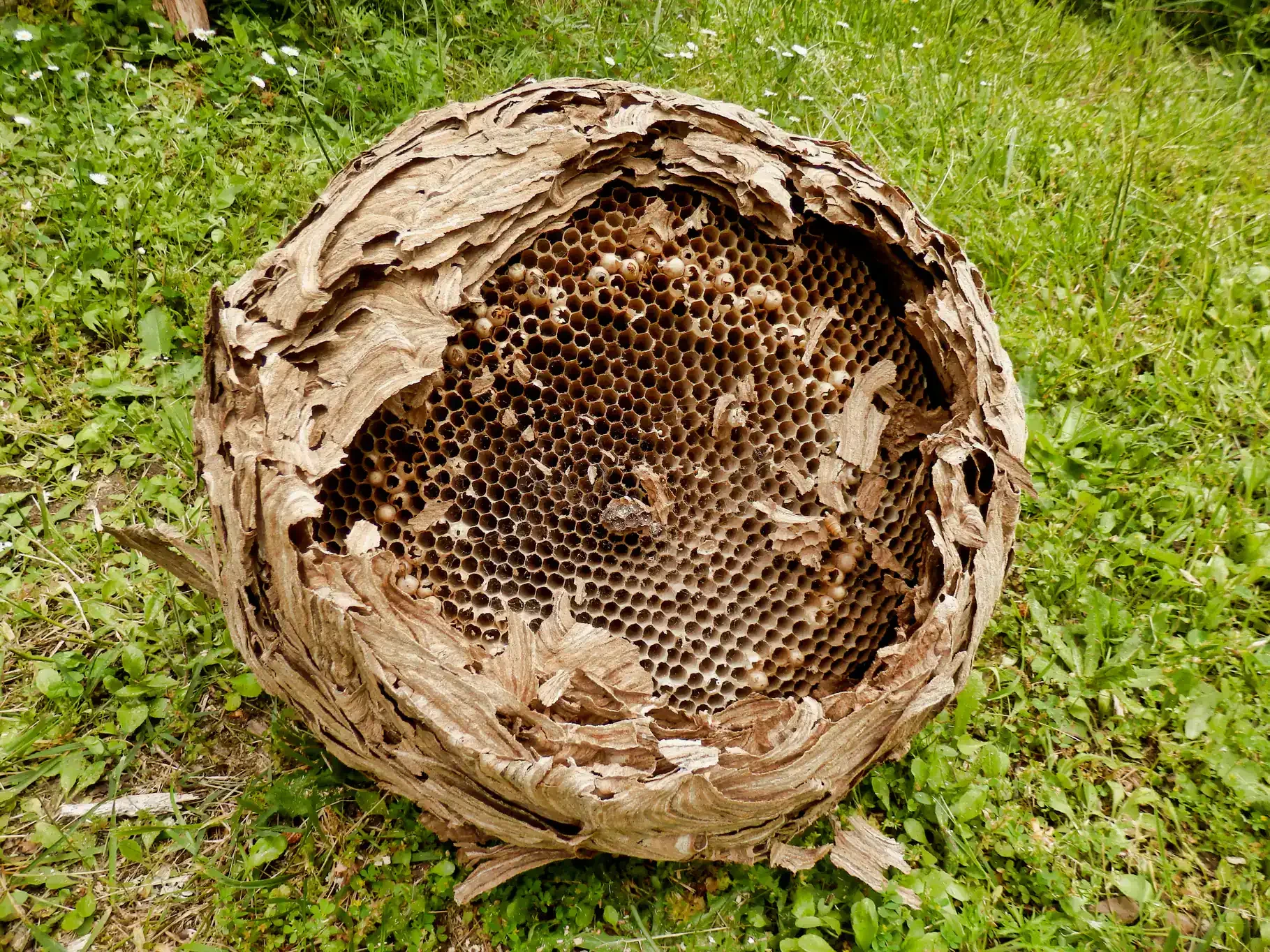
Ground nests are the most common — and most dangerous — type of yellow jacket infestation on rural properties in Deerfield Township. Because they are built in abandoned rodent burrows or natural soil cavities, you often cannot see them until you are already too close. The first signs are usually a cluster of wasps flying low to the ground near a specific spot, especially along field margins, fence lines, or areas with loose soil. If you notice wasps disappearing into the ground rather than flying up toward a structure, that is a strong indicator.
The problem with ground nests on Deer Creek properties is that they are easy to disturb accidentally — while mowing, walking a fence line, or letting a dog run the yard. By late summer, a single ground colony can hold thousands of workers, all of which will mobilize instantly when threatened. If you suspect a ground nest, do not probe the area or try to treat it yourself. Mark the general location from a safe distance and call us. The risk of a partial or failed DIY treatment is a swarm response that is significantly more dangerous than the original nest.
For a standard above-ground nest — a paper wasp nest under an eave, for example — professional removal typically runs in the range of $300 to $450. Yellow jacket removal, especially for ground nests or wall-void infestations, tends to run higher, often $600 to $800 or more, because the job is more complex. The colony is harder to access, the treatment has to reach the queen to be effective, and the risk level during treatment is elevated.
On rural properties in Deerfield Township, the complexity factor is real. A nest inside an old barn wall, beneath a concrete slab, or in a ground cavity in a farm field takes more time and expertise than a visible eave nest on a suburban home. We offer price matching on reasonable competitor quotes, so if you have already received an estimate, bring it to the conversation. The goal is to make sure you are getting the right level of service for your specific property — not a one-size-fits-all quote that does not account for what is actually on your land.
For very small, newly formed nests — a paper wasp nest with fewer than a dozen cells, caught early in spring — a careful DIY attempt at dusk using a commercially available aerosol spray can sometimes work. The key word is small. Once a colony is established and the worker population is in the hundreds or thousands, the risk of a partial treatment triggering a swarm response is serious. Yellow jackets in particular are extremely aggressive when their nest is disturbed, and a failed treatment attempt can make the situation significantly more dangerous than it was before.
Most people who call us for wasp nest removal in Deer Creek, MI have already tried something on their own first. That is not a criticism — it is just the reality of living on a rural property where you handle most things yourself. But if the first attempt did not work, or if the nest is in a location you cannot safely reach, or if anyone in your household has a known or suspected allergy to stings, the risk calculation changes entirely. Between 1% and 3% of adults carry a risk of life-threatening anaphylaxis from a single sting. For anyone in that category, a DIY attempt near an established colony is not worth it.
In Michigan, yellow jacket colonies start small in spring when overwintered queens emerge and begin building new nests — typically April through May. Through June and July, worker populations grow steadily and nests become more visible. By August and into September, colonies are at their peak size, workers are at their most aggressive, and natural food sources are declining, which pushes them toward scavenging near outdoor areas, compost, and garbage. That late-summer window is when the vast majority of stings, emergency calls, and professional service requests happen across Livingston County.
For properties in and around Deer Creek, the timing matters because of the rural environment. Wooded lots, agricultural fields, and the tree lines along Deerfield Township’s stream corridors provide abundant overwintering habitat for queens, which means the colony pressure each spring is consistently high. The best time to call is the moment you notice activity — not after the colony has had another four weeks to grow. Early treatment means a smaller colony, a simpler job, and a lower risk to everyone on the property. If you are seeing wasps regularly in a specific area right now, that is the signal to act.
Yellow jackets do not reuse the same physical nest from one year to the next — the colony dies off after the first hard frost, and the nest is abandoned. But they do return to the same favorable locations. If a ground cavity in your field was a good nesting site this year, a new queen emerging next spring may find it just as attractive. The same applies to structural gaps in barns, attic voids, and wall cavities in old outbuildings — all of which are common on rural Deerfield Township properties.
This is why the work does not stop at eliminating the current colony. We identify the structural vulnerabilities and environmental attractants that made your property a target in the first place — and address them. Entry points into structures are sealed where possible. Attractants like fallen fruit, accessible compost, and wood piles near the home are flagged. On a property with mature trees, aging outbuildings, and open agricultural land like many homes near Wiggins Road and Cohoctah Road, that preventative step is what separates a one-time fix from a long-term solution.
Yes. We extend discounts to seniors, military veterans, and first responders on all pest control services, including wasp nest removal. Deerfield Township is a working rural community — the kind of place where people have put in decades of service, whether in uniform, on the job, or raising a family on a piece of land they have worked for years. The discounts reflect that. They are not a promotional gimmick tied to a season or a signup offer. They are a standing policy.
If you qualify, just mention it when you call. There is no paperwork process or hoop to jump through. We also offer price matching on reasonable competitor rates, so if you have already gotten a quote from another provider for wasp nest removal near Deer Creek, MI, bring it to the conversation. The goal is straightforward: make sure cost is not the reason someone leaves a wasp problem unaddressed on a property where kids and animals are spending time outdoors.
Useful Links