
Hear from Our Customers
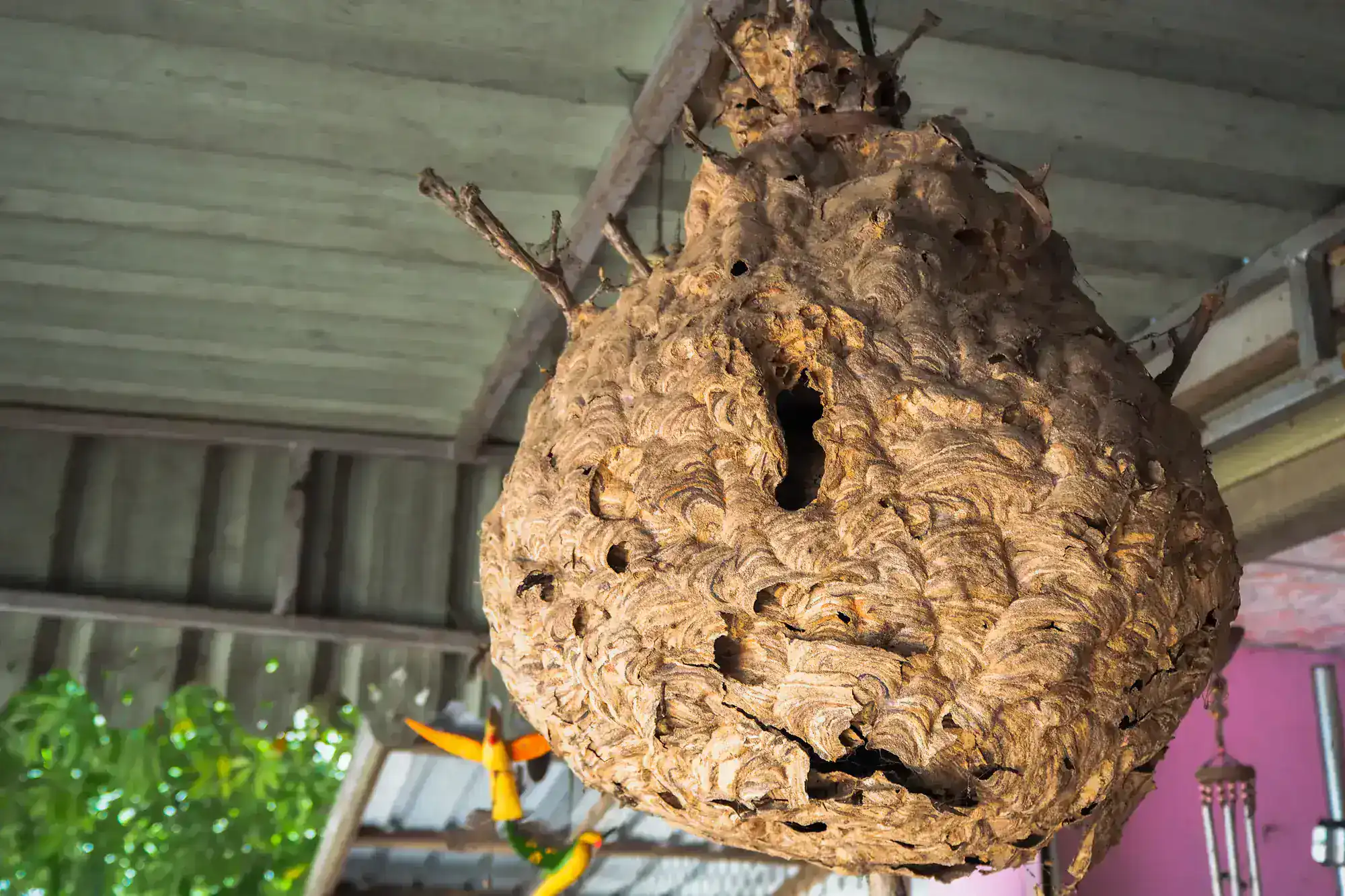
A hornet nest near Duck Lake isn’t just a nuisance — it’s a real threat to the outdoor life you built here. Whether it’s a bald-faced hornet colony hanging 25 feet up in a tree, a nest tucked under the eaves of a boat house, or workers swarming near a paddock on your equestrian property, the problem doesn’t stay manageable for long. By late summer, what started as a golf ball-sized nest in April can be the size of a basketball with 700 workers defending it.
East Highland’s combination of mature tree canopy, older lake homes along the Duck Lake Road corridor, and the wooded buffer of the Highland State Recreation Area creates near-ideal conditions for hornet colonies to establish and grow fast. The properties out here — with their outbuildings, dock structures, and acreage — give hornets more places to nest than a standard suburban lot ever would.
Getting this handled professionally means you stop managing the risk and start using your property again. Kids in the yard. Guests on the dock. Horses in the paddock without a cloud of workers nearby. That’s what a proper hornet removal in East Highland actually gets you — not just a dead nest, but your space back.
We’ve been serving East Highland and southeast Michigan homeowners since May 31, 2005 — twenty years this year. Roger, who founded First Choice Pest Control and still leads it, brings 26 years of hands-on pest control experience to every service call. That’s not a corporate bio line. That’s the person whose name is on the license making sure the job gets done right.
One thing that sets us apart in Oakland County is the same-technician model. Your technician learns your property — your tree line, your outbuildings, your eave overhangs — and comes back year after year. No new face every season, no one reading from a script. For homeowners in the Seven Harbors area and along the Duck Lake Road corridor, where properties have their own specific character and pest history, that continuity makes a real difference.
We hold Michigan Pesticide Application Business License #250081 and IPM training certification recognized by MDARD. We’ve earned awards from both Angie’s List and HomeAdvisor, carry a 4.7-star Google rating, and offer discounts for seniors, veterans, and first responders — because this community deserves a company that recognizes more than just the transaction.
It starts with an inspection. Before anything is treated, your technician identifies the species, locates the nest — whether that’s 30 feet up in a mature oak, tucked into a wall void in an older lake home, or hidden under a barn eave — and assesses the size and activity level of the colony. In East Highland, that inspection step matters more than it might in a newer subdivision, because the building stock out here is older, the lots are larger, and nests can end up in places a quick visual scan won’t catch.
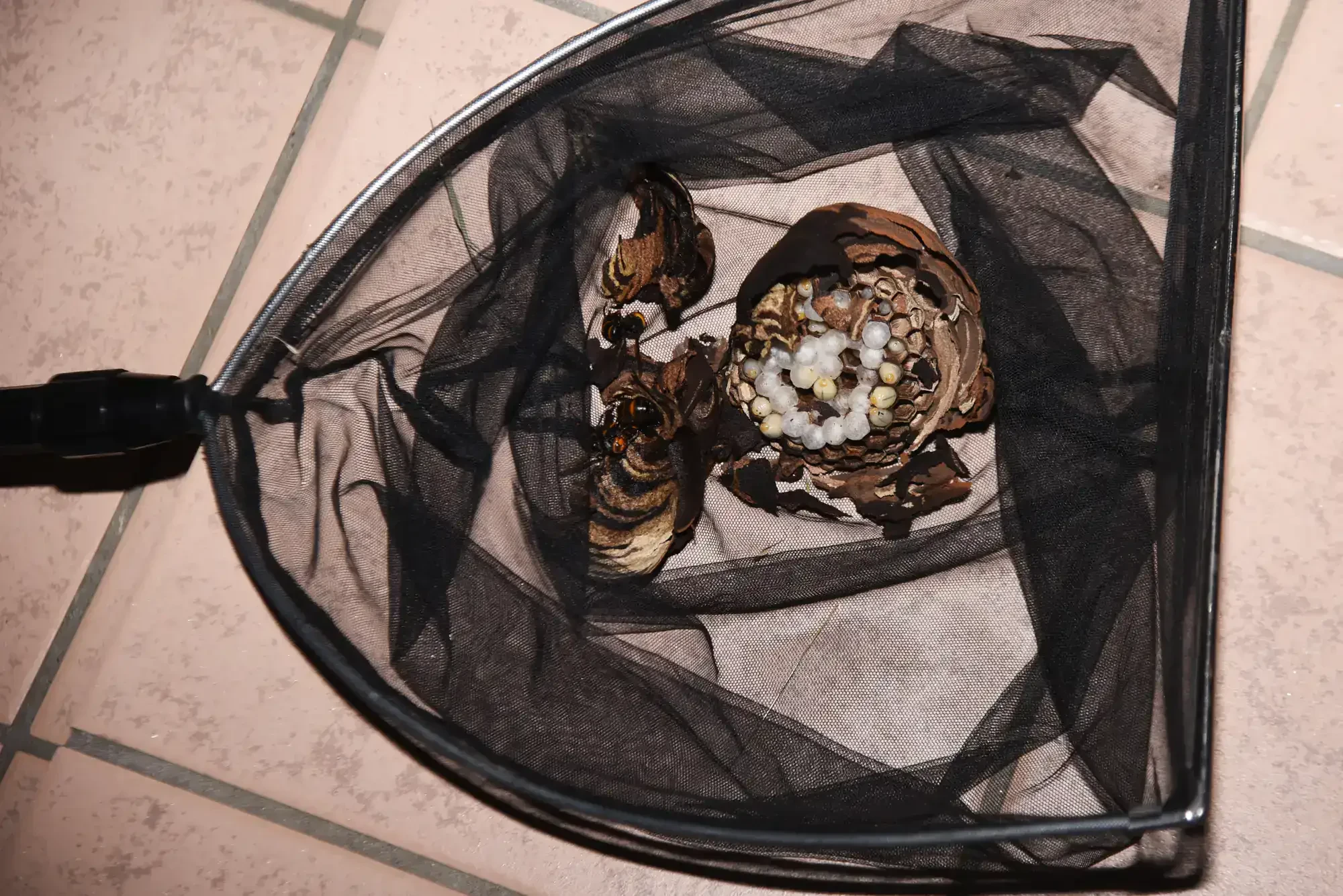
Once the nest is located and the species is confirmed, we apply treatment using the most targeted method available. Active aerial nests in trees get treated directly. Wall void infestations — common in the older homes along the Duck Lake corridor — get a dust treatment that penetrates the cavity without tearing open walls. The goal is to eliminate the colony, not just scatter it. After treatment, your technician walks you through what to expect over the next 24 to 48 hours as the colony collapses.
If a follow-up visit is needed, we return at no additional cost. That’s not a promotional line — it’s how we’ve operated for twenty years. Michigan’s stinging insect season runs hard from June through September, and East Highland’s wooded, lake-adjacent environment keeps the pressure elevated all the way through fall. Getting ahead of it in spring — when nests are small and colonies are minimal — is always the smarter call.
Ready to get started?
We handle the full range of stinging insect problems that East Highland properties generate — bald-faced hornets, European hornets, yellow jackets, and paper wasps. Bald-faced hornets are the most common and most aggressive species in this part of Oakland County, and their enclosed paper nests in tree canopies are exactly the kind of elevated, hard-to-reach situation that requires professional equipment and experience, not a ladder and a hardware store spray.
Every hornet removal service we provide includes a property inspection, species identification, targeted nest treatment, and a follow-up if needed at no extra charge. For equestrian properties in Highland Township — Michigan’s first officially designated equestrian community — we can treat barn structures, paddock-adjacent areas, and outbuildings with methods that are safe for livestock and the surrounding environment. Our IPM certification means the approach is always targeted: the right treatment for the specific pest, applied in a way that minimizes unnecessary chemical exposure near Duck Lake and the Highland State Recreation Area.
Our pricing is flat-rate and upfront — you know the number before anyone shows up. If you’ve received a reasonable quote from another local provider, we’ll match it. Seniors, veterans, and first responders receive a discount. There are no hidden fees, no surprise charges for elevated access, and no pressure to add services you don’t need. Just a licensed, experienced technician who knows what they’re doing and backs the work.
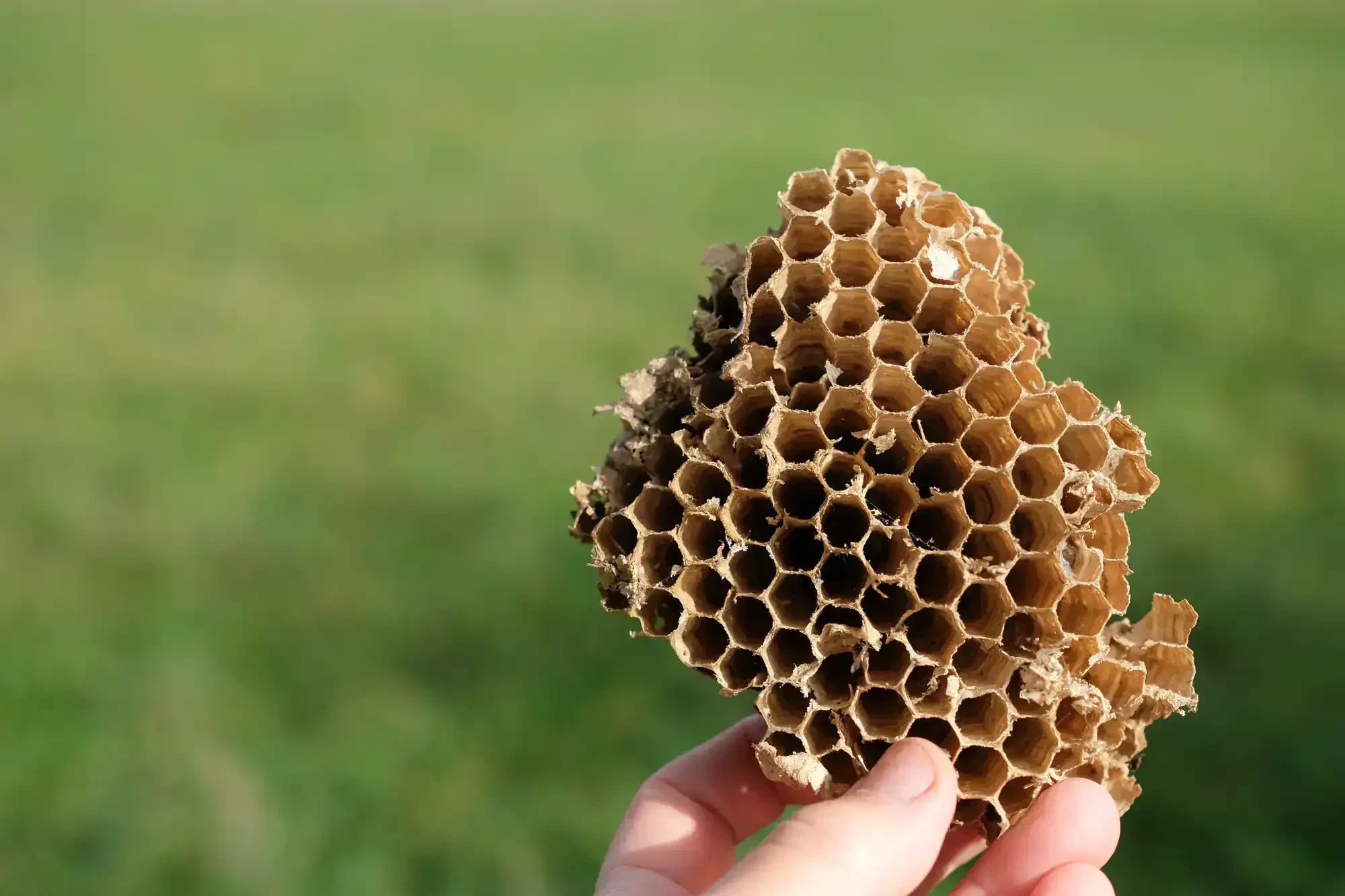
The most common stinging insect in this part of Oakland County is the bald-faced hornet. Despite the name, it’s technically a yellow jacket — but it behaves more aggressively than most and builds large, enclosed paper nests almost exclusively in trees and shrubs. In East Highland, where mature deciduous trees are abundant along the Duck Lake Road corridor and on larger rural lots, bald-faced hornets have no shortage of ideal nesting sites. Nests can reach basketball size or larger by late summer, and the workers defend them intensely when disturbed.
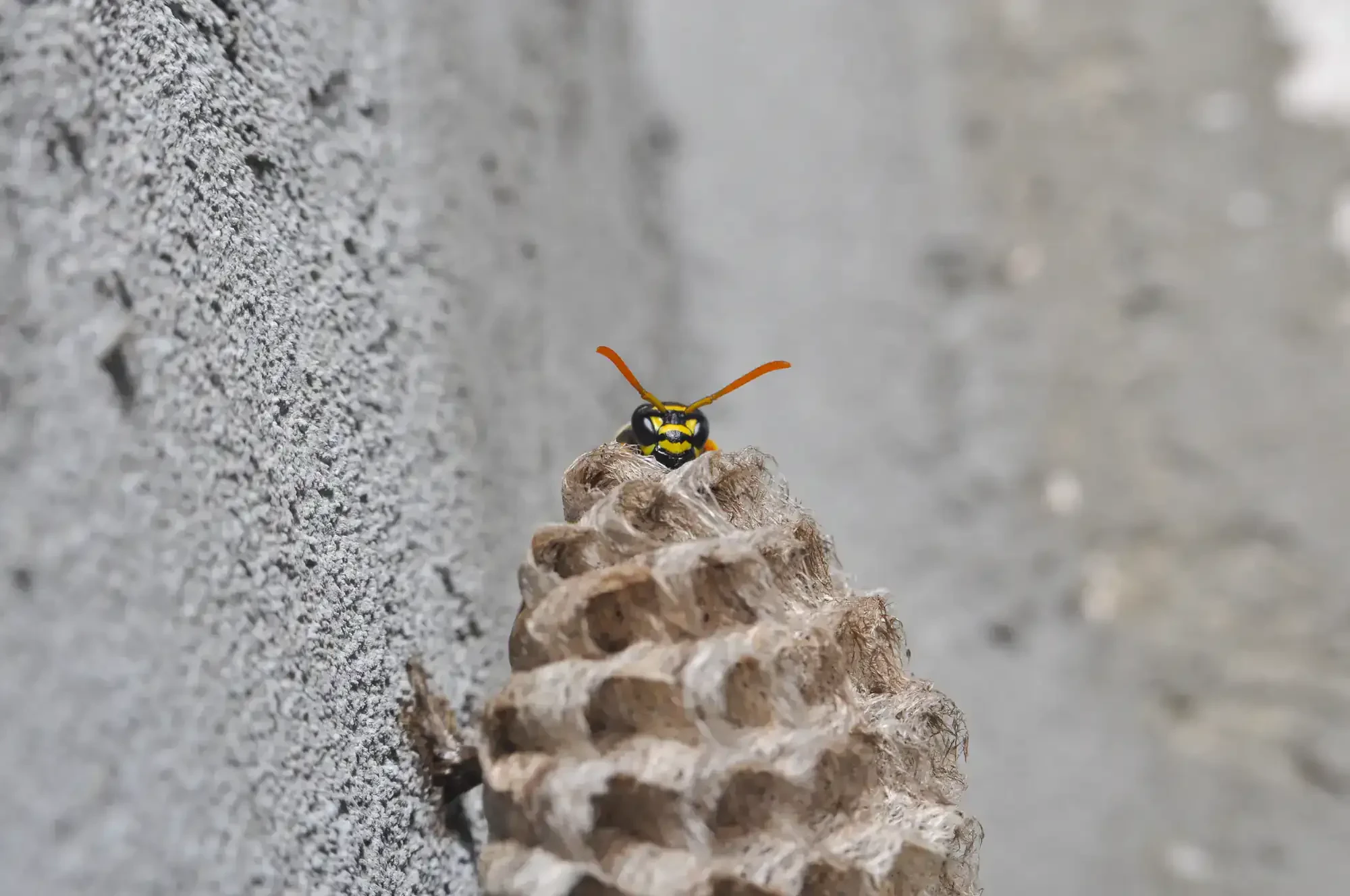
European hornets are also present in the East Highland area and are notable for being active at night — something that surprises a lot of homeowners who notice activity around porch lights after dark. Yellow jackets are the third major species, and they shift from protein-hunting to sugar-seeking in late summer, which is when they become a serious problem near outdoor dining areas, dock spaces, and garbage cans. Knowing which species you’re dealing with matters because the treatment approach differs, and that’s one of the first things your technician will confirm during the inspection.
It depends on the location and the size of the colony — but the risk is real and worth taking seriously. The CDC reports an average of 62 deaths per year in the United States from hornet, wasp, and bee stings. Most of those fatalities are anaphylactic reactions in people who didn’t know they were allergic until the sting happened. Even for people without a known allergy, a disturbed bald-faced hornet colony can deliver multiple stings in seconds, and a large late-summer colony can have 700 or more workers responding to a perceived threat.
For East Highland homeowners with children, pets, or horses, the risk profile is higher than it might seem on paper. A nest near a paddock, a dock, or a backyard play area isn’t just an inconvenience — it’s an active hazard. Horses can be stung and react unpredictably, and children often don’t recognize the warning signs of a disturbed colony until it’s too late. If the nest is in a low-traffic area and you’re not near it, the urgency is lower. But if it’s anywhere near where people or animals spend time, professional removal is the right call.
Nationally, professional hornet removal runs between $300 and $700 for most situations. Bald-faced hornet removal — which often involves elevated nests in tree canopies — averages around $625 because of the access challenges and the size the colonies can reach. In East Highland, where properties frequently have mature trees, outbuildings, and older structures with wall voids, the specific location and accessibility of the nest will affect the final number.
What’s worth knowing is that timing matters significantly to cost. A nest treated in April or May — when it’s still small and the colony is minimal — typically costs $200 to $300. That same nest left until August can cost two to three times more to remove, and carries significantly more risk during the process. We provide flat-rate, upfront pricing so you know exactly what you’re paying before the technician arrives. If you’ve gotten a reasonable quote from another licensed provider in the area, we’ll match it. There are no hidden fees for elevated access, no surprise charges, and no pressure to add services you didn’t ask for.
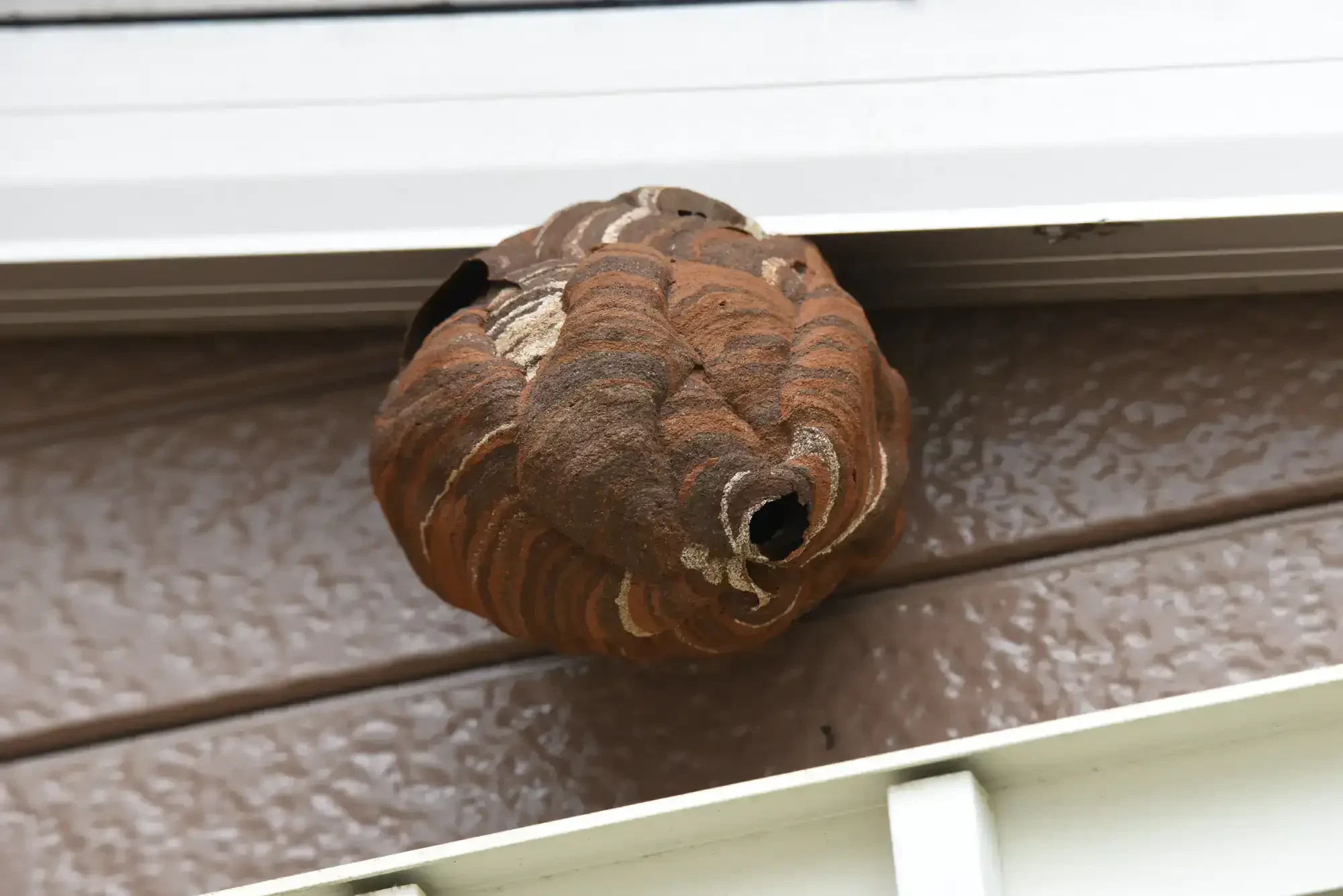
Yes, and it’s more common than most people expect — especially in older homes. The lake properties along the Duck Lake Road corridor and throughout the Seven Harbors area tend to be older structures with wood siding, soffit gaps, and exterior openings that hornets and yellow jackets use to access wall voids. Once inside, they build nests within the wall cavity itself, and the colony can grow significantly before the homeowner notices anything beyond some buzzing or a few workers appearing inside the house.
Wall void infestations require a different approach than aerial nest removal. Your technician will apply a professional-grade dust treatment directly into the void — this penetrates the cavity and eliminates the colony without requiring you to open up the wall. It’s a targeted method that works well in the building types common to East Highland’s older lake home stock. One important note: if the nest is left untreated and the colony dies on its own in fall, the wax and organic material left inside the wall can attract other pests and create moisture issues. Getting it treated properly is always the better outcome.
Not the same colony — hornet colonies don’t survive winter. The workers and the original queen all die off once temperatures drop in Michigan. But that doesn’t mean you’re in the clear for next season. Fertilized queens overwinter in protected spots — leaf litter, tree cavities, wood piles, and the kinds of natural debris that are abundant on wooded, lake-adjacent properties in East Highland. In spring, those queens emerge and begin building new nests, often in the same general area where previous colonies established successfully.
So while you won’t have the same nest return, you can absolutely have a new colony set up in the same tree, under the same eave, or near the same outbuilding the following spring. The best way to reduce that risk is to treat early in the season, before colonies have a chance to establish. We can walk you through what preventive measures make sense for your specific property — whether that’s monitoring certain areas, sealing entry points on structures, or scheduling a spring inspection before nesting season gets underway. Properties near the Highland State Recreation Area tend to see consistent pressure year over year because of the dense natural habitat nearby.
We offer discounts for seniors, veterans, and first responders. Highland Township’s median age sits at 43.6 years, and the community includes a meaningful number of retired homeowners and veterans who’ve put real roots down here — people who deserve straightforward pricing from a company that’s been around long enough to know the value of treating a customer right.
Beyond the discounts, we also offer price matching against reasonable competitor quotes. If you’ve done your homework and gotten a quote from another licensed provider serving the East Highland or Highland Township area, bring it to the conversation. The goal is to make sure you’re working with the most experienced, credentialed option available — not just the one you could afford to settle for. Flat-rate pricing, no hidden fees, and a return visit included at no extra charge if the job needs follow-up are all part of how we operate. Twenty years in southeast Michigan means the reputation matters more than squeezing a service call.
Useful Links