
Hear from Our Customers
Late August in East Highland hits different when a yellow jacket colony has taken over. The dock is off-limits. The patio furniture hasn’t moved in weeks. You’re watching the end of summer from inside because a nest you can’t even see has made it impossible to be outside.
The properties along Duck Lake and the wooded edges bordering the Highland State Recreation Area see some of the highest yellow jacket pressure in Oakland County. When you’ve got 5,900 acres of forested state park land right behind your neighborhood, colonies don’t stay in the trees. They find their way into your soffits, your wall voids, your outbuildings — and by the time you notice them, the colony is already thousands of workers strong.
Getting the nest handled by someone who actually knows what they’re looking at means you stop guessing, stop spraying, and stop waiting. You get your property back. Yellow jacket nest removal in East Highland done right the first time means no second-guessing, no repeat infestations, and no more planning your outdoor life around where the wasps are.
We’ve been operating in Southeast Michigan since May 2005 — that’s 20 years of showing up for homeowners across Oakland County, including the lakefront communities, equestrian properties, and wooded neighborhoods that make up Highland Township and East Highland. Roger Chinault founded this company and still brings 26 years of hands-on pest control experience to every job. This isn’t a call center routing your request to whoever’s available. It’s a named professional with two decades of local knowledge.
One thing that matters to East Highland homeowners: you get the same technician every time. Not a rotating crew, not a summer hire — the same trained professional who already knows your property, your specific risks, and your history. We hold a 4.7 out of 5 rating on Angi backed by verified reviews. We also hold MDARD Pesticide Application Business License #250081, have completed IPM training, and have earned awards from both Angie’s List and HomeAdvisor.
The first thing that happens is identification — and it matters more than most people realize. East Highland properties deal with two distinct yellow jacket species. The German Yellowjacket nests inside structures: wall voids, attics, soffits, and the gaps in older lakefront cottages that have been converted to year-round homes. The Eastern Yellowjacket goes underground, often in abandoned animal burrows along wooded lot lines or near paddock areas on equestrian properties. Treating one like the other is exactly why DIY attempts fail and why the colony comes back angrier than before.
Once the species and nest location are confirmed, the right treatment is applied — not the easiest one, the right one. For structural infestations in wall voids or attics, that means targeted application that reaches the colony without driving workers deeper into your home. For ground nests, it means treating the full tunnel system, not just the visible entrance. Every treatment accounts for the specific conditions on your East Highland property: the building age, the proximity to the Recreation Area, the outdoor spaces you need back.
After treatment, you’ll know exactly what was applied, when it’s safe to resume normal activity, and what to watch for in the days that follow. The work is backed by a 1-year service guarantee — if yellow jacket activity returns within the guarantee period, we come back at no additional charge.
Ready to get started?
Yellow jacket pest control in East Highland covers the full scope of what a real infestation requires — not a surface-level spray and a handshake. That means a thorough inspection to find every entry point, correct species identification before any treatment begins, and a treatment plan built around your specific property. Whether the nest is in a wall void of an older home near Duck Lake, in the attic of a house backing up to the Highland State Recreation Area, or in the ground along a wooded lot line, the approach is tailored to what’s actually there.
We serve both residential and commercial customers throughout Highland Township and the surrounding Oakland County area. All work is performed under MDARD Pesticide Application Business License #250081 by trained, full-time professionals — not seasonal workers. Our IPM-certified approach means the treatment used is the most targeted and appropriate one for your situation, which matters if you’re on the water, near conservation land, or have horses and animals on the property.
Seniors, veterans, and first responders receive special discounts — ask when you call. We also offer price matching against reasonable competitor rates, so you don’t have to choose between experience and value. No binding contracts, ever.
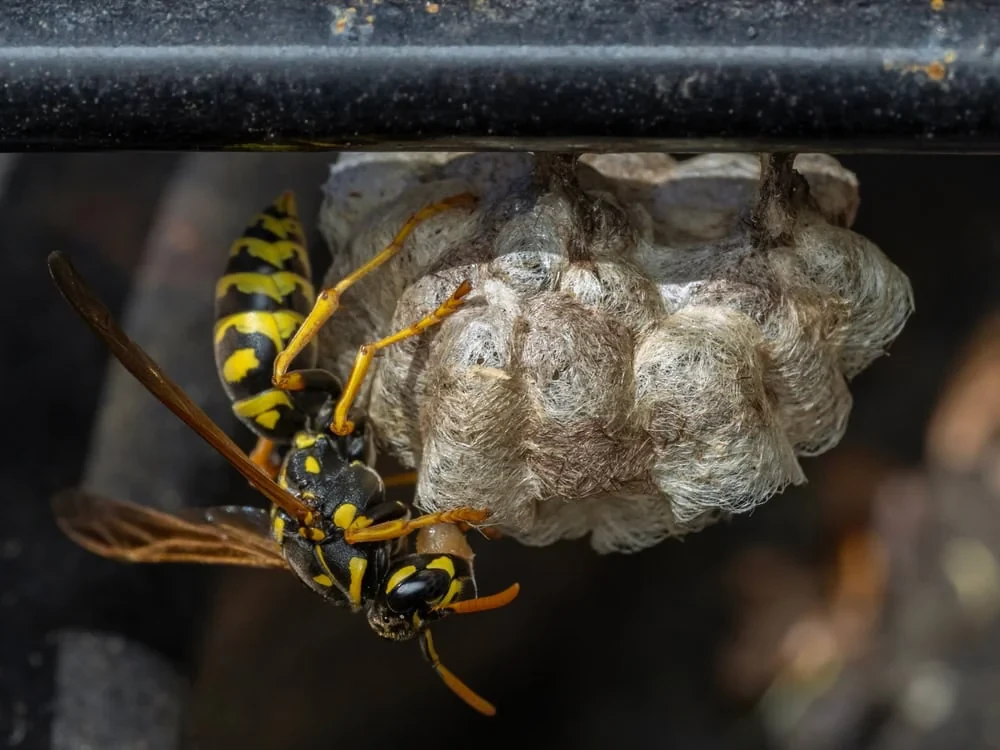
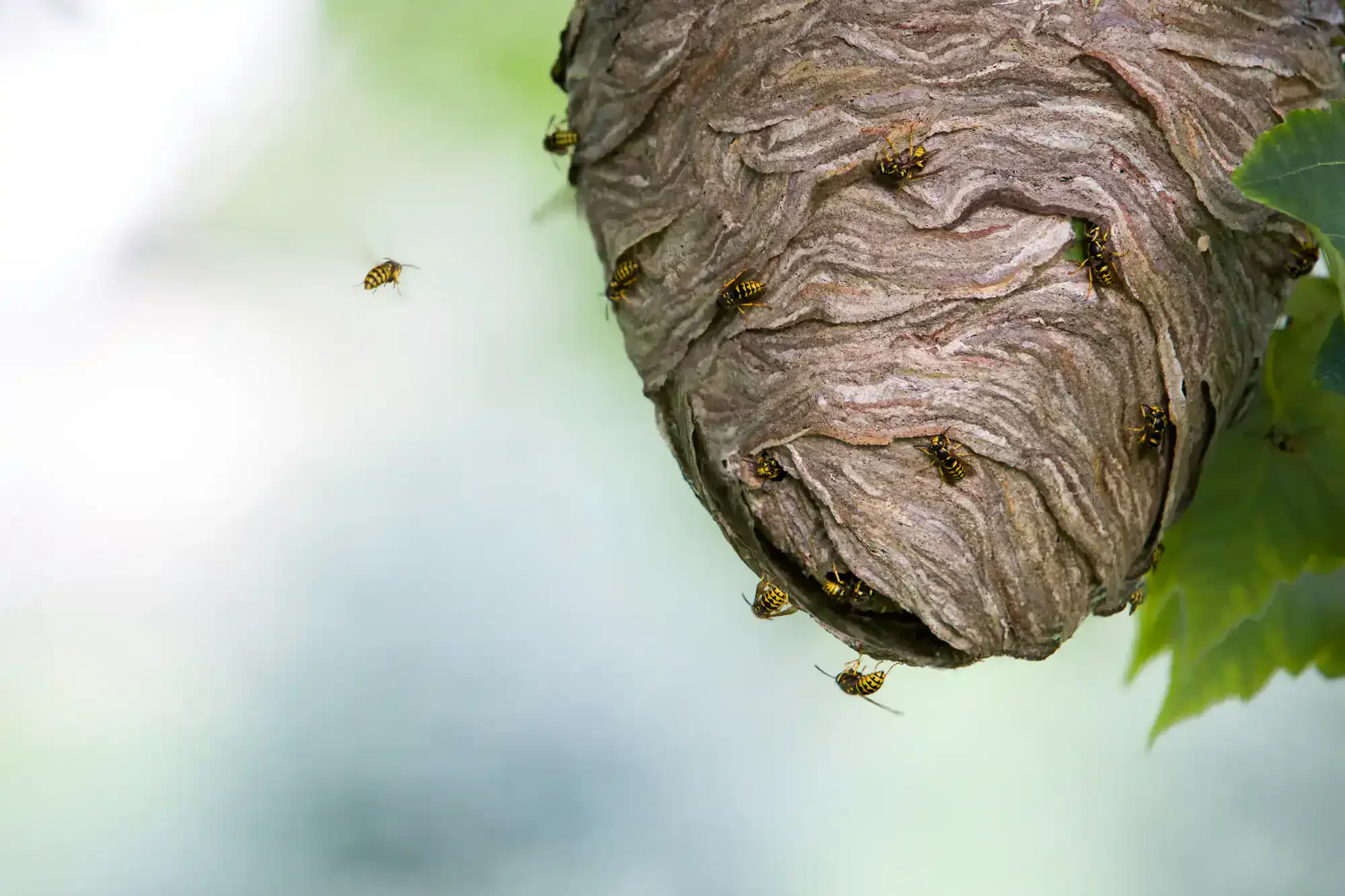
The Highland State Recreation Area is 5,900 acres of forest, wetland, and kettle lake habitat — and it sits directly adjacent to residential neighborhoods throughout East Highland and Highland Township. That kind of forested land supports large yellow jacket populations year-round. In spring, queens emerge from the woods and start scouting for nesting sites. By August, the colonies they’ve built can house anywhere from 1,000 to 5,000 workers, and those workers are foraging into yards, docks, and outdoor dining areas looking for food.
Properties near Duck Lake face an added layer of pressure. Outdoor entertaining, open garbage near the water, fish cleaning stations, and the abundance of sugary drinks on docks and patios make waterfront properties a prime target for late-summer yellow jacket aggression. When colony size peaks and food sources shift, yellow jackets become significantly more defensive — and that’s exactly when East Highland residents are trying to enjoy the last weeks of summer on the water. The combination of forested habitat next door and outdoor lake living is what makes yellow jacket pest control in East Highland a recurring need for so many homeowners in this area.
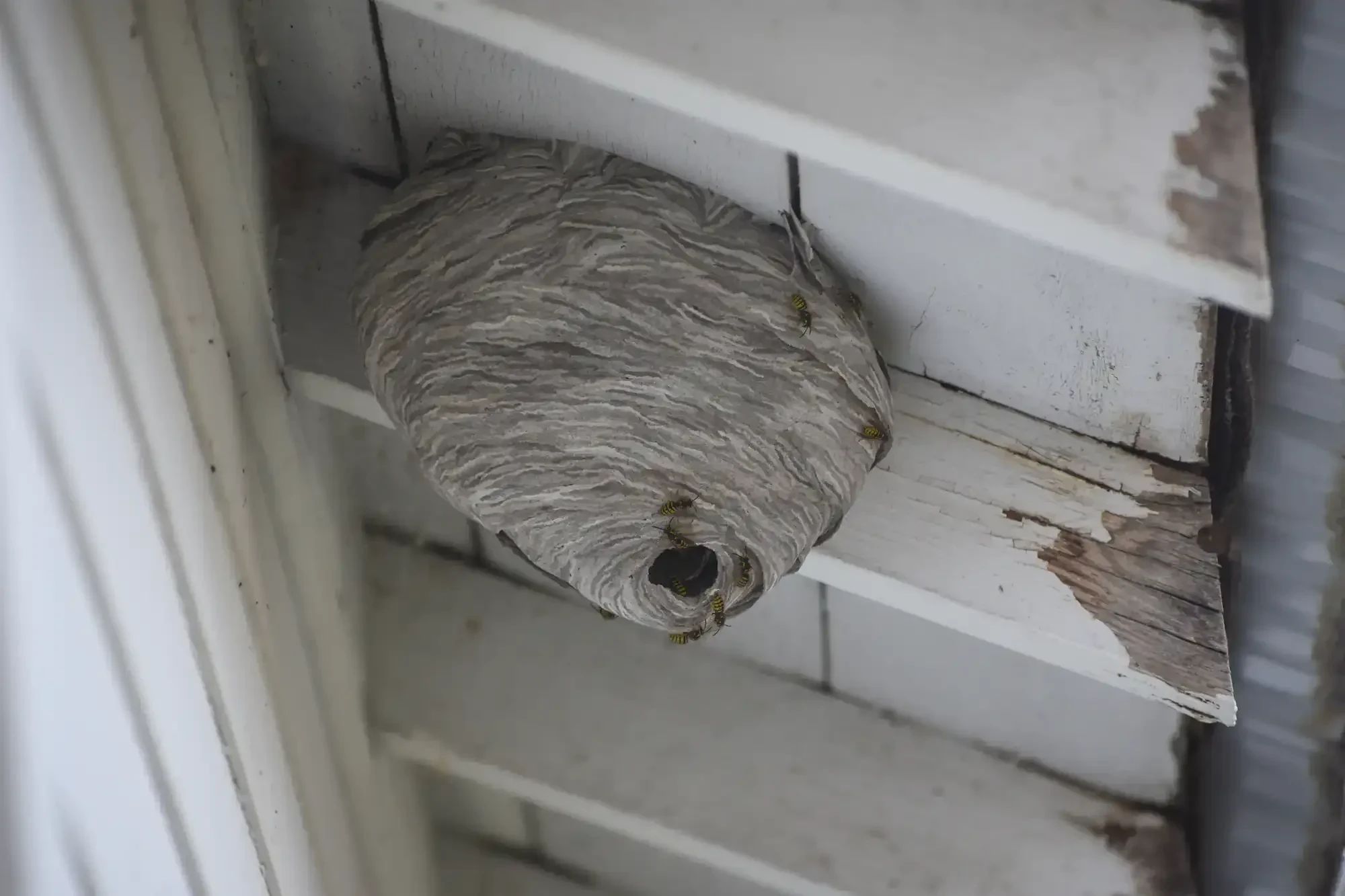
The clearest sign of a wall or attic infestation is yellow jackets appearing inside your living space — coming through electrical outlets, light fixtures, or small cracks in the ceiling or walls. That means the colony has established itself inside the structure and workers are finding their way into your home through gaps in the nest cavity. In older homes and lakefront cottages common throughout East Highland, aging siding, soffit gaps, chimney joints, and loose fascia boards are the most frequent entry points for German Yellowjackets.
Ground nests are different. You’ll typically notice a steady stream of yellow jackets flying low to the ground, entering and exiting a hole in the soil — often in an undisturbed area of the yard, along a wooded lot line, or near a brush pile. On larger properties with paddocks or naturalized areas, the entrance can be surprisingly hard to spot. If you’re not sure which you’re dealing with, don’t probe around the area — yellow jackets will defend the nest aggressively if disturbed. A trained technician can identify the species and nest type quickly, which is what determines the right treatment approach.
DIY yellow jacket removal is one of the most common ways a manageable problem becomes a serious one. Store-bought aerosol sprays applied to a wall void or attic nest don’t reach the queen or the core of the colony — they agitate the workers near the surface and drive the rest of the colony deeper into the structure. What follows is typically a larger, more aggressive nest and workers now finding new exit points inside your home.
For ground nests, the risk is more immediate. Disturbing the nest entrance without proper protective equipment and the right treatment can trigger a mass defensive response — yellow jackets can sting repeatedly, and a colony of several thousand workers is not something to approach without training. Between 0.5% and 4% of the population experiences anaphylaxis from stinging insect venom, and stinging insects send more than 500,000 people to the emergency room annually across the U.S. Professional yellow jacket nest extermination in East Highland means the job is done correctly the first time, with the right equipment and the knowledge to handle whatever species and nest type is present.
Earlier is always better. Yellow jacket queens emerge from overwintering sites in late March or early April — often from the wooded areas bordering the Highland State Recreation Area — and begin building nests immediately. In the early weeks of colony development, the nest is small, the worker population is low, and treatment is significantly less complex and less costly than late-season intervention.
By August, a colony that went untreated through spring and early summer can house thousands of workers. That’s when the service calls spike across East Highland and Highland Township, because that’s when yellow jackets shift from hunting insects to seeking out sugary foods — and that’s exactly when outdoor life on Duck Lake is at its peak. Treating in spring or early summer gives you the best outcome at the lowest risk. If you’re finding yellow jackets in August or September, waiting until next year isn’t an option — an active colony in your wall or yard will not resolve on its own, and the structural damage from a wall-void nest continues as the colony expands. Call when you see the problem, whatever the season.
Yes — and this is one of the most underappreciated risks of a wall-void infestation. German Yellowjackets, which are the species most commonly found nesting inside structures in Highland Township, actively chew through drywall, insulation, and wood to expand the nest cavity. A colony that started behind a small gap in your siding in April can occupy a significant portion of a wall by August. The physical damage to insulation and drywall is real, and it compounds the longer the colony remains active.
There’s also a secondary problem that most homeowners don’t think about until it’s too late: when the colony dies off in late fall, the nest material left inside the wall attracts rodents and flesh flies. The entry points that yellow jackets used to access the wall void remain open after the colony is gone, which means next spring’s queens — and other pests — can use the same access point. Proper yellow jacket nest removal in East Highland includes identifying and sealing those entry points, not just treating the colony. Leaving them open is an invitation for the same problem to return the following year.
We offer discounts for seniors, veterans, and first responders — and Highland Township has a meaningful population of all three. If you or someone in your household qualifies, mention it when you call and ask about current availability. It’s a straightforward discount from a company that’s been part of this community for 20 years, not a promotional add-on with fine print attached.
We also match reasonable competitor rates. If you’ve received a quote from another licensed pest control provider serving the East Highland area, bring it to the conversation. The goal is to make sure price isn’t the reason you end up with a less experienced technician treating a yellow jacket nest in your home. You can have the 26 years of hands-on experience, the same technician every visit, the IPM-certified approach, and the 1-year service guarantee — without paying more than you would elsewhere. No binding contracts, no pressure. Just a straight conversation about what’s on your property and what it takes to handle it right.
Useful Links