
Hear from Our Customers
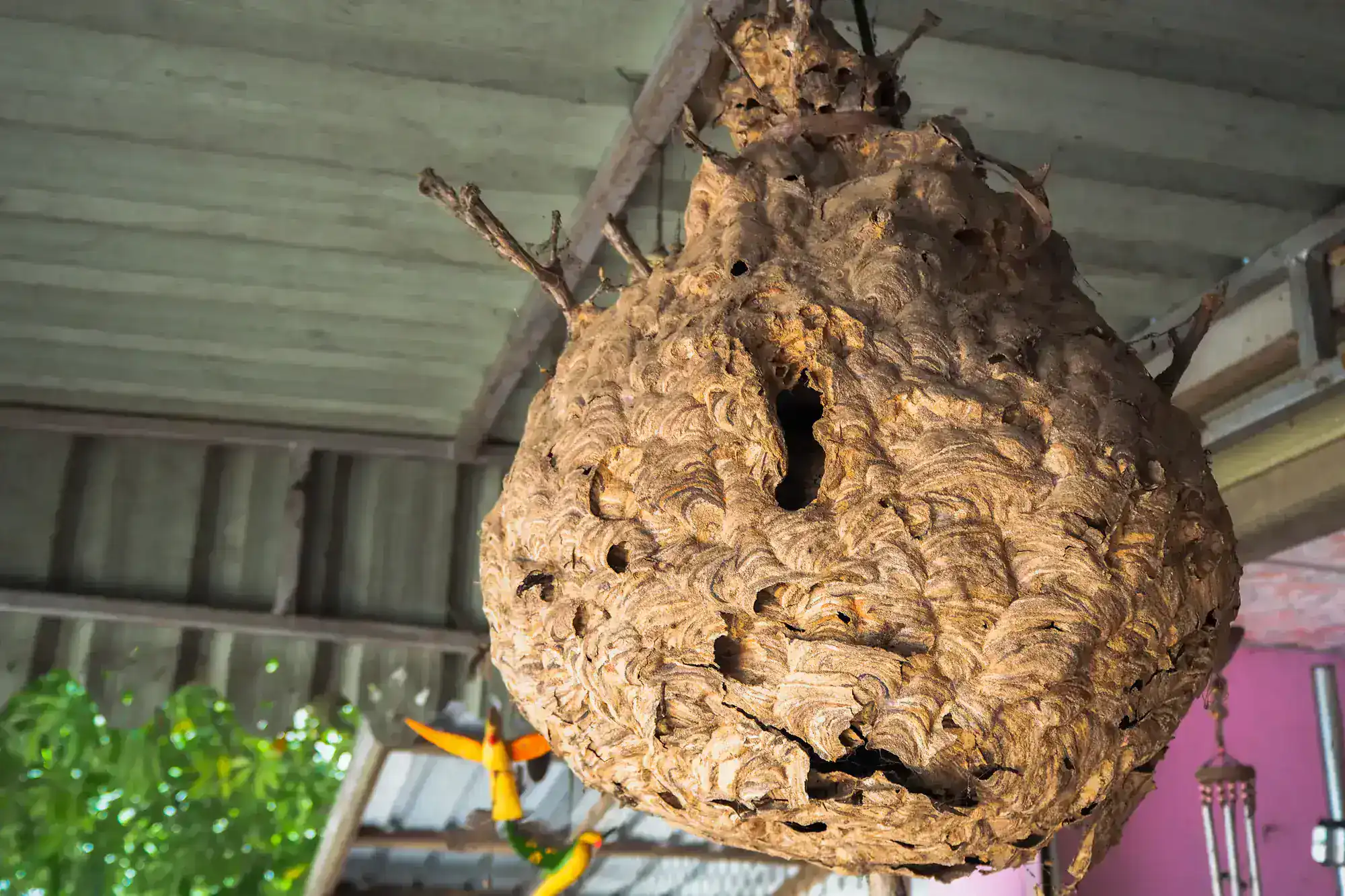
Howell residents don’t exactly have a shortage of reasons to be outside. Between summer weekends on the water, evenings on the deck, and kids running through the yard, outdoor space isn’t a luxury here — it’s part of the lifestyle. A hornet nest changes that fast. One colony near a high-traffic area of your property can shut down how you use your own home for months.
What most people don’t realize is that the nest you spot in May is a fraction of what it becomes by August. Bald-faced hornets — the most common species in Livingston County — can grow to several hundred workers by peak season. The bigger the colony, the more aggressive the defense, and the higher the cost to remove it. Early treatment isn’t just safer, it’s smarter.
Howell’s mature tree canopy and established landscaping — especially in neighborhoods around the historic downtown and throughout Howell Township — give hornets exactly what they’re looking for: dense shrubs, overhanging eaves, and wall voids in older homes. These aren’t just outdoor nuisances. Left untreated, they become a real safety concern for your family, your guests, and anyone near the nest.
We’ve been serving southeast Michigan since 2005 — that’s two decades of hornet nest removal, stinging insect control, and pest management across Howell, Livingston County, and the surrounding region. We’re not a franchise that opened last year or a call center routing your job to whoever’s available. We’re a family-owned business with a real track record in the communities we serve.
Roger, our founder, brings 26 years of hands-on pest control experience to every job. When you call First Choice for hornet removal in Howell, you get the same trained technician assigned to your property year after year — someone who learns your home, your yard, and where problems tend to show up. That continuity matters, especially for properties near the wooded recreation corridors throughout Livingston County where hornet pressure stays high season after season.
We hold Michigan Pesticide Application Business License #250081 and are IPM-certified through MDARD. We’re an Angie’s List and HomeAdvisor award winner, BBB Accredited, and we offer discounts for seniors, veterans, and first responders — because this community deserves that.
It starts with a call. You describe what you’re seeing — where the nest is, how long it’s been there, whether anyone’s been stung — and we work to get a technician to your Howell property quickly. This isn’t a “we’ll put you on the schedule for next week” situation. Hornet nests don’t wait, and neither do we.
When the technician arrives, the first step is identification. Not every stinging insect is a hornet, and the treatment approach depends entirely on the species and the nest location. Bald-faced hornets nesting in a tree require a different approach than a yellow jacket colony in a wall void or a nest tucked under the eave of a Victorian-era home in downtown Howell. Getting this right the first time is what separates a real fix from a temporary patch.
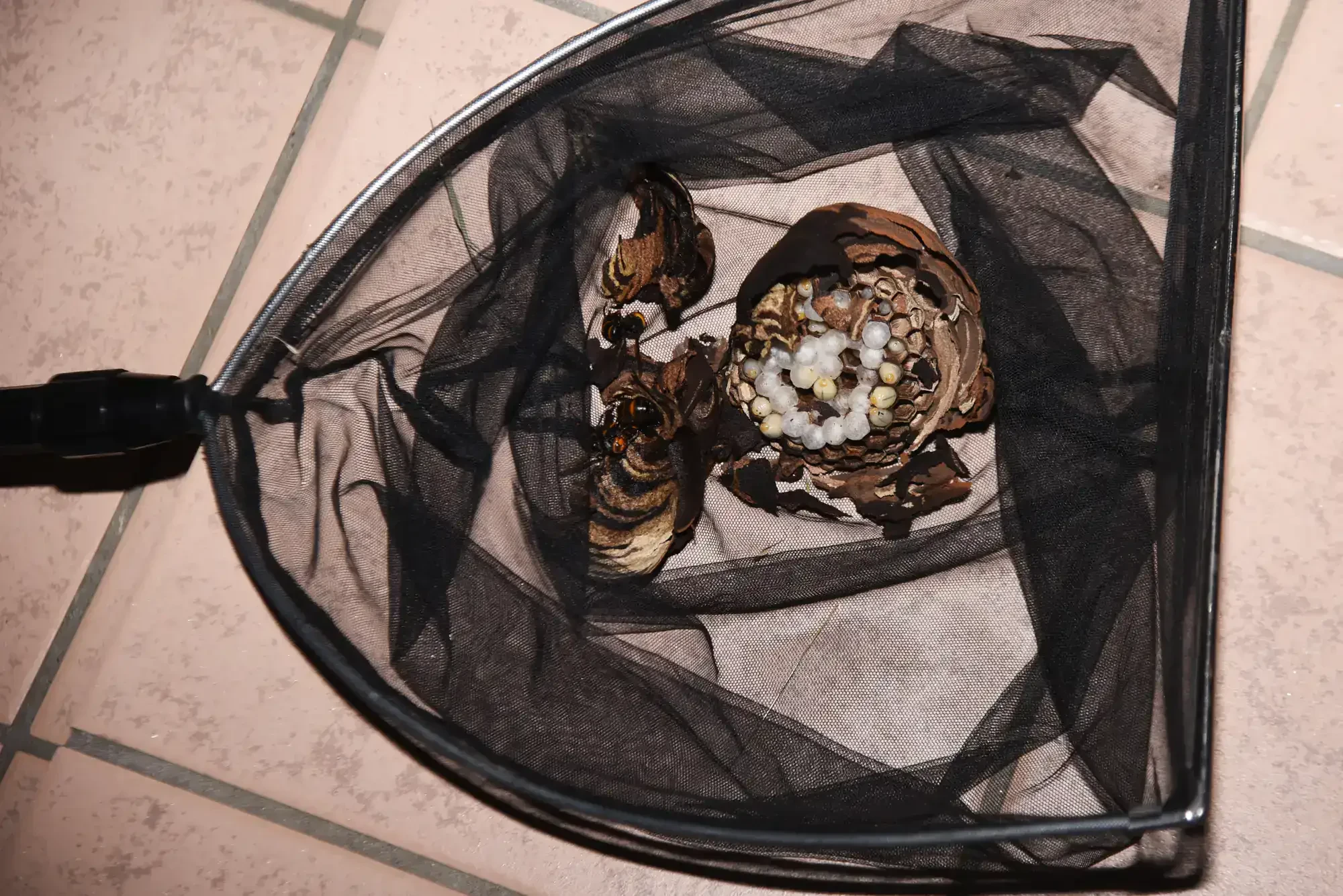
Treatment is applied using IPM-certified methods — targeted, effective, and chosen based on what’s actually in front of the technician, not a one-size-fits-all spray. After treatment, the nest activity will stop. If it doesn’t, we come back. No additional charge, no runaround. Howell’s peak hornet season runs from late June through September, and our goal is simple: get you back to using your property the way you planned.
Ready to get started?
Howell’s housing stock runs the full spectrum — Victorian-era buildings in the historic downtown district, mid-century ranches in established neighborhoods, and newer construction throughout Howell Township along Burkhart Road and Mason Road. Each one presents different hornet nesting scenarios, and the treatment has to match the situation. We handle all of it: nests under eaves, in wall voids, inside attic spaces, high up in trees, and in the dense shrubs that line so many Howell properties.
For nests inside wall cavities — more common in older homes near downtown — we use dust-based treatment to reach areas a surface spray simply can’t penetrate. Elevated nests on second-story overhangs or in trees require proper protective equipment and the right approach to avoid driving the colony deeper into the structure. This is exactly why hardware store sprays often make things worse before they get better.
We serve both residential and commercial customers in Howell. That includes homeowners, landlords, and businesses along Grand River Avenue whose customers or employees are at risk from a nest near an entrance or outdoor seating area. Every service comes with upfront, flat-rate pricing — no surprise charges on the invoice. And if you’ve received a reasonable quote from a competitor, we’ll match it.
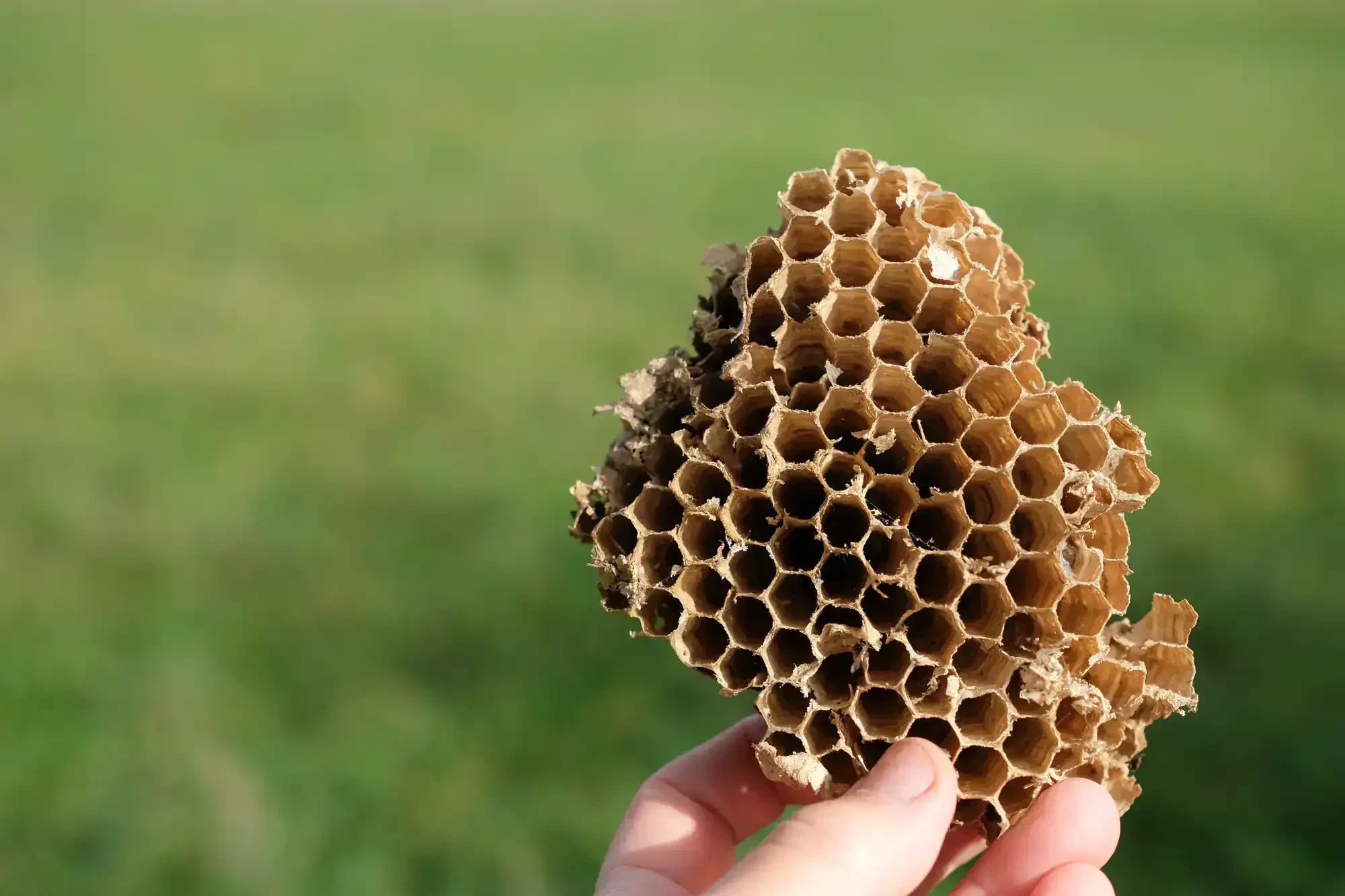
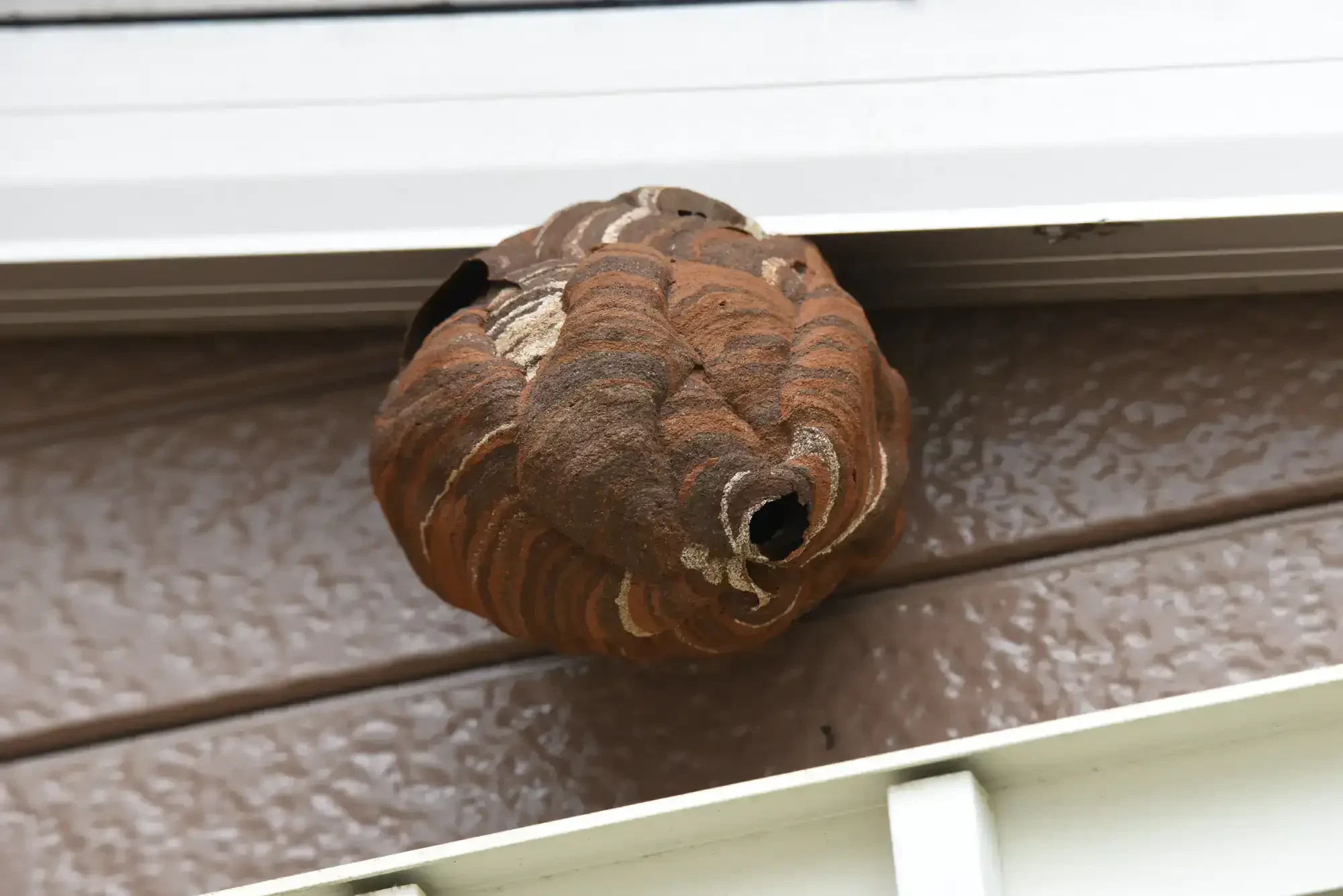
The most common species you’ll encounter in Howell and throughout Livingston County is the bald-faced hornet. Despite the name, it’s technically a close relative of yellow jackets — but it behaves like a true hornet in every way that matters. It builds large, enclosed paper nests, usually in trees or shrubs, and it defends that nest aggressively. A mature colony by late summer can hold several hundred workers, all of which will sting repeatedly if they feel threatened.
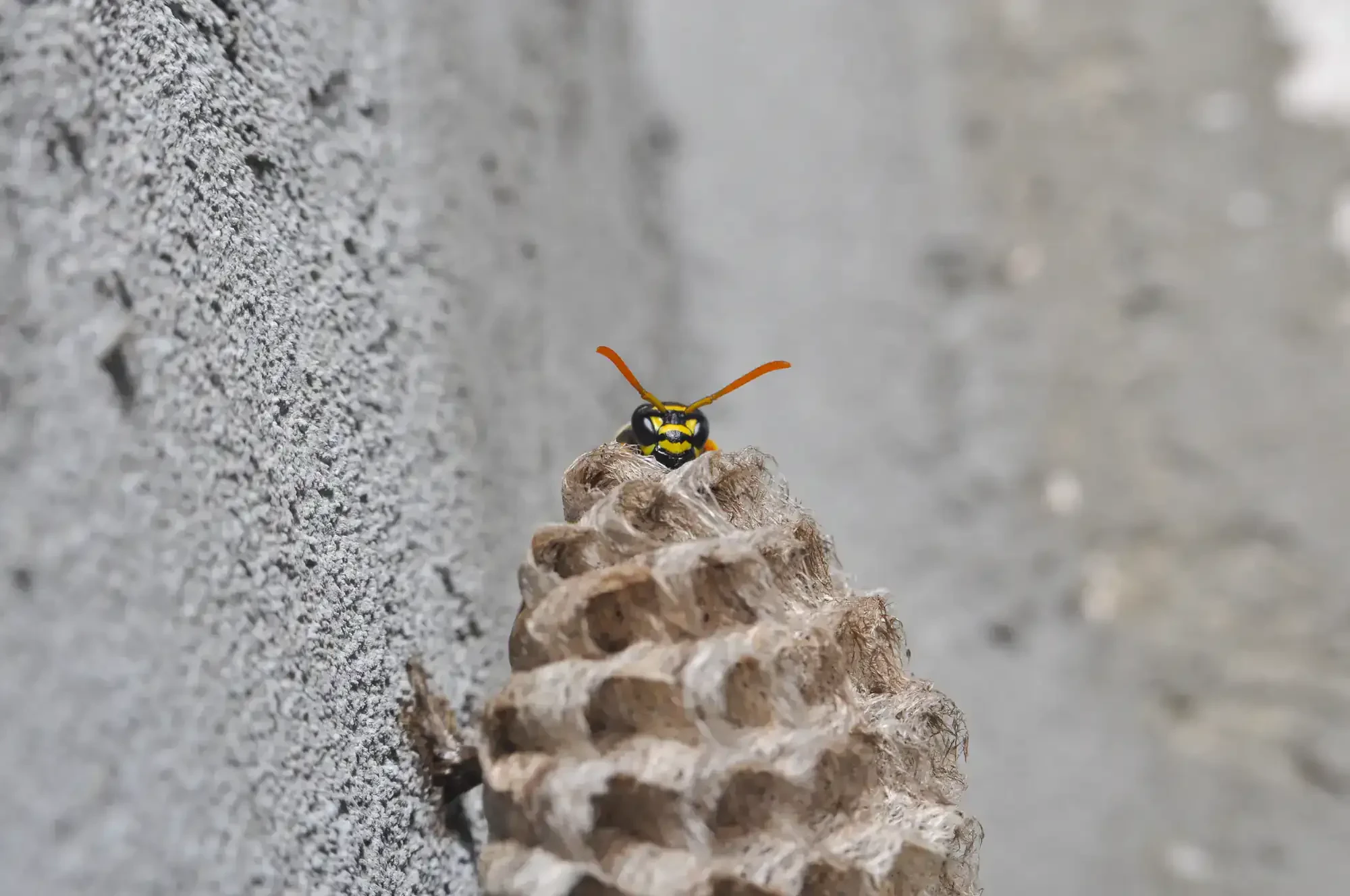
You may also encounter European hornets in the area, which are larger and can nest in hollow trees, wall voids, or attic spaces. Yellow jackets are frequently mistaken for hornets and are equally aggressive, especially in late summer when food sources become scarce. The treatment approach varies by species, which is one reason accurate identification matters before any treatment begins. If you’re not sure what you’re dealing with, don’t try to get closer — call us and let our technician assess it safely.
Professional hornet removal in Howell generally runs between $300 and $700, depending on the nest size, species, and location. A small nest treated early in the season — May or June, when colonies are just getting started — is on the lower end of that range. A large bald-faced hornet nest in a tree or under a second-story eave by mid-August, when the colony is at full strength, is a different job entirely and priced accordingly.
The most important thing to understand is that waiting doesn’t save you money — it costs more. A nest that might run $200 to $300 to treat in spring can easily double or triple in cost by August simply because the colony has grown and the job has become more complex and more dangerous. We offer flat-rate, upfront pricing, so you know what you’re paying before anyone shows up. And if you’ve received a reasonable quote from another company, ask about price matching.
The honest answer is: it depends on the nest, and most of the time the risk isn’t worth it. A small, newly-formed nest in an accessible location with minimal colony activity is a different situation than a basketball-sized nest in a tree with hundreds of workers defending it. The problem is that most people can’t accurately assess which situation they’re dealing with until they’re already too close.
Bald-faced hornets — the most common species in the Howell area — are notoriously defensive. Unlike honeybees, they can sting multiple times, and a single disturbance can mobilize the entire colony. Hardware store sprays are often ineffective on enclosed nests and can drive hornets deeper into wall voids, making the problem significantly worse. If the nest is near a doorway, a children’s play area, or inside a wall or eave of your home, professional removal is the right call. The cost of treatment is far less than an ER visit or a structural repair from a colony that was pushed further into your home.
The best time to treat a hornet nest in Howell is as early in the season as you notice activity — ideally May or early June. At that point, the queen has established the nest but the colony is still small, the workers are fewer, and the job is simpler, safer, and less expensive. Most homeowners don’t call until July or August, which is understandable — that’s when the nest becomes impossible to ignore. But by then, the colony is at or near peak size and significantly more defensive.
Michigan’s hornet season runs roughly from April through October, with peak activity in July through September. That window lines up directly with Howell’s busiest outdoor season — the Michigan Challenge Balloonfest, MelonFest, backyard gatherings, and kids out of school. If you’re seeing hornets flying in and out of a specific spot on your property, that’s enough reason to call. You don’t need to wait until someone gets stung to take it seriously.
They can, and in Howell’s climate, it’s a real pattern worth understanding. Hornet colonies don’t survive Michigan winters — the workers die off as temperatures drop, and only fertilized queens make it through by finding protected overwintering spots. Those spots are often in or around the same structures, trees, or landscape features where the previous colony was active. Come spring, a new queen can emerge and start building in the same general area.
The old nest itself won’t be reused — hornets don’t return to a previous season’s nest. But the location that attracted them once will attract them again if nothing changes. That’s why treatment alone isn’t always a complete answer. Sealing entry points in older Howell homes, addressing gaps in soffits or eaves, and removing attractants can significantly reduce the likelihood of a new colony forming in the same spot the following spring. We can identify those vulnerabilities during the service visit and walk you through what to address before next season.
Yes. We offer discounts for seniors, veterans, and first responders. Livingston County has a strong community of people who have served — in the military, in emergency services, and in public safety roles — and this is a straightforward way to reflect that. If you or someone in your household qualifies, just mention it when you call.
Beyond the discount programs, we also match reasonable competitor quotes. So if you’ve already gotten a price from another company serving the Howell area, bring it up. The goal is to make sure cost isn’t the reason someone leaves a hornet nest untreated or tries to handle it themselves when professional removal is clearly the safer choice. Flat-rate, upfront pricing applies to every job — no hidden fees, no charges that appear after the fact. You’ll know the number before the technician arrives.
Useful Links