
Hear from Our Customers
You stop watching where you walk. Your kids go back outside. The dog stops getting stung near the fence line. That’s what wasp nest removal actually does — it gives your property back to you, and in Howell, where summers are short and outdoor living is the whole point, that matters more than people realize.
Howell’s mix of older historic homes near Grand River Avenue and newer construction in communities like Marion Oaks creates two very different wasp problems. In older homes, wasps find their way into wall voids, rotting fascia, and uninsulated attic spaces — places a can of spray from the hardware store will never reach. In newer builds near wooded lots and nature preserves, ground disturbance and proximity to natural habitat means yellow jacket pressure starts early and builds fast through the summer.
By August — right around the Melon Festival — yellow jacket colonies in Livingston County can hold thousands of workers, and their behavior shifts. They’re not just building anymore. They’re aggressive, they’re scavenging, and they’re everywhere you want to be. Getting ahead of that, or handling it quickly when it happens, is the difference between a summer you enjoy and one you spend avoiding your own yard.
First Choice Pest Control has been operating since May 31, 2005 — 20 years of protecting Michigan homes, and not one of those years involved rotating in seasonal hires or part-time crews to handle calls. Roger Chinault founded our company and brings 26 years of hands-on pest control experience to every service decision. When something goes wrong on a job, there’s a real person accountable for it.
We’re based in Swartz Creek and serve Howell and the broader Livingston County area — the same I-96 corridor that connects both communities daily. First Choice holds awards from Angie’s List and HomeAdvisor, is trained in Integrated Pest Management, and is fully licensed through the Michigan Department of Agriculture and Rural Development. Those aren’t decorations — they’re the baseline for doing this work correctly and legally in Michigan.
What actually sets us apart is simpler than any certification: you get the same technician every time. They learn your property. They remember where the old nest was, which entry points are vulnerable, and what your yard looks like before wasp season starts. That kind of continuity doesn’t exist with national franchises, and it’s exactly what Howell homeowners — people who invest in their properties and expect real service — deserve.
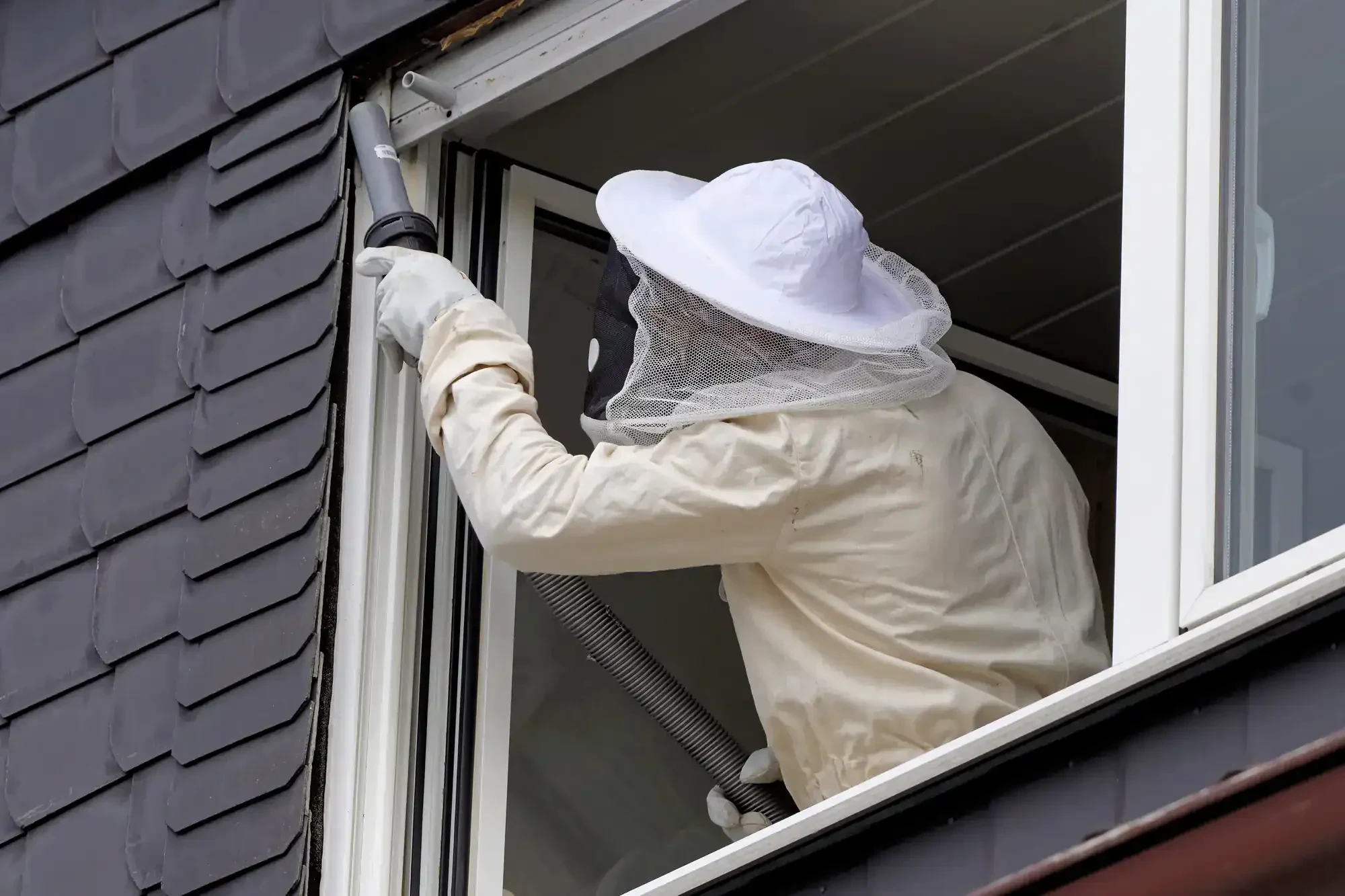
It starts with a thorough inspection. Wasps don’t always nest where you can see them — especially in Howell, where older homes near the historic downtown district have aging wood trim, open soffits, and wall voids that are practically built for yellow jackets and paper wasps to move into. We check the obvious spots and the ones you’d never think to look: eaves, deck undersides, garage door frames, attic vents, and ground-level areas along landscaping borders.
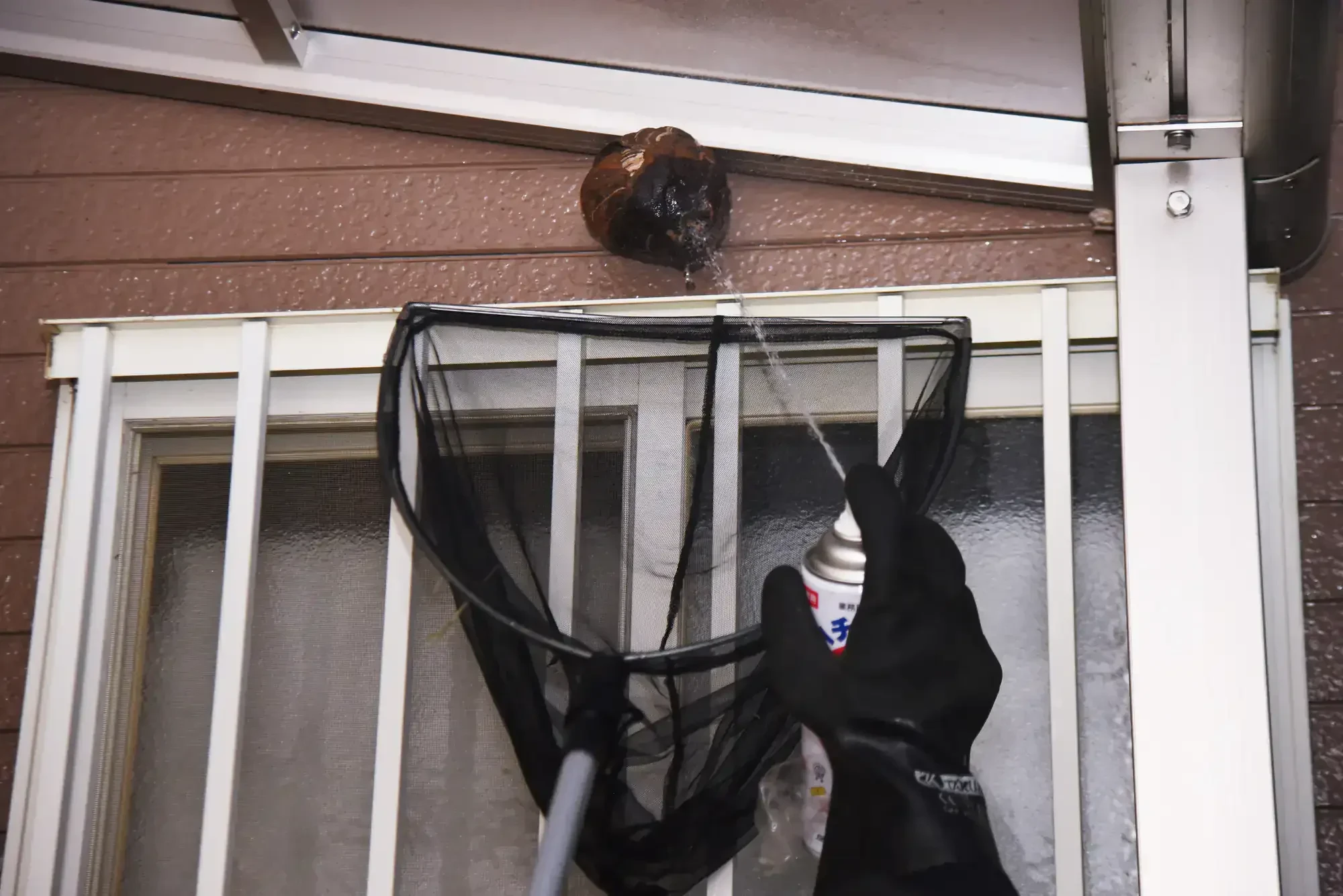
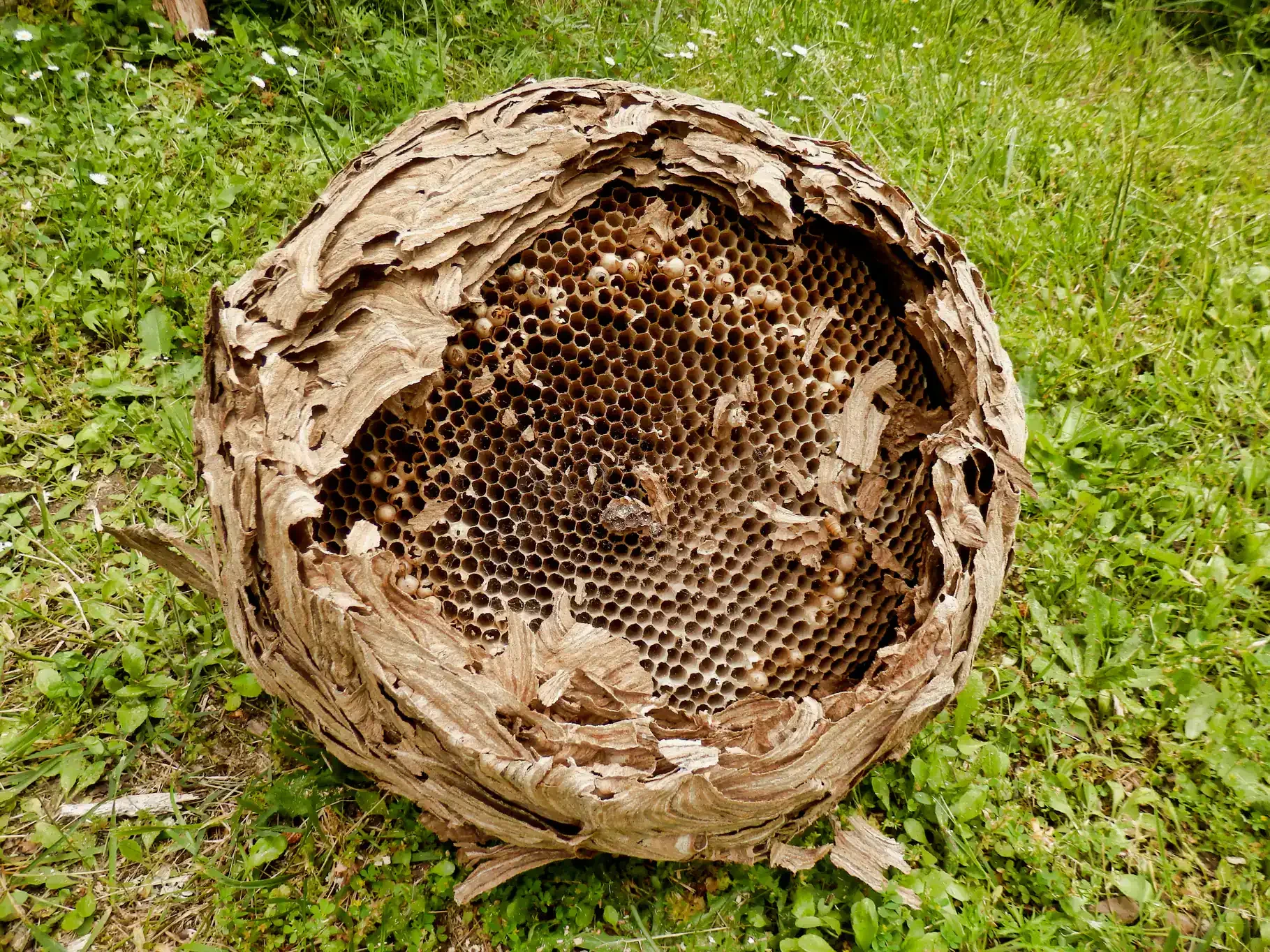
Once the nest is located and identified — because treatment varies depending on whether you’re dealing with paper wasps, yellow jackets, or bald-faced hornets — we apply targeted treatment directly to the colony. We use Integrated Pest Management methods, meaning the treatment goes where the problem is, not broadcast across your entire yard. After the colony is eliminated, the nest is physically removed and entry points are sealed to reduce the chance of a new queen choosing the same location next spring.
Before our technician leaves, you’ll know exactly when it’s safe for your kids and pets to be back in the area — not a vague “give it a few hours,” but a specific, clear answer based on what was used and where. If activity returns after treatment, we come back. No debate, no additional charge.
Ready to get started?
Every wasp nest removal service we provide in Howell includes the full process — inspection, targeted treatment, physical nest removal, and entry point sealing. There’s no partial job where a technician sprays the outside of the nest and calls it done. Our goal is to eliminate the colony, remove the structure, and close off the access point so the problem doesn’t repeat itself in the same location next season.
For Howell homeowners dealing with ground nests — which are common in yards near Livingston County’s wooded corridors and lake-adjacent properties — our treatment approach is different than an aerial nest under the eaves. Ground yellow jacket colonies can be significantly larger and are often discovered suddenly, usually when someone mows over them or a pet gets too close. We handle those situations with the same thoroughness, just with methods suited to the specific nest type and location.
We also offer senior, veteran, and first responder discounts, and will match any reasonable competitor’s rate. There are no binding contracts — if our service doesn’t earn your business back, you’re never obligated to return. For Howell residents who want seasonal wasp control built into a broader pest protection plan, ask about our mosquito program, which includes flea and tick treatment at no extra charge — a real advantage for families using Livingston County’s parks and trails throughout the summer.
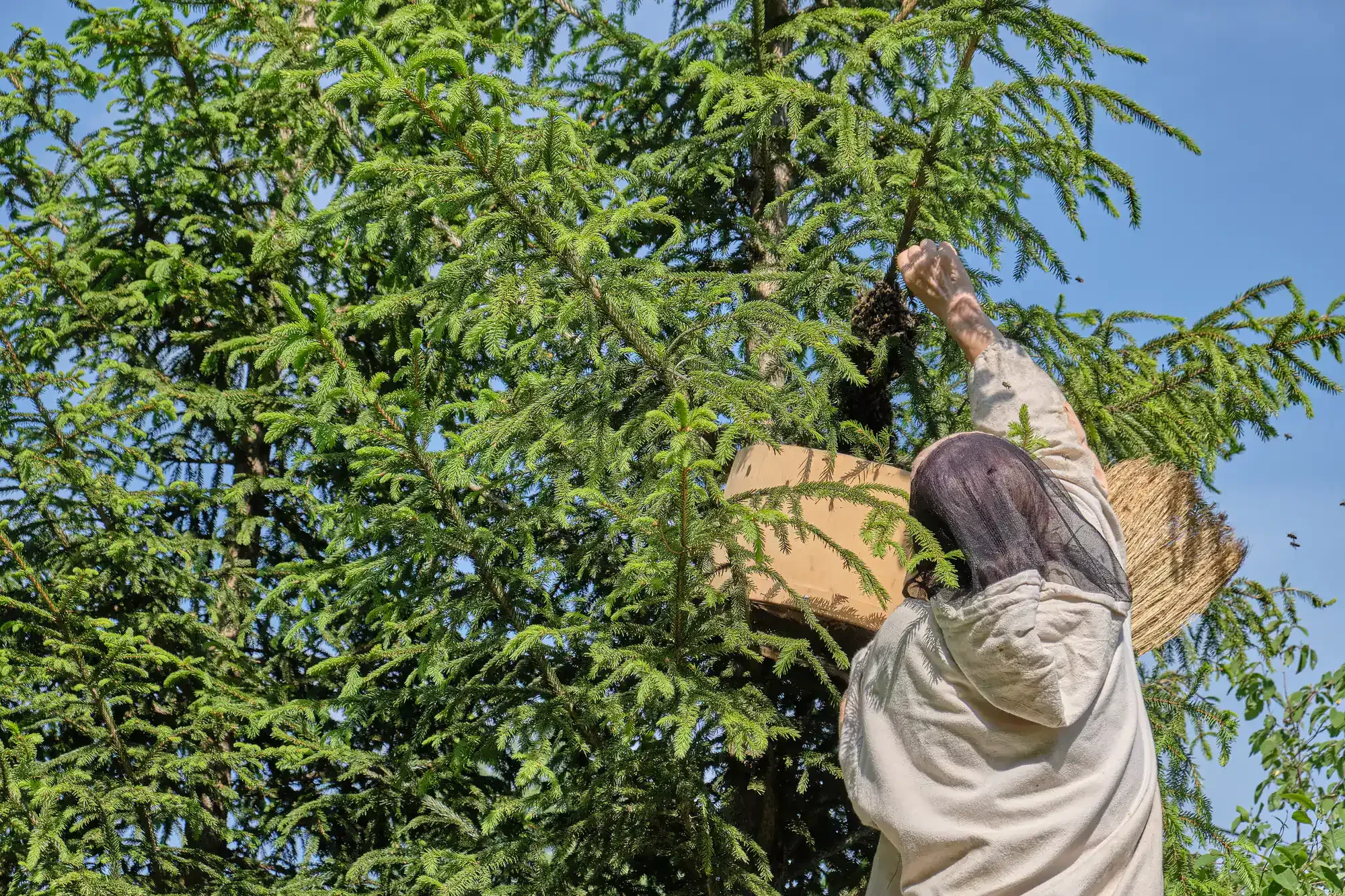
In Howell and throughout Livingston County, the most dangerous stretch of wasp season runs from late July through September. Yellow jacket colonies that started with a single queen in April can grow to several thousand workers by August — and their behavior changes significantly as the season progresses. Early summer, they’re focused on building and feeding larvae. By late summer, natural food sources are declining and the colony shifts toward scavenging, which is why yellow jackets become aggressive around outdoor food, trash, and anything sweet.
That timing overlaps directly with the Howell Melon Festival in August, when 20,000-plus people fill Grand River Avenue — and with the final weeks of summer when families are spending the most time outside before school starts. If you’ve noticed wasp activity around your property and have been putting off a call, late July is not the time to keep waiting. Colonies don’t slow down until the first hard frost, and a nest that seemed manageable in June is a completely different problem by August.
You can attempt it, but the risk-to-reward ratio is poor — especially with yellow jackets, which are the most common and most aggressive species in Livingston County by late summer. Over-the-counter sprays work on small, exposed paper wasp nests when the colony is still small in spring. But yellow jacket nests in wall voids, underground, or inside structural cavities are a different situation entirely. Spraying the entrance without treating the full colony typically agitates thousands of workers without eliminating the nest, and that’s when people get stung repeatedly.
There’s also the issue of not knowing what you’re dealing with. Paper wasps, yellow jackets, and bald-faced hornets all look similar to the untrained eye but require different treatment approaches. A professional inspection identifies the species, locates the full extent of the nest, and applies the right treatment in the right place. For anything other than a small, accessible paper wasp nest caught early in the season, professional removal is the safer and more effective option.
Cost varies based on nest type, location, and size. A standard aerial nest — paper wasps under an eave or deck — is typically on the lower end of the range. Yellow jacket removal, particularly for ground nests or wall void infestations, involves more complexity and runs higher, often in the $400–$750 range depending on what’s involved. These aren’t arbitrary numbers — they reflect the actual labor, materials, and follow-up required to do the job completely rather than just spray the surface.
We match reasonable competitor rates, so if you’ve gotten a quote from another Howell-area pest control company, it’s worth a call before you book. There are no hidden fees and no contracts. What you’re quoted is what you pay, and if activity returns after treatment, the follow-up visit doesn’t cost extra. For Howell homeowners who are comparison shopping — which is a smart move — our price match policy makes the decision straightforward.
The treated colony won’t come back — once the workers are eliminated and the nest is removed, that specific colony is gone. The real concern is whether a new queen will find the same location attractive next spring, and that’s a legitimate one. Queen wasps overwinter in protected spots and emerge in April looking for a nesting site. If the entry point that allowed access to your wall void, attic, or eave space isn’t sealed after removal, there’s a real chance a new colony starts building in the same spot the following year.
That’s why entry point sealing is part of every First Choice service call, not an add-on. In Howell’s older homes — particularly those near the historic downtown district with aging wood trim and original soffits — sealing those access points after removal is especially important. The same technician who handles your removal will know your property’s specific vulnerabilities and can identify spots worth monitoring before the next season starts.
The most common sign is consistent wasp traffic in and out of a small gap — a crack in siding, a gap around a window frame, a space where a utility line enters the house. If you’re seeing wasps disappearing into your exterior walls rather than flying to an obvious nest, that’s a strong indicator of a wall void colony. You may also hear a faint buzzing or crackling sound from inside the wall, particularly in quieter areas of the house.
Wall void nests are more common in Howell’s older housing stock, where gaps in original construction have widened over decades and insulation may be minimal or absent in certain areas. These nests are also more dangerous to treat incorrectly — spraying the entry point without treating the full colony can drive wasps deeper into the wall or into interior living spaces. A professional inspection can confirm whether you’re dealing with a wall void nest and determine the right treatment approach before anything is applied.
Yes — we offer discounts for seniors, veterans, and first responders. Howell has a visible and active veterans community, and these discounts are a straightforward acknowledgment of that. If you or someone in your household qualifies, mention it when you call and it gets applied to your service.
Beyond the discount, we also match reasonable competitor rates — so if you’ve already gotten a quote from another Livingston County pest control company, bring it up. The combination of price matching and our discount programs means most Howell residents can get professional-grade wasp nest removal without overpaying for it. No contracts, no pressure, and no obligation to continue service if the work doesn’t earn your trust. That’s our standing offer, and it doesn’t change based on who you are or where in Howell you’re calling from.
Useful Links