
Hear from Our Customers
Out here in Hadley Township, your property isn’t a postage-stamp yard — it’s several acres of land you actually use. Gardens, fire pits, barns, outbuildings, trails through the tree line. When a hornet colony sets up near any of those spaces, you lose access to the property you chose this area for. That’s a real disruption to how you live.
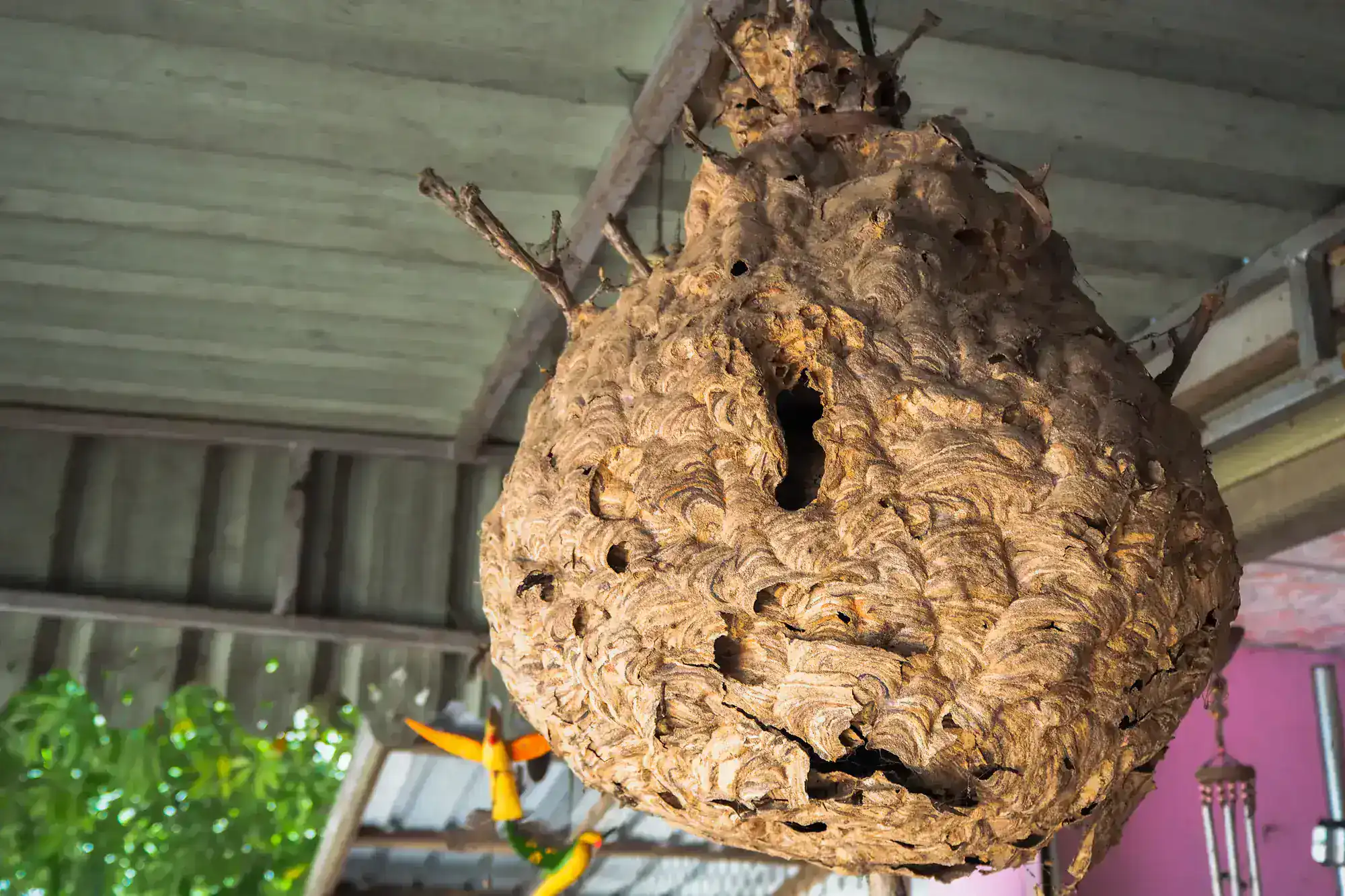
Bald-faced hornets — the most common and most aggressive species in this part of Lapeer County — build large enclosed paper nests in exactly the kind of environment that defines Kerr Hill: mature hardwoods, wooded buffers, farmhouse eaves, and outbuilding overhangs. A colony that starts as a golf ball in April can house 400 to 700 workers by August. And unlike honey bees, hornets sting repeatedly. Every worker in that nest will defend it.
The Metamora-Hadley State Recreation Area sits right next door to this community. That 723-acre stretch of forest and trail habitat is a constant source of hornet pressure on nearby residential properties — colonies establish in the park’s woodland edge and expand outward. Professional hornet removal in Kerr Hill isn’t just about eliminating what you can see. It’s about treating the problem at the source so it doesn’t come back next season.
We’ve been serving southeast Michigan homeowners since May 31, 2005. In 2025, that’s 20 years of showing up, doing the work, and building a reputation entirely on results. Roger, our owner, brings 26 years of personal, hands-on pest control experience — not a corporate title, but real field knowledge built one job at a time.
We’re based in Swartz Creek, right across the Genesee-Lapeer county line, and have been serving families throughout Lapeer County — including the rural, wooded properties surrounding Kerr Hill and the Hadley Township area — for years. We hold Michigan Pesticide Application Business License #250081 and IPM training certification recognized by Michigan’s Department of Agriculture and Rural Development. Angie’s List and HomeAdvisor have both recognized us for service quality, and our 4.7-star Google rating reflects what actual customers say after the job is done.
No contracts. No strangers rotating through your property. The same trained technician comes back every time — someone who learns your land, your structures, and your specific situation.
It starts with a call. You describe what you’re seeing — where the nest is, how long it’s been there, whether you’ve tried anything already. That information matters, because the treatment approach for a nest tucked under a farmhouse eave is different from one hanging 25 feet up in a maple or buried inside a barn wall void. Kerr Hill properties present a wide range of nest locations, and we build the plan around your specific situation before anyone shows up.
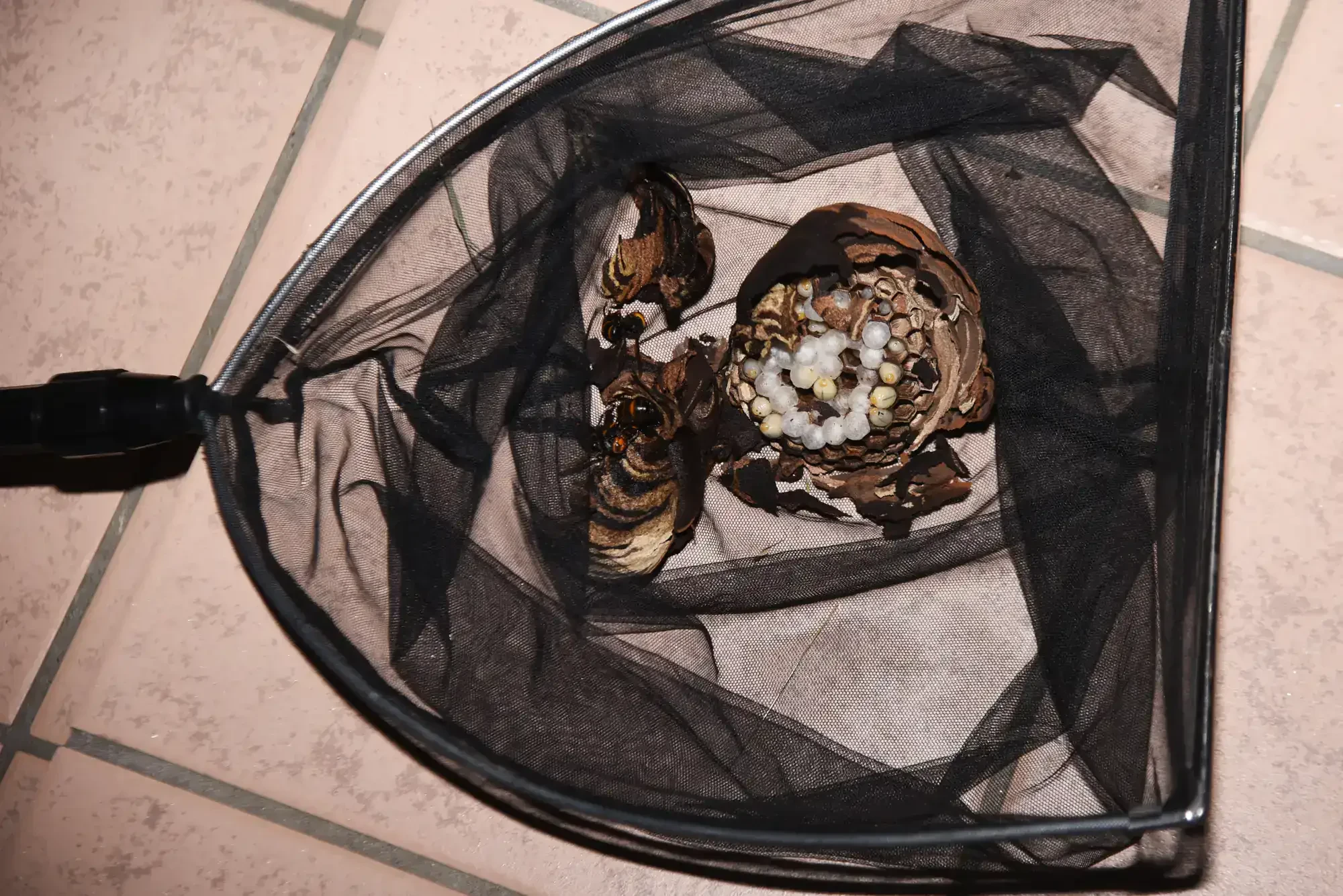
When our technician arrives, the first step is a thorough assessment of the nest location, size, and access. Exposed nests at reachable heights are treated with a targeted aerosol application. Elevated tree nests — common on the wooded lots throughout Hadley Township — require specialized application equipment and proper protective gear. Enclosed nests inside wall voids or outbuilding cavities are treated with dust formulations that penetrate the structure and reach the colony directly. The treatment method is chosen based on what will actually work, not what’s fastest or easiest.
Michigan’s hornet season peaks in late summer, and timing matters. A nest discovered in June is significantly smaller and less expensive to treat than the same nest in August. If you’re in the Kerr Hill area and you’ve spotted hornet activity — even if the nest isn’t visible yet — earlier is always better. After treatment, our technician walks you through what to expect in the following days and whether a follow-up visit is warranted. If it is, we come back at no additional charge.
Ready to get started?
Most pest control companies are set up to handle a nest under a roofline in a subdivision. That’s not what Kerr Hill looks like. Out here, the nests are in trees on three-acre lots, inside the walls of 80-year-old barns, under the overhangs of pole buildings, and along the wooded edges where your property meets the tree line near the Metamora-Hadley Recreation Area. We’re equipped and experienced for all of it.
Every hornet removal service we provide includes a full property assessment, targeted treatment using IPM-certified methods, and a follow-up if the initial treatment doesn’t fully resolve the problem. Because we use Integrated Pest Management protocols — certified by Michigan’s MDARD — the treatment is precise. You’re not getting a blanket chemical application across your land. You’re getting a targeted approach that addresses the actual colony without unnecessary exposure to your family, your pets, or the surrounding environment. For Kerr Hill residents who live adjacent to a state recreation area and care about their land, that distinction is meaningful.
We also offer price matching for reasonable competitor quotes, so if you’ve already called around, bring it. Discounts are available for seniors, veterans, and first responders — and with a median age over 46 in Hadley Township and a community that takes care of its own, those discounts get used regularly.
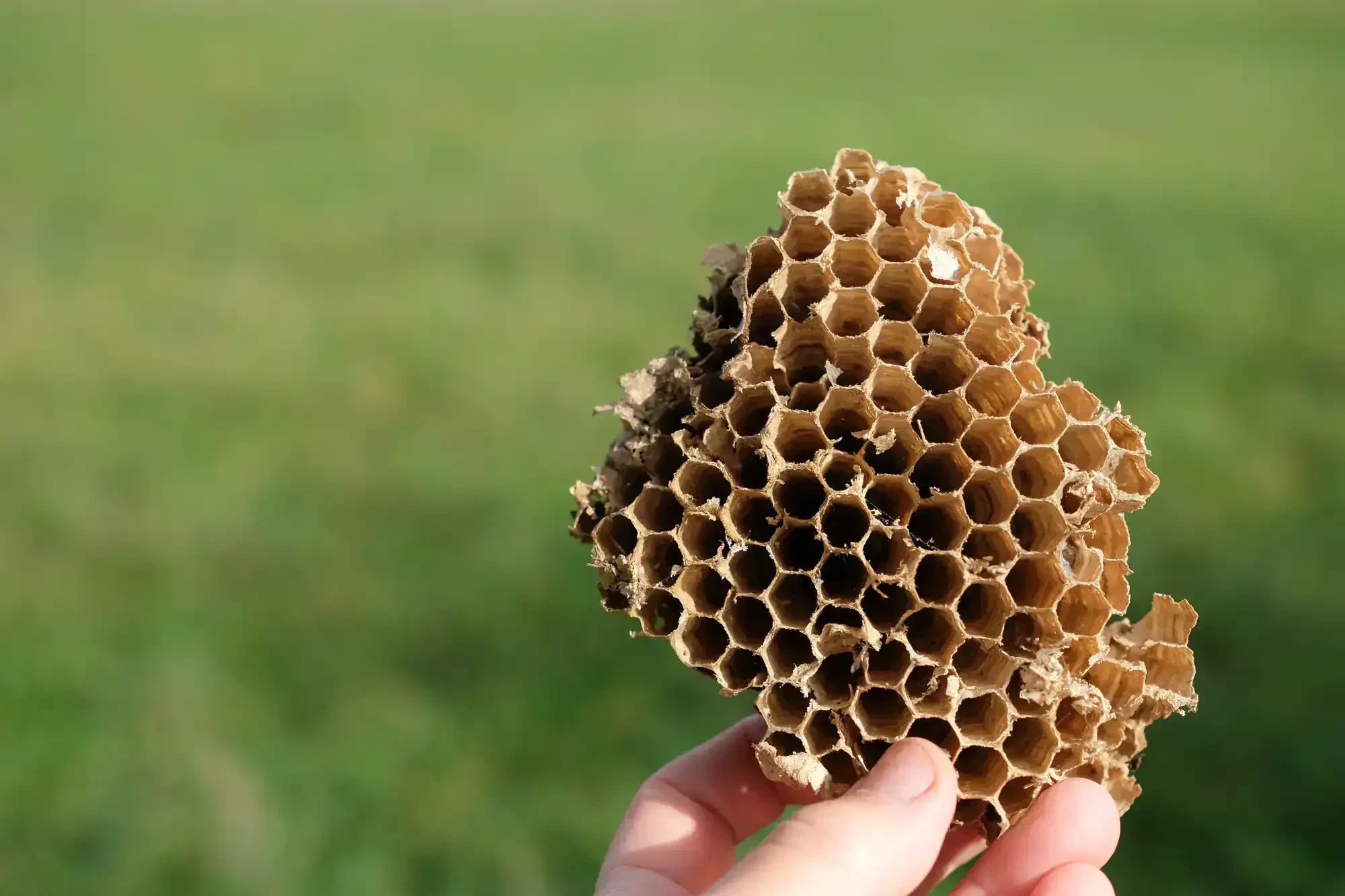
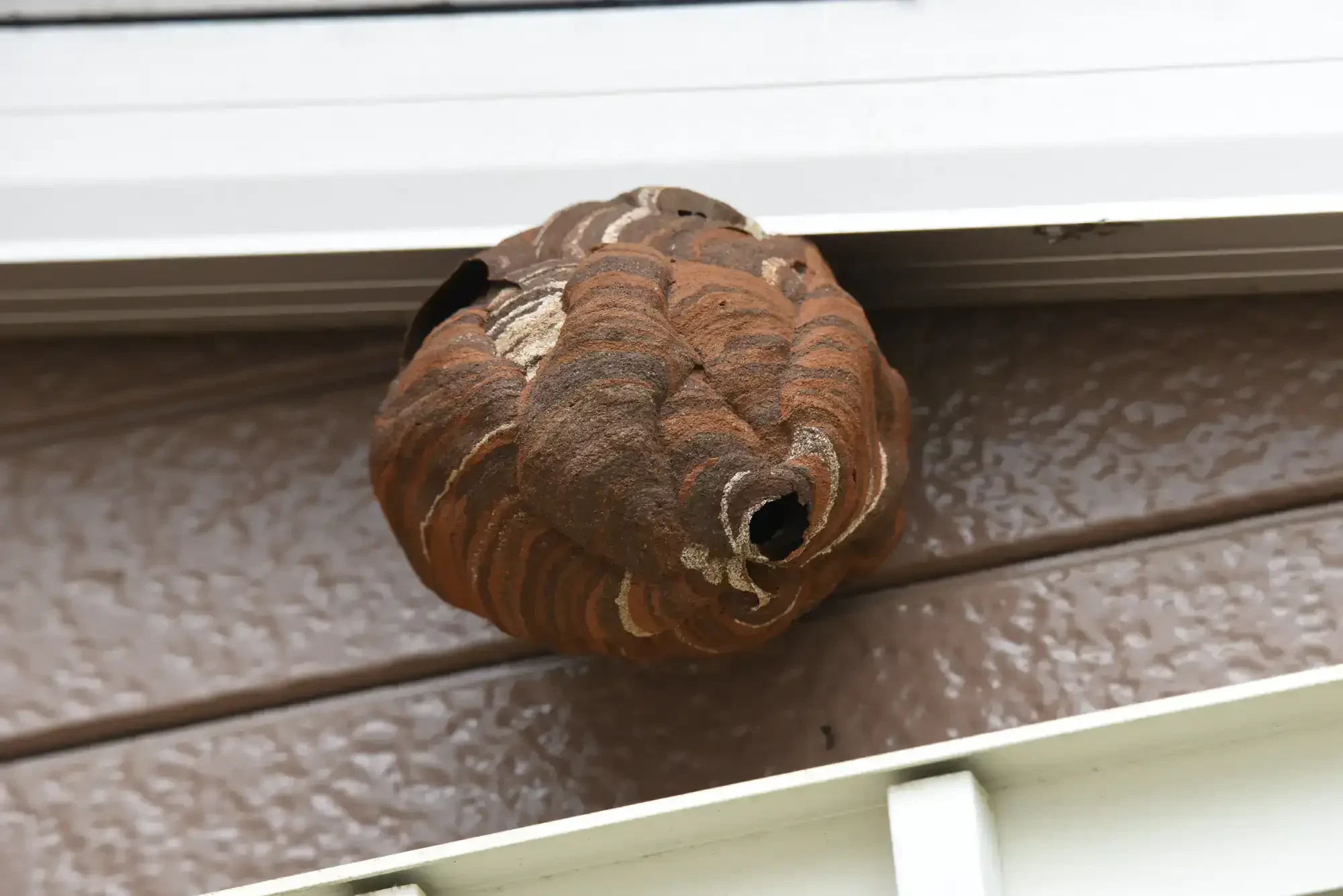
It’s a fair question, and the answer actually changes how the removal is handled. Bald-faced hornets — the most common species in Lapeer County — build large, enclosed, teardrop-shaped paper nests that are usually attached to tree branches, eaves, or the sides of structures. The nest itself is a gray, papery shell, often the size of a softball by early summer and a basketball or larger by August. Yellow jackets, on the other hand, frequently nest in the ground or inside wall voids, and their nests aren’t visible the same way.
On a multi-acre Kerr Hill property with mature hardwoods and outbuildings, you may be dealing with either — or both. The treatment approach is different for each. Ground nests require a different application method than elevated tree nests or enclosed structural nests. If you’re not sure what you’re looking at, the safest move is to call before you get any closer. Our trained technician can identify the species and the nest type on arrival and choose the right treatment method from there.
The honest answer is that it depends heavily on the nest size, location, and how far the season has progressed — but the risk is higher than most people expect. A bald-faced hornet colony in peak season can mobilize hundreds of workers in seconds. They don’t lose their stinger like a honey bee, which means every single worker can sting multiple times. If the nest is disturbed without fully eliminating the colony, the response can be fast and dangerous.
Store-bought aerosol sprays are sometimes effective on very small, newly established nests in early spring. But by the time most homeowners notice a nest on their Kerr Hill property — often while mowing, working in the garden, or checking on an outbuilding — the colony is already well-established. Nests in elevated tree locations or inside barn walls are particularly difficult to treat safely without the right equipment and protective gear. If there’s any doubt about the size, location, or accessibility of the nest, professional removal is the safer and more reliable option. A botched DIY attempt often makes the colony more aggressive and the job harder to complete safely.
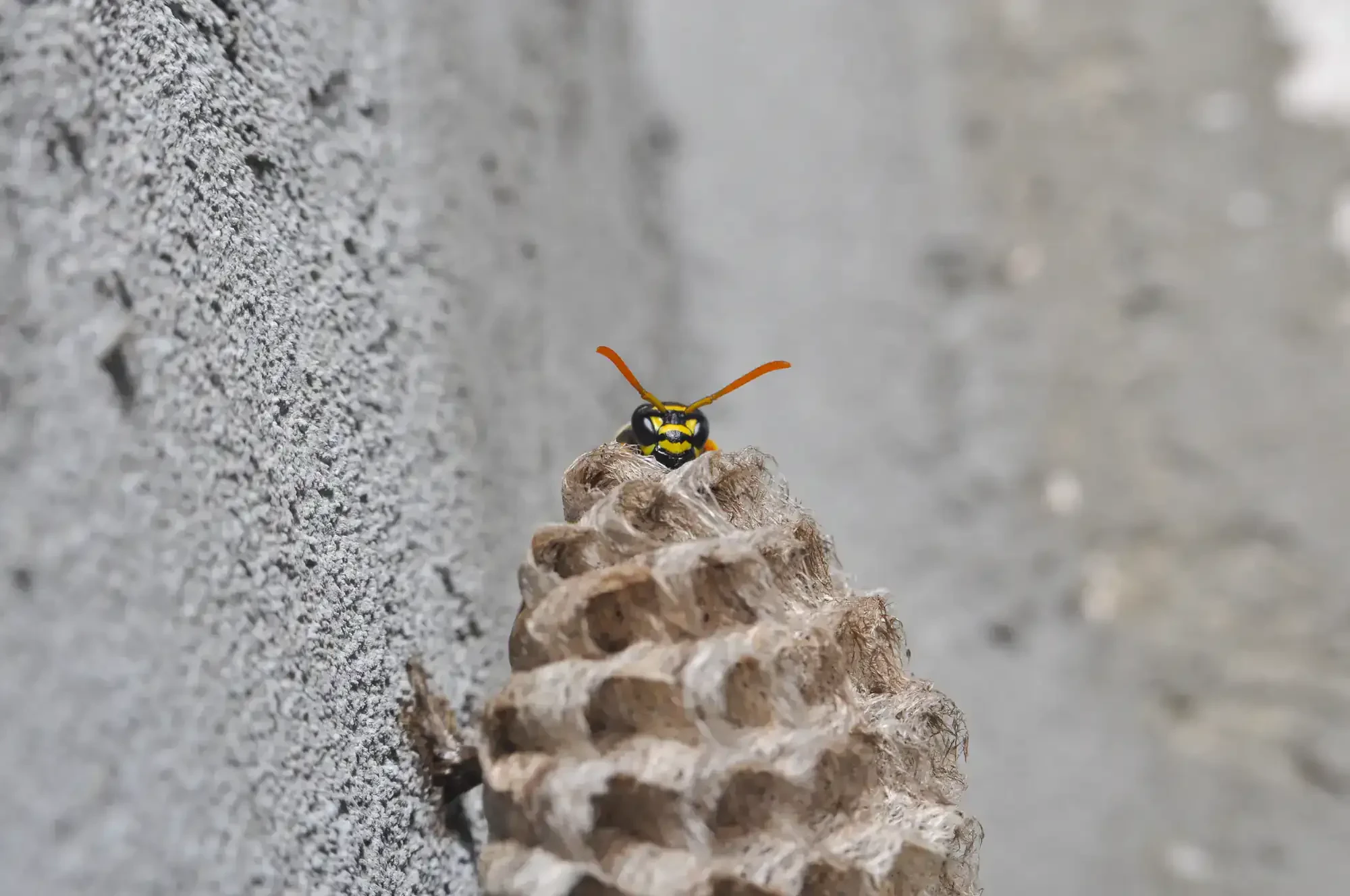
Spring is the best window, and the difference in cost and risk between spring and late summer is significant. In Michigan, overwintered hornet queens emerge in April and May and begin building new nests. At that stage, the colony is small — sometimes just the queen and a handful of early workers — and the nest is easy to locate and treat. Removal at this stage typically costs $200 to $300 and carries far less risk than treating a full-size late-summer colony.
By August, a bald-faced hornet nest on a Kerr Hill property can hold 400 to 700 workers at peak size. That’s when the majority of calls come in, and it’s also when removal is most expensive and most dangerous. If you spot hornet activity in the spring — even just a single queen investigating your eaves or a small paper structure starting to form on a tree branch — that’s the time to call. Waiting until the nest is the size of a basketball is never the better option. We serve the Kerr Hill and Hadley Township area throughout the entire season, but earlier is always easier for everyone.
Nationally, professional hornet removal runs between $300 and $700, with bald-faced hornet removal averaging closer to $625 due to the size and elevation of the nests. The factors that most directly affect cost are nest size, nest location, and how far into the season you are. A small spring nest at reachable height is a straightforward job. A large late-summer nest 25 feet up in a hardwood on a rural Lapeer County property requires specialized equipment, more time, and more complex treatment — and that’s reflected in the price.
For Kerr Hill properties specifically, outbuilding nests and elevated tree nests are the most common scenarios that push toward the higher end of the range. Wall void nests inside older farmhouse structures or barns also require dust treatment rather than aerosol, which adds to the complexity. We offer upfront, flat-rate pricing with no surprise charges after the job. If you’ve already received a quote from another licensed pest control company serving the area, we’ll match it. The goal is straightforward: you know what you’re paying before anyone shows up.
The colony itself won’t survive — worker hornets die off in late fall, and the nest is not reused the following year. But the queen that produced that colony will overwinter somewhere on or near your property and build a new nest the following spring, often in the same general area. On a Kerr Hill property with several acres of wooded land, mature trees, and outbuildings, there’s no shortage of overwintering habitat — leaf litter, bark crevices, wood piles, and the sheltered draws common in the Hadley Hills terrain are all prime spots.
This is why preventive treatment matters as much as removal. We can discuss options for reducing the likelihood of re-establishment in the same locations — particularly around eaves, barn structures, and tree lines that have hosted nests before. The same technician returns to your property each visit, which means they build familiarity with your specific land and the spots that have been problematic in the past. That continuity makes a real difference over time, especially on larger rural properties where monitoring every corner of the lot isn’t realistic on your own.
Yes — we offer discounts for seniors, veterans, and first responders. Hadley Township has a median age of 46 and over 1,000 seniors in the community, and the area has a strong tradition of military and public service. These discounts aren’t a footnote — they’re a straightforward acknowledgment that the people who’ve given the most to their communities deserve fair pricing when they need help protecting their homes.
If you or someone in your household qualifies, just mention it when you call. There’s no complicated process or paperwork involved. We’re a family-owned business that has been serving southeast Michigan since 2005, and the way we operate reflects that — straightforward pricing, no binding contracts, and the same technician on your property year after year. For a Kerr Hill homeowner on a fixed income or a veteran who’s been out here on a rural Lapeer County property for decades, that combination of fair pricing and consistent, trustworthy service is exactly what you should expect from a local company worth calling.
Useful Links