
Hear from Our Customers
The hardest part of hornet removal on a Parshallville property isn’t the treatment — it’s finding every nest in the first place. When your lot backs up to the North Ore Creek corridor, has mature trees shading the roofline, and includes a shed or barn you don’t check every week, an active colony can grow well into the hundreds before you ever notice it. By the time you do, it’s usually late summer — and that’s when hornets are at their most aggressive.
Once the job is done right, that changes completely. You’re not doing a wide arc around the back corner of your property anymore. Your kids aren’t getting chased away from the fire pit. You’re not dreading the walk to the outbuilding. That’s what professional hornet nest removal in Parshallville actually delivers — not just a dead colony, but the confidence to use your own land again.
The older wood-frame structures common throughout Hartland Township are also worth mentioning. European hornets don’t just nest in trees — they get into wall voids, attic spaces, and hollow sections of aging siding. If you’ve been hearing buzzing inside a wall at night, that’s not a coincidence. It’s a colony that hardware store spray will never reach. A licensed technician with the right dust treatments and proper inspection protocol will.
First Choice Pest Control was founded on May 31, 2005 — and in 2025, we’re marking our 20th year serving residential and commercial customers across southeast Michigan, including Livingston County and Parshallville. Owner Roger brings 26 years of hands-on pest control experience to every job. This isn’t a franchise where your call gets routed to a regional dispatch center. It’s a family-owned operation where the person responsible for your results is the same person who built this business.
We hold Michigan Pesticide Application Business License #250081 and carry IPM training certification recognized by MDARD — which matters in a place like Parshallville, where North Ore Creek runs through the neighborhood and residents care about what gets applied near the water, the garden, and the kids’ yard. We’ve earned awards from both Angie’s List and HomeAdvisor, and we assign the same technician to your property year after year. When your tech already knows your land — which tree had a nest last August, which eave keeps getting recolonized — that continuity isn’t a perk. It’s the whole point.
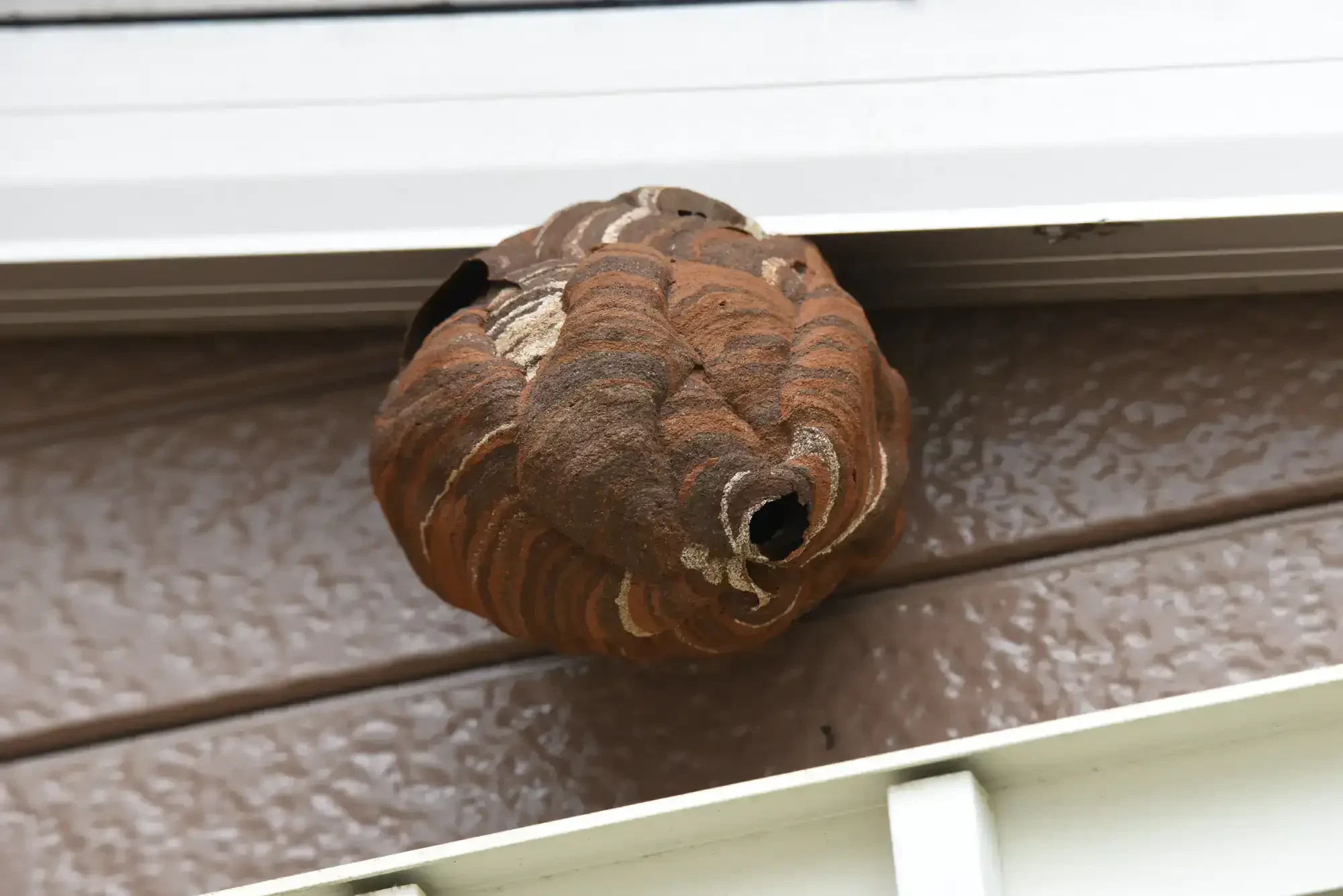
It starts with a real inspection — not a quick walk around the front of the house. On a Parshallville property, that means checking the tree line along the creek, the eaves of any outbuildings, the hollow sections of older wood structures, and anywhere along the roofline where a colony could establish without being visible from the driveway. Bald-faced hornets build large enclosed paper nests in trees and under eaves. European hornets go inside walls, attic spaces, and structural cavities. Both need to be identified before treatment begins, because the approach is different for each.
Once the nests are located, treatment is applied directly and precisely. For exposed nests in trees or on structures, a professional-grade insecticide is applied at the entry point, typically in the evening when workers have returned to the nest. For wall void infestations — which are common in the older homes and agricultural structures throughout this area — dust treatment is injected into the cavity to reach the colony where sprays can’t. No unnecessary chemical broadcast, no guesswork.
After treatment, you’ll know what was found, what was treated, and what to watch for going forward. Parshallville’s heavily wooded lots mean that queens can overwinter in the same trees and structural gaps year after year, so understanding prevention is part of the conversation — not an upsell. Michigan’s pest control law requires all pesticide applications for hire to be performed by or under the supervision of a licensed commercial applicator, and every one of our technicians operates in full compliance with that standard.
Ready to get started?
Hornet removal in Parshallville isn’t a one-size job. Our service is built around what’s actually on your property — the mature deciduous trees that bald-faced hornets prefer for their large enclosed paper nests, the older barn or shed sitting at the back of a rural lot, the historic wood-frame home with gaps in the siding that European hornets will find before you do. We treat all of it: nests in trees, nests on structures, and nests inside walls or attic voids.
The service includes a full property inspection, targeted treatment using professional-grade materials appropriate for the nest type and location, and a clear explanation of what was found and treated. For customers in the Hartland Township and Tyrone Township areas, the same licensed technician handles your job from inspection through follow-up — not a rotating crew, not a seasonal hire. We do not use part-time college students as technicians, which is worth saying plainly because it’s not standard practice across the industry.
Seniors, veterans, and first responders receive a discount on service — and if you’ve received a reasonable quote from another licensed pest control company serving Livingston County, we’ll match it. The goal is straightforward: get the nest gone, protect the property, and make sure the same problem doesn’t show up in the same spot next spring.
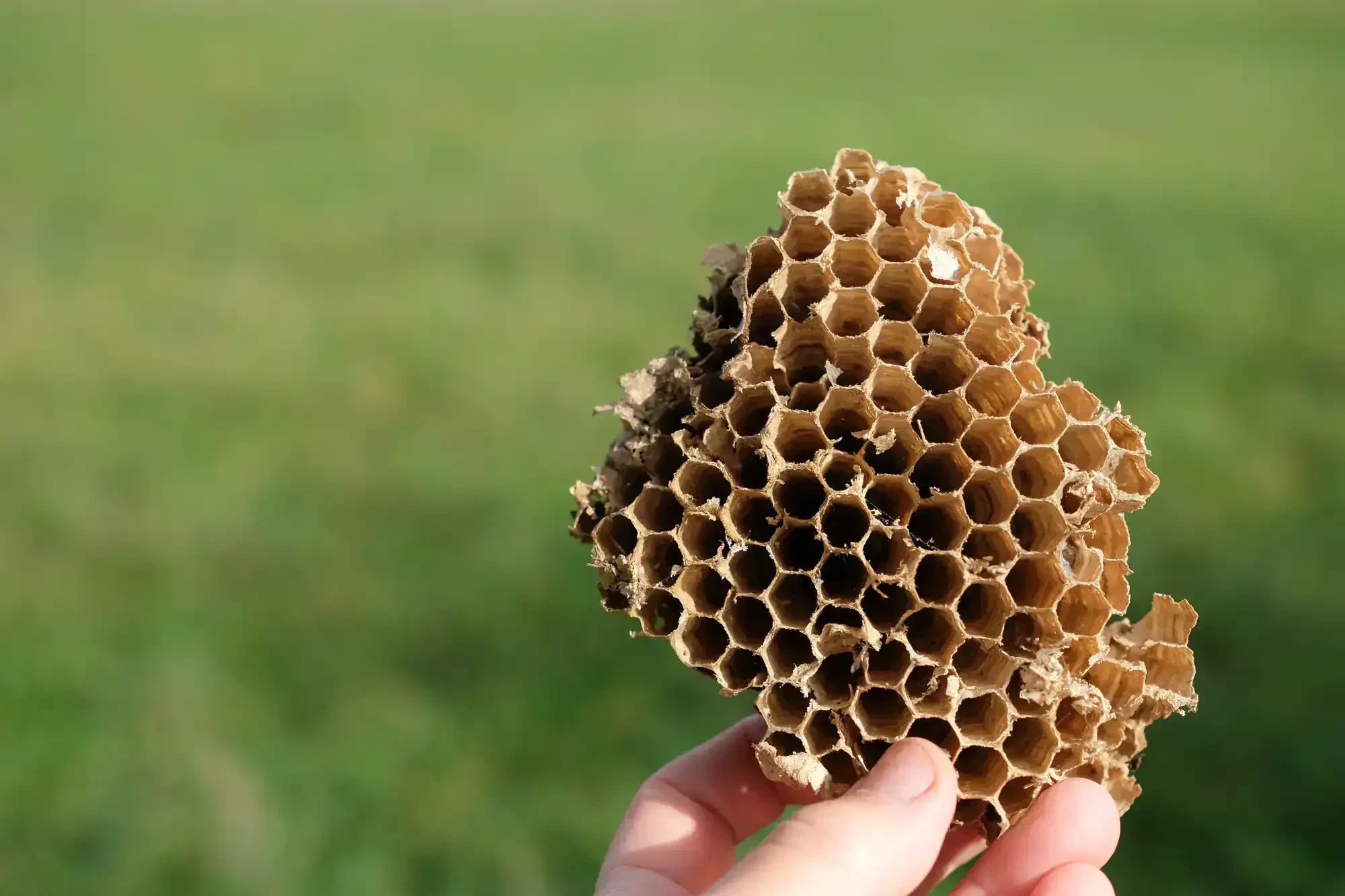
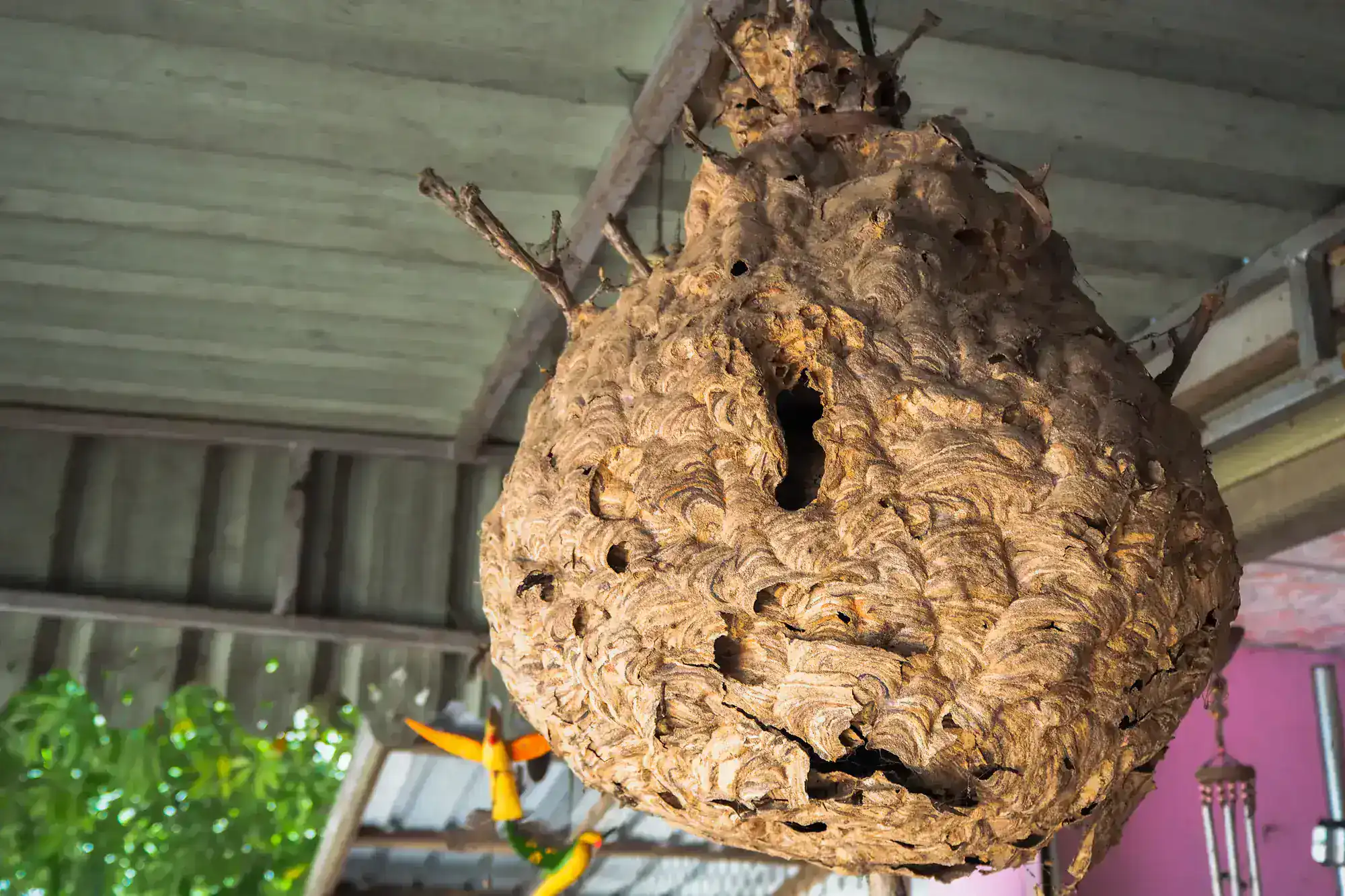
The two species you’re most likely dealing with in Parshallville are bald-faced hornets and European hornets. Bald-faced hornets are the ones building those large, enclosed gray paper nests you’ll find hanging in trees, under eaves, or attached to the side of an outbuilding. They’re highly defensive and will mobilize the entire colony if the nest is disturbed — which is why a nest in a tree along the North Ore Creek corridor or in your backyard tree line is not a DIY situation once the colony is established.
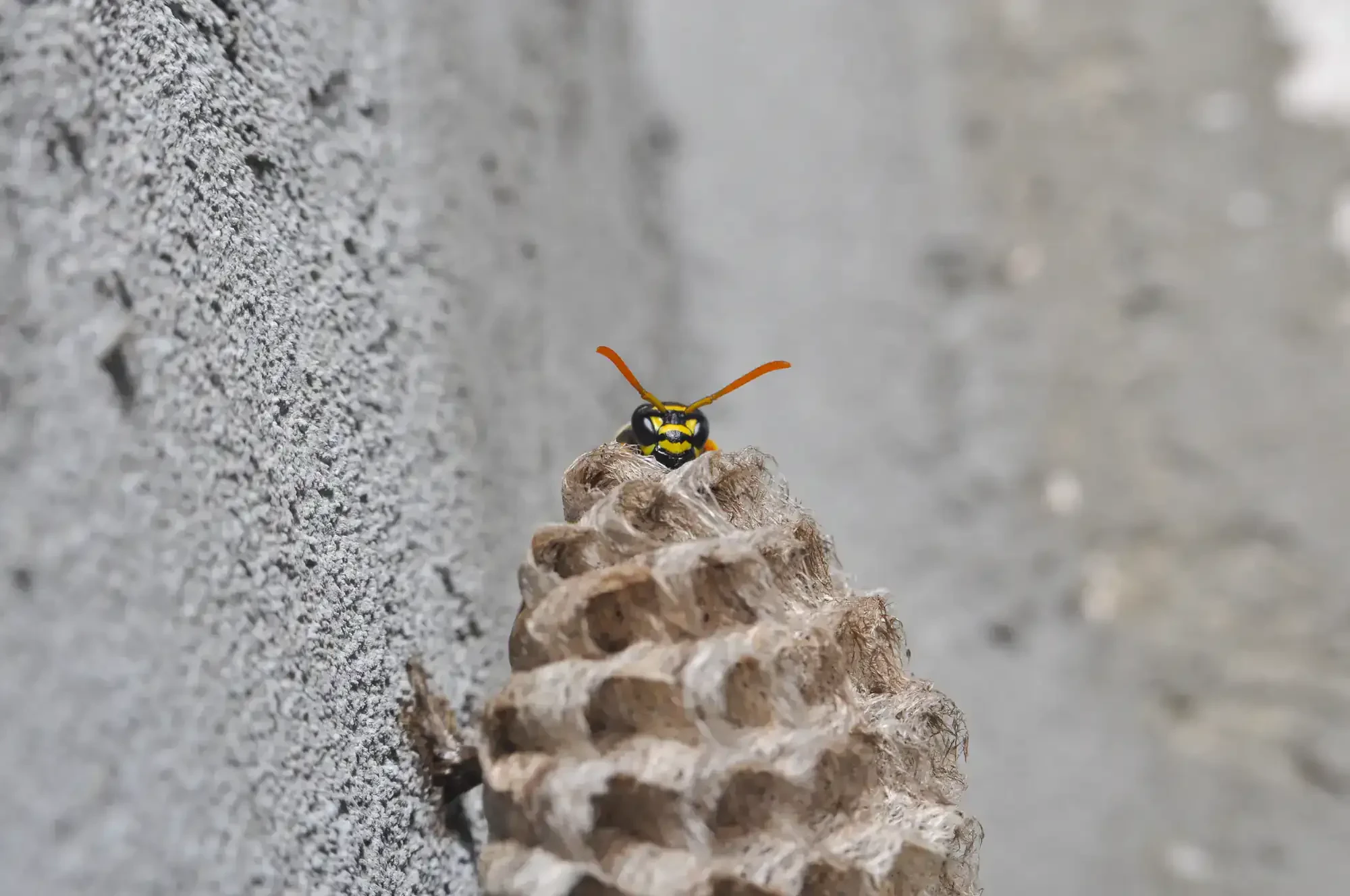
European hornets are the only true hornet species in North America, and they behave differently. They nest inside wall voids, hollow trees, attic spaces, and structural cavities — and they’re active at night, which is why you might notice them flying near porch lights after dark. The older wood-frame homes and agricultural structures throughout Parshallville and the surrounding area give European hornets plenty of entry points that aren’t visible from the outside. If you’re hearing buzzing inside a wall or noticing hornets entering a gap in your siding, that’s the species to suspect.
For a small nest early in the season — late April or May, when the colony is just getting started — some homeowners handle it without incident. But by midsummer, and certainly by late August and September when Parshallville’s fall season kicks in and colonies are at peak population, a bald-faced hornet nest can contain several hundred workers capable of stinging repeatedly and mobilizing instantly when they sense a threat. That’s not a situation where a can of hardware store spray and a flashlight is a reasonable plan.
The bigger issue is that DIY treatment often fails to eliminate the colony completely, especially for nests inside walls or structural voids where the spray never actually reaches the queen or the core of the nest. A partial treatment agitates the colony without eliminating it, and you’re left with an angrier, more defensive situation than you started with. A licensed technician uses professional-grade materials applied directly to the nest entry point, in the right conditions, with the right protective equipment. The job gets done once, correctly, without putting you or your family in the path of a defensive swarm.
The most common signs are audible buzzing or a low humming sound coming from inside a wall, especially in the evening when European hornets are most active. You might also notice workers entering and exiting a small gap in your siding, a crack around a window frame, a soffit vent, or a gap in the eave of an older structure. On Parshallville properties with historic wood-frame homes or aging outbuildings, these entry points are often subtle — a gap you’d walk past without a second thought.
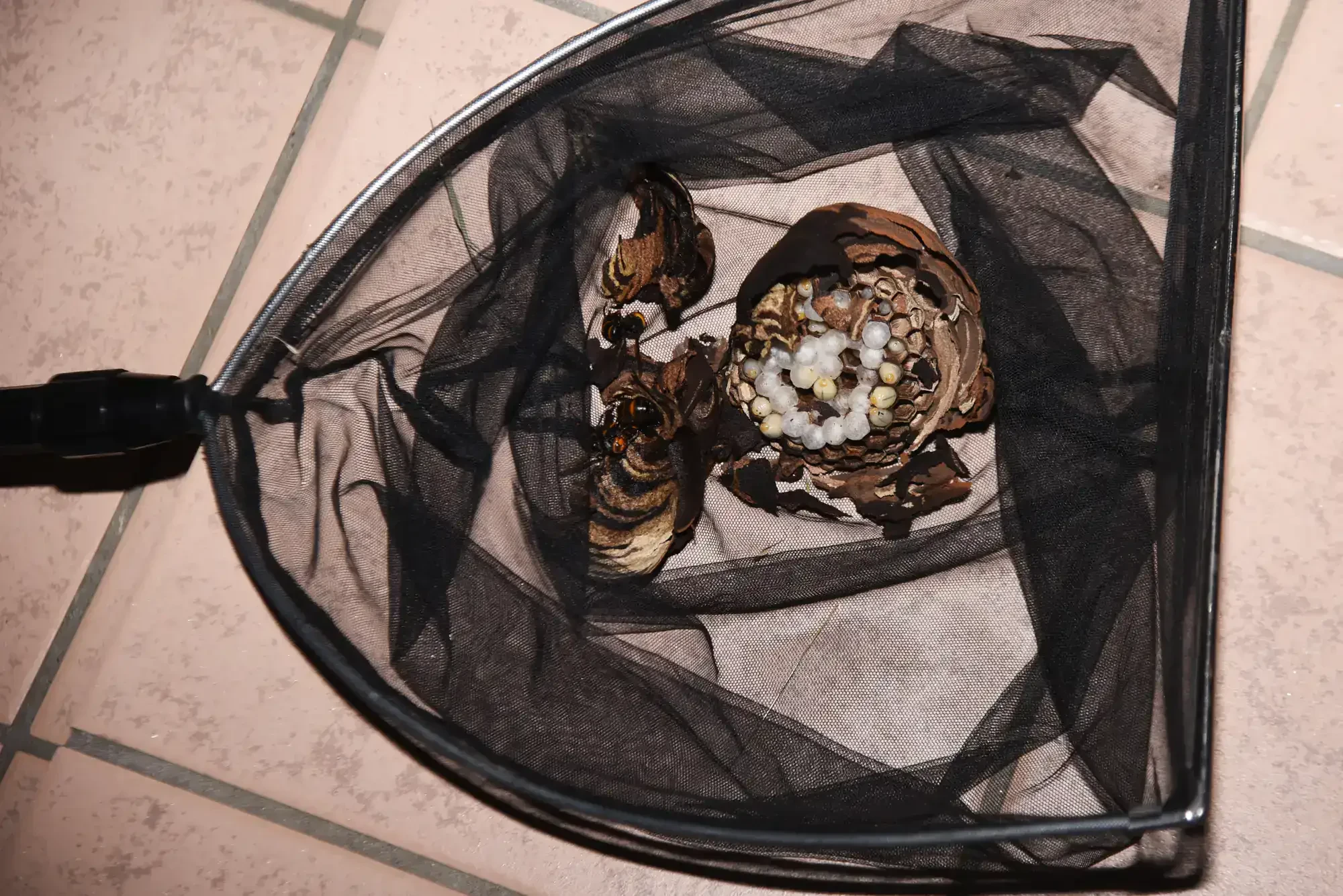
What you won’t see is the nest itself, because it’s inside the wall cavity. That’s what makes these infestations harder to treat than an exposed tree nest. A professional inspection involves checking the exterior of the structure for entry points, listening for activity, and in some cases using a thermal or physical probe to confirm nest location before treatment. Dust insecticide injected into the cavity is the standard treatment approach — it reaches the colony where liquid sprays can’t, and it doesn’t require tearing open the wall. For homes with any historic character or older construction, that matters.
Spring is the ideal window — specifically late April through May, when overwintered queens are just beginning to establish new colonies. At that stage, the nest is small, the worker population is minimal, and treatment is simpler, less expensive, and less risky. In Parshallville’s heavily wooded environment, queens have no shortage of sheltered nesting sites coming out of winter — mature trees, outbuilding eaves, hollow sections of older structures, and brush along the creek corridor all provide ideal startup locations.
By late summer, the window for easy treatment has closed. August and September are when colonies reach maximum size and workers become noticeably more aggressive as the reproductive cycle winds down. That’s also when the Parshallville Cider Mill draws fall visitors to the area and outdoor activity on local properties picks up — the worst possible combination when there’s an active nest near a gathering space. If you’ve spotted a nest or noticed increased hornet activity on your property, the right call is sooner rather than later. Waiting from July to September doesn’t save you anything — it just makes the job harder and the risk higher.
The colony itself won’t survive winter — workers and males die off once temperatures drop, and only fertilized queens overwinter. So the specific nest you had treated won’t be reactivated by the same colony. However, new queens can and do return to the same general area the following spring, especially if the conditions that made that spot attractive haven’t changed. A hollow section of tree, an unscreened soffit vent, a gap in the eave of an old barn — these are the same features that drew a colony there in the first place, and a new queen will find them just as appealing next April.
This is why a good technician doesn’t just treat the nest and leave. They’ll point out the specific conditions on your property that are likely to attract re-colonization and explain what you can do to reduce that risk — sealing entry points, clearing brush near structures, and scheduling a spring inspection before colonies have a chance to establish. On a rural Parshallville lot with mature trees, outbuildings, and creek-adjacent vegetation, prevention is an ongoing conversation, not a one-time fix.
Yes — we offer discounts for seniors, veterans, and first responders. Parshallville and the surrounding Hartland and Tyrone Township areas include a lot of long-established homeowners, many of whom have been on their properties for decades and have dealt with stinging insects as a recurring part of rural Michigan property ownership. The discount is a straightforward acknowledgment of that — no hoops, no conditions beyond confirming eligibility when you call.
We also offer price matching for reasonable competitor quotes. If you’ve already gotten a quote from another licensed pest control company serving Livingston County and it’s lower, bring it up when you call. We’ve been doing this for 20 years and are confident enough in the quality of the work to compete on price without cutting corners on how the job gets done. Between the discount programs and the price match, most customers find that professional hornet removal from a licensed, experienced company is more accessible than they expected — especially compared to the cost of a failed DIY attempt followed by a professional call anyway.
Useful Links