
Hear from Our Customers
A wasp nest doesn’t stay small for long. By the time most Parshallville homeowners notice one, the colony is already well-established — and if it’s tucked into a wall void of an older outbuilding, under a deck along the creek, or buried in the ground near your garden, a hardware store spray isn’t going to cut it. What you get from our professional wasp nest removal isn’t just a dead nest. It’s the ability to walk across your own property again without scanning every step.
Parshallville’s rural character — the mature tree canopy lining North Ore Creek, the older homes and outbuildings that have stood for decades, the undisturbed ground along the creek banks — creates exactly the kind of environment wasps look for. Bald-faced hornets nest in mature trees. Yellow jackets burrow into the ground and colonize wall voids in aging wood-frame structures. Paper wasps take over eaves, porch ceilings, and fence lines. These aren’t suburban nuisance calls. They’re complex situations that require someone who knows what they’re looking at.
When the nest is gone and the entry points are sealed, you stop reacting and start living in your space the way you intended when you chose to be here. Kids in the yard. Dogs off the leash. Dinner on the deck. That’s what this is actually about.
First Choice Pest Control has been serving Livingston County since 2005 — that’s 20 years of Michigan seasons, Michigan properties, and the specific pest pressures that Parshallville residents face. Roger founded this company and still leads it, bringing 26 years of hands-on experience to every service call. This isn’t a franchise with rotating staff and a call center three states away. It’s a family-owned operation that assigns the same technician to your property year after year, so the person who shows up actually knows your land.
That matters in a place like Parshallville. The properties here aren’t cookie-cutter — older structures, creek-adjacent lots, outbuildings with decades of gaps and voids — and the pest pressure reflects that. We hold Integrated Pest Management (IPM) training, are fully licensed through the Michigan Department of Agriculture and Rural Development, and carry full insurance. Angie’s List and HomeAdvisor have both recognized us for consistent service quality, and we don’t require binding contracts — because the work speaks for itself.
When you call, the first thing that happens is a real conversation — not a scripted intake. You describe what you’re seeing, where it is, and when you first noticed it. That context matters, because a ground nest near your garden in Parshallville behaves differently than a paper wasp nest under your porch eave, and the treatment approach is different too. Most calls are scheduled within 24 hours, including urgent situations where the nest is near a high-traffic area of your property.
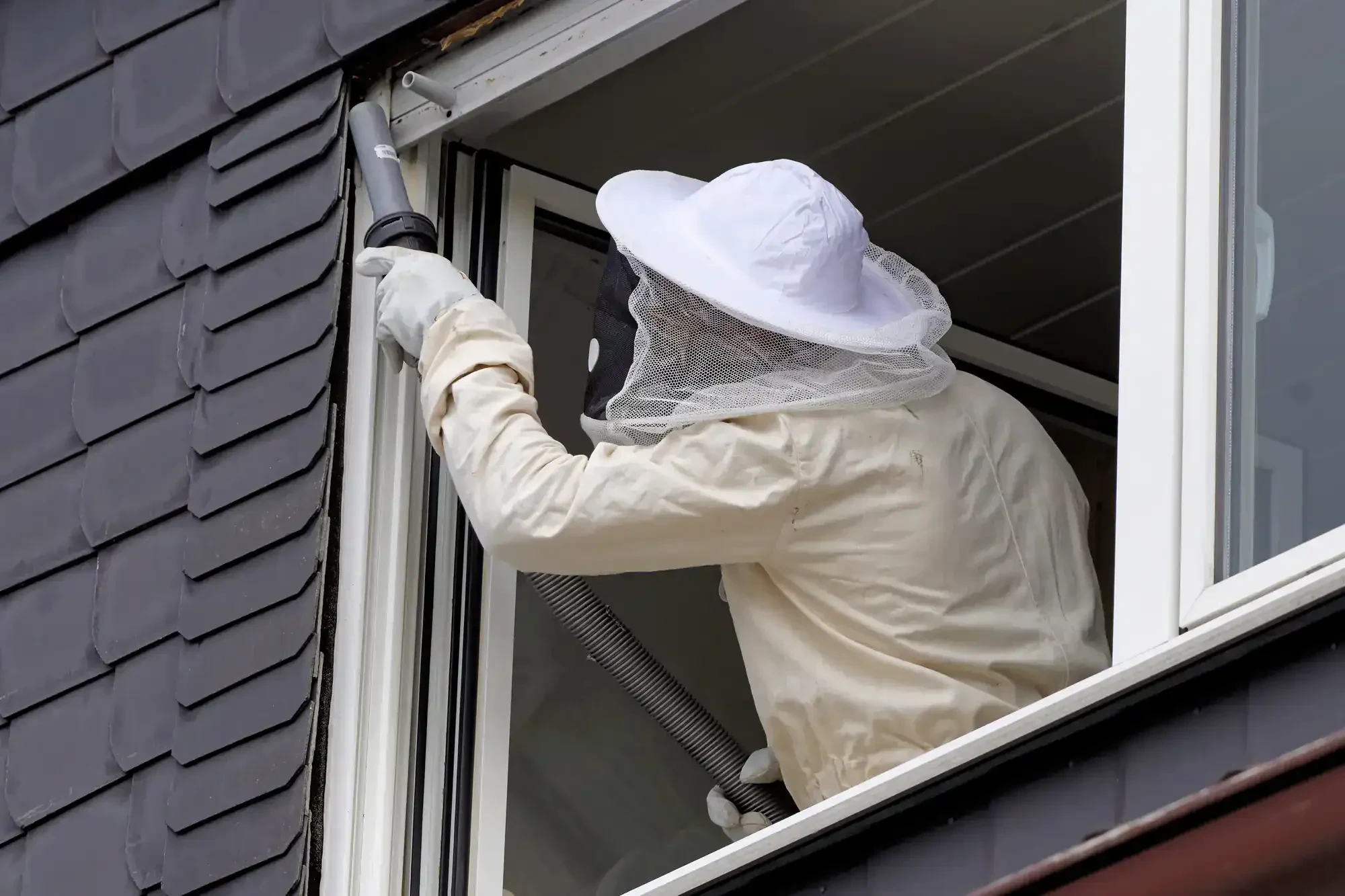
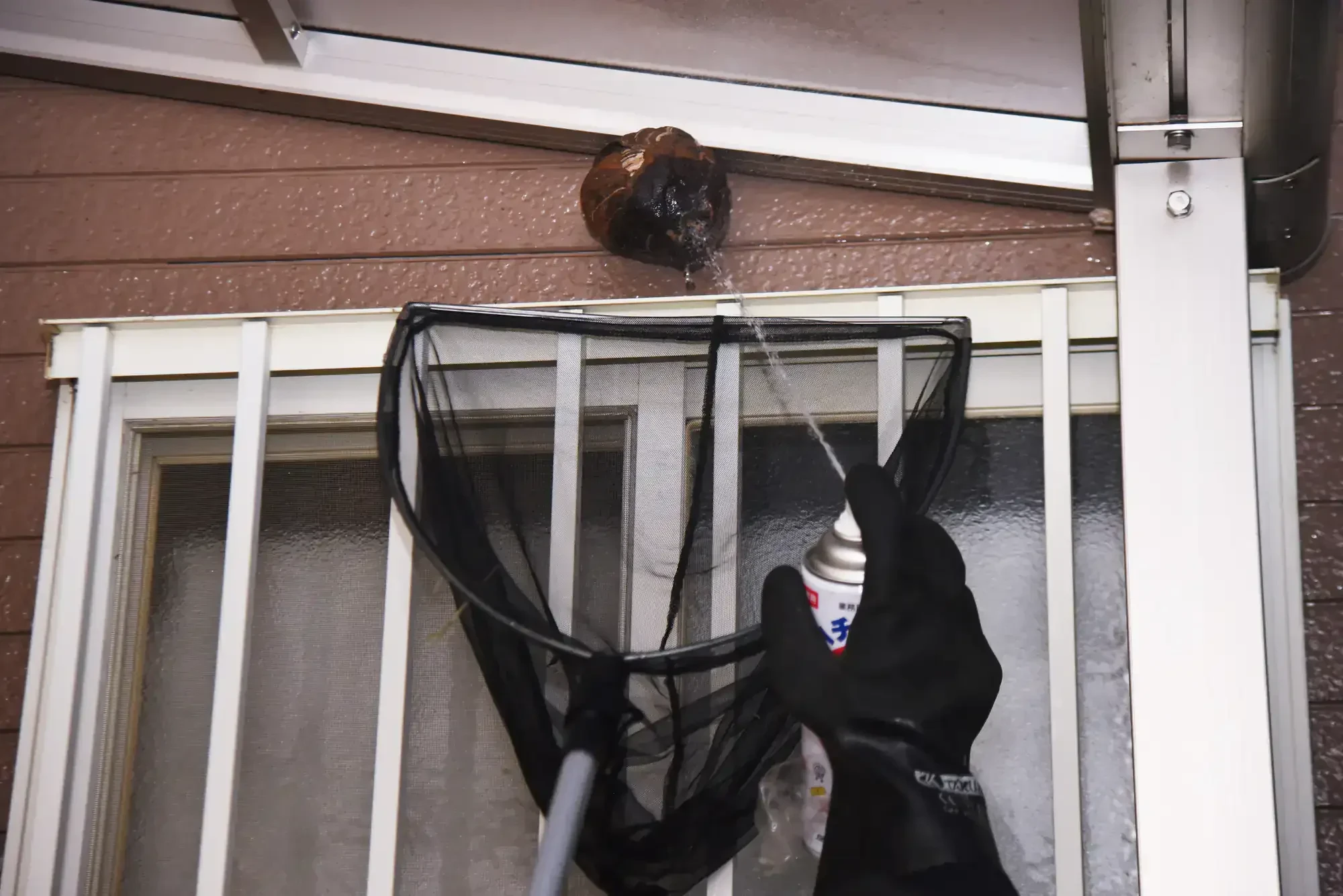
On-site, your technician does a full assessment before touching anything. That means identifying the species, locating the full extent of the nest — including any secondary entry points — and understanding what’s around it. In Parshallville, that often means accounting for creek-adjacent vegetation, mature trees, older wooden structures, or outbuildings where voids aren’t always obvious from the outside. IPM-trained treatment means targeted application, not a blanket chemical spray across your property.
After the colony is eliminated, the nest is physically removed and entry points are sealed. You’ll get clear guidance on when it’s safe for kids and pets to return to the area. If there’s seasonal activity that suggests follow-up — yellow jackets are especially persistent in Livingston County’s late summer months, when colonies peak between 5,000 and 15,000 workers — that gets communicated plainly, not upsold.
Ready to get started?
Wasp nest removal in Parshallville isn’t one-size-fits-all, and we don’t treat it that way. The three species Parshallville homeowners deal with most — yellow jackets, paper wasps, and bald-faced hornets — each nest differently, behave differently, and require different treatment approaches. Yellow jackets are the most dangerous by late summer, when their colonies are at full size and their natural food sources start declining. They become aggressive scavengers in August and September, which is exactly when Parshallville residents are spending the most time outside. Ground nests and wall voids in older outbuildings are their preferred sites here.
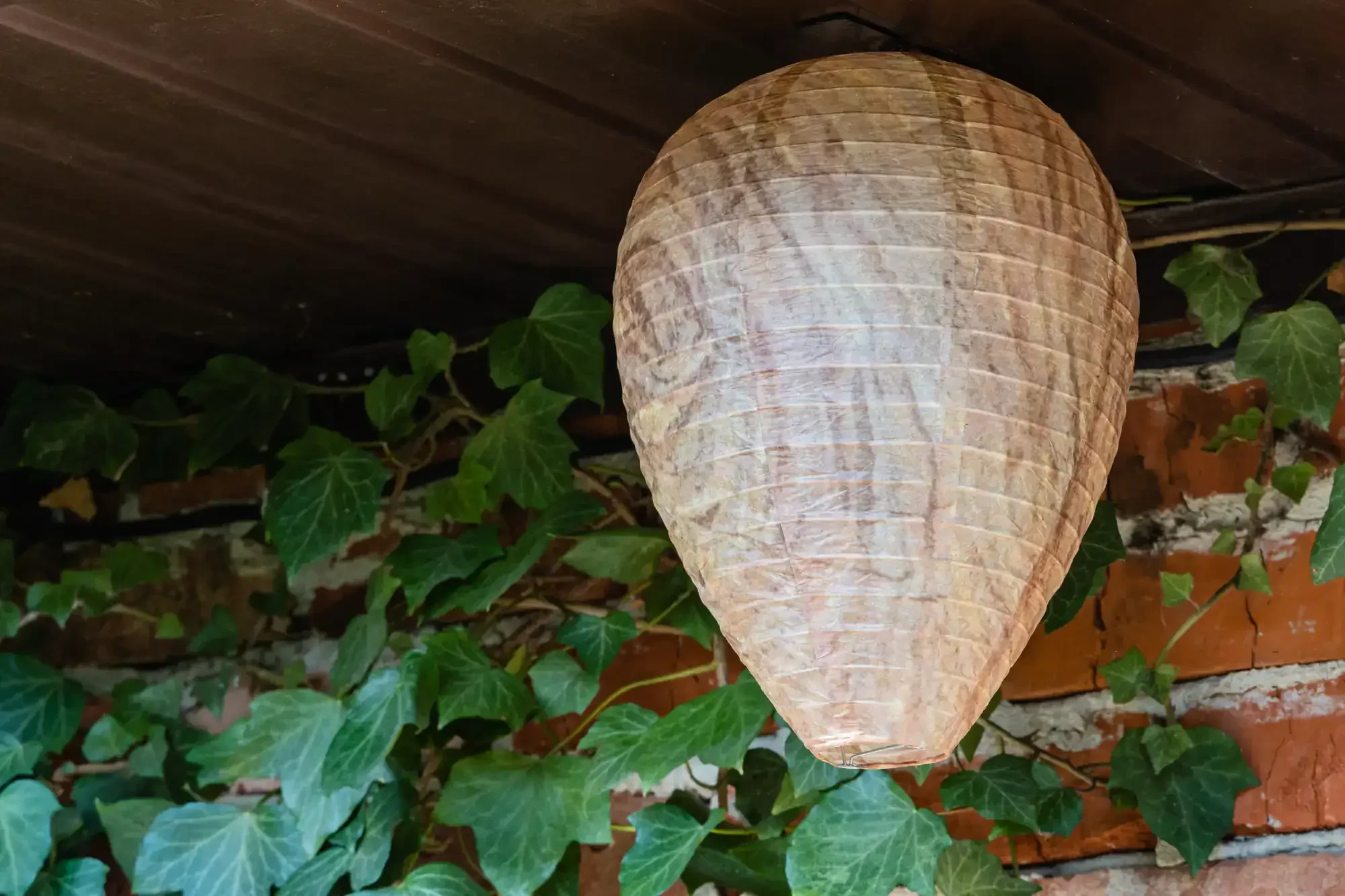
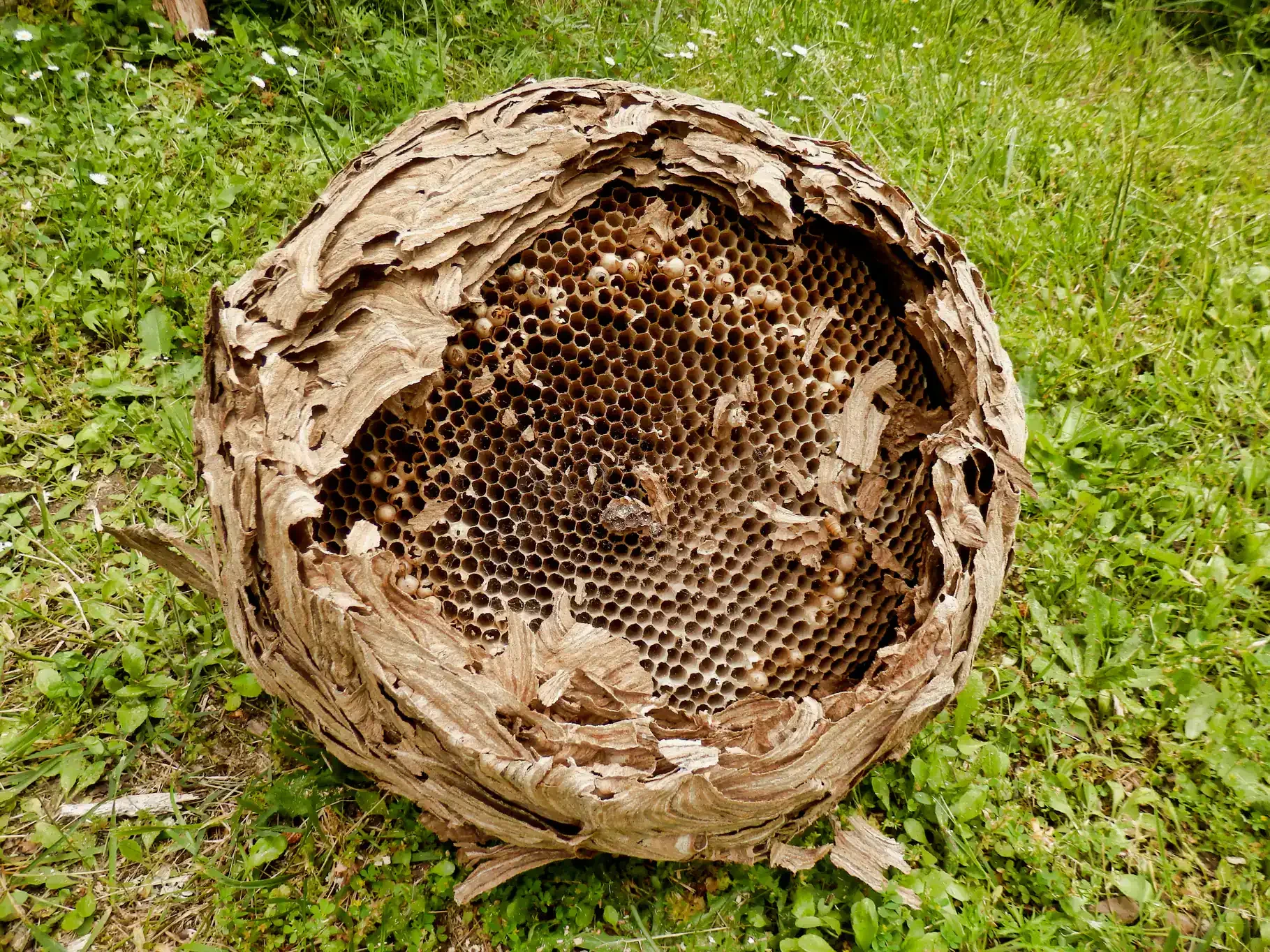
Paper wasps are more visible — you’ll usually spot their open-comb nests under eaves, on deck railings, or along fence lines — but that doesn’t make them safe to handle without proper equipment. Bald-faced hornets build the large, enclosed paper-ball nests you see in trees and on the exterior of structures, and they are Michigan’s most aggressive stinging insect. All three are covered under our wasp nest removal service for Parshallville and the surrounding Livingston County area.
Every service includes inspection, targeted treatment, physical nest removal, and entry point sealing. We also offer price matching for reasonable competitor rates, and discounts are available for seniors, veterans, and first responders — populations that make up a real part of this community.
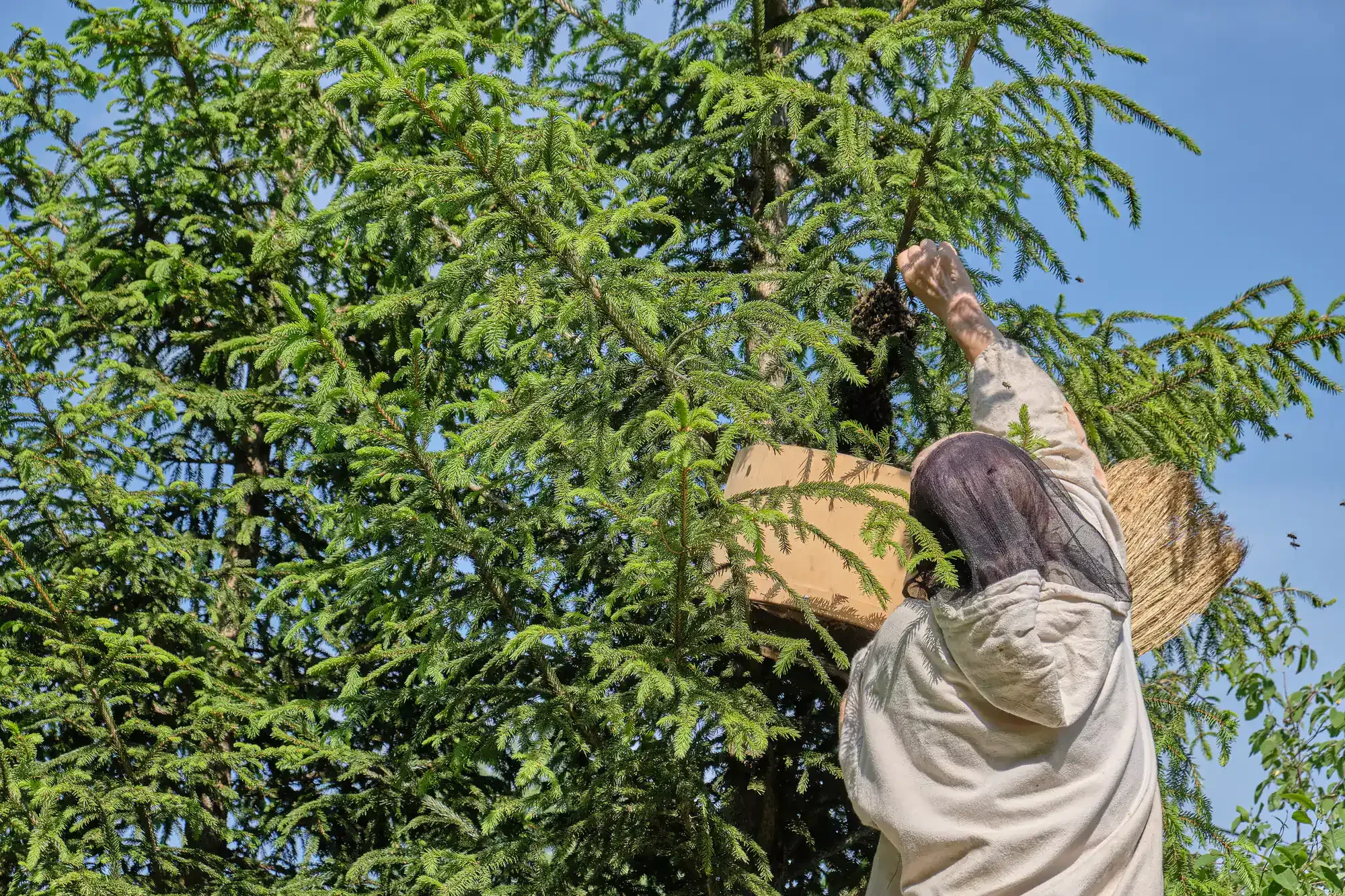
If you can see the nest clearly and it’s small — early spring, golf-ball size, only a handful of workers — some homeowners do attempt treatment themselves. But in most cases people call when the nest is already well-established, hard to reach, or in a location that makes DIY treatment genuinely risky. On Parshallville properties specifically, nests in barn wall voids, ground nests along creek-adjacent areas, or colonies high in the mature trees lining North Ore Creek are not situations where a hardware store spray can gives you a safe angle of approach.
Beyond access, there’s the species question. Yellow jackets in the ground will send the entire colony out if disturbed incorrectly. Bald-faced hornets are aggressive even when the nest isn’t directly threatened. If you’re not certain what you’re dealing with, or if the nest is anywhere near a door, a play area, a pet run, or a structure you use regularly, professional removal is the right call. The risk of a failed DIY attempt — agitated colony, multiple stings, allergic reaction — is not worth the cost savings.
Late summer — August through mid-September — is consistently the most dangerous window for wasp activity in Livingston County. By that point, yellow jacket colonies have had the entire growing season to expand, and they can reach anywhere from 5,000 to 15,000 workers depending on conditions. At the same time, their natural food sources start declining, which makes them more aggressive and more likely to show up wherever people are — outdoor meals, yard work, anything involving food or sweet drinks.
For Parshallville specifically, that timing coincides with the fall harvest season and more time spent outdoors on rural properties. If you have fruit trees, a garden, or any vegetation that produces late-summer food sources near your home, yellow jacket pressure can be especially concentrated around those areas. The best time to act is actually spring — when colonies are small and queens are just getting started — but if you’re finding a nest in August, don’t wait. The colony isn’t going to shrink on its own before the first frost, and the danger is at its peak right now.
Yes — and your technician will give you a specific timeframe before leaving, not a vague “wait a few hours.” The answer depends on where the nest was, what treatment was used, and what species was involved. IPM-trained treatment means the application is targeted to the nest and its immediate surroundings, not broadcast across your whole yard. That approach significantly reduces the area and duration of any post-treatment precaution.
For most standard nest removals — eave nests, deck nests, accessible above-ground locations — the treated area is safe for children and pets within a few hours once the product has dried. Ground nests or wall void treatments may require a slightly longer window because the product needs to reach deeper into the colony. You’ll get a clear, honest answer based on exactly what was used at your property, not a blanket statement. If you have specific concerns about a pet with sensitivities or a child with allergies, mention that when you call — it factors into the treatment approach from the start.
They can — and this is one of the most common frustrations homeowners have after a removal that didn’t include sealing. Wasps don’t reuse an old nest, but they do return to favorable locations. A wall void in an older outbuilding that housed a yellow jacket colony one summer is still an attractive entry point the following spring if it was treated but not sealed. The same goes for ground nests in undisturbed areas along fence lines or garden borders.
On Parshallville properties with older structures — barns, detached garages, sheds that have been standing for decades — this is especially relevant. Wood-frame buildings develop gaps and voids over time, and without sealing those entry points after treatment, you’re solving this year’s problem without addressing next year’s. We include entry point sealing as part of the removal process, not as an add-on. That’s the difference between a complete job and one that gets you back on the phone in twelve months.
Yes, species identification changes the treatment approach, which is part of why a professional assessment matters before anything is applied. Paper wasps build the open, umbrella-shaped comb nests you typically see under eaves and on railings. They’re defensive rather than aggressive — they’ll sting if the nest is disturbed, but they’re not hunting you. Yellow jackets are a different story. They nest in the ground or in enclosed voids, their colonies are significantly larger by late summer, and they’re genuinely aggressive when threatened. Bald-faced hornets build the large enclosed paper nests in trees and on structures — they’re the most aggressive of the three and will pursue a perceived threat well away from the nest.
Each species responds differently to treatment timing, application method, and product choice. A ground nest requires a different approach than an aerial nest. A wall void colony may need multiple access points addressed. Misidentifying the species — or skipping identification altogether — is one of the main reasons DIY attempts fail and escalate. Your technician will confirm exactly what you’re dealing with before any treatment begins.
We offer discounts for seniors, veterans, and first responders — and in a rural Livingston County community like Parshallville, those aren’t abstract categories. They’re homeowners who’ve lived here for decades, people who’ve served, neighbors who show up when things go wrong. If you or someone in your household qualifies, just mention it when you call and it gets applied to your service.
Beyond the discount programs, we also match reasonable competitor rates. If you’ve already gotten a quote from another wasp removal company serving the Parshallville area and it’s a fair number, bring it up. The goal is to make sure cost isn’t the reason you end up with a less experienced technician or a job that doesn’t get fully finished. You also won’t be asked to sign a contract — not for this service, not for anything. If the work is done right, you’ll come back because you want to, and that’s the only kind of return business worth having.
Useful Links