
Hear from Our Customers
You stop planning your day around where the hornets are. You stop steering clear of the barn door, the shed corner, or that one section of the yard your kids won’t go near. When the nest is gone and the treatment is done right, your property feels like yours again.
Out here in rural Saginaw County, the conditions that make Walters a great place to live — the mature trees, the wooded lot lines, the outbuildings — are the same conditions that let hornet colonies grow large before anyone notices them. A nest tucked under the eave of a pole barn or high in an oak at the back of your property doesn’t announce itself until it’s housing hundreds of workers and you’ve walked too close.
That’s not a suburban problem with a suburban solution. Larger properties, harder-to-reach nests, and structures that don’t get checked every week require a technician who knows what they’re looking at and has the right equipment to treat it safely. That’s the difference between a quick fix and actually solving the problem.
First Choice Pest Control was founded on May 31, 2005 — which makes 2025 our 20th year serving mid-Michigan. Roger, our owner, has 26 years of personal pest control experience and still runs the operation the way he started it: family-owned, hands-on, and accountable to the people we serve.
We’re based in Swartz Creek and Davison, in Genesee County — right on the border of Saginaw County where Walters sits. That’s not a technicality. It means the technician who shows up at your Walters-area property knows this part of Michigan. They know what rural properties look like out here, what the seasonal pest patterns are, and what a nest in a wall void of an older outbuilding actually takes to treat.
We hold Michigan Pesticide Application Business License #250081, have earned awards from Angie’s List and HomeAdvisor through verified customer reviews, and carry IPM training certification recognized by MDARD. These aren’t things we put on a website to look good — they’re the baseline of how we operate.
When you call, the first thing that happens is a real conversation. You describe what you’re seeing — where the nest is, how active it looks, whether you’ve tried anything already. That information matters because it shapes what our technician brings and how they approach the job.
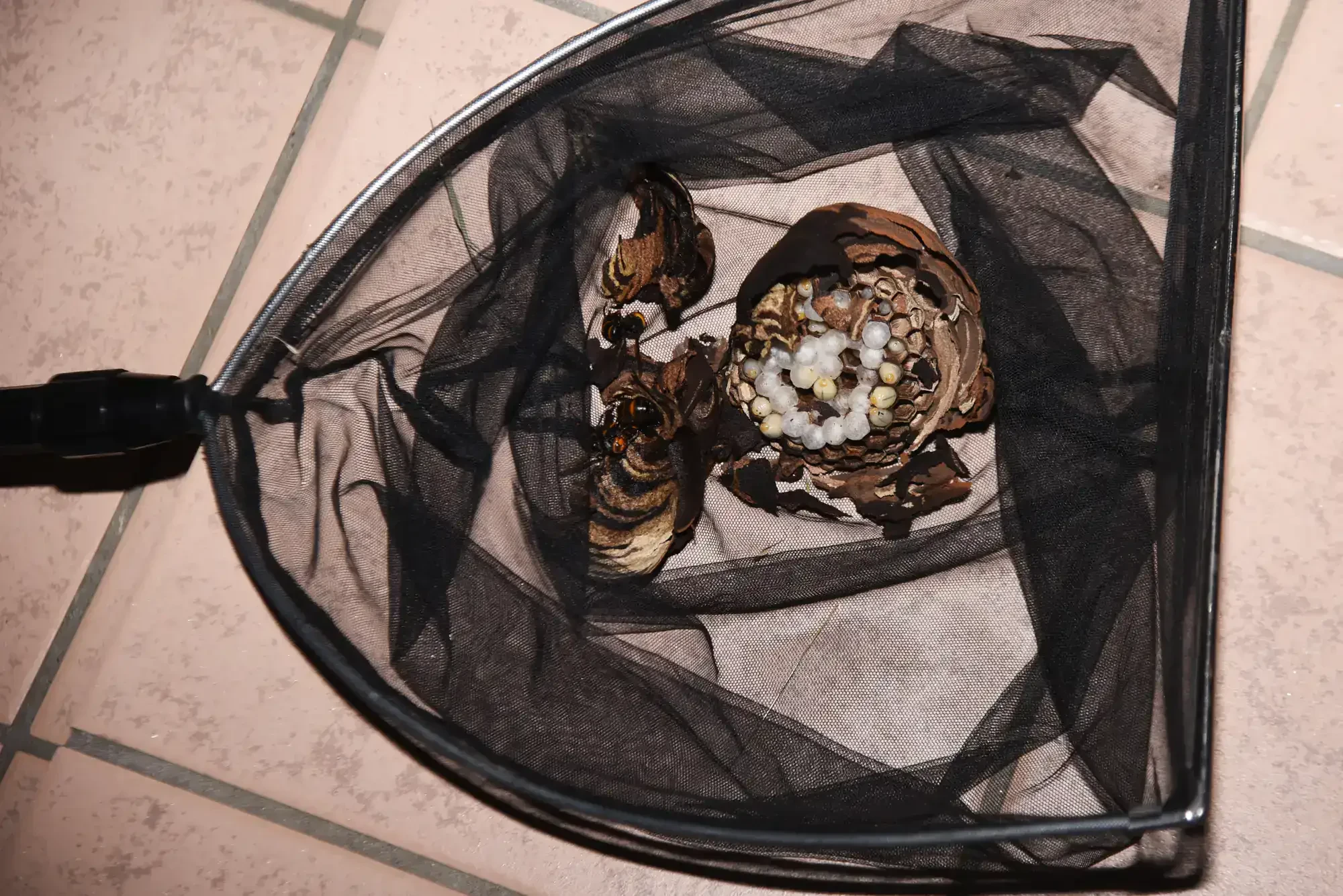
When the technician arrives, they identify the species before anything else. Bald-faced hornets, yellow jackets, and paper wasps all behave differently and require different treatment approaches. On rural Saginaw County properties, nests are often in less obvious locations — inside wall voids of older outbuildings, under barn eaves, or elevated in mature trees along a lot line. The technician assesses the nest location, size, and access before deciding on treatment. For enclosed nests or wall voids, a dust application is typically more effective than a liquid spray. For elevated nests, timing matters — treatment is most effective at dusk or after dark, when the colony is inside and less active.
After treatment, the technician walks you through what to expect over the next 24 to 72 hours and what signs indicate the colony has been fully eliminated. There are no hidden charges added after the fact. The price you’re quoted before the job starts is the price on the invoice.
Ready to get started?
We handle hornet removal for both residential and commercial properties in the Walters area. Whether it’s a nest on your home, a barn that needs to be treated before harvest season, or a small business entrance that’s become a hazard for customers and employees, the scope of the job doesn’t change the standard of our work.
Every service starts with a proper species identification — not just “it’s a wasp” — because the treatment method depends on it. IPM certification means our technician selects the most targeted approach for the specific pest and situation, which matters on properties where kids, pets, or livestock are present. You’re not getting a broad-spectrum spray applied across your entire yard. You’re getting the right treatment in the right location.
We offer upfront, flat-rate pricing before any work begins. If you’ve already received a quote from another company, we’ll match reasonable competitor pricing. Discounts are available for seniors, veterans, and first responders — and in a community like Walters, where those groups represent a meaningful share of the people who’ve been here the longest, that’s a straightforward acknowledgment of that. No state or local permit is required for professional hornet nest removal on private property in Walters — Michigan state licensing through MDARD covers it, and we hold that license.
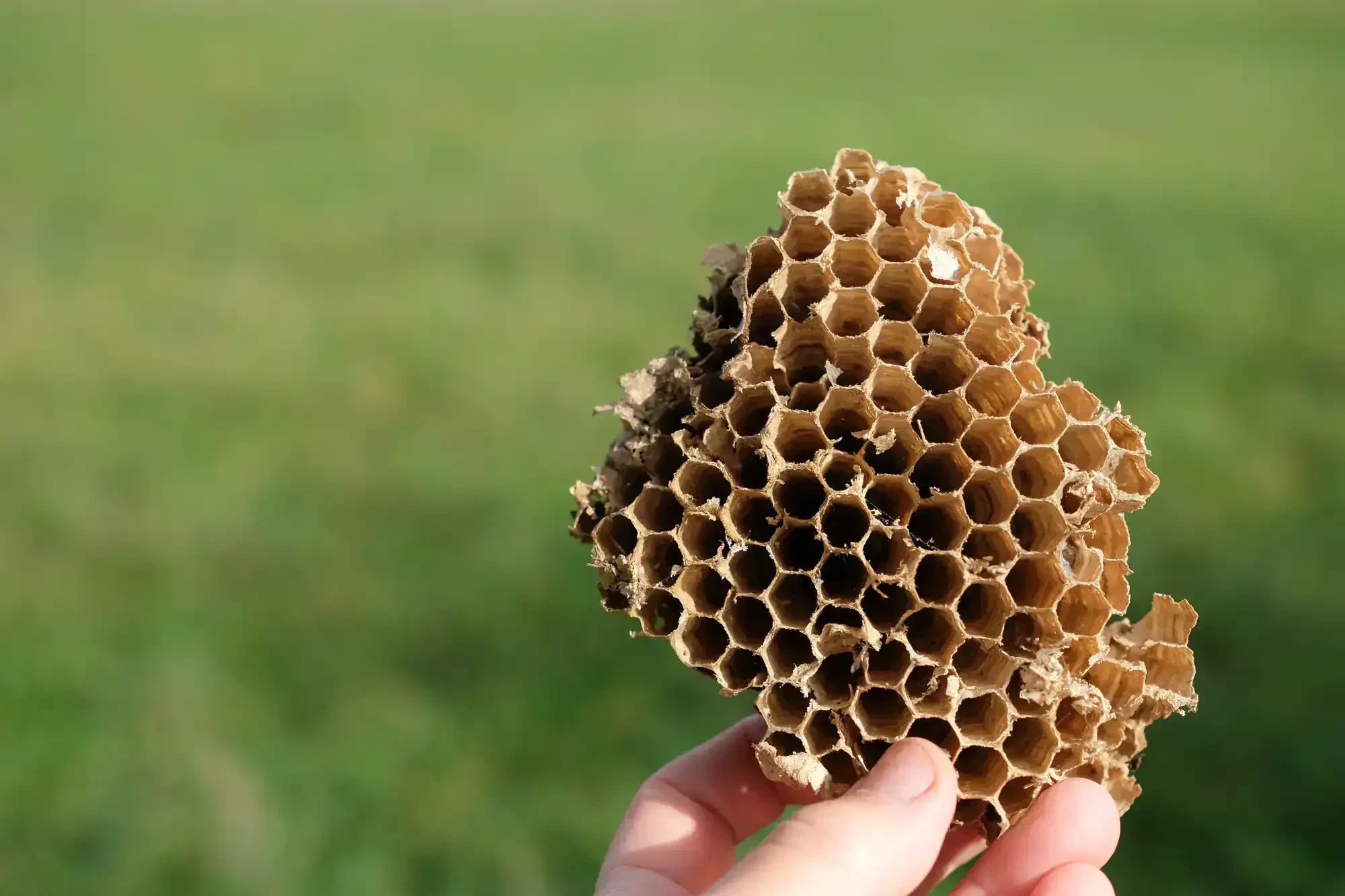
DIY hornet removal is genuinely risky, and on rural properties it tends to be more complicated than people expect. Hardware store sprays can work on small, accessible nests — but they require you to get close, often in low light, and they don’t account for what happens when you partially treat a colony and the surviving hornets become more aggressive. A bald-faced hornet colony at peak summer population can have 400 to 700 workers, and they will defend the nest.
On Walters-area properties specifically, nests are often in locations that make DIY treatment more dangerous: high under barn eaves, inside wall voids where you can’t see the full nest, or in mature trees where getting close means getting directly below the colony. A professional technician has the right protective equipment, the right treatment products for the specific location, and the experience to do it without triggering a defensive swarm. The CDC reports an average of 62 Americans die each year from hornet, wasp, and bee stings — and most of those incidents involve people who didn’t know they were allergic until it was too late. If there’s any doubt, call first.
Nationally, professional hornet removal runs between $300 and $700, with bald-faced hornet removal averaging around $625 due to the enclosed nest structure and the elevated locations these species prefer. What you pay locally depends on the nest size, species, location, and how accessible it is. A nest found early in the season — May or June, when it’s still small — typically costs significantly less to remove than one discovered in August when the colony is fully established.
That’s worth knowing because a lot of Walters-area homeowners don’t catch nests early. On larger rural properties with outbuildings and wooded areas, a colony can grow for months before it’s noticed. A nest that might cost $200 to $300 to remove in spring can cost two to three times that by late summer. We provide upfront pricing before any work starts — no surprises on the invoice — and will match reasonable competitor quotes. If you’ve already gotten a price from someone else, bring it up when you call.
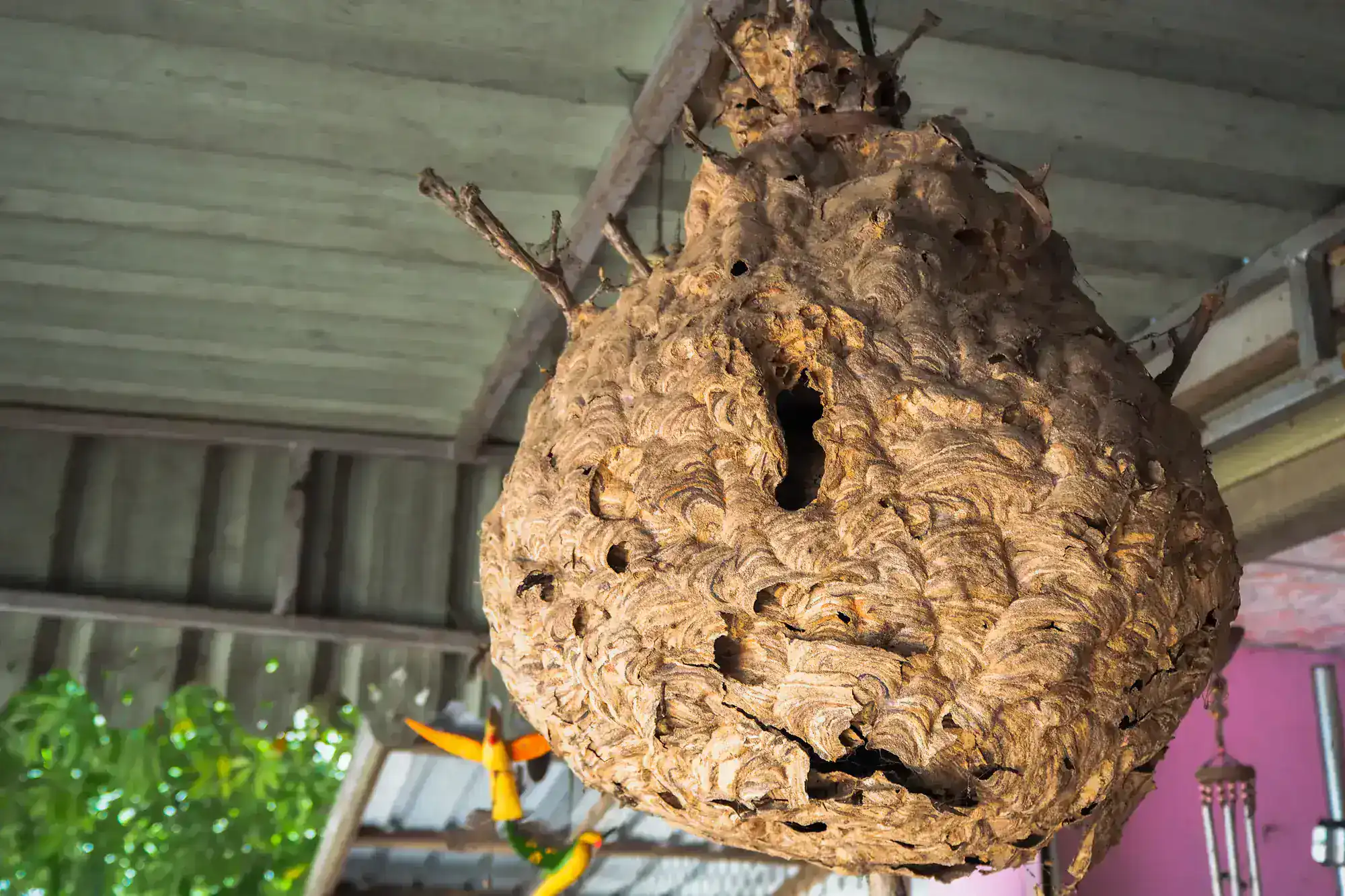
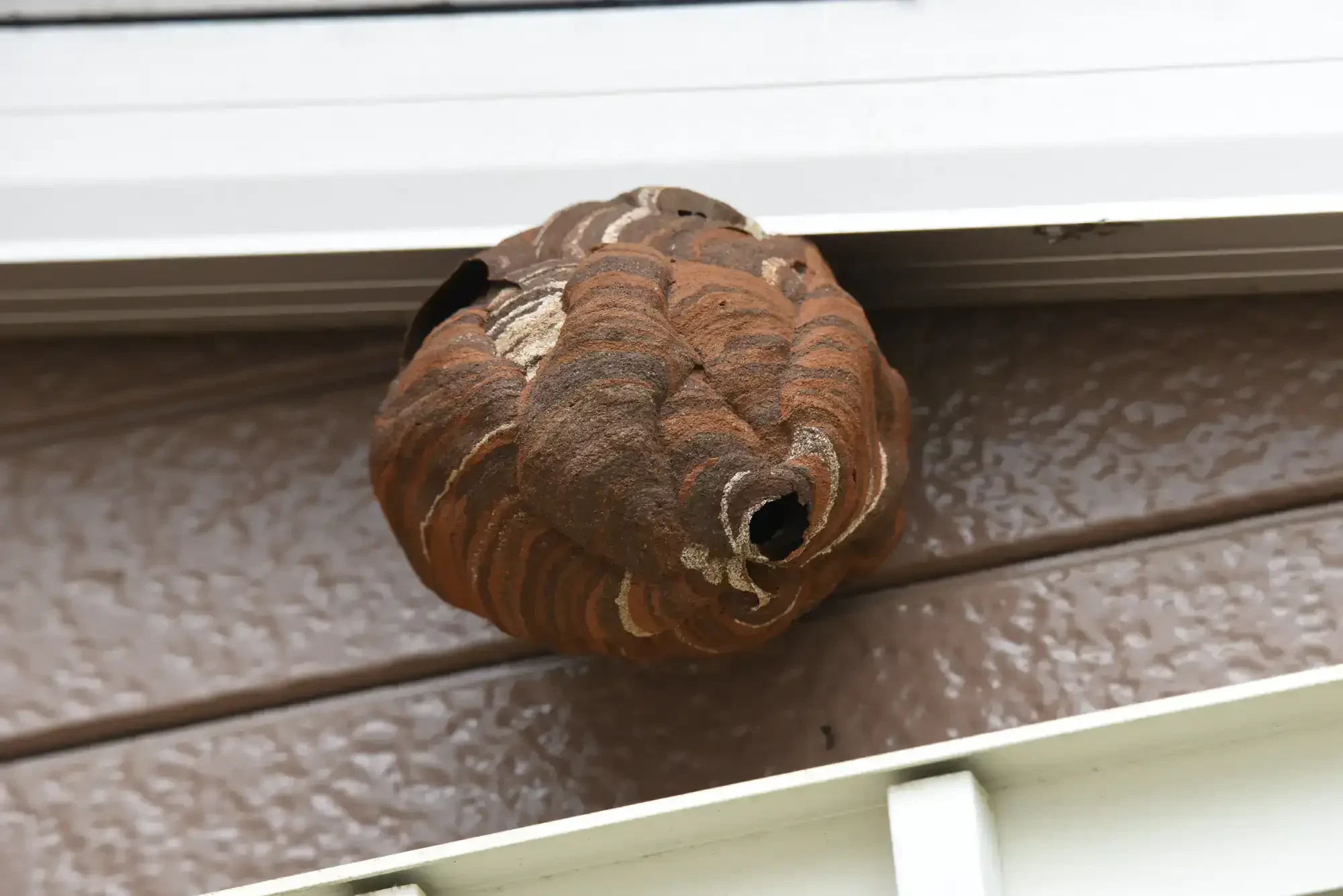
The most common species in this part of Michigan is the bald-faced hornet — technically a large yellow jacket, but it builds the large, enclosed gray paper nest most people picture when they think of a hornet nest. These nests are typically found in trees, shrubs, and on the undersides of eaves. They’re aggressive defenders and will sting repeatedly without provocation if the nest is disturbed.
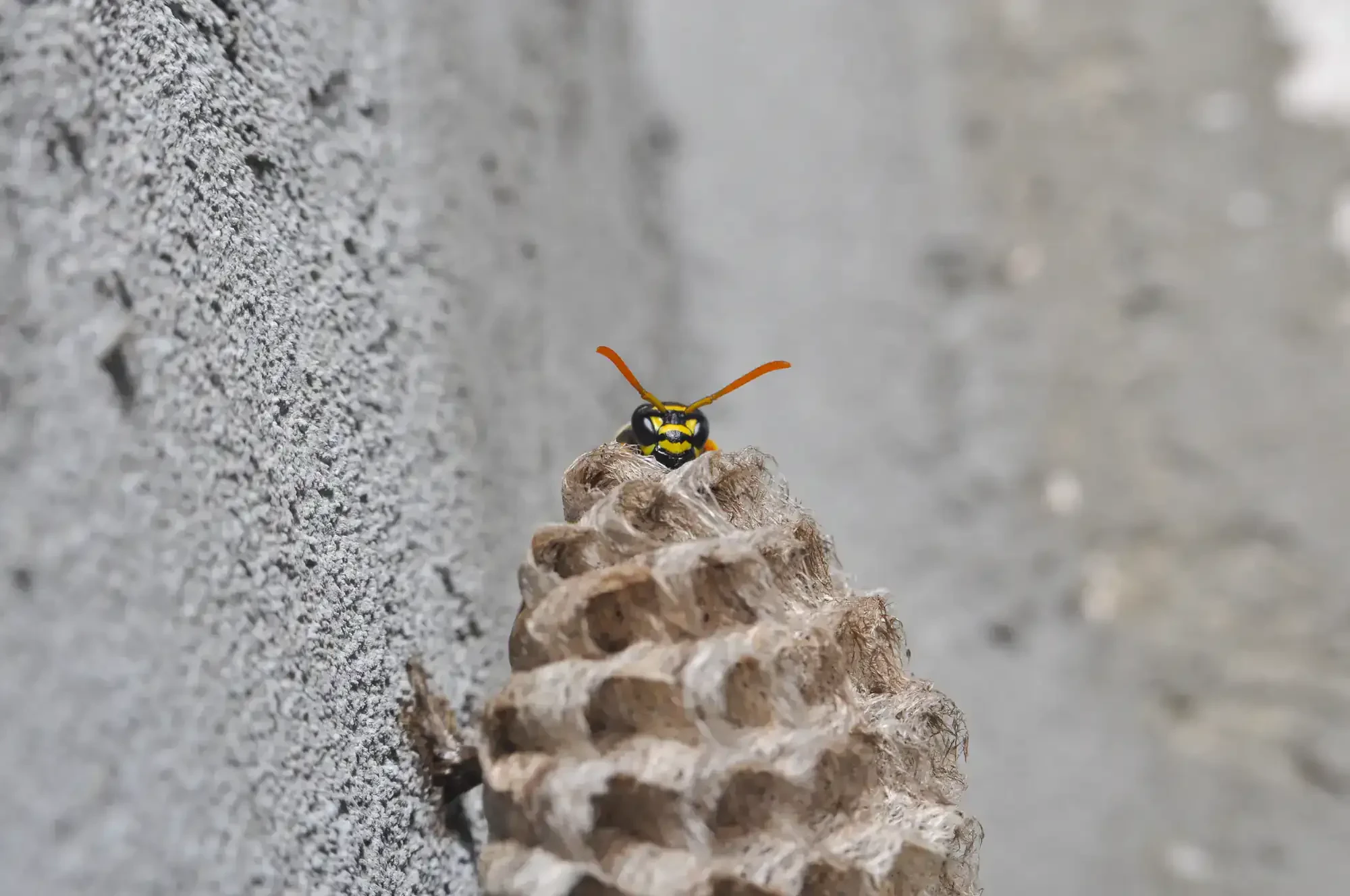
Yellow jackets are also common in Saginaw County, and they’re a different challenge. They frequently nest in the ground, inside wall voids, or in the cavities of older structures — which is especially relevant on rural properties with older outbuildings around Walters. Ground-level yellow jacket nests are easy to step on or disturb with a mower, and the colony response is fast and intense. Paper wasps are less aggressive but often nest in sheltered spots around porches, window frames, and equipment. The species matters because the treatment approach is different for each one — a dust treatment for a wall void, a direct application for an aerial nest, a different timing and method for a ground nest. That’s why identification comes first.
The colony itself won’t survive a Michigan winter — workers and the current queen die off once temperatures drop. But fertilized queens hibernate through the winter in protected locations, including wall voids, attic spaces, and inside outbuildings. Those queens emerge in late April or early May and begin building new nests, often in the same general area where a previous colony was located, because the conditions that made it attractive the first time haven’t changed.
On rural Saginaw County properties, this cycle can repeat year after year in the same barn eave, the same tree, or the same corner of a shed. Removing the nest eliminates the current colony, but it doesn’t guarantee the location won’t be used again next season. A technician can assess whether there are structural gaps, entry points, or site conditions that make the location particularly attractive to returning queens — and in some cases, sealing those entry points after treatment is the most effective long-term step. If you’re dealing with a recurring problem in the same spot, that’s worth discussing when you call.
This is one of the more common situations on older rural properties in the Walters area, and it’s one of the most important to get right. If you’re hearing a low buzzing sound inside a wall, noticing hornets or yellow jackets entering and exiting through a small gap in siding, a gap around a window frame, or a crack near a foundation, there’s a reasonable chance the nest is inside the wall void rather than on the exterior surface.
Wall void nests require a different treatment approach than visible aerial nests. A liquid spray on the exterior won’t reach the colony — and in some cases, it can drive the insects deeper into the wall or cause them to chew through interior drywall to escape. Dust treatments applied directly into the void through the entry point are typically more effective. This is not a situation to treat with a hardware store product, because a partial treatment can make it significantly worse. A technician who identifies the entry point, confirms the nest location, and applies the right product in the right way is the difference between solving the problem and creating a bigger one.
Yes. We offer discounts for senior citizens, military veterans, and first responders. In a rural community like Walters, those groups represent a real portion of the people who’ve lived here the longest and contributed the most — farmers who’ve worked the same land for decades, veterans who came home to mid-Michigan, neighbors who show up when something goes wrong. The discount is a straightforward way of acknowledging that.
Beyond the discounts, we also match reasonable competitor quotes. If you’ve already called around and gotten a price from another company, mention it when you call — if it’s a legitimate quote for a comparable service, we’ll work with it. Flat-rate pricing means the number you’re given before the job starts is the number on your invoice. For a working-class rural community where a $300 to $600 pest control call is a real household expense, knowing exactly what you’re paying before anyone starts work isn’t just a preference — it’s the only way to do business honestly.
Useful Links