
Hear from Our Customers
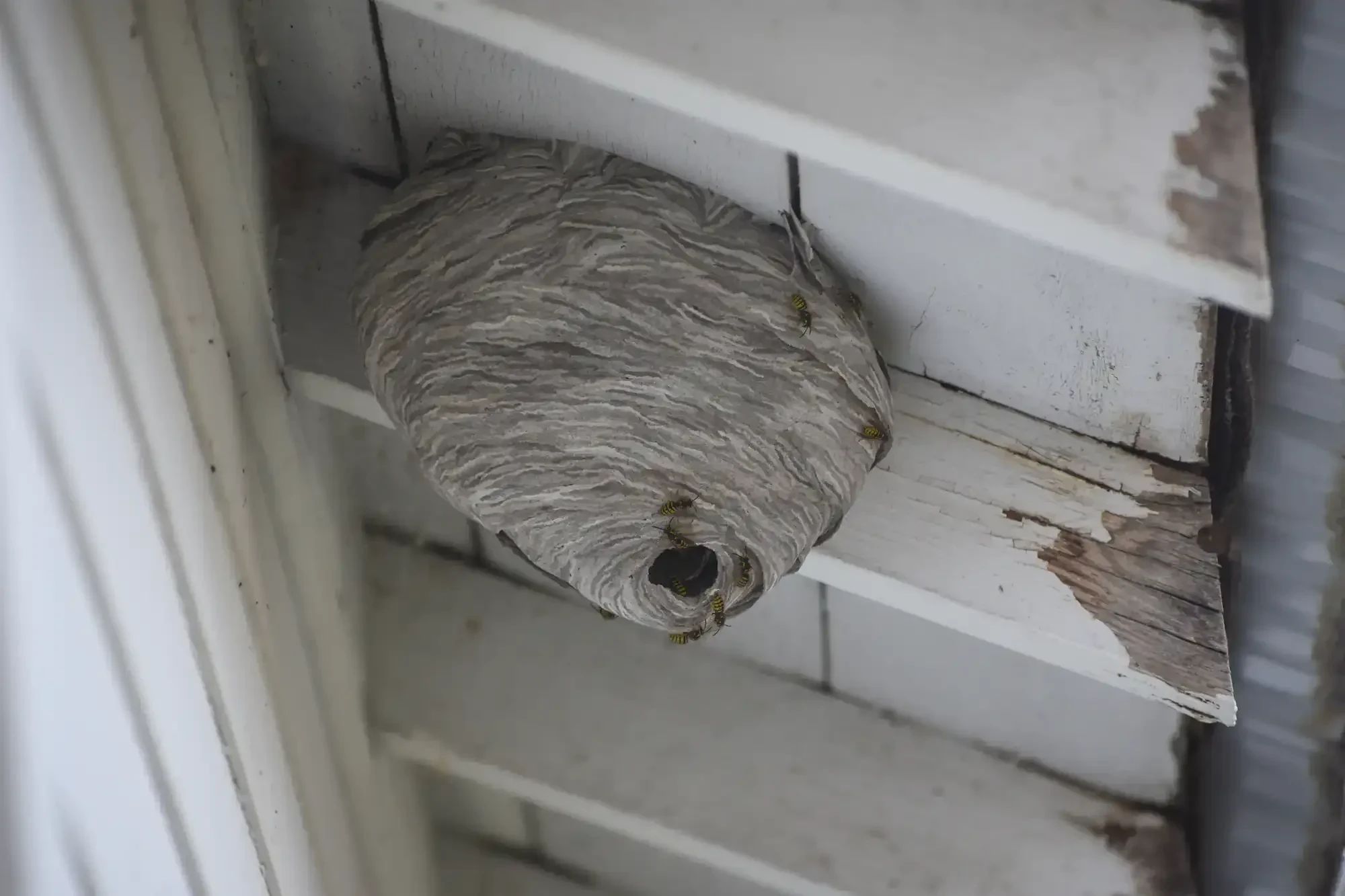
When a yellow jacket colony sets up near your dock or under your deck on Walters Lake, it does not stay small. By late August, a single nest can hold up to 5,000 workers — all of them food-stressed, territorial, and looking for a reason to sting. That is exactly when you are trying to host a cookout, let the kids swim, or walk the dog along the shoreline. Professional yellow jacket nest removal in Walters, MI stops that collision before it sends someone to the ER.
The wooded, landscaped lots around Walters Lake create near-ideal nesting conditions. Mature trees, natural ground cover along the shoreline, and the kind of undisturbed root cavities that yellow jackets love for underground colonies are everywhere here. And for homes with older siding, aging soffits, or gaps around chimneys — common in the mixed-age housing stock on the lake — the German Yellowjacket will find its way into a wall void or attic and start expanding from the inside. Left alone, that means chewed drywall, damaged insulation, and an entry point that a new queen will find again next spring.
Getting it handled professionally means the colony is gone — not driven deeper into your walls by a store-bought spray that triggered their alarm response. It means your yard is safe for your family again. And with a 1-year service guarantee, if yellow jacket activity returns within the guarantee period, we come back at no additional charge.
First Choice Pest Control is a family-owned company founded on May 31, 2005, and in 2025 we are marking 20 years of protecting Southeast Michigan homes. Roger Chinault, who leads every job with 26 years of hands-on pest control experience, built this company around one idea: the person who shows up at your door should actually know what they are doing — and should keep showing up, year after year.
We serve Independence Township and the Walters Lake community as part of our core Oakland County service area. That means Roger and our team are familiar with the wooded lakefront lots, the older housing stock along the water, and the seasonal pest patterns that come with living near Independence Oaks County Park and the natural corridors that connect it to residential neighborhoods. The homes around Walters Lake — many of them cottage-era construction or substantially renovated — present unique nesting opportunities for yellow jackets, and we have developed treatment protocols specifically suited to the structural challenges these properties present.
We hold MDARD Pesticide Application Business License #250081, carry IPM training certification, and have earned recognition from both Angie’s List and HomeAdvisor. We offer discounts for seniors, veterans, and first responders — and we do not use part-time technicians or lock customers into binding contracts. You get the same technician, the same accountability, and the same standard every time.
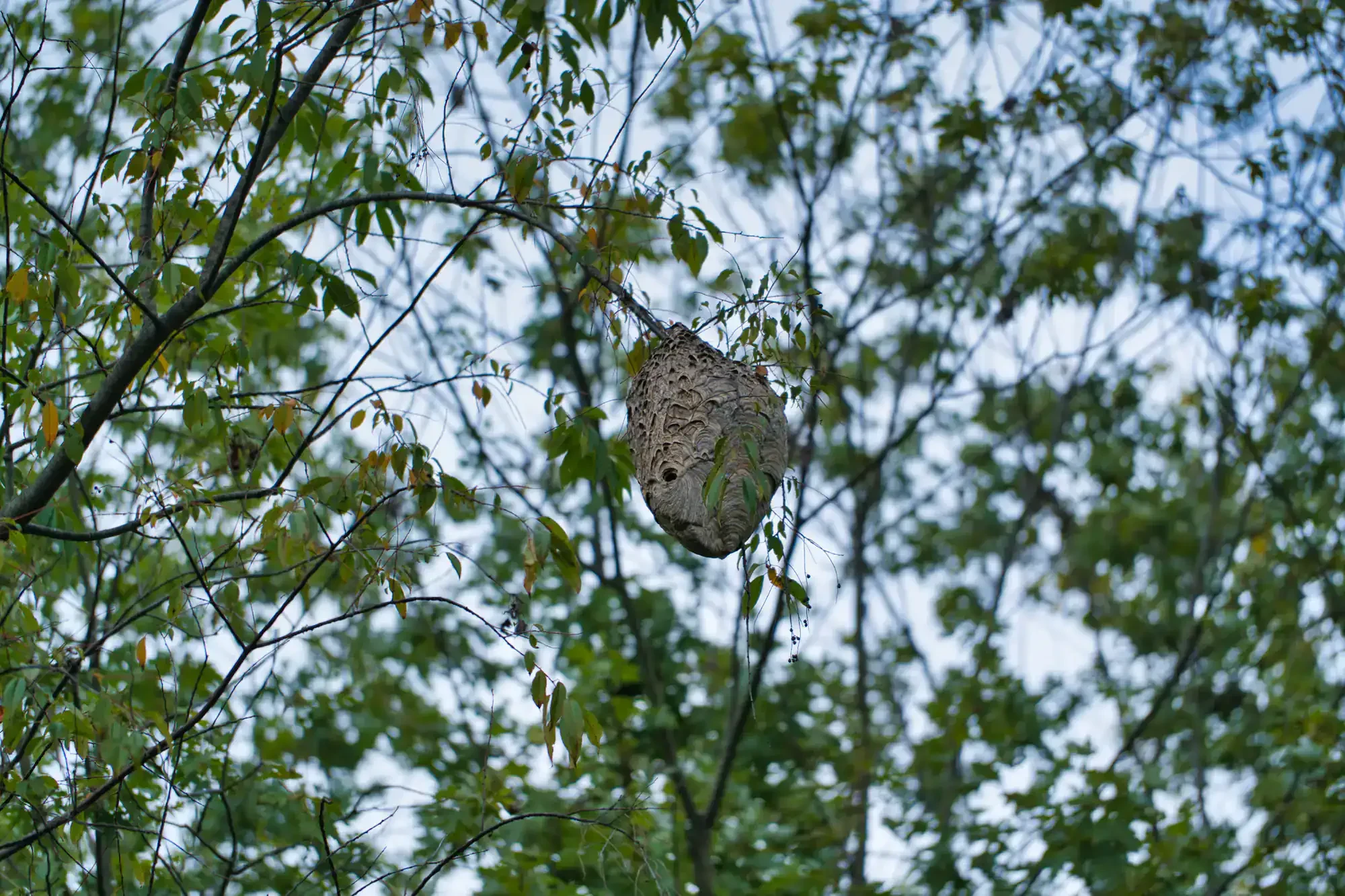
It starts with a call. We respond quickly — often within minutes — because when you have a yellow jacket nest near your family, waiting around for a callback is not acceptable. When we arrive at your Walters Lake property, the first thing we do is a thorough inspection. We are not just looking at where you saw yellow jackets going in. We are looking at the whole picture — ground-level nesting sites in the yard, structural entry points along the roofline, soffits, siding gaps, and any attic or wall-void access points that are common in the mixed-age homes along the lake.
Once we identify the nest location and species — because treatment method depends on whether you are dealing with a ground nest, a wall void, or an attic infestation — we apply targeted professional-grade treatment that reaches the entire colony, including the queen. This is where store-bought sprays fail. They hit the entry point and trigger alarm pheromones, which drives the colony deeper and increases aggression. Our professional treatment is designed to eliminate the source.
After treatment, we walk you through what to expect over the next 24 to 72 hours as colony activity winds down, and we give you honest guidance on sealing entry points — especially important for older lakefront homes where the same gap can be recolonized by a new queen the following spring. The 1-year service guarantee covers you if activity returns within the guarantee period.
Ready to get started?
Yellow jackets do not nest in just one place, and the Walters Lake area sees the full range. Ground nests are common along wooded shorelines and in yards with natural ground cover — the kind of habitat that runs right up to the water’s edge on many Walters Lake properties. These are the nests that get discovered the hard way: a mower passes too close, a dog wanders over the entry point, and suddenly everyone is running. Underground colony removal requires locating the nest cavity and applying treatment in a way that eliminates the entire population, not just the workers visible at the surface.
Wall-void and attic yellow jacket removal is a different challenge, and it is the one most likely to cause lasting property damage if it goes untreated. The German Yellowjacket — the species most commonly found nesting inside homes across Oakland County — colonizes enclosed structural cavities and expands by chewing through drywall and insulation. Homes along Walters Lake, particularly those with older construction or converted cottage-era bones, are especially vulnerable to this. Attic yellow jacket removal near Walters, MI requires treatment that penetrates the void and reaches the full colony, followed by guidance on sealing the entry point so the cavity is not reused.
All yellow jacket pest control services from First Choice are backed by our 1-year service guarantee and performed by licensed, IPM-certified technicians. We match reasonable competitor rates, and we will never send someone without the training and experience to handle the job correctly.
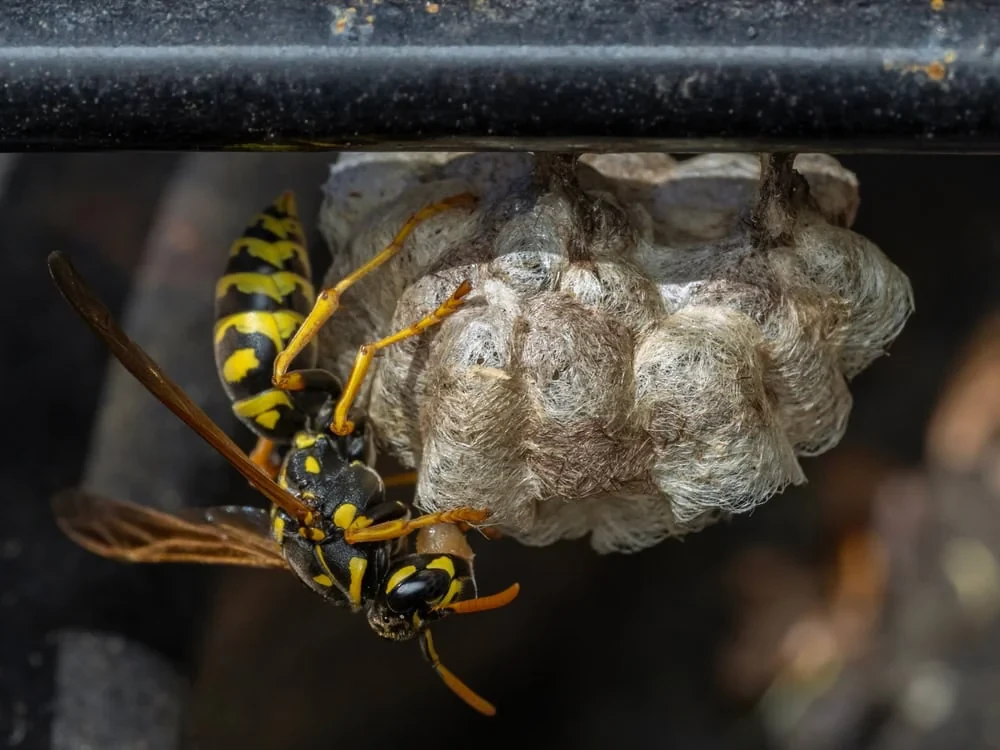
The most common sign is a consistent line of yellow jackets entering and exiting a single point on your home’s exterior — a gap in the siding, a crack near the soffit, a space around a utility line, or an opening near the roofline. If you are seeing that kind of traffic near your Walters Lake home, there is almost certainly an established colony behind the wall or in the attic, not just a few wasps investigating.
The other sign people notice is sound. A large wall-void colony produces a faint buzzing or chewing sound that can sometimes be heard through drywall, especially in quieter rooms. Some homeowners also notice yellow jackets appearing inside the living space — coming through gaps in baseboards or light fixtures — which means the colony has expanded far enough to breach the interior wall. If any of these are happening, do not spray the entry point yourself. That drives them deeper and makes the situation harder to treat. Call for a professional inspection first.
Nationally, yellow jacket extermination averages around $725, with ground nests typically on the lower end and wall-void or attic nests ranging from $500 to $1,300 depending on accessibility and colony size. In Oakland County, where homes tend to be larger and structural nests in older lakefront properties can require more involved treatment, it is reasonable to expect costs within that range or higher for complex jobs.
The cost of professional treatment is almost always less than the alternatives. A single emergency room visit for an anaphylactic reaction to a sting can run $1,000 or more without insurance. Structural repair from a wall-void colony that has been chewing through drywall and insulation for a full season can reach several thousand dollars. We offer price matching for reasonable competitor rates, so you are not choosing between quality and cost — and the 1-year service guarantee means you are covered if the problem returns.
For a small, exposed nest early in the season — say, a paper nest the size of a golf ball under an eave in May — a careful DIY approach is sometimes manageable. But by mid-summer, most yellow jacket colonies near Walters Lake have grown well past that point. A mature colony can hold 1,000 to 5,000 workers, all capable of stinging repeatedly, and they respond to perceived threats with coordinated aggression that can escalate in seconds.
The bigger risk with store-bought aerosols is not just the sting danger — it is that they rarely solve the problem. Spraying the entry point of a wall-void or ground nest triggers alarm pheromones that drive the colony deeper into the structure and increase defensive behavior. The queen is almost never reached, which means the colony survives and continues to grow. You end up with a more aggressive, harder-to-treat infestation than you started with. Professional treatment is designed to reach and eliminate the full colony, including the queen, which is the only way to actually end the infestation.
Late July through September is the peak danger window, and it lines up almost exactly with the most active part of the outdoor season for Walters Lake residents. By August, colonies are at maximum population and workers have shifted away from hunting insects toward seeking sugary foods — which means your dockside cooler, your backyard barbecue, and your kids’ popsicles become targets. Workers are food-stressed and highly territorial during this period, and colonies near high-traffic outdoor areas become genuinely hazardous.
The timing is also tied to Independence Township’s natural environment. The wooded habitat around Walters Lake and the natural corridors connecting residential properties to areas like Independence Oaks County Park support large yellow jacket populations that peak in sync with late summer. Queens that overwintered in the area establish colonies in spring, and those colonies reach full size just as your outdoor season hits its peak. Getting treatment done in June or early July — before the colony reaches maximum size — is always easier and less risky than waiting until August when the pressure is highest.
Yellow jacket colonies themselves do not survive winter — the workers and the queen all die off by late fall. But the entry points they used do not disappear, and new queens emerging in spring are actively searching for sheltered cavities to start a new colony. If a wall void, attic space, or ground cavity was used last year and the entry point was not sealed after treatment, there is a real chance a new queen finds the same location the following spring.
This is one of the most common reasons homeowners deal with yellow jackets in the same spot year after year. It is not the same colony returning — it is a new queen finding an already-proven location. After treatment, sealing the entry point is a critical step, especially for the older and mixed-age homes along Walters Lake where gaps in aging siding, soffits, and wood-framed construction can be difficult to locate without a trained eye. We walk you through this after every treatment, and the 1-year service guarantee covers you if a new colony establishes in the same area within the guarantee period.
Yes — we offer discounts for seniors, veterans, and first responders. The Walters Lake community and Independence Township are home to a lot of people who have served in some capacity, whether that is military service, law enforcement, fire, or EMS, and this is a straightforward way to make sure the cost of professional pest control is accessible for those households.
If you or someone in your home qualifies, just mention it when you call. There is no complicated process. We also match reasonable competitor rates, so if you have gotten a quote from another licensed provider in the Oakland County area, bring it up — we will work with you on pricing without cutting corners on the service itself. The goal is to make sure cost is not the reason a yellow jacket nest goes untreated on your property when the solution is right here.
Useful Links